RJ Mitte Dies at 34: ‘Breaking Bad’ Actor Remembered for Disability Advocacy
RJ Mitte, the actor who played Walter “Flynn” White Jr. in Breaking Bad and became a prominent advocate for disability representation, has died at 34. His representatives said he died by suicide, while authorities said the formal cause and manner remained subject to official determination.
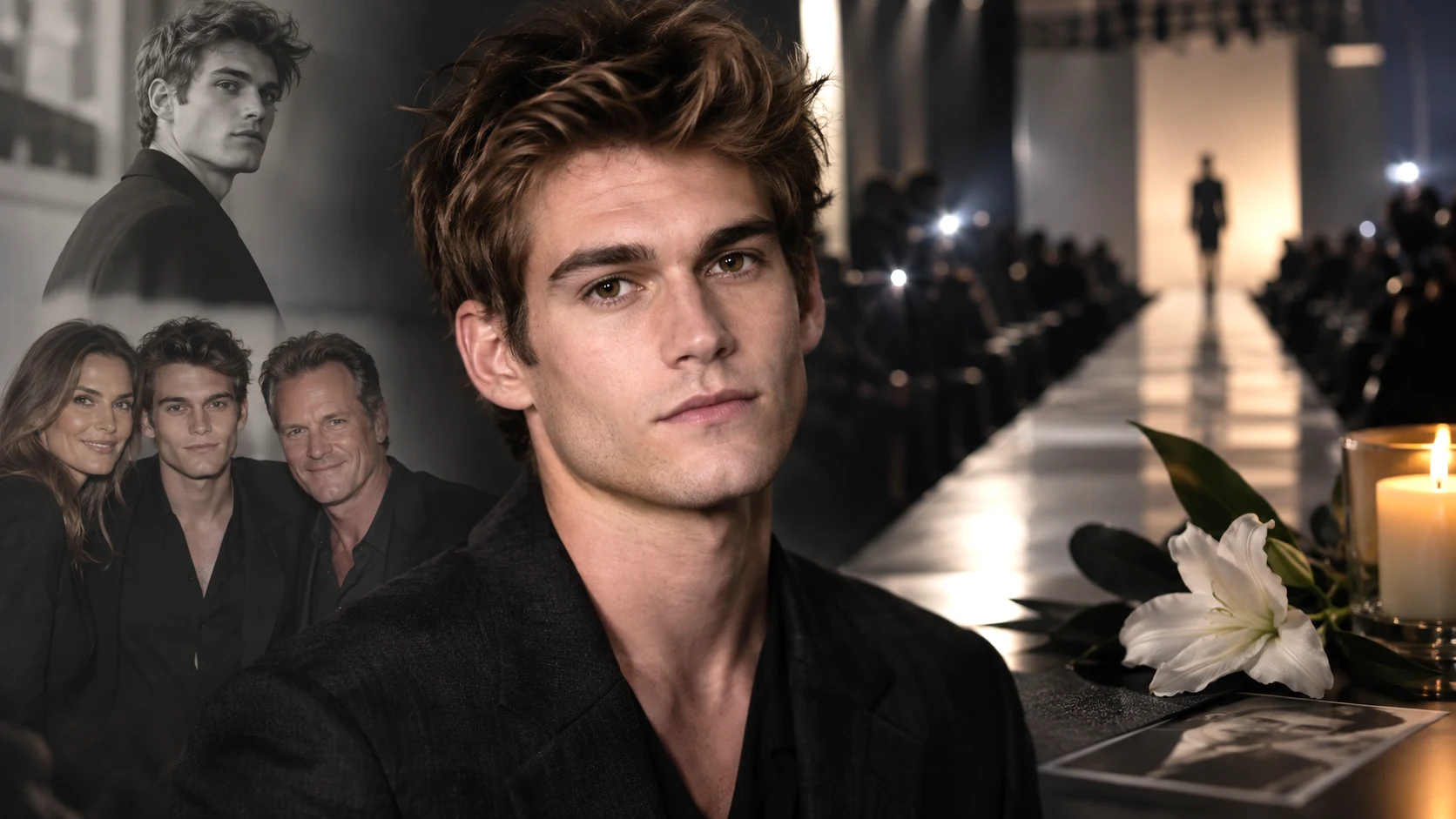
Editorial illustration remembering RJ Mitte and his work on Breaking Bad and disability advocacy
Table of Contents (12 sections)
RJ Mitte, the actor best known around the world for playing Walter “Flynn” White Jr. in the acclaimed television series Breaking Bad, has died at the age of 34.
Mitte died on Monday, October 12, 2026, in Brownsville, Texas, according to authorities and his representatives. His death was initially announced without a cause. His representatives subsequently said that he died by suicide.
Authorities, however, have maintained the distinction between that statement and the formal official process. A Cameron County justice of the peace said an autopsy would be performed, while Brownsville Police said the official cause and manner of death remained pending determination as part of the investigation.
That distinction is important. Reports from his representatives describe the death as suicide, but the final official determination rests with the relevant authorities following the medical and investigative process.
No graphic details about the circumstances of his death are necessary to understand the story.
Mitte’s death has prompted tributes from people who worked with him on Breaking Bad, as well as renewed attention to a part of his career that extended far beyond the television role for which he became famous: his advocacy for actors and other people with disabilities.
He lived with cerebral palsy and used his visibility in Hollywood to push for more authentic representation, better opportunities for performers with disabilities and a broader understanding of disability on screen.
Recommended Reading
Related Stories & In-Depth Guides
Curated editorial perspectives matching this topic.
Presley Gerber, the model and son of supermodel Cindy Crawford and businessman Rande Gerber, has died at the age of 27. Authorities say he died at a rehabilitation facility in California on Sunday, September 20. His family has confirmed his death and asked for privacy, while the Los Angeles County M
Amitabh Bachchan turns 84 on October 11, 2026, while remaining active across television and cinema. From the emotional birthday tribute on Kaun Banega Crorepati to five performances that helped define his career, here is a verified look at his legacy, current work and the projects still ahead.
For millions of viewers, however, their first introduction to Mitte came through one of television’s most recognisable families.
Key Takeaways
RJ Mitte, known for Walter “Flynn” White Jr. in Breaking Bad, has died at 34.
Representatives said he died by suicide; official cause and manner still pending.
Lived with cerebral palsy and became a leading advocate for disability representation.
Tributes from Bryan Cranston, Aaron Paul and other Breaking Bad colleagues.
Career extended beyond the series into acting, advocacy and community work.
The role that made RJ Mitte famous
Breaking Bad premiered on AMC in 2008 and followed Walter White, the chemistry teacher played by Bryan Cranston whose cancer diagnosis and financial fears set him on a path into the illegal drug trade.
Mitte played Walter White Jr., the teenage son of Walter and Skyler White, played by Anna Gunn.
The character was also known as Flynn during parts of the series.
Mitte was still a teenager when he joined the production. Bryan Cranston later recalled meeting him when Mitte was only 14 and watching him develop as an actor during the years that followed.
Breaking Bad ultimately ran for five seasons from 2008 to 2013 and became one of the most celebrated television dramas of its era.
Walter Jr. was not simply a peripheral member of the White family. As the story became darker, the character increasingly represented one of the people forced to live with the consequences of decisions made by adults around him.
At the beginning of the series, Walter Jr. largely saw his father as someone to admire. As Walter White’s criminal life consumed the family, that relationship became progressively more complicated.
Mitte’s performance became especially significant because both the actor and the character lived with cerebral palsy.
That shared experience gave the portrayal an authenticity that was unusual on mainstream television, particularly at a time when disabled characters were still frequently portrayed by actors without the same lived experience.
Disability was part of the character, not the entire character
One of the most important aspects of Walter Jr. was that his disability was not written as the sole reason for the character to exist.
He was a teenager dealing with parents, school, loyalty, anger and the breakdown of his family. Cerebral palsy was part of his life but not the complete definition of him.
That mattered to Mitte.
Throughout his public career, he repeatedly argued for people with disabilities to be treated as complete individuals rather than being reduced to stereotypes.
His experience on Breaking Bad gave him an unusually large platform from which to make that case.
After the series became a global success, Mitte increasingly became associated not only with Walter Jr. but with campaigns for better disability representation in entertainment.
He served as a spokesman connected with performers with disabilities through the Screen Actors Guild and was associated with United Cerebral Palsy as an ambassador.
In 2013, he received the SAG-AFTRA Harold Russell Award, an honour recognising work that advances awareness and representation of the disability experience through entertainment.
The significance of his career therefore went beyond whether viewers remembered particular scenes from Breaking Bad.
His presence on one of the world's most widely watched television dramas demonstrated that an actor with a disability could occupy a major recurring role without the character being confined to an inspirational stereotype or a disability-focused plot.
His career after Breaking Bad
Mitte continued acting after Breaking Bad ended.
His later work included television and film projects such as Switched at Birth, The Oak Room, Standing Up for Sunny and Triumph.
Some of those roles continued to intersect with questions of disability and representation.
In the 2019 romantic comedy Standing Up for Sunny, for example, he played a comedian with cerebral palsy. He later appeared in Triumph, a drama centred on a high-school wrestler with cerebral palsy.
More recently, Mitte had been promoting the film Talking to Strangers.
His continued work is relevant because his career was sometimes discussed primarily through the lens of Breaking Bad even though he spent more than a decade after the series pursuing acting, advocacy and philanthropic projects.
He also became involved in community and charitable work in Brownsville, Texas.
Following his death, local organisations in Brownsville remembered him not simply as a television actor but as someone who had supported arts and cultural initiatives in the community.
The Mitte Cultural District described his contribution in terms of bringing people and communities together through culture and the arts.
That local work added another dimension to a public identity that audiences elsewhere primarily knew through television.
Bryan Cranston remembers his on-screen son
Tributes from the Breaking Bad cast quickly followed confirmation of Mitte’s death.
Bryan Cranston, who played Walter White, described himself as being in “deep despair” and reflected on having known Mitte since he was a young teenager entering a demanding television production.
Cranston remembered Mitte’s determination during filming and his development from a young actor into a more experienced performer.
He also highlighted Mitte’s later work advocating for performers with disabilities.
Cranston ended his remembrance with the words: “I’ll miss you, son.”
The line carried particular weight because the two had played father and son throughout Breaking Bad’s five-season story.
Aaron Paul, who played Jesse Pinkman, also expressed grief following Mitte’s death.
Other Breaking Bad colleagues, including Anna Gunn and Dean Norris, subsequently remembered Mitte publicly, adding personal accounts of working with him when he was young and watching his career develop.
Those tributes have focused not only on his professional work but also on the relationships formed during the years in which Breaking Bad went from a relatively small television production to an international phenomenon.
Why RJ Mitte’s representation mattered
There is a risk, following the death of a performer with a disability, of reducing the person’s life either to the disability itself or to an uncomplicated story of “overcoming” it.
Mitte’s own career points toward a more useful understanding.
He was an actor who happened to live with cerebral palsy, and that lived experience also gave him insight into how the entertainment industry portrays and employs disabled people.
His prominence mattered partly because viewers could watch a disabled performer playing a continuing character in a major drama rather than appearing only in a specially constructed storyline about disability.
That may seem unremarkable today, but representation in film and television has historically involved not only who appears on screen but who receives opportunities to work behind and in front of the camera.
Mitte used the attention generated by Breaking Bad to discuss those opportunities.
His advocacy addressed an important distinction: authentic representation involves more than simply writing disabled characters. It also concerns whether performers with disabilities are given access to auditions, substantial roles and long-term careers.
The Screen Actors Guild-related recognition he received in 2013 reflected that broader contribution.
Cerebral palsy and Mitte’s public advocacy
Cerebral palsy is a group of conditions that can affect movement, balance and posture. Its effects vary considerably from one person to another.
Mitte was diagnosed during childhood and used mobility supports when he was younger.
His own experience differed in some respects from Walter Jr.’s portrayal, but it allowed him to draw on real experiences when developing the character.
That authenticity attracted attention early in Breaking Bad’s run.
It is also important not to connect Mitte’s cerebral palsy to the circumstances of his death without evidence. Disability should not be treated as an explanation for suicide, and no such causal conclusion should be drawn from the confirmed information available about his death.
His disability belongs in this story because it was part of his life, his acting and his public advocacy — not because it provides a speculative explanation for what happened.
What has officially been said about RJ Mitte’s death?
There are two pieces of information that should be kept separate.
First, Mitte’s representatives publicly confirmed his death and subsequently said he died by suicide.
Second, authorities in Texas said the formal cause and manner of death remained subject to official determination. A Cameron County justice of the peace said an autopsy would be carried out.
Those statements are not necessarily contradictory.
A representative can provide information about the circumstances known to the family or management team while a medical examiner or other competent authority follows the formal process required to determine and record a cause and manner of death.
Until that process is complete, responsible reporting should make clear which information comes from representatives and which conclusions have been formally established by authorities.
There is no public-interest reason to speculate beyond those confirmed facts.
A career that became bigger than one television character
For many people, RJ Mitte will always be associated first with Walter White Jr.
That is understandable.
Breaking Bad reached a level of cultural recognition achieved by relatively few television dramas, and Mitte appeared throughout the central White family story.
But measuring his career only by the success of that programme would leave out much of what he did with the opportunity it created.
He continued acting.
He spoke publicly about disability.
He encouraged greater inclusion within entertainment.
He worked with organisations concerned with disability representation.
He supported cultural and philanthropic initiatives.
And he became an example of why representation can matter both on screen and within the industry producing what audiences see.
His death at 34 cuts short a career that was still active.
Only weeks before his death, Mitte was promoting new work and continuing to discuss acting and his experiences in the entertainment industry.
That makes the news particularly striking for viewers who had followed him from his teenage years on Breaking Bad into adulthood.
What happens next
Authorities are expected to complete the formal investigative and medical processes surrounding Mitte’s death.
Any future official finding should be reported as an update rather than anticipated through speculation.
Meanwhile, tributes from his colleagues, friends and the communities connected to his advocacy have continued.
For audiences revisiting Breaking Bad, Mitte’s performance will remain one of the most visible parts of his legacy.
For actors and viewers with disabilities, his influence may be remembered differently: as part of a continuing push for disabled performers to receive opportunities to play complex characters whose lives are not defined solely by disability.
Those two parts of his public life were never entirely separate.
Breaking Bad made RJ Mitte famous.
What he did with that visibility helped turn the role into something larger — a platform for arguing that disability representation should be ordinary, authentic and fully integrated into the stories audiences watch.
Editor’s Note on Mental Health Support
This article contains discussion of suicide. Reporting on a death by suicide should avoid graphic details, unsupported explanations and speculation about a single cause.
If you or someone you know in India is experiencing severe emotional distress or thoughts of self-harm, the Government of India’s Tele-MANAS service provides free, confidential, 24-hour mental-health support. Call 14416 or 1-800-891-4416. In an immediate emergency, contact local emergency services or seek urgent medical assistance.
Key Takeaway
RJ Mitte, Breaking Bad’s Walter White Jr., has died at 34.
Representatives said suicide; official determination pending. Remembered for acting and disability advocacy.
The Rajatheertha Team publishes news, explainers, guides and updates across India and the world. Our coverage follows Rajatheertha's editorial, verification and corrections standards.
Rajinikanth’s Jailer 2 has opened with an estimated ₹59.70 crore India net and ₹125.25 crore worldwide gross, while Vijay Deverakonda and Rashmika Mandanna’s Ranabaali begins its first day in theatres. Here is the verified day-wise box-office picture, what the early numbers mean and why a final verd
As of September 16, Pawan Kalyan and Sujeeth are developing the next chapter of the OG Universe, Nagarjuna’s milestone King100 is set for Christmas, Ravi Teja’s Irumudi is heading to Netflix after a major theatrical run, and Samantha’s Maa Inti Bangaram has set a new benchmark for women-led Telugu c
Entertainment/ Reality TV | Telugu Television12 min read
Bigg Boss Telugu 10 has entered Week 6 after Apoorva and Charan left in a double elimination and five new wild-card contestants entered the house. Here is what is confirmed, what remains only reported and why the new nomination list should not be treated as final until the episode establishes it.
Entertainment/ Reality TV | Telugu Television11 min read
Bigg Boss Telugu 10 is preparing for another shake-up as wild-card speculation grows around Neethu Natraj, Rama Krishna, Shiva Kumar and other names. Here is what is confirmed, what remains rumoured and how the Week 5 danger zone has changed.
British singer Ed Sheeran addressed the Israel-Gaza conflict and the controversy surrounding Macklemore’s removal from his Loop Tour during a concert in Philadelphia, saying the situation in Gaza is “catastrophic and unjustifiable” while apologizing for mistakes he said he had made during a turbulen
Avengers: Endgame has overtaken Avatar again at the worldwide box office after its 2026 Encore re-release, returning Marvel’s 2019 blockbuster to the top of the all-time chart.
Bigg Boss Telugu 10 Week 5: Latest Nominations, Voting Updates and Eliminated Contestants











0 Comments