Delhi Police Expand BNS Action Against Crime Networks as Five Held in Rohini Murder; Separate Body Recoveries Probed
Registrations under the Bharatiya Nyaya Sanhita’s organised and petty organised crime provisions rose 16% in the first five months of 2026, while police separately arrested five people over an e-rickshaw driver’s killing and opened investigations into two unrelated body discoveries in outer Delhi.
Delhi Police investigations into organised-crime cases under BNS provisions, a Rohini murder and separate body recovery probes
Table of Contents (16 sections)
Delhi Police are making increased use of the Bharatiya Nyaya Sanhita’s provisions dealing with organised and petty organised crime, with registrations under Sections 111 and 112 rising during the first five months of 2026.
Police data reported on September 14 showed that 736 cases were registered under the two provisions between January and May this year, compared with 634 during the corresponding period in 2025 — an increase of approximately 16%. Arrests associated with the two categories increased from 769 to 1,232, or about 60%.
Those figures reflect an increase in cases registered under the specific BNS provisions. They should not automatically be interpreted as proof that every form of crime in Delhi has risen by the same percentage, since changes in enforcement strategy and greater use of Sections 111 and 112 can also affect registration numbers.
The statistics come as police handle several unrelated criminal investigations across the capital, including the killing of e-rickshaw driver Abhishek in Rohini and two separate body discoveries in Kanjhawala and Swaroop Nagar.
Recommended Reading
Related Stories & In-Depth Guides
Curated editorial perspectives matching this topic.
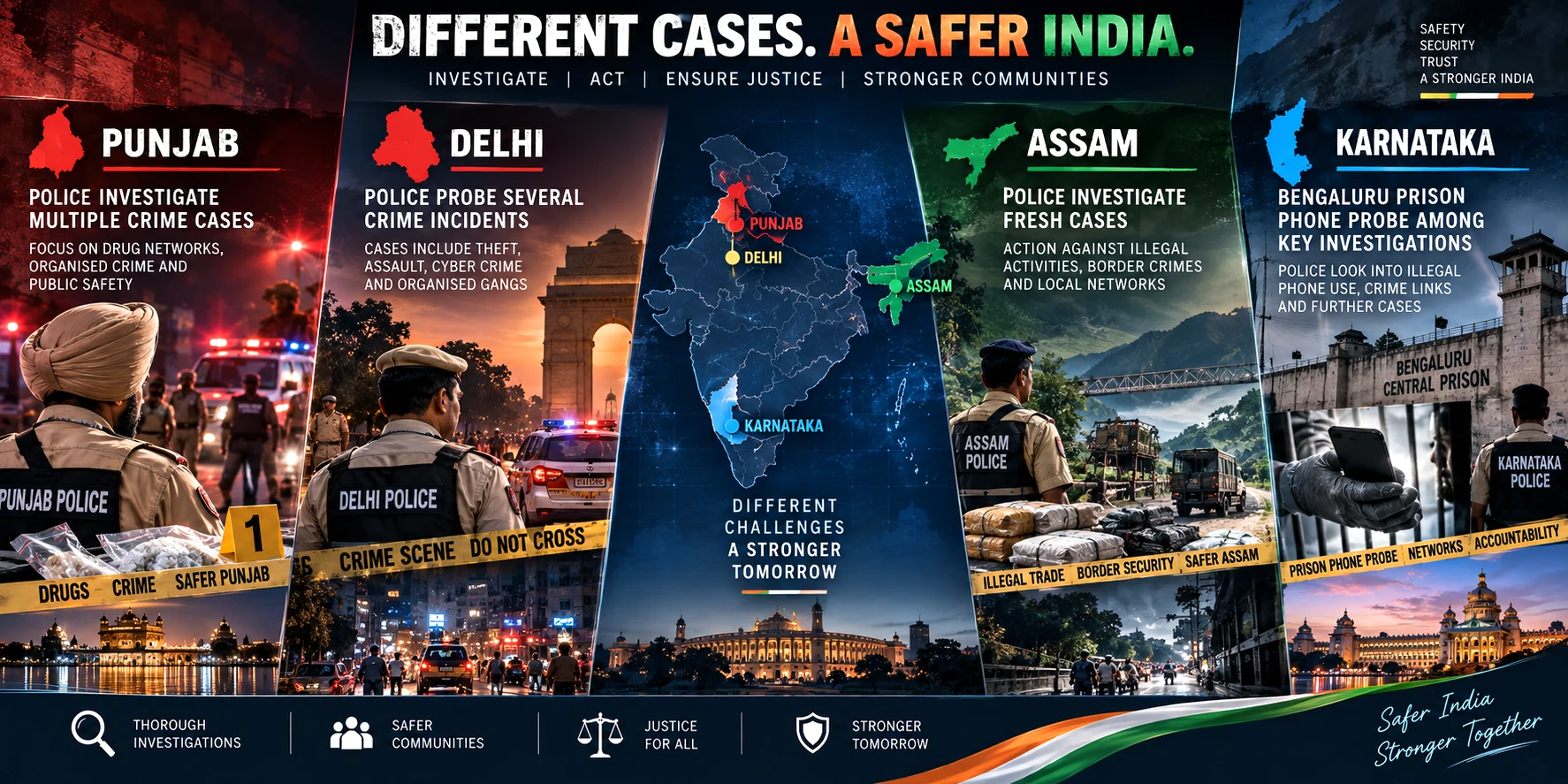
Two alleged gang operatives were killed in a Ludhiana police encounter, a Delhi e-rickshaw driver’s fatal stabbing triggered protests, Assam continues to confront serious sexual-violence cases, and the Prajwal Revanna phone seizure has widened into an alleged Bengaluru prison smuggling network.
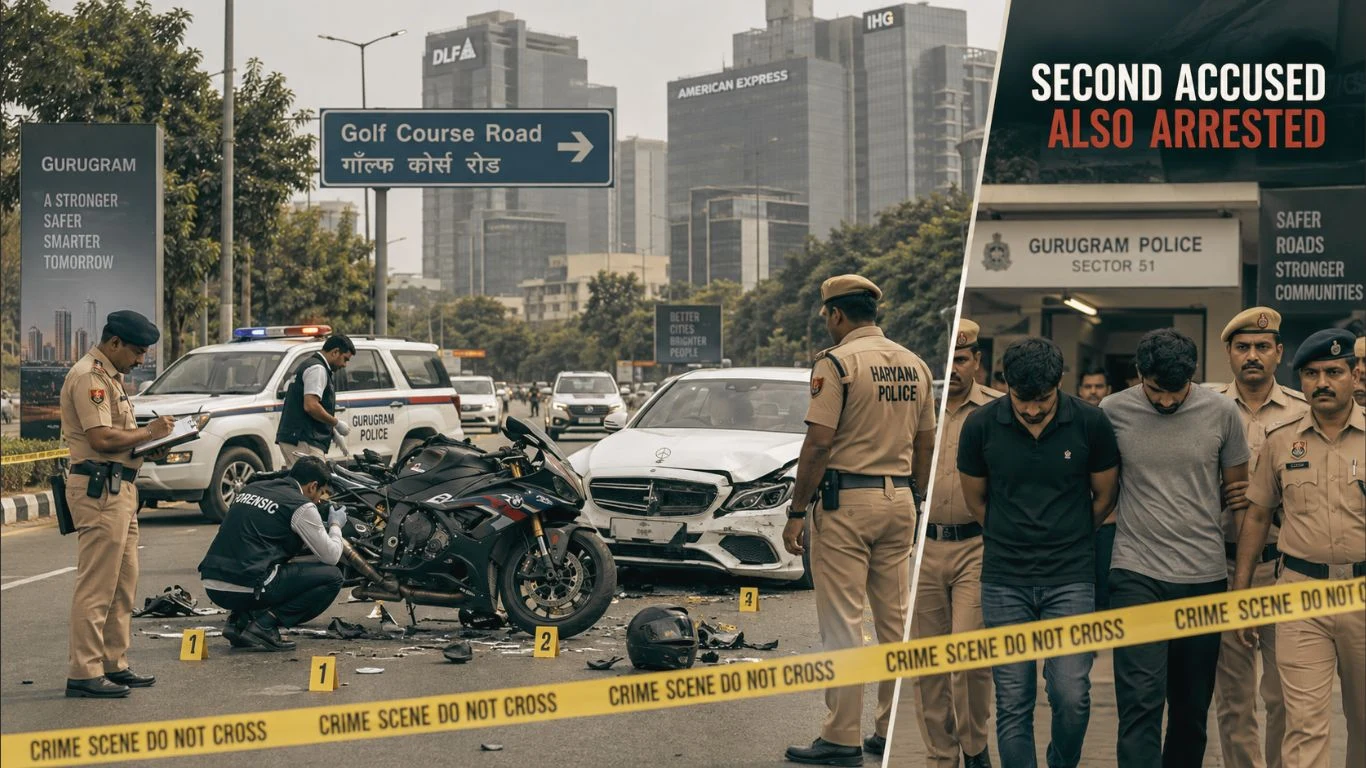
Police have arrested Kalyan Bainsla and his cousin Lavnish, who was allegedly inside the car during the September 13 Golf Course Road incident involving biker Shivani Chauhan, alias Sia. Investigators have added an attempt-to-murder charge after examining video evidence, while Sia is seeking action
Key Takeaways
Delhi Police recorded 736 cases under BNS Sections 111 and 112 between January and May 2026, up from 634 during the same period in 2025 — an increase of about 16%.
Arrests in cases registered under the two provisions rose from 769 to 1,232, according to police data reported by The Times of India.
Section 111 deals with organised crime, while Section 112 covers petty organised crime; police say the provisions allow investigators to pursue alleged networks rather than only individual offences.
Five people, including two women, have been arrested in connection with the September 12 killing of e-rickshaw driver Abhishek in Rohini Sector 28.
In separate and unrelated investigations, police recovered an infant’s body in the Kanjhawala area and an unidentified decomposed body in Swaroop Nagar.
The organised-crime statistics, Rohini murder and two body-recovery cases are separate developments and should not be interpreted as one connected series of crimes.
BNS Sections 111 and 112 Increasingly Used Against Networks
The Bharatiya Nyaya Sanhita, which came into force on July 1, 2024, contains specific provisions for organised crime and petty organised crime. Section 111 is titled “Organised crime”, while Section 112 covers “Petty organised crime”.
According to Delhi Police data reported by The Times of India, Section 111 cases increased from 122 between January and May 2025 to 166 during the same five-month period this year.
Arrests in those cases rose more sharply, from 76 to 333. Police also reported that 154 organised-crime cases had been solved by the end of May 2026, compared with 45 during the comparable period a year earlier.
Section 112 registrations, covering petty organised crime, increased from 512 to 570.
Arrests in those cases rose from 693 to 899, while the number of cases police classified as solved increased from 500 to 533.
Taken together, the figures show both increased registration under the BNS provisions and a substantial rise in arrests.
What Delhi Police Say the Provisions Are Being Used For
Police officials say the two provisions are being used to investigate alleged criminal networks rather than limiting cases to the person accused of carrying out an individual offence.
A senior officer cited by The Times of India said Section 111 can be used in cases involving serious organised criminal activity pursued by gangs or networks for financial or material gain.
Section 112 is being applied to recurring lower-level organised offences allegedly committed by groups or gangs. Police cited examples including snatching networks, illicit-liquor operations and recurring cyber-fraud structures involving mule accounts or illicit money transfers.
The wider investigative approach can include people accused of recruiting offenders, transporting illegal goods, disposing of stolen property or facilitating financial transactions.
However, registration under an organised-crime provision remains an allegation within a criminal case. Whether individual accused persons are legally responsible must be determined through investigation and, where charges proceed, judicial findings.
A Rise in Registrations Does Not Equal a Citywide Crime Rate
The 16% figure requires careful interpretation.
It compares cases registered specifically under Sections 111 and 112 during two five-month periods.
Delhi Police have said they are deliberately using the newer BNS provisions more frequently against repeat offenders and alleged networks. That enforcement change can itself contribute to higher registration figures.
The data therefore supports the statement that organised and petty organised crime cases registered under these BNS provisions increased.
It does not, by itself, establish that Delhi’s overall crime rate increased 16%, nor does it establish that every registered allegation resulted in a conviction.
Five Arrested in Rohini E-Rickshaw Driver Killing
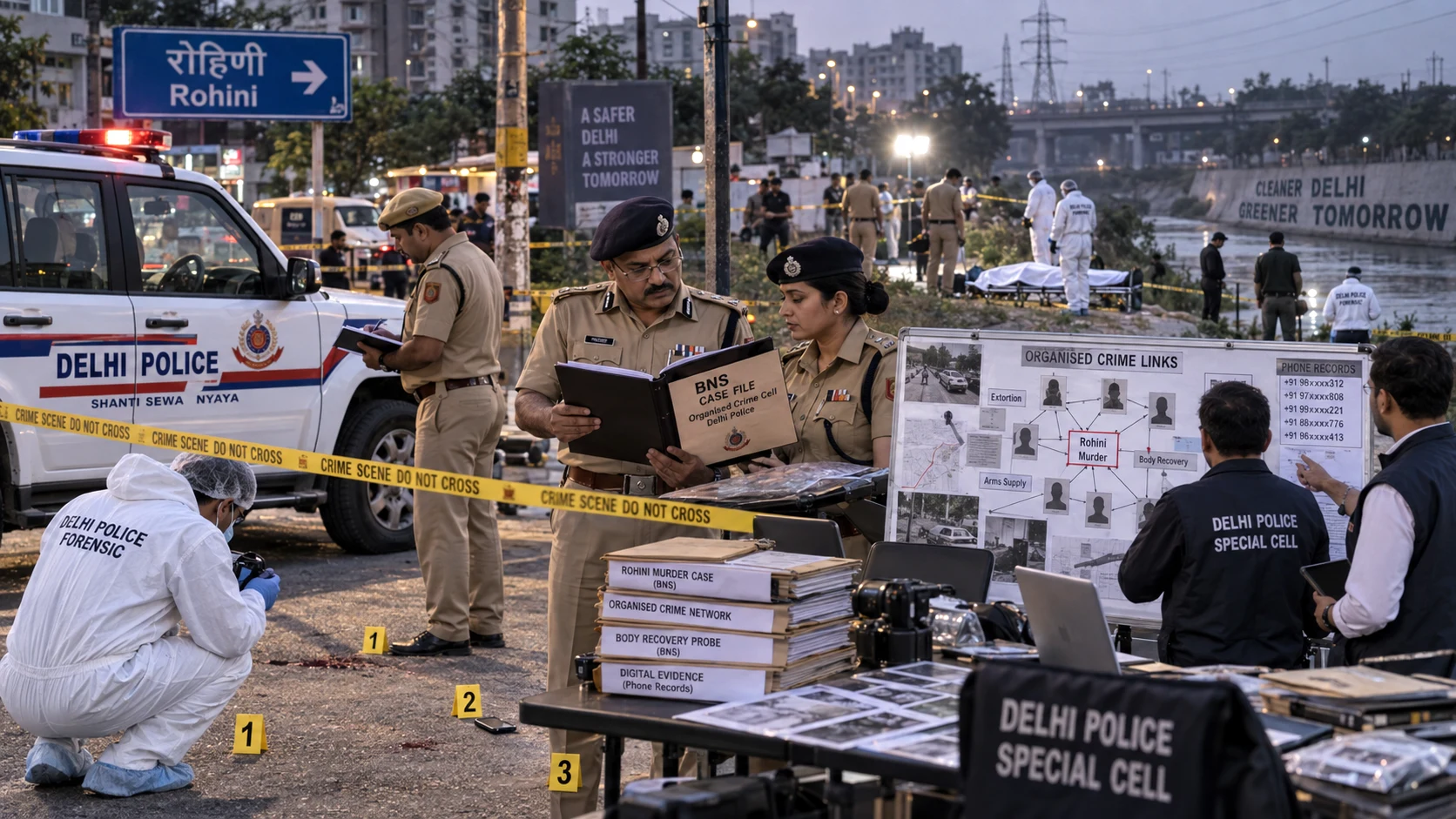
In a separate investigation, Delhi Police have arrested five people in connection with the killing of e-rickshaw driver Abhishek in Rohini Sector 28.
The arrested have been identified by police as Anuj, 19; Himanshu, 21; Sachin, 22; Nandini Tiwari, 19; and Kunti, 18. Police said a knife allegedly used in the incident, vehicles and blood-stained clothing were also recovered during the investigation.
The killing occurred on the night of September 12.
According to the police account reported by The Times of India, the events began after a minor collision involving a motorcycle and a scooter led to an argument.
Abhishek allegedly intervened in that dispute.
Police Reconstruct Altercation Before Stabbing
Police sources said Himanshu allegedly became involved in a physical confrontation with Abhishek.
Investigators allege that Anuj then restrained Abhishek from behind while Sachin, also identified in the report as Sachin alias Santosh, stabbed him with a knife.
Abhishek was taken to hospital but later died from his injuries, according to the police account.
Nandini and Kunti were allegedly present with the group when the incident occurred.
Police said the three arrested men are residents of Shahbad, while the two women are from Jahangirpuri.
These details represent the investigators’ reconstruction at this stage. Arrest does not establish guilt, and the allegations against the five accused remain subject to the legal process.
Recovered Evidence Becomes Part of the Case
Police say the investigation has produced several physical items they believe are relevant to reconstructing the killing.
These include the alleged weapon, the vehicles connected to the group and clothing described by investigators as blood-stained.
Such recoveries may become important evidentiary material, but their significance will depend on forensic examination, witness statements and other evidence presented during the investigation and subsequent court proceedings.
The case should also remain distinct from other recent killings involving e-rickshaw drivers elsewhere in Delhi. Similar occupations or timing do not establish any connection between separate incidents.
Infant’s Body Recovered in Kanjhawala Area
Police are separately investigating the discovery of an infant’s body in the Mubarakpur Dabas area of Kanjhawala.
The body was found near a crematorium on September 14 after police received information and reached the location.
Initial police information estimated the infant to be around two to three months old.
Reports described the body as having been found without the head. Given the sensitive nature of the case, further graphic description is unnecessary.
Police have sent the remains for post-mortem examination and formed teams to determine the circumstances surrounding the death and how the body reached the location.
Police Trying to Establish What Happened Before Body Was Found
Investigators are examining evidence around the crematorium and making local enquiries.
Police have also said efforts are underway to locate the missing part of the body and reconstruct the sequence of events. Senior officers visited the location because of the sensitivity of the discovery.
At this stage, police have not publicly established how the infant died or who was responsible for leaving the body near the crematorium.
It would therefore be premature to assign a motive or identify a suspect without further evidence.
Separate Unidentified Body Found in Swaroop Nagar
A second, unrelated body-recovery case is being investigated in Swaroop Nagar in outer north Delhi.
Police said an unidentified body was discovered at a plot on September 13.
The body was in a decomposed condition and was believed to have been at the location for around two to three days. Investigators also observed injury marks around the neck and chest.
The deceased had not been identified in the latest available report.
Police teams are checking local records and attempting to establish the person’s identity before determining the full circumstances of the death.
The Kanjhawala and Swaroop Nagar discoveries are separate cases, and there is no evidence connecting them.
Why Identification Matters in the Swaroop Nagar Case
Establishing the identity of an unidentified deceased person is often one of the first critical stages in a suspicious-death investigation.
Once identity is confirmed, investigators can examine missing-person reports, recent movements, family contacts and other circumstances that may help reconstruct how the person reached the location.
Post-mortem findings can also help investigators determine the cause and approximate time of death.
Until those steps are completed, visible injuries alone should not be used to present an unverified account of how the death occurred.
Three Developments, Different Investigative Questions
The latest Delhi crime reports involve very different legal and factual circumstances.
The BNS statistics concern the police force’s wider use of legal provisions aimed at alleged organised criminal networks.
The Rohini case is a homicide investigation in which five people have now been arrested following a specific altercation.
The Kanjhawala and Swaroop Nagar cases involve recovered bodies where investigators are still working to establish crucial facts, including identity and cause or circumstances of death.
Combining these developments into a single narrative of a supposed citywide “crime wave” would go beyond the available evidence.
Crime trends require broader, consistent datasets covering comparable offences and time periods, rather than conclusions drawn from several high-profile individual incidents.
Police Enforcement and Due Process
The BNS data also illustrates the distinction between police enforcement numbers and judicial outcomes.
An increase in arrests means more people were taken into custody in connection with cases registered under Sections 111 and 112.
It does not mean every arrested individual will ultimately be convicted.
Similarly, describing a person as part of a criminal syndicate reflects an allegation unless that responsibility has been established through the applicable legal process.
The same principle applies to the five people arrested in the Rohini case.
Police have provided an account of their alleged roles, but criminal responsibility remains for the courts to determine based on admissible evidence.
What Happens Next
Delhi Police are expected to continue using Sections 111 and 112 against cases they identify as involving organised criminal structures.
Future data will be necessary to determine whether the increase in registrations continues through the remainder of 2026 and whether higher arrest and detection figures translate into successful prosecutions.
In Rohini, investigators will continue building the case around the five arrested individuals, including examination of the recovered knife, vehicles and clothing.
In Kanjhawala, the post-mortem examination and efforts to trace the infant’s identity and missing body part will be central to establishing what occurred.
In Swaroop Nagar, identifying the deceased remains a priority before investigators can reconstruct the circumstances of the death.
Bottom Line
Delhi Police recorded 736 cases under BNS Sections 111 and 112 during the first five months of 2026, compared with 634 during the same period last year. Arrests rose from 769 to 1,232, reflecting both increased use of the organised-crime provisions and intensified enforcement against alleged networks.
Separately, five people have been arrested in connection with the September 12 killing of e-rickshaw driver Abhishek in Rohini Sector 28. Police say the confrontation began after a minor road collision and have recovered an alleged weapon and other evidence.
Two unrelated body discoveries are also under investigation: an infant’s body recovered near a crematorium in Kanjhawala and an unidentified decomposed body found in Swaroop Nagar.
The cases remain factually and legally separate. Each requires its own investigation, evidence and judicial process rather than conclusions based on their proximity in the news cycle.
Key Takeaway
Delhi Police recorded a 16% rise in cases under BNS Sections 111 and 112 in early 2026.
Five people have been arrested in the Rohini e-rickshaw driver murder case.
Separate investigations are underway into body recoveries in Kanjhawala and Swaroop Nagar.
These are distinct developments, not a single connected crime series.
The Rajatheertha Team publishes news, explainers, guides and updates across India and the world. Our coverage follows Rajatheertha's editorial, verification and corrections standards.
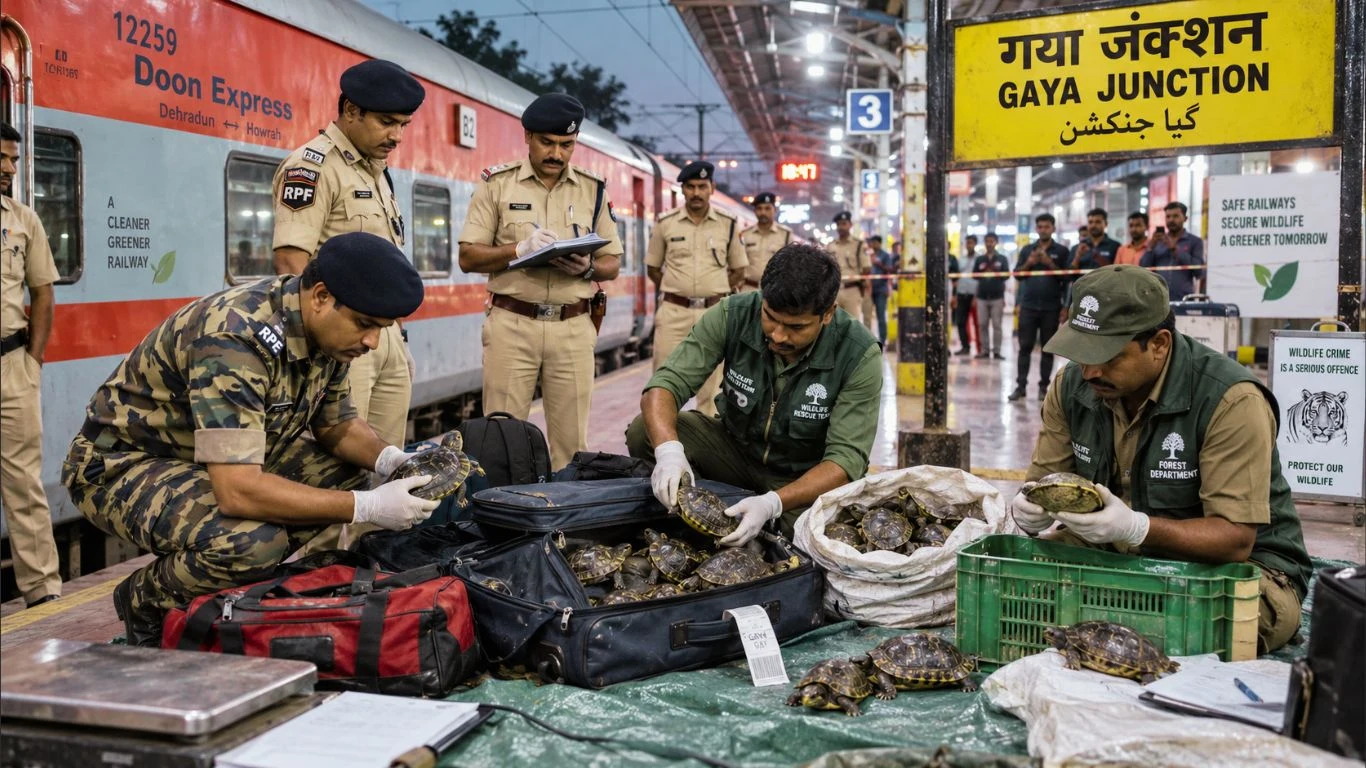
RPF and GRP personnel recovered the turtles from two sacks and a backpack left outside the toilet of sleeper coach S-8 on the Rishikesh-Howrah Doon Express. No one was arrested at the scene, and the animals have been handed to the Gaya Forest Department for identification and further legal action.
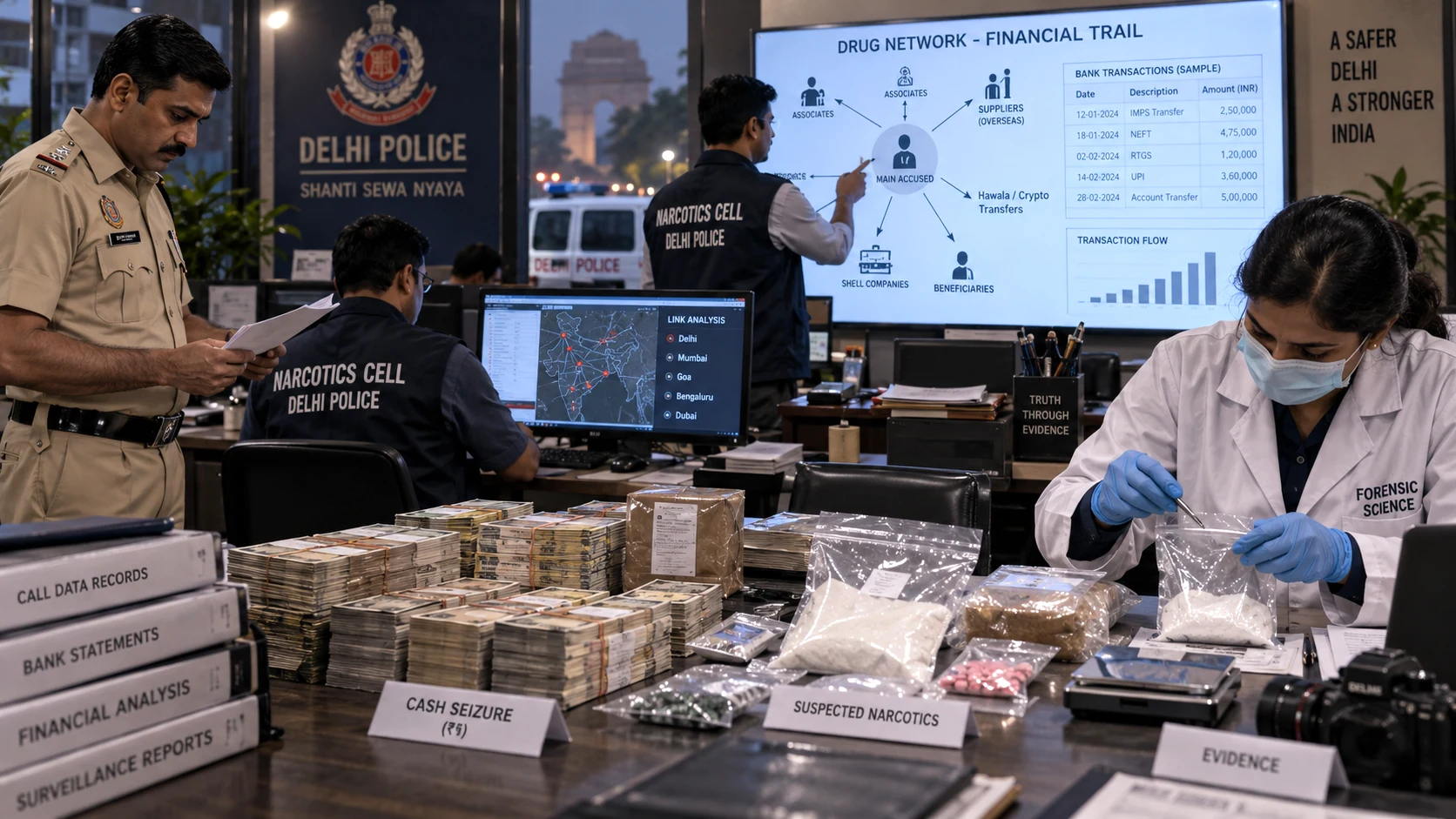
The investigation began with two alleged local peddlers arrested in April and later expanded across southeast Delhi, Noida and Faridabad. Police say the latest operation exposed an alleged supply chain involving distributors, transporters, suppliers and a stockist.
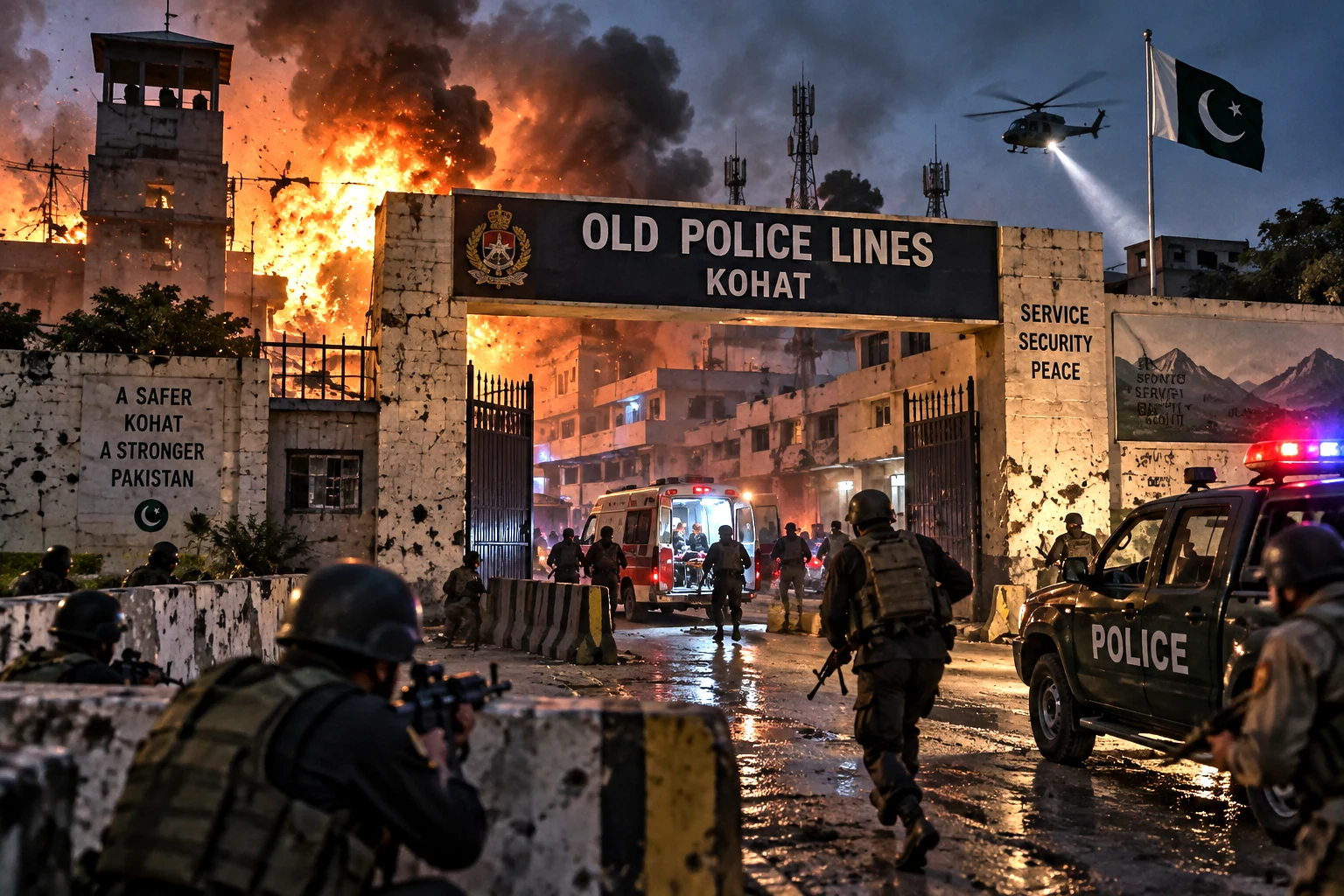
At least 24 people are reported dead after a coordinated suicide bombing and armed assault on the Old Police Lines complex in Kohat, northwestern Pakistan, while investigators examine how the attackers breached the heavily guarded compound and whether facilitators or cross-border militant networks w
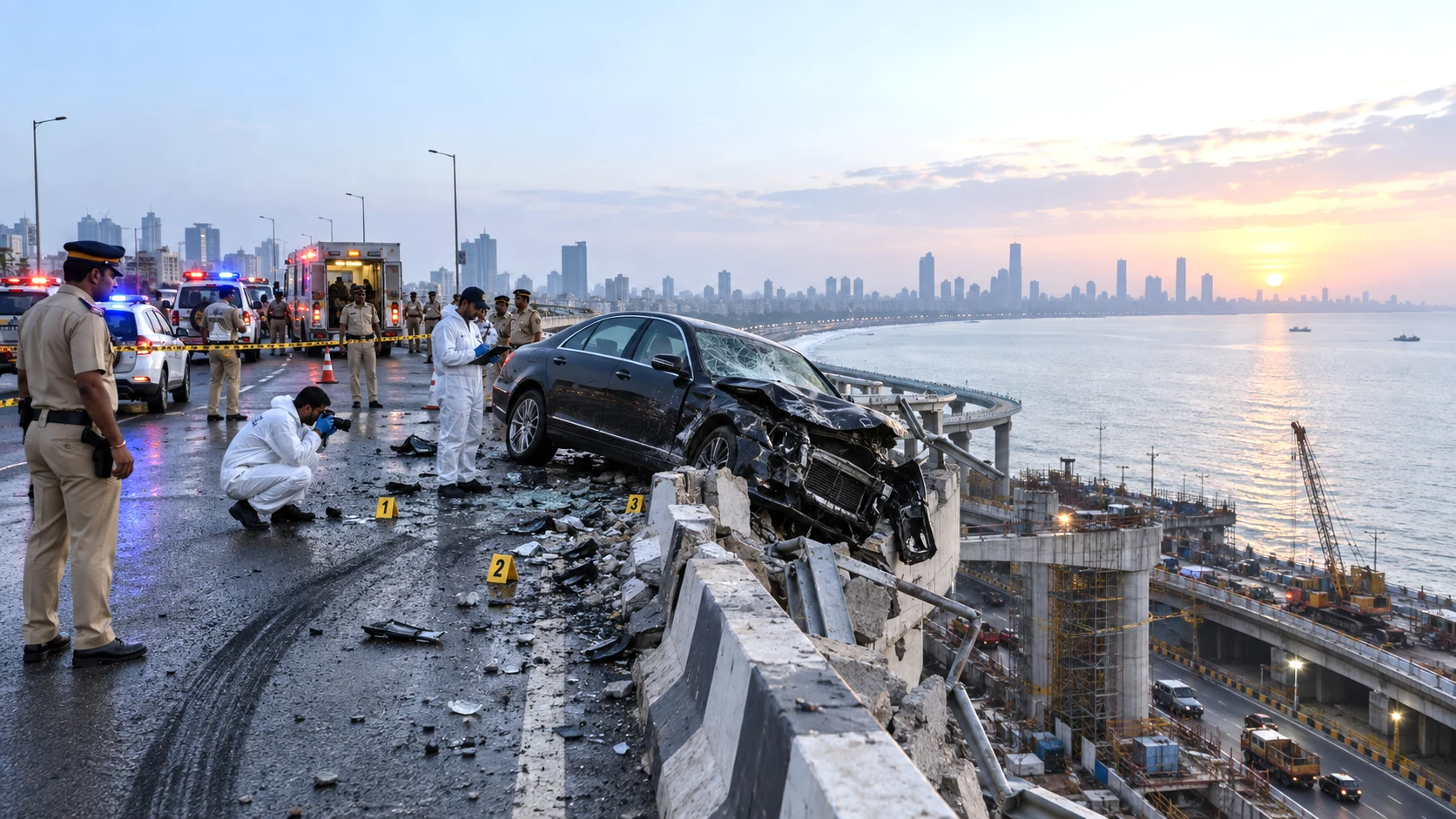
Three students were killed and another was critically injured after a BMW crashed through the outer barrier of Mumbai’s Coastal Road and plunged nearly 75 feet early Sunday morning. Police said excessive speed is suspected, while the circumstances surrounding the crash remain under investigation.
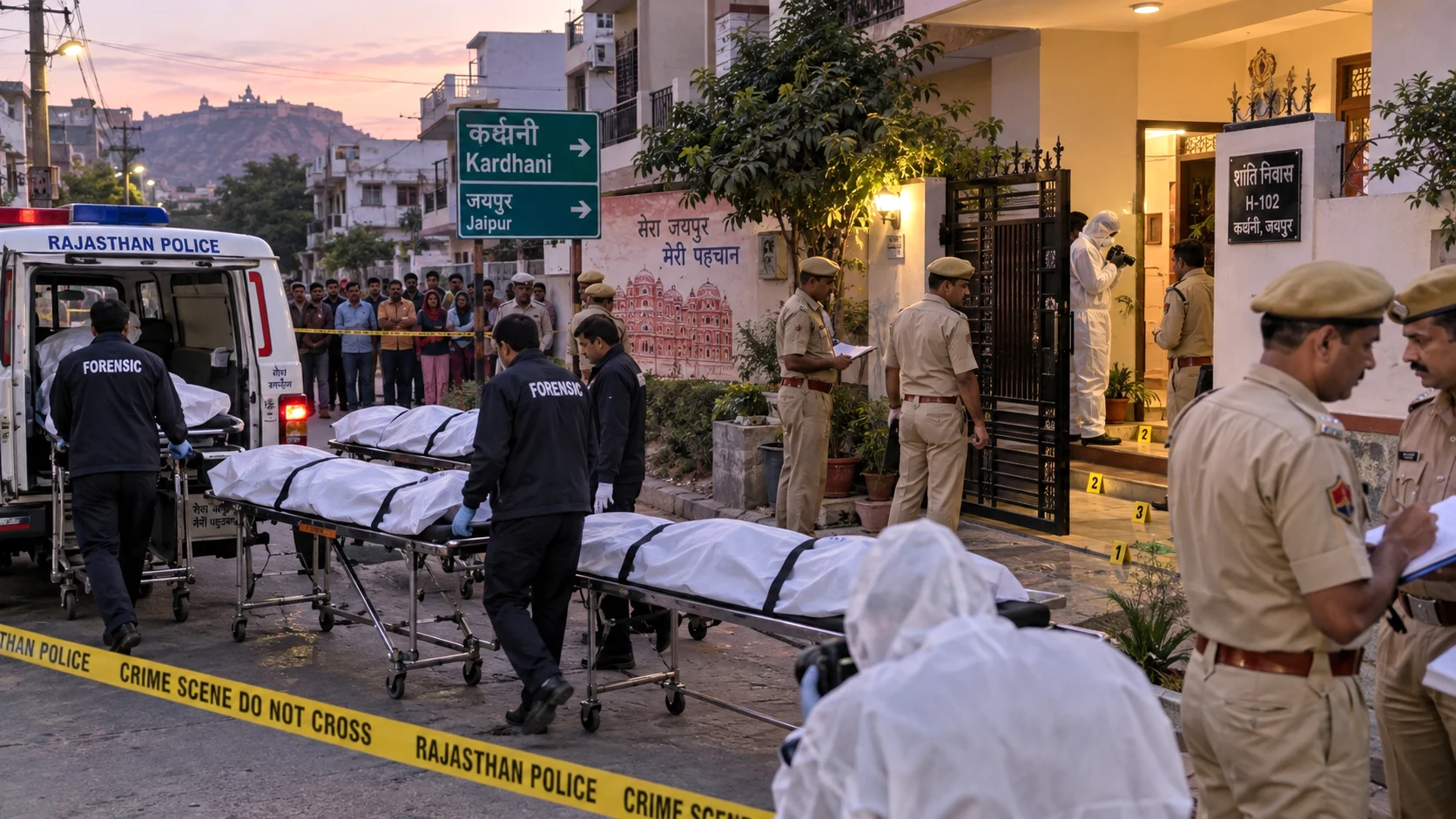
Rahul Jha was tracked through CCTV footage and arrested in Reengus after his wife Geeta and their three daughters were found dead at their Govind Vatika home in Jaipur’s Kardhani area. Police say he admitted to the killings during preliminary questioning, but investigators are still corroborating hi
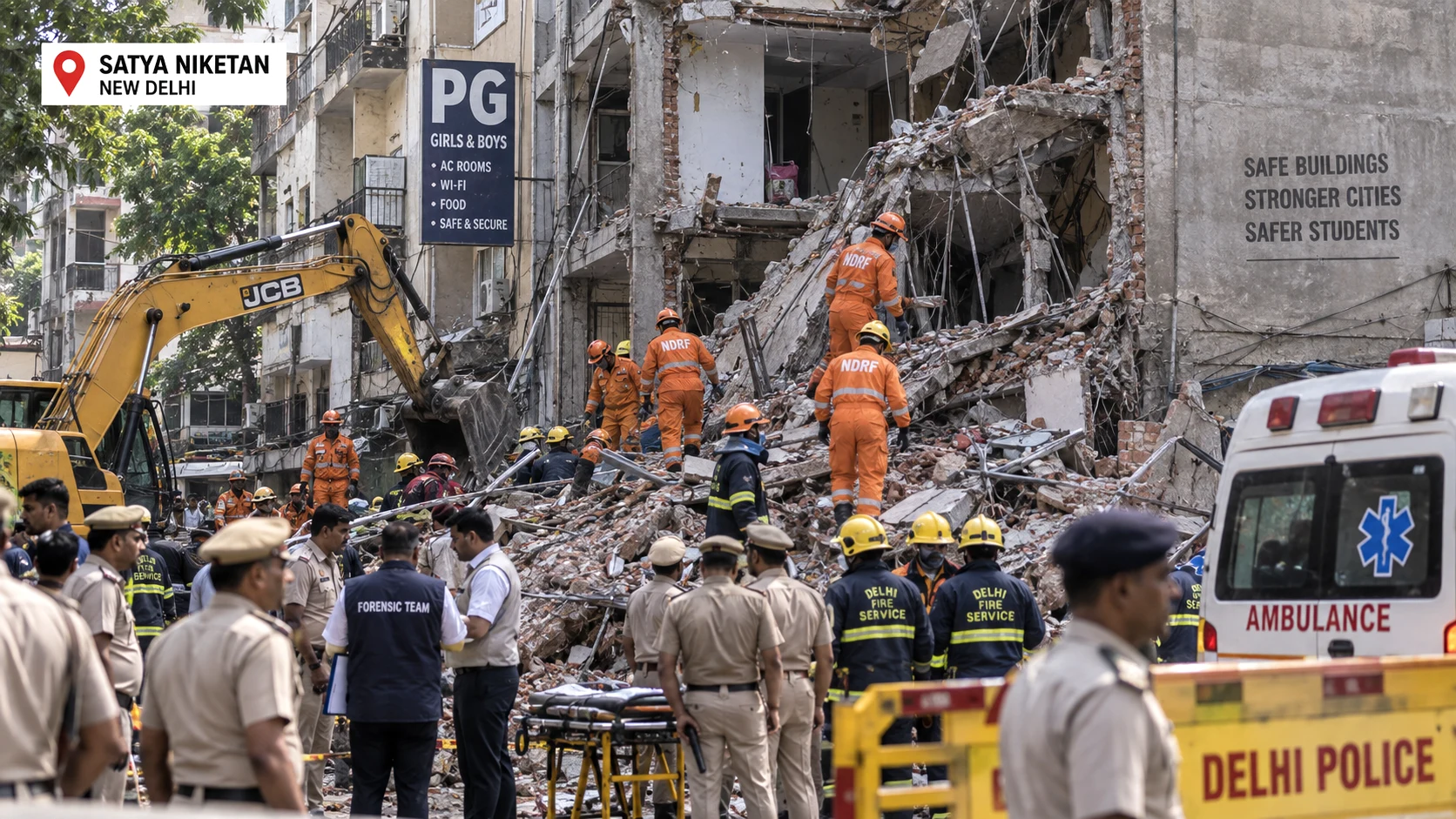
Delhi Police have arrested a PG operator and labour contractor as the Satya Niketan building collapse probe widens into repairs, structural alterations and management.


0 Comments