Delhi Satya Niketan Building Collapse: More Arrests as Probe Widens Into PG Operations and Repairs
Delhi Police have arrested a PG operator and labour contractor as the Satya Niketan building collapse probe widens into repairs, structural alterations and management.
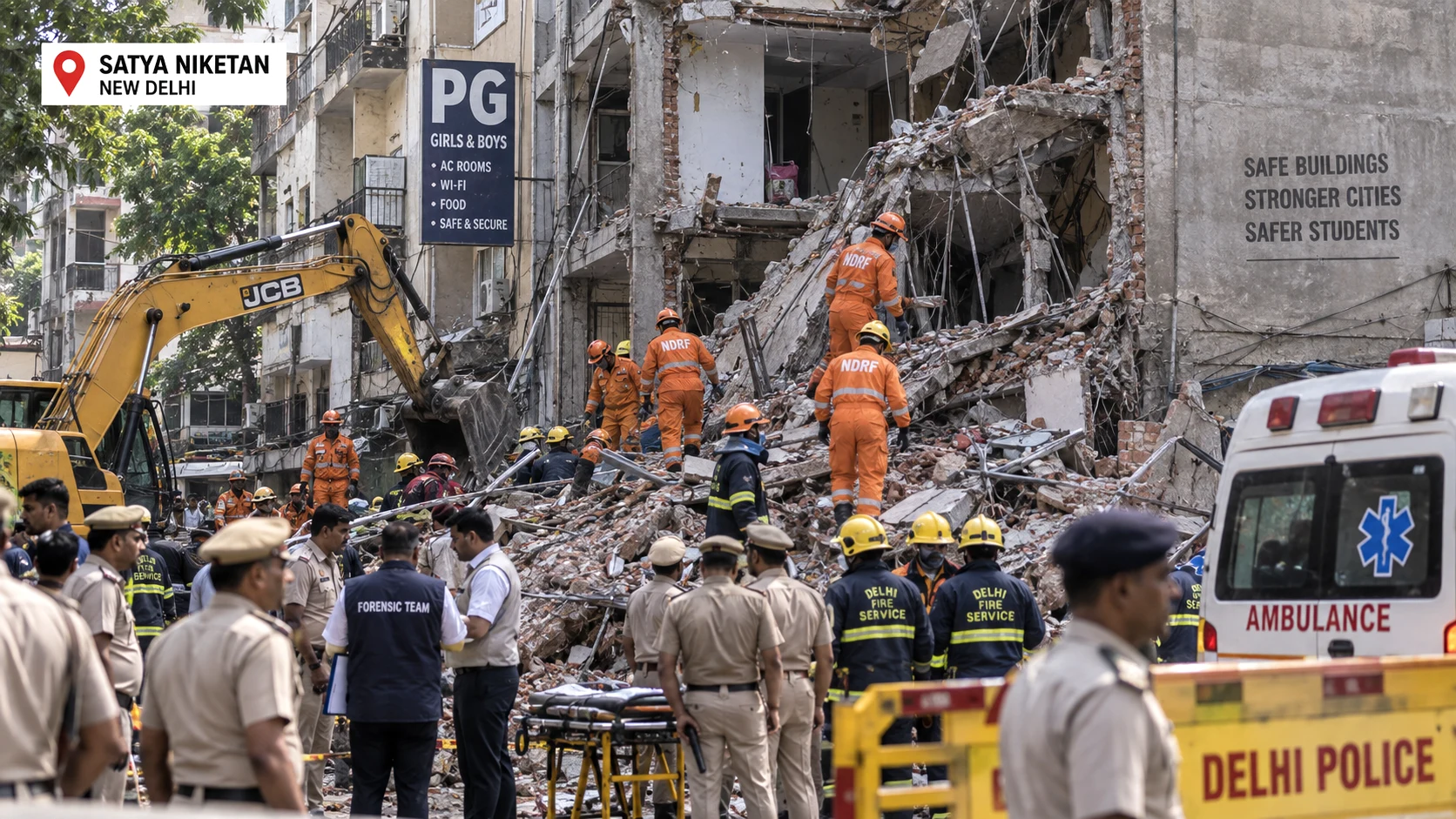
Police and rescue personnel at the Satya Niketan building collapse site in Delhi as investigators examine PG safety and renovation work
Table of Contents (17 sections)
New Delhi, September 10, 2026: The investigation into the deadly Satya Niketan building collapse has widened, with Delhi Police arresting a paying guest accommodation operator and a labour contractor as investigators examine renovation work, alleged structural alterations and the management of the decades-old property.
The five-storey building, which was being used as a boys’ PG near Delhi University’s South Campus, collapsed on September 6, killing seven people.
Police have now arrested PG operator Sudhanshu, labour contractor Sanoj, property owners Hariram Gupta and Urmila Gupta, and their son Mahesh Gupta in connection with the case.
Investigators are examining whether construction and repair work being carried out in and around the basement weakened the structure. Police are also investigating an allegation that a wall was removed during renovation shortly before the collapse.
However, the final cause of the structural failure has not yet been established, and these allegations remain part of the ongoing investigation.
Recommended Reading
Related Stories & In-Depth Guides
Curated editorial perspectives matching this topic.
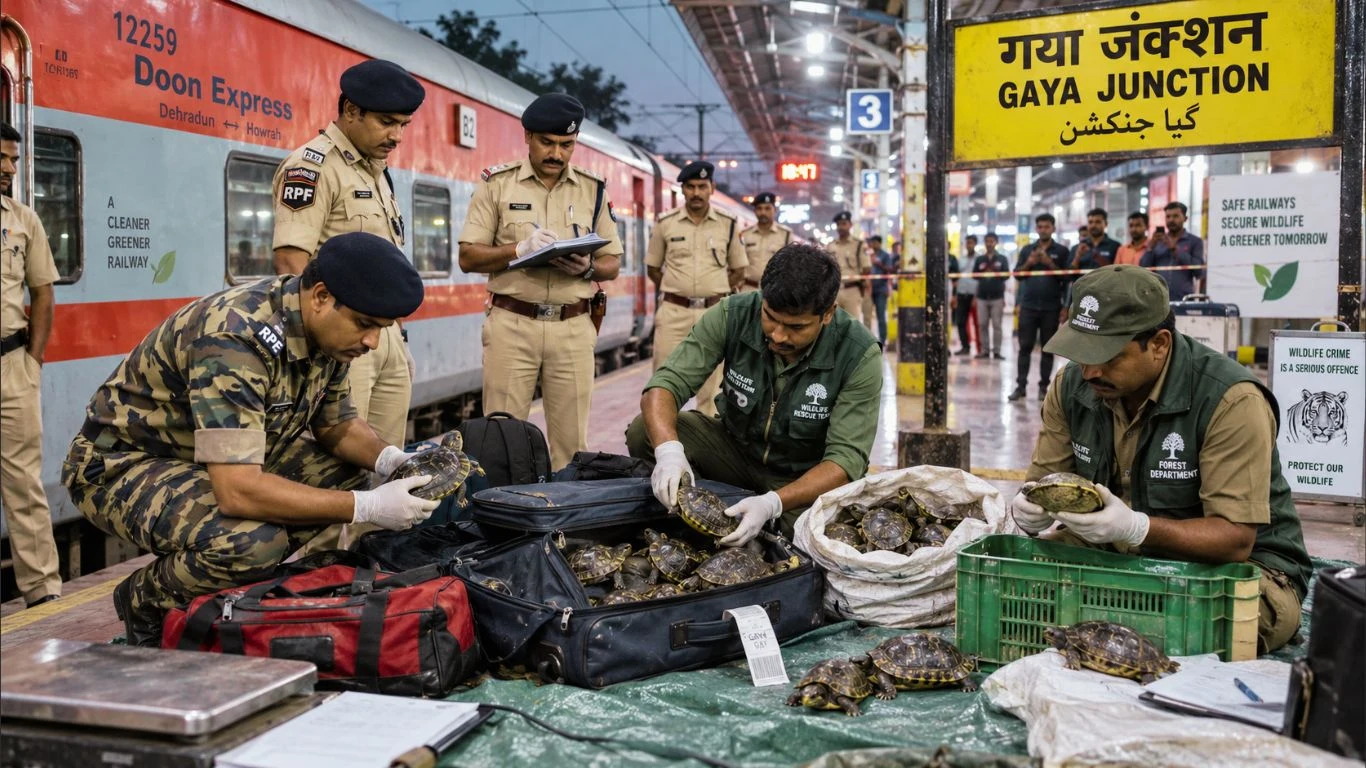
RPF and GRP personnel recovered the turtles from two sacks and a backpack left outside the toilet of sleeper coach S-8 on the Rishikesh-Howrah Doon Express. No one was arrested at the scene, and the animals have been handed to the Gaya Forest Department for identification and further legal action.
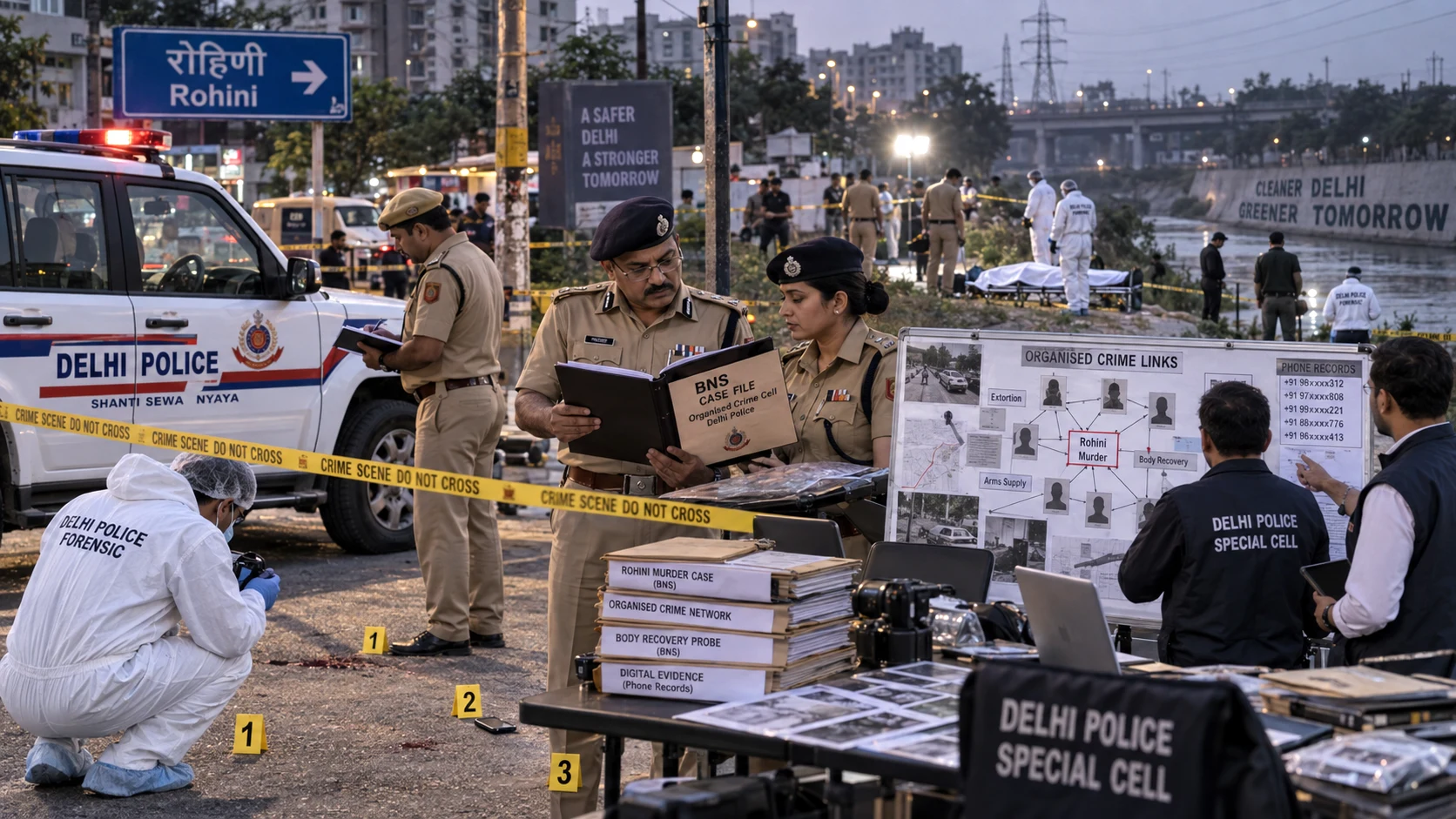
Registrations under the Bharatiya Nyaya Sanhita’s organised and petty organised crime provisions rose 16% in the first five months of 2026, while police separately arrested five people over an e-rickshaw driver’s killing and opened investigations into two unrelated body discoveries in outer Delhi.
The tragedy has, meanwhile, triggered action well beyond the individual building. The Municipal Corporation of Delhi has intensified inspections and enforcement against dangerous and unauthorised properties, the Delhi High Court has intervened over PG safety, and the Supreme Court is considering broader scrutiny of student accommodation.
Table of Contents
What is the latest in the Satya Niketan collapse?
PG operator Sudhanshu arrested
Labour contractor arrested as wall removal is investigated
Five people arrested so far
How was the property being operated?
What investigators are examining
Rental agreement comes under scrutiny
What caused the building to collapse?
Seven people died in the tragedy
MCD expands crackdown after collapse
Delhi High Court intervenes on PG safety
The Supreme Court considers wider scrutiny
Why student PG safety has become a larger issue
What happens next?
Key takeaway
PG Operator Arrested in Satya Niketan Collapse Case
Delhi Police arrested 31-year-old Sudhanshu, who operated the PG accommodation from the collapsed building under the name Hostel Daze.
According to police information reported by The Indian Express, Sudhanshu and his business partner Shubham Tyagi had been running PG facilities in the Satya Niketan area since 2022.
The pair took four floors of the building on lease in August 2025 for approximately ₹1.05 lakh per month.
Police said Sudhanshu was involved in installing facilities for tenants, maintenance and overseeing repair and construction work required at the property.
Investigators are now questioning him about the management of the building, the work being carried out and events surrounding the collapse.
Police have said the building was available at a lower rent partly because of its poor condition.
That detail is now relevant to investigators as they examine what those operating the PG knew about the condition of the property and what repairs or alterations were subsequently undertaken.
These questions remain part of the investigation and do not by themselves establish criminal liability.
Police Also Arrest Labour Contractor
Another significant development concerns labour contractor Sanoj.
Police traced and apprehended him in Kasganj, Uttar Pradesh, as investigators focused increasingly on the renovation work taking place at the property.
India Today reported on September 10 that the contractor told investigators that a wall had been removed before the building collapsed.
Police are examining whether that alleged alteration, basement renovation, debris accumulation or other construction activity contributed to the structural failure.
This is an important distinction for accurate reporting.
The allegation that a wall was removed is now part of the police investigation.
It should not yet be presented as the established cause of the collapse.
Structural failures can involve several interacting factors, and investigators will need to determine whether the work affected load-bearing elements or otherwise compromised the building.
Five People Reported Arrested in the Case
The latest developments bring the reported number of arrests to five.
Those arrested include:
Hariram Gupta
Urmila Gupta
Mahesh Gupta
labour contractor Sanoj
PG operator Sudhanshu
Hariram and Urmila were sent to 14 days’ judicial custody, while Mahesh was initially remanded to police custody.
Sudhanshu and Sanoj were subsequently taken into custody as investigators widened the probe.
Police are also seeking Sudhanshu’s business partner Shubham Tyagi, who was reported to be absconding as of the latest available reports.
No guilt should be presumed merely from an arrest.
Criminal responsibility will ultimately depend on the evidence gathered by investigators and findings of the courts.
Who Owned and Managed the Building?
The ownership and management structure is an important part of the investigation.
The property was registered in the name of Urmila Gupta, while police say her husband Hariram and son Mahesh were involved in its management.
According to statements attributed to Mahesh during the investigation, the building had been leased to Sudhanshu and Shubham Tyagi in August 2025 for operation as a student PG.
Mahesh reportedly told investigators that he looked after maintenance on behalf of his parents.
Police are consequently examining several different layers of responsibility:
the ownership of the property, maintenance decisions, PG operations, construction and repair work, and regulatory oversight.
Determining who authorised particular structural changes will be especially important.
Rental Agreement Comes Under Police Scrutiny
The lease arrangements have also attracted attention.
The Indian Express reported that a rental agreement accessed during its reporting contained language appearing to attempt to absolve property owners from responsibility for casualties or deaths involving students living there.
Police said Sudhanshu was allegedly involved in getting rent agreements signed.
The existence of such a contractual clause does not automatically determine legal responsibility following a fatal building collapse.
Questions of negligence, statutory obligations, building safety and criminal liability are governed by applicable law and ultimately assessed by investigators and courts.
Nevertheless, the agreement has become relevant to the investigation because it may help establish how the PG was operated and what risks or responsibilities were contemplated by those involved.
What Repairs Were Taking Place?
Investigators are paying particular attention to the basement and ground floor.
According to information attributed to Mahesh during questioning, repair work had been underway in the basement for approximately eight to ten days.
Waste and rainwater had reportedly accumulated there during the monsoon period.
Work was also reportedly being undertaken on the ground floor in connection with expansion for commercial use.
Residents had earlier told AP that labourers were carrying out digging work in the basement before the collapse.
Delhi Chief Minister Rekha Gupta said preliminary findings indicated that water accumulation and ongoing repair work in the ageing building were among the factors being examined.
Police are now trying to establish exactly what work was performed, who authorised it and whether any structural components were affected.
What Caused the Satya Niketan Building to Collapse?
This remains the most important unanswered question.
Several possible contributing factors have emerged:
the age and condition of the building;
basement renovation;
water accumulation;
alleged removal of a wall;
structural modifications;
additional construction; and
possible regulatory violations.
But authorities have not announced a final engineering conclusion identifying a single definitive cause.
That means headlines stating that one particular renovation or one removed wall “caused” the collapse would currently go beyond the established evidence.
The investigation will need to reconstruct the building’s original structure, subsequent additions, repair history and condition immediately before the collapse.
Structural experts may also need to determine whether modifications affected load distribution or weakened critical components.
Seven People Killed in the Collapse
The tragedy occurred on Sunday, September 6, in the densely populated Satya Niketan area near Delhi University’s South Campus.
The building was approximately five storeys high and was being used primarily to accommodate students.
Rescue operations continued for more than a day as police, firefighters and disaster-response teams searched through the debris.
The final reported death toll rose to seven.
The deaths transformed what might otherwise have been treated as an isolated building violation into a much broader debate over the safety of private student housing in Delhi.
Satya Niketan contains numerous PG accommodations serving students who attend nearby colleges.
For many students who cannot obtain university hostel accommodation, private PGs are a practical necessity.
That makes enforcement of structural, fire and building-safety standards particularly important.
MCD Intensifies Enforcement Across Delhi
The Municipal Corporation of Delhi has launched a wider enforcement drive following the tragedy.
According to The Indian Express, the civic body carried out 34 demolition actions and sealed 17 properties on Wednesday across its 12 zones.
It also issued additional demolition orders and show-cause notices concerning unauthorised construction and sealing.
The MCD has been carrying out surveys of PG accommodations in Satya Niketan as authorities attempt to identify potentially dangerous properties.
The civic response is not limited to the building that collapsed.
Authorities are examining unauthorised construction, misuse of properties and violations of Delhi’s building rules across a much wider area.
Five MCD officials associated with building-safety oversight in the area were also suspended following the collapse.
Suspension, like arrest, should not automatically be interpreted as a final finding of personal wrongdoing.
Delhi High Court Orders Wider Scrutiny
The Delhi High Court has also intervened.
The court directed the MCD to inspect PG hostels under its jurisdiction and determine whether they had been constructed with appropriate permissions and whether building bye-laws had been violated.
It also sought a high-level inquiry into the Satya Niketan collapse and scrutiny of possible regulatory lapses.
The legal proceedings have now expanded further.
On September 9, the High Court issued notice to the Centre, the Delhi government and Delhi University on another PIL seeking a time-bound policy for expanding student hostel facilities.
That petition argues that inadequate institutional hostel capacity leaves large numbers of students dependent on private accommodation.
The matter is scheduled to be heard again on September 25, alongside another petition seeking an independent investigation and stronger regulation of PG and hostel facilities.
Supreme Court Could Examine Wider PG Safety Issue
The Satya Niketan tragedy has also reached the Supreme Court.
A court-appointed amicus curiae has asked the Supreme Court to expand an existing exercise dealing with illegal construction to cover PG accommodation, private hostels and similar student housing facilities.
The proposed inspections would examine issues including sanctioned building plans, actual construction, number of floors, basement alterations, structural safety, fire compliance, land use and emergency access.
The Supreme Court indicated that it would consider the issue.
This is an important point for reporting: the court’s consideration of wider inspections should not yet be described as a completed nationwide PG audit order unless such a direction is formally issued.
The judicial scrutiny nevertheless demonstrates how quickly the Satya Niketan case has developed from a local building collapse into a broader student-safety issue.
Why Delhi’s PG Safety Question Is Bigger Than One Building
The tragedy highlights a structural problem affecting university neighbourhoods.
Thousands of students travel to Delhi for higher education every year.
University and college hostel capacity cannot accommodate everyone.
Private PGs, rented rooms and independently operated hostels therefore fill the gap.
This creates an important housing market around areas such as Satya Niketan.
But student accommodation is not safe simply because it contains beds, Wi-Fi and other amenities.
A building being used to house large numbers of students also needs appropriate structural stability, fire precautions, safe exits and compliance with land-use and building regulations.
The Satya Niketan investigation is now testing whether those safeguards were present in this case and whether the regulatory system adequately identifies dangerous properties before a disaster occurs.
Accountability Must Follow Evidence
Seven deaths understandably create demands for accountability.
But determining responsibility requires separating several different questions.
Who owned the building?
Who managed it?
Who operated the PG?
Who authorised renovations?
What exactly did contractors change?
Were structural engineers consulted?
Were additional floors authorised?
Did authorities know about any violations?
Were inspections carried out?
And if violations existed, which officials or private parties had legal responsibility to correct them?
These questions cannot be answered simply by identifying one owner, tenant, contractor or civic official.
The investigation needs to establish a chain of decisions and determine which actions, if any, contributed to the collapse.
That is particularly important in a criminal case where allegations of negligence may ultimately have to be proved in court.
What Happens Next?
The investigation is now moving in several directions simultaneously.
Delhi Police are questioning those arrested and tracing others associated with the operation and maintenance of the PG.
Investigators are examining the renovation work and alleged structural alterations.
Civic authorities are surveying other PG properties and taking action against unauthorised construction.
The Delhi High Court is examining both regulatory accountability and the broader shortage of student hostel accommodation.
And the Supreme Court is considering whether its scrutiny of illegal and unsafe structures should extend further into private student housing.
For families who lost loved ones, however, the central questions remain much simpler:
Why did this building collapse, could the deaths have been prevented, and who was responsible for ensuring that students were living in a structurally safe property?
Those questions have not yet received final answers.
The latest arrests are an important stage in the investigation — but they are not the conclusion.
Until structural findings and the police investigation establish the chain of events, allegations surrounding basement work, wall removal, unauthorised construction and negligence must continue to be reported carefully as matters under investigation.
What the tragedy has already established is the need for closer scrutiny of the buildings in which students live.
Seven people died in Satya Niketan.
The wider challenge for Delhi’s authorities is ensuring that another unsafe PG does not produce the same outcome.
Key Takeaway
The Satya Niketan building collapse investigation has widened with the arrests of PG operator Sudhanshu and labour contractor Sanoj, bringing the reported total to five.
Police are examining basement renovations, alleged wall removal, water accumulation and the management of the property.
The cause of the collapse has not yet been officially established.
Seven people died on September 6. Civic enforcement, High Court scrutiny and possible Supreme Court expansion of building-safety inspections are now underway.
Accountability will depend on evidence, not assumptions.
The Rajatheertha Team publishes news, explainers, guides and updates across India and the world. Our coverage follows Rajatheertha's editorial, verification and corrections standards.
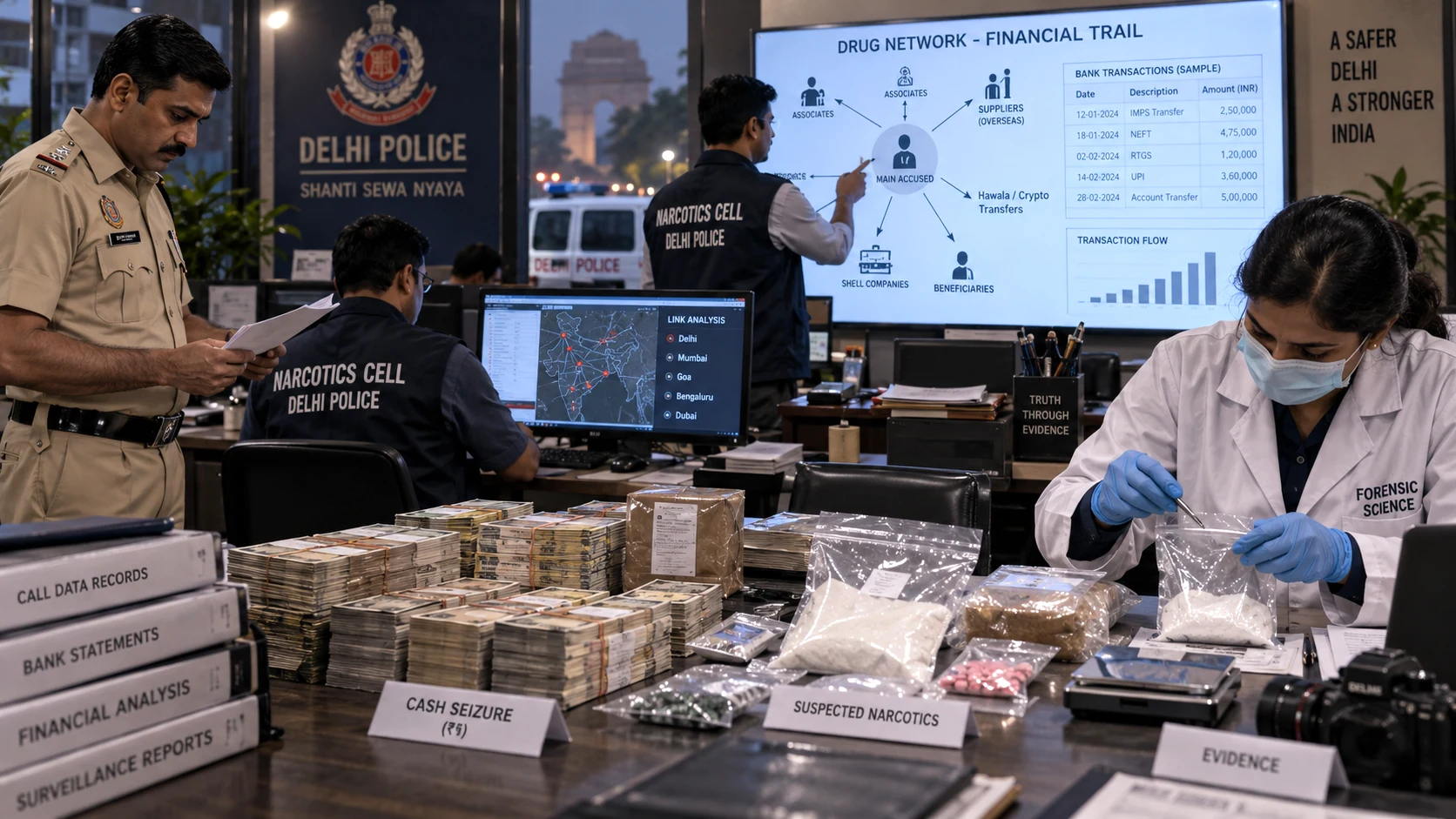
The investigation began with two alleged local peddlers arrested in April and later expanded across southeast Delhi, Noida and Faridabad. Police say the latest operation exposed an alleged supply chain involving distributors, transporters, suppliers and a stockist.
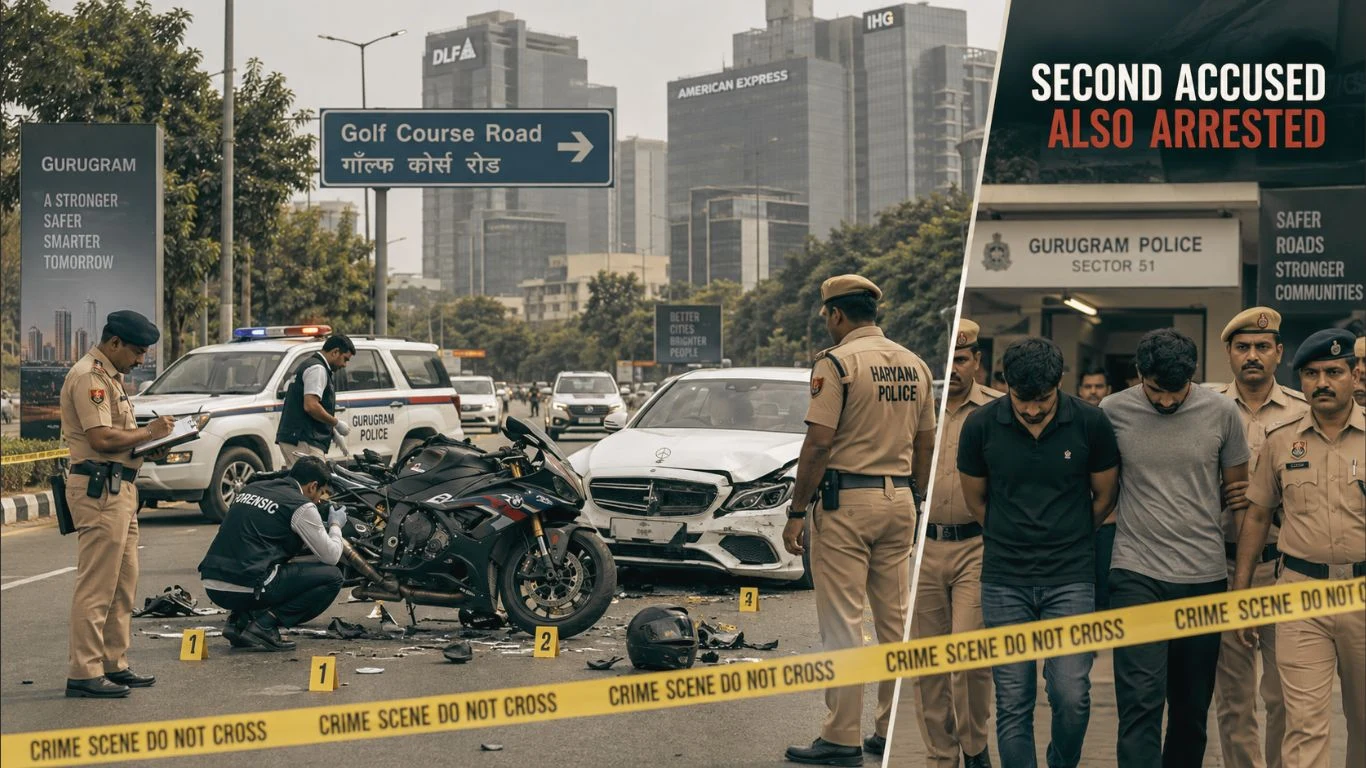
Police have arrested Kalyan Bainsla and his cousin Lavnish, who was allegedly inside the car during the September 13 Golf Course Road incident involving biker Shivani Chauhan, alias Sia. Investigators have added an attempt-to-murder charge after examining video evidence, while Sia is seeking action
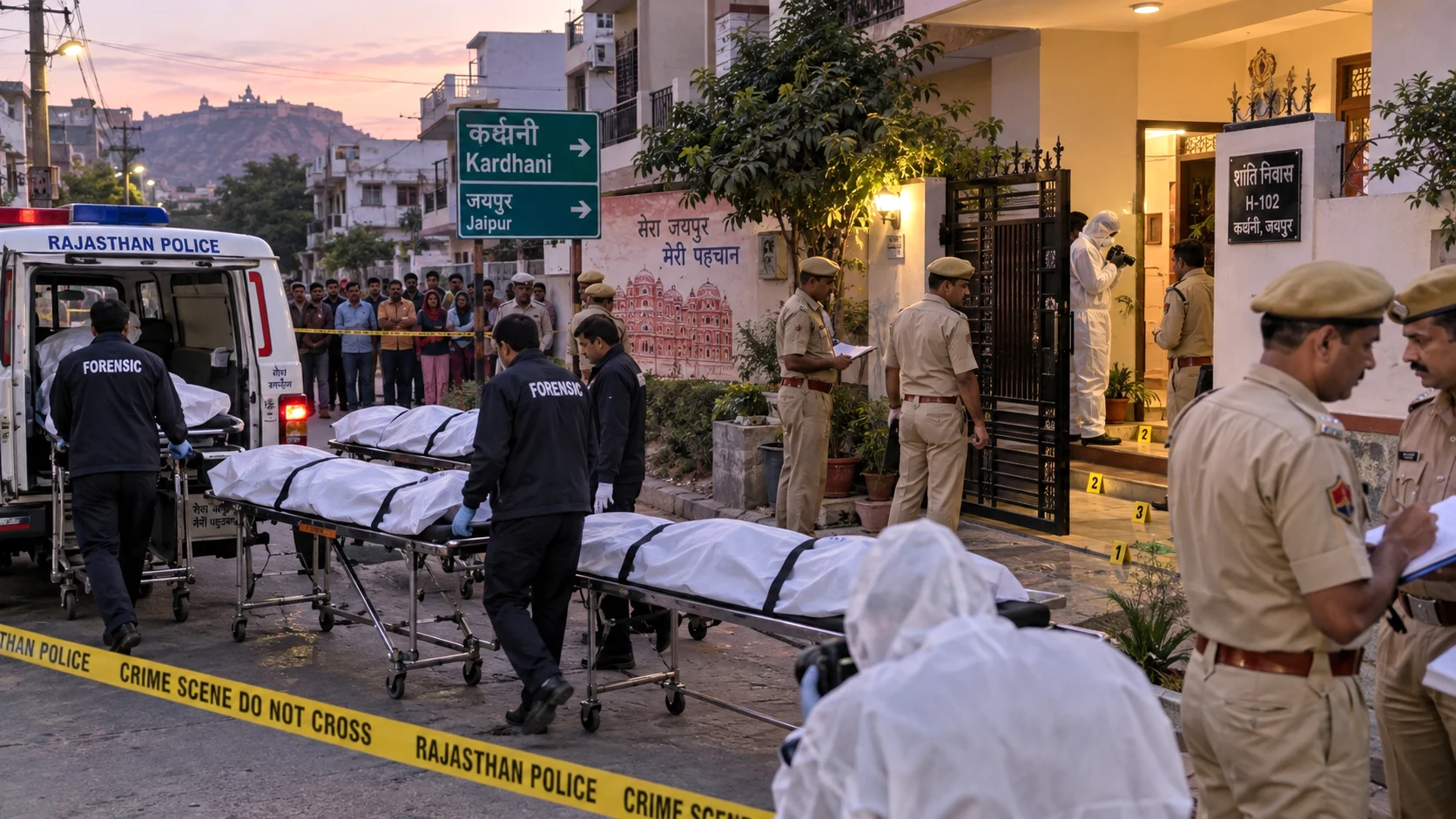
Rahul Jha was tracked through CCTV footage and arrested in Reengus after his wife Geeta and their three daughters were found dead at their Govind Vatika home in Jaipur’s Kardhani area. Police say he admitted to the killings during preliminary questioning, but investigators are still corroborating hi
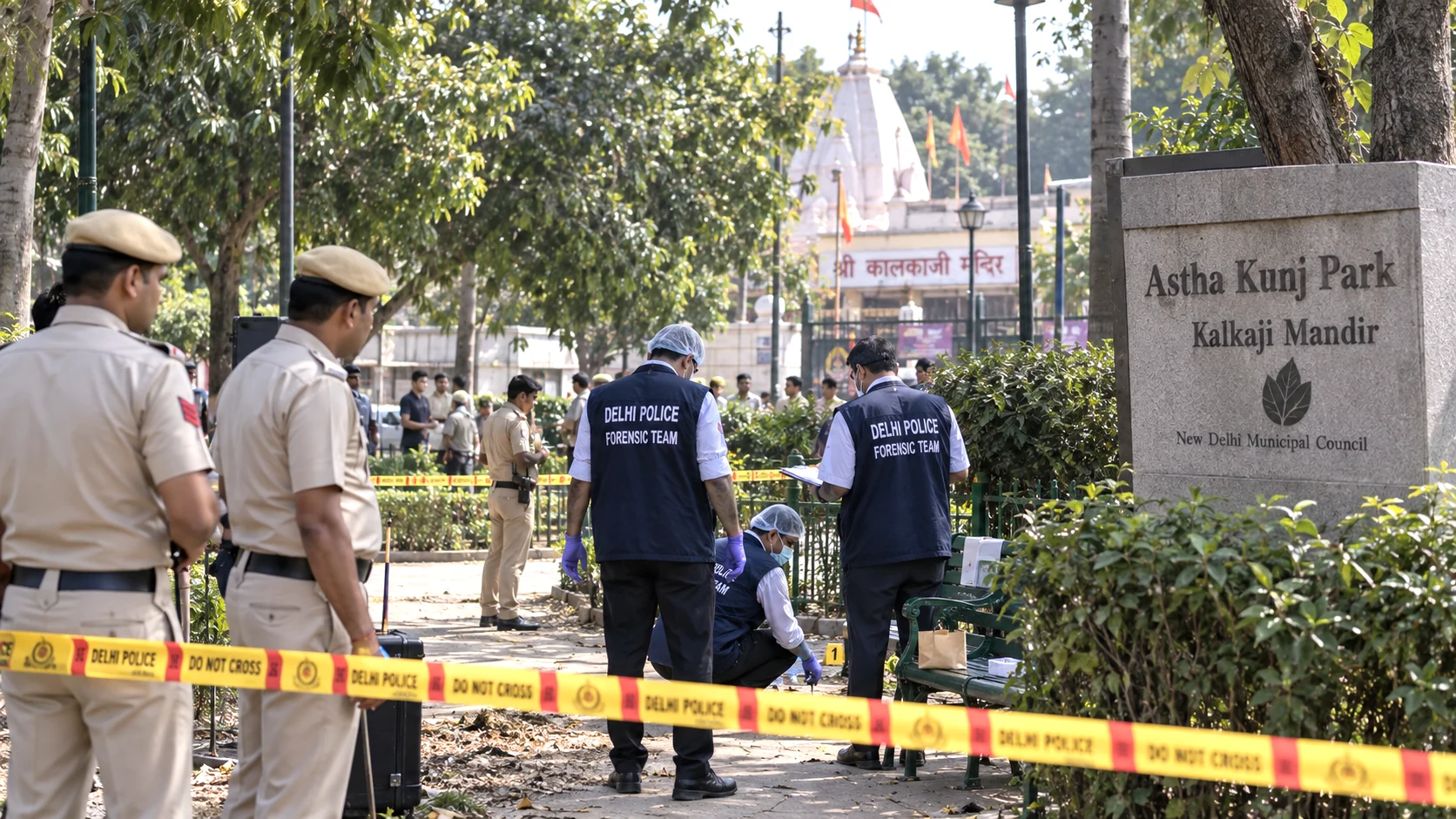
Delhi Police have arrested three men accused of posing as police personnel and sexually assaulting a minor at Astha Kunj Park near Kalkaji Mandir. One accused was injured during a police interception after allegedly opening fire.
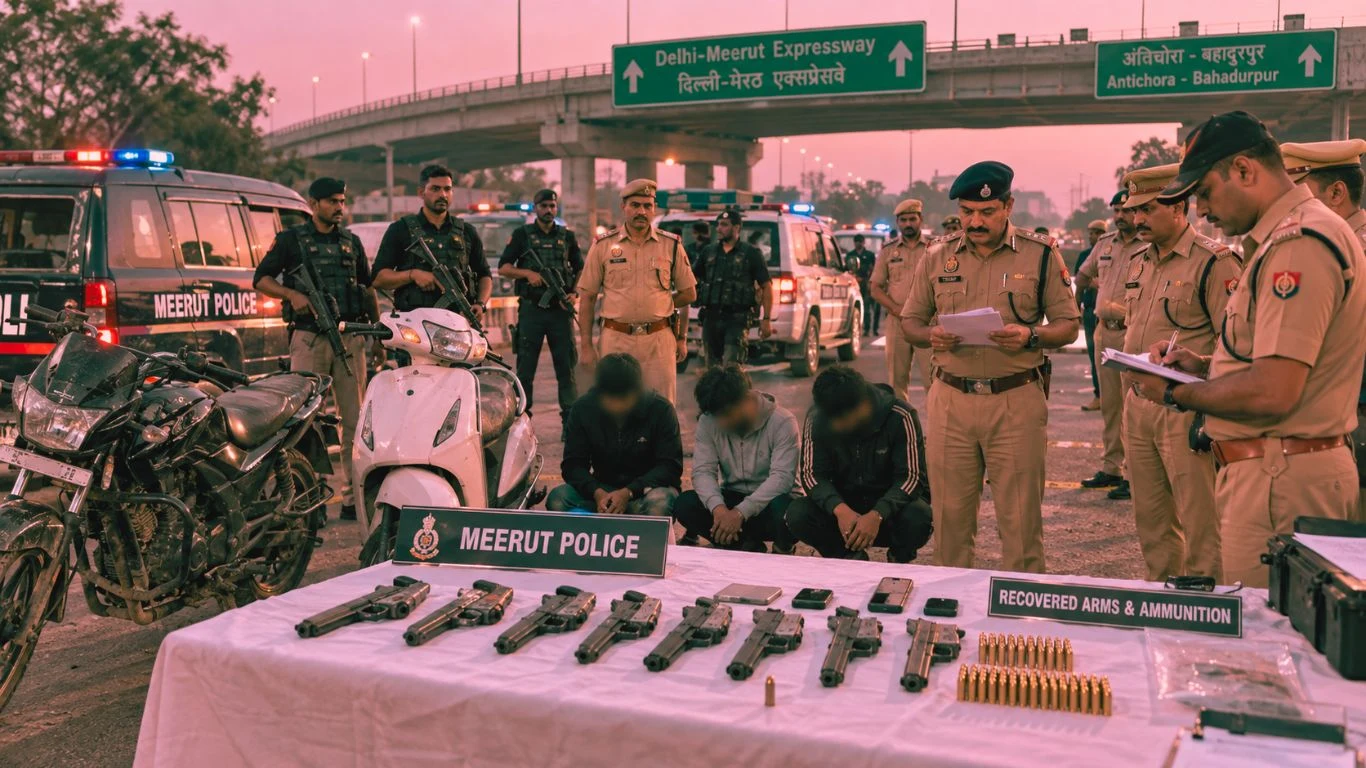
Meerut Police recovered seven .32-bore pistols, 20 live cartridges and vehicles after an operation near the Delhi-Meerut Expressway. Police-based reporting says accused Aamir allegedly admitted supplying more than 100 illegal pistols and investigators are examining claims of previous supplies to peo
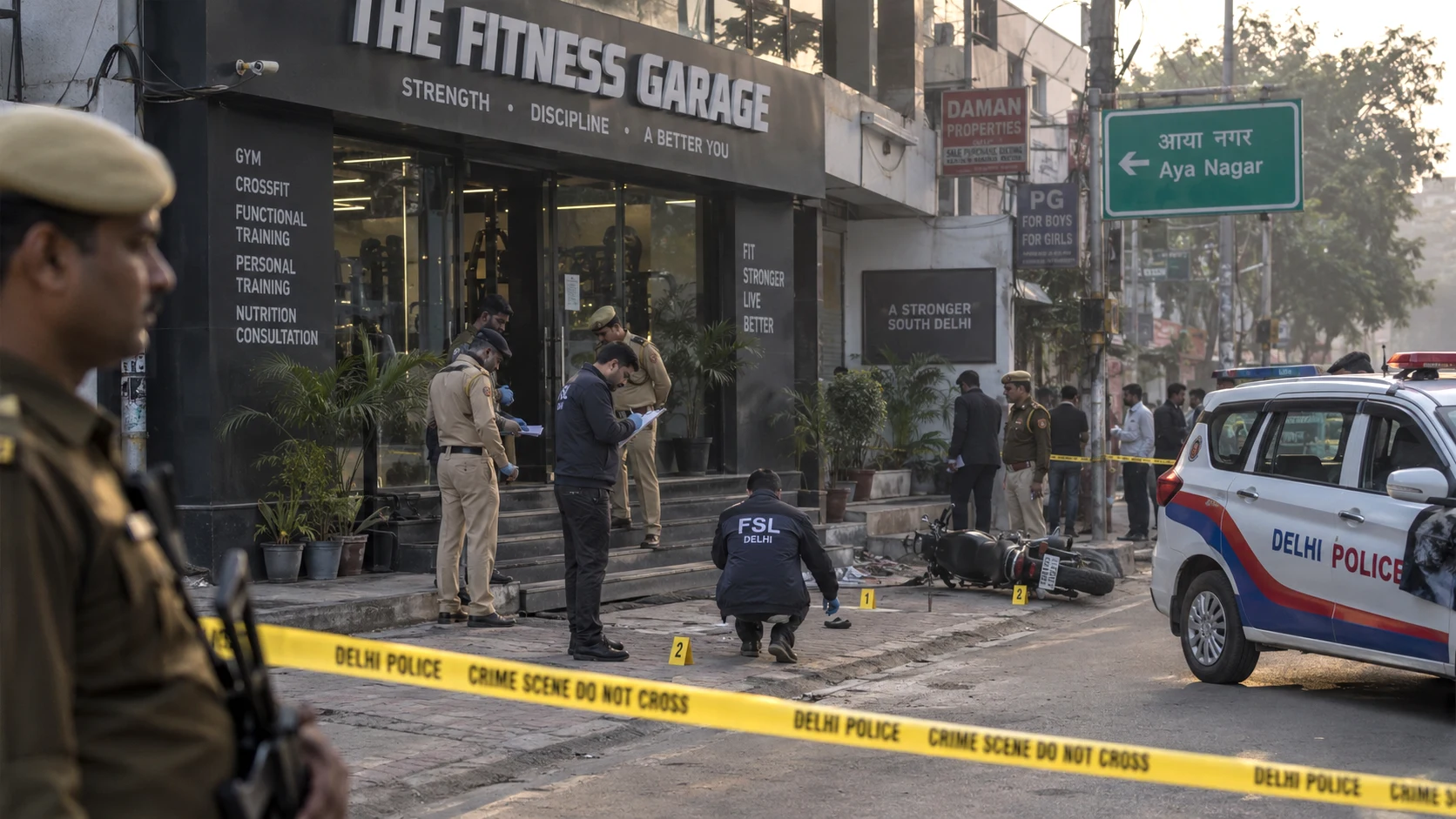
Vijay Kumar was called outside a gym near Hansa Chowk in south Delhi before gunmen opened fire on Monday morning. Police have formed multiple teams and are examining personal enmity and a possible connection to an older rivalry in the area.


0 Comments