Opposition March to Supreme Court Today: 6 Metro Stations Restrict Entry/Exit, Roads to Avoid in Delhi
Entry and exit are restricted at six central Delhi Metro stations until 4 PM as the INDIA bloc prepares to march towards the Supreme Court. Delhi Traffic Police has also identified 30 locations where diversions may be imposed from 6 AM depending on conditions on the ground.
Editorial illustration representing Delhi Metro restrictions and traffic advisory for the Opposition Supreme Court march
Table of Contents (17 sections)
NEW DELHI, October 12, 2026 — Delhi commuters are facing a new round of transport restrictions on Monday as Opposition parties prepare for a march towards the Supreme Court, with entry and exit closed at six central Delhi Metro stations and Delhi Traffic Police warning of possible diversions at 30 locations.
The most important point for Metro passengers is that the six affected stations are not completely shut to trains.
The Delhi Metro Rail Corporation has restricted street-level entry and exit from 6 AM until 4 PM at Patel Chowk, Janpath, Rajiv Chowk, Mandi House, Central Secretariat and Barakhamba Road. Interchange operations remain available, and security agencies are expected to review the arrangement during the day.
Road restrictions are less fixed. Delhi Traffic Police says diversions may be imposed from 6 AM depending on the law-and-order situation, meaning a route that is open during the morning could be regulated later as the proposed march approaches.
The INDIA bloc march is scheduled to assemble at the Connaught Place–Barakhamba Road junction at around 1:30 PM before heading towards the Supreme Court.
Recommended Reading
Related Stories & In-Depth Guides
Curated editorial perspectives matching this topic.
News 24/7/ Delhi | Traffic & Civic Updates13 min read
Delhi commuters face major disruption around the October 10 CJP protest call: entry and exit are restricted at 45 Metro stations, traffic may be diverted at 30 points, and mobile internet is suspended in a limited central Delhi zone.
Delhi has ordered retail liquor shops to remain closed on October 9 and 10, 2026, as a preventive public-order measure based on Delhi Police inputs. Here is why the shops are shut, which outlets are affected and what remains open.
For anyone travelling through central Delhi today, the practical advice is simple: do not rely on an old screenshot of a traffic map, allow additional travel time and check the latest police and Metro updates immediately before starting the journey.
Key Takeaways
Six Metro stations: Entry/exit restricted 6 AM–4 PM (subject to review).
Important: The 4 PM Metro timing is subject to review. It should not be treated as a guarantee that all road restrictions will disappear at 4 PM.
Six Delhi Metro Stations With Entry and Exit Restricted Today
The Metro restrictions are concentrated in central Delhi and are substantially narrower than the measures imposed during the October 10 CJP protest.
Patel Chowk
Passengers cannot use the station to enter from or exit to street level during the notified restriction period.
The surrounding Parliament Street, Ashoka Road, Sansad Marg and Jantar Mantar corridors may also experience road regulation.
Janpath
Janpath is particularly important because several roads around Connaught Place, Tolstoy Road and the central government district appear in the traffic advisory.
Passengers who normally use Janpath as their destination should consider a workable alternative and complete the final part of their journey by another mode.
Rajiv Chowk
Rajiv Chowk remains a major interchange point.
The entry and exit restriction does not mean Blue Line and Yellow Line trains have stopped running through the station.
Passengers changing lines should, however, prepare for additional security management and crowd-control measures.
Mandi House
Entry and exit are restricted, while Metro operations through the station continue.
Road movement around the Mandi House roundabout is also among the locations identified by the traffic police as potentially affected.
Central Secretariat
The station serves a highly sensitive central-government zone and is under entry/exit restriction until the scheduled review.
Passengers travelling through the station for an interchange should distinguish between changing trains and trying to reach street level.
Barakhamba Road
This is likely to be one of the most closely watched stations because the Opposition march is scheduled to assemble near the Connaught Place–Barakhamba Road junction.
Passengers whose destination is the immediate area should expect restrictions to be capable of changing as the scheduled 1:30 PM assembly time approaches.
Do Not Read “Metro Closed” as “Metro Line Stopped”
This distinction matters.
A station with entry and exit gates closed can still have trains passing through it.
DMRC has said interchange facilities will remain available at the affected stations. For passengers, the immediate question is therefore not simply whether a station appears on the restriction list, but whether they need to enter or leave the Metro network there.
Someone changing from the Blue Line to the Yellow Line at Rajiv Chowk, for example, faces a different situation from a commuter trying to leave Rajiv Chowk and walk into Connaught Place.
Passengers should nevertheless check the latest DMRC service information before travelling because the security arrangement is explicitly subject to review.
Delhi Traffic Advisory: 30 Locations That May Face Diversions
Delhi Traffic Police has not described all 30 locations as permanently closed roads.
Instead, the advisory allows diversions to be introduced according to conditions on the ground.
For practical travel planning, the affected points can be understood in three broad zones.
Central Delhi, Connaught Place and Government District
Motorists should be especially cautious around:
Jhandewalan Roundabout
Panchkuian Roundabout
Mandi House Roundabout
Dr Dinesh Nandini Dalmia Chowk, also known as W-Point
Ram Charan Aggarwal Chowk, or A-Point
Minto Road–Deen Dayal Upadhyay Marg
Guru Nanak Chowk
Chelmsford Road–Outer Circle Connaught Place T-Point
Ashoka Road–Jantar Mantar Road Roundabout
Windsor Place Roundabout
Tolstoy Road–Janpath Crossing
Rail Bhawan Roundabout
Jai Singh Road–Sansad Marg Crossing
Outer Circle Connaught Place–Barakhamba Road T-Point
Gol Dak Khana Roundabout
Patel Chowk Roundabout
Jai Singh Road–Ashoka Road T-Point
RML Hospital Roundabout
Outer Circle Connaught Place–Sansad Marg T-Point
South and Southwest Delhi Approaches
Possible regulation can also affect:
Shankar Road–Vande Mataram T-Point towards New Delhi
Dhaula Kuan Flyover
Samrat Hotel Roundabout
Sardar Patel Marg–Panchsheel Marg Crossing
the road section under Bhikaji Cama Place
the road section under Moti Bagh Flyover
Ring Road–San Martin Marg T-Point
East and Southeast Approaches
The advisory also identifies:
Bhairon Road–MGM/Ring Road T-Point
Lodhi Road Flyover
Neela Gumbad Roundabout
Madarsa T-Point
Roads Most Worth Avoiding Unless Your Trip Is Essential
The full traffic advisory is wide, but people trying to avoid the immediate political and security activity should pay particular attention to Connaught Place approaches, Barakhamba Road, Janpath, Ashoka Road, Sansad Marg, Patel Chowk and the Jantar Mantar side of central Delhi.
The Opposition assembly is scheduled near the Connaught Place–Barakhamba Road junction, making that corridor particularly sensitive around and after the planned 1:30 PM gathering time.
Police barricades or diversions may also be adjusted rapidly.
A navigation application can help identify congestion, but it may not immediately recognise a temporary police barricade. Drivers should therefore follow instructions from traffic personnel even when an app suggests a different route.
Travelling to the Airport, Railway Station or ISBT
Passengers with a flight, long-distance train or inter-state bus should leave additional time if their route passes through New Delhi or Central Delhi.
This is particularly important for travellers who would normally cross Connaught Place, Mandi House, Janpath, Patel Chowk, Sansad Marg or other areas covered by the advisory.
Avoid calculating the journey using normal Monday travel time alone.
A Metro journey may still work even when a station has entry/exit restrictions, but passengers should make sure both the origin and destination stations can actually be accessed from street level.
For a railway or airport journey with a fixed departure time, using a less direct but more predictable route may be safer than attempting to cross a dynamically regulated central-Delhi corridor.
Why the Opposition Is Marching to the Supreme Court
The march is part of the continuing political confrontation over the Election Commission of India, the Special Intensive Revision of electoral rolls and Opposition allegations of electoral irregularities.
Opposition parties have demanded that Chief Election Commissioner Gyanesh Kumar resign and that the disputed SIR process be halted. Rahul Gandhi has also called on youth organisations, civil-society groups and Opposition parties to participate.
The Opposition describes the dispute as a question of voting rights and electoral accountability.
Those claims remain politically and legally contested.
The Election Commission has rejected allegations that it manipulated electoral rolls to favour a political party, while the BJP has also rejected Opposition accusations of electoral manipulation.
No court finding establishing the Opposition's broader allegations should therefore be implied merely because protests and legal proceedings are continuing.
What Was Supposed to Happen at the Supreme Court
Congress president Mallikarjun Kharge and Leader of the Opposition Rahul Gandhi had sought a meeting with Chief Justice of India Surya Kant to submit a memorandum concerning the Election Commission dispute.
Reports citing people familiar with the communication say the Chief Justice declined an administrative meeting because related matters are already before the Court and indicated that any judicial relief should be pursued through the legal process.
That distinction is important.
A political delegation seeking to submit a memorandum is different from litigants formally filing a petition before the Supreme Court.
The planned march can therefore proceed as a political protest call, but that does not itself create a judicial proceeding or require the Court to accept the Opposition's political demands.
Supreme Court Scrutiny Makes Today's Transport Restrictions Significant
Monday's restrictions come only a day after the Supreme Court considered complaints about the much broader security measures imposed during the October 10 CJP mobilisation.
The Court directed that public transport and internet access should function normally subject to genuine law-and-order requirements and issued notices in proceedings alleging non-compliance with earlier directions concerning transport restrictions.
Today's six-station entry/exit restriction is considerably narrower than the 45-station arrangement that affected commuters during the October 10 protest.
That difference does not settle the legal dispute over the restrictions, but it is an important practical change for Delhi passengers.
Rajatheertha's detailed October 10 coverage of the CJP-related Metro and traffic restrictions is available here:
Today's Story Is Different From the October 10 CJP Protest
Readers should avoid mixing Monday's advisory with screenshots and lists circulated during the weekend.
On October 10, entry and exit were restricted at 45 Metro stations during security measures surrounding the proposed CJP demonstration.
On October 12, the currently verified DMRC list contains six stations.
The traffic advisory again identifies 30 potential diversion points, but the operational situation is dynamic.
Old WhatsApp forwards claiming that 45 or 57 stations are currently restricted should not be treated as today's DMRC position.
Key Times to Watch Today
The first major time is 1:30 PM, when Opposition participants are scheduled to assemble near the Connaught Place–Barakhamba Road junction.
Traffic pressure and police regulation could increase before that time rather than beginning precisely at 1:30 PM.
The second major time is 4 PM.
DMRC's current entry and exit restrictions are scheduled until then, after which the security situation is expected to be reviewed.
Passengers should not automatically assume the gates will open exactly at 4 PM. DMRC could relax, continue or otherwise revise the restrictions depending on the security review.
Road restrictions are even more fluid because Delhi Traffic Police has not announced one universal end time for all 30 locations.
What Delhi Commuters Should Do Before Leaving
Check the latest DMRC update rather than relying on the morning station list alone.
Confirm whether you need to enter or exit at one of the six restricted stations, or only interchange there.
If travelling through Connaught Place or Barakhamba Road around the march assembly period, consider an alternative route.
Build additional time into journeys to the airport, railway stations and ISBTs.
Follow police directions at barricades even when a navigation app shows the road as open.
Avoid forwarding old Metro closure lists from the October 10 protest.
Keep tickets, booking information and important addresses readily available before beginning a time-sensitive journey.
Delhi Traffic Police has also publicised its traffic helpline 1095 and control-room number 011-25844444 for assistance.
What Could Change Later Today
Three developments would justify an immediate update to this article.
First, DMRC may revise the six-station restriction before or after the scheduled 4 PM review.
Second, Delhi Traffic Police may activate, relax or move diversions as the Opposition gathering develops.
Third, the political and legal situation could change if organisers alter the march route, police issue new instructions, or the Supreme Court makes any fresh intervention.
Because all three are developing issues, readers should treat the timings and access arrangements in this report as the latest verified position rather than a guarantee for the entire day.
Background Without Repeating the Entire CEC Dispute
Rajatheertha has separately explained why Opposition parties are demanding CEC Gyanesh Kumar's resignation, the arguments over the SIR process and the Election Commission's response.
Today's article is intentionally focused on the immediate public-service question: which Metro stations commuters cannot enter or exit, which road corridors may face diversions and when conditions are most likely to change.
Bottom Line
As of 10:48 AM IST on October 12, entry and exit remain restricted at Patel Chowk, Janpath, Rajiv Chowk, Mandi House, Central Secretariat and Barakhamba Road until 4 PM, subject to review.
Metro trains have not been declared shut across those lines, and interchange facilities remain available.
Delhi Traffic Police has identified 30 locations where traffic movement may be regulated from 6 AM according to the situation on the ground.
The INDIA bloc's march is scheduled to assemble at the Connaught Place–Barakhamba Road junction at around 1:30 PM before moving towards the Supreme Court.
For commuters, the safest approach is to avoid unnecessary travel through the immediate central-Delhi protest corridor, allow additional travel time and check live DMRC and Delhi Traffic Police information immediately before departure.
This article should be updated on the same URL as the situation changes through the day.
Key Takeaway
Six Metro stations: Entry/exit restricted till 4 PM (subject to review).
The Rajatheertha Team publishes news, explainers, guides and updates across India and the world. Our coverage follows Rajatheertha's editorial, verification and corrections standards.
Connaught Place’s Central Park is closed on October 16 and 17 ahead of CJP’s proposed “Lehra Do Tiranga” gathering. Delhi Traffic Police says movement on 21 roads and locations may be affected from 3 PM, while no station-specific Delhi Metro closure was confirmed as of publication.
The Supreme Court did not ban protests at Jantar Mantar on October 9. It asked authorities to consider a better venue. Two days later, Delhi Police formally de-notified Jantar Mantar and designated Ramlila Ground, Burari Ground and CBD Ground as Delhi’s new protest venues.
More than 5,000 passengers reportedly missed trains from New Delhi Railway Station after severe central Delhi traffic restrictions on October 8. As festival travel demand builds, a reserved New Delhi–Katra special begins October 9.
CJP leaders Abhijeet Dipke, Ashutosh Ranka and Saurav Das are due before an Executive Magistrate after being placed under preventive arrest, while a fresh Jantar Mantar protest call has prompted traffic diversions across Delhi.
The Supreme Court has reaffirmed that arrested persons must receive the grounds of arrest in writing and in a language they understand, holding that Article 22(1) applies across criminal laws, including special statutes such as PMLA and UAPA.
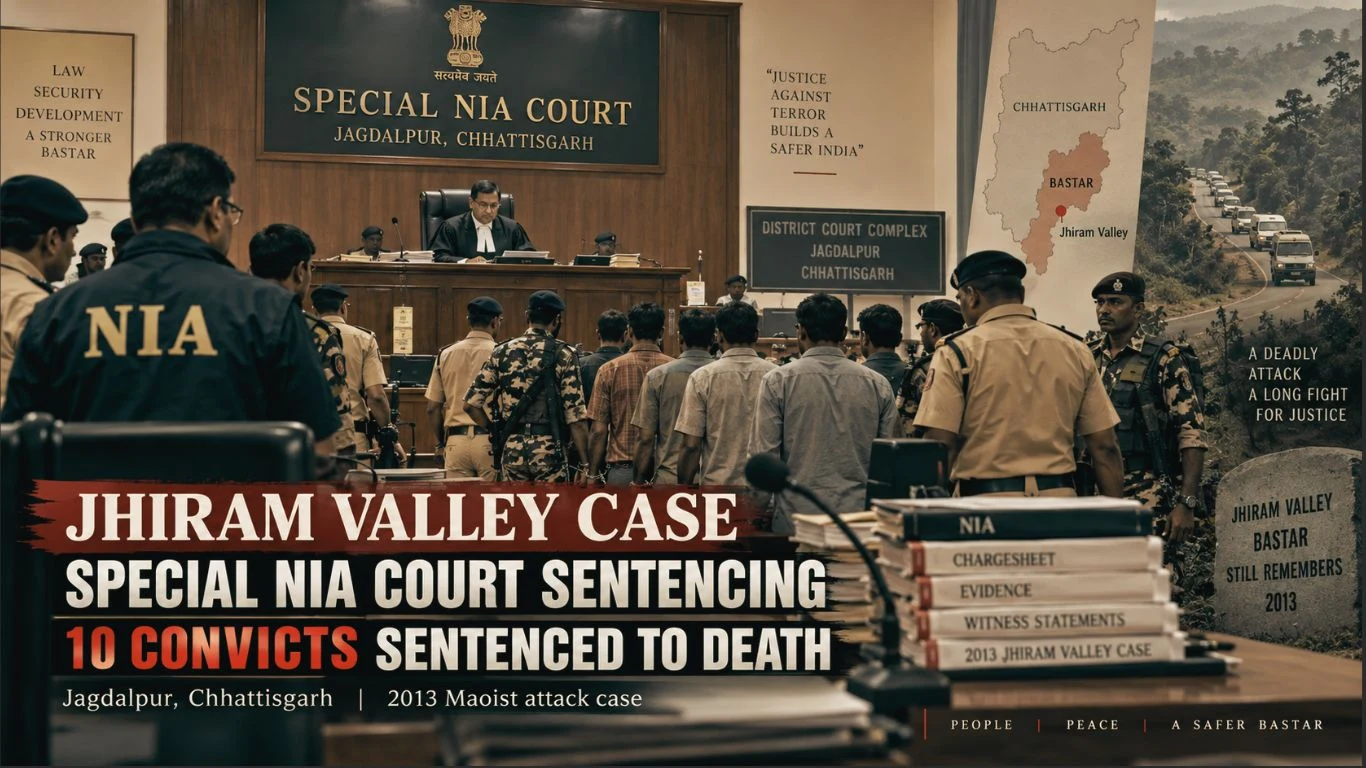
The Jagdalpur court imposed capital punishment on all 10 people convicted in the 2013 Maoist ambush on a Congress convoy in Chhattisgarh. Two women are among those sentenced. The death sentences must still go through the High Court confirmation process, and the defence can appeal.






0 Comments