Pope Leo XIV Recovery Update: Walking, Eating and Celebrating Mass After Lung Cancer Surgery
Pope Leo XIV is walking, eating normally and has celebrated Mass at Rome’s Gemelli Hospital as the Vatican reports an expected recovery after surgery for lung adenocarcinoma. Important questions about staging, further treatment and his November travel plans remain unresolved.
Editorial illustration representing Pope Leo XIV recovery after lung cancer surgery
Table of Contents (13 sections)
VATICAN CITY — Pope Leo XIV has begun walking, returned to a normal diet and celebrated Mass in hospital as his recovery continues after surgery to remove the lower lobe of his right lung, according to the latest information released through the Vatican.
The update provides the clearest indication so far of how the 71-year-old pontiff is progressing following his October 13 operation at Rome’s Agostino Gemelli University Hospital.
Doctors said scheduled blood tests and a chest X-ray produced results within the expected range for the type of surgery he underwent. Pope Leo has also started respiratory physiotherapy and has been walking around his hospital room.
Later, the Vatican confirmed that he celebrated Mass with his secretaries in a chapel arranged for him inside the hospital.
These are encouraging short-term developments in his postoperative recovery, but they do not answer the most important remaining medical question: whether the lung adenocarcinoma confirmed during surgery was entirely confined to the removed area or whether additional treatment will be recommended.
The Vatican has not announced a formal cancer stage, final complete pathology assessment or definitive long-term treatment plan.
That distinction remains important. A successful operation and normal early recovery describe how the procedure and immediate postoperative period have progressed. They do not by themselves establish that all cancer treatment has been completed.
Recommended Reading
Related Stories & In-Depth Guides
Curated editorial perspectives matching this topic.
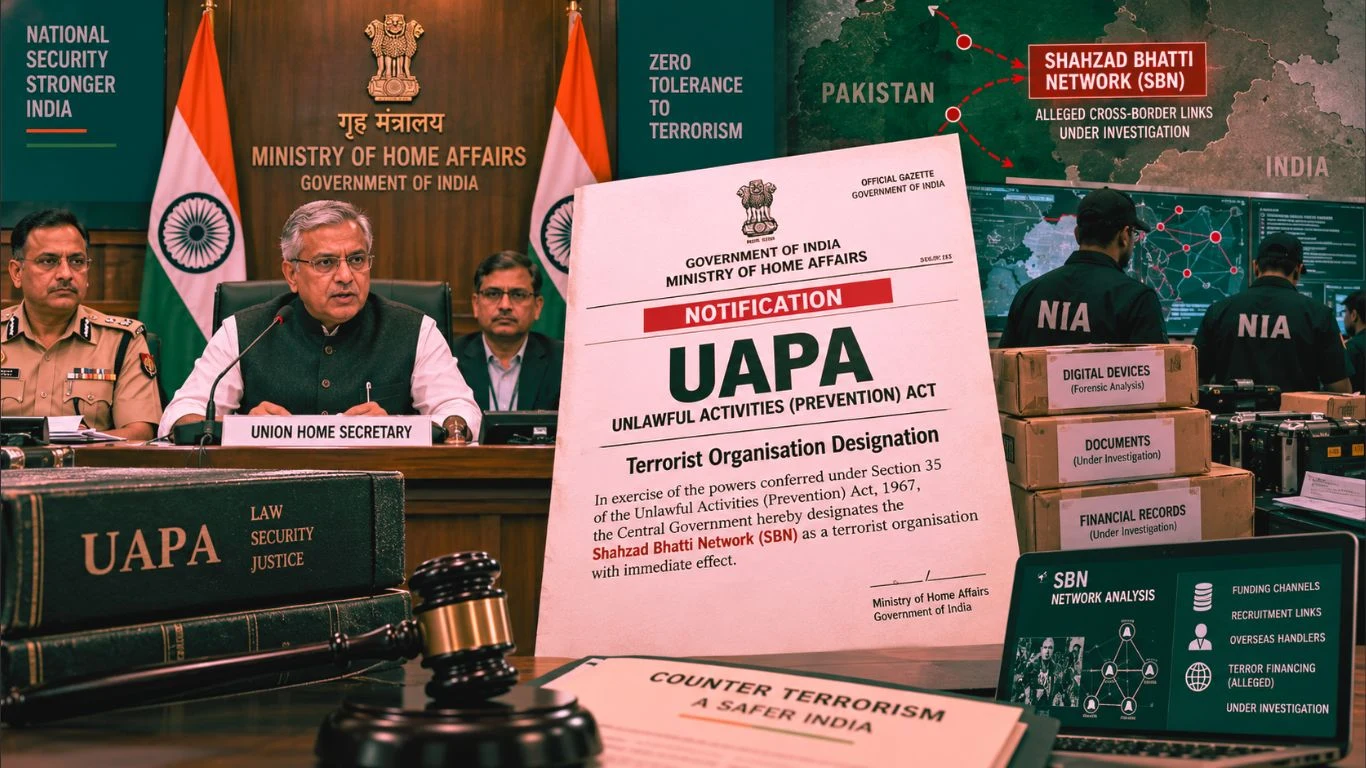
The Home Ministry has formally added the Shahzad Bhatti Network to the First Schedule of the UAPA, citing alleged cross-border arms, explosives and narcotics smuggling, recruitment of local criminals and the use of digital platforms for terror-related activity. The designation follows a multi-state
The Supreme Court did not ban protests at Jantar Mantar on October 9. It asked authorities to consider a better venue. Two days later, Delhi Police formally de-notified Jantar Mantar and designated Ramlila Ground, Burari Ground and CBD Ground as Delhi’s new protest venues.
Celebrated private Mass with secretaries in hospital chapel.
Blood tests and chest X-ray within expected range.
Cancer staging, full pathology and any further treatment still not announced.
November 6–17 South America trip remains scheduled pending medical clearance.
What has changed since the first surgery announcement?
Rajatheertha reported on October 14 that Pope Leo had been diagnosed with lung adenocarcinoma after surgeons removed the lower lobe of his right lung.
At that stage, the Vatican had confirmed that the operation was successfully completed without complications and that the Pope had returned to his hospital room after waking normally.
The latest medical update adds several concrete signs of postoperative progress.
His doctors said scheduled blood examinations and a chest X-ray showed values within the expected range following the operation.
He has started respiratory physiotherapy.
He has begun walking around his room.
He has resumed eating normally, including breakfast and lunch.
He has also celebrated Mass while remaining in hospital.
Together, those developments indicate that his immediate recovery is proceeding as doctors expected.
They should not, however, be interpreted as a final assessment of his cancer.
Why walking and respiratory physiotherapy matter after surgery
Pope Leo underwent thoracic surgery involving removal of the lower lobe of his right lung.
After this type of operation, the immediate postoperative period typically focuses on monitoring breathing, circulation, pain, wound recovery and possible complications while gradually restoring normal activity.
The Vatican’s reference to respiratory physiotherapy is therefore an important part of the recovery update.
Such therapy is intended to help a patient breathe effectively and recover lung function after chest surgery. Beginning to walk is also an important step in postoperative care because doctors generally encourage safe mobilisation when a patient's condition allows it.
The Vatican has not released a detailed rehabilitation programme for Pope Leo, so it would be inappropriate to speculate about how quickly he will progress beyond the activities already confirmed.
What can be stated is narrower: the Pope is no longer confined to bed, has begun walking in his room and is participating in respiratory therapy.
He is also eating normally again, another practical indicator that the immediate postoperative course has not produced complications serious enough to prevent the resumption of a regular diet.
Pope Leo celebrates Mass inside Gemelli Hospital
Another notable development came when the Vatican said Pope Leo celebrated Mass while recovering at Gemelli Hospital.
The Mass was held with his secretaries in a chapel set up for him within the hospital.
The development is significant because it shows that the Pope has resumed at least some elements of his normal spiritual routine even though his public programme remains suspended.
It should not be interpreted as a return to his full workload.
Celebrating a private Mass in hospital is very different from resuming public audiences, large liturgies, travel or the demanding schedule normally associated with the papacy.
For now, the Vatican’s medical updates remain focused on recovery rather than a formal return to public duties.
What exactly did doctors remove?
During the October 13 operation, surgeons removed the lower lobe of Pope Leo’s right lung.
The procedure was performed using a video-assisted surgical technique.
The Vatican said the removal was undertaken to achieve a sufficiently extensive surgical resection of the suspicious area.
Tissue examined during the operation confirmed lung adenocarcinoma, supporting what doctors had suspected from examinations carried out before surgery.
The operation itself lasted approximately 90 minutes, while the Pope spent about three hours in the operating room overall.
The Vatican reported no surgical complications.
After the procedure, Pope Leo woke normally, underwent a period of observation and returned to his hospital room.
That was the first stage of the story.
The focus has now moved from whether the surgery was completed successfully to how he recovers and what additional information emerges from the examination of the removed tissue.
What does “normal postoperative recovery” actually mean?
The wording used by the Pope’s doctors should be read carefully.
Their update says his recovery is progressing normally and that test results are within the expected range for the procedure he underwent.
That is positive news about his immediate physical recovery.
It does not mean the Vatican has declared him cancer-free.
It does not establish the formal stage of his lung cancer.
It does not confirm whether lymph nodes were involved.
And it does not establish whether surgery will be the only cancer treatment he requires.
Those questions require additional medical assessment.
This is particularly important because the word “successful” can have different meanings in different contexts.
When the Vatican described the operation as successful, it was reporting that surgeons completed the planned procedure and that there were no reported complications during surgery.
A successful operation is not automatically equivalent to a complete long-term cure.
The Vatican has so far been appropriately cautious about making that broader claim.
What remains unknown about Pope Leo’s cancer?
Several important questions remain unanswered publicly.
The Vatican has confirmed the type of cancer: lung adenocarcinoma.
It has confirmed where the suspicious lesion was located and that surgeons removed the lower lobe of the right lung.
It has also said Pope Leo previously described the nodule as having been detected very early and as being well localised.
However, the Holy See has not publicly announced a formal cancer stage.
A formal stage helps describe how extensive a cancer is and whether it has spread beyond its original location.
The Vatican has also not announced final detailed findings regarding lymph-node involvement.
Those findings can be important when doctors decide whether surgery alone is sufficient or whether additional therapy should be considered.
For that reason, claims that Pope Leo has been completely cured would currently go beyond what the Vatican has confirmed.
Likewise, it would be premature to state that chemotherapy, radiation therapy, targeted treatment or another cancer therapy will definitely be required.
The appropriate position is to wait for the Pope’s doctors or the Holy See to provide further information.
How did the health announcement develop?
The sequence of events helps explain why the story has changed rapidly.
October 11: Pope Leo personally told the faithful that recent medical examinations had identified a small, localised nodule in his lung. He said the abnormality had been detected at a very early stage and that doctors recommended surgery. At that point, the public announcement did not state that the nodule had been conclusively diagnosed as cancer.
October 13: Pope Leo entered Gemelli Hospital and underwent thoracic surgery. Doctors removed the lower lobe of his right lung. Examination of tissue during the operation confirmed lung adenocarcinoma. The Vatican said the procedure went according to plan and reported no complications.
October 14–15: Doctors provided the first substantial postoperative update. Blood tests and a chest X-ray were within the expected range. Pope Leo underwent respiratory physiotherapy, started walking around his room and returned to normal eating. The Vatican later confirmed that he had celebrated Mass with his secretaries at the hospital.
As of the latest verified information available for this update on October 15, those remain the principal confirmed developments in his recovery.
How long could Pope Leo remain in hospital?
Before the operation, Vatican spokesman Matteo Bruni indicated that the expected postoperative hospital stay would be approximately one week.
There has been no announcement changing that broad estimate.
However, an expected hospital stay should not be treated as a guaranteed discharge date.
Doctors will determine when Pope Leo can leave Gemelli based on his actual recovery.
His public audiences through October 20 had already been cancelled as part of the immediate recovery period.
That means the Vatican has deliberately created time in his schedule for hospital treatment and recuperation.
Whether normal public activity resumes immediately after that date will depend on subsequent medical assessments and Vatican announcements.
Until a specific return date is confirmed, it would be safer not to describe October 20 as the date on which he will definitely resume his full schedule.
What happens to Pope Leo’s November South America trip?
One of the largest practical questions concerns his scheduled journey to Uruguay, Argentina and Peru from November 6 to November 17.
The trip remains particularly important because it would involve an extensive international itinerary only weeks after major lung surgery.
As of the latest available information, the Vatican has not announced that the journey has been cancelled.
That does not mean every part of the itinerary is guaranteed to proceed unchanged.
The final decision will depend on Pope Leo’s recovery and medical advice.
The distinction is important for readers following changing headlines.
“Still scheduled” means that no official cancellation has been announced.
It does not necessarily mean doctors have already given final clearance for every flight, public appearance and event.
The Vatican may have considerably more medical information before the scheduled departure date.
Any changes should therefore be reported only after confirmation by the Holy See or the governments involved.
Why the next medical bulletin will matter
The latest update answers the immediate question of whether Pope Leo is recovering normally from the operation.
So far, the answer from his doctors is yes.
The next major phase of the story concerns the cancer itself.
Future information may clarify the complete pathology findings, the formal stage of the disease and whether doctors recommend additional treatment.
It may also provide a clearer timeline for hospital discharge, resumption of papal duties and international travel.
Those developments should be treated separately from the positive short-term recovery indicators.
Walking around his room, eating normally and celebrating Mass are meaningful signs of postoperative progress.
They are not substitutes for pathology and staging information.
For readers, that is the central distinction to keep in mind as further updates emerge.
What happens next?
Pope Leo is expected to continue recovering at Gemelli Hospital under medical supervision.
Respiratory physiotherapy and gradual mobilisation are already underway.
Doctors will continue monitoring his postoperative condition, while further analysis of the surgically removed tissue may help determine the next stage of treatment or surveillance.
The Vatican may also issue a further bulletin if there is a meaningful change in his condition or if additional test results become available.
Attention will then turn to three practical milestones: his discharge from hospital, his return to public duties and the status of the November 6–17 South America journey.
Until those decisions are announced, the latest confirmed picture is encouraging but incomplete.
Pope Leo XIV has successfully undergone surgery in which the lower lobe of his right lung was removed after doctors confirmed lung adenocarcinoma.
His immediate recovery is proceeding within expected parameters.
He is walking.
He is eating normally.
He is undergoing respiratory physiotherapy.
And he has celebrated Mass while recovering in hospital.
The remaining questions concern not the immediate success of the operation, but the complete cancer assessment, whether any further treatment will be necessary and how quickly the Pope will be medically ready to return to his full public schedule.
Key Takeaway
Pope Leo XIV recovering well after lung adenocarcinoma surgery: walking, eating normally and has celebrated Mass in hospital.
Staging and any further treatment still not announced. November trip status pending.
The Rajatheertha Team publishes news, explainers, guides and updates across India and the world. Our coverage follows Rajatheertha's editorial, verification and corrections standards.
One person has died and five others were injured after a Delhi Transport Corporation bus hit a scooter and subsequently struck other road users in Delhi’s Anand Parbat area. Police are investigating the sequence of events, while some details remain preliminary.
Three children and a teacher were killed in a shooting at Silver Rail Elementary School in Bend, Oregon. Police say an unnamed teacher tackled the attacker before Kaylub Giamanco, a father of two students, intervened and fatally shot him.
The planned 0.4% MDR on certain UPI merchant payments will not start on October 15. Here is what remains free, who may eventually pay the merchant-side charge, how the ₹300 cap works and what NRIs should know.
News 24/7/ Delhi | Traffic & Civic Updates11 min read
Entry and exit are restricted at six central Delhi Metro stations until 4 PM as the INDIA bloc prepares to march towards the Supreme Court. Delhi Traffic Police has also identified 30 locations where diversions may be imposed from 6 AM depending on conditions on the ground.
The Supreme Court has reaffirmed that arrested persons must receive the grounds of arrest in writing and in a language they understand, holding that Article 22(1) applies across criminal laws, including special statutes such as PMLA and UAPA.
Hurricane Polo has rapidly intensified into a powerful Category 4 storm off southwestern Mexico and is approaching Category 5 strength. Heavy rain, flooding, landslides and dangerous coastal conditions remain the main threats even if the storm's core stays offshore.








0 Comments