Jhiram Valley Attack: Special NIA Court Sentences All 10 Convicts to Death
The Jagdalpur court imposed capital punishment on all 10 people convicted in the 2013 Maoist ambush on a Congress convoy in Chhattisgarh. Two women are among those sentenced. The death sentences must still go through the High Court confirmation process, and the defence can appeal.
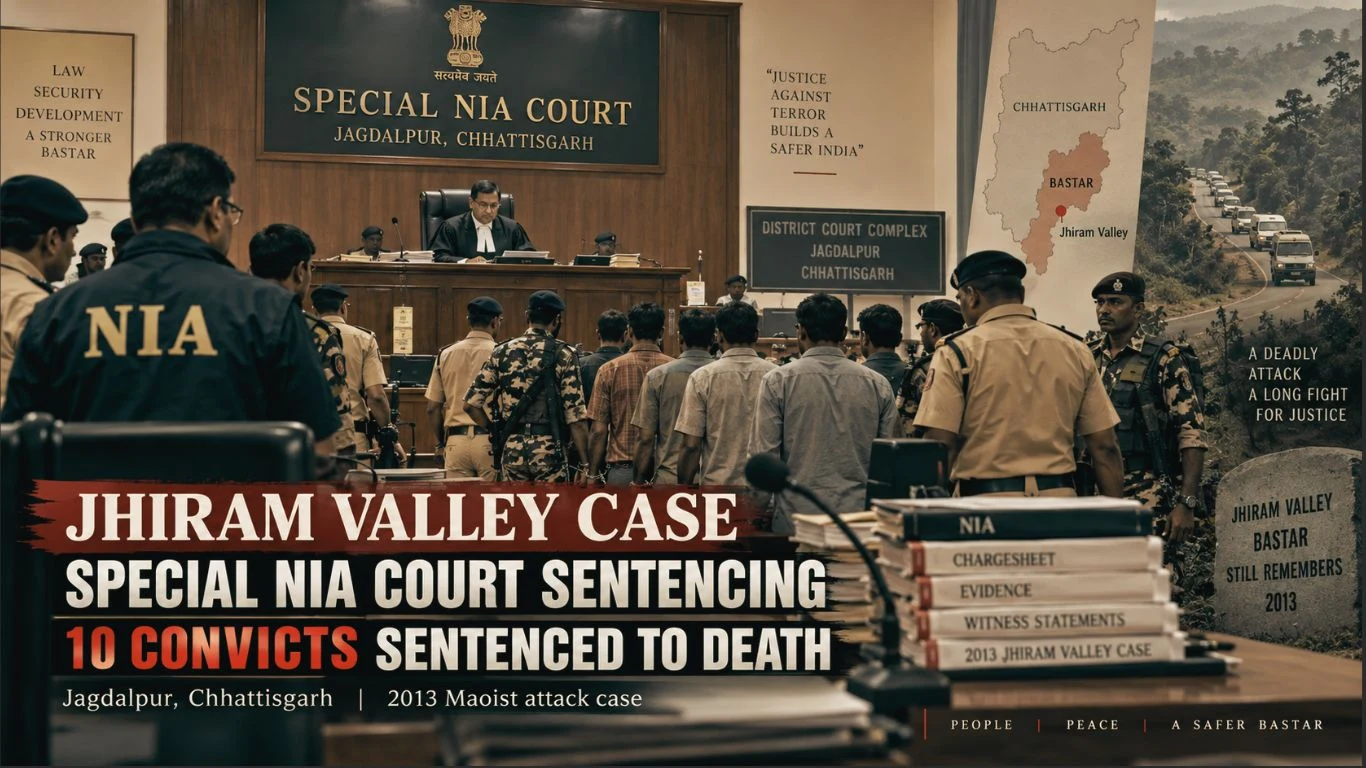
a Special NIA Court sentencing in the 2013 Jhiram Valley Maoist attack case
Table of Contents (16 sections)
A special National Investigation Agency court in Chhattisgarh has sentenced all 10 people convicted in the 2013 Jhiram Valley Maoist attack case to death, bringing the trial-court phase of one of the state’s most consequential political violence cases to a close more than 13 years after the ambush.
The special court in Jagdalpur announced the sentences on September 16, 2026. It had found all 10 accused guilty on September 5 and reserved its decision on the quantum of punishment for September 16.
Two women are among those sentenced.
The ruling does not mean the executions can now proceed immediately. Current reporting on the order says the death sentences require the High Court’s confirmation, while the convicts also have the right to challenge the verdict before the higher judiciary.
Key Takeaways
A special NIA court in Jagdalpur sentenced all 10 convicts in the 2013 Jhiram Valley Maoist attack case to death on September 16, 2026.
The same court had convicted them on September 5 after a trial lasting more than 13 years.
Recommended Reading
Related Stories & In-Depth Guides
Curated editorial perspectives matching this topic.
The Supreme Court has reaffirmed that arrested persons must receive the grounds of arrest in writing and in a language they understand, holding that Article 22(1) applies across criminal laws, including special statutes such as PMLA and UAPA.
The Pentagon says all U.S. bombers deployed to RAF Fairford have returned to the United States following a suspected terrorism incident near the UK base. British investigators are examining possible foreign-state involvement, while Iran denies any role.
Two women — Pramila Modiyam and Sumitra Punem Modiyam — are among the 10 convicts.
The prosecution examined 101 witnesses during the trial.
Eleven arrested accused originally faced trial; one died during the proceedings.
Current reports commonly place the overall toll from the Jhiram attack and its aftermath at 29. However, the NIA’s official case record states that 27 people were killed in the May 25, 2013 attack and 38 were injured; former Union minister Vidya Charan Shukla later died of his injuries.
The trial court’s death sentences cannot be treated as immediately executable. They require confirmation through the High Court process, and the convicts have a right to challenge the judgment.
Several other accused named in the NIA investigation were not part of this completed trial.
All 10 Convicts Receive Death Penalty
The court awarded capital punishment to each of the 10 surviving accused who faced the completed trial.
The convicted persons, as reported by PTI after the September 5 judgment, are:
Pramila Modiyam
Chaitu Lekam
Sumitra Punem Modiyam
Mukka Mandavi
Kosa Kavasi
Aayata Markam
Madkami Deva
Joga Madkami
Banjami Sanna
Mahadev Nag
Pramila Modiyam and Sumitra Punem Modiyam are the two women among the convicts.
Names and aliases have appeared with minor spelling variations across reports, which is common when names from regional-language records are transliterated into English.
The court reportedly imposed the death sentence under seven of the charges proved against the convicts and also imposed a fine of ₹800 on each, according to a report detailing the sentencing order.
Conviction Came on September 5
The sentencing follows the court’s September 5 judgment holding all 10 accused guilty.
Trial proceedings had originally involved 11 arrested accused, but one died while the proceedings were pending, leaving 10 to face the final verdict.
The prosecution examined 101 witnesses during the trial and presented documentary and other evidence before the special court.
The case went through hundreds of hearings over more than a decade.
The Indian Express reported that the trial involved 294 hearings, while a number of accused named in the wider NIA case remained outside this completed trial.
What Happened in Jhiram Valley in 2013?
The attack took place on May 25, 2013, when Maoists ambushed a convoy associated with the Congress party’s Parivartan Yatra in Jhiram Ghati, under the Darbha police station area of Bastar.
According to the NIA’s official case record, CPI (Maoist) members attacked the convoy at around 4.15 pm on National Highway 221. The agency records 27 people killed in the attack, including 10 police personnel, and 38 injured.
The attackers also looted or took weapons and ammunition, including AK-47 rifles, a pistol, grenades and communication equipment, according to the NIA case summary.
The attack devastated the senior leadership of the Chhattisgarh Congress.
Among those killed or fatally injured were then state Congress president Nand Kumar Patel, his son Dinesh Patel, senior Congress leader Mahendra Karma, former MLA Uday Mudliyar and former Union minister Vidya Charan Shukla.
Why Do Reports Say 27, 29 or Sometimes 31 Deaths?
This is one detail that requires careful treatment.
Most current reports on the September 16 sentencing describe the Jhiram Valley attack as having killed 29 people. PTI, Hindustan Times, NDTV and several other outlets use that figure.
However, the NIA’s own official case page records 27 people killed in the May 25 ambush and 38 injured.
Former Union minister Vidya Charan Shukla was among those critically injured in the attack and died later.
This difference appears to reflect different ways of counting those who died at the scene or immediately from the attack and those who subsequently succumbed to injuries. Some reporting has also used still higher historical totals.
For a factually careful account, the safest wording is:
The NIA officially records 27 deaths in the May 25 attack itself, while current reporting commonly places the overall death toll associated with the attack and its aftermath at 29.
That is more precise than presenting one disputed historical total as though all sources use the same figure.
Congress Leadership Was Among the Main Targets
The convoy included senior Congress leaders campaigning ahead of the 2013 Chhattisgarh Assembly election.
Mahendra Karma, who had been a prominent political opponent of Maoist groups in Bastar, was among those killed.
Then Chhattisgarh Congress president Nand Kumar Patel and his son Dinesh were also killed, along with Uday Mudliyar and others.
Vidya Charan Shukla suffered serious injuries and later died.
The attack became one of the most politically significant Maoist attacks in India because of the concentration of senior political figures in the convoy.
NIA Took Over Investigation Within Days
The National Investigation Agency took over the investigation after the attack.
According to the agency’s official case record, the Centre directed the NIA to take over the Darbha police case on May 27, 2013, two days after the ambush.
The agency re-registered the case as RC-06/2013/NIA/DLI.
The case included allegations under provisions dealing with murder, attempt to murder, criminal conspiracy, robbery and dacoity, alongside the Arms Act, Explosives Act and Unlawful Activities (Prevention) Act.
The NIA filed its first chargesheet against nine arrested accused in September 2014 and later filed a supplementary chargesheet naming additional accused in September 2015.
Not Every Accused Named in the Case Has Been Tried in This Judgment
The September 16 death sentences apply to the 10 people convicted in this particular trial.
They should not be described as the only people ever accused in the Jhiram Valley investigation.
The Indian Express reported that an eleventh arrested accused died during trial and that 28 other accused named in the chargesheet were listed as wanted at the time of the September conviction.
Some prominent accused identified in the wider case had subsequently surrendered or been killed, according to that report.
This distinction is important because the sentencing concludes the trial against these 10 convicts, not every investigative strand arising from the 2013 attack.
Defence Has Disputed the Convictions
The defence has indicated that the judgment will be challenged.
After the September 5 conviction, defence lawyer Arvind Choudhary said the defence intended to approach the High Court after receiving and examining the judgment.
Family members of some convicts have also publicly maintained that they were wrongly implicated.
Those claims do not overturn the special court’s findings, but they form part of the defendants’ position and are relevant because the case is expected to continue through appellate proceedings.
The trial court has now convicted and sentenced them; whether those findings and sentences survive appeal will be determined by higher courts.
Death Sentence Requires High Court Scrutiny
The September 16 order is a death sentence delivered by a trial-level special court.
It should not be reported as though execution will follow automatically.
Reporting on the judgment states that the death sentences must receive the High Court’s approval before they can be carried out, and the convicts can appeal.
The convicts will remain in custody while that legal process continues.
This is an important part of accurately reporting capital punishment cases in India: a trial court’s death sentence is a major legal ruling, but it is not the final stage of judicial review.
What the Court Found
The convicts were prosecuted for their roles in the Maoist attack and were found guilty of offences including criminal conspiracy and murder, along with offences under anti-terror and other laws.
The Indian Express reported that the prosecution case described the attack as involving more than 150 Maoists and linked it to the CPI (Maoist)’s Tactical Counter Offensive Campaign.
The NIA’s official case description says CPI (Maoist) members attacked the Parivartan Yatra convoy, resulting in deaths, injuries and the looting of weapons.
The court’s conviction means these 10 defendants are no longer merely accused in this case: at the trial-court level they are now convicted persons who have been sentenced to death.
That legal status is different from suspects or wanted accused in the wider investigation.
A 13-Year Judicial Process
The sentencing comes more than 13 years after the attack.
The lengthy proceedings included examination of 101 prosecution witnesses and a large documentary record.
The Special NIA Court delivered the conviction on September 5, 2026, and the punishment was pronounced 11 days later on September 16.
The time taken reflects both the complexity of a large terrorism-related prosecution and the number of accused, witnesses and evidentiary issues involved.
Political Debate Around the Investigation Has Continued
The Jhiram Valley case has remained politically sensitive in Chhattisgarh.
Following the September 5 conviction, former chief minister Bhupesh Baghel described the verdict as “incomplete justice” and argued that what he considers a larger conspiracy behind the attack had not been adequately investigated.
That represents Baghel’s political position and should not be interpreted as a judicial finding that such a conspiracy existed.
The special court’s proceedings dealt with the criminal liability of the accused placed before it on the evidence presented in the NIA case.
What Happens Next?
The trial court’s sentencing is not necessarily the end of the case.
The next legal stages are expected to include:
Transmission of the death-sentence proceedings for High Court confirmation.
Appeals by the convicts challenging the conviction and sentence.
Review of the trial record and evidence by the High Court.
Possible further proceedings before the Supreme Court depending on the outcome.
Current reporting says the convicts can challenge the verdict in the High Court within the applicable appeal period.
Until those proceedings conclude, the death sentences should be described as awarded by the Special NIA Court and subject to further judicial review.
Bottom Line
The central development is confirmed: a Special NIA Court in Jagdalpur has sentenced all 10 convicts in the 2013 Jhiram Valley Maoist attack case to death.
The 10 had been convicted on September 5 after a trial lasting more than 13 years. Two women are among them, and the prosecution examined 101 witnesses.
The May 25, 2013 ambush targeted a Congress Parivartan Yatra convoy in Bastar and killed senior political leaders, police personnel and others.
Current news reports commonly cite an overall death toll of 29. For precision, however, the NIA’s official case record states that 27 people were killed in the attack itself and 38 injured, with former Union minister Vidya Charan Shukla among those who later died from injuries.
The death sentences are a major trial-court judgment, but they are not immediately executable. High Court confirmation and appellate proceedings remain ahead.
Key Takeaway
All 10 convicts in the 2013 Jhiram Valley Maoist attack case sentenced to death.
Two women among those sentenced after a 13-year trial.
Death sentences subject to High Court confirmation and appeal.
NIA records 27 deaths in the attack itself; overall toll often cited as 29.
The Rajatheertha Team publishes news, explainers, guides and updates across India and the world. Our coverage follows Rajatheertha's editorial, verification and corrections standards.
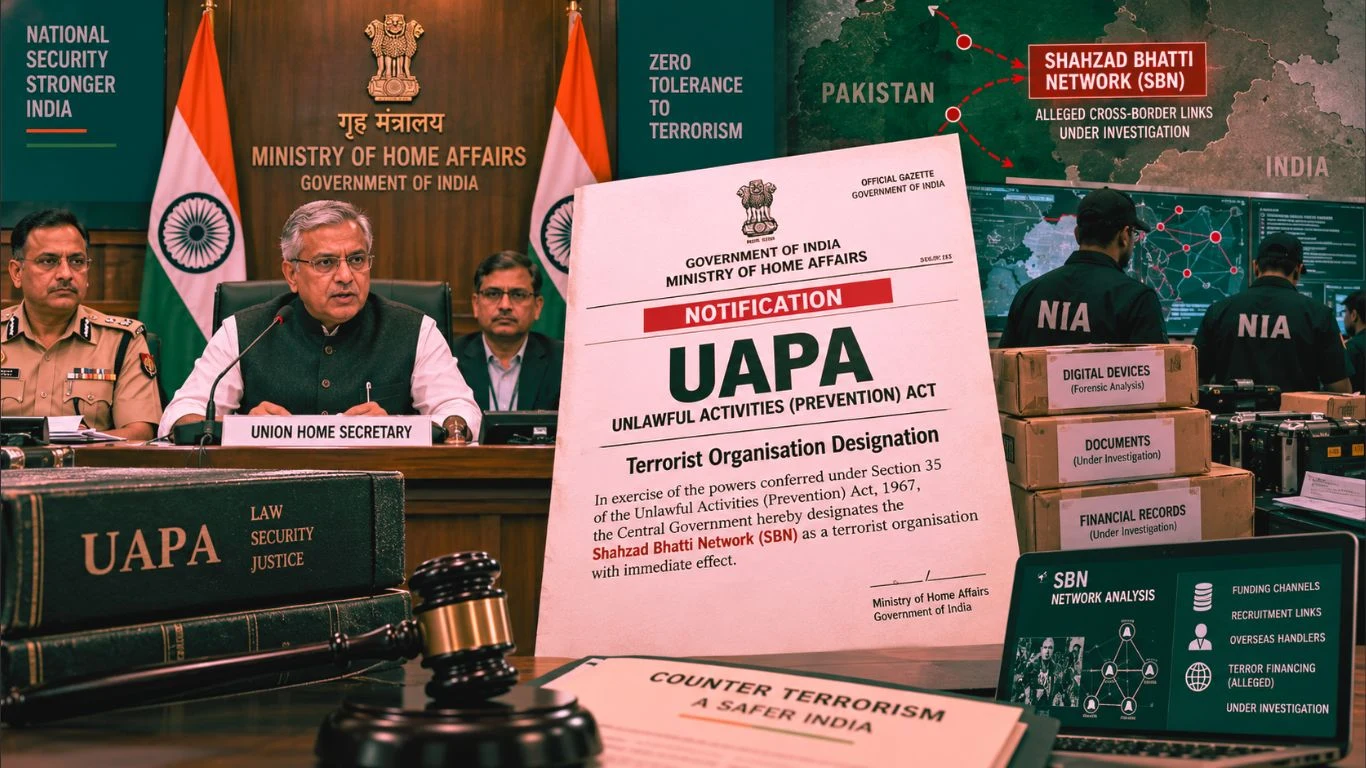
The Home Ministry has formally added the Shahzad Bhatti Network to the First Schedule of the UAPA, citing alleged cross-border arms, explosives and narcotics smuggling, recruitment of local criminals and the use of digital platforms for terror-related activity. The designation follows a multi-state
Ukraine has confirmed striking the Moscow Oil Refinery during an extraordinary long-range drone and missile operation against Russia, while Russian authorities say hundreds of drones targeted the capital and more than 1,000 were intercepted across the country. At least three people were reported kil
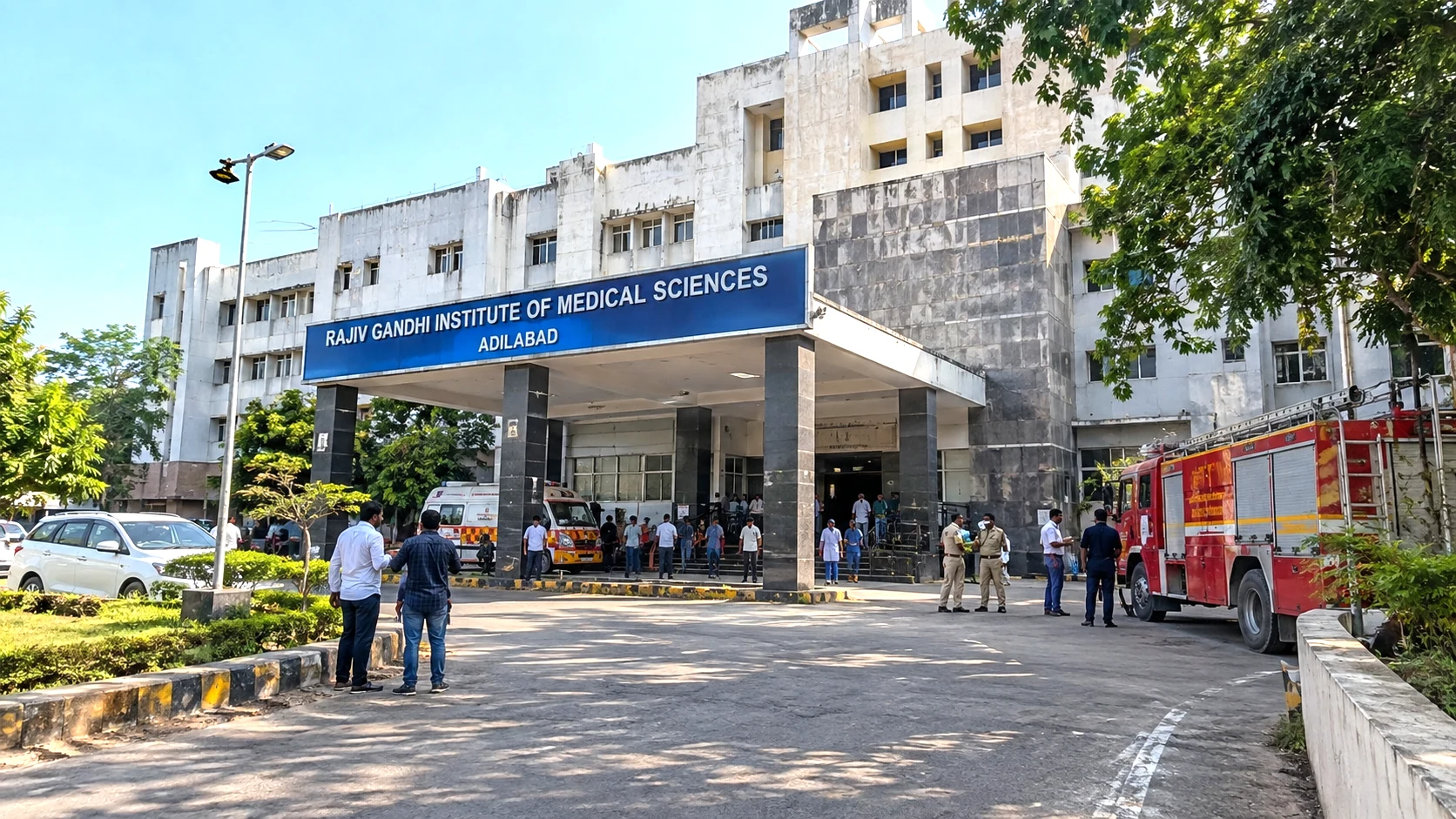
Three infants have died following a fire in the Special Newborn Care Unit at RIMS Adilabad. Officials are investigating a suspected AC-related electrical malfunction, while the Telangana government has ordered an inquiry and stronger hospital safety measures.
Revenue authorities are examining survey records and government-land classifications around former Chief Minister K. Chandrashekar Rao’s Erravalli property after Chief Minister A. Revanth Reddy raised allegations in the Assembly. The BRS rejects the allegations and has demanded an independent judge-
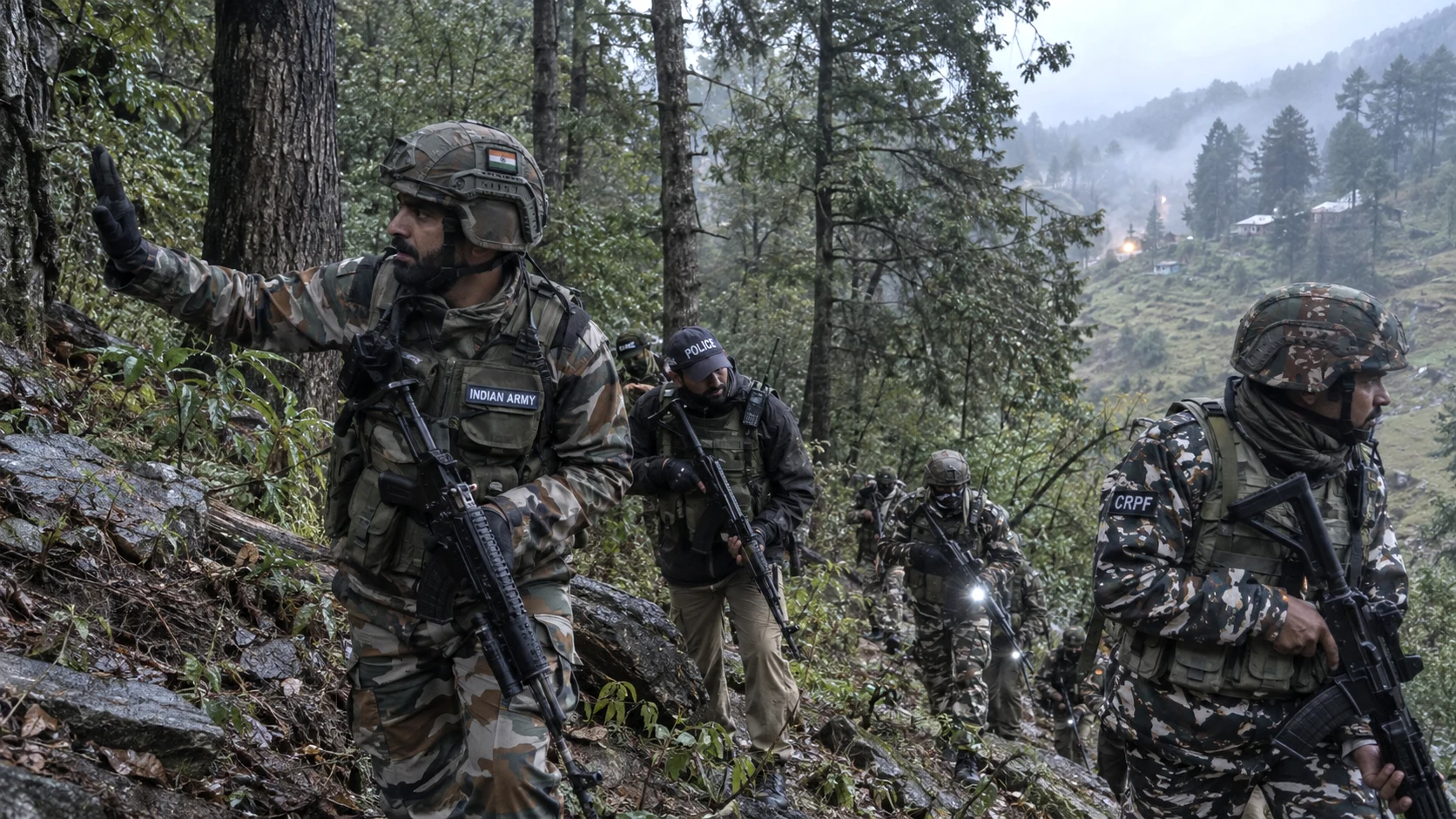
Security forces identified the slain militants as Saddam and Mustafa, both Pakistani nationals associated with Jaish-e-Mohammad. An AK-series rifle, M4 carbine, Glock pistol, grenades and ammunition were recovered after the overnight operation in the Brattal-Sohan forests of Majalta.
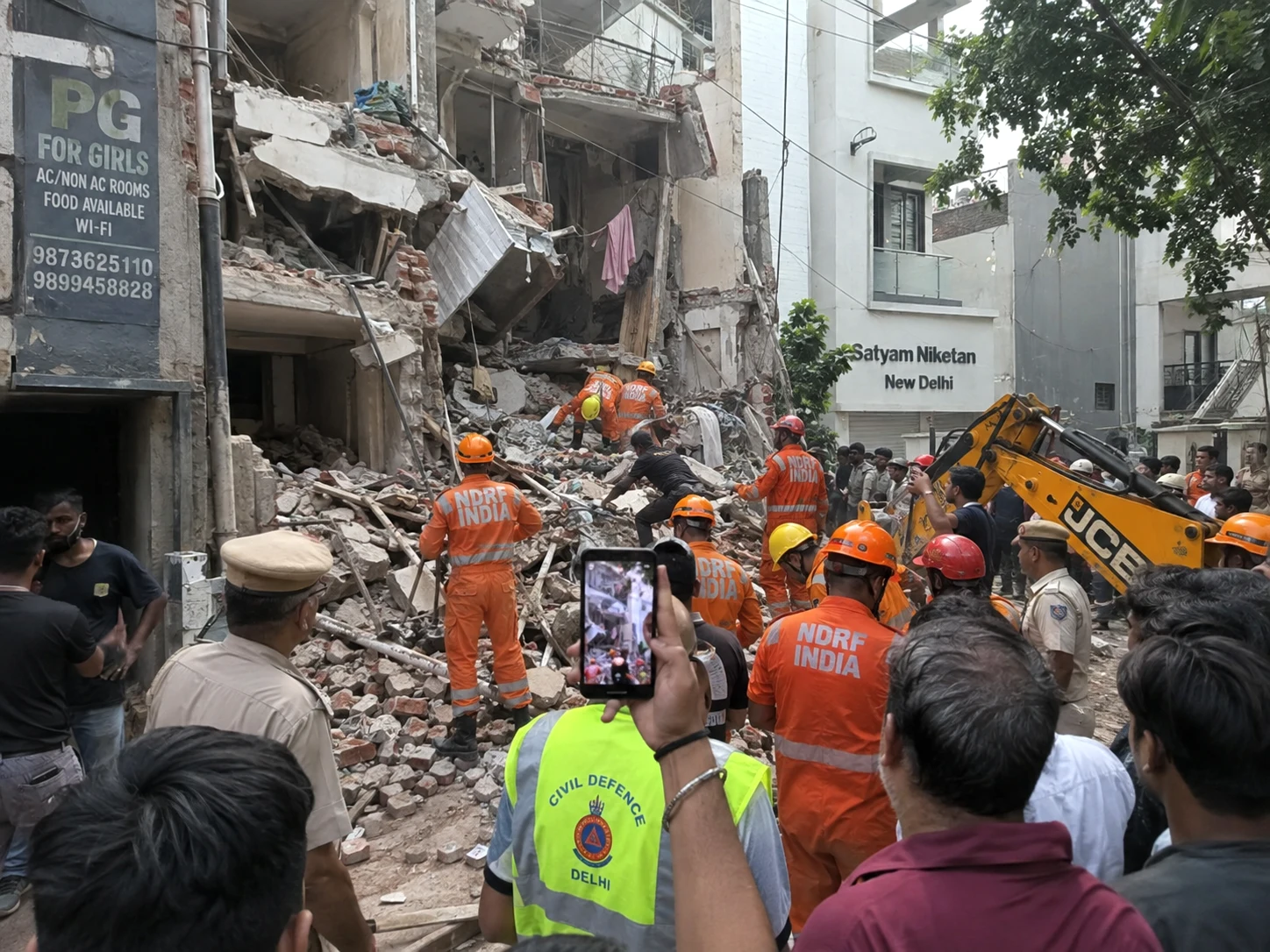
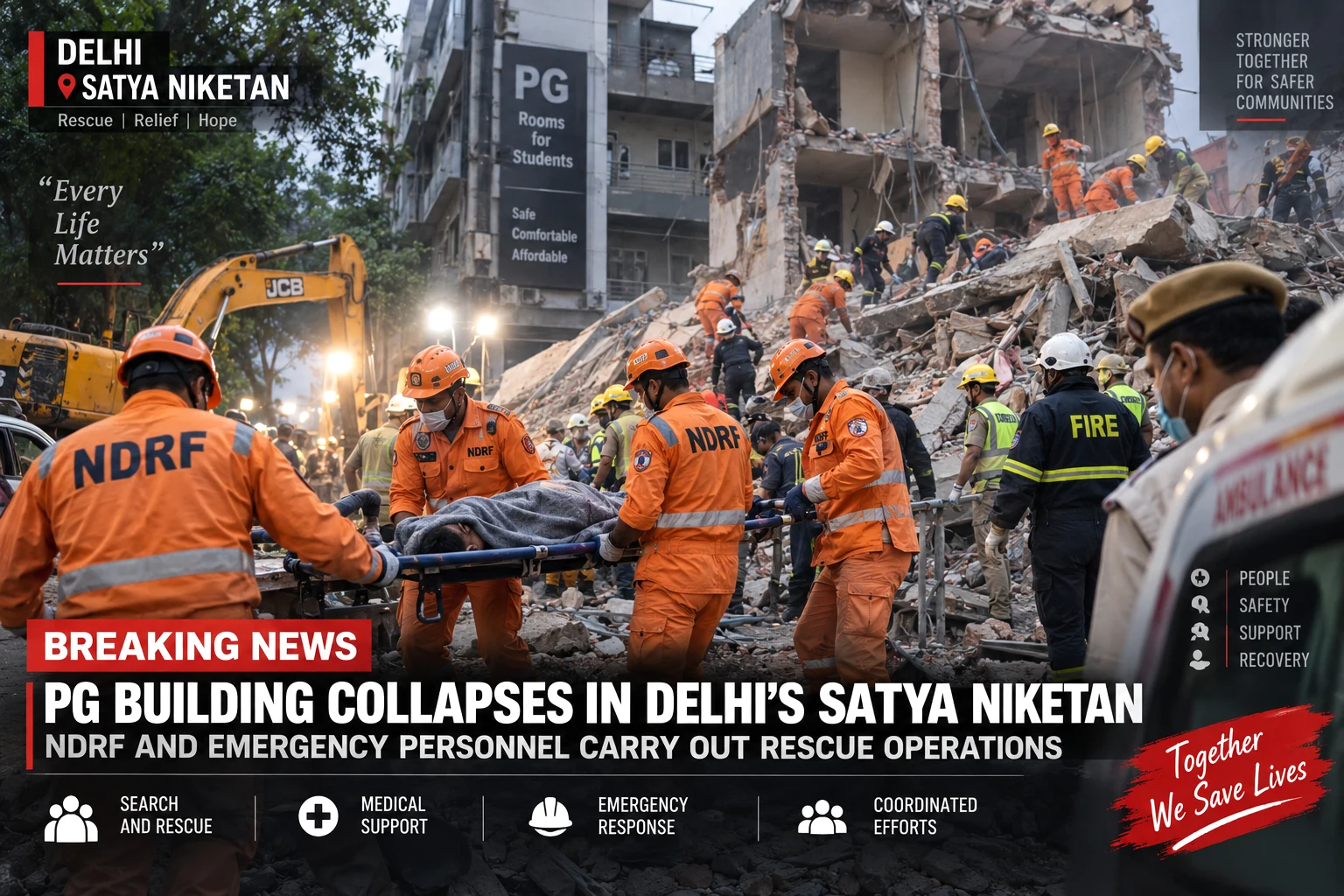
Seven people died in Delhi’s Satya Niketan PG building collapse. Arrests, MCD suspensions and court intervention have triggered wider questions over student housing and building safety.







0 Comments