Centre Declares Pakistan-Based Shahzad Bhatti Network a Terrorist Organisation Under UAPA
The Home Ministry has formally added the Shahzad Bhatti Network to the First Schedule of the UAPA, citing alleged cross-border arms, explosives and narcotics smuggling, recruitment of local criminals and the use of digital platforms for terror-related activity. The designation follows a multi-state
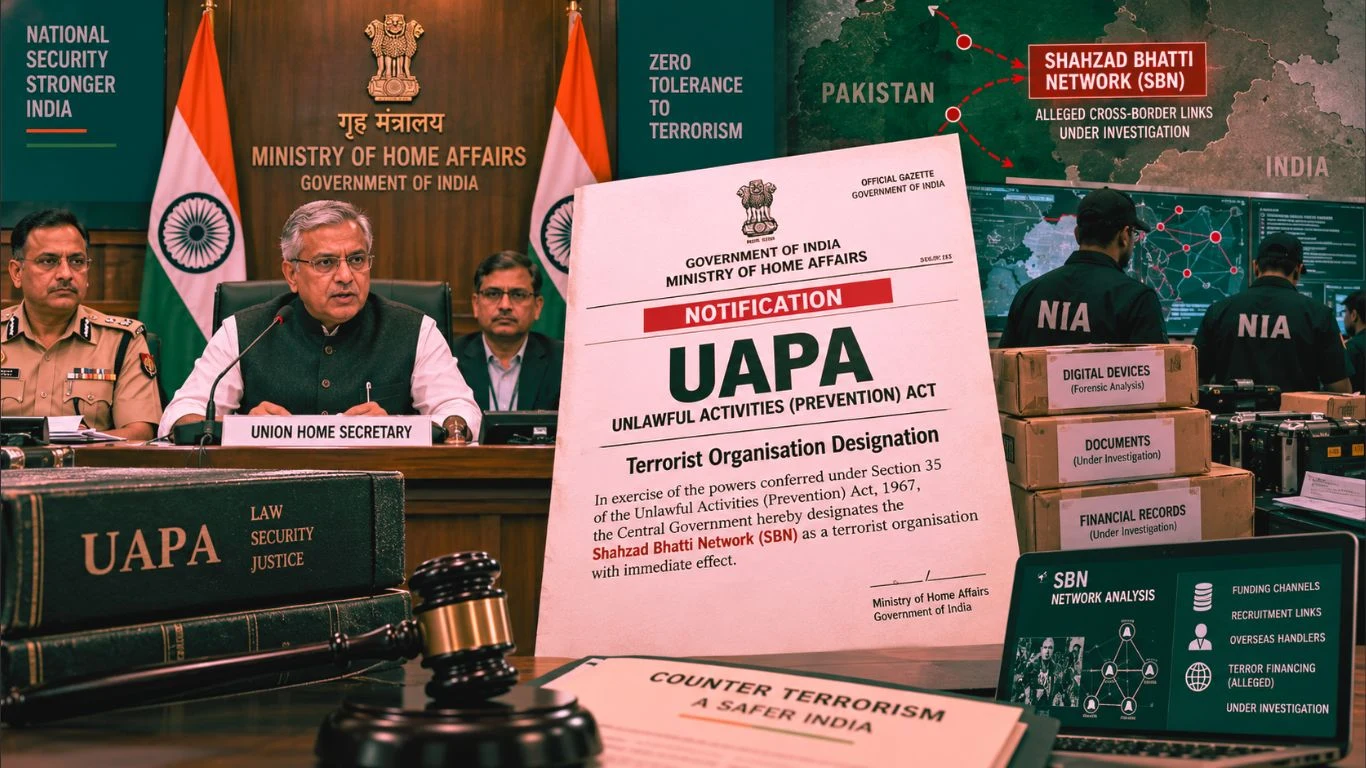
The Union Home Ministry has formally declared the Shahzad Bhatti Network (SBN) a terrorist organisation under the Unlawful Activities (Prevention) Act, marking a significant escalation in the Centre’s legal action against the Pakistan-based network.
In an extraordinary Gazette notification issued on September 16, the government exercised its powers under Section 35(1)(a) of the UAPA to add SBN to the law’s First Schedule, which contains organisations formally designated as terrorist organisations in India.
SBN has been inserted as entry No. 46 on the list. The notification is numbered S.O. 5080(E).
The Home Ministry says it believes the organisation has been involved in terrorism and participated in terrorist activity in India. The notification accuses the network of trying to draw young people and local criminals into cross-border smuggling of arms, explosives and narcotics and of using them in activities threatening India’s internal security.
The designation follows a large security operation in August in which authorities detained 253 people across 14 states while investigating alleged links to SBN. The government subsequently said more than 200 arrests and more than 80 FIRs had been recorded in cases connected to the network.
Key Takeaways
Recommended Reading
Related Stories & In-Depth Guides
Curated editorial perspectives matching this topic.
The Supreme Court has reaffirmed that arrested persons must receive the grounds of arrest in writing and in a language they understand, holding that Article 22(1) applies across criminal laws, including special statutes such as PMLA and UAPA.
The Pentagon says all U.S. bombers deployed to RAF Fairford have returned to the United States following a suspected terrorism incident near the UK base. British investigators are examining possible foreign-state involvement, while Iran denies any role.
The Ministry of Home Affairs formally designated the Shahzad Bhatti Network, or SBN, a terrorist organisation on September 16, 2026.
Gazette notification S.O. 5080(E) added SBN as entry No. 46 in the First Schedule of the Unlawful Activities (Prevention) Act, 1967.
The Centre invoked Section 35(1)(a) of the UAPA for the designation.
The government alleges that SBN recruits vulnerable youth and local criminals for cross-border movement of arms, explosives and narcotics and for terrorist activity.
The notification also accuses the network of radicalisation, mobilisation of resources with other banned entities and dissemination of provocative material through digital platforms.
An August 12 multi-state crackdown resulted in 253 detentions across 14 states; the government later said more than 200 arrests and over 80 FIRs had been recorded in cases linked to the network.
Authorities describe SBN as Pakistan-based and have alleged links with Pakistan’s ISI. The ISI connection is an Indian security-agency allegation rather than an independently adjudicated finding.
The terror designation does not automatically make every person questioned, detained or accused in an SBN-linked investigation guilty of a terrorism offence; individual liability still has to be established under law.
What the Government Notification Says
The September 16 notification is the clearest authoritative source for understanding exactly what has changed.
The Centre says SBN has an objective of involving vulnerable youth and local criminals in the smuggling of weapons, explosives and narcotics from across the border and using terrorist activity to threaten India’s democratic system, communal harmony and internal security.
The government further alleges that the network:
radicalises young people using inducements;
motivates recruits to engage in what the notification describes as anti-national activities;
mobilises resources in coordination with other banned organisations and designated entities;
promotes terrorism through violent activity; and
uses digital communication platforms to circulate provocative material.
These are formal findings and allegations recorded by the Central government for the purpose of the UAPA designation.
They should not be confused with court convictions against every individual suspected of association with the network.
SBN Becomes 46th Organisation in UAPA First Schedule
Under the UAPA, a “terrorist organisation” includes an organisation listed in the First Schedule.
The government invoked Section 35(1)(a), which empowers the Centre to add an organisation to that schedule when it believes the organisation is involved in terrorism.
The September 16 notification inserts:
“46. Shahzad Bhatti Network (SBN)”
after the previous entry No. 45.
That means the designation is not merely a police description or an intelligence-agency label. It is now a formal statutory designation under Indian anti-terror law.
Describing the group as “banned” is broadly understandable in ordinary reporting, but the most precise legal formulation is that SBN has been designated and listed as a terrorist organisation under the UAPA.
What Does the UAPA Designation Mean?
The designation allows authorities to apply the UAPA framework to activities connected with the listed organisation where the statutory requirements of the law are satisfied.
Investigations can potentially involve offences relating to membership, support, recruitment, terror financing, conspiracy and other forms of assistance depending on the facts of each case.
However, inclusion of an organisation in the First Schedule does not mean that every person who has ever been questioned in an SBN-linked investigation automatically becomes guilty of a terrorism offence.
Police and prosecutors must still establish the conduct and role of each individual.
This distinction is particularly important because hundreds of people were detained during the August crackdown, while the government’s own figures distinguish between detentions and arrests.
253 Detained Across 14 States in August Crackdown
The September designation comes about a month after one of the largest coordinated operations publicly associated with SBN.
According to an official Press Information Bureau release dated August 17, security agencies conducted a coordinated operation on August 12 that resulted in 253 detentions across 14 states.
The state-wise figures given by the government were:
Uttar Pradesh — 62
Haryana — 52
Delhi — 51
Punjab — 44
Rajasthan — 15
Maharashtra — 8
Uttarakhand — 5
Karnataka — 3
Gujarat — 3
Bihar — 3
Telangana — 2
Himachal Pradesh — 2
Jammu and Kashmir — 2
Kerala — 2
The Centre said that, cumulatively, more than 80 FIRs and 200-plus arrests had been recorded in investigations associated with the network.
Those figures should not be rewritten as “253 terrorists arrested”.
The official government wording was that 253 people were detained, while more than 200 arrests had been recorded across the larger set of cases.
Arms, Explosives and Surveillance Equipment Recovered
The August government statement said agencies had recovered material including improvised explosive devices, grenades carrying Pakistan Ordnance Factory markings, pistols, live ammunition and surveillance cameras allegedly used for espionage.
Officials cited those recoveries as evidence of what they described as direct cross-border links.
The Indian Express separately reported that officials alleged members or local operatives had been tasked with reconnaissance of police establishments, defence facilities and religious sites.
Such claims remain allegations within ongoing national-security investigations unless and until individual cases are proven in court.
Centre Calls Network Pakistan-Based
The Home Ministry and Union Home Minister Amit Shah have described SBN as a Pakistan-based network.
Announcing the designation, Shah said the organisation was involved in cross-border smuggling of arms, explosives and narcotics as well as efforts to draw young people and petty criminals into terrorism.
Indian security agencies have also described the network as being backed by Pakistan’s Inter-Services Intelligence.
That alleged ISI connection has been repeatedly stated by Indian officials and in the government’s August security narrative.
For factual reporting, however, it should remain attributed.
The public material reviewed establishes that the Indian government alleges an ISI-backed cross-border network; it does not provide an independently adjudicated finding by a court establishing every aspect of that alleged relationship.
Who Is Shahzad Bhatti?
Security-agency accounts describe Shahzad Bhatti as a Pakistan-based gangster who became the central figure around which the network was organised.
Current reports say he has operated from outside India and has been associated by Indian authorities with cross-border arms supply, recruitment through social media and alleged terror-gangster operations.
Some reports describe him as moving between Pakistan and other countries.
Those details largely originate from intelligence and police assessments rather than a public judicial determination.
The September 16 Gazette notification itself is focused on the organisation, rather than providing a detailed biography of Bhatti.
Multiple Criminal Laws Cited in Notification
The Gazette notification says criminal cases have been registered against alleged SBN cadres across multiple jurisdictions.
It lists cases invoking provisions from several laws, including:
Bharatiya Nyaya Sanhita
Unlawful Activities (Prevention) Act
Arms Act
Explosive Substances Act
Explosives Act
Information Technology Act
Official Secrets Act
Delhi Prevention of Defacement of Property Act
Immigration and Foreigners Act
The range of statutes reflects the government’s assessment that the network’s alleged activity extends beyond one type of offence.
But registration of an FIR or invocation of a criminal provision remains the beginning of a legal process, not proof of guilt.
Digital Recruitment Is a Major Part of Government’s Case
A notable element of the notification is its focus on digital communication.
The government says SBN used online platforms to disseminate provocative messages and radicalise or recruit young people and local criminals.
Authorities have separately alleged that some recruits were used for surveillance, weapons movement and other tasks.
The emphasis on online recruitment reflects a wider security concern about networks that combine conventional organised crime with remote recruitment, encrypted communication and cross-border direction.
The specific actions attributed to individual suspects will still have to be established case by case.
Why the Multi-State Dimension Matters
The user-provided description that the network is linked to “multiple states” is supported, but can be stated much more precisely.
The government’s August operation covered 14 states, making this a national rather than single-state investigation.
The largest detention numbers were recorded in Uttar Pradesh, Haryana, Delhi and Punjab.
Authorities also took action in Rajasthan, Maharashtra, Uttarakhand, Karnataka, Gujarat, Bihar, Telangana, Himachal Pradesh, Jammu and Kashmir and Kerala.
This geographical spread is one reason the Centre has described SBN as a significant internal-security threat.
It does not mean, however, that each of those states contained an established SBN organisational unit of equal size or sophistication.
The figures represent the scope of the government’s investigative crackdown.
Government Says Network Threatened Internal Security
The Gazette explicitly says the Centre believes the network poses a serious threat to:
India’s democratic system;
communal harmony; and
internal security.
The notification also says the organisation has participated in various acts of terrorism in India.
That language is the legal and policy basis used by the government for adding SBN to the UAPA schedule.
Reporting should make clear that this is now an official government determination under the UAPA, while criminal culpability in individual prosecutions remains for courts to decide.
Bottom Line
The central claim is confirmed.
On September 16, 2026, the Ministry of Home Affairs formally declared the Shahzad Bhatti Network a terrorist organisation under the Unlawful Activities (Prevention) Act.
Notification S.O. 5080(E) invokes Section 35(1)(a) of the UAPA and adds SBN as the 46th organisation in the First Schedule.
The government alleges that the Pakistan-based network recruits vulnerable youth and local criminals, facilitates cross-border movement of arms, explosives and narcotics, works with other banned entities and uses digital platforms to promote terrorism.
The designation follows a major August crackdown in which 253 people were detained across 14 states, while the Centre said more than 200 arrests and over 80 FIRs had been recorded across cases associated with the network.
Indian authorities also describe SBN as having ISI backing and direct cross-border links. Those claims form part of the government and security agencies’ case against the organisation and should remain clearly attributed.
The most accurate description is therefore that the Shahzad Bhatti Network is now legally designated as a terrorist organisation under Indian law, while allegations against individual suspected members and associates must still be established through investigation and court proceedings.
Key Takeaway
Shahzad Bhatti Network formally designated a terrorist organisation under UAPA.
Added as entry No. 46 in the First Schedule via Gazette notification.
Follows 14-state crackdown with 253 detentions.
ISI links remain Indian security-agency allegations.
The Rajatheertha Team publishes news, explainers, guides and updates across India and the world. Our coverage follows Rajatheertha's editorial, verification and corrections standards.
Ukraine has confirmed striking the Moscow Oil Refinery during an extraordinary long-range drone and missile operation against Russia, while Russian authorities say hundreds of drones targeted the capital and more than 1,000 were intercepted across the country. At least three people were reported kil
Revenue authorities are examining survey records and government-land classifications around former Chief Minister K. Chandrashekar Rao’s Erravalli property after Chief Minister A. Revanth Reddy raised allegations in the Assembly. The BRS rejects the allegations and has demanded an independent judge-
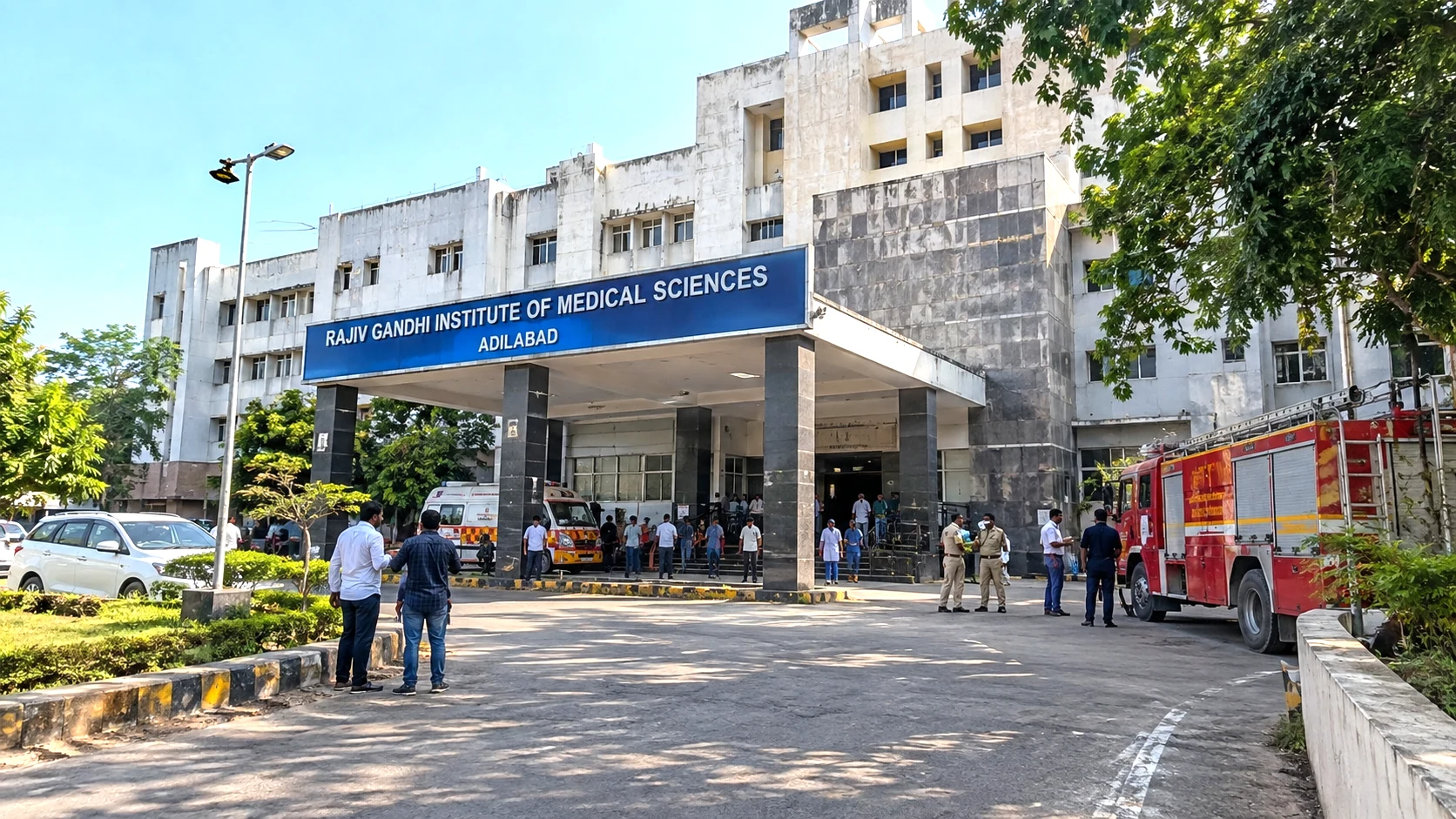
Three infants have died following a fire in the Special Newborn Care Unit at RIMS Adilabad. Officials are investigating a suspected AC-related electrical malfunction, while the Telangana government has ordered an inquiry and stronger hospital safety measures.
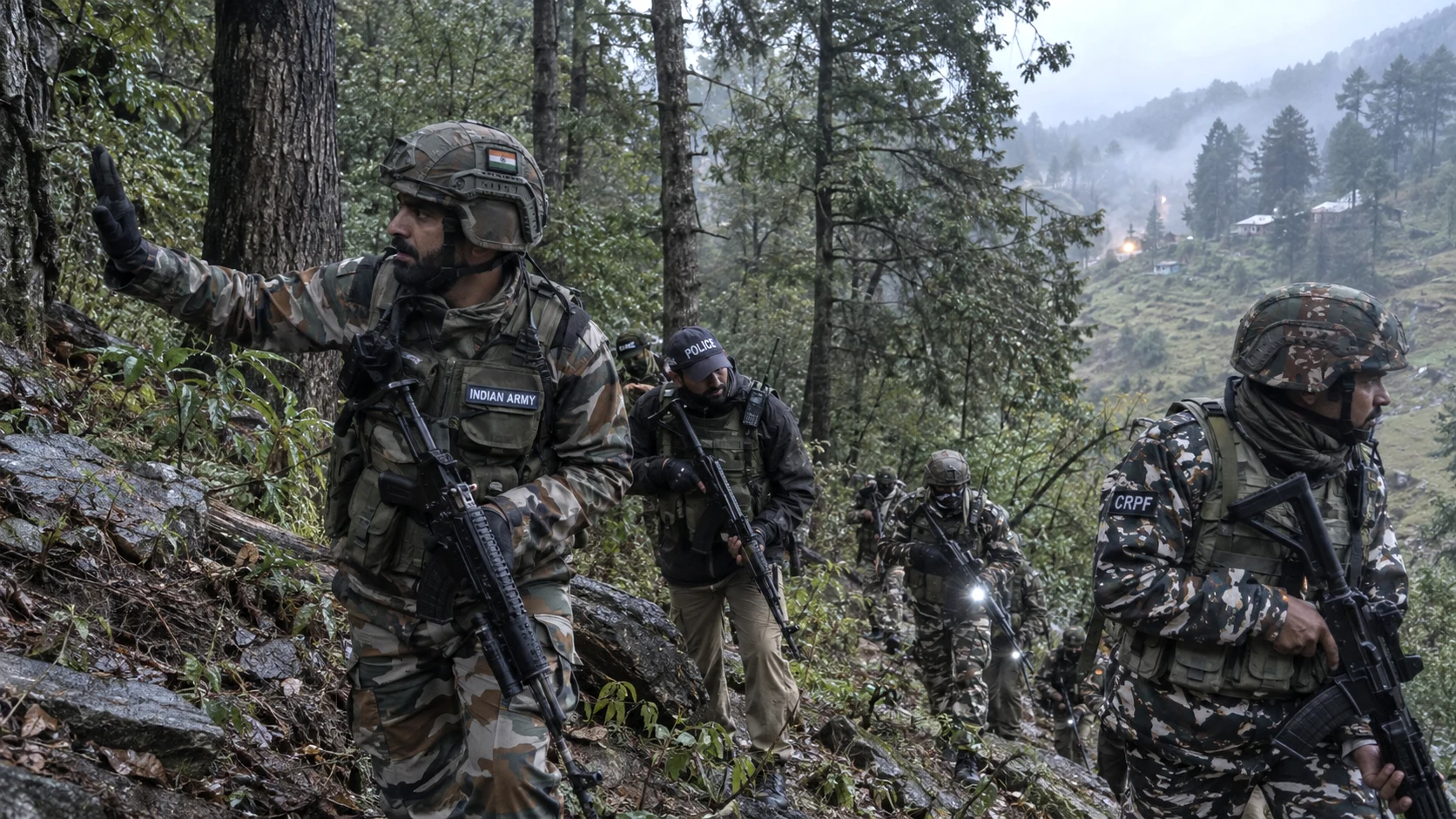
Security forces identified the slain militants as Saddam and Mustafa, both Pakistani nationals associated with Jaish-e-Mohammad. An AK-series rifle, M4 carbine, Glock pistol, grenades and ammunition were recovered after the overnight operation in the Brattal-Sohan forests of Majalta.
The Jagdalpur court imposed capital punishment on all 10 people convicted in the 2013 Maoist ambush on a Congress convoy in Chhattisgarh. Two women are among those sentenced. The death sentences must still go through the High Court confirmation process, and the defence can appeal.
Hurricane Polo has rapidly intensified into a powerful Category 4 storm off southwestern Mexico and is approaching Category 5 strength. Heavy rain, flooding, landslides and dangerous coastal conditions remain the main threats even if the storm's core stays offshore.










0 Comments