Delhi Firecracker Ban Diwali 2026: What’s Banned, Penalties and Police Action
Delhi Police have seized more than 2.5 tonnes of illegal firecrackers in two October 15 operations as Diwali 2026 approaches. Here is what Delhi’s current firecracker restrictions mean, the legal risks, how green-cracker proceedings before the Supreme Court affect the position, and how residents can
Editorial illustration of Delhi firecracker ban enforcement and Diwali 2026 rules
Table of Contents (15 sections)
NEW DELHI, October 16, 2026: Delhi residents should not assume that ordinary firecrackers — or products simply marketed as “green crackers” — can legally be bought, stored or burst in the capital this Diwali.
As of October 16, the safest reading of the verified official position is that Delhi’s restrictive firecracker regime remains the enforcement backdrop, while the Supreme Court is separately examining whether and how less-polluting firecrackers can be regulated ahead of Diwali 2026. A new Delhi-specific order creating a 2026 festive sale or bursting window could not be verified at the time of publication.
That distinction is important because Diwali falls on Sunday, November 8, 2026, and several Supreme Court proceedings concerning green crackers, barium formulations and enforcement are still developing. The September 30 proceedings in Arjun Gopal v. Union of India specifically recognised that the Delhi-NCR issue overlaps with the separate M.C. Mehta air-pollution litigation.
At the same time, enforcement is already visible on Delhi’s roads and in residential areas.
Recommended Reading
Related Stories & In-Depth Guides
Curated editorial perspectives matching this topic.
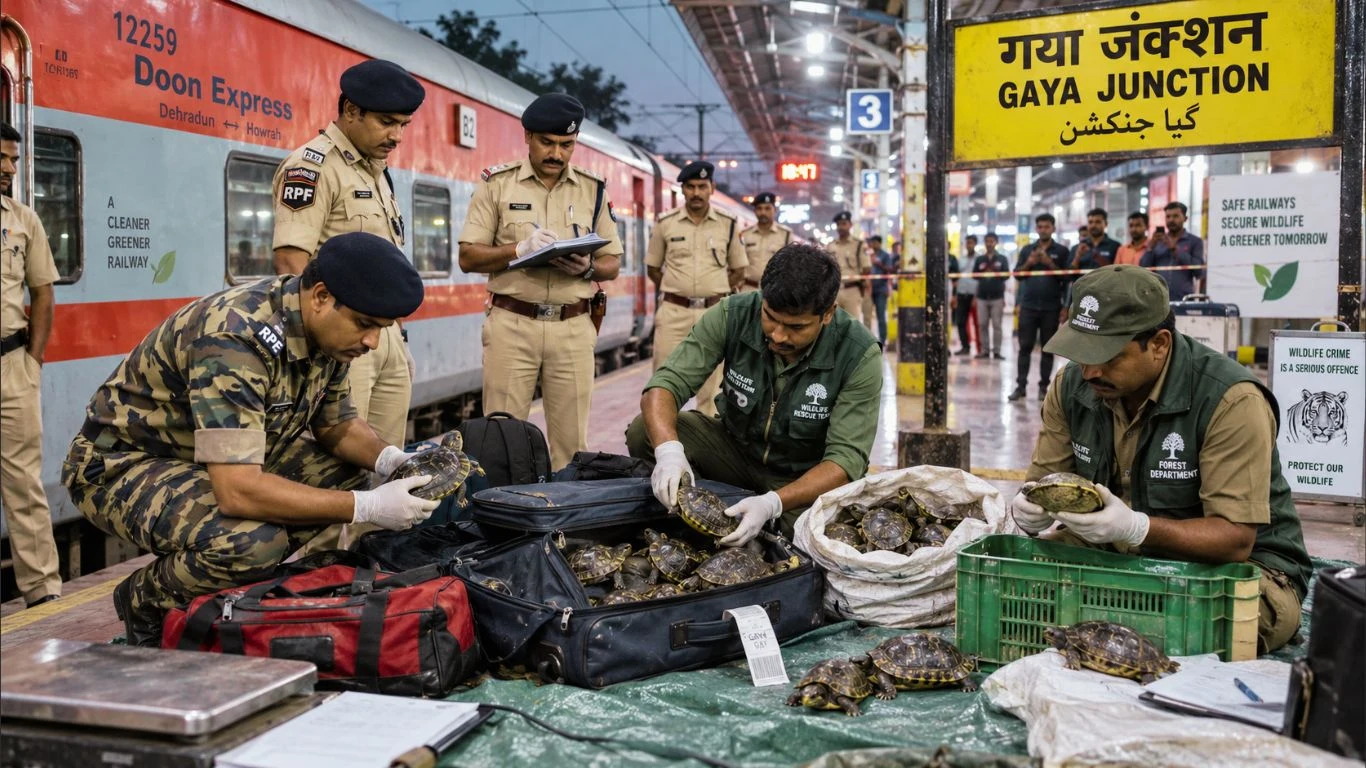
RPF and GRP personnel recovered the turtles from two sacks and a backpack left outside the toilet of sleeper coach S-8 on the Rishikesh-Howrah Doon Express. No one was arrested at the scene, and the animals have been handed to the Gaya Forest Department for identification and further legal action.
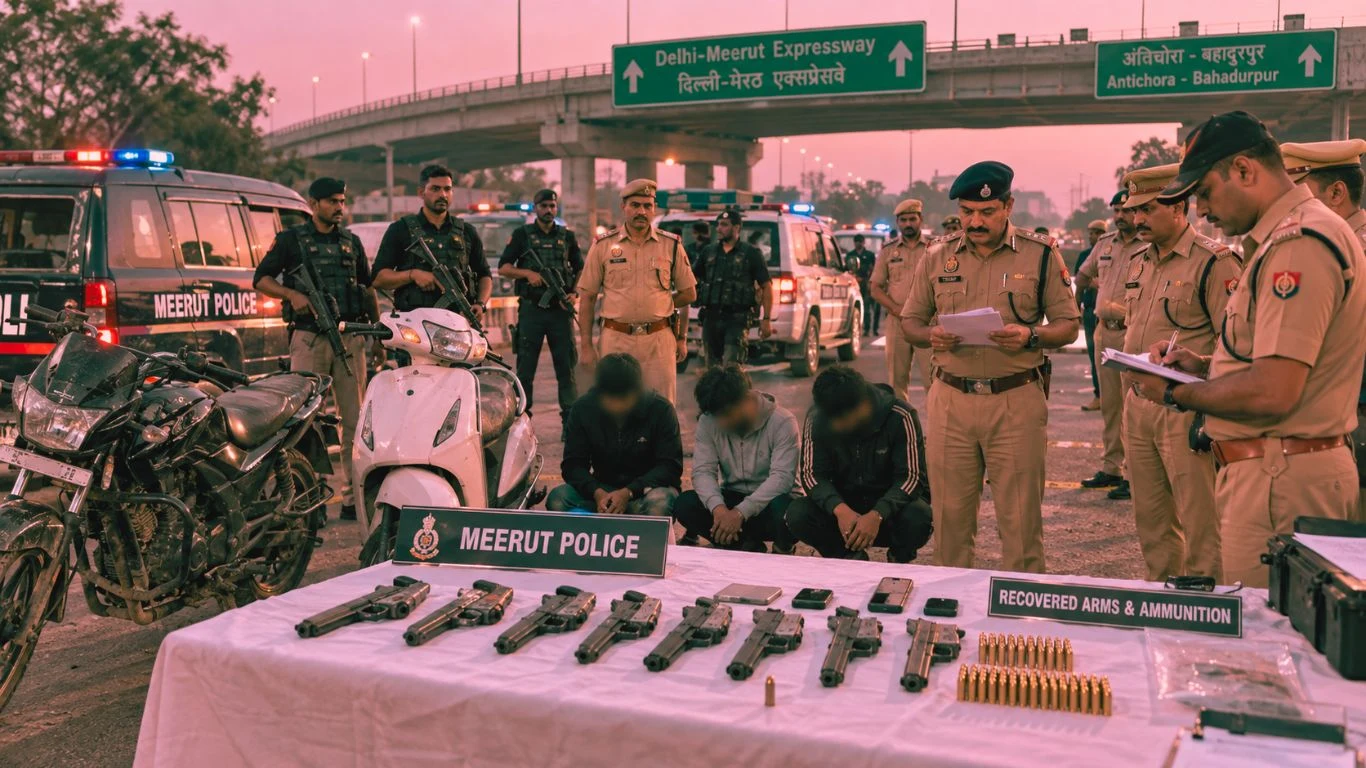
Meerut Police recovered seven .32-bore pistols, 20 live cartridges and vehicles after an operation near the Delhi-Meerut Expressway. Police-based reporting says accused Aamir allegedly admitted supplying more than 100 illegal pistols and investigators are examining claims of previous supplies to peo
Delhi Police recorded two major firecracker actions on October 15: the Crime Branch reported recovery of 2,260 kg of illegal firecrackers and apprehension of four people, while the Anti-Auto Theft Squad of Outer North district reported another 338.5 kg seizure, valued by police at approximately ₹3.5 lakh, along with the apprehension of one person.
Together, those two announced recoveries amount to about 2,598.5 kg of firecrackers.
Key Takeaways
Delhi’s restrictive firecracker regime remains in force; no verified 2026 festive sale/bursting window yet.
Police seized ~2,598.5 kg of illegal firecrackers in two Oct 15 operations.
“Green cracker” label alone does not make a product legal in Delhi.
Diwali 2026 is on November 8; Supreme Court proceedings on green crackers ongoing.
Report illegal activity on 112; do not confront sellers or handle suspected stocks.
What is allowed and what is banned in Delhi right now?
For residents, the most important point is that there is currently no verified basis to treat the approaching Diwali as an unrestricted firecracker period.
Delhi’s official pollution-control pages continue to carry directions and public information relating to the ban on firecrackers. The DPCC firecracker page, last updated on October 15, 2026, lists public advertisements and directions dealing with restrictions on manufacturing, storage, sale, online delivery and use.
The legal backdrop also includes a Delhi government direction dated December 19, 2024 imposing a complete prohibition on manufacturing, storage, sale — including online delivery — and bursting of firecrackers in the National Capital Territory throughout the year. The Supreme Court referred to that direction while dealing with Delhi-NCR firecracker restrictions in 2025.
The important caution for 2026 is that later court proceedings are considering whether some categories of reduced-emission or next-generation green crackers should be permitted under controlled conditions.
That does not mean consumers can presently assume that any box carrying the words “green cracker” is legal for sale or use in Delhi.
Ordinary or unauthorised crackers
Firecrackers that do not fall within a legally permitted category are not safe to buy merely because they are available from a shop, roadside seller or private supplier.
Police enforcement in October demonstrates that authorities are actively treating unauthorised stocks and transportation as criminal or regulatory matters.
Green crackers
The phrase “green cracker” has a specific regulatory context. It does not simply mean a cracker with green packaging or a seller’s environmental claim.
The Supreme Court has previously linked permitted green crackers to formulations and manufacturers approved through the CSIR-National Environmental Engineering Research Institute, or CSIR-NEERI, together with applicable licensing and identification requirements.
But the precise Delhi-NCR position for Diwali 2026 remains important because the Court has continued examining newer formulations.
On September 30, the Supreme Court accepted conditions proposed for specified next-generation joined green crackers, including requirements relating to specifications, licensed manufacture, noise limits, emissions, safety and traceability. The Court separately directed further open-ground testing relating to barium-containing green crackers.
Crucially, however, the Court recorded that Delhi-NCR raised an overlapping issue with M.C. Mehta v. Union of India and said it would be appropriate for the matters to be considered together.
For Delhi residents, that means a national discussion about green crackers should not be interpreted as automatic permission to buy and burst them inside Delhi.
Why the 2025 Diwali relaxation does not automatically apply in 2026
This is another source of possible confusion.
On October 15, 2025, the Supreme Court temporarily relaxed the then-complete NCR restriction as a test measure.
That order permitted specified NEERI-approved green crackers during a tightly controlled festive window. Among other conditions, sales were restricted to designated places and licensed traders, and bursting was confined to specified morning and evening periods around Diwali.
The Court expressly described that relaxation as temporary and limited to the period stated in the order.
Therefore, last year’s permission cannot simply be carried forward to November 2026.
A person cannot reasonably rely on a screenshot, social-media post or news story describing the 2025 timings as proof that identical timings automatically apply this year.
The 2026 position has to be determined from the orders and official directions applicable to 2026.
What the Supreme Court is considering for Diwali 2026
The Court has been reconsidering firecracker regulation from several directions: pollution, enforcement feasibility, newer green-cracker technology, noise levels and the composition of fireworks.
In the September 30 Arjun Gopal proceedings, the Court accepted a set of proposed safeguards for a category of next-generation joined green crackers. Those safeguards included compliance with tested formulations, manufacture by licensed manufacturers, prescribed noise standards, emission and safety requirements, identification or markings for traceability, and exclusion of banned chemicals.
The Court did not, however, resolve the Delhi-NCR question through that order because of the overlapping M.C. Mehta litigation.
During another hearing on October 12, the Supreme Court emphasised the need for restrictions that are practical and enforceable rather than rules that authorities cannot realistically implement on the ground. The Court discussed public awareness and less-polluting alternatives while continuing to consider the public-health effects of festive firecracker use.
The practical result is that residents and traders should watch for a formal order rather than relying on oral observations or headlines suggesting either a complete relaxation or an entirely new ban.
Delhi Police seize 2,260 kg in major Alipur operation
The most significant recent enforcement action involved 2,260 kg of firecrackers.
Delhi Police’s official press-release index lists the October 15 Crime Branch operation as a “massive recovery” of illegal firecrackers, with four people apprehended. The case is categorised by police under the Explosives Act.
According to police information reported by PTI, two vehicles were intercepted in the Alipur area after investigators received information about firecrackers being transported into Delhi.
Police said 1,350 kg was recovered from one vehicle and another 910 kg from the second, making a total of 2,260 kg packed in dozens of cartons and parcels.
The consignment was allegedly sourced from Kurali in Punjab and was intended for delivery to recipients in Delhi, according to the police account. Investigators are examining the people allegedly involved in loading, transporting and receiving the material.
The allegations against the individuals involved remain subject to investigation and any subsequent court proceedings.
Another 338.5 kg recovered in Outer North Delhi
A separate Outer North district action added substantially to the same day’s seizure total.
Delhi Police said the district’s AATS recovered approximately 338.5 kg of illegally stored firecrackers worth about ₹3.5 lakh and apprehended one person.
Reporting based on the police press note said the operation took place in the Bhalswa Dairy area after information about alleged storage and wholesale supply.
Officers initially found several boxes before a subsequent search led to the recovery of a much larger stock containing different types of fireworks.
A case was reported as having been registered under Section 223(b) of the Bharatiya Nyaya Sanhita and Section 9B of the Explosives Act, with investigators examining the procurement and distribution chain.
The two October 15 operations illustrate that enforcement is not limited to people actually bursting crackers on Diwali night. Transportation, storage, supply and sale can themselves trigger police action.
What are the penalties for illegal firecrackers?
There is no single universal “Delhi firecracker fine” that applies identically to every case.
The consequences depend on what a person is alleged to have done, what order or licence condition was violated, the quantity and circumstances involved, and which statutory provisions investigators invoke.
Section 9B of the Explosives Act, 1884 provides penalties for several forms of unlawful dealing with explosives.
Under Section 9B(1)(b), possession, use, sale or transportation of an explosive in violation of rules made under the Act or licence conditions can attract imprisonment of up to two years, a fine of up to ₹3,000, or both.
Manufacturing, importing or exporting explosives in contravention of the relevant rules or licence conditions can attract imprisonment of up to three years, a fine of up to ₹5,000, or both under Section 9B(1)(a).
Those statutory figures should not be interpreted as the maximum financial consequence of every possible firecracker case. Other offences, regulatory action, confiscation, licence consequences or different legal provisions may apply depending on the facts.
Section 223 of the Bharatiya Nyaya Sanhita deals with disobedience of a lawfully promulgated order of a public servant.
Where the disobedience falls within the more serious category involving danger to human life, health or safety, Section 223(b) provides for imprisonment that may extend to one year, a fine that may extend to ₹5,000, or both.
Firecrackers and vehicles carrying them may also be seized during investigation, as demonstrated by the current Delhi Police operations.
For traders and suppliers, the risk is therefore significantly broader than receiving a spot fine.
Can people be arrested for selling or storing illegal crackers?
They can face criminal proceedings where the facts satisfy the applicable law.
Delhi Police’s recent announcements themselves refer to people being apprehended in connection with alleged transportation and storage of illegal firecrackers.
Whether a particular person is arrested, issued notice, released on bail, prosecuted or ultimately convicted depends on the alleged offence and evidence.
A shopkeeper, transporter, warehouse operator or household should therefore not assume that enforcement applies only to people setting off fireworks in public.
Large unauthorised storage also creates an obvious fire and explosion hazard, particularly in densely populated residential or commercial areas.
How can Delhi residents report illegal firecracker activity?
Where someone sees what appears to be active illegal sale, large-scale storage, transportation or another situation requiring an immediate police response, Delhi Police’s official Emergency Response Support System number is 112.
The Delhi Police website lists 112 as the 24-hour toll-free emergency number and also provides an online complaint-lodging service.
Residents reporting suspected illegal stock should provide useful factual information where possible: the location, approximate time, nature of the activity and any safely obtainable identifying information.
People should not enter a warehouse, confront sellers, handle suspected fireworks or put themselves at risk simply to obtain photographs.
Pollution-related complaints can also be raised through Delhi’s Green Delhi grievance system, which is designed to route pollution complaints to the relevant agencies.
If there is an active fire or immediate fire hazard, emergency fire services should be contacted rather than treating the matter only as an environmental complaint.
Be cautious with online and social-media sellers
Consumers should be particularly careful with advertisements claiming that crackers are “Delhi approved”, “100% legal”, “pollution free” or “official green crackers”.
A seller’s description is not a legal authorisation.
Historically, Supreme Court firecracker directions have distinguished certified products and licensed traders from unauthorised products, and have also imposed restrictions on online sales in earlier regulatory frameworks.
For 2026, buyers should wait for a current Delhi-specific official order before assuming that a particular category, seller, sales channel or bursting time has been approved.
Why Delhi's air-pollution rules matter before Diwali
Firecracker enforcement is taking place against a wider winter pollution-control programme.
Delhi has already announced a set of seasonal measures covering office attendance, traffic, construction and other pollution sources. Rajatheertha previously reported that Delhi’s winter framework includes a 50% physical-office attendance rule for covered workplaces from November 1, along with other seasonal pollution controls.
That broader context matters because firecrackers are only one contributor to Delhi’s recurring winter pollution problem.
Vehicle emissions, road dust, construction activity, industrial emissions, waste or biomass burning and regional factors can also affect air quality.
Firecracker restrictions should therefore not be presented as a single solution to Delhi’s winter pollution challenge.
Diwali 2026 is on November 8
The official 2026 government holiday calendar lists Diwali, or Deepavali, on Sunday, November 8.
That leaves several weeks between the present police crackdown and the festival itself.
It also means the regulatory position could still be clarified further through a Supreme Court order, Delhi government direction or pollution-control notification before Diwali.
Any such fresh order would be more relevant than old social-media graphics or summaries of the 2025 rules.
What residents should watch for next
The next important development is a formal clarification of the Delhi-NCR rules for the 2026 festive period.
Readers should look for official information addressing several practical questions:
Whether any category of certified green cracker will receive a Delhi-NCR exemption.
Whether a limited sale period will be created.
Whether sales will be confined to designated physical locations.
Whether specific bursting hours will apply.
Whether next-generation joined green crackers are included.
How barium-containing formulations are treated after the latest scientific testing.
What identification, QR-code, manufacturer or licensing requirements will apply.
Until such a Delhi-specific relaxation is formally confirmed, consumers should not treat reports about proposed green-cracker permissions as permission to purchase or use firecrackers in the capital.
The position as of October 16
Delhi Police is actively enforcing against illegal firecracker transportation and storage, with more than 2.5 tonnes announced in two October 15 actions alone.
Delhi’s official pollution-control system continues to carry firecracker-ban directions, while Supreme Court proceedings are considering how future regulation should distinguish prohibited products from potentially permissible reduced-emission alternatives.
What has not been verified is equally important: as of October 16, a fresh Delhi-specific Diwali 2026 order creating a new legal sales-and-bursting window has not been identified in the official material reviewed for this report.
For residents, traders and online buyers, the practical approach is therefore straightforward: do not assume that a product is lawful merely because it is labelled “green”, and check the latest Delhi government, DPCC, Delhi Police and Supreme Court directions before Diwali.
With November 8 still several weeks away, this is a developing regulatory story, and the rules should be updated if the Court or government issues a new order.
Key Takeaway
Delhi firecracker restrictions remain in force; police seized over 2.5 tonnes on Oct 15.
No verified 2026 festive window yet — wait for official order before Diwali.
The Rajatheertha Team publishes news, explainers, guides and updates across India and the world. Our coverage follows Rajatheertha's editorial, verification and corrections standards.
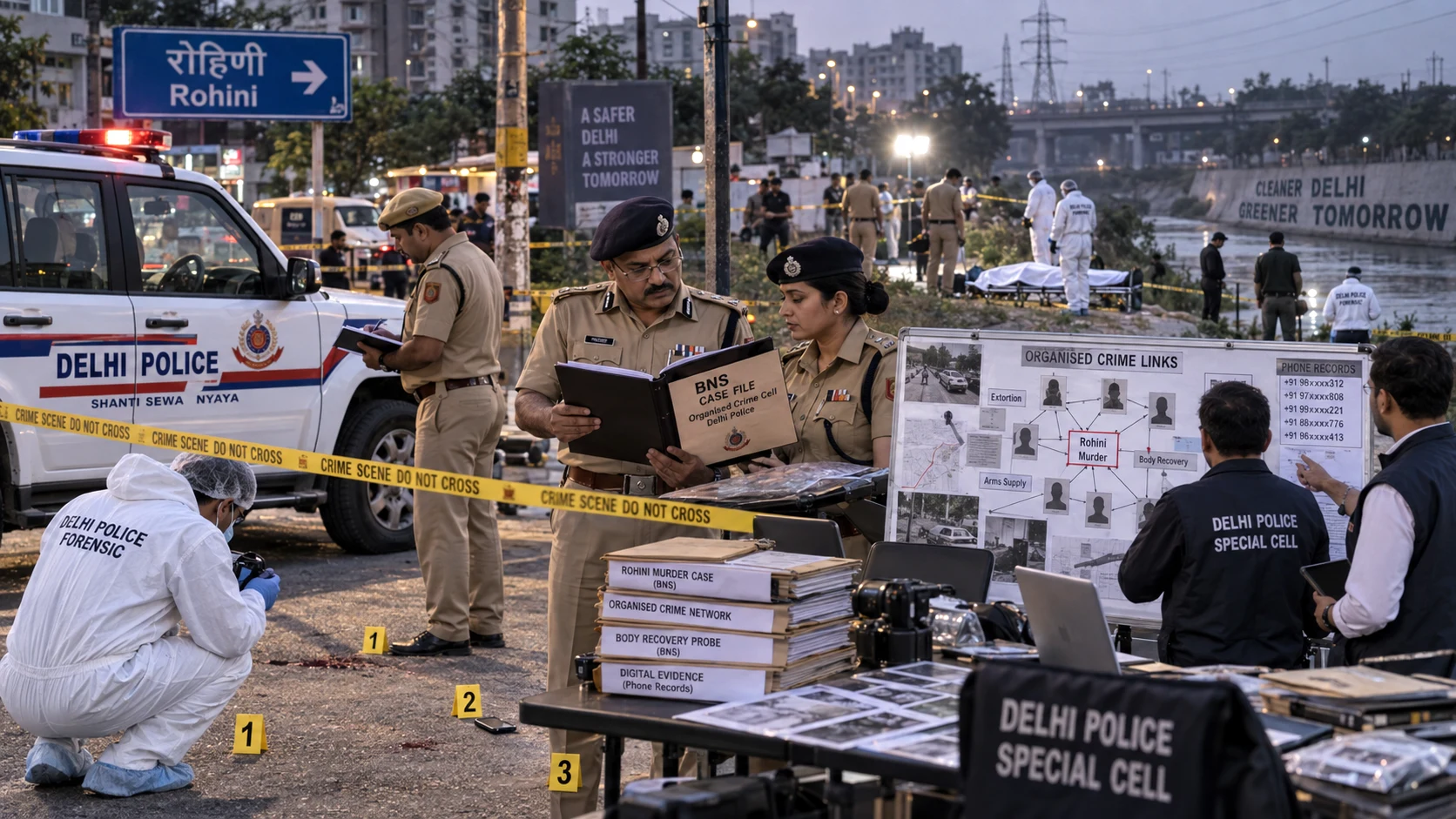
Registrations under the Bharatiya Nyaya Sanhita’s organised and petty organised crime provisions rose 16% in the first five months of 2026, while police separately arrested five people over an e-rickshaw driver’s killing and opened investigations into two unrelated body discoveries in outer Delhi.
Four deaths remain confirmed in the New Seemapuri building collapse as DNA identification of recovered remains continues. The building owner was still untraced in the latest direct police-linked update, while investigators examine structural conditions, nearby demolition work and reported cracks. Ci
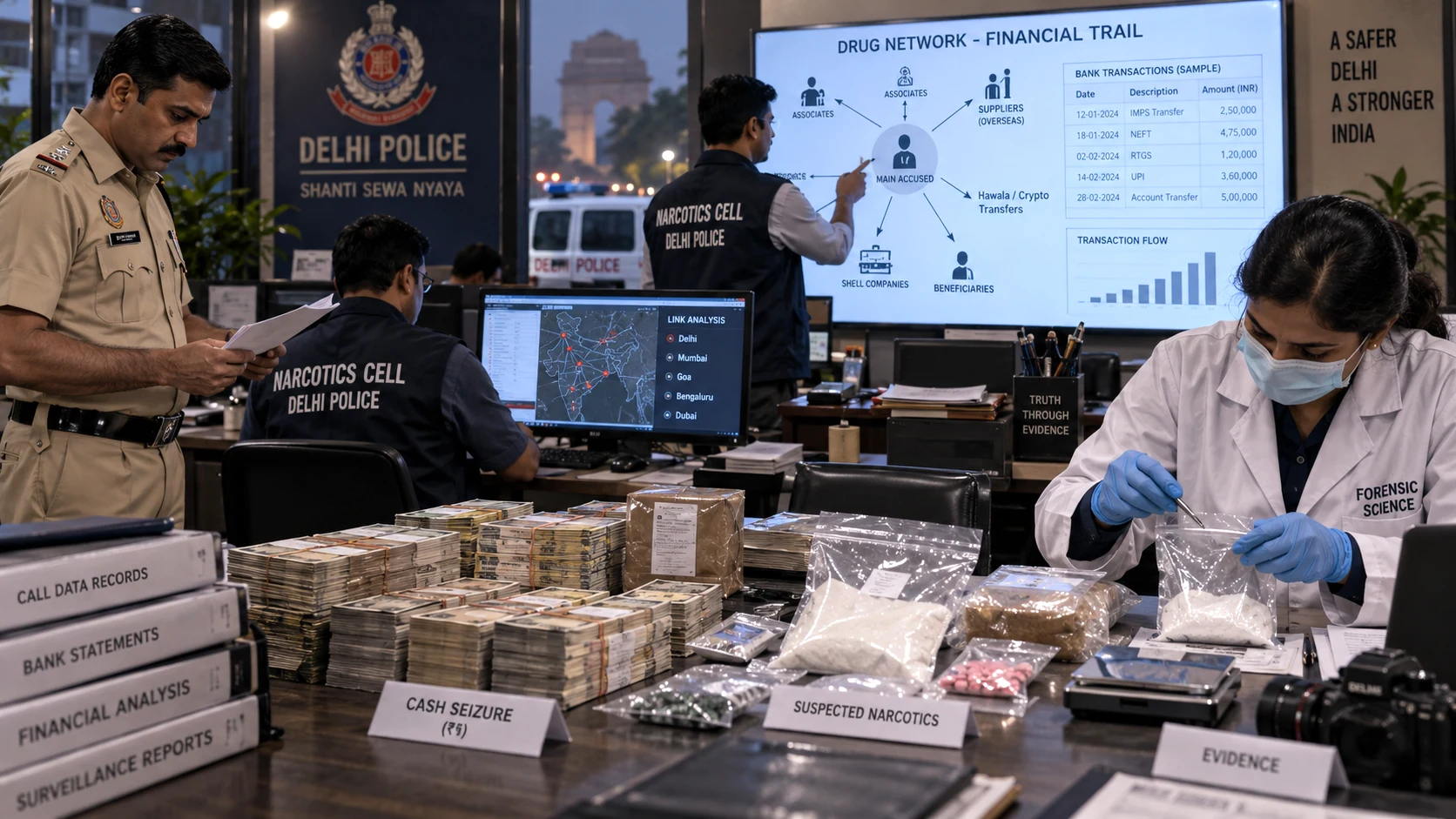
The investigation began with two alleged local peddlers arrested in April and later expanded across southeast Delhi, Noida and Faridabad. Police say the latest operation exposed an alleged supply chain involving distributors, transporters, suppliers and a stockist.
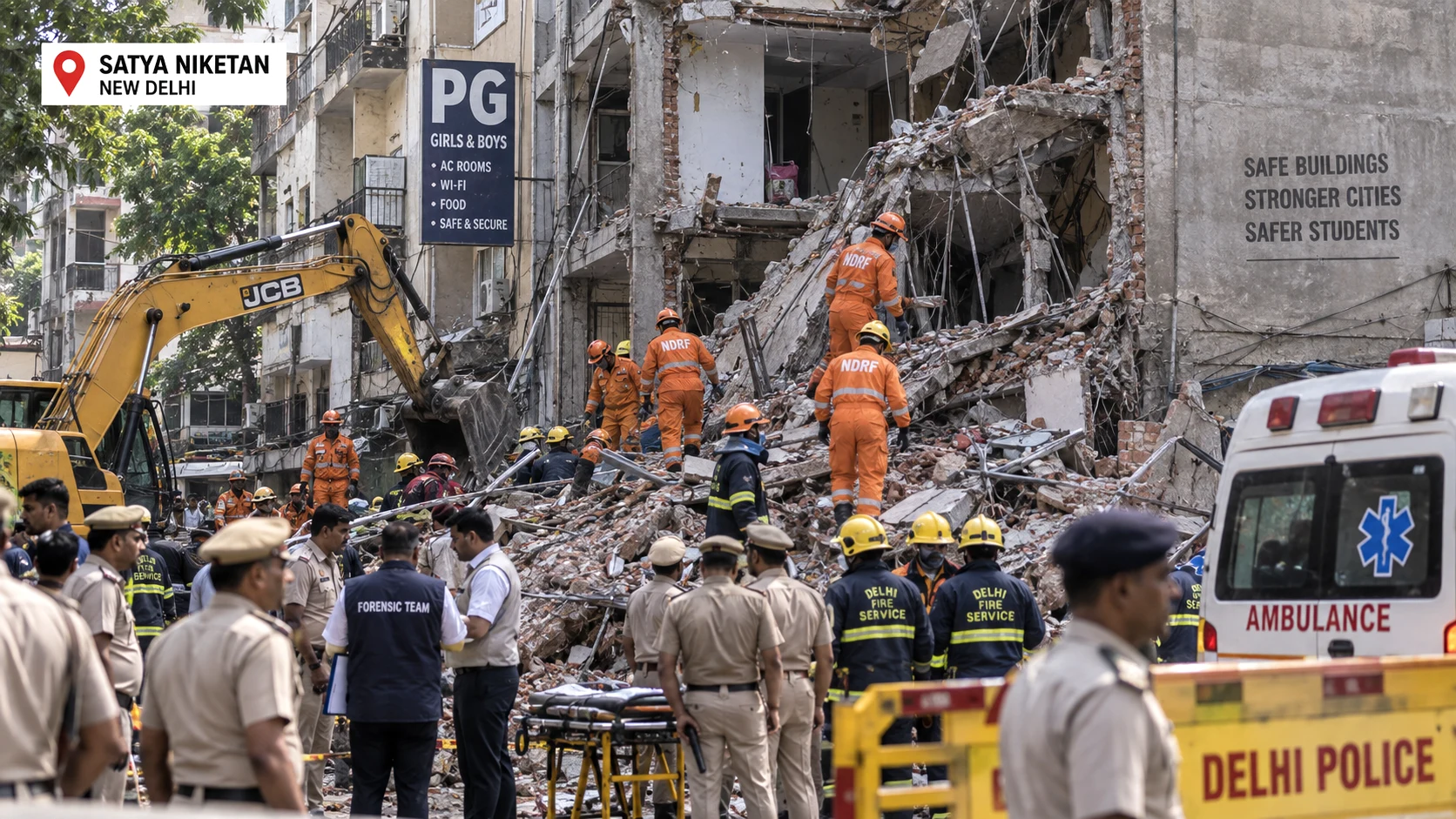
Delhi Police have arrested a PG operator and labour contractor as the Satya Niketan building collapse probe widens into repairs, structural alterations and management.
Delhi Police have confirmed four deaths in the New Seemapuri building collapse while DNA tests on recovered remains continue. Investigators are examining the structure, adjoining demolition activity and possible regulatory failures as questions over accountability grow.
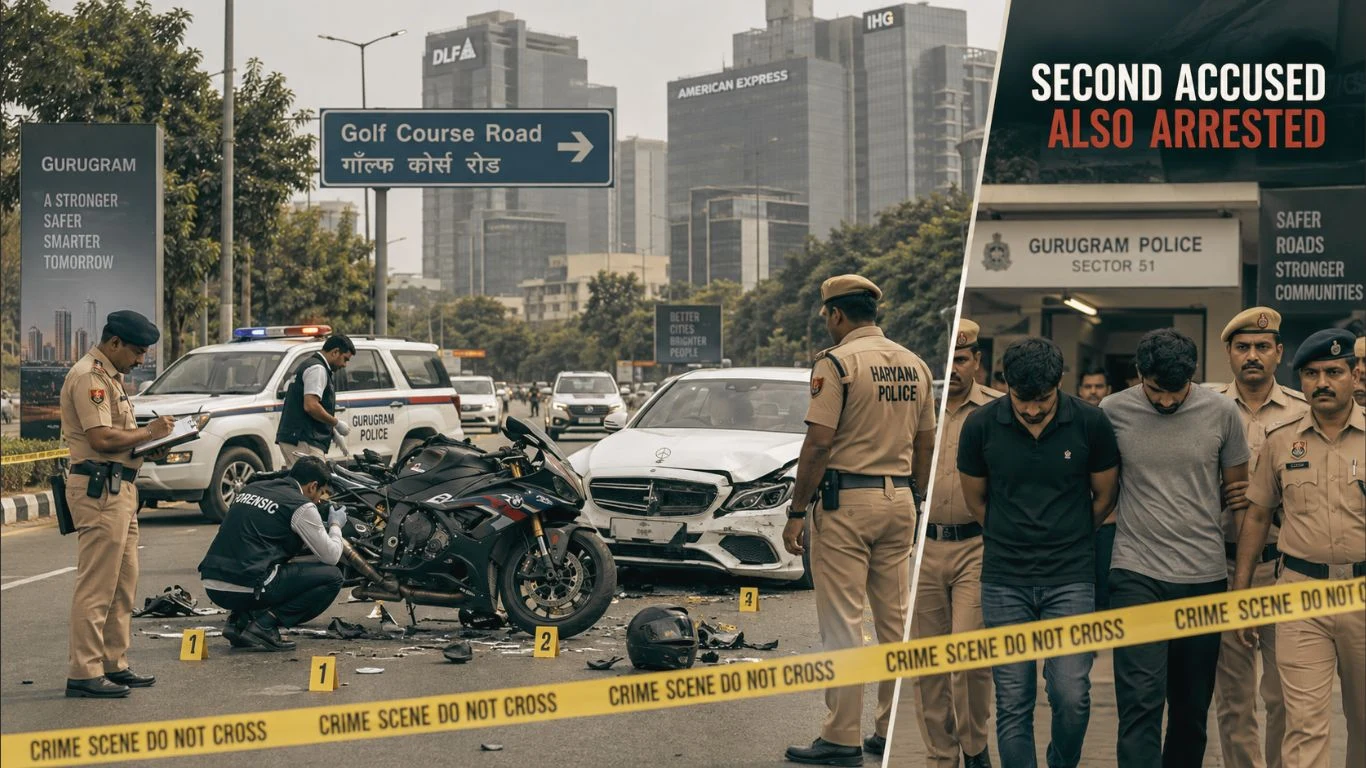
Police have arrested Kalyan Bainsla and his cousin Lavnish, who was allegedly inside the car during the September 13 Golf Course Road incident involving biker Shivani Chauhan, alias Sia. Investigators have added an attempt-to-murder charge after examining video evidence, while Sia is seeking action







0 Comments