Seemapuri Collapse: Latest Death Toll, Cause and What the Probe Says
Four deaths are confirmed in the New Seemapuri building collapse as DNA tests continue on recovered remains. Police and a magisterial inquiry are examining structural conditions, additional construction and demolition activity nearby, while questions over civic responsibility remain unresolved.
Editorial illustration representing the New Seemapuri building collapse investigation and public safety concerns
Table of Contents (15 sections)
Latest verified position checked on October 11, 2026: Four people have been confirmed dead in the New Seemapuri building collapse. DNA examination of human remains recovered from the debris is continuing, meaning the final casualty count could still change if forensic testing establishes that the remains belong to additional victims.
The distinction matters because several early reports placed the death toll at five. Delhi Police subsequently revised the confirmed figure to four after determining that recovered body parts could not automatically be counted as belonging to separate people before identification.
Eight people were also reported injured in the October 7 collapse.
The rescue operation has ended, but the investigation is far from over.
Police have registered a criminal case, a magisterial inquiry has been initiated and investigators are examining a combination of possible factors — including the structural condition of the building, additional construction, reported cracks and demolition work at an adjoining property.
None of those factors has yet been established as the definitive cause.
Questions over who should ultimately be held responsible are also unresolved. The building owner was still being traced in the latest police-linked update, while the Municipal Corporation of Delhi and the Delhi Urban Shelter Improvement Board have publicly differed over which agency bore responsibility for controlling unauthorised construction in the locality.
Recommended Reading
Related Stories & In-Depth Guides
Curated editorial perspectives matching this topic.
Delhi Police have confirmed four deaths in the New Seemapuri building collapse while DNA tests on recovered remains continue. Investigators are examining the structure, adjoining demolition activity and possible regulatory failures as questions over accountability grow.
Delhi Police have arrested a PG operator and labour contractor as the Satya Niketan building collapse probe widens into repairs, structural alterations and management.
Key Takeaways
Confirmed deaths: 4 (DNA tests ongoing — final toll may change).
Reported injured: 8.
Criminal case registered; magisterial inquiry initiated.
Probe examining structural condition, additional floors and nearby demolition.
MCD–DUSIB dispute over regulatory responsibility continues.
Latest Status
Confirmed deaths: 4
Reported injured: 8
DNA examination: Underway on recovered remains
Police investigation: Continuing
Magisterial inquiry: Initiated
Building owner: Police were continuing efforts to trace him in the latest available update
Exact engineering cause: Not yet established
Final legal responsibility: Not yet determined
This is the most important point for readers following changing casualty figures: four is the confirmed toll at present, while the final number remains subject to forensic identification.
Why Were Five Deaths Reported Earlier?
The confusion arose during a fast-moving search-and-rescue operation.
As rescuers worked through the debris, bodies as well as separate human remains were recovered. Early official-linked reports placed the number of deaths at five.
Police later revised the count.
Authorities said four people had been definitively identified as dead, while other recovered remains required DNA testing before investigators could determine whether they belonged to those already counted or to additional victims.
The four confirmed victims include three women and a young child.
Five recovered body parts were reported to have been sent for identification.
That means headlines published at different stages of the rescue operation can legitimately show different numbers.
For current reporting, however, the police-confirmed figure should take precedence over an earlier provisional tally.
What Happened in New Seemapuri?
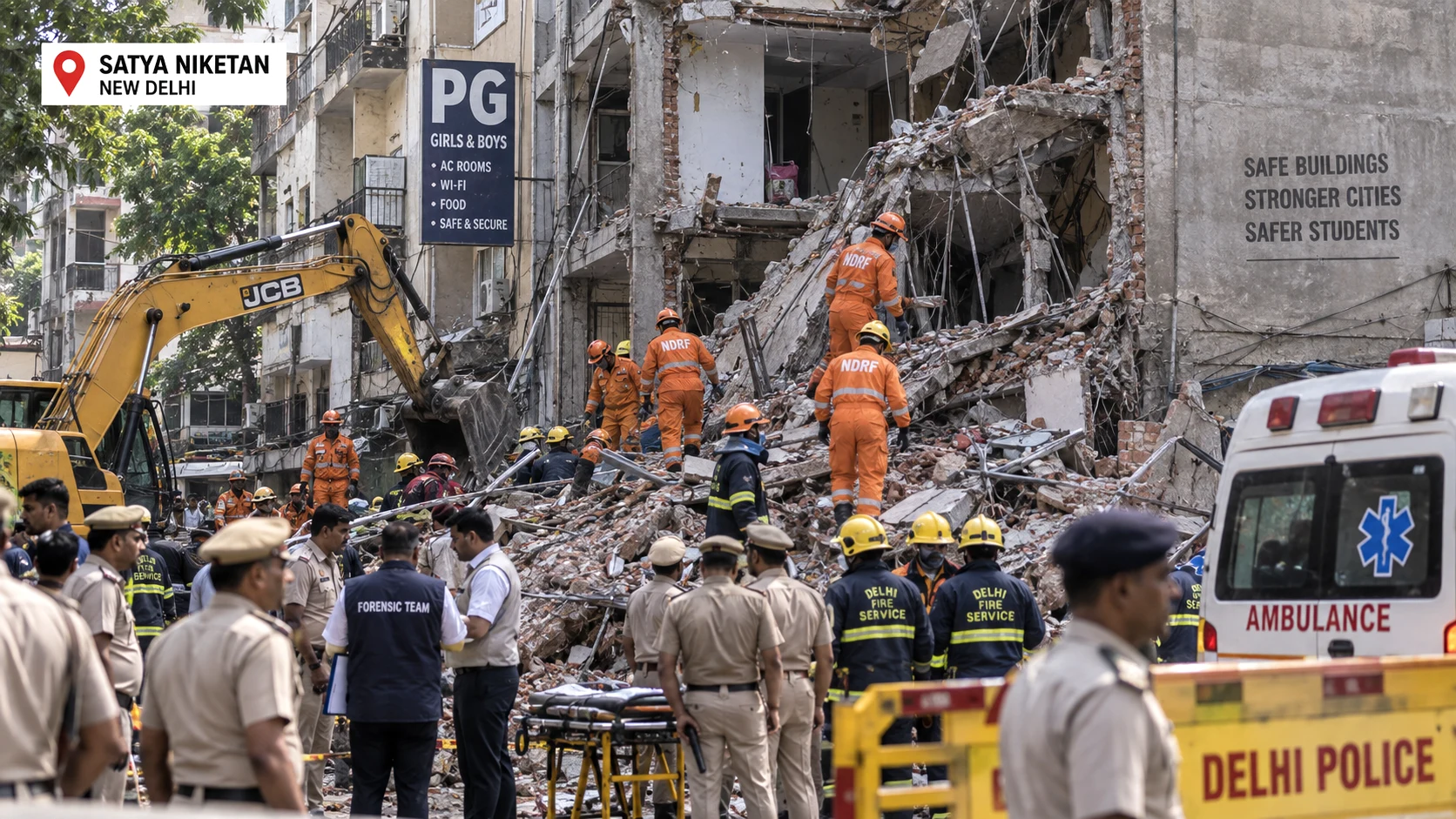
The multi-storey residential structure collapsed during the afternoon of October 7 in New Seemapuri, a densely built part of Delhi where narrow plots and tightly packed buildings can make emergency access difficult.
People inside and around the structure were caught in the collapse.
Police, Delhi Fire Services, disaster-response personnel and civic agencies joined rescue operations as teams worked through the debris and attempted to reach those trapped.
At least eight injured people were rescued and taken for medical treatment.
Search-and-rescue work continued into the following day before authorities shifted their focus towards clearing debris, securing the site and examining damaged structures nearby.
The case then moved from rescue to investigation.
That investigation now has to answer two different questions.
The first is technical: why did the building fail?
The second is legal and administrative: were actions or failures by any person, contractor, property owner or public authority connected to the collapse?
Those questions cannot responsibly be answered merely from photographs, neighbourhood accounts or the fact that the structure had multiple floors.
They require forensic, engineering and documentary evidence.
What We Know
Four deaths have been confirmed by Delhi Police.
Eight people were reported injured.
Recovered human remains are undergoing DNA examination.
Police have registered a criminal case.
A magisterial inquiry has been initiated.
Investigators are examining the building's structural condition.
Possible additional construction and vertical expansion are part of the investigation.
Demolition activity at an adjoining property is also being examined as a possible contributing factor.
Officials have referred to cracks reportedly seen around the period of recent tremors.
The building owner was still being traced in the latest available police-linked reporting.
Authorities also took safety action around nearby structures affected by the collapse.
What We Don't Know Yet
The final death toll cannot be treated as completely settled until forensic identification of the recovered remains is completed.
The precise engineering sequence that caused the building to fail has not been publicly established.
It is not yet known whether one factor caused the collapse or whether several vulnerabilities combined.
There is no final technical finding establishing that earthquake tremors caused the building to collapse.
There is no final finding establishing that neighbouring demolition activity alone caused it.
Investigators have not completed their assessment of whether structural additions or alterations weakened the building.
No court has determined the criminal liability of the building owner or any other person in connection with the collapse.
The administrative responsibility of different civic bodies has also not been finally resolved.
These uncertainties are important because a plausible explanation is not the same thing as a proven cause.
What Is the Probe Examining?
1. Demolition activity beside the building
One of the most important lines of inquiry concerns demolition work reportedly taking place at a neighbouring property.
District authorities have said preliminary information indicated that machinery had been used during that work in the days before the collapse.
Investigators must determine whether vibration or physical disturbance from the work affected the failed structure.
Even if vibration is eventually established as a trigger, that would not necessarily answer the whole question.
Engineers would still need to determine whether the building was structurally capable of resisting normal loads and whether pre-existing vulnerabilities made it unusually susceptible to disturbance.
2. Additional floors and structural loading
Authorities are also examining the building's construction history.
The collapsed structure stood on a very small plot in an area originally developed through resettlement arrangements.
Officials quoted in reporting on the case have said construction permitted for such plots was substantially lower than the eventual height of the collapsed building.
Adding floors to an existing structure can increase the loads transferred through walls, columns, beams and foundations.
But the fact that additional storeys existed does not, by itself, prove the technical cause of a collapse.
Investigators will need to examine how the structure was originally built, what additions were made, whether structural strengthening accompanied them and whether those additions complied with applicable rules.
3. Reported cracks
Cracks were also reported before the collapse, including accounts linking their appearance to recent tremors.
That evidence may be important.
But cracks can have very different meanings.
Some are cosmetic. Others can indicate movement, settlement, deterioration or serious structural distress.
Investigators must establish where the cracks appeared, how large they were, whether they were growing and whether they represented a new problem or exposed an existing weakness.
Until that assessment is complete, reporting the earthquake as the established cause would be premature.
4. Foundation and overall structural condition
A technical inquiry is also expected to examine the building's foundation, load-bearing system and construction quality.
A structure may stand for years and still become unsafe if extra floors are added, structural walls are removed, reinforcement deteriorates, foundations are disturbed or neighbouring work changes the conditions around it.
Understanding those factors will be central to determining whether the collapse resulted from a sudden external trigger, long-term structural weakness or a combination of both.
What Does the Police Case Mean?
Delhi Police have registered a case invoking Sections 105 and 110 of the Bharatiya Nyaya Sanhita.
The provisions concern culpable homicide not amounting to murder and attempt to commit culpable homicide.
The use of serious criminal provisions reflects the gravity of the incident.
It does not mean that the guilt of a particular person has already been established.
Investigators still have to determine who authorised or carried out relevant construction, alteration or demolition work; what permissions existed; whether known risks were ignored; and whether any particular action or omission can legally be connected to the deaths and injuries.
The building owner, identified in police-linked reporting as Mohammad Anwar, was still being traced as of the latest available update.
Police seeking or questioning an owner should not be treated as proof of guilt.
Any criminal responsibility must ultimately depend on evidence and the legal process.
Why Are MCD and DUSIB Part of the Accountability Debate?
The collapse has also exposed a dispute between two public bodies.
The Municipal Corporation of Delhi has maintained that the property stood on land associated with the Delhi Urban Shelter Improvement Board and has argued that the land-owning agency had responsibility for preventing unauthorised construction.
DUSIB officials have disputed that position.
Their reported argument is that the plots were allotted decades ago as part of a resettlement arrangement and that enforcement of building plans and building-safety requirements falls within the municipal framework.
The plot on which the building stood was reported to measure around 25 square yards.
Officials cited in reporting on the dispute said such plots were originally intended for much more limited construction than the multi-storey structures now found in parts of the locality.
The conflicting institutional positions are significant, but neither automatically establishes legal responsibility for the deaths.
The inquiry will need to examine records rather than competing statements alone.
Relevant questions include whether unauthorised construction had previously been identified, whether complaints were made, whether inspections occurred, which authority had statutory power to act, whether notices were issued and whether any known danger was left unresolved.
Who Could Ultimately Be Held Responsible?
There is no responsible basis at this stage to declare that one person or agency will be held accountable.
Several forms of responsibility could emerge from the investigation.
Property-owner responsibility
Investigators may examine whether unauthorised or unsafe alterations were carried out with the owner's knowledge and whether occupants were exposed to a known structural danger.
Contractor or demolition responsibility
If engineering evidence establishes that nearby demolition or the use of machinery materially contributed to the collapse, investigators could examine who ordered, supervised and performed that work and whether appropriate safeguards were used.
Civic or regulatory responsibility
Authorities may face scrutiny over whether visibly excessive or unauthorised construction should have triggered earlier enforcement.
The MCD-DUSIB dispute makes documentary evidence about jurisdiction and previous action especially important.
Technical or professional responsibility
If engineers, contractors or other professionals were involved in structural additions, alterations or demolition, investigators may examine their roles and whether professional safety requirements were followed.
These possibilities remain investigative questions rather than findings.
What Happens Next?
The DNA results are one of the immediate developments to watch.
They should help establish whether the recovered remains belong to already identified victims or whether the official casualty count must be revised.
Investigators are also expected to continue examining construction records, the building's physical condition and activity at the adjoining property.
The magisterial inquiry can play a broader role by reconstructing the chronology before the collapse.
That could include when cracks were noticed, what demolition or construction was taking place nearby, whether residents or officials raised concerns, what changes had been made to the building and whether civic agencies had previous knowledge of unauthorised construction.
A proper structural assessment will be particularly important.
Witnesses can describe shaking, cracks, noises or demolition work.
Only technical evidence can establish how those observations relate to the actual failure mechanism.
Tenant Building-Safety Checklist
The Seemapuri collapse also carries a practical lesson for tenants living in older or heavily modified buildings.
Before renting a flat, ask whether additional floors or major structural alterations have been made to the property.
Look carefully at columns, beams, slabs and structural walls rather than judging safety only from paint and interior finishes.
Take wide, deep or rapidly expanding cracks seriously.
Pay particular attention to new cracks appearing after nearby excavation, demolition, heavy machinery or an earthquake.
Do not ignore leaning walls, visibly sagging slabs, damaged columns, falling concrete or exposed reinforcement.
If multiple doors and windows suddenly begin jamming at the same time, investigate whether building movement may be involved rather than assuming every problem is routine maintenance.
If heavy demolition or excavation is underway directly beside your building and you begin noticing new movement or cracking, document it and report it promptly.
Raise serious structural concerns with the landlord or property manager in writing so there is a dated record.
Report suspected dangerous construction to the appropriate civic authority.
If major cracks are widening rapidly, pieces of the structure are falling, walls appear to be moving or a collapse appears possible, leave the building and move to a safe distance rather than waiting for reassurance.
Do not re-enter a visibly unstable building simply to recover documents, money or belongings.
After a serious structural incident, wait for clearance from competent authorities or an appropriately qualified structural professional before returning.
Tenants cannot inspect every hidden structural element themselves, but visible warning signs should never be dismissed as merely cosmetic without assessment.
Why This Case Matters Beyond One Building
The Seemapuri collapse is not only a question of what happened to one structure.
It highlights a wider urban-safety problem in neighbourhoods where very small plots have accumulated additional floors over time.
When ownership records, land-agency responsibilities, municipal enforcement and informal construction overlap, accountability can become difficult to identify until a disaster occurs.
That institutional complexity cannot become a substitute for responsibility.
The purpose of the current investigation should be to establish the physical cause of the collapse, identify any unlawful or unsafe construction, determine whether foreseeable risks were ignored and establish whether regulatory intervention should have occurred earlier.
Those conclusions need evidence.
Bottom Line
As of the latest verified position, four people are confirmed dead in the New Seemapuri building collapse and eight were reported injured.
DNA tests on recovered human remains are continuing, so the final casualty count could still change.
Police have opened a criminal investigation and a magisterial inquiry is underway.
Investigators are examining several possible contributors, including the structural condition of the building, additional construction, reported cracking and demolition activity at an adjoining property.
The MCD and DUSIB have also differed publicly over responsibility for controlling unauthorised construction in the area.
None of those disputes or investigative leads amounts to a final determination of cause or guilt.
The next decisive evidence should come from forensic identification, technical examination of the collapse and the findings of the police and magisterial investigations.
Until then, the accurate position is clear: four deaths are confirmed, the exact cause remains under investigation and accountability has not yet been legally settled.
Key Takeaway
Four deaths confirmed; DNA tests ongoing.
Probe examining structure, extra floors and nearby demolition.
MCD–DUSIB dispute unresolved.
No final cause or legal responsibility yet established.
The Rajatheertha Team publishes news, explainers, guides and updates across India and the world. Our coverage follows Rajatheertha's editorial, verification and corrections standards.
Four deaths remain confirmed in the New Seemapuri building collapse as DNA identification of recovered remains continues. The building owner was still untraced in the latest direct police-linked update, while investigators examine structural conditions, nearby demolition work and reported cracks. Ci
Police have arrested New Seemapuri building owner Mohammad Anwar as investigators continue examining structural conditions, nearby demolition work and reported cracks. Four deaths remain confirmed while DNA identification of recovered remains is awaited.
Delhi Police have seized more than 2.5 tonnes of illegal firecrackers in two October 15 operations as Diwali 2026 approaches. Here is what Delhi’s current firecracker restrictions mean, the legal risks, how green-cracker proceedings before the Supreme Court affect the position, and how residents can
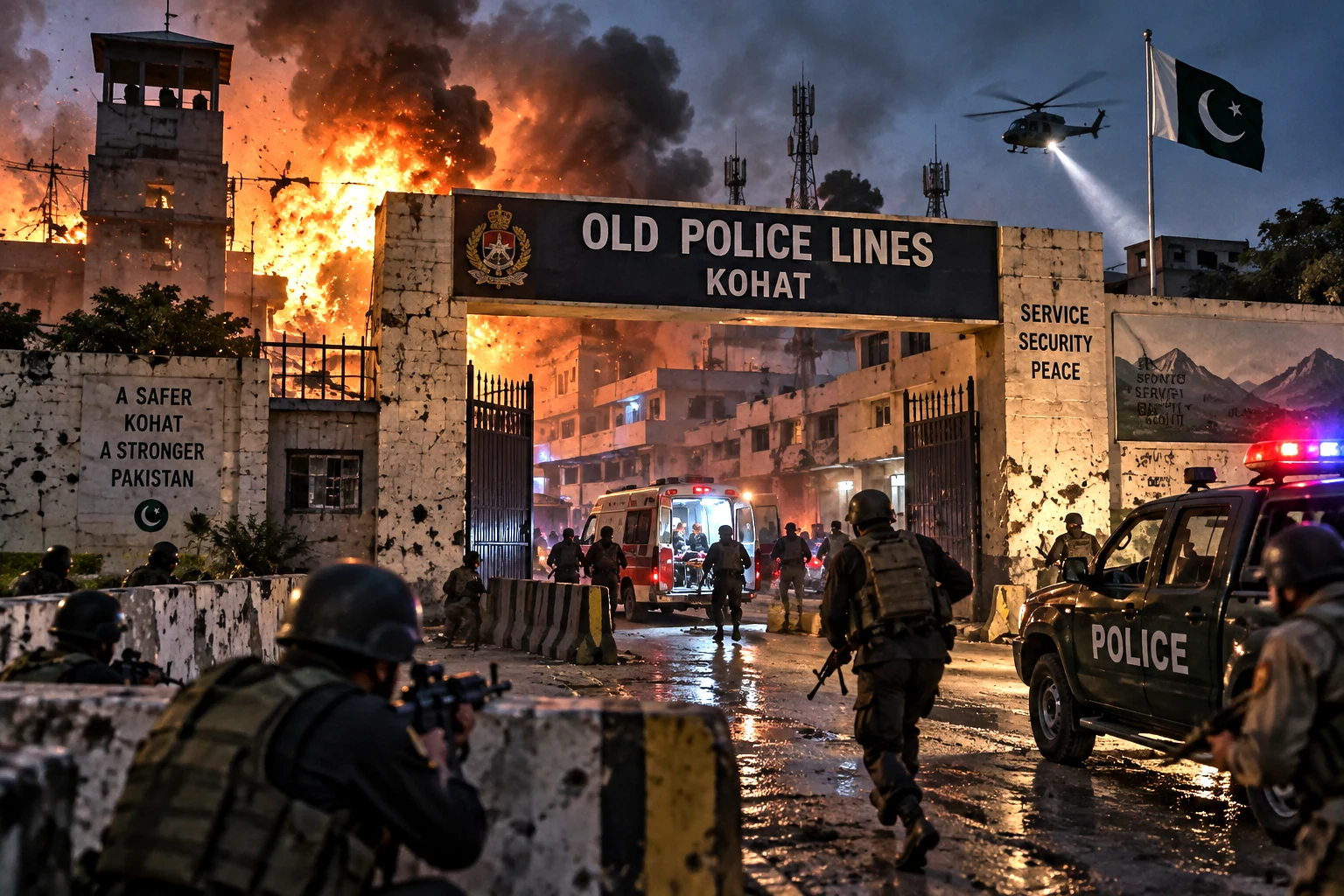
At least 24 people are reported dead after a coordinated suicide bombing and armed assault on the Old Police Lines complex in Kohat, northwestern Pakistan, while investigators examine how the attackers breached the heavily guarded compound and whether facilitators or cross-border militant networks w
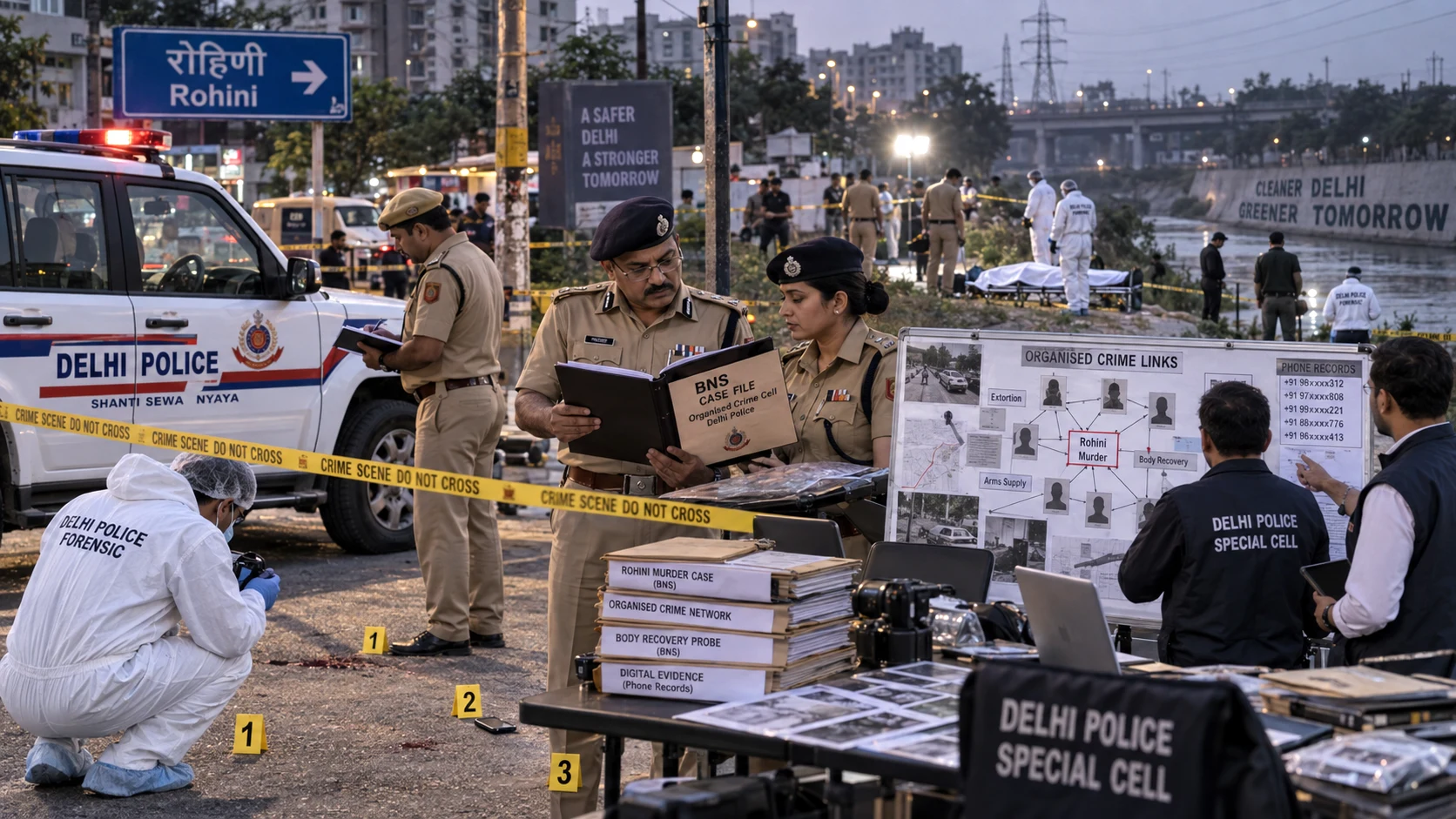
Registrations under the Bharatiya Nyaya Sanhita’s organised and petty organised crime provisions rose 16% in the first five months of 2026, while police separately arrested five people over an e-rickshaw driver’s killing and opened investigations into two unrelated body discoveries in outer Delhi.
The investigation began with two alleged local peddlers arrested in April and later expanded across southeast Delhi, Noida and Faridabad. Police say the latest operation exposed an alleged supply chain involving distributors, transporters, suppliers and a stockist.









0 Comments