Seemapuri Collapse Update: Owner Untraced, DNA Tests Continue as Safety Action Widens
Four deaths remain confirmed in the New Seemapuri building collapse as DNA identification of recovered remains continues. The building owner was still untraced in the latest direct police-linked update, while investigators examine structural conditions, nearby demolition work and reported cracks. Ci
Editorial illustration representing the ongoing New Seemapuri building collapse investigation and safety action ---
Table of Contents (16 sections)
NEW DELHI, October 12, 2026: Four deaths remain officially confirmed after the October 7 building collapse in New Seemapuri, while DNA examination of human remains recovered from the debris is continuing and investigators are still trying to establish exactly why the multi-storey structure failed.
The latest direct police-linked reporting located by Rajatheertha said building owner Mohammad Anwar had not been traced as of October 10. A review of subsequent reliable reporting through October 12 found no confirmed announcement that he had been arrested.
That distinction is important. Some earlier reports described Anwar as absconding, but until police announce an arrest or provide a newer status, the more precise formulation is that he was being sought and remained untraced in the latest verified update.
The investigation is also broader than the whereabouts of the owner.
Police and district authorities are examining the building's structural condition, reported additions to the structure, demolition activity at an adjoining property and claims that cracks appeared around the time tremors from an Uttarakhand earthquake were felt in Delhi.
None of those factors has yet been established as the definitive cause.
Recommended Reading
Related Stories & In-Depth Guides
Curated editorial perspectives matching this topic.
Police have arrested New Seemapuri building owner Mohammad Anwar as investigators continue examining structural conditions, nearby demolition work and reported cracks. Four deaths remain confirmed while DNA identification of recovered remains is awaited.
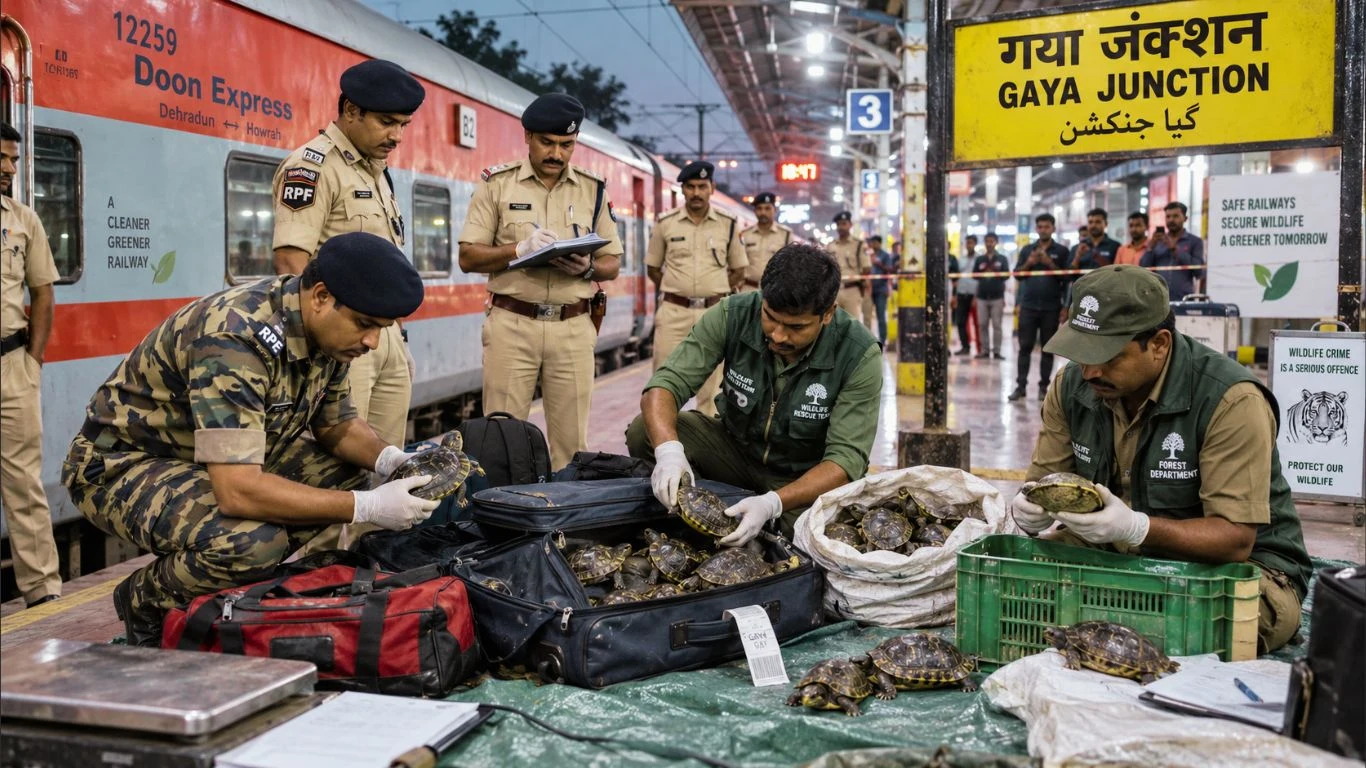
RPF and GRP personnel recovered the turtles from two sacks and a backpack left outside the toilet of sleeper coach S-8 on the Rishikesh-Howrah Doon Express. No one was arrested at the scene, and the animals have been handed to the Gaya Forest Department for identification and further legal action.
Meanwhile, civic agencies have begun taking additional safety action in New Seemapuri. Government data released over the weekend said one unsafe building in Seemapuri was demolished and notices were issued to three other houses after the collapse.
That action comes against the background of a much wider Delhi campaign against unsafe and unauthorised construction.
Key Takeaways
Confirmed deaths: 4 (DNA tests on recovered remains ongoing).
Building owner Mohammad Anwar: Still untraced in latest verified update.
Civic action: One unsafe building demolished; notices to three others in Seemapuri.
No final technical cause announced yet.
What Has Changed Since the Previous Update?
Three developments are now particularly important.
First, the confirmed death toll remains four rather than five. Human remains recovered separately from the identified bodies are undergoing DNA examination before authorities decide whether they represent additional victims.
Second, Mohammad Anwar remained untraced in the latest direct police-linked update available. No reliable report reviewed through October 12 confirms that police have arrested him.
Third, the civic response around Seemapuri has widened. One unsafe structure has been demolished and three other houses have received notices, while Delhi authorities have disclosed larger enforcement figures covering unsafe and unauthorised properties across the capital.
These developments add to the story without changing the central investigative fact: authorities have not yet announced a final technical cause for the collapse.
Four Deaths Are Confirmed — Why Earlier Reports Said Five
Casualty figures changed during the rescue operation because bodies and separate human remains were recovered from the debris.
At one stage, reports said five people had died.
Delhi Police later revised the confirmed figure to four, explaining that body parts recovered separately could not automatically be counted as belonging to additional victims.
DNA examination is therefore crucial.
The testing is intended to establish whether the recovered remains belong to people who have already been counted among the four confirmed dead or to one or more additional victims.
Until that process is completed, four is the appropriate confirmed toll.
Eight people were also reported injured in the collapse.
The search-and-rescue operation has ended, shifting the focus from emergency rescue to forensic identification, structural examination and questions of criminal and administrative responsibility.
What Is the Latest Status of Building Owner Mohammad Anwar?
The latest direct police-linked report located by Rajatheertha, published on October 10, said Mohammad Anwar had yet to be traced.
Anwar was reportedly not inside the property when the building collapsed.
His connection to the investigation is significant because police are examining the construction history of the property and whether unsafe additions, alterations or other decisions contributed to the disaster.
However, the fact that police are looking for a property owner does not by itself establish criminal guilt.
Investigators must still determine what work was carried out, who authorised it, whether permissions were required or obtained, whether structural risks were known, and whether any specific act or omission can legally be linked to the deaths and injuries.
As of the latest verification for this update, Rajatheertha found no reliable October 11 or October 12 report announcing Anwar's arrest.
That status should be updated immediately if Delhi Police subsequently announces that he has been detained, questioned or arrested.
What Case Have Police Registered?
Delhi Police have registered a criminal case in connection with the collapse.
Reporting on the case says Sections 105 and 110 of the Bharatiya Nyaya Sanhita have been invoked. These provisions relate respectively to culpable homicide not amounting to murder and attempt to commit culpable homicide.
Public reports have not been completely consistent in describing how the accused are recorded in the case. Some reporting said the case was registered against the building owner, while other reporting described the FIR as being against unknown persons while police attempted to trace Anwar.
For that reason, it would be premature to state that a court has found Anwar—or anybody else—responsible.
An FIR begins a criminal investigation. It is not a finding of guilt.
A magisterial inquiry has also been initiated, creating a separate process for examining the circumstances around the collapse and possible administrative or safety failures.
What Is the Police Probe Examining?
Investigators appear to be working across several possible explanations rather than treating one early theory as settled.
1. Demolition Work at an Adjoining Property
One of the most important lines of inquiry concerns demolition activity at a neighbouring building.
District authorities have said preliminary information indicated that demolition work involving machinery had been underway nearby before the collapse.
Investigators now have to establish whether vibration or physical disturbance from that work had any effect on the structure that collapsed.
Even if nearby demolition is eventually found to have played a role, that may not answer every question.
A technically sound building should have a measurable capacity to withstand ordinary environmental and construction-related stresses. Investigators therefore have to determine whether the collapsed structure already had weaknesses that made it unusually vulnerable.
2. The Building's Structural Condition
The building itself is under scrutiny.
Reports have referred to its foundation, construction quality and the possibility that additional floors or alterations were made over time.
There is also an unresolved discrepancy in public descriptions of the property.
Municipal information described it as a ground-plus-three-floor structure on a plot of roughly 25 square yards in a jhuggi-jhopri area associated with the Delhi Urban Shelter Improvement Board.
Other police-linked and media reports repeatedly described the building as five storeys.
That difference is not merely semantic.
Investigators will need construction records, property documents, measurements and physical evidence to establish the building's actual configuration at the time of collapse and how it had changed over the years.
3. Additional Floors and Increased Structural Loads
Residents and other accounts have said floors were added to the structure over time.
Adding storeys increases the loads carried through walls, columns, beams and foundations.
But additional floors alone cannot responsibly be declared the cause without an engineering assessment.
Investigators need to establish whether additions were made, when they were built, what structural system supported them, whether reinforcement was added and whether the work complied with applicable rules.
The key question is not simply whether the building became taller.
It is whether its structural system was capable of carrying the loads placed on it safely.
4. Cracks Reported Around the Time of the Earthquake
The earthquake connection has received substantial attention because residents reported cracks after tremors were felt in Delhi.
An earthquake did occur.
The National Center for Seismology recorded a magnitude-4.9 earthquake in Chamoli, Uttarakhand, at about 10:23 p.m. on October 6. It was recorded at a depth of 13 kilometres, and tremors were felt in Delhi-NCR.
The New Seemapuri building collapsed the following afternoon.
That sequence makes the reported cracks relevant evidence.
It does not prove that the earthquake caused the collapse.
Investigators would need to determine whether the cracks were new, whether they affected structural components, whether they widened after the tremor and whether the building already had serious vulnerabilities.
A crack can range from superficial plaster damage to evidence of substantial structural movement.
Only technical inspection can determine its significance.
Why the Earthquake Should Not Yet Be Called the Cause
The temptation after a disaster is to connect the most visible preceding event to what happened next.
In this case, the earthquake occurred before the collapse and residents reported cracks.
That makes the tremor a legitimate investigative lead.
But several other factors are also being examined: possible additional construction, the building's foundation and structural condition, neighbouring demolition activity and the broader history of the property.
A final engineering explanation may identify one principal trigger.
It may also find that several vulnerabilities acted together.
Until technical findings are released, a headline saying the earthquake "caused" the Seemapuri collapse would go beyond the available evidence.
Fresh Safety Action in Seemapuri
The aftermath has now moved beyond the collapsed property itself.
New government data says one unsafe building in Seemapuri was demolished and three other houses were issued notices.
This suggests authorities are examining risks to neighbouring structures rather than limiting their response to the rubble of the collapsed building.
The Seemapuri action is also taking place during a larger municipal enforcement campaign across Delhi.
Figures released for the period from September 6 to October 10 said the Municipal Corporation of Delhi took action against 1,046 properties across its 12 zones.
The figures included 282 properties that were sealed and 47 dangerous buildings that were demolished.
The broader drive should not be inaccurately described as having begun solely because of the Seemapuri disaster.
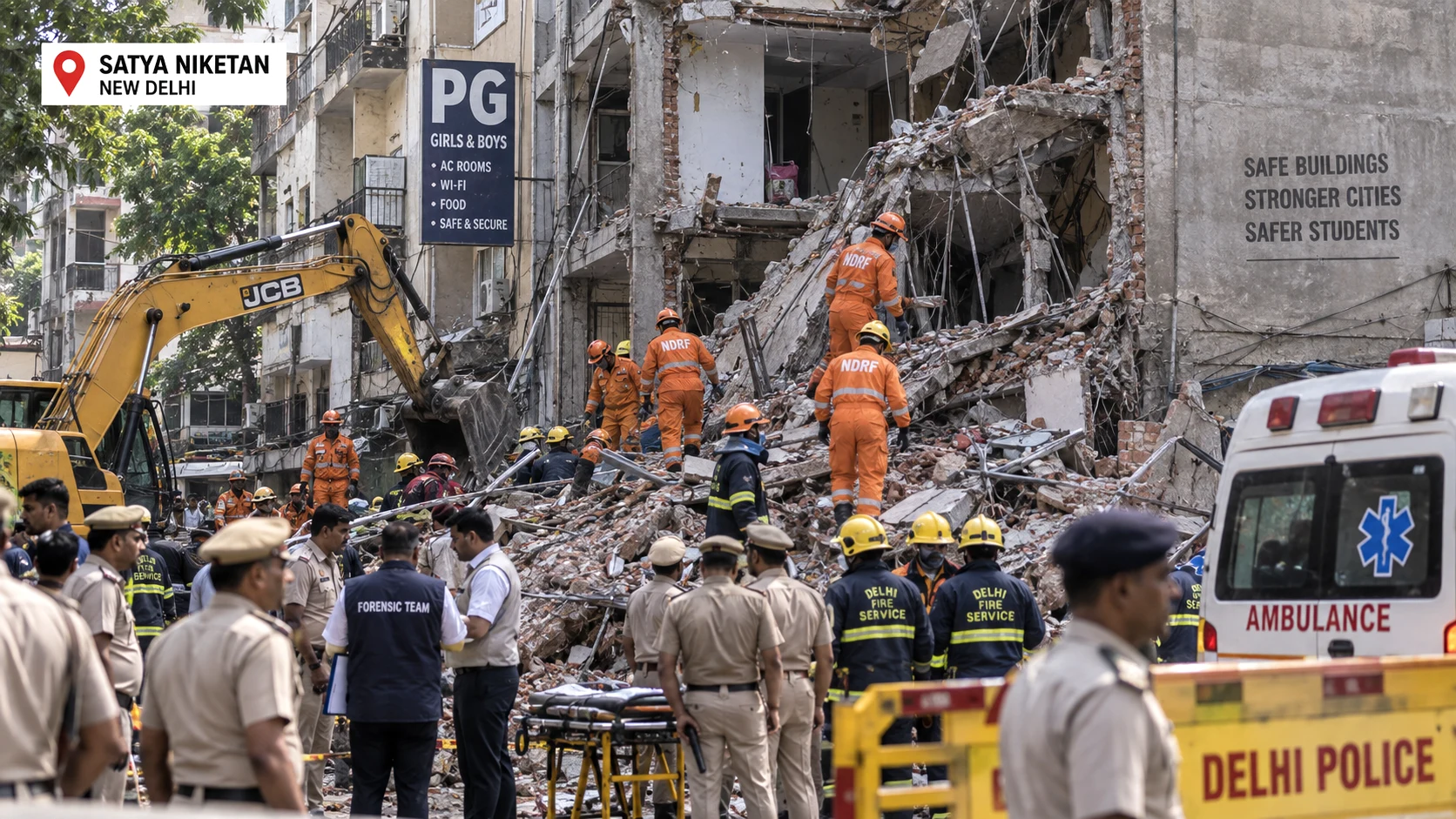
It had already been intensified following concerns over unsafe construction, including the earlier Satya Niketan building collapse.
The Seemapuri tragedy has nevertheless added urgency to questions about how hazardous structures are detected and what happens after a warning or notice is issued.
The MCD-DUSIB Responsibility Question
The collapsed property stood in an area connected with the Delhi Urban Shelter Improvement Board, while municipal building enforcement also falls within the wider regulatory picture.
That has produced questions about which agency should have detected or acted against unsafe or unauthorised construction before the collapse.
The answer cannot be reduced to competing public statements.
A meaningful inquiry needs records.
Investigators should be able to establish:
Whether the building had previously been inspected.
Whether any unauthorised construction had been recorded.
Whether residents or neighbours had made complaints.
Whether notices had been issued.
Which authority had legal responsibility to act.
Whether demolition or removal orders existed.
Whether any earlier warning was ignored.
Whether the building's later additions were documented.
Those records will be critical to distinguishing institutional responsibility from hindsight after a disaster.
What We Don't Know Yet
The final casualty count: Four deaths are confirmed, but DNA testing of recovered human remains is still relevant to establishing whether the toll changes.
The final DNA findings: No verified result located for this update establishes whether the separately recovered remains belong to the four confirmed victims or to additional people.
The exact engineering cause: Authorities have not announced a final structural finding explaining precisely how the building failed.
Whether the earthquake materially contributed: The October 6 earthquake is confirmed, and cracks were reported, but no technical finding has established the tremor as the cause.
Whether adjoining demolition triggered the collapse: Nearby demolition activity is being investigated, but it has not been conclusively established as the sole trigger.
How much the structure had been altered: Reports describe additional construction, but investigators still need to establish the complete building history and its structural effect.
The owner's current legal status after the latest direct update: Mohammad Anwar was still untraced in the latest direct police-linked report reviewed. No subsequently verified arrest announcement was located through October 12.
Who will ultimately be held legally responsible: Police investigation and the magisterial inquiry remain underway. No court has determined liability.
Why the DNA Results Matter Beyond the Number
DNA identification may appear to be primarily about settling whether the death toll is four or higher.
Its significance is deeper.
For families, identification determines whether remains can be conclusively associated with a loved one.
For investigators, it creates an accurate record of casualties.
For criminal proceedings, compensation and official inquiries, a definitive victim count is essential.
It is therefore better to wait for forensic confirmation than to repeat an early casualty figure that may later prove inaccurate.
This is why Rajatheertha continues to use four as the confirmed toll while clearly explaining that the number remains subject to the forensic process.
What Investigators Need to Establish Next
The case is now likely to depend less on eyewitness impressions and more on documentary and technical evidence.
Important evidence may include construction and land records, photographs of the structure before the collapse, evidence of alterations, notices issued by public authorities, witness accounts of demolition work, equipment used at the adjoining property and engineering examination of the remaining debris and foundations.
Investigators may also seek to establish when cracks were first noticed and whether anyone was warned that the structure could be unsafe.
That chronology matters.
If evidence shows a known danger existed before the collapse, investigators will need to determine who knew about it, when they knew and what action—if any—was taken.
If no such warning existed, technical evidence will become even more important in explaining whether the failure was sudden or the result of longer-term structural weakness.
A Wider Delhi Building-Safety Question
The collapse comes amid heightened concern over dangerous and unauthorised buildings in Delhi.
The newly released MCD figures show that action is occurring on a large scale.
But demolition and sealing statistics alone cannot answer whether dangerous buildings are being identified early enough.
The stronger public-safety measure is prevention.
That requires agencies to identify structures showing serious distress, respond to complaints, establish clear jurisdiction, inspect risky alterations and ensure demolition or excavation work does not endanger neighbouring properties.
For residents, visible structural warning signs also require caution.
Rapidly widening cracks, damaged columns, sagging slabs, exposed reinforcement, leaning walls or sudden movement after nearby excavation or demolition should not be dismissed without professional assessment.
Where a structure appears immediately unstable, personal safety takes priority over retrieving belongings.
What Happens Next?
The most important immediate development is the DNA examination.
Those findings should clarify whether the official casualty count remains four.
Police efforts to trace Mohammad Anwar are another development to watch. Any confirmed arrest, questioning or appearance before investigators would materially change the status of the case and justify a further update.
The magisterial inquiry and structural investigation will be more consequential for determining why the building collapsed.
Authorities will also need to establish whether neighbouring demolition activity contributed to the failure and whether any construction or alterations at the collapsed property breached applicable safety requirements.
Finally, the safety action involving nearby Seemapuri properties could expand if officials identify additional dangerous buildings.
Bottom Line
Four people remain confirmed dead in the October 7 New Seemapuri building collapse, with eight others reported injured.
DNA examination of recovered human remains is continuing.
Building owner Mohammad Anwar remained untraced in the latest direct police-linked update located by Rajatheertha, and no reliable subsequent report reviewed through October 12 confirms that he has been arrested.
Police and a magisterial inquiry are examining several possible contributors to the collapse, including the building's structural condition, additional construction, reported cracks and demolition work at an adjoining property.
The magnitude-4.9 Uttarakhand earthquake on October 6 is independently confirmed, but there is no final finding that it caused the collapse.
Authorities have also widened their safety response in Seemapuri, demolishing one unsafe building and issuing notices to three others as part of a broader push against dangerous construction in Delhi.
The central questions—exact cause, final casualty count and legal responsibility—remain unresolved.
Those answers should come from forensic identification, structural evidence, documentary records and the continuing police and magisterial investigations, not from early assumptions.
Key Takeaway
Four deaths confirmed; DNA tests ongoing.
Owner Mohammad Anwar still untraced.
Probe examining structure, demolition and cracks.
Civic agencies demolish one unsafe building and issue notices to three others.
The Rajatheertha Team publishes news, explainers, guides and updates across India and the world. Our coverage follows Rajatheertha's editorial, verification and corrections standards.
Delhi Police have confirmed four deaths in the New Seemapuri building collapse while DNA tests on recovered remains continue. Investigators are examining the structure, adjoining demolition activity and possible regulatory failures as questions over accountability grow.
Four deaths are confirmed in the New Seemapuri building collapse as DNA tests continue on recovered remains. Police and a magisterial inquiry are examining structural conditions, additional construction and demolition activity nearby, while questions over civic responsibility remain unresolved.
Delhi Police have seized more than 2.5 tonnes of illegal firecrackers in two October 15 operations as Diwali 2026 approaches. Here is what Delhi’s current firecracker restrictions mean, the legal risks, how green-cracker proceedings before the Supreme Court affect the position, and how residents can
Delhi Police have arrested a PG operator and labour contractor as the Satya Niketan building collapse probe widens into repairs, structural alterations and management.
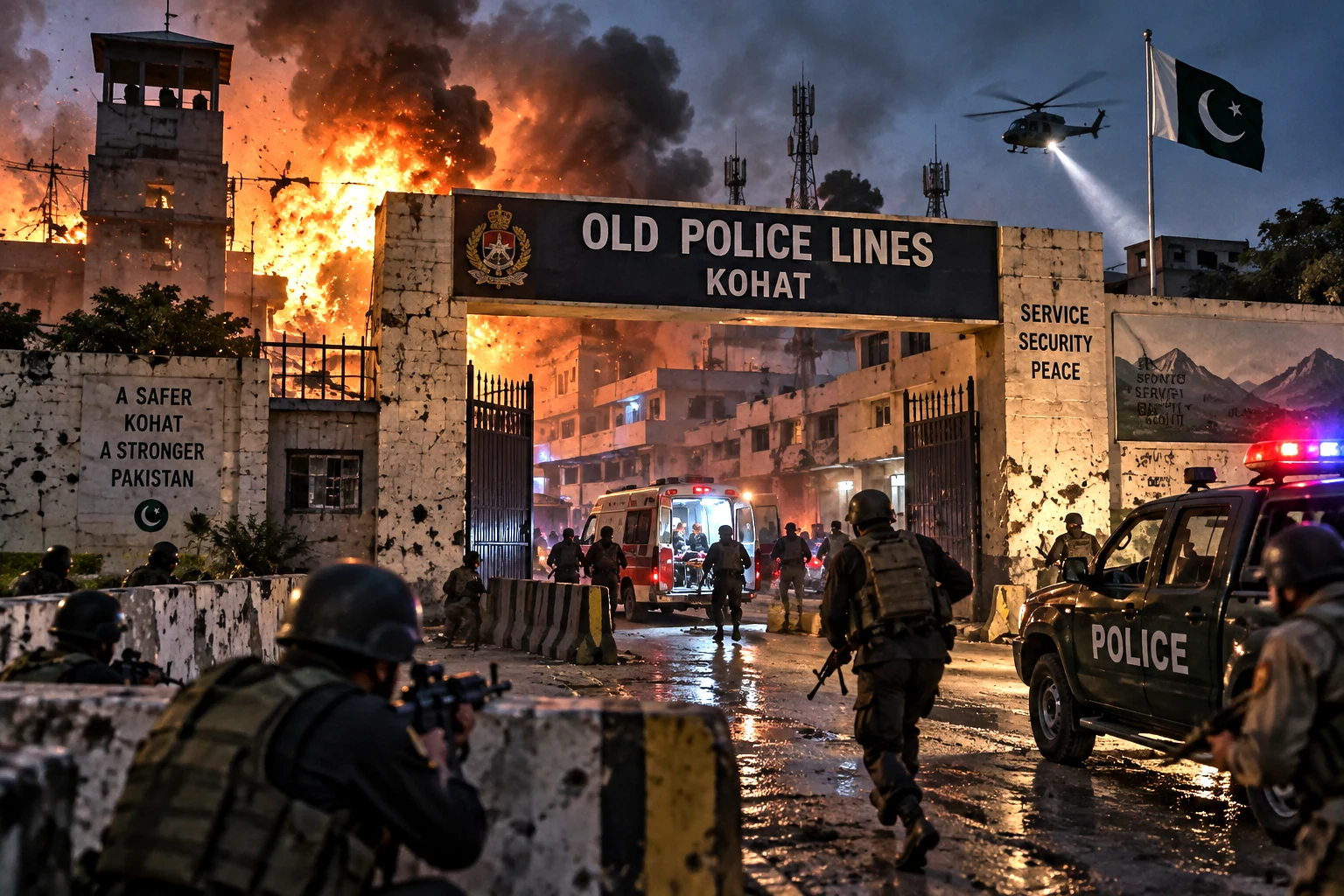
At least 24 people are reported dead after a coordinated suicide bombing and armed assault on the Old Police Lines complex in Kohat, northwestern Pakistan, while investigators examine how the attackers breached the heavily guarded compound and whether facilitators or cross-border militant networks w
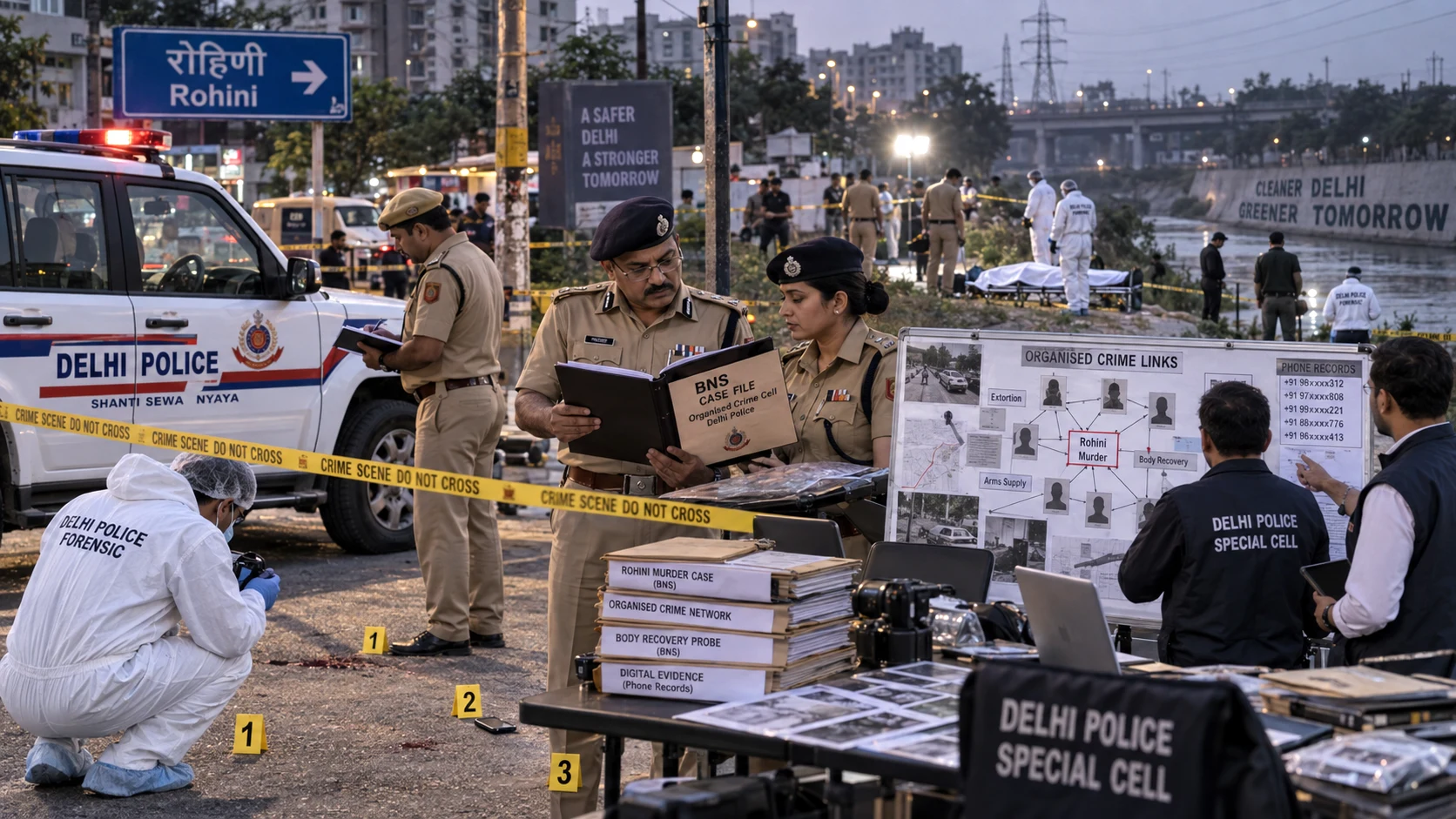
Registrations under the Bharatiya Nyaya Sanhita’s organised and petty organised crime provisions rose 16% in the first five months of 2026, while police separately arrested five people over an e-rickshaw driver’s killing and opened investigations into two unrelated body discoveries in outer Delhi.








0 Comments