US Weighs Large-Scale Iran Operations: What Is Reported, What Trump Has Said and How India Could Be Affected
US military planners have reportedly prepared options for renewed major operations against Iran, but no new large-scale campaign has been officially announced. Here is what is confirmed, what remains reported and why India is watching oil, the rupee and fuel costs.
Editorial illustration representing US-Iran military tensions, Strait of Hormuz and potential impact on global oil markets
Table of Contents (21 sections)
The United States has not announced a new large-scale attack on Iran, but multiple reports say American military planners have been preparing options for renewed major combat operations as President Donald Trump weighs how to proceed with the continuing conflict.
That distinction is the most important fact in the story.
Military planning is real and preparations have reportedly been ordered. A decision to begin a new large-scale campaign, however, has not been publicly confirmed.
The picture has become more complicated because Trump's own public position has shifted within days. He initially said the United States would not attack Iran before the November 3 midterm elections, citing what he described as productive discussions with Tehran. He subsequently left the possibility of earlier military action open when questioned by reporters.
At the same time, military activity around Iran has not stopped entirely. On October 11, the US military said it disabled a Panama-flagged commercial vessel in the Gulf of Oman after the ship allegedly ignored warnings while attempting to breach the American naval blockade of Iranian ports. US Central Command said the strike disabled the vessel's propulsion without injuring its crew.
Recommended Reading
Related Stories & In-Depth Guides
Curated editorial perspectives matching this topic.
The GFS Pride and Cape Dao have sunk near the Strait of Hormuz as attacks on commercial shipping intensify. The two sinkings happened close together, but Cape Dao had been struck weeks earlier. Here is what is confirmed, what remains unclear and why the escalation matters for global trade and India.
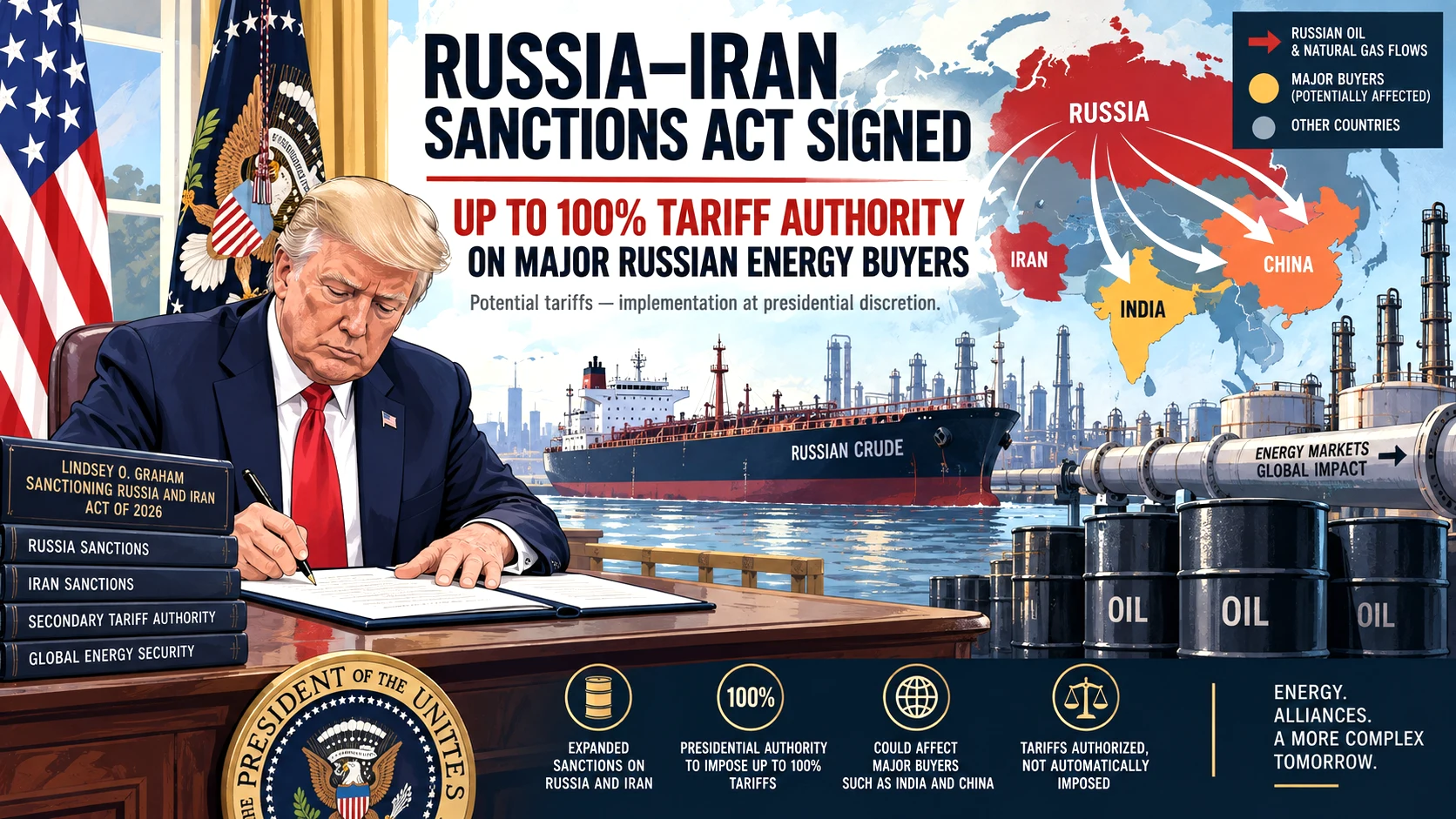
The new US law targets Russia’s energy, financial and defence networks and allows additional tariffs of up to 100% on goods from the largest buyers of Russian oil and gas. India faces significant exposure because of its large Russian crude imports, but a 100% tariff on Indian goods has not been impo
The result is a security environment in which diplomatic contacts, military preparations and limited operational actions are occurring simultaneously.
For India, the immediate concern is less about predicting whether another American attack will occur and more about what continued uncertainty does to crude oil prices, shipping costs, the rupee and eventually domestic fuel and inflation pressures.
Key Takeaways
Pentagon reportedly preparing options for renewed major combat operations against Iran.
No public confirmation of a new large-scale campaign or fixed start date.
Trump’s statements have shifted: first ruled out pre-midterm attacks, then left the possibility open.
October 11 vessel strike shows blockade enforcement remains active.
India watches crude prices, shipping costs, the rupee and potential fuel/inflation pressure.
What Is Actually Being Reported About US Military Plans?
Reports published on October 7 said the Pentagon had directed US Central Command to complete preparations for the possible resumption of major combat operations against Iran.
Axios, citing US officials, reported that CENTCOM had been instructed to conclude preparations for renewed military operations. The Pentagon's role in developing military options does not by itself mean the president has authorised one of them.
The Atlantic separately reported that the White House had asked the Pentagon to develop possible strike options, with the scale and timing still under consideration and no final decision made at that stage.
Other reporting described discussions inside the administration about potentially resuming larger military operations in the coming weeks.
Taken together, those reports establish something narrower than several dramatic headlines might suggest:
The United States is preparing options and military forces are expected to be ready if the president orders further action.
They do not establish that a new large-scale bombing campaign has already been approved.
They also do not establish a confirmed start date.
That difference should remain clear in any reporting on the situation.
Confirmed: Pentagon Planning and Military Readiness
Preparing military options is a normal function of the Pentagon during an active conflict.
The significance here is that reports describe preparations for something larger than routine defensive activity or isolated enforcement operations.
Axios reported that US Central Command had been instructed to prepare for the possible return of major combat operations. The Atlantic also reported active discussion of possible strikes.
Those reports therefore support saying that military preparations are under way.
They do not support saying that Washington has definitely decided to launch a new war phase on a particular date.
Reported, Not Confirmed: A New Large-Scale Attack
Descriptions such as "large-scale military operations" have appeared in reports about options being considered by Trump's national-security team.
Those descriptions should be attributed.
There is presently an important difference between:
“The United States will launch a large-scale operation against Iran”
and:
“US officials are reportedly preparing options for possible large-scale operations.”
Only the second formulation reflects the evidence available publicly.
Neither the White House nor the Pentagon has announced a fixed timetable for a new full-scale campaign.
That remains true even though American military activity against Iran and enforcement of the blockade continue.
Trump's Position Has Changed Within Days
Trump's public statements make the timing particularly difficult to describe with certainty.
On October 8, Trump said the United States would not attack Iran before the November 3 midterm congressional elections. Reuters reported that he said Washington was holding what he called productive discussions with Tehran.
That appeared to reduce the immediate probability of the reported pre-election strike scenarios.
Oil prices reacted as markets reassessed the risk of a sudden escalation.
But Trump's position subsequently became less categorical.
Asked on October 9 about possible military action before the midterms, he replied that the United States "may" act and said the situation would be seen, according to reporting on his remarks.
The safest conclusion is therefore not that military action before November 3 has either been scheduled or definitively cancelled.
The president has made conflicting or evolving public statements, while military preparations reportedly continue.
Did Oil Rise Today Because of the Reports?
The timing needs clarification.
The major oil surge associated with renewed fears of US action against Iran occurred on October 8, not Sunday, October 11.
Reuters reported that Brent crude settled 4% higher on October 8 at $104.28 a barrel, while West Texas Intermediate settled at $91.49. Middle East security concerns were one factor, alongside major US Gulf of Mexico production shutdowns ahead of Hurricane Isaias.
Trump's subsequent statement that there would be no attack before the midterms helped reduce some of the immediate geopolitical concern.
On October 9, Brent settled at $104.72 a barrel and WTI at $91.85, with hurricane-related US production losses contributing to the move.
Because October 11 is a Sunday, it would be misleading to describe the earlier surge as an oil-price rise "today."
The broader conclusion remains valid: markets continue to attach a substantial risk premium to the Iran conflict, tanker security and the possibility of further escalation.
Why the Strait of Hormuz Remains Central
Any discussion of a renewed US-Iran escalation quickly becomes an energy story because of the Strait of Hormuz.
Before the present conflict, roughly one-fifth of global petroleum consumption moved through the waterway, making it one of the world's most important energy chokepoints.
Rajatheertha previously reported that vessel traffic through Hormuz had fallen dramatically and that tanker attacks, insurance costs and freight rates were becoming as important as the physical availability of crude.
That remains the relevant background to the latest military-planning reports.
Iran has described the strait as closed and under its control, while commercial traffic data show that ships are still moving through the region in greatly reduced and increasingly risky conditions. Rajatheertha's October 8 analysis therefore characterised Hormuz as severely disrupted rather than literally sealed.
The danger for oil markets is that another major escalation could again discourage tanker operators, increase insurance premiums, reduce available shipping capacity or damage energy infrastructure.
That can push delivered oil costs higher even without a complete physical shutdown.
October 11 Vessel Strike Shows Tensions Are Still Active
The latest confirmed military development adds another reason for caution.
The US military said on October 11 that it had disabled the Panama-flagged M/V Ocean Molica, also known as Arika Sun, in the Gulf of Oman.
According to the US account, the commercial vessel was travelling from an Iranian port and attempted to breach the naval blockade while ignoring warnings.
CENTCOM said a US fighter aircraft used a precision munition to disable the ship's propulsion and that the crew was not harmed.
This should not be described as the beginning of the reported large-scale campaign.
It is, however, evidence that the conflict and blockade are active rather than merely hypothetical planning exercises in Washington.
The incident also reinforces the danger surrounding commercial shipping near the Gulf and Hormuz.
What Iran Is Saying
Iran has continued to combine military warnings with diplomacy.
Tehran says reopening the Strait of Hormuz depends on conditions it has put forward as part of negotiations with Washington.
Iranian officials have also warned that the country's forces are prepared to respond if the United States undertakes renewed military action.
Earlier in October, Iranian officials said Hormuz would remain restricted until their conditions were met, while US and Iranian positions continued to be exchanged through intermediaries.
That means neither diplomacy nor military confrontation has displaced the other.
Both tracks are continuing.
What Is Confirmed Right Now?
Several facts can be stated with reasonable confidence.
First, US military planners have reportedly been instructed to prepare options for renewed major operations against Iran.
Second, no public announcement has confirmed that Trump has approved a specific large-scale operation with a fixed start date.
Third, Trump said on October 8 that the United States would not attack Iran before the November 3 midterms, but his comments the following day left the possibility less firmly excluded.
Fourth, American military enforcement activity around Iran continues, including the October 11 action against the commercial vessel that CENTCOM said was violating the blockade.
Fifth, Iran-US diplomatic contacts have not ended.
Sixth, the conflict continues to create unusually high risk around Gulf energy infrastructure and shipping.
Those facts are more useful than attempting to predict the date or scale of a future operation.
What Remains Unconfirmed?
There is no publicly confirmed order beginning a new large-scale US bombing campaign.
There is no verified public timetable for such an operation.
The precise targets being considered have not been officially announced.
There is no reliable basis for stating that Washington has decided to strike Iran before or immediately after the midterms.
There is also no basis for predicting with certainty how Iran would respond to a new American attack.
Military plans can be prepared, changed, postponed or never executed.
Reporting should therefore continue to attribute proposed operational scenarios to the organisations that reported them instead of presenting planning documents or discussions as completed presidential decisions.
Why India Is Watching the Story Closely
India is not a participant in the US-Iran conflict, but it is highly exposed to its economic consequences.
India imports most of the crude oil it consumes.
That means a sustained increase in global crude prices can raise the country's dollar-denominated import bill even when Indian refiners are able to obtain all the physical barrels they require.
India has diversified its crude supply considerably during the conflict.
Rajatheertha previously reported that the Petroleum Ministry said non-Hormuz supplies had risen to around 70% of India's crude imports during an earlier stage of the crisis.
That diversification reduces the risk of an immediate physical shortage.
It does not insulate India from global prices.
A barrel sourced from outside the Persian Gulf can still become more expensive when Brent rises because of events inside the Gulf.
Higher Oil Can Put More Pressure on the Rupee
The currency is another important transmission channel.
On October 8, the rupee weakened to around ₹96.775 against the US dollar, with Reuters reporting that higher crude prices were adding to pressure on the Indian currency.
India's oil companies require large amounts of foreign currency to pay international suppliers.
When crude becomes more expensive, their dollar requirements can increase.
A weaker rupee then makes dollar-denominated oil still more expensive when converted into Indian currency.
The Reserve Bank of India has subsequently announced additional steps aimed at managing dollar demand from major state-run oil companies as the rupee faces pressure from high oil prices and wider global financial conditions.
That illustrates why a Middle East military story can quickly become an Indian currency story.
Does This Mean Petrol and Diesel Will Immediately Become Costlier?
No.
A jump in Brent crude does not produce an automatic one-for-one increase in Indian petrol or diesel prices the following morning.
Domestic retail prices depend on several factors, including crude acquisition costs, refining economics, the rupee-dollar exchange rate, central and state taxes, oil-marketing-company pricing decisions, existing inventories and government policy.
Retail fuel prices in major Indian cities remained broadly stable on October 10 despite crude trading above $100 a barrel.
The more accurate statement is that prolonged high crude prices create increasing pressure somewhere in the system.
That pressure can eventually be absorbed by consumers, oil companies, government finances or some combination of them.
A brief geopolitical spike and a multi-month oil shock therefore have very different consequences.
India's Risk Is Broader Than Petrol
Crude oil affects far more than the number displayed at a petrol pump.
Persistent high energy prices can influence road freight, aviation, plastics, chemicals, fertilisers, manufacturing and food distribution.
They can also complicate inflation management.
A Reuters poll published on October 8 estimated that India's September consumer inflation may have accelerated to around 5.4%, with energy and food pressures among the concerns identified by economists. The official inflation figure should be treated separately once released.
Oil can therefore affect Indian households even when the retail petrol price itself does not change immediately.
Shipping Costs Are Part of the Problem
The headline Brent price does not capture the entire cost of the crisis.
War-risk insurance and tanker freight rates have risen sharply as vessels navigate a region affected by attacks, blockades and disrupted routes.
Reuters reported this week that freight costs for moving US crude to Asia had increased so sharply that some cargoes had become commercially unattractive for Asian refiners.
For Indian refiners, the important number is ultimately the delivered cost of crude at the refinery.
That includes the oil itself, transport, insurance and other logistical expenses.
This helps explain why India can face energy inflation even if there is technically enough crude available in the global market.
Could New US Strikes Push Oil Higher?
They could, but the size and duration of any move would depend on what happened.
Markets would examine whether military operations affected Iranian exports, Gulf production facilities, tanker traffic, the Strait of Hormuz, insurance availability and the willingness of shipowners to operate in the region.
A limited strike that did not interrupt physical oil flows could produce a shorter-lived market reaction.
A broader confrontation damaging infrastructure or sharply reducing Hormuz traffic could be considerably more disruptive.
There is therefore no responsible way to assign a guaranteed oil price to an operation that has not been announced.
The risk is real.
The price outcome is uncertain.
Diplomacy Still Matters
The military-planning reports should not obscure the continuing diplomatic track.
Trump said on October 8 that Washington was engaged in productive discussions with Iran. Iran has separately communicated proposals and conditions through intermediaries.
Neither side has announced a comprehensive settlement.
But the existence of negotiations matters because markets are responding not only to military events but also to signs that escalation may be postponed or avoided.
This explains some of the sharp swings in crude prices during recent sessions.
Headlines indicating possible attacks increase supply-risk fears.
Statements suggesting negotiations are progressing can reduce part of that geopolitical premium.
What Happens Next?
The first indicator to watch is Trump's public position.
His comments have moved from ruling out pre-midterm attacks to leaving more room for military action. Any formal presidential or Pentagon announcement would therefore be considerably more important than anonymous discussions about options.
Second is US military deployment and operational activity.
The October 11 vessel strike shows that enforcement of the blockade remains active even without confirmation of a new large-scale campaign.
Third is Iran's response.
Further attacks on tankers, US forces, Gulf infrastructure or shipping routes would increase escalation risks.
Fourth is the Strait of Hormuz.
Daily shipping volumes, tanker incidents and war-risk insurance prices offer more useful evidence about the economic effect of the crisis than political rhetoric alone.
Fifth is Brent crude.
For India, sustained prices above $100 matter much more than an isolated intraday move.
Sixth is the rupee.
A combination of high oil and rupee weakness increases India's effective energy cost.
Finally, diplomacy remains crucial.
A credible agreement reducing attacks and restoring predictable navigation through Hormuz would change the economic picture far more fundamentally than a temporary fall in crude futures.
Bottom Line
Reports that the United States is preparing options for renewed large-scale military operations against Iran are credible enough to matter, but preparation must not be confused with a final presidential decision.
Trump's public position has also changed rapidly. He said on October 8 that there would be no US attack before the November 3 midterms, then left the possibility open again when questioned the following day.
Meanwhile, US military activity around Iran continues: CENTCOM said on October 11 that American forces disabled a commercial vessel allegedly attempting to breach the blockade.
For India, the most immediate risk is economic rather than military.
A prolonged escalation could keep crude oil and shipping costs elevated, increase demand for dollars, put additional pressure on the rupee and eventually intensify inflation and domestic fuel-cost pressures.
But higher crude does not automatically mean an immediate petrol-price increase.
The responsible conclusion is therefore straightforward: preparations are being reported, military tensions remain active, but a new large-scale US campaign has not been publicly confirmed. India should watch oil, shipping and the rupee closely while the diplomatic and military tracks continue in parallel.
Key Takeaway
Pentagon preparing options for major Iran operations — no confirmed large-scale campaign yet.
Trump’s position has shifted within days.
Active blockade enforcement continues (October 11 vessel strike).
India’s main exposure is economic: oil prices, shipping costs and the rupee.
The Rajatheertha Team publishes news, explainers, guides and updates across India and the world. Our coverage follows Rajatheertha's editorial, verification and corrections standards.
Eighteen days before the November 3 US midterms, Washington and Tehran remain without a comprehensive agreement. Iran says the latest US response on Hormuz is insufficient, the American blockade remains in force, attacks on shipping have intensified and oil prices remain above $100 a barrel.
Donald Trump says the United States will not resume military strikes on Iran before the November 3 midterm elections, but the blockade, sanctions and Hormuz dispute remain unresolved. Here is what the pause means for oil markets, diplomacy and India.
Iranian military officials claim Tehran controls the Strait of Hormuz as ship traffic falls sharply and Iran warns it could launch pre-emptive operations. Here's what is actually happening and why the crisis matters for India's oil bill, rupee and inflation.
A Saudi Aramco administrative building in Dhahran was targeted on October 13, causing a limited fire but no casualties. Crude prices have risen as markets assess Saudi supply risks, but there is no confirmed disruption to Aramco oil production and India’s PSU petrol and diesel prices remain unchange
Donald Trump’s remarks naming Los Angeles and San Diego while discussing the Iran war and higher prices have drawn criticism from California officials. The White House says Trump was describing the threat a nuclear-armed Iran could pose, not encouraging an attack.
Donald Trump says Russia and Ukraine have agreed to immediately stop attacks on energy infrastructure. Volodymyr Zelensky says he was not informed of such an agreement, while Ukraine has reported new Russian strikes since the announcement. Here is what is actually confirmed.






0 Comments