Iran Claims Control of Strait of Hormuz as Traffic Slumps; Pre-Emptive Strike Warning Raises India Oil Risks
Iranian military officials claim Tehran controls the Strait of Hormuz as ship traffic falls sharply and Iran warns it could launch pre-emptive operations. Here's what is actually happening and why the crisis matters for India's oil bill, rupee and inflation.
Oil tanker navigating the Strait of Hormuz amid Iran tensions and sharply reduced shipping traffic
Table of Contents (26 sections)
Iranian military officials have stepped up warnings over the Strait of Hormuz, claiming Tehran has full control of the strategic waterway and signalling that Iranian forces could conduct pre-emptive military operations if they believed another attack was imminent.
The statements on October 7 came as independent shipping data showed traffic through Hormuz falling to its lowest level in more than two months and tanker attacks around the Gulf intensifying.
But Iran's declaration that the strait is “closed” requires an important qualification: commercial vessels are still passing through the waterway.
Recommended Reading
Related Stories & In-Depth Guides
Curated editorial perspectives matching this topic.
Donald Trump says the United States will not resume military strikes on Iran before the November 3 midterm elections, but the blockade, sanctions and Hormuz dispute remain unresolved. Here is what the pause means for oil markets, diplomacy and India.
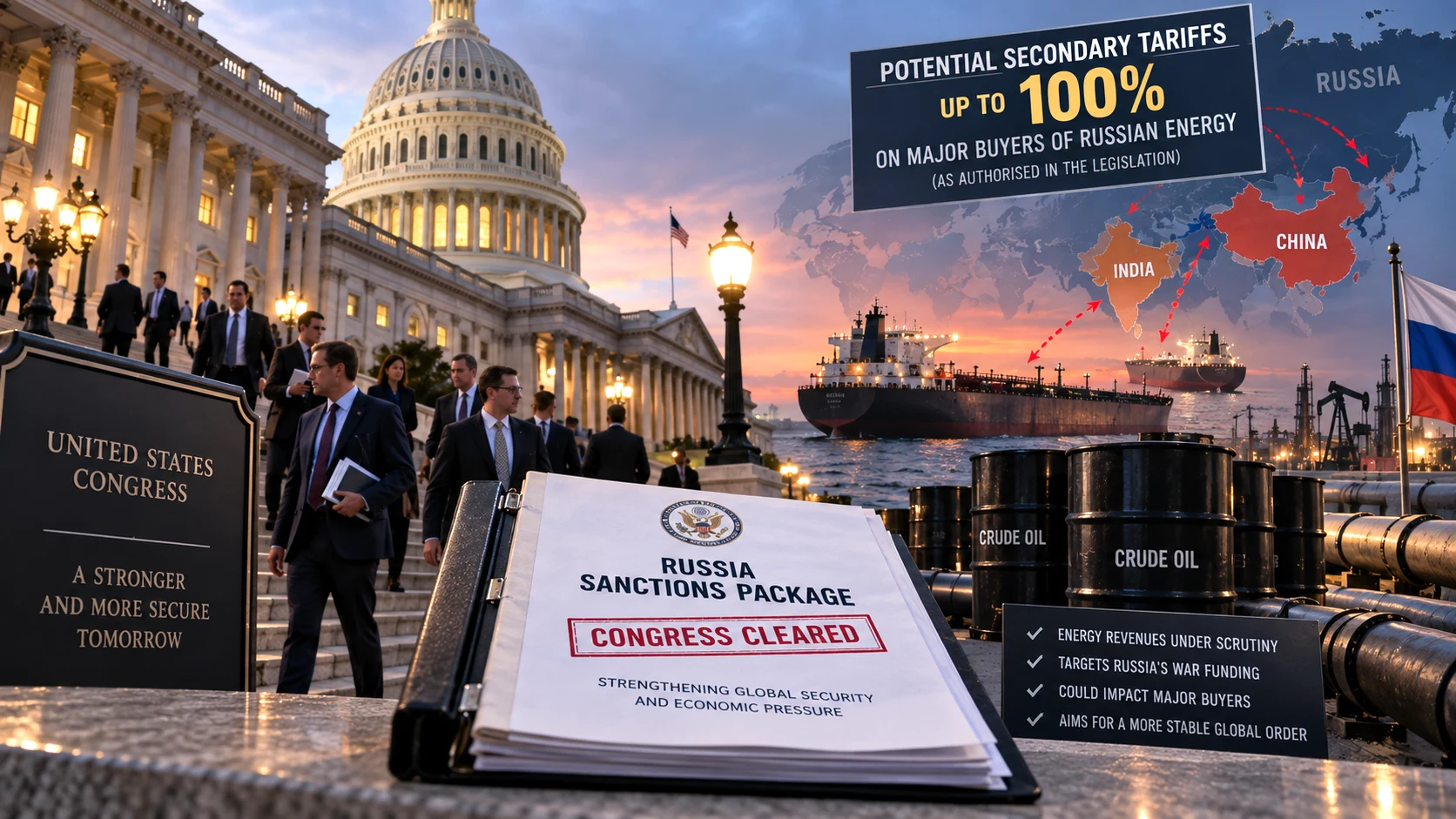
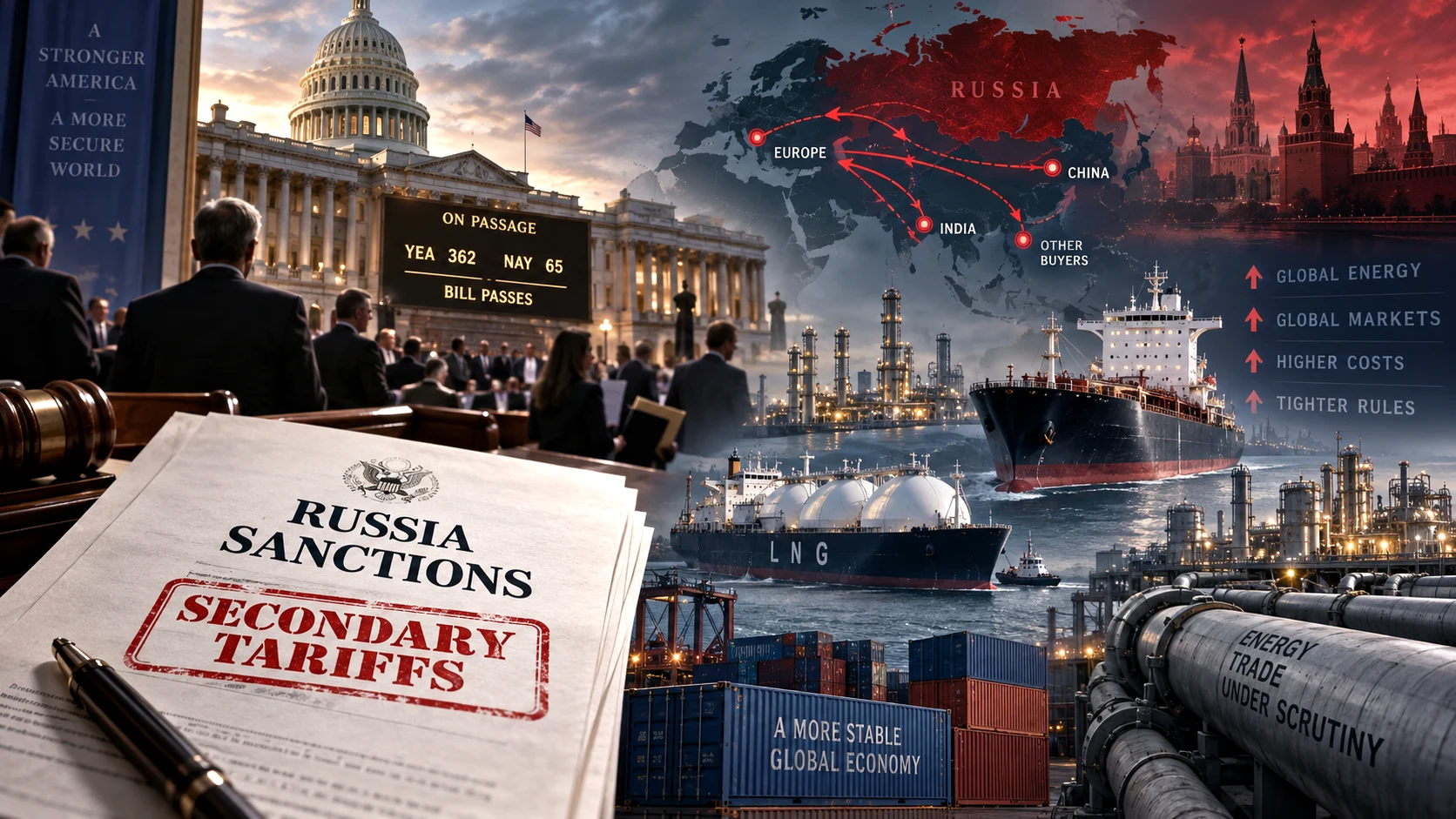
The House approved the Lindsey O. Graham Sanctioning Russia and Iran Act of 2026 by 262-159 after the Senate passed it 86-11. The measure now awaits President Donald Trump’s signature and could subject major buyers of Russian oil or gas to additional US tariffs of up to 100%, although India and Chin
Reuters reported that only seven commodity vessels transited Hormuz on October 6, the lowest daily figure since July 23. Traffic recovered slightly to 10 vessels on October 7, compared with roughly 125 large commercial vessels a day before the war.
That means the strait is severely disrupted and operating far below normal levels, but it is not literally experiencing zero vessel traffic.
The distinction matters for global oil markets—and particularly for India, one of the world's largest crude importers.
India had historically depended heavily on Gulf crude moving through Hormuz. Although the country has diversified supplies substantially during the conflict, renewed attacks, higher tanker costs and Brent crude above $100 a barrel could still affect India's oil-import bill, inflation, the rupee and eventually the cost of fuels and other goods.
What Did Iran Say About the Strait of Hormuz?
Brigadier General Mohammad Reza Naqdi, an adviser to the commander of Iran's Islamic Revolutionary Guard Corps, said Iranian armed forces had full control of Hormuz.
Naqdi was quoted as saying:
“The Strait of Hormuz is closed, and the armed forces ... have full control over it.”
He said the situation would continue until what Tehran calls its legitimate demands were met.
Naqdi also said Iran intended to shut what it considers unauthorised routes near the Omani side of the strait.
According to his account, some small vessels have been using alternative passages to move oil toward larger tankers.
Those assertions are Iranian claims and should not be interpreted as independent confirmation that Tehran exercises uncontested legal or military authority over every vessel crossing the international waterway.
Iran Says Only About 10 Ships Are Passing Each Day
A second IRGC adviser, Majid Mirahmadi, said international monitoring indicated that roughly 10 ships per day had recently been passing through Hormuz, compared with about 125 before the war.
He said many of the vessels still using the route were doing so with Iranian permission.
Independent shipping information broadly confirms the dramatic fall in vessel numbers, though not necessarily Iran's explanation for why individual vessels are moving.
Reuters, citing Kpler data, reported:
7 commodity vessels crossed on October 6;
traffic rose to 10 vessels on October 7;
crude flow through Hormuz stood at about 10.1 million barrels per day;
that was approximately 74% of pre-war crude volumes through the route.
The numbers demonstrate why “closed” should not be read as a complete physical shutdown.
Significant volumes of energy are still moving through Hormuz.
Tanker Attacks Have Reached a Wartime High
What has changed more clearly is the security environment.
Reuters reported at least 12 attacks, attempted attacks or harassment incidents involving tankers between September 28 and October 5, the highest weekly number since the US-Iran conflict began on February 28.
The International Maritime Organization had corroborated nine incidents at the time of the report.
The incidents included drone activity, aggressive communications and physical attacks.
The escalating risks affect more than whether ships can technically cross the strait.
Shipowners and traders must also consider:
crew safety;
war-risk insurance;
tanker availability;
naval escorts;
freight rates;
delays;
alternative loading arrangements;
and the risk that a vessel may be damaged or detained.
Those costs can eventually feed into the price of oil delivered to importing countries.
Iran Also Raises Possibility of Pre-Emptive Strikes
Iran's regular army separately warned that its forces could undertake pre-emptive operations.
Army spokesman Brigadier General Mohammad Akrami-Nia said Iranian forces were prepared to act first if circumstances required action to prevent what Tehran considered an impending attack or intrusion.
The statement does not mean Iran has announced an immediate new strike.
It is a warning about Iran's stated military doctrine and possible future action.
That distinction is important because describing the statement as confirmation that Iran is about to launch an attack would go beyond what was announced.
The development nevertheless adds another layer of uncertainty to a conflict already affecting shipping, oil infrastructure and energy markets.
Is the Strait of Hormuz Actually Closed?
Not completely.
Iranian officials are describing the strait as closed and under Iranian control, but vessel-tracking data show continuing traffic.
A more accurate description is that the waterway is experiencing a severe, militarised disruption with heavily reduced and risky transit.
Reuters reported that crude flows through Hormuz were about 10.1 million barrels per day this week—roughly three-quarters of pre-war levels.
Some Gulf producers have also increased exports through routes that do not rely entirely on the strait.
Exports through the Gulf of Oman and Red Sea recently reached around 6.7 million barrels per day, helping offset part of the reduction through Hormuz.
This helps explain an apparently contradictory situation:
ship traffic through Hormuz can collapse while total Middle Eastern oil exports remain considerably stronger than vessel counts alone might suggest.
Why the Strait of Hormuz Matters So Much
Hormuz is one of the world's most important energy chokepoints.
Before the 2026 conflict, around 20 million barrels per day of crude oil and petroleum products moved through the strait, according to the International Energy Agency.
That represented roughly 25% of global seaborne oil trade.
About 80% of those supplies were destined for Asia.
The strait is the primary maritime outlet for major producers including:
Saudi Arabia;
Iraq;
Kuwait;
Qatar;
Bahrain;
the UAE;
and Iran.
Saudi Arabia and the UAE have some alternative pipeline capacity, but other Gulf producers have far fewer options.
Hormuz Is Also Critical for LNG
The risk is not limited to crude oil.
The IEA estimates approximately:
93% of Qatar's LNG exports, and
96% of the UAE's LNG exports
normally pass through Hormuz.
Together, those flows accounted for about 19% of global LNG trade before the disruption.
That makes prolonged instability particularly relevant to Asian economies reliant on imported natural gas.
India is among them.
What Does This Mean for India's Oil Supply?
India is vulnerable to international crude-price shocks because it imports the overwhelming majority of the crude oil it consumes.
Before the current Middle East crisis, the Indian government said approximately 45% of India's crude imports passed through the Hormuz route.
However, India's dependence on the route has since been reduced through diversification.
In March, the Petroleum Ministry told Parliament that non-Hormuz supplies had risen to approximately 70% of India's crude imports, compared with about 55% before the conflict.
India had expanded sourcing to around 40 countries, according to the ministry.
That diversification provides India with an important buffer.
It does not, however, make India immune to what happens in Hormuz.
India's Middle East Oil Purchases Have Been Rising Again
There is another important development.
As Gulf exports recovered, India increased purchases from the region.
Reuters reported that Middle Eastern crude deliveries to India exceeded 11.3 million tonnes in September, their highest level since February.
This means greater availability of Gulf barrels has helped Indian refiners, but it also means renewed security problems around Hormuz can again influence the cost and reliability of those supplies.
India's exposure therefore has two dimensions:
physical supply risk and price risk.
The second can affect India even if every required barrel ultimately reaches an Indian refinery.
Brent Crude Climbs Above $102
Oil prices moved higher again on October 8 as markets reacted to Middle East shipping risks and other supply concerns.
Reuters reported Brent crude rising $2.28 to around $102.28 a barrel, while US West Texas Intermediate moved to about $89.94.
Brent above $100 matters for India because oil imports are largely paid for in US dollars.
The combination of:
expensive crude;
a strong dollar;
and a weaker rupee
raises the rupee cost of importing the same quantity of oil.
First India Impact: A Higher Import Bill
India is one of the world's largest crude-importing economies.
When international oil prices rise, Indian refiners must generally spend more foreign currency to purchase crude.
A persistent increase can widen India's merchandise trade deficit and current-account deficit, depending on movements in exports, services and other imports.
Earlier analysis during the 2026 crisis estimated that sustained oil around $100 a barrel could materially widen India's current-account deficit compared with a lower-price scenario.
The exact impact will depend on:
how long prices remain elevated;
India's import volumes;
discounts negotiated by refiners;
the rupee-dollar exchange rate;
product exports;
and government energy policy.
Second Impact: Pressure on the Indian Rupee
The currency impact is already visible.
On October 8, the rupee weakened to around ₹96.775 per US dollar, its lowest level since May and close to its record low.
Reuters reported that rising oil prices were adding to pressure on the currency because of India's dependence on imported crude.
Oil-importing companies need dollars to pay suppliers.
When the cost of crude rises, demand for dollars from importers can increase, potentially putting additional downward pressure on the rupee.
A weaker rupee can then make dollar-priced crude even more expensive in Indian currency.
That creates a potentially reinforcing cycle.
Third Impact: Inflation
Higher energy costs can spread through an economy well beyond petrol stations.
Transport costs influence the price of:
food distribution;
road freight;
aviation;
manufacturing;
plastics;
chemicals;
logistics;
fertilisers;
and numerous petroleum-derived materials.
A Reuters poll published October 8 estimated that India's September consumer inflation may have risen to about 5.4%, from 4.82% in August, with food and energy among the pressures cited by economists.
That is an estimate pending the official inflation release, rather than a confirmed CPI figure.
Will Petrol and Diesel Prices in India Rise Immediately?
Not necessarily.
An increase in Brent crude does not automatically translate into an identical immediate increase at Indian fuel pumps.
Retail petrol and diesel prices also depend on:
refinery economics;
oil marketing company pricing;
central taxation;
state VAT;
exchange rates;
inventory purchased at earlier prices;
and government policy.
Therefore, consumers should not assume that a $1 rise in Brent automatically means an immediate specified increase per litre.
What sustained high crude prices do create is greater cost pressure somewhere in the petroleum supply chain.
If the shock persists long enough, those costs can eventually affect consumers, businesses, government finances or oil marketing companies depending on how the burden is absorbed.
Freight Costs Are Another Hidden Risk for India
Even when crude itself is available, moving it has become much more expensive.
Reuters reported that tanker costs on some Middle East-to-Asia routes had climbed above $1.2 million per day during the disruption.
War-risk insurance premiums and security costs also matter.
For India, this means the relevant question is not simply:
“Is oil available?”
It is also:
“At what delivered cost can that oil reach Indian refineries?”
A barrel purchased at an attractive headline price can become substantially more expensive after freight, insurance and logistical costs are included.
Could India Replace Gulf Oil Completely?
India has substantially broadened its supply base, but completely replacing Gulf oil at short notice would be difficult and potentially expensive.
Indian refiners buy crude from producers across:
Russia;
the Americas;
Africa;
the Middle East;
and other regions.
The Petroleum Ministry said in March that India had access to supplies from more than 40 countries and had secured significant non-Hormuz volumes.
But crude grades are not perfectly interchangeable.
Refineries are configured for particular blends, while shipping distance, freight costs, contractual terms and sanctions can affect which alternatives are commercially practical.
Diversification reduces vulnerability; it does not eliminate global oil-price exposure.
Does India Have Emergency Oil Stocks?
India maintains commercial inventories and strategic petroleum reserves.
During the initial Hormuz disruption in March, the Petroleum Ministry said total stock cover was around 60 days at that time, while the country's combined reserve capacity was equivalent to approximately 74 days.
It also said crude procurement for the following two months had been secured.
Those figures were a March 26 snapshot and should not be presented as India's exact inventory position in October unless the government releases an updated figure.
The broader point remains that India has strategic and commercial stocks designed to cushion temporary supply disruptions.
Why India Still Needs to Watch Hormuz Even After Diversifying
There are at least five reasons.
Global benchmark prices
Even crude purchased outside the Gulf is generally influenced by global benchmark prices.
If Hormuz disruption pushes Brent higher, alternative barrels can become more expensive too.
Shipping costs
Longer routes from alternative suppliers can increase freight expenses.
Rupee pressure
Higher oil imports can increase demand for dollars.
Inflation
Costlier transport and energy can feed through to other products and services.
LNG and LPG exposure
India's energy relationship with the Gulf extends beyond crude oil.
The Hormuz crisis can therefore affect natural gas and cooking-fuel markets as well.
Is Global Oil Supply Actually Falling Right Now?
The picture is more complicated than headlines about the strait suggest.
Middle Eastern producers managed to restore substantial export volumes in September.
Reuters reported that regional crude and condensate exports averaged about 18.3 million barrels per day at one point in late September, with supplies topping pre-war levels on multiple days.
Alternative routes through the Red Sea and Gulf of Oman have contributed to that recovery.
As a result, the present oil-market problem is partly one of logistics, security and cost, rather than simply an absence of crude.
But the recovery remains fragile.
Continued tanker attacks could again reduce shipowner willingness to enter high-risk waters.
Why the Latest Drop to Seven Ships Matters
The October 6 count of seven commodity vessels was the lowest in more than two months.
It came after the most intense week of tanker incidents recorded since the war began.
A single day's vessel count does not establish a permanent trend.
But if extremely low traffic continues, there are several possible consequences:
fewer Gulf cargoes reaching global markets;
higher freight and insurance costs;
stronger oil prices;
increased use of strategic reserves;
more pressure on Asian importing economies;
and greater risk of shortages in particular refined fuels.
India would be exposed primarily through prices and import costs even if its diversified sourcing prevents an outright physical shortage.
Iran and the US Make Competing Control Claims
Iran is not the only side claiming authority over the waterway.
US President Donald Trump has also publicly said the United States exercises control over Hormuz.
Iranian officials dispute that claim and argue that vessels operating through the area do so under Tehran's authority.
Both statements should be treated as claims by parties to an active conflict, rather than independent factual descriptions of uncontested control.
The observable evidence is that shipping continues under exceptionally difficult security conditions involving Iranian forces, US naval activity and commercial vessels attempting to move energy cargoes through or around the region.
What Happens Next?
For India and international energy markets, five indicators deserve particular attention.
First, daily vessel traffic through Hormuz.
A sustained recovery would reduce pressure; another decline could raise oil-market fears.
Second, tanker attacks.
Shipowners may withdraw vessels even if the channel itself remains navigable when crew and asset risks become unacceptable.
Third, Brent crude prices.
A sustained move above $100 would be more consequential for India than a brief daily spike.
Fourth, the rupee.
A weaker rupee compounds the cost of dollar-denominated energy imports.
Fifth, diplomatic and military developments.
Iran's warning about possible pre-emptive strikes raises the risk that another escalation could interrupt the fragile recovery in regional exports.
Latest Verified Position — October 8, 2026
As of October 8:
an IRGC adviser claims Iran has full control over the Strait of Hormuz and describes it as closed;
shipping data show the strait is not completely without traffic;
only seven commodity vessels crossed on October 6, the lowest level since July 23;
10 vessels crossed on October 7;
pre-war traffic was approximately 125 large commercial vessels per day;
crude flow through Hormuz is around 10.1 million barrels per day, about 74% of pre-war volumes;
the latest week saw the highest number of reported tanker attacks since the war began;
Iran's army says it could undertake pre-emptive operations if it believed circumstances required them;
Brent crude was trading above $102 on October 8;
India's rupee was under renewed pressure, with higher oil prices adding to its vulnerability;
India has diversified crude imports considerably since the conflict began, reducing—but not eliminating—its exposure to Hormuz.
The central takeaway is that Hormuz is not completely sealed, but it remains severely disrupted and dangerous.
For India, that distinction matters: the immediate risk is not necessarily petrol pumps running dry, but a prolonged period of costly crude, expensive shipping, rupee pressure and broader inflation if the security crisis continues.
Frequently Asked Questions
Has Iran closed the Strait of Hormuz?
Iranian officials say the strait is closed and under their control, but independent shipping data show vessels are still crossing. Seven commodity vessels transited on October 6 and 10 on October 7. It is more accurate to describe Hormuz as severely disrupted rather than completely sealed.
How many ships normally pass through the Strait of Hormuz?
Before the 2026 war, approximately 125 large commercial vessels passed through the strait each day, according to shipping data cited by Reuters.
How many ships are passing now?
Seven commodity vessels were recorded on October 6 and 10 on October 7, although daily numbers can fluctuate.
Has Iran threatened a pre-emptive attack?
Iranian army spokesman Mohammad Akrami-Nia said Tehran could carry out pre-emptive operations if circumstances required action to prevent an anticipated attack. It was a conditional military warning, not an announcement of an immediate strike.
Why is Hormuz important to India?
Before the current conflict, around 45% of India's crude imports transited the Hormuz route, according to the Indian Petroleum Ministry. India has since increased non-Hormuz sourcing significantly.
Could the Hormuz crisis increase petrol and diesel prices in India?
It could increase pressure on fuel costs if global crude and shipping prices remain elevated, but pump-price changes are not automatic. Domestic retail prices also depend on taxes, exchange rates, oil-company pricing and government policy.
How does higher crude affect the rupee?
India needs large amounts of foreign currency to pay for imported oil. Higher crude costs can increase demand for dollars and worsen external balances, potentially adding pressure to the rupee. Reuters reported higher oil was already contributing to rupee weakness on October 8.
What is the current Brent crude price?
Brent was around $102.28 per barrel in October 8 trading reported by Reuters. Oil prices change continuously.
Does India have alternative crude suppliers?
Yes. India has substantially diversified its supplier base and increased imports that do not transit Hormuz. The Petroleum Ministry said India was sourcing crude from around 40 countries during the crisis.
Does Hormuz affect LNG too?
Yes. The IEA says almost all Qatari LNG exports and most UAE LNG exports normally transit the Strait of Hormuz, making it a major global gas chokepoint as well as an oil route.
Bottom Line
Iran claims full control of the Strait of Hormuz and warns of possible pre-emptive strikes, but shipping data show the waterway is severely disrupted rather than completely closed. For India, the main risks are higher oil costs, rupee pressure and inflation, not an immediate fuel shortage.
The Rajatheertha Team publishes news, explainers, guides and updates across India and the world. Our coverage follows Rajatheertha's editorial, verification and corrections standards.
US military planners have reportedly prepared options for renewed major operations against Iran, but no new large-scale campaign has been officially announced. Here is what is confirmed, what remains reported and why India is watching oil, the rupee and fuel costs.
The GFS Pride and Cape Dao have sunk near the Strait of Hormuz as attacks on commercial shipping intensify. The two sinkings happened close together, but Cape Dao had been struck weeks earlier. Here is what is confirmed, what remains unclear and why the escalation matters for global trade and India.
Eighteen days before the November 3 US midterms, Washington and Tehran remain without a comprehensive agreement. Iran says the latest US response on Hormuz is insufficient, the American blockade remains in force, attacks on shipping have intensified and oil prices remain above $100 a barrel.
For an Indian motorist watching another round of tension in the Strait of Hormuz, the most practical question is simple: will the next visit to the petrol pump cost more? For now, the answer is not automatically.
The House voted 262-159 to approve the Lindsey O. Graham Sanctioning Russia and Iran Act of 2026 after the Senate backed it 86-11 in August. The bill targets Russian banks, energy, defence and its “shadow fleet” while creating secondary tariffs for major buyers of Russian oil and gas. It now goes to
Ukraine is urgently searching for Patriot interceptors as Russian ballistic attacks intensify and the Iran war adds pressure to already limited global stocks. Here is why Patriot matters, how severe the shortage is and when new missiles could arrive.








0 Comments