Russia’s Oct. 7 Ukraine Strike: Timeline of the Night and Why Patriot Missiles Matter
Russia’s Oct. 7 missile and drone barrage killed at least 32 people across Ukraine. Here is how the attack unfolded and why scarce Patriot interceptors remain critical.
KYIV, October 9, 2026: Russia’s large-scale missile and drone assault on Ukraine overnight into October 7 killed at least 32 people and wounded about 100, according to the latest reported casualty figures, turning what began as an anticipated air raid into one of the deadliest nationwide attacks of recent months.
The heaviest loss of life was reported in Pryluky, in Ukraine’s northern Chernihiv region, where a missile struck a five-storey residential building. Ukrainian authorities later said 22 people were killed there, including five children.
Four deaths were also reported in Kyiv, while fatalities and injuries were recorded in other parts of the country.
The final scale of the attack became clear only gradually.
Early reports during October 7 put the nationwide death toll at 19 or lower. As emergency teams searched damaged buildings and recovered additional victims, the number rose repeatedly. By October 8, the reported toll had reached at least 32.
That makes the chronology particularly important.
Recommended Reading
Related Stories & In-Depth Guides
Curated editorial perspectives matching this topic.
Russian missile and drone strikes across Ukraine killed at least 32 people and wounded about 100, according to the latest reports. Pryluky suffered the heaviest casualties after a missile struck a residential building.
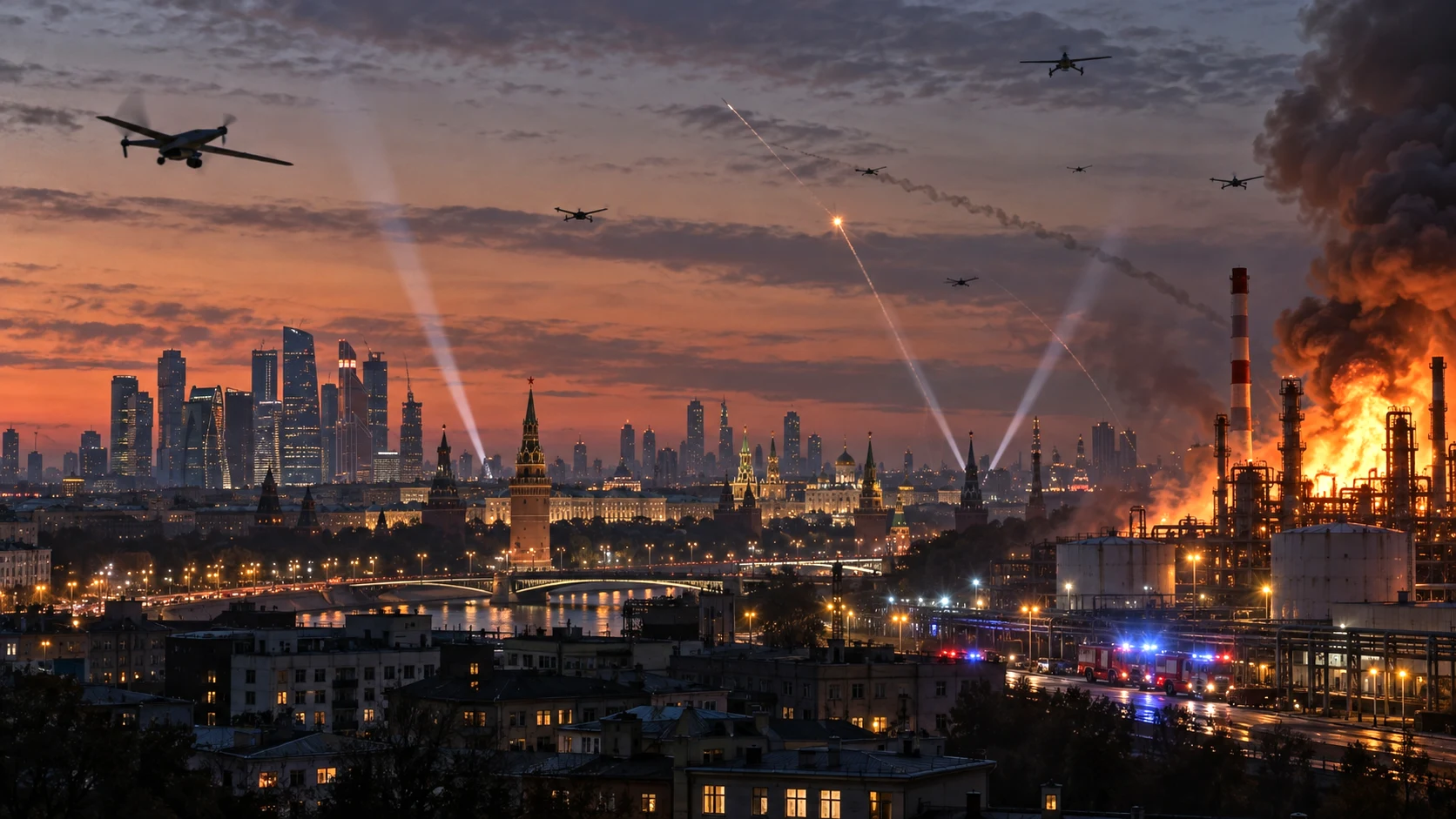
A huge Ukrainian long-range attack sent hundreds of drones toward Moscow and other parts of Russia early Sunday, damaging the Moscow Oil Refinery, disrupting civilian areas and putting Russian air defences under intense pressure. Russian officials described it as the largest drone attack yet directe
Ukraine knew a large attack could be coming. Its president publicly warned citizens the evening before. Air-defence units were put on alert. Yet Russia was still able to send a complex mixture of missiles and drones across a wide area, damaging homes, infrastructure and energy facilities.
The episode demonstrates a central problem in Ukraine’s current air war: warning about an attack is not the same as having enough weapons to stop it.
That is especially true when ballistic missiles are involved.
Ukraine has become significantly better at intercepting many drones and conventional cruise missiles, but high-speed ballistic threats place far greater demands on systems such as the US-designed Patriot.
And Patriot interceptor missiles are not available in unlimited numbers.
Here is how the night unfolded and why the shortage matters.
Key Takeaways
Russia’s October 7 missile and drone attack killed at least 32 people across Ukraine, according to the latest figures.
The deadliest site was Pryluky, where 22 people, including five children, were killed in a residential building strike.
Ukraine had advance intelligence warning of a major attack the evening before.
Ballistic missiles remain Ukraine’s most difficult air-defence challenge.
Scarce Patriot interceptors are critical because cheaper systems cannot reliably stop high-speed ballistic threats.
Global demand and production timelines mean Ukraine continues to face an immediate ammunition gap.
October 6 Evening: Ukraine Warns a Major Strike May Be Coming
The first part of the timeline began before any missiles reached Ukrainian cities.
On the evening of October 6, President Volodymyr Zelenskyy said Ukrainian intelligence had received updated information indicating that Russia was preparing what he described as a massive strike.
He urged people to respond to missile alerts and said Ukraine’s Air Force and other services were preparing to defend the country within the limits of the capabilities available to them.
That wording was significant.
Ukraine was not saying it had been caught completely by surprise. It was publicly acknowledging that a large Russian operation was expected.
Advance intelligence can provide important advantages. Air-defence crews can prepare launchers and radars. Aircraft can be repositioned. Emergency services can increase readiness. Civilians can be warned to use shelters.
But intelligence cannot create interceptor missiles that are not already available.
That distinction became critical during the hours that followed.
Overnight Into October 7: Missiles and Drones Move Across Ukraine
Russia launched a combined attack involving missiles and unmanned aircraft against a broad section of Ukraine.
Zelenskyy later said approximately 70 missiles were used during the operation, alongside attack drones.
The weapons were not all identical.
Russia’s long-range campaigns increasingly mix several kinds of threats, potentially including cruise missiles, ballistic missiles and different generations of attack drones.
That complicates air defence because each target behaves differently.
A slower drone can potentially be engaged by mobile gun teams, electronic warfare, interceptor drones, aircraft or surface-to-air systems.
A cruise missile flies differently and may require another defensive response.
A ballistic missile can arrive at very high speed and gives defenders much less reaction time.
Using different weapons in the same attack can therefore force Ukraine to operate several layers of its air-defence network simultaneously.
Kyiv Comes Under Attack
The Ukrainian capital was among the locations struck during the barrage.
Residents spent part of the night responding to air-raid warnings as explosions were reported around the city.
Emergency authorities initially reported fires and destruction in Kyiv’s Darnytskyi and Podilskyi districts.
In the Darnytskyi district, a fire broke out at a garage complex. Emergency workers later found two bodies while extinguishing the blaze and rescued two other people.
Further casualties were identified as assessments continued, eventually taking Kyiv’s reported death toll from the wider attack to four.
The strikes also contributed to disruption in the capital’s electricity system.
The importance of Kyiv extends beyond its population. It contains government institutions, command infrastructure, industry, energy facilities and other strategic sites. That means the capital remains one of the most heavily defended areas of Ukraine while simultaneously remaining one of Russia’s most important long-range targets.
Even a heavily defended city, however, cannot assume every incoming missile will be intercepted.
Pryluky Becomes the Deadliest Site of the Attack
The worst consequences were reported in Pryluky, a city in the Chernihiv region northeast of Kyiv.
A missile struck a five-storey residential building.
The damage triggered a large search-and-rescue operation as emergency workers and residents moved through collapsed sections of the structure and searched for people trapped under debris.
The casualty figure climbed throughout the day and into October 8.
Ukraine’s presidency later confirmed 22 deaths at the site, including five children.
The scale of the loss in one building accounted for most of the deaths from the nationwide barrage.
President Zelenskyy visited Pryluky the following day with British Foreign Secretary Ed Miliband and met emergency officials working at the site.
The incident also illustrates why casualty totals during major attacks must be treated as provisional in the first hours.
Initial reports are usually based on bodies already located, hospital admissions and information from local officials.
When large buildings collapse, the number can change significantly as rescue teams gain access to areas that were initially unreachable.
That is what happened after the October 7 attack.
The early nationwide figure of at least 19 was overtaken by later information. By the following morning, at least 32 people had been reported killed across Ukraine.
Other Regions Report Deaths and Damage
The operation extended far beyond Kyiv and Pryluky.
Casualties were reported in Kremenchuk and Oleksandriia, while strikes and air-defence activity affected numerous other Ukrainian regions.
Russia said its operation targeted military-industrial facilities and infrastructure connected to Ukrainian weapons production.
Moscow’s Defence Ministry also said facilities connected with missiles, drones, ports and ship-repair activity were among its intended targets.
Ukraine, however, documented damage to residential buildings and said energy infrastructure was also targeted.
Those two descriptions are not mutually exclusive.
A military may state the installations it intended to strike while missiles, drones, intercepted weapons or debris can affect civilian locations elsewhere.
The documented deaths in residential areas therefore remain part of the consequences of the operation regardless of Russia’s stated targeting objectives.
Morning of October 7: The Scale Starts to Become Visible
As daylight returned, the scale of damage became clearer.
Emergency crews were working at multiple sites.
In Pryluky, the search of the apartment building continued.
In Kyiv, firefighters dealt with damaged locations while officials assessed infrastructure disruption.
Across the country, casualty figures began rising.
Images and official reports from affected areas showed why the attack could not be understood simply through an interception percentage.
Air defence does not need to fail completely for an attack to cause severe damage.
If dozens of weapons are launched and most are intercepted, the smaller number that penetrate the defence can still produce catastrophic consequences if they reach densely populated areas or critical infrastructure.
That mathematical reality is central to Ukraine’s current air-defence problem.
October 7 Daytime: Attention Turns to Ballistic Missiles
After the attack, Zelenskyy again identified Russian ballistic missiles as Ukraine’s most difficult air-defence challenge.
Ukraine has multiple systems capable of engaging aircraft, drones and some cruise missiles.
It has also developed cheaper ways of dealing with mass drone attacks so that the country does not have to fire its most expensive missiles at every incoming unmanned aircraft.
Ballistic missiles present a different problem.
Their speed and flight characteristics dramatically reduce interception opportunities.
For Ukraine, the Patriot system has become its most important proven defence against this category of threat.
That makes the number of Patriot batteries important.
But it makes the number of interceptor missiles available to those batteries just as important.
Why Having a Patriot Battery Is Not Enough
The phrase “Ukraine needs more Patriots” can be misleading because it can refer to two different shortages.
One is the shortage of complete Patriot air-defence systems.
A battery consists of radar, command equipment, launchers, power and support vehicles.
Additional batteries allow Ukraine to protect more geographic areas.
The second shortage is ammunition.
Every time a Patriot battery launches an interceptor, one missile from its stock is consumed.
The battery may remain fully operational after the launch, but it cannot continue intercepting ballistic threats indefinitely unless replacement missiles arrive.
This means a country can possess sophisticated launchers and radar while still becoming vulnerable if its interceptor inventory falls too low.
For the October 7 attack, that distinction matters more than simply counting how many Patriot systems Ukraine operates.
Why Ukraine Is Short of Patriot Interceptors
Ukraine’s Patriot problem developed over several years rather than appearing suddenly in October.
The first pressure comes from the scale of the Russia-Ukraine war itself.
Russia has launched repeated ballistic and cruise missile attacks since the full-scale invasion began in 2022.
Every interception draws from a finite stockpile.
European allies that transferred missiles or systems to Ukraine also have to consider their own national air-defence requirements.
The second pressure comes from global demand.
The conflict involving Iran has increased consumption of advanced air-defence ammunition in the Middle East, placing additional strain on US and allied inventories.
That does not mean the Iran conflict alone caused Ukraine’s shortage.
The supply problem existed already.
But simultaneous missile-intensive conflicts mean the same industrial base is being asked to replenish inventories for Ukraine, the United States, NATO members and Middle Eastern partners.
Exact national Patriot stockpiles are classified, so claims that a particular country has literally “run out” should be treated cautiously.
The more defensible conclusion is that readily available stocks are under heavy pressure and replacement production cannot immediately match wartime expenditure.
Production Is Increasing — but Ukraine Needs Missiles Now
Western manufacturers are expanding Patriot production.
Ukraine is also pursuing large future missile contracts with international support.
Those programmes matter strategically, but they do not completely solve the immediate problem.
Factory capacity can be expanded, but not overnight.
A missile scheduled for delivery years from now cannot defend an apartment building or electricity substation tonight.
That gap between future orders and missiles available for immediate use is at the centre of Kyiv’s current appeal.
For a detailed breakdown of interceptor inventories, future production, the effect of the Iran conflict and Ukraine’s procurement plans, readers can see Rajatheertha’s separate explainer, why Ukraine is short of Patriot missiles.
Ukraine is increasingly using lower-cost technologies to deal with drones.
Electronic warfare can interfere with some unmanned systems.
Mobile firing teams can engage slower drones.
Interceptor drones are being developed to destroy attack drones without using expensive surface-to-air missiles.
Fighter aircraft can also contribute.
These approaches are crucial because using a multimillion-dollar Patriot interceptor against every inexpensive drone would rapidly exhaust ammunition.
But layered air defence has limits.
A system designed to stop a relatively slow drone is not automatically capable of defeating a high-speed ballistic missile.
Ukraine therefore needs to preserve its most capable interceptors for threats that cheaper systems cannot reliably handle.
Russia can exploit that dilemma by mixing inexpensive drones with far more dangerous missiles.
The defender must identify the threat, decide which weapon should engage it and avoid wasting scarce high-end interceptors.
October 8: The Death Toll Reaches at Least 32
By the morning after the attack, rescuers had recovered additional bodies.
The nationwide toll was reported at at least 32 killed and roughly 100 wounded.
Pryluky accounted for 22 of the deaths.
Kyiv reported four.
Other fatalities were recorded elsewhere.
These figures replaced the lower numbers circulated during the first hours of October 7.
For that reason, headlines still stating only that “at least 19” people were killed should now be understood as snapshots from an earlier point in the rescue operation, not the latest assessment of the October 7 barrage.
What the Attack Reveals About the Air War
The October 7 operation demonstrates that modern air defence is not simply a question of whether a country knows an attack is coming.
Ukraine had advance intelligence.
Its forces were prepared.
Air-defence units intercepted a significant share of the incoming threats.
Yet dozens of people were still killed.
The reason is that defending an entire country against repeated mixed missile and drone salvos requires enormous numbers of radars, launchers, aircraft, electronic-warfare systems and interceptor missiles.
The hardest weapons to stop also require some of the most sophisticated and limited ammunition.
For Ukraine, Patriot remains central to that equation.
The country can continue developing cheaper defences for drones, increase domestic weapons production and strengthen electronic warfare.
But as long as Russia continues launching ballistic missiles, Ukraine is likely to remain dependent on a limited global supply of high-end interceptors.
What Happens Next
Ukraine is expected to continue pressing the United States, NATO governments and other Patriot operators to release missiles from existing inventories while new production expands.
At the same time, Kyiv is seeking longer-term arrangements intended to reduce its dependence on emergency transfers.
Russia, meanwhile, continues its long-range campaign against Ukrainian infrastructure and facilities it describes as supporting the country’s military effort.
The October 7 attack was followed by further deadly strikes elsewhere in Ukraine, showing that the danger did not end when rescuers finished searching the first damaged buildings.
The strategic contest therefore has two clocks running simultaneously.
Russia can prepare and launch new missiles now.
Ukraine and its partners are expanding interceptor production for the future.
The critical question is whether enough missiles can be made available during the period in between.
Bottom Line
Russia’s October 7 missile and drone barrage across Ukraine killed at least 32 people according to the latest reported toll, not the earlier figure of 19 that circulated while rescue operations were still under way.
Pryluky suffered the heaviest losses, with 22 people, including five children, reported killed after a missile struck a five-storey residential building.
Ukraine had warned the previous evening that intelligence indicated a major Russian attack was being prepared, but advance warning could not guarantee complete protection.
The attack again exposed the particular danger posed by ballistic missiles and the importance of Patriot interceptors.
Ukraine’s problem is not that Patriot has stopped working.
It is that every interception consumes scarce ammunition, several countries need the same missiles, global inventories are under pressure and expanded production takes time.
That makes the October 7 attack not only a story about the scale of Russia’s aerial campaign, but also about the increasingly important question of whether Ukraine can keep enough high-end interceptors available for the next one.
Key Takeaway
Russia’s Oct. 7 attack killed at least 32 people across Ukraine.
Pryluky suffered the heaviest losses with 22 deaths, including five children.
Advance warning did not guarantee full protection.
Scarce Patriot interceptors remain critical against ballistic missiles.
The Rajatheertha Team publishes news, explainers, guides and updates across India and the world. Our coverage follows Rajatheertha's editorial, verification and corrections standards.
Donald Trump says Russia and Ukraine have agreed to immediately stop attacks on energy infrastructure. Volodymyr Zelensky says he was not informed of such an agreement, while Ukraine has reported new Russian strikes since the announcement. Here is what is actually confirmed.
Ukraine is urgently searching for Patriot interceptors as Russian ballistic attacks intensify and the Iran war adds pressure to already limited global stocks. Here is why Patriot matters, how severe the shortage is and when new missiles could arrive.
Eighteen days before the November 3 US midterms, Washington and Tehran remain without a comprehensive agreement. Iran says the latest US response on Hormuz is insufficient, the American blockade remains in force, attacks on shipping have intensified and oil prices remain above $100 a barrel.
Former U.S. Army Maj. Nidal Hasan is scheduled to be executed by firing squad at Fort Hood on December 3, 2026, nearly 17 years after the 2009 shooting that killed 13 people. Here is what happened, how the military appeals process unfolded and why the execution could still be delayed.
The GFS Pride and Cape Dao have sunk near the Strait of Hormuz as attacks on commercial shipping intensify. The two sinkings happened close together, but Cape Dao had been struck weeks earlier. Here is what is confirmed, what remains unclear and why the escalation matters for global trade and India.
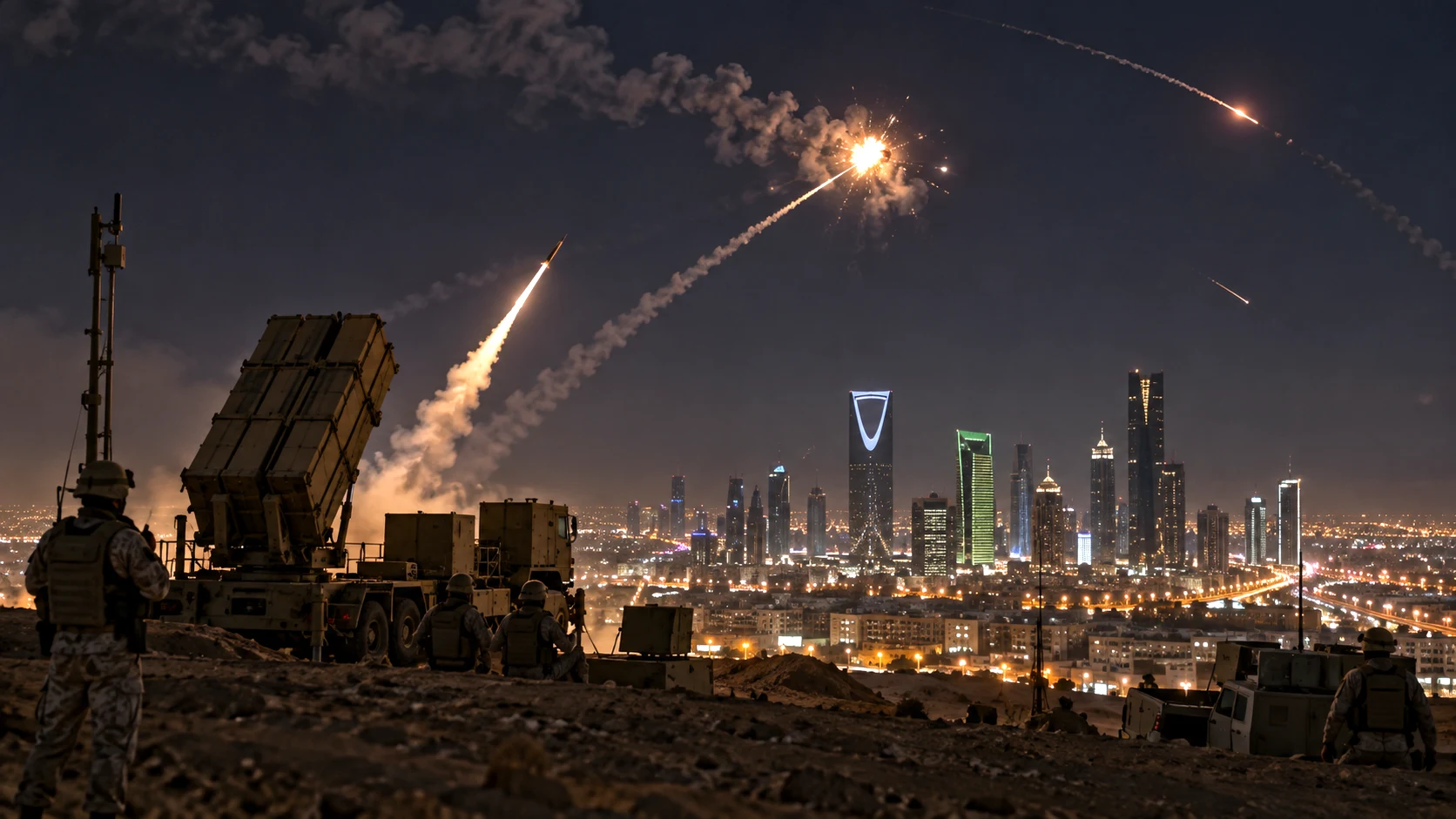
A Houthi ballistic missile aimed at Riyadh was intercepted by Saudi air defences as explosions and smoke were reported near the Saudi capital’s main airport, marking a sharp escalation in the renewed Saudi-Houthi confrontation. The attack comes alongside strikes on Saudi energy infrastructure, inten








0 Comments