Saudi Aramco Building Attacked: Will Oil and Petrol Prices Rise?
A Saudi Aramco administrative building in Dhahran was targeted on October 13, causing a limited fire but no casualties. Crude prices have risen as markets assess Saudi supply risks, but there is no confirmed disruption to Aramco oil production and India’s PSU petrol and diesel prices remain unchange
Editorial illustration representing Saudi Aramco attack and oil price impact
Table of Contents (16 sections)
A Saudi Aramco administrative building in Dhahran was targeted on the evening of October 13, causing a limited fire but no reported injuries or deaths, according to Saudi Arabia’s Energy Ministry. The incident has put oil markets on alert, but there is an important distinction for consumers: an attack on an Aramco building does not automatically mean Saudi oil production has been disrupted or that petrol prices in India will immediately rise.
That distinction matters because the attack comes during a wider escalation between Saudi Arabia and Yemen’s Houthis, at a time when traders are already watching Middle Eastern oil supplies and shipping routes closely.
Global crude prices moved higher on October 14 as markets assessed the possibility of further attacks on Saudi infrastructure. Brent crude was trading above $106 a barrel during the session, while US West Texas Intermediate was near $95.
For Indian motorists, however, there has been no corresponding immediate nationwide increase in regular petrol and diesel prices at the outlets of the three state-run oil marketing companies.
Private fuel retailers are a different story. Jio-bp increased petrol by ₹5 a litre and diesel by ₹3 a litre from October 11 in markets where the revised prices apply, after sustained pressure from high international crude and product costs. Nayara Energy had also raised prices earlier.
Recommended Reading
Related Stories & In-Depth Guides
Curated editorial perspectives matching this topic.
Donald Trump says the United States will not resume military strikes on Iran before the November 3 midterm elections, but the blockade, sanctions and Hormuz dispute remain unresolved. Here is what the pause means for oil markets, diplomacy and India.
Donald Trump says Russia and Ukraine have agreed to immediately stop attacks on energy infrastructure. Volodymyr Zelensky says he was not informed of such an agreement, while Ukraine has reported new Russian strikes since the announcement. Here is what is actually confirmed.
So what exactly happened at Aramco, why did oil prices react, and how much should Indian consumers read into it?
Key Takeaways
Aramco administrative building in Dhahran targeted Oct 13; limited fire, no casualties.
No confirmed disruption to Saudi oil production.
Brent crude rose above $106; WTI near $95.
India’s state-run petrol/diesel prices unchanged; private retailers have raised prices.
Escalation risk remains the key market concern.
What happened at the Saudi Aramco building in Dhahran?
Saudi Arabia’s Energy Ministry said an administrative building belonging to Saudi Aramco in Dhahran in the kingdom’s Eastern Province was targeted on Tuesday evening, October 13.
The incident caused what the ministry described as a limited fire. Authorities responded to the site, and the ministry said there were no injuries or fatalities.
The ministry’s short statement did not itself assign responsibility for the attack.
Separately, the Saudi-led coalition fighting in Yemen said its air defences intercepted and destroyed a ballistic missile launched by the Houthi movement toward Dhahran.
Reuters also reported, citing a company source, that a ballistic missile hit the Aramco headquarters complex and damaged the upper floors of an office tower.
Those details place the incident within the broader Saudi-Houthi escalation, but they do not establish that an oil-production facility was damaged.
That is a crucial point for energy markets.
An administrative building can be operationally important, particularly at the headquarters of one of the world’s largest energy companies, but its targeting does not necessarily have the same immediate supply consequences as damage to an oil field, processing plant, export terminal, pipeline or refinery.
As of October 14, there was no confirmed announcement of a reduction in Saudi crude production caused by the Dhahran incident.
Why does an attack involving Aramco matter so much to oil markets?
Saudi Aramco is not simply another oil producer.
It sits at the centre of Saudi Arabia’s petroleum industry and is one of the largest crude-oil producers in the world. Its operations span oil and gas production, processing, pipelines, export terminals, refining, petrochemicals and international energy trading.
Aramco reported total liquids production of 10.7 million barrels per day for 2025 and maximum sustainable crude-production capacity of 12 million barrels per day.
Saudi Arabia also plays a distinctive role in the global oil market because it traditionally possesses more spare production capacity than most major producers.
That means traders watch threats to Saudi infrastructure closely.
The market question is not simply whether one building was damaged. It is whether attacks could expand into facilities that physically produce, process or export crude oil — and whether repeated attacks could affect Saudi Arabia’s ability to maintain reliable output.
That is why even an incident that has not caused a confirmed production loss can increase what traders call a geopolitical risk premium in oil prices.
Why did crude oil prices rise after the attack?
Oil prices moved higher on October 14 as traders assessed growing supply risks from the Saudi-Houthi conflict.
Brent crude rose to around $106.58 a barrel, while US West Texas Intermediate was around $94.94 during the session.
The Aramco incident was only one part of the market calculation.
Recent Houthi missile and drone attacks have targeted multiple locations in Saudi Arabia, including airports and other infrastructure. The conflict has also intensified around Yemen and the strategically important Bab el-Mandeb area.
At the same time, markets remain sensitive to disruption risks elsewhere in the Middle East, including shipping routes.
Oil traders therefore have to price not only barrels that have actually been removed from the market but also the probability that future escalation could interrupt supply.
That does not mean every geopolitical event causes a lasting oil rally.
Prices can retreat quickly when fears ease, when production remains intact, when alternative supplies increase or when traders conclude that an incident is unlikely to affect physical oil flows.
That is why the next developments are more important than the initial market reaction alone.
Has the attack disrupted Saudi oil production?
There was no confirmed evidence as of October 14 that the attack on the Dhahran administrative building had reduced Saudi crude production.
The Saudi Energy Ministry reported the limited fire and absence of casualties but did not announce a production outage.
That separates the latest incident from an attack directly damaging a major processing or export facility.
Oil markets will therefore be looking for any update from Saudi authorities or Aramco on production, processing, pipelines, terminals and export operations.
Without an actual supply interruption, part of the price response can remain a risk premium rather than a reaction to barrels physically disappearing from the market.
This distinction is important because headlines involving Aramco can naturally create concern among consumers, but the scale and location of any damage determine the economic consequences.
What could happen if attacks on Saudi energy infrastructure continue?
The answer depends on what is targeted and whether physical supply is affected.
If the Dhahran incident remains isolated and Saudi production and exports continue normally, the direct effect on global supply could remain limited.
If repeated attacks begin threatening oil-processing plants, major pipelines, export terminals or producing fields, markets could become significantly more nervous.
There is historical precedent for why traders take that possibility seriously.
Saudi energy infrastructure is essential to the global petroleum system, and interruptions can influence international benchmark prices quickly.
However, it would be premature to assume that the October 13 attack will develop into such a disruption.
The responsible approach is to watch confirmed production and export data rather than treating the existence of an attack as proof of a supply shortage.
Will petrol prices rise in India because of the Aramco attack?
Not automatically.
India is highly dependent on imported crude oil, which makes sustained international oil-price increases economically important. Higher crude costs can eventually raise the cost of producing petrol, diesel and other petroleum products.
But the price Indian motorists pay at a fuel station does not move mechanically with Brent crude on the same day.
Retail fuel prices are influenced by several factors, including international crude and refined-product costs, the rupee-dollar exchange rate, refinery economics, freight, dealer margins, central duties, state taxes and the pricing decisions of individual oil marketing companies.
This means a one-day increase in crude does not by itself establish that petrol or diesel prices will increase.
What matters more is whether crude remains elevated and whether refiners and fuel retailers continue absorbing higher costs.
What are petrol and diesel prices doing in India now?
For regular fuels sold by the major state-owned oil marketing companies — Indian Oil Corporation, Bharat Petroleum and Hindustan Petroleum — prices have remained unchanged in the latest available update.
The Petroleum Planning and Analysis Cell listed IndianOil’s Delhi retail selling price on October 13 at ₹102.12 per litre for petrol and ₹95.20 per litre for diesel.
That does not mean every fuel outlet in India charges the same amount. Retail prices differ across states and cities because of tax structures and other local components.
It also does not mean the entire Indian fuel market is unchanged.
Jio-bp, the private fuel retailer backed by Reliance Industries and BP, raised petrol prices by ₹5 per litre and diesel by ₹3 per litre from October 11 in applicable markets as high international crude and refined-product prices squeezed retail margins.
Nayara Energy had also increased its prices earlier.
The result is an unusual divergence in which some private-sector fuel prices have moved higher while the large public-sector retailers continue to hold regular petrol and diesel prices steady.
For consumers, that makes the company operating a particular fuel station increasingly relevant.
Why India is vulnerable when global crude stays expensive
India imports the overwhelming majority of the crude oil it consumes.
That means a sustained rise in international crude prices can affect the country even when retail petrol and diesel prices are temporarily unchanged.
The effects can appear through several channels.
First, refiners have to pay more for imported crude.
Second, a higher oil import bill can put pressure on India’s trade balance.
Third, expensive oil can increase costs across transport, aviation, manufacturing, logistics and industries that use petroleum products.
Fourth, the rupee also matters because crude oil is generally purchased internationally in US dollars. A weaker rupee can make imported oil more expensive even when the dollar price of crude is unchanged.
For households, the most visible concern is the petrol pump. For the wider economy, however, the consequences of expensive crude are much broader.
Why the Strait of Hormuz and Bab el-Mandeb matter too
The Aramco attack cannot be viewed entirely in isolation from regional shipping risks.
Two maritime routes are particularly important to global energy markets: the Strait of Hormuz and the Bab el-Mandeb Strait.
Hormuz connects the Persian Gulf with the Arabian Sea and is one of the world’s most important oil transit routes.
Bab el-Mandeb connects the Red Sea with the Gulf of Aden and forms part of the maritime route linking the Indian Ocean with the Suez Canal and Mediterranean.
Disruption around either route can affect shipping schedules, insurance costs, tanker availability and energy-market sentiment even when individual oil fields remain operational.
The renewed Saudi-Houthi confrontation therefore matters beyond the territory immediately involved in the fighting.
For oil prices, a direct production outage is one risk. A shipping disruption is another.
The wider Saudi-Houthi escalation
The Dhahran incident follows a series of missile and drone attacks in and around Saudi Arabia as fighting involving the Houthis has intensified.
Saudi airports have also been targeted during the latest escalation.
Saudi-backed forces, meanwhile, have intensified military activity connected to Yemen, while the Saudi-led coalition has carried out strikes on Houthi-controlled positions and infrastructure.
The conflict has renewed concerns about both civilian safety and regional energy security.
Rajatheertha previously reported in September on Houthi ballistic missile activity toward Riyadh and the possible consequences of renewed attacks on Saudi energy infrastructure.
The October 13 incident represents a further escalation because an administrative building belonging to Aramco in Dhahran was actually reported as targeted and damaged.
The economic significance will depend on whether the confrontation stops at this level or expands further.
What should oil-market watchers look for next?
There are several indicators that matter more than speculation about where crude or petrol prices might go.
The first is any confirmation of damage to producing, processing or exporting facilities in Saudi Arabia.
The second is Aramco’s production and export continuity.
The third is whether additional missile or drone attacks target oil installations.
The fourth is shipping security around the Gulf and Red Sea routes.
The fifth is the response of Saudi Arabia and other OPEC+ producers. Additional available supply can soften the market impact of disruptions elsewhere.
The sixth is India’s domestic fuel-pricing response, particularly whether public-sector oil marketing companies continue holding retail prices steady while international crude remains elevated.
Those developments will provide a clearer indication of whether the current rise in crude is a short-lived security premium or the beginning of a more persistent supply problem.
Could oil prices rise further?
They could, but there is no responsible basis for assigning a specific future price simply from the Dhahran attack.
A further rise would become more likely if physical Saudi output were disrupted, export infrastructure were damaged, shipping routes were significantly affected or the conflict broadened.
On the other hand, prices could stabilise or retreat if Saudi production remains uninterrupted, attacks ease, diplomatic efforts progress or additional global supply offsets the perceived risk.
Energy markets can reprice geopolitical developments very quickly in either direction.
That is why predictions such as “petrol will rise by ₹X” or “crude will reach $Y” would be speculative without stronger evidence.
What does this mean for Indian motorists right now?
The immediate answer is simpler than the headlines may suggest.
There is no confirmed nationwide increase in regular petrol or diesel prices at India’s state-run fuel retailers because of the October 13 Aramco incident.
There is also no confirmed Saudi production shutdown linked to the targeted Dhahran administrative building.
Crude prices, however, are elevated, and private Indian fuel retailers have already begun responding to broader international cost pressures.
That makes the duration of high oil prices more important than a single trading session.
If international crude remains expensive for a prolonged period, the pressure on Indian refiners and fuel retailers increases. Whether and when that pressure reaches consumers depends on domestic pricing decisions as well as taxes, exchange rates and market conditions.
Bottom Line
The Saudi Aramco incident is significant because of where it occurred and because it comes during a rapidly intensifying regional confrontation.
Saudi Arabia has confirmed that an Aramco administrative building in Dhahran was targeted, causing a limited fire without casualties.
What has not been confirmed is equally important: there is currently no announced oil-production disruption from the incident.
Global crude prices have risen as traders price in greater Saudi supply risk, but a higher crude benchmark does not translate immediately or automatically into higher petrol and diesel prices in India.
For Indian consumers, regular PSU fuel prices remain unchanged in the latest official snapshot, although private retailers including Jio-bp have already implemented increases amid broader pressure from international energy costs.
The next question is therefore not simply whether Aramco was attacked. It is whether the regional escalation begins interrupting the physical production and movement of oil.
That is the development most likely to determine whether today’s market anxiety turns into a more lasting energy-price shock.
Key Takeaway
Aramco Dhahran building attacked Oct 13; limited fire, no casualties or confirmed production loss.
Crude prices rose on risk premium. India’s PSU petrol/diesel prices unchanged; private retailers have raised rates.
The Rajatheertha Team publishes news, explainers, guides and updates across India and the world. Our coverage follows Rajatheertha's editorial, verification and corrections standards.
Eighteen days before the November 3 US midterms, Washington and Tehran remain without a comprehensive agreement. Iran says the latest US response on Hormuz is insufficient, the American blockade remains in force, attacks on shipping have intensified and oil prices remain above $100 a barrel.
US military planners have reportedly prepared options for renewed major operations against Iran, but no new large-scale campaign has been officially announced. Here is what is confirmed, what remains reported and why India is watching oil, the rupee and fuel costs.
The GFS Pride and Cape Dao have sunk near the Strait of Hormuz as attacks on commercial shipping intensify. The two sinkings happened close together, but Cape Dao had been struck weeks earlier. Here is what is confirmed, what remains unclear and why the escalation matters for global trade and India.
Iranian military officials claim Tehran controls the Strait of Hormuz as ship traffic falls sharply and Iran warns it could launch pre-emptive operations. Here's what is actually happening and why the crisis matters for India's oil bill, rupee and inflation.
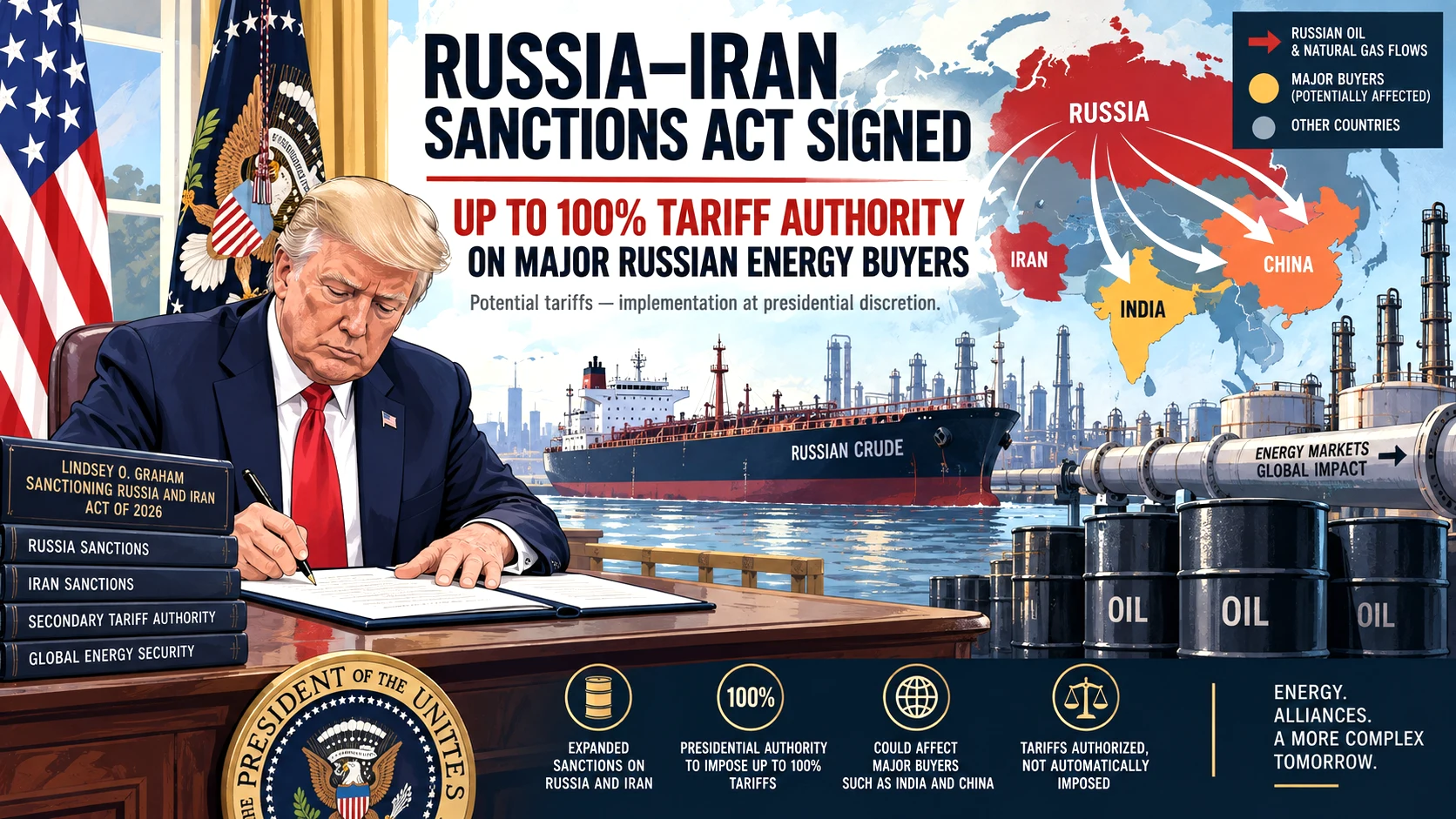
The new US law targets Russia’s energy, financial and defence networks and allows additional tariffs of up to 100% on goods from the largest buyers of Russian oil and gas. India faces significant exposure because of its large Russian crude imports, but a 100% tariff on Indian goods has not been impo
The Vatican has confirmed that Pope Leo XIV has lung adenocarcinoma after surgeons removed the lower lobe of his right lung. The operation was successful, but important questions about staging, further treatment and his November South America trip remain unanswered.






0 Comments