Yemeni Government Forces Retake Key Areas Around Bab el-Mandeb in Major Offensive Against Houthis
Saudi-backed Yemeni government forces say they have retaken Dhubab, Mocha and other strategic positions around the Bab el-Mandeb Strait in a major offensive against the Houthis, escalating a conflict with major consequences for Red Sea shipping.
Yemeni government-aligned forces near the Bab el-Mandeb Strait during a major offensive against Houthi forces
Table of Contents (22 sections)
Forces aligned with Yemen's internationally recognised government have made a rapid advance along the country's Red Sea coast, reclaiming several strategically important positions around the Bab el-Mandeb Strait from the Iran-aligned Houthis as a major new offensive intensifies Yemen's renewed civil war.
Government and military officials said forces backed by Saudi Arabia advanced through the Dhubab district and coastal areas toward Mocha, pushing Houthi fighters out of much of the territory they had captured during a September offensive.
Reuters reported that the government forces staged a rapid advance on October 5, retaking the coastline around Bab el-Mandeb up to Mocha with heavy Saudi air support.
Associated Press separately reported that government-aligned troops had retaken Dhubab, Bab and Hadeid, citing Yemeni officials and witnesses who said tanks and government forces had entered some of the recaptured towns.
Recommended Reading
Related Stories & In-Depth Guides
Curated editorial perspectives matching this topic.
The GFS Pride and Cape Dao have sunk near the Strait of Hormuz as attacks on commercial shipping intensify. The two sinkings happened close together, but Cape Dao had been struck weeks earlier. Here is what is confirmed, what remains unclear and why the escalation matters for global trade and India.
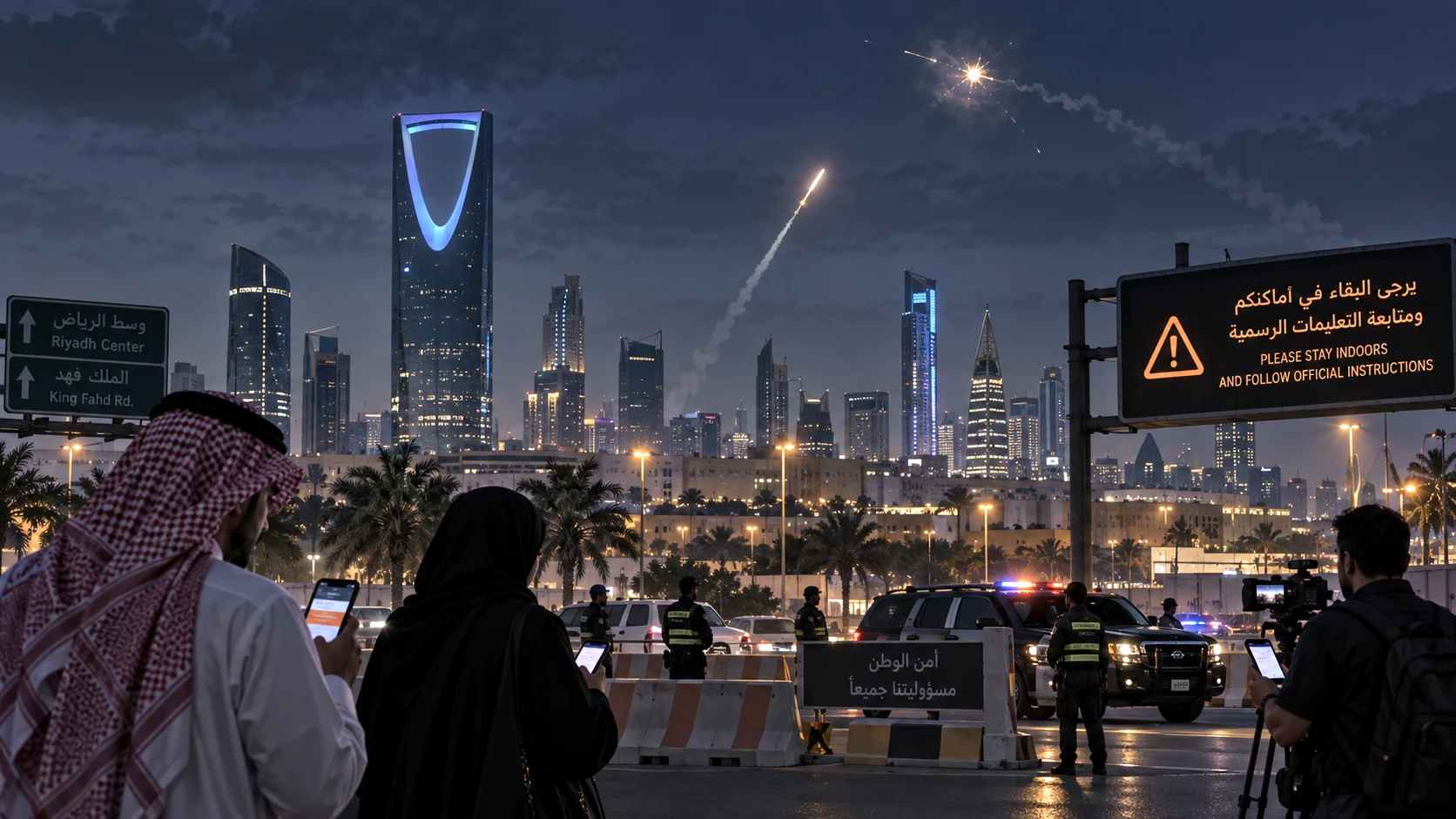
Saudi authorities said air defences destroyed a ballistic missile launched toward Riyadh on September 19, marking the first reported targeting of the capital since the latest escalation with Yemen’s Houthis, as residents received emergency warnings and explosions were heard.**
The operation represents one of the most important territorial shifts in Yemen in recent weeks because Bab el-Mandeb is a critical maritime chokepoint connecting the Red Sea with the Gulf of Aden and Arabian Sea.
However, the situation remains fluid.
The Houthis have disputed some government claims about the scale of their retreat, while several reports have noted that individual battlefield assertions cannot yet be independently verified in full.
The most accurate description at this stage is therefore that Saudi-backed Yemeni government forces have reported major gains and retaken key positions around Bab el-Mandeb, rather than saying uncontested control of the entire strategic waterway has been conclusively established.
Key Developments
Yemen's internationally recognised government launched a major offensive against the Houthis.
Government forces reported retaking Dhubab district and key coastal positions near Bab el-Mandeb.
Government forces also reported retaking Mocha, a strategic Red Sea port.
Saudi Arabia is providing extensive air support to the offensive.
The Saudi-led coalition says around 100 fighter aircraft have participated in operations.
The coalition claimed it had struck hundreds of Houthi targets.
Government forces say the Giants Brigades and Nation's Shield Forces played important roles in the advance.
The Houthis have launched retaliatory attacks and claimed strikes on targets inside Saudi Arabia.
Fighting is continuing elsewhere, including around Taiz.
Humanitarian displacement has risen sharply as the conflict intensifies.
Control of the Bab el-Mandeb region has major implications for global oil and commercial shipping routes.
What Happened Around Bab el-Mandeb?
The new offensive followed major Houthi gains in September.
The Houthis had captured Mocha and advanced down Yemen's western coastline toward the Bab el-Mandeb Strait, dramatically increasing their influence over territory bordering one of the world's most strategically important sea routes.
Government forces began their latest push with Saudi air cover.
Reuters reported that the advance pushed the Houthis out of most of the coastal areas they had seized during the previous month.
Military officials said government troops entered Dhubab and secured positions overlooking the strait.
The government also reported regaining control of Dhubab airport and cutting a road linking Dhubab and Mocha.
These locations matter because controlling roads, elevated positions and coastal approaches can determine whether forces can maintain access to Bab el-Mandeb.
Government Forces Say Mocha Has Been Retaken
Yemen's government-aligned military also announced that it had regained the strategic port city of Mocha, around 45 kilometres north of Dhubab.
Mocha had fallen to Houthi forces during their rapid September advance.
Government military sources said the Nation's Shield Forces, Giants Brigades, Tihama Resistance and other allied fighters participated in the operation, supported by coalition air power.
The reported recapture of Mocha is particularly significant because the port lies on Yemen's Red Sea coast and forms part of the wider military geography around Bab el-Mandeb.
Who Is Fighting the Houthis?
The anti-Houthi forces are not a single uniform army.
They include several military formations aligned with or operating alongside Yemen's internationally recognised government.
Among the forces named in reports are:
Yemen's government armed forces;
the Giants Brigades;
the Nation's Shield Forces;
the Tihama Resistance; and
other local and Popular Resistance formations.
Saudi Arabia has supplied major air support.
Some southern Yemeni forces have also historically received support from the United Arab Emirates, adding another layer to Yemen's complicated military and political landscape.
What Is Operation 'Yemen Dawn'?
Yemen's Presidential Leadership Council, led by Rashad al-Alimi, announced the broader campaign as an operation intended to restore government control over territory held by the Houthis.
Reports have referred to the campaign as Operation Yemen Dawn, or “Dawn of Yemen”.
Al-Alimi said the objective extended beyond Bab el-Mandeb and included restoring state institutions and ultimately retaking the capital, Sanaa, which has been controlled by the Houthis since 2014.
The government military has also announced what it calls a “strategic offensive” toward Sanaa.
Whether the current offensive can translate coastal gains into a sustained campaign deep inside Houthi-held territory remains uncertain.
Saudi Arabia Provides Heavy Air Support
Saudi-led coalition officials say approximately 100 fighter aircraft have been involved in supporting Yemeni government troops.
Coalition spokesman Maj Gen Turki al-Malki said air operations were continuing around the clock and claimed hundreds of Houthi targets had been struck.
Those target-destruction figures come from the Saudi-led coalition and have not been independently verified in full.
Saudi Arabia has described its military involvement as support for Yemen's internationally recognised government and as a response to Houthi threats against Saudi territory.
Did Government Forces Capture the Entire Bab el-Mandeb Strait?
Government officials have made broad claims of control, but the situation requires careful wording.
Yemen's information minister and military officials said government forces had established effective control around the Bab el-Mandeb area.
Government military spokesman Lt Col Majid Abdullah al-Nuzayli said the Giants Brigades and Nation's Shield Forces had taken control of the strategic area.
Reuters confirmed significant government advances along the coastline but also noted that Houthi forces retain the ability to threaten the waterway, including through drones and other long-range systems.
This means territorial control of nearby coastal positions does not automatically eliminate the military threat to shipping.
Houthis Dispute Government Claims
The Houthis have rejected or challenged some accounts of the government advance.
Reports citing Houthi-linked sources said they denied that government forces had achieved the degree of progress claimed around Bab el-Mandeb.
Al Jazeera also noted that it could not independently verify all battlefield claims made by government forces.
Battlefield information in Yemen is frequently released by military participants while fighting is still underway, so territorial-control claims can change rapidly.
For that reason, reports should distinguish between confirmed fighting, credible independently reported advances, and claims from the combatants themselves.
Houthis Launch Retaliatory Attacks on Saudi Arabia
The Houthis responded to the offensive by claiming attacks against several targets inside Saudi Arabia.
The group has used drones and missiles in attacks against Saudi territory during previous phases of the conflict.
Individual Houthi claims should be treated cautiously unless independently confirmed.
Why Bab el-Mandeb Matters to the World
Bab el-Mandeb is not just a Yemeni battlefield.
It is one of the world's critical maritime chokepoints.
The strait sits between Yemen on the Arabian Peninsula and Djibouti and Eritrea on the African side, connecting the Gulf of Aden and Arabian Sea with the Red Sea.
Ships travelling between Asia and Europe through the Suez Canal generally pass through Bab el-Mandeb.
The US Energy Information Administration describes the strait as a strategic route for international oil and natural-gas shipments.
EIA data show that around 8.1 million barrels per day of oil moved through Bab el-Mandeb during the second quarter of 2026, highlighting the route's growing energy importance.
That makes instability along Yemen's coastline capable of influencing:
tanker routes;
freight charges;
maritime insurance;
oil markets;
delivery schedules;
and supply chains between Asia and Europe.
Why Is Bab el-Mandeb Even More Important in 2026?
The strait has become particularly important because other Middle Eastern energy routes have also faced severe disruption.
EIA data show oil flows through Bab el-Mandeb rose substantially during the first half of 2026 while flows through the Strait of Hormuz fell sharply.
The agency said in September that constrained Red Sea shipping was already affecting Saudi export routes and Middle Eastern oil supply patterns.
That means control and security around Bab el-Mandeb now have consequences extending well beyond Yemen.
Could Shipping Become Safer After the Government Advance?
Possibly, but territorial gains do not automatically make the waterway safe.
The Houthis have demonstrated the ability to threaten ships using:
missiles;
drones;
unmanned maritime systems;
and attacks launched from locations away from the immediate coastline.
Even if government forces hold Dhubab and Mocha, commercial shipping companies and insurers would still assess the Houthis' longer-range strike capability before concluding that risks have materially fallen.
Historically, insecurity in the Red Sea has caused shipping companies to divert vessels around the Cape of Good Hope, increasing both time and cost.
Fighting Around Taiz Continues
The government gains near Bab el-Mandeb do not mean the Houthis are retreating everywhere.
In other areas, Houthi forces have recently made advances.
The Guardian reported that the Houthis had captured territory around Turbah and routes near Taiz, putting additional pressure on government positions.
Al Jazeera similarly reported that the Houthis had made significant gains before the government launched its current counteroffensive.
This illustrates how fragmented the battlefield remains.
One side can gain territory on the coast while losing ground elsewhere.
Yemen's Humanitarian Crisis Is Worsening
The renewed fighting is also forcing more civilians from their homes.
The International Organization for Migration said that from January 1 through October 3, it had tracked 31,844 displaced households, representing about 191,064 people, who had experienced displacement at least once during 2026.
Between September 27 and October 3 alone, the organisation tracked approximately 21,798 newly displaced people, with Taiz accounting for much of the recent movement.
Those figures underline the civilian cost of renewed large-scale fighting.
Territorial gains by either side do not reduce the humanitarian consequences of artillery fire, air strikes, disrupted roads, damaged infrastructure and population displacement.
How Did Yemen Reach This Point?
The Houthis seized the capital Sanaa in 2014, forcing Yemen's internationally recognised government from the city.
A Saudi-led coalition intervened militarily in 2015 in support of the government.
Years of fighting produced a devastating humanitarian crisis before a UN-mediated truce in 2022 significantly reduced major cross-border hostilities.
The conflict nevertheless remained unresolved.
Fighting escalated again in 2026, and the Houthis made major territorial gains along Yemen's western coast in September, including around Mocha and strategic Red Sea islands.
The government offensive now seeks to reverse those gains.
Is Iran Directly Fighting in the Battle?
The Houthis are widely described as Iran-aligned and have received support from Tehran.
However, describing every Houthi operation as directly commanded by Iran would go beyond what has been established publicly.
Iran's relationship with the Houthis has become an important element of broader regional tensions, but the movement also has its own Yemeni political, military and territorial objectives.
Claims about operational control should therefore be specifically attributed when made.
What Has the United States Said?
US Secretary of State Marco Rubio said Saudi Arabia had come under Houthi attack and had a right to defend itself.
He also said Yemeni government forces could be expected to attempt to retake territory they had lost.
When asked about US coordination with the operation, Rubio referred to the US-Saudi defence relationship but did not provide full operational details.
What Happens Next?
The key question is whether government forces can consolidate the territory they say they have retaken.
Capturing an area and maintaining control over it are different military challenges.
Important developments to watch include:
whether government forces maintain control of Dhubab and Mocha;
whether they regain or secure strategic islands near Bab el-Mandeb;
whether the Houthis mount a counteroffensive;
whether Houthi missile or drone attacks continue against shipping;
whether Saudi air operations intensify;
whether government forces advance deeper toward Sanaa;
whether fighting around Taiz expands;
and whether civilian displacement continues rising.
Latest Verified Position
As of October 6, 2026, the strongest available evidence indicates:
Saudi-backed Yemeni government forces have made major territorial gains around Bab el-Mandeb.
Government forces have reported retaking Dhubab and strategic coastal positions.
Multiple reports say government forces also retook Mocha.
Saudi Arabia is providing substantial air support.
The Houthis have disputed some claims about the extent of the government advance.
Houthi forces continue to possess missile and drone capabilities capable of threatening territory beyond the immediate front line.
Fighting elsewhere in Yemen remains intense.
The humanitarian impact is worsening, particularly around Taiz.
The development therefore represents a significant government counteroffensive and a potentially important shift around Bab el-Mandeb, but it is too early to conclude that the Houthis have permanently lost the ability to contest the strategic waterway.
Frequently Asked Questions
Did Yemeni government forces retake Bab el-Mandeb from the Houthis?
Government forces have reported taking key positions around Bab el-Mandeb and establishing effective control of the area. Reuters and AP confirm substantial advances, although some details remain contested and the Houthis retain long-range strike capabilities.
Did Yemen's government retake Mocha?
Government military sources say they retook Mocha during the October 5 offensive. Multiple news organisations have reported the claim.
Who controls Bab el-Mandeb now?
Saudi-backed government forces appear to hold key Yemeni coastal positions around the strait after the latest offensive. However, the battlefield remains fluid and some Houthi-linked sources dispute the extent of the government's control.
Why is Bab el-Mandeb important?
It connects the Red Sea with the Gulf of Aden and is a major shipping route linking Asia, the Middle East and Europe. EIA data show about 8.1 million barrels per day of oil transited the route in the second quarter of 2026.
Who is supporting the Yemeni government offensive?
Saudi Arabia is providing extensive air support, while multiple Yemeni government-aligned formations are participating in the ground campaign.
Are the Houthis defeated?
No. They continue to control Sanaa and substantial areas of northern and western Yemen and retain significant missile, drone and ground-force capabilities.
Is Bab el-Mandeb safe for commercial ships now?
That cannot yet be concluded. Control of nearby land positions may reduce some risks, but Houthi long-range weapons could continue to threaten maritime traffic.
Bottom Line
Saudi-backed Yemeni government forces have reported major gains around the Bab el-Mandeb Strait, including the retaking of Dhubab and Mocha. The offensive is significant for Red Sea shipping, but the frontline remains fluid and the Houthis retain long-range strike capabilities.
The Rajatheertha Team publishes news, explainers, guides and updates across India and the world. Our coverage follows Rajatheertha's editorial, verification and corrections standards.
Eighteen days before the November 3 US midterms, Washington and Tehran remain without a comprehensive agreement. Iran says the latest US response on Hormuz is insufficient, the American blockade remains in force, attacks on shipping have intensified and oil prices remain above $100 a barrel.
Donald Trump says the United States will not resume military strikes on Iran before the November 3 midterm elections, but the blockade, sanctions and Hormuz dispute remain unresolved. Here is what the pause means for oil markets, diplomacy and India.
For an Indian motorist watching another round of tension in the Strait of Hormuz, the most practical question is simple: will the next visit to the petrol pump cost more? For now, the answer is not automatically.
US military planners have reportedly prepared options for renewed major operations against Iran, but no new large-scale campaign has been officially announced. Here is what is confirmed, what remains reported and why India is watching oil, the rupee and fuel costs.
Iranian military officials claim Tehran controls the Strait of Hormuz as ship traffic falls sharply and Iran warns it could launch pre-emptive operations. Here's what is actually happening and why the crisis matters for India's oil bill, rupee and inflation.
Russian missile and drone strikes across Ukraine killed at least 32 people and wounded about 100, according to the latest reports. Pryluky suffered the heaviest casualties after a missile struck a residential building.






0 Comments