Delhi Satya Niketan PG Building Collapse: 7 Dead, Arrests Made as Supreme Court Examines Wider Safety Concerns
Seven people died in Delhi’s Satya Niketan PG building collapse. Arrests, MCD suspensions and court intervention have triggered wider questions over student housing and building safety.
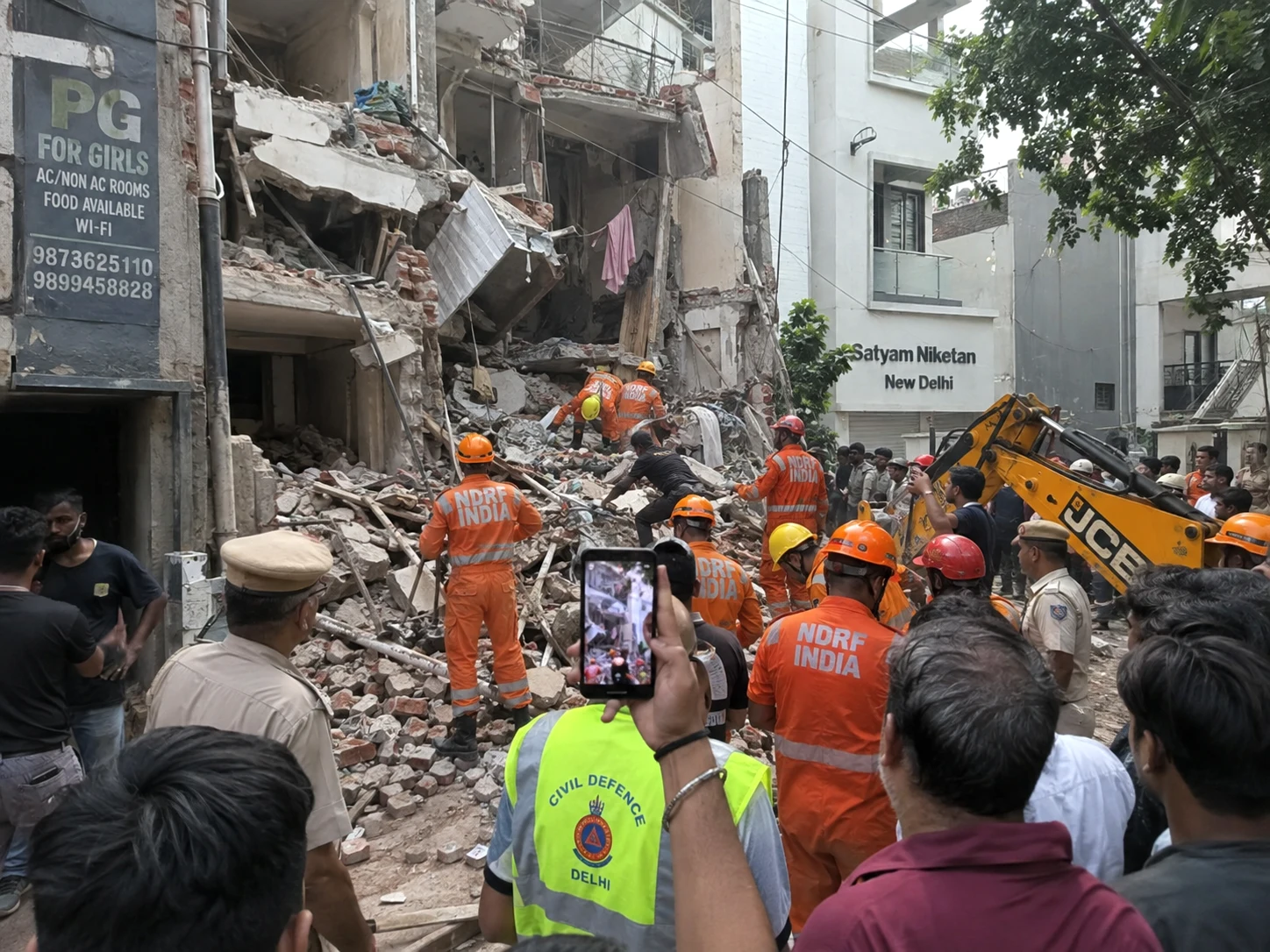
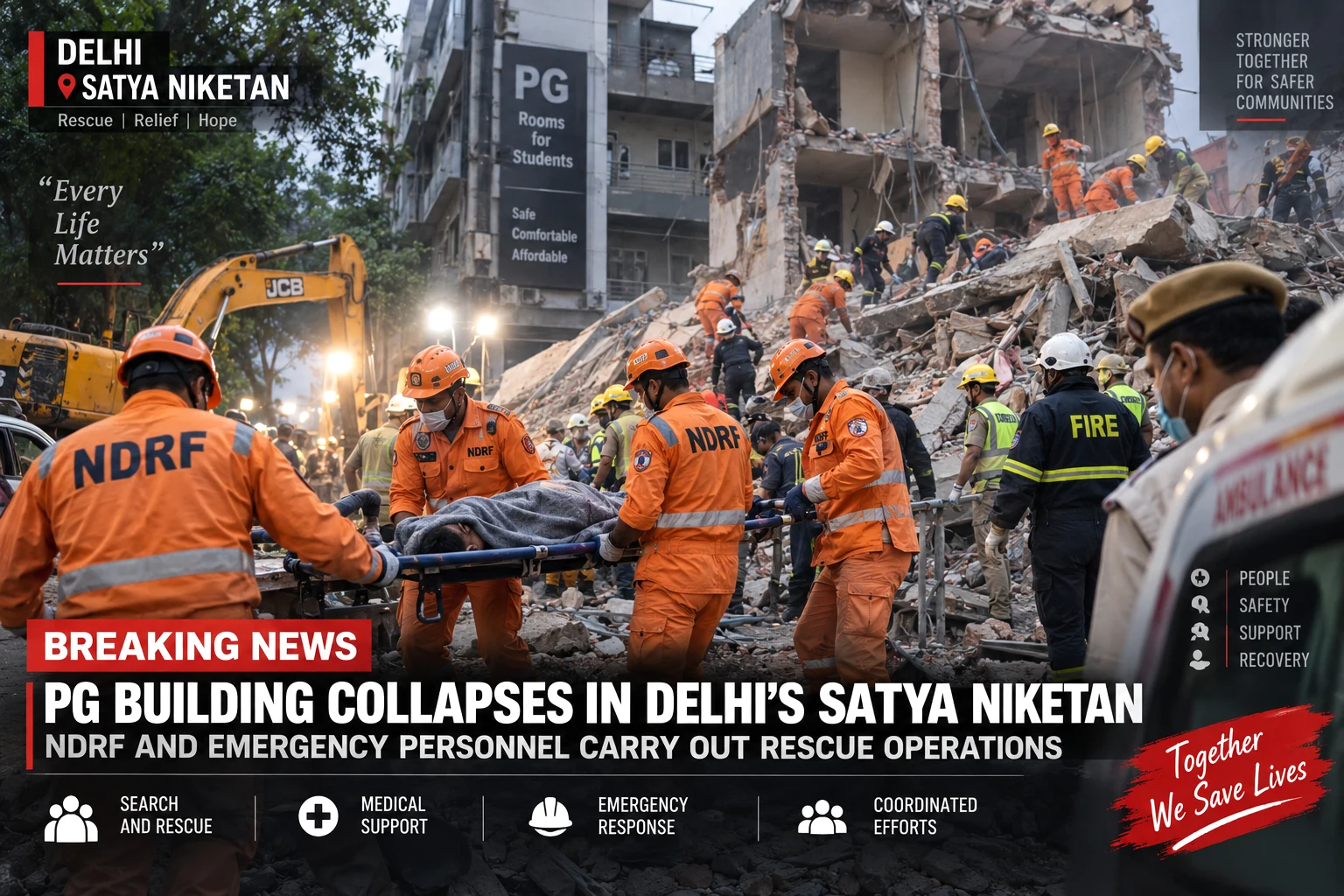
Rescue personnel at the site of the collapsed PG building in Delhi’s Satya Niketan near Delhi University South Campus
Table of Contents (15 sections)
New Delhi, September 9, 2026: The collapse of a multi-storey paying guest accommodation in Delhi’s Satya Niketan has developed into a major building-safety and accountability case after seven people were killed, several others were injured, arrests were made, and courts stepped in to examine possible failures in construction safety and regulatory oversight.
The building, which operated as a boys’ PG under the name Hostel Daze near Delhi University’s South Campus, collapsed at around 1:30 pm on September 6. Students and workers were trapped beneath concrete and debris, triggering a large rescue operation involving the Delhi Police, fire services and disaster-response personnel.
Authorities are investigating whether construction or renovation activity in or around the basement contributed to the collapse. Reports of water accumulation in the basement have also come under scrutiny. However, the precise cause has not yet been officially established, and the investigation remains underway.
The tragedy has now moved beyond a single building. The Delhi High Court has ordered scrutiny of PG accommodation in the city, while the Satya Niketan incident has also been placed before the Supreme Court in proceedings concerning violations of building bye-laws and unauthorised use of properties.
Recommended Reading
Related Stories & In-Depth Guides
Curated editorial perspectives matching this topic.
A multi-storey building housing a boys’ PG collapsed in Delhi’s Satya Niketan on Sunday afternoon, triggering a major rescue operation as several people were feared trapped under debris.
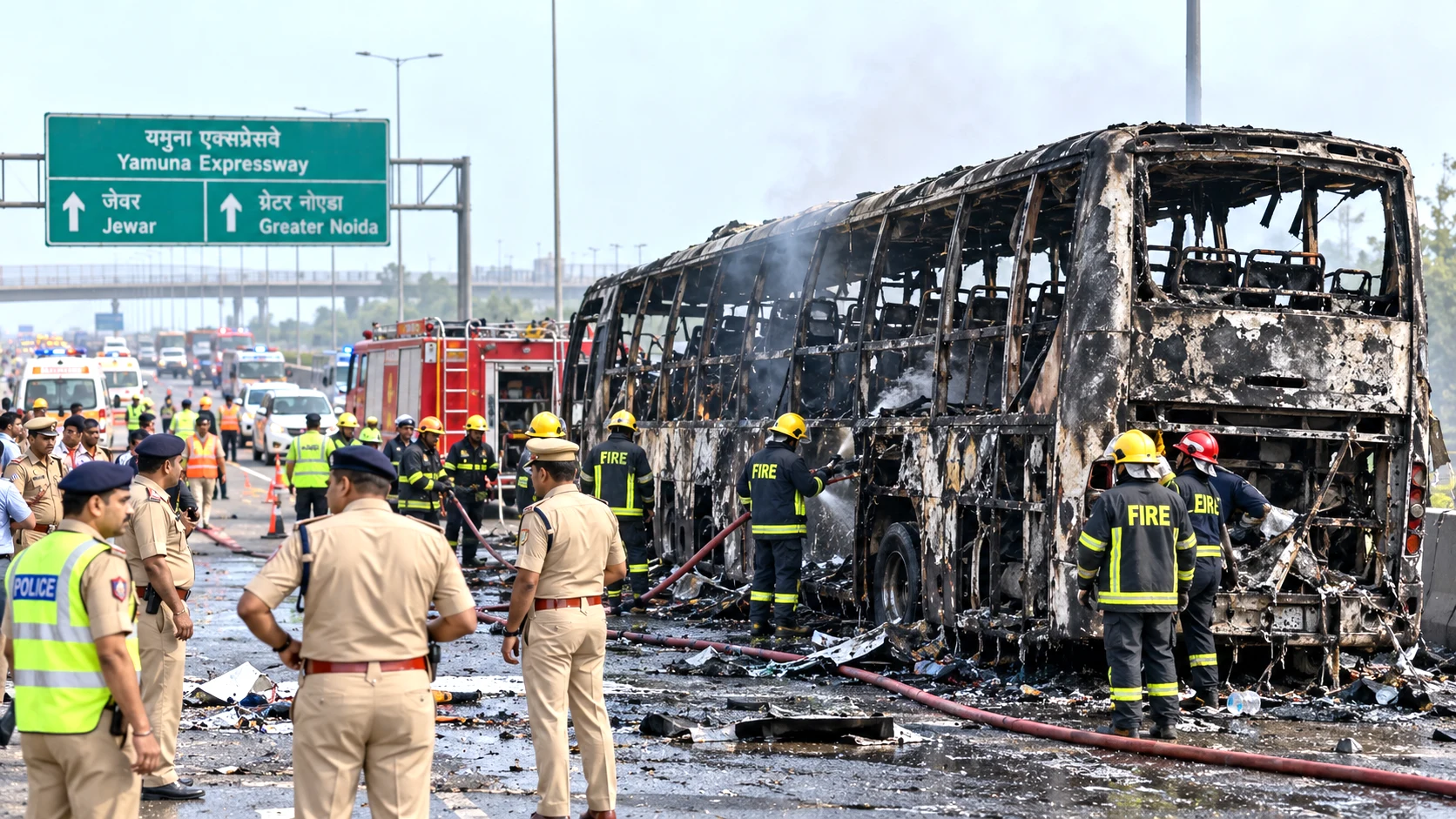
At least nine passengers died after an AC sleeper bus caught fire on the Yamuna Expressway near Jewar in Greater Noida. Police are investigating the cause, while a survivor’s complaint alleges warnings about a burning smell were ignored.
Table of Contents
What happened at Satya Niketan?
Seven people killed in the collapse
Arrests and criminal investigation
PG operator arrested
What investigators are examining
Five MCD officials suspended
Delhi High Court orders inspection of PG hostels
Why the Supreme Court is examining the collapse
Could the case lead to pan-India action?
Questions over student housing safety
What happens next
Key takeaway
What Happened in the Satya Niketan PG Building Collapse?
The building stood in Satya Niketan, a major student-housing neighbourhood close to Delhi University’s South Campus.
According to reports, the structure was several decades old and had been functioning as a private boys’ PG accommodation. It collapsed suddenly on the afternoon of September 6 while repair or construction activity was reportedly taking place.
Emergency personnel rushed to the location after authorities received information about the collapse at around 1:30 pm.
Rescuers worked through large quantities of concrete, metal and other debris in an effort to locate people trapped inside. The rescue operation continued for roughly 27 hours before concluding.
Seven People Killed, Several Rescued
The confirmed death toll subsequently rose to seven.
Reports indicate that the victims included students as well as workers. Several people were rescued and taken to hospitals for treatment.
The tragedy has had a particularly strong impact because Satya Niketan and surrounding areas accommodate thousands of students studying at Delhi University and other educational institutions.
Many students who cannot obtain university hostel accommodation depend on privately operated PGs and rented buildings.
That dependence has now placed a larger question before authorities: Are buildings being commercially used as student accommodation structurally safe and legally compliant?
Arrests Made as Police Investigate Criminal Liability
Delhi Police registered a criminal case following the collapse and launched an investigation into the people responsible for the ownership, management and maintenance of the property.
Police arrested Hariram Gupta, his wife Urmila Gupta and their son Mahesh Gupta in connection with the case. Reports said the property was registered in Urmila’s name, while investigators were examining the roles played by other family members in operating and managing the premises.
A Delhi court subsequently sent Hariram and Urmila to judicial custody, while Mahesh was initially remanded to police custody for further questioning.
Police have invoked provisions relating to alleged culpable homicide, negligence involving a building or repair work, and acts endangering public safety.
These remain allegations under investigation, and criminal responsibility will ultimately have to be determined through the legal process.
PG Operator Sudhanshu Arrested
The investigation widened further on September 9 when Delhi Police arrested PG operator Sudhanshu in connection with the collapse.
Police are investigating the management of the accommodation, the renovation work and the possible roles of different people associated with the property.
This means the case is no longer focused only on the registered ownership of the building. Investigators are also attempting to determine who exercised operational control and who authorised or carried out work at the premises.
Was Basement Construction Responsible for the Collapse?
One of the most important questions is what caused the structure to fail.
Preliminary information has pointed towards construction or repair activity in or around the basement. There have also been reports of waterlogging or accumulated water in the basement before the collapse.
Delhi Chief Minister Rekha Gupta said after visiting the site that excavation had been taking place in the basement and referred to a pillar shifting before the collapse.
However, these preliminary accounts should not be treated as a final engineering conclusion.
A detailed technical investigation will be necessary to establish whether excavation, structural alterations, water accumulation, the age and condition of the building, construction violations, or a combination of factors caused the collapse.
Five MCD Officials Suspended
The incident has also brought the role of the Municipal Corporation of Delhi (MCD) under intense scrutiny.
Five MCD officials from the South Zone have been suspended in connection with the case as authorities investigate possible regulatory failures.
The key accountability questions include whether the building complied with its sanctioned plan, whether alterations had been made, whether additional floors or basement work violated applicable rules, and whether authorities had adequately inspected buildings being used as PG accommodation.
The suspension of officials does not by itself establish individual criminal responsibility, but it shows that the investigation is examining possible administrative failures alongside the conduct of private owners and operators.
Delhi High Court Orders Inspection of PG Hostels
The Delhi High Court has separately intervened following the tragedy.
The court directed the MCD to conduct an inquiry at its highest executive level into whether the collapsed building had been constructed with valid permission.
It also directed the civic body to inspect PG hostels under its jurisdiction and examine whether the buildings were constructed according to required permissions and whether there were violations of sanctioned plans or building bye-laws.
The High Court also sought information about the regulatory framework governing PG accommodation in Delhi.
The court raised broader concerns about the shortage of safe hostel accommodation for students and the dependence of outstation students on privately operated PG facilities.
This makes the case not only a construction-safety issue but also a student-housing policy question.
Supreme Court to Examine Satya Niketan Collapse
The case has now reached another significant stage.
The Satya Niketan collapse has been placed before the Supreme Court of India in existing proceedings concerning widespread violations of building bye-laws, land-use regulations and unauthorised conversion of properties.
Senior Advocate Ajit Kumar Sinha, serving as amicus curiae in the matter, submitted a status report bringing the September 6 tragedy to the court’s attention.
The Supreme Court is expected to take up the matter on Friday, September 11.
The amicus has sought a time-bound inspection and safety audit of PG accommodation, private hostels and similar student housing around colleges and universities across Delhi.
Such inspections could examine sanctioned building plans, actual construction, number of floors, basement alterations, structural safety, fire-safety compliance, land use, and emergency access and exit arrangements.
Could the Supreme Court Order Pan-India Building Safety Action?
This is where some early headlines require careful wording.
The Supreme Court has not yet issued a new nationwide inspection order specifically because of the Satya Niketan collapse.
However, during proceedings, Justice Ahsanuddin Amanullah indicated that the overlapping building-safety issue could require consideration on a pan-India basis.
The distinction is important.
The Supreme Court was already dealing with broader concerns over violations of building bye-laws and land-use rules before the Satya Niketan tragedy. The new collapse has now been placed before the court as an example of the potential consequences of inadequate compliance and enforcement.
Therefore, the September 11 hearing could become important in determining whether the court expands existing inspections or issues broader directions.
Any nationwide action, however, should be reported only after the Supreme Court actually passes such an order.
Satya Niketan Tragedy Raises Bigger Questions About Student Housing
The collapse has exposed a difficult reality facing students in major education hubs.
Private PGs play an important role because university and college hostels cannot accommodate every student. But converting older residential buildings into high-occupancy student accommodation can create risks if structural capacity, fire safety, ventilation, exits and building permissions are not properly monitored.
The questions arising from Satya Niketan therefore extend well beyond one property:
Who verifies the structural safety of buildings used as PGs?
Are major alterations being carried out with engineering approval?
Are basements being modified without adequate safeguards?
Are sanctioned building plans being followed?
Are civic authorities regularly inspecting potentially unsafe structures?
Should PG operators require dedicated safety certification?
Who is accountable when violations are known but enforcement does not follow?
The answers could determine how Delhi — and potentially other Indian cities — regulate privately operated student accommodation in the future.
Accountability Will Depend on Evidence, Not Assumptions
The deaths of seven people have understandably generated demands for accountability.
But accountability must follow evidence.
Police will have to determine the roles of the property owners, operators, contractors and others involved in construction or repair work. Technical experts will have to establish the structural cause of the collapse.
Civic authorities will need to determine whether permissions were obtained and whether officials failed to detect or act against violations.
The courts, meanwhile, are examining whether the regulatory system itself requires stronger safeguards.
Delhi Chief Minister Rekha Gupta has said that those responsible — whether private individuals or officials — would face action.
What Happens Next?
Attention will now focus on three parallel processes: the criminal investigation, the Delhi High Court-directed scrutiny of PG accommodation, and the Supreme Court proceedings on building-rule violations.
The Supreme Court hearing expected on September 11 will be particularly important because it may clarify whether the existing building-safety proceedings should be expanded and whether additional inspections or regulatory measures are required.
For families who send students to Delhi from across India, the issue is fundamental: a room rented for education must also be a structurally safe place to live.
The Satya Niketan collapse has turned that basic expectation into a major question of public accountability.
Key Takeaway
The Satya Niketan PG building collapse has evolved from a rescue emergency into a wider case of criminal investigation, municipal accountability and judicial scrutiny.
Seven people were killed. Arrests have been made, including of property owners and a PG operator. Five MCD officials have been suspended. The Delhi High Court has ordered inspections of PG hostels, and the Supreme Court is set to examine the incident in the context of broader building-bye-law violations.
The precise structural cause remains under investigation. Preliminary references to basement work and water accumulation require technical confirmation.
What is already clear is that the tragedy has forced a larger public question: whether privately operated student accommodation in dense urban areas is being adequately regulated for structural safety.
The Rajatheertha Team publishes news, explainers, guides and updates across India and the world. Our coverage follows Rajatheertha's editorial, verification and corrections standards.
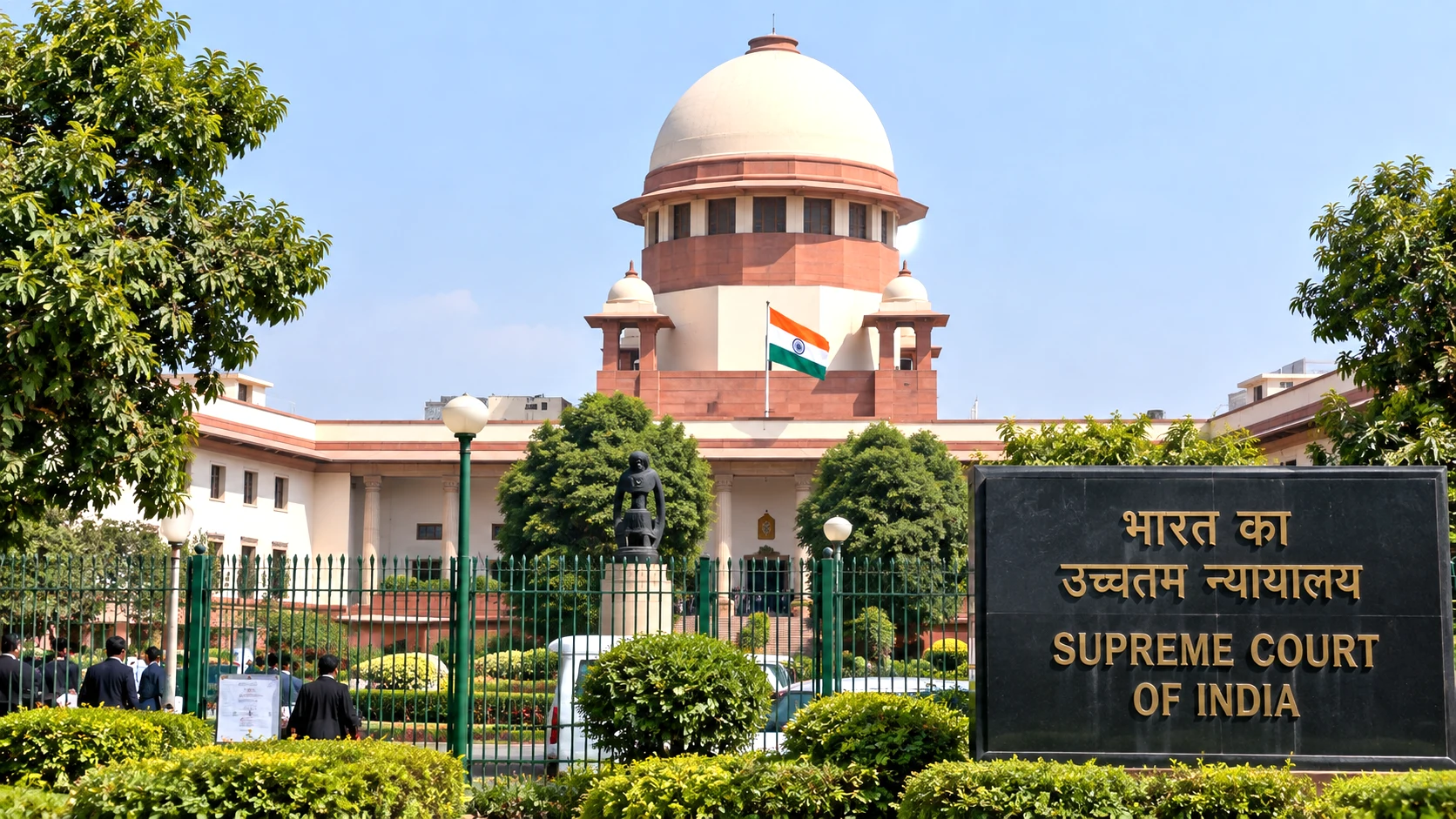
The Supreme Court has reaffirmed that arrested persons must receive the grounds of arrest in writing and in a language they understand, holding that Article 22(1) applies across criminal laws, including special statutes such as PMLA and UAPA.
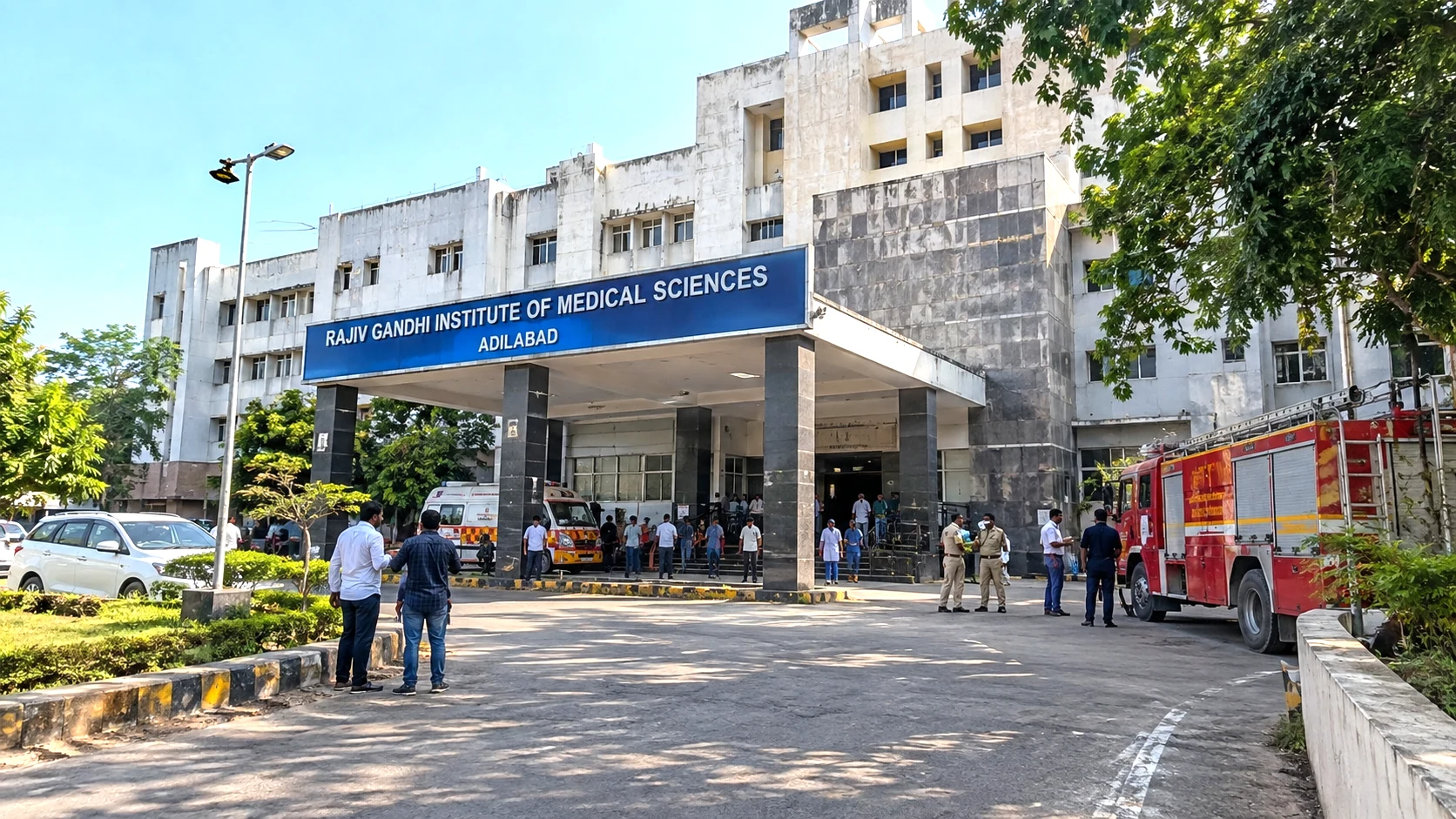
Three infants have died following a fire in the Special Newborn Care Unit at RIMS Adilabad. Officials are investigating a suspected AC-related electrical malfunction, while the Telangana government has ordered an inquiry and stronger hospital safety measures.
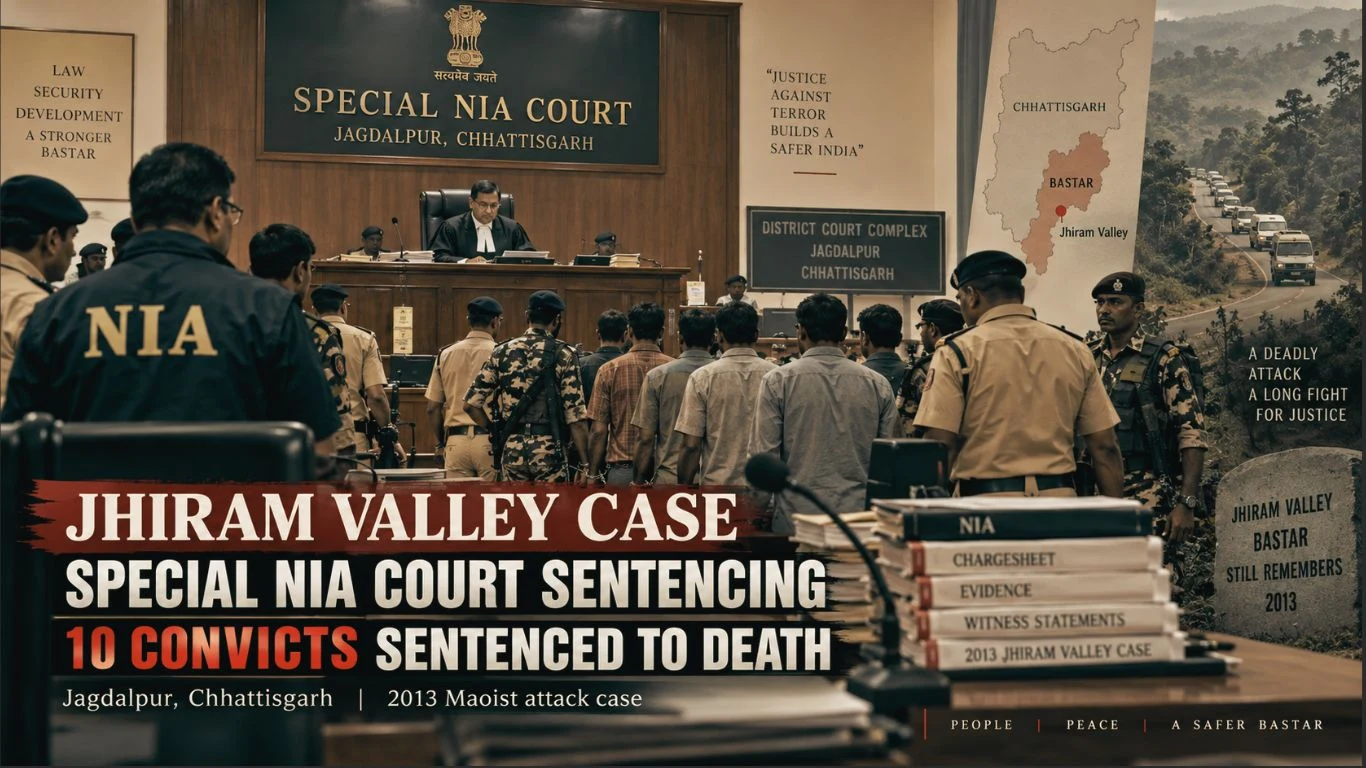
The Jagdalpur court imposed capital punishment on all 10 people convicted in the 2013 Maoist ambush on a Congress convoy in Chhattisgarh. Two women are among those sentenced. The death sentences must still go through the High Court confirmation process, and the defence can appeal.
Ukraine has confirmed striking the Moscow Oil Refinery during an extraordinary long-range drone and missile operation against Russia, while Russian authorities say hundreds of drones targeted the capital and more than 1,000 were intercepted across the country. At least three people were reported kil
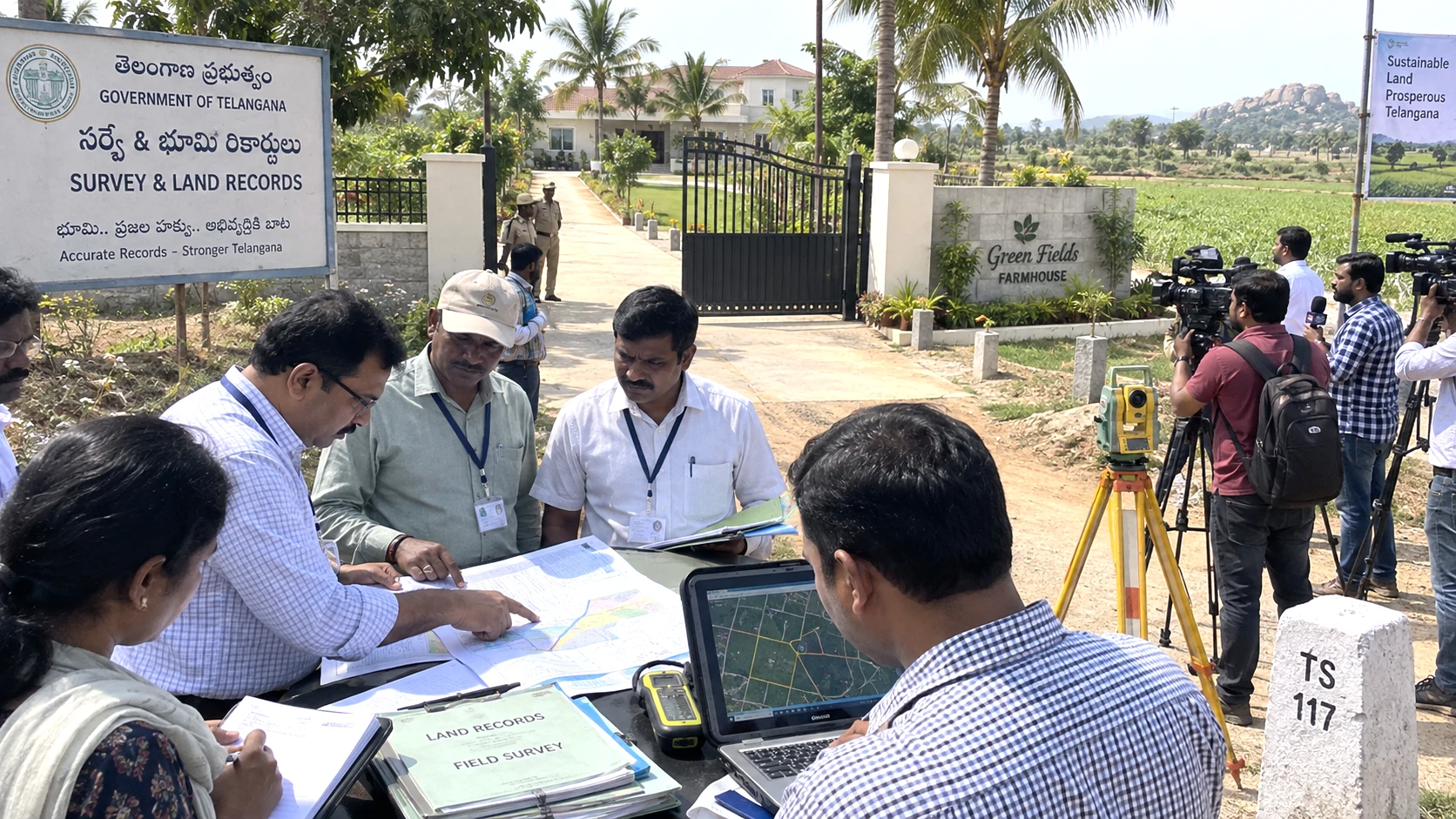
Revenue authorities are examining survey records and government-land classifications around former Chief Minister K. Chandrashekar Rao’s Erravalli property after Chief Minister A. Revanth Reddy raised allegations in the Assembly. The BRS rejects the allegations and has demanded an independent judge-
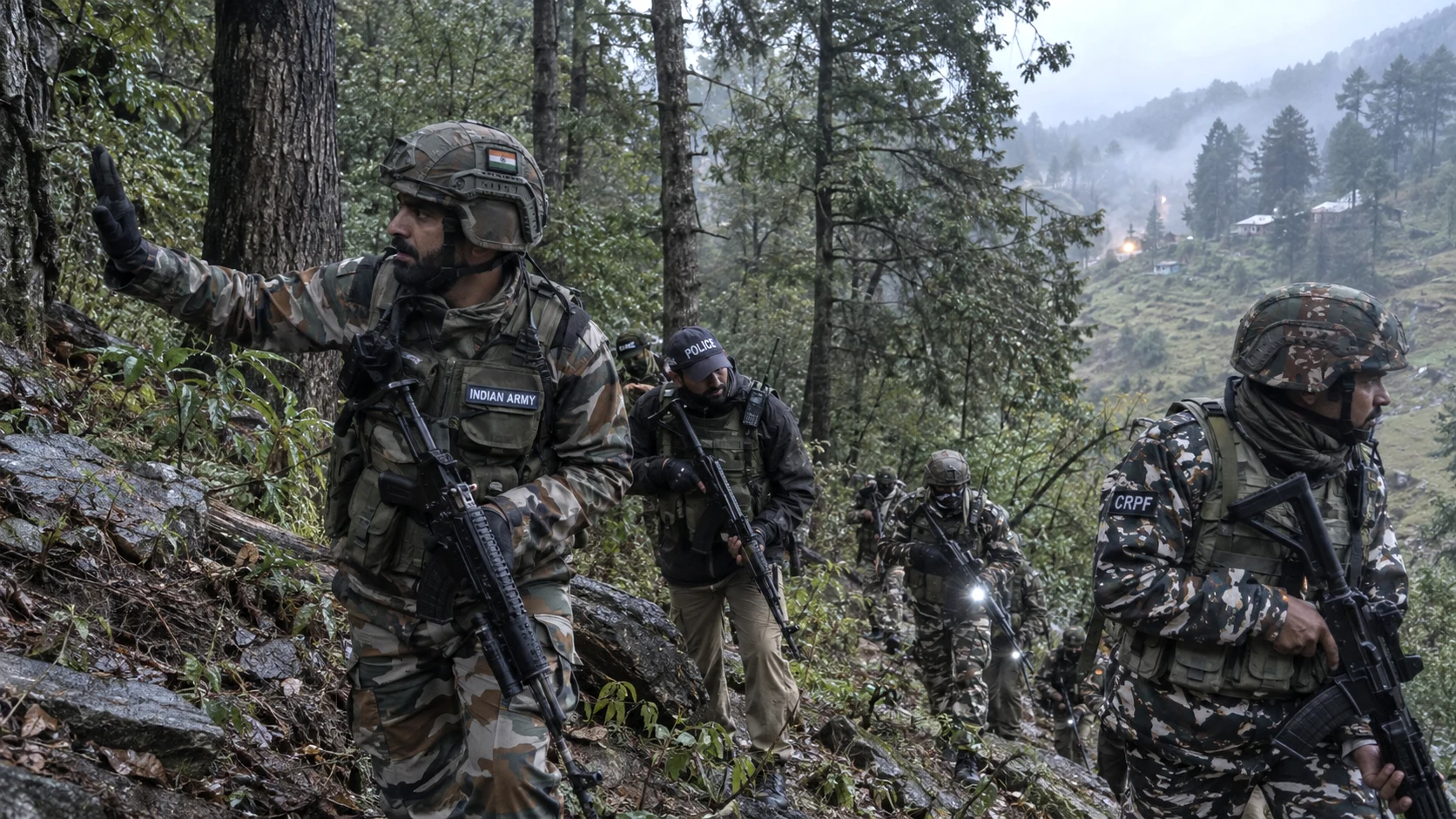
Security forces identified the slain militants as Saddam and Mustafa, both Pakistani nationals associated with Jaish-e-Mohammad. An AK-series rifle, M4 carbine, Glock pistol, grenades and ammunition were recovered after the overnight operation in the Brattal-Sohan forests of Majalta.




0 Comments