US Congress Passes Russia Sanctions Bill With Up to 100% Tariffs on Major Energy Buyers; India Warns of Impact on Ties
The House approved the Lindsey O. Graham Sanctioning Russia and Iran Act of 2026 by 262-159 after the Senate passed it 86-11. The measure now awaits President Donald Trump’s signature and could subject major buyers of Russian oil or gas to additional US tariffs of up to 100%, although India and Chin
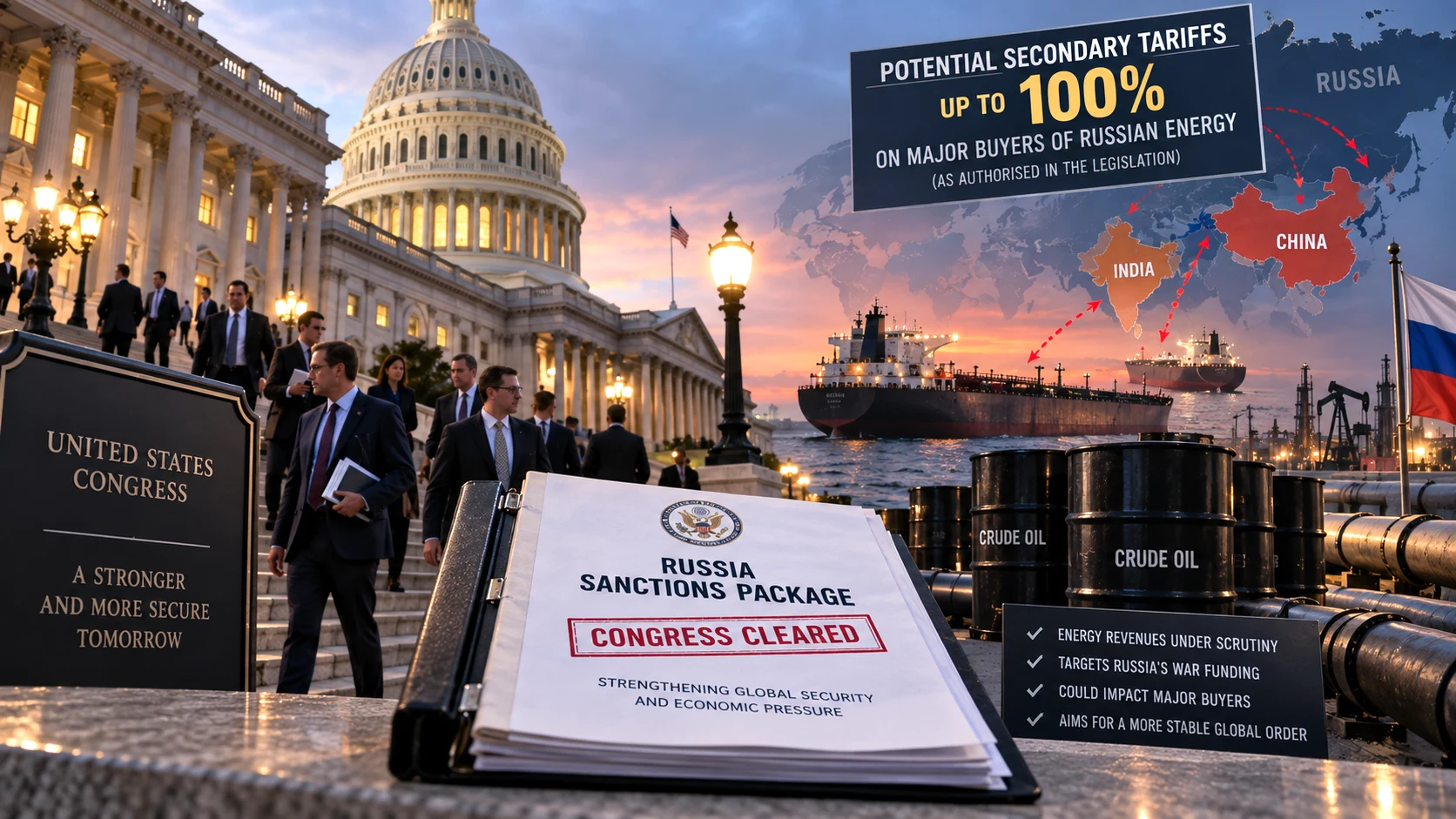
the US Congress clearing a major Russia sanctions package with potential secondary tariffs on large energy-buying countries
Table of Contents (14 sections)
The United States Congress has cleared a sweeping Russia sanctions package that could expose India and other major purchasers of Russian energy to additional US tariffs of up to 100%, creating a new source of uncertainty for India-US trade and New Delhi’s crude-oil strategy.
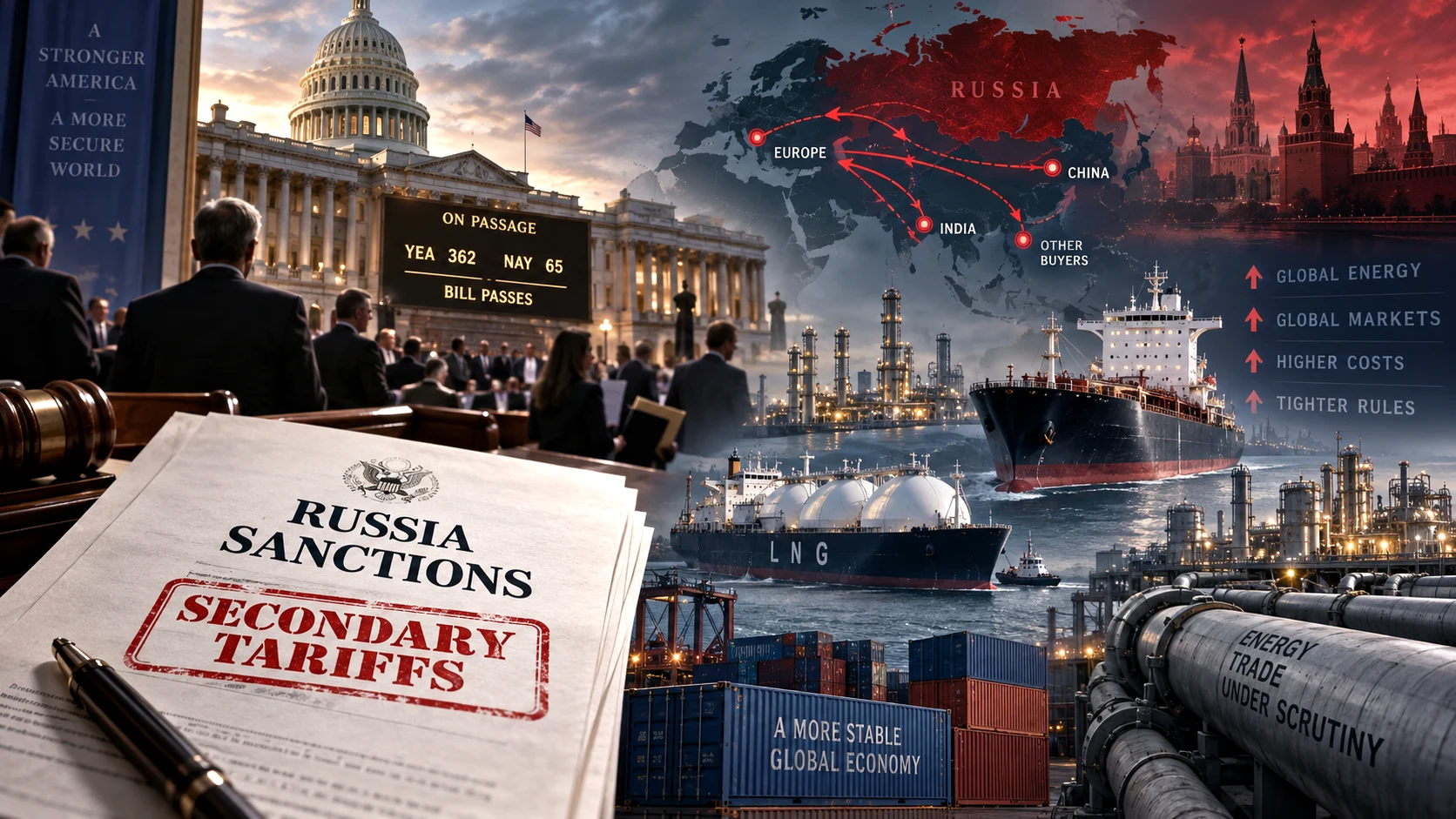
The US House of Representatives voted 262-159 on September 16, 2026, to concur with the Senate amendments to H.R. 5334, formally completing congressional action on the legislation. The House Clerk recorded 203 Republicans, 58 Democrats and one independent voting in favour.
The Senate had already passed the measure on August 7 by an overwhelming 86-11 vote.
The legislation is titled the Lindsey O. Graham Sanctioning Russia and Iran Act of 2026, honouring the late South Carolina senator who had championed the sanctions effort.
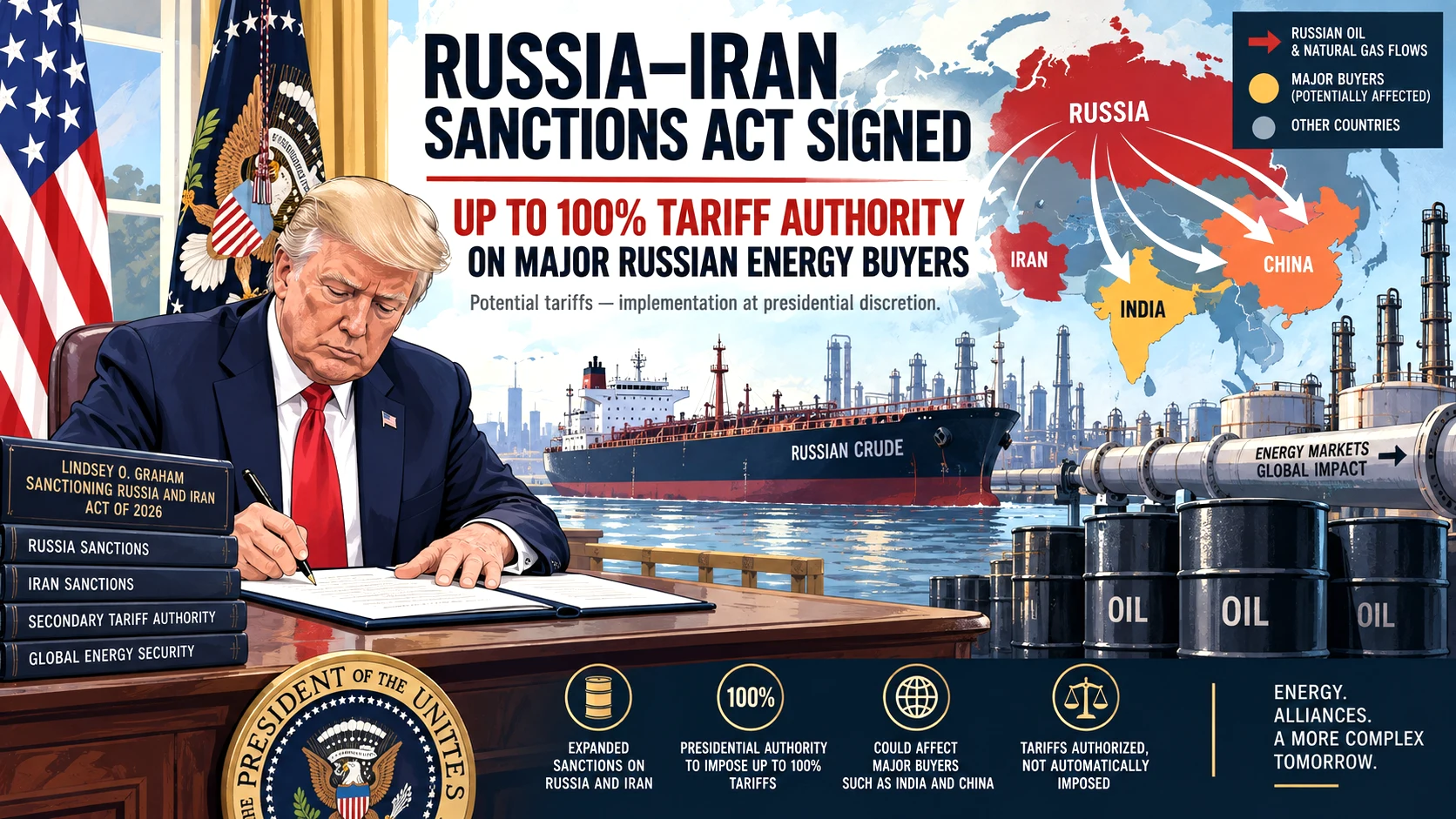
It now goes to President Donald Trump.
As of September 18, the measure was still being reported as awaiting the president’s signature rather than as an enacted law. Reuters reported that the House vote sent the legislation to Trump for final approval, while the Financial Times said the White House expected him to sign it.
The Trump administration had already formally backed the legislation. A July 28 White House Office of Management and Budget statement said the administration supported passage and that presidential advisers would recommend Trump sign the measure if presented in its current form.
Recommended Reading
Related Stories & In-Depth Guides
Curated editorial perspectives matching this topic.
The House voted 262-159 to approve the Lindsey O. Graham Sanctioning Russia and Iran Act of 2026 after the Senate backed it 86-11 in August. The bill targets Russian banks, energy, defence and its “shadow fleet” while creating secondary tariffs for major buyers of Russian oil and gas. It now goes to
A huge Ukrainian long-range attack sent hundreds of drones toward Moscow and other parts of Russia early Sunday, damaging the Moscow Oil Refinery, disrupting civilian areas and putting Russian air defences under intense pressure. Russian officials described it as the largest drone attack yet directe
Key Takeaways
The US House voted 262-159 on September 16 to accept the Senate version of H.R. 5334, completing congressional passage.
The Senate had approved the measure 86-11 on August 7.
The legislation now goes to President Donald Trump and, as of September 18, had not yet been reported signed into law. Reuters and the Financial Times continue to describe it as awaiting his signature.
Section 113 directs tariffs of up to 100% on all goods imported into the US from qualifying countries, not merely on their energy exports to America.
Qualifying countries include major importers of Russian-origin crude oil or natural gas that continue new purchases after enactment, as well as major facilitators of Russian oil sanctions evasion.
India and China are not expressly named in the final bill text. A House proposal that would have specifically listed India, China and eight other countries was not adopted.
India is nevertheless highly exposed because it is currently one of the largest buyers of Russian crude. S&P Global data cited India as the largest Russian crude importer in August at about 1.6 million barrels per day.
The legislation gives the president broad authority to waive duties or sanctions when he certifies that doing so is in the US national interest.
India says it has warned Washington that the legislation could affect India-US relations and international energy markets and says it will protect its energy, trade and economic interests.
What the 100% Tariff Provision Actually Says
The most consequential provision for India is Section 113.
It states that, no later than 30 days after enactment, the president shall increase tariffs on all goods imported into the United States from a qualifying country to a rate of up to 100% ad valorem.
That distinction matters.
The tariff is not simply a 100% duty on Russian oil purchased by India.
Instead, continued Russian energy purchases could trigger additional US tariffs on a broad range of Indian goods entering the American market if India falls within the statutory criteria and no exemption or presidential waiver is applied.
The legislation also specifies that these duties would be in addition to other applicable tariffs, fees, taxes or trade charges.
That makes the potential trade impact considerably wider than the phrase “Russian oil tariff” may suggest.
India and China Are Not Specifically Named in the Final Provision
Several headlines have described the measure as a bill imposing 100% tariffs “on India and China”.
That wording requires qualification.
The final statutory language does not explicitly name India or China as countries that must automatically be tariffed.
Instead, it establishes objective categories based on Russian energy purchases and sanctions-evasion activity.
The House Rules Committee considered a proposed amendment that would have specifically listed:
China, India, Türkiye, Azerbaijan, Hungary, Slovakia, the United Arab Emirates, Singapore, Kazakhstan and Kyrgyzstan.
That proposal was not adopted. The Rules Committee rejected the motion to make the amendment in order by 7-3.
The accurate formulation is therefore:
India and China are major countries potentially captured by the bill’s criteria, rather than countries individually named in the enacted congressional text.
Which Countries Can Be Covered?
Under the Senate-passed language accepted by the House, a country can fall within the initial tariff category if it knowingly makes new purchases of Russian-origin crude oil or natural gas after the specified post-enactment period and was among the five largest importers by volume during the relevant preceding 12 months.
The provision also covers countries ranked among the top five facilitators of Russian oil sanctions evasion.
The US Trade Representative is then required to conduct subsequent reviews every 180 days, in consultation with the secretary of state and secretary of energy, to identify major importers of Russian crude and natural gas.
This means the countries affected can change as global Russian-energy trade patterns change.
Why India Is Particularly Exposed
Although India is not named directly in the operative provision, its current Russian crude purchases make the legislation highly relevant to New Delhi.
S&P Global reported that India imported approximately 1.6 million barrels per day of Russian crude in August, making it the largest importer in its dataset for that month. China followed at approximately 1.1 million barrels per day.
India dramatically increased purchases of discounted Russian crude after Western sanctions reshaped global energy flows following Russia’s full-scale invasion of Ukraine in 2022.
Russian crude has since become an important part of India’s refinery supply mix.
That is why India is widely viewed as one of the countries most likely to be affected if Trump implements the tariff provision without granting a waiver.
It would nevertheless be inaccurate to report that India has already been hit with a new 100% tariff.
No such new tariff has yet taken effect under this bill.
The bill first has to become law, after which the administration must make the relevant determinations and set tariff rates under the statutory framework.
Does the Bill Automatically Mean a 100% Tariff?
No.
The legislation sets a ceiling of up to 100%.
It does not state that every qualifying country must automatically receive the full 100% rate.
Section 113 gives the administration room to determine and subsequently adjust rates within the framework.
More importantly, Section 115 gives the president substantial waiver authority.
The president may waive a tariff, sanction or restriction if he submits a written certification to Congress stating that the waiver is in the national interests of the United States, along with an explanation.
That provision gives the Trump administration significant diplomatic flexibility.
It means the legislation can serve both as an economic penalty and as negotiating leverage with energy-buying governments.
India Responds: Energy Security Comes First
New Delhi has already formally reacted.
The Ministry of External Affairs said on September 17 that India remained firmly committed to securing energy supplies for its 1.4 billion people and would continue diversified sourcing based on changing market conditions.
The MEA said the issue had been discussed with US interlocutors at high levels in recent months.
India said it had clearly conveyed the potential consequences for both the India-US bilateral relationship and the international energy market.
New Delhi also said it would take all necessary measures to protect its trade and economic interests and would work with Indian business and industry organisations to address the implications.
Reuters separately reported the Indian warning, noting that New Delhi had told Washington new tariff measures linked to Russian oil could affect bilateral ties.
Tariffs Would Apply to Indian Exports, Not to the Russian Oil Itself
This is another important point for readers.
If India qualifies for secondary tariffs under Section 113, the penalty is structured around goods imported into the United States from India.
It is therefore potentially a trade penalty on Indian exports to America because of India’s purchases of Russian energy.
That is different from imposing a tax on an Indian refinery when it buys a Russian cargo.
Section 113 says tariffs may apply to all goods imported into the US from the covered country.
The potential commercial consequences could therefore extend far beyond the oil industry into sectors that export to the United States.
The precise effect cannot be calculated until the administration determines which countries are covered, what tariff rates are imposed and whether waivers or exemptions are granted.
Bill Also Targets Russia Directly
The legislation is far broader than the secondary tariff provision.
Section 112 directs the president to raise tariffs on goods imported directly from Russia to rates of up to 500%, covering categories including oil, natural gas, LNG, petroleum products, petrochemicals and coal.
The bill also provides for sanctions targeting Russian officials, financial institutions, energy interests and vessels associated with sanctions evasion.
Reuters reported that the package focuses on Russia’s energy and defence sectors and its so-called shadow fleet of tankers used to move oil outside existing Western restrictions.
The broader objective is to reduce revenues available to Moscow as the war in Ukraine continues.
Iran Is Also Covered
Despite the public focus on Russia and Indian oil imports, Iran is an important part of the legislation.
The measure extends the Iran Sanctions Act of 1996 through 2031, maintaining US sanction authorities related to Iran’s energy sector and activities connected to weapons development.
The White House specifically endorsed those provisions in its July statement, saying they would preserve presidential authorities concerning Iranian terrorism and nuclear proliferation concerns.
Why H.R. 5334 Has an Unusual Legislative History
The bill number itself can cause confusion.
H.R. 5334 originally moved through the House as legislation dealing with tax deductions for early-childhood educators.
The Senate subsequently amended the measure by replacing it with the much broader Graham Russia and Iran sanctions package while retaining the H.R. 5334 legislative vehicle.
The House vote on September 16 was therefore a vote to concur in the Senate amendments, rather than passage of an entirely new numbered House bill. The official House Clerk record confirms the 262-159 concurrence vote.
White House Has Signalled Support
There is little indication at present that the bill will face a presidential veto.
The administration’s July 28 policy statement explicitly supported the Senate amendment and said Trump’s advisers would recommend signing it.
When Senator Rand Paul later sought to remove the tariff provisions from the package, the White House strongly opposed that amendment, saying tariff authority was an important tool for pressuring Russia toward a negotiated settlement.
The Senate rejected Paul’s proposal before passing the final measure.
Even so, until Trump actually signs the legislation, it remains a congressionally passed bill rather than law.
Bottom Line
The core of the user-provided claim is correct, but the tariff language needs important qualification.
The US Congress has completed passage of the Lindsey O. Graham Sanctioning Russia and Iran Act of 2026 after a 262-159 House vote on September 16 and an earlier 86-11 Senate vote on August 7.
The bill now awaits President Donald Trump’s signature.
If enacted, it creates a framework for tariffs of up to 100% on goods imported into the United States from major purchasers of Russian-origin crude oil or natural gas and countries heavily involved in sanctions evasion.
India and China are widely viewed as major potential targets because of their Russian-energy purchases, but they are not individually named in the final tariff provision.
India has already warned Washington about potential consequences for bilateral ties and global energy markets while reiterating that its priority remains affordable and secure energy supplies for its population.
Whether India ultimately faces additional tariffs — and whether those reach anything close to 100% — will depend on the legislation becoming law, the administration’s country determinations, the tariff rate selected and President Trump’s use or non-use of the bill’s broad waiver authority.
Key Takeaway
US Congress clears Russia sanctions bill with up to 100% tariffs on major energy buyers.
India and China not named but highly exposed due to Russian crude purchases.
Tariffs apply to goods entering the US, not the oil itself.
Bill awaits Trump’s signature; waiver power remains significant.
The Rajatheertha Team publishes news, explainers, guides and updates across India and the world. Our coverage follows Rajatheertha's editorial, verification and corrections standards.
The new US law targets Russia’s energy, financial and defence networks and allows additional tariffs of up to 100% on goods from the largest buyers of Russian oil and gas. India faces significant exposure because of its large Russian crude imports, but a 100% tariff on Indian goods has not been impo
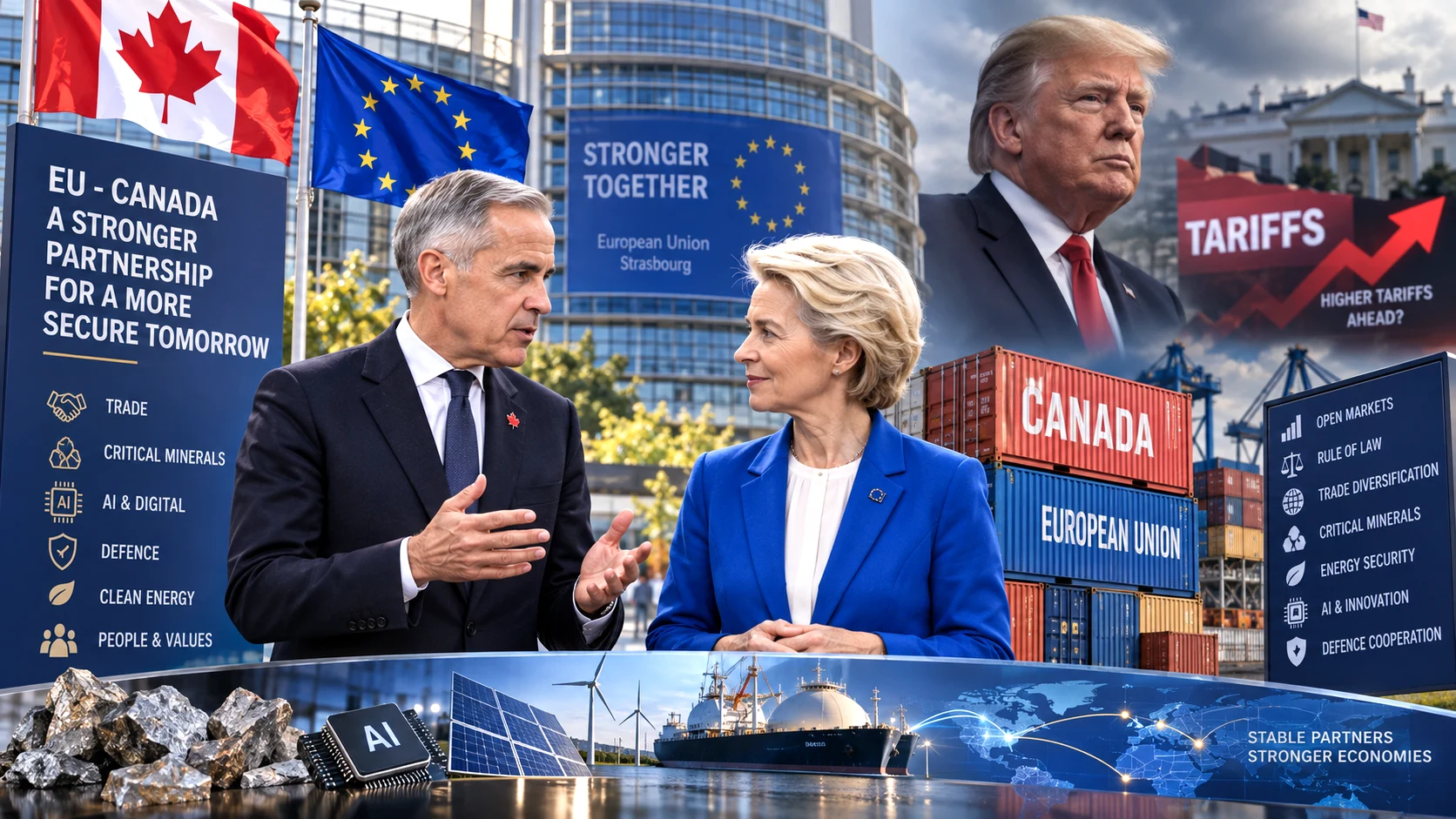
European Commission President Ursula von der Leyen has proposed opening the door for Canada to become the EU’s first “associate member,” but the status does not yet legally exist and has not been approved by the bloc’s 27 governments. Mark Carney welcomed the ambition in Strasbourg as Donald Trump w
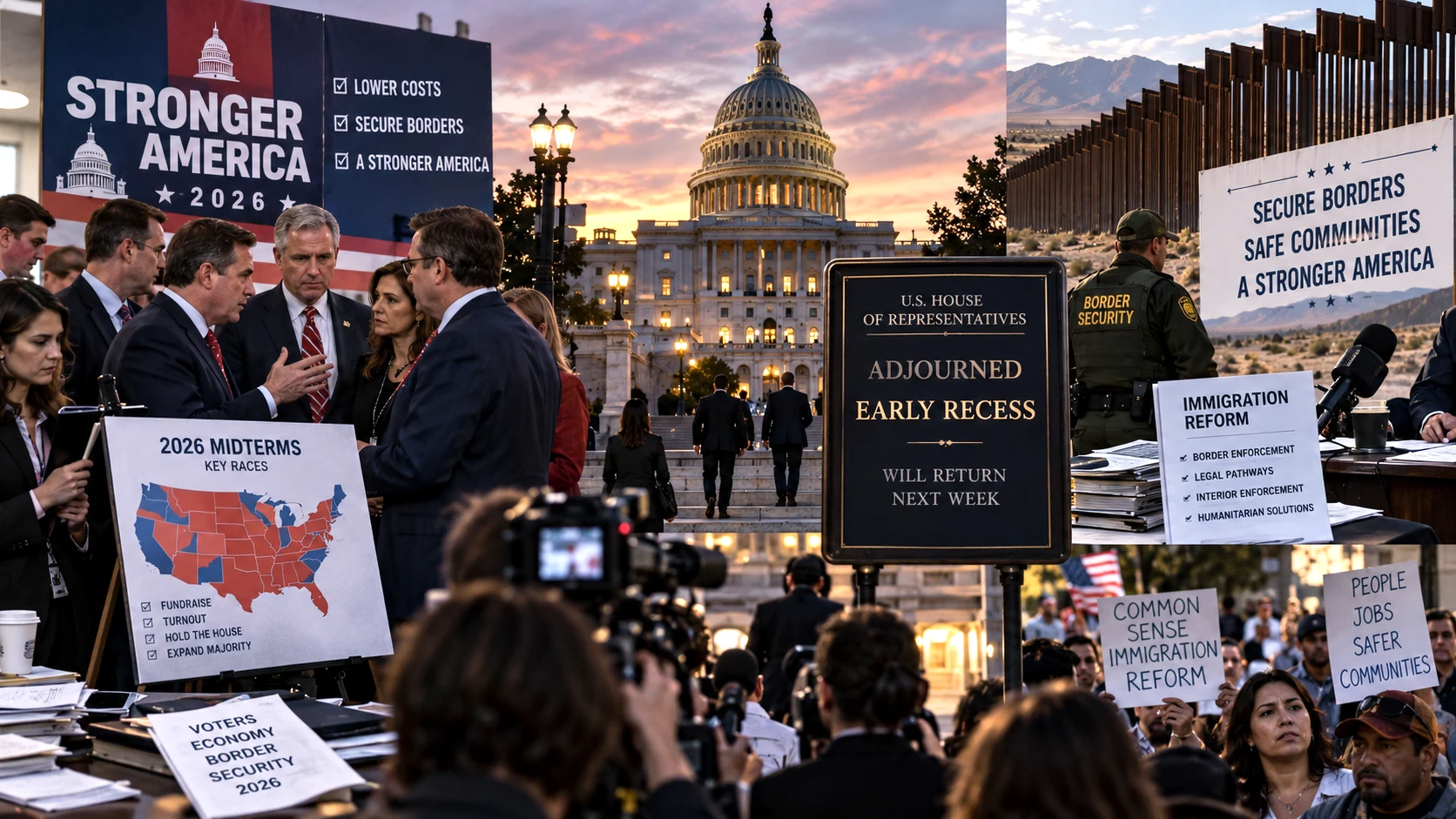
The Florida Republican says Hispanic voters who helped return Donald Trump to the White House now “feel betrayed,” while polling shows broader erosion in support for the president’s immigration approach. Separately, Speaker Mike Johnson has sent the House home early for the campaign season, drawing
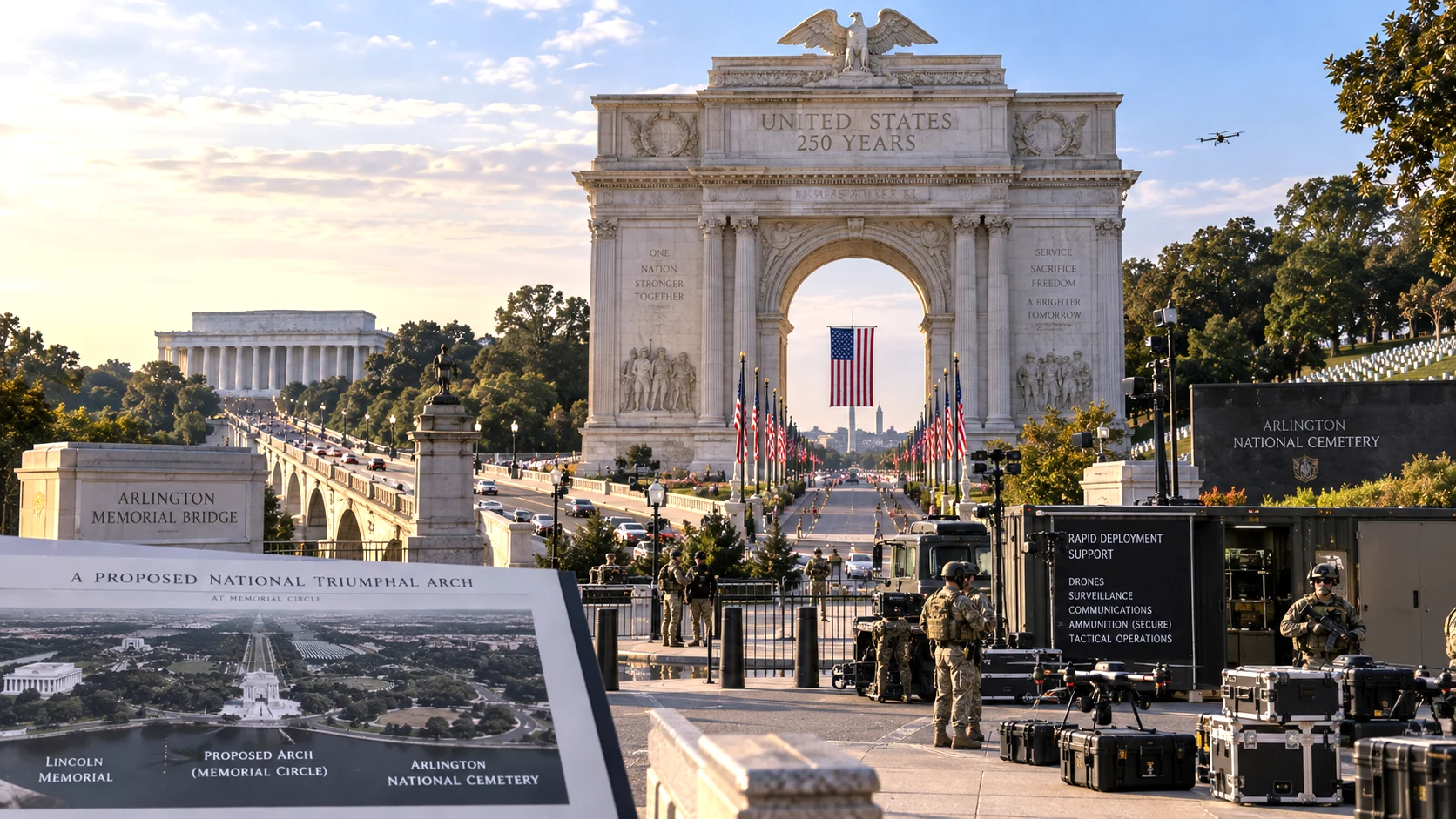
President Donald Trump says his proposed 250-foot triumphal arch near Arlington National Cemetery will now be designed as a dual-purpose military facility capable of housing drones, sniper positions and ammunition. The announcement adds a national-security dimension to an already controversial Washi
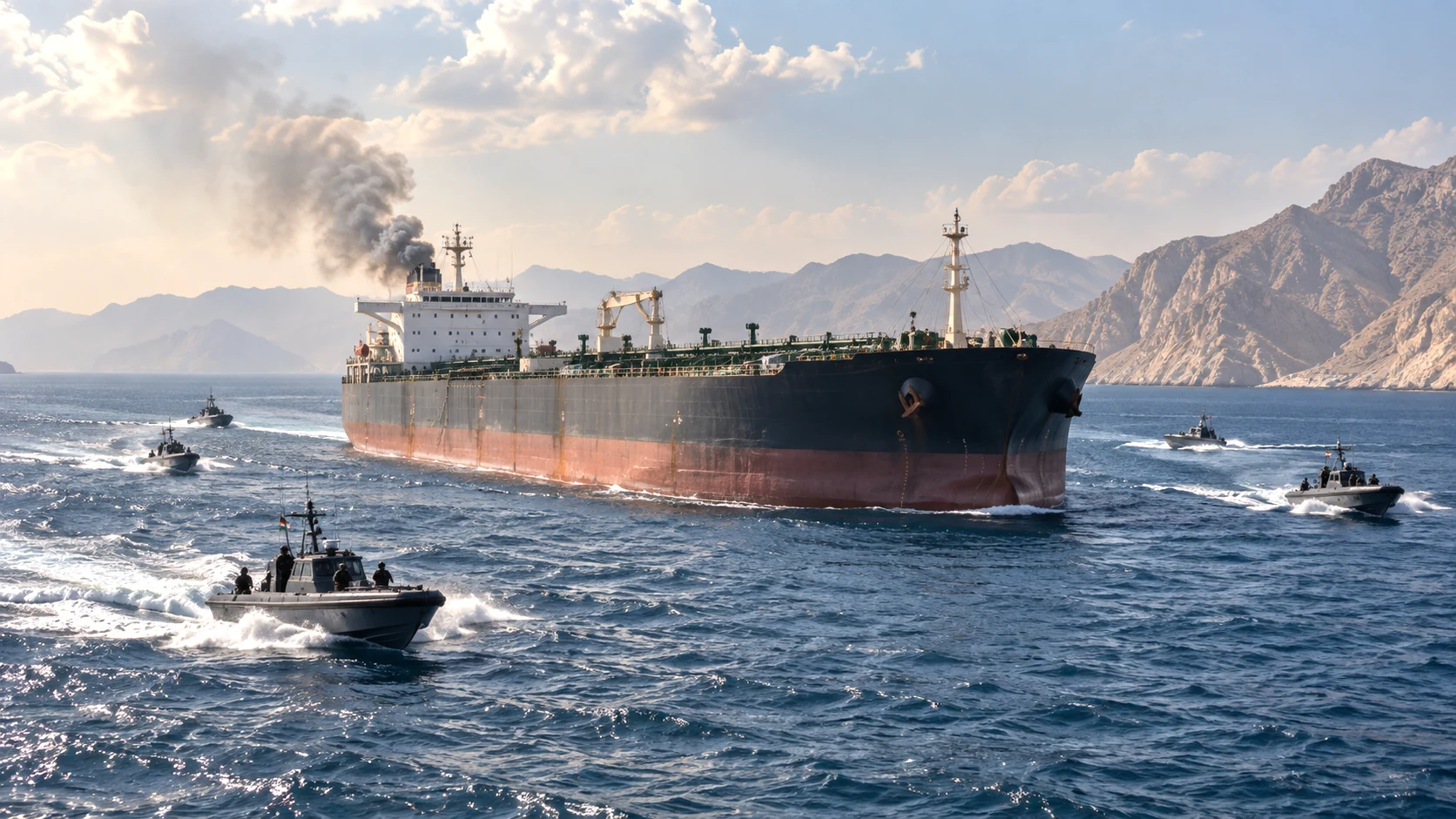
Iran’s Revolutionary Guards Navy says the Togo-flagged oil-products tanker caught fire and stopped after attempting what Tehran called an “illegal passage” on September 17. No independent confirmation of the strike, casualties or cargo damage was immediately available as shipping through the strateg
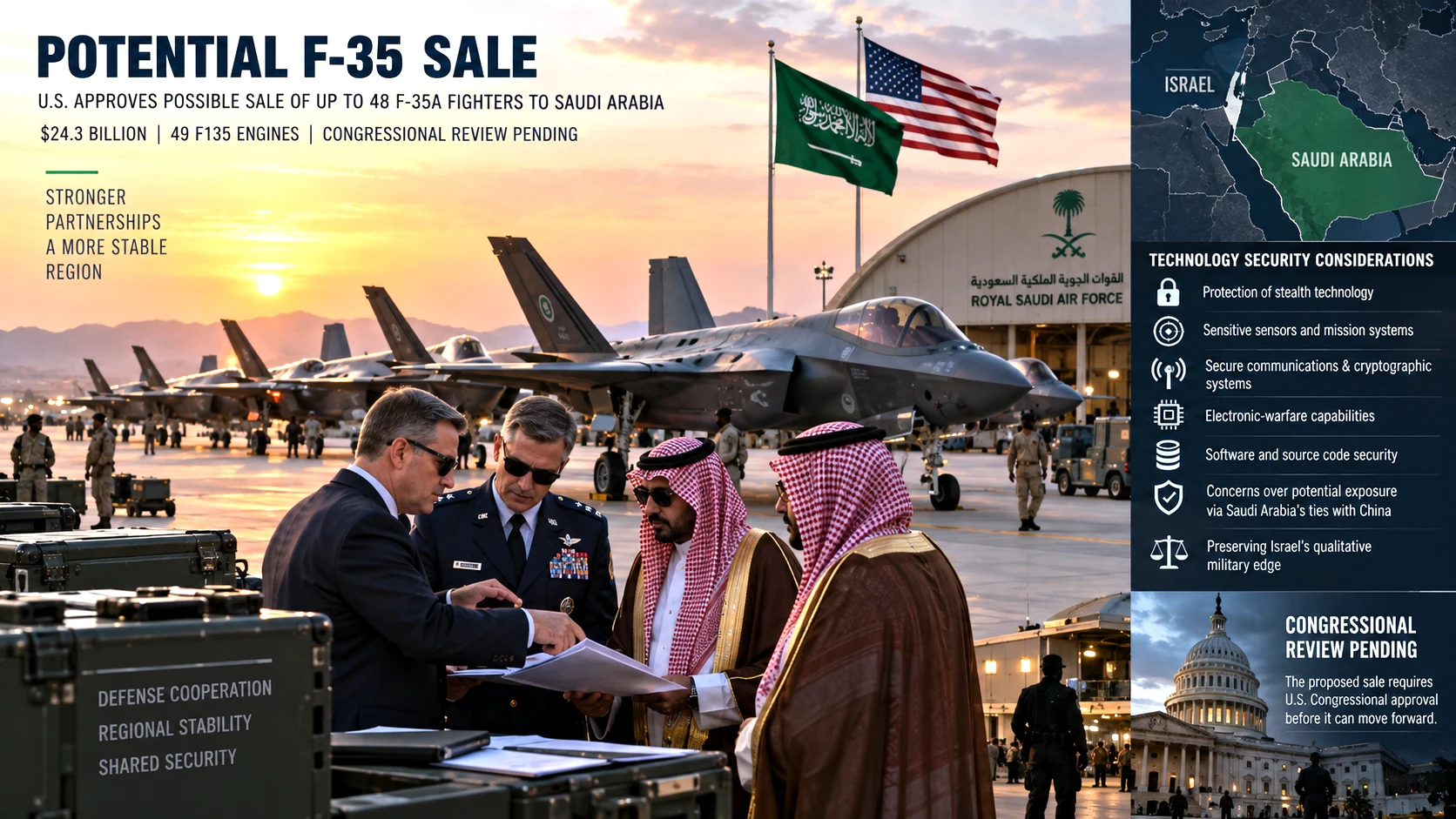
The Trump administration has formally notified Congress of a proposed sale of 48 F-35A stealth fighters and 49 engines to Saudi Arabia. The deal is not yet completed, while separate US intelligence assessments have reportedly warned that China could try to gain access to sensitive F-35 technology th


0 Comments