Russia-Ukraine War Escalates: Zelenskyy Warns of 300,000 New Russian Troops as Drone and Missile Strikes Intensify
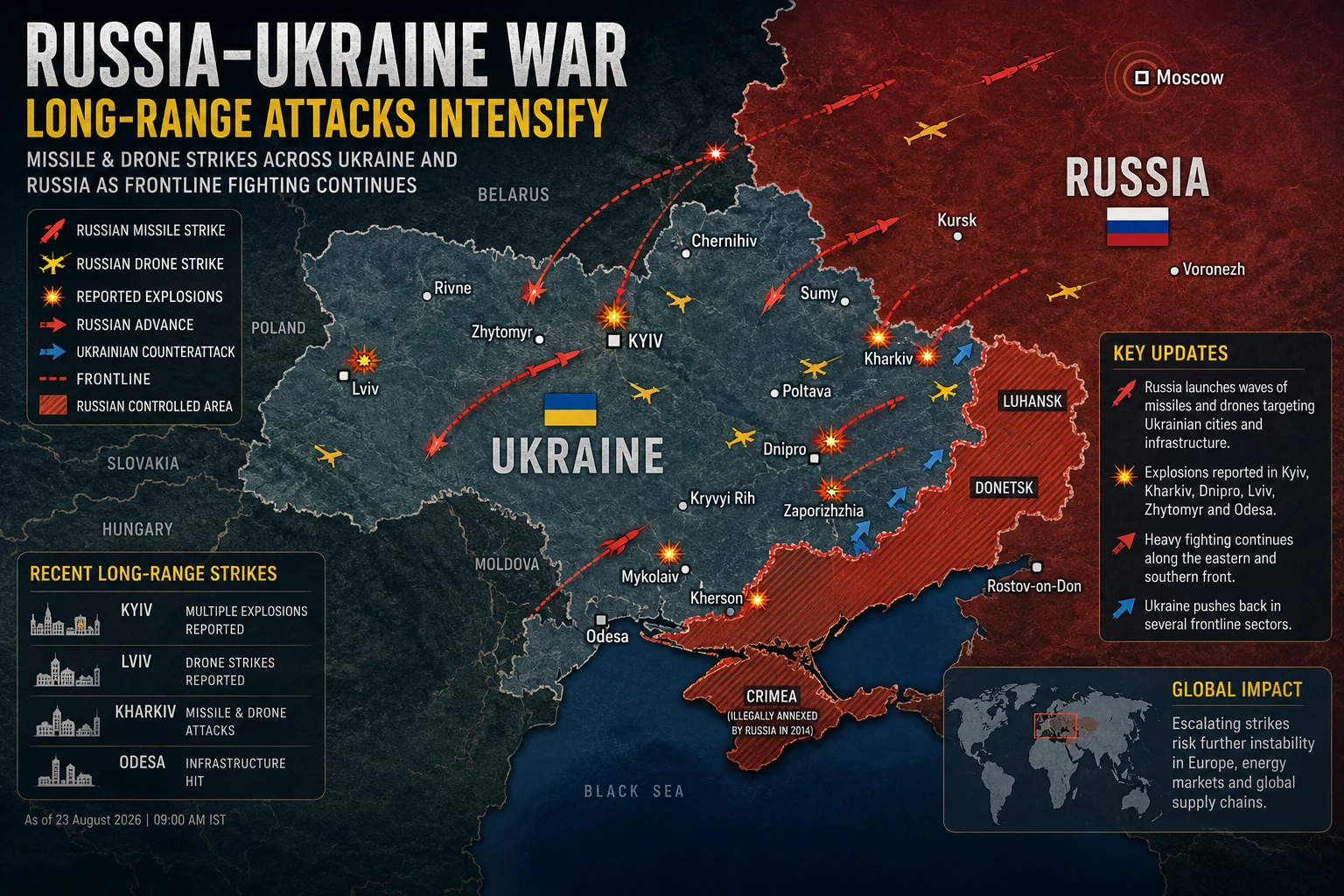
The Russia-Ukraine war is entering another tense phase as missile and drone attacks intensify. Zelenskyy says Moscow could mobilize another 300,000 troops, while Ukraine expands long-range strikes inside Russia.
Russia-Ukraine war latest developments as missile and drone attacks intensify amid warnings of possible new Russian troop mobilization
Table of Contents (10 sections)
Russia-Ukraine War Enters Another Dangerous Phase
More troops. More missiles. More drones.
The Russia-Ukraine war is showing few signs of cooling down as both sides intensify attacks and the prospects for a major peace breakthrough remain uncertain.
On Sunday, August 23, Ukrainian President Volodymyr Zelenskyy made a striking claim: Russia could be preparing to draft another 300,000 troops after parliamentary elections in September.
If that happens, it could signal Moscow’s intention to maintain or increase military pressure rather than reduce the scale of the war.
But there is an important qualification.
The figure comes from Zelenskyy. Russia has not publicly confirmed an order to mobilize 300,000 additional troops.
Why Is the 300,000 Figure So Important?
Workforce remains one of the defining factors in the war.
Zelenskyy says Russia wants additional soldiers as it continues trying to capture more Ukrainian territory, particularly in the Donbas.
A mobilization on the scale claimed by the Ukrainian president could give Russia more personnel for frontline operations and potentially replace battlefield losses.
Recommended Reading
Related Stories & In-Depth Guides
Curated editorial perspectives matching this topic.
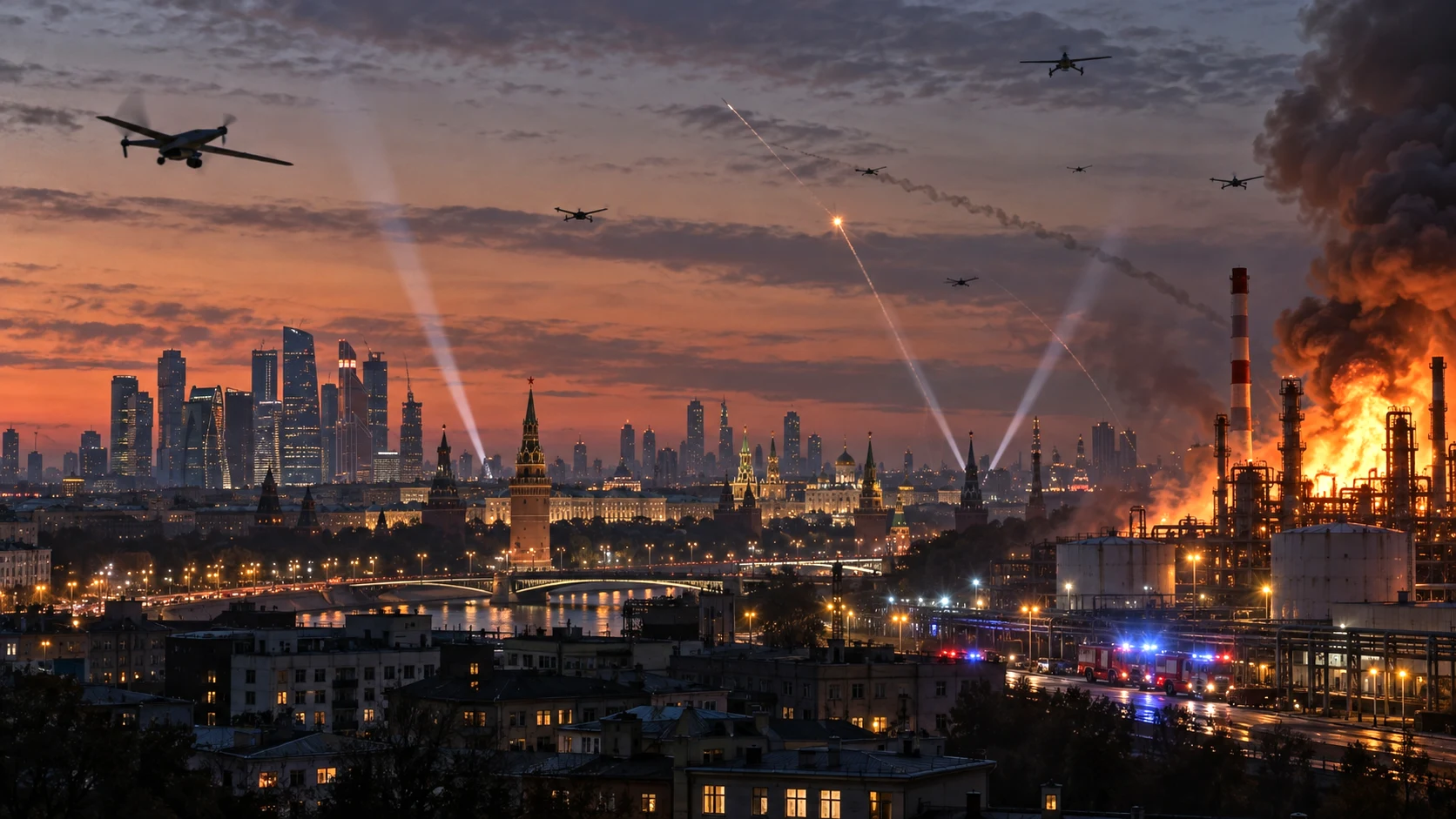
A huge Ukrainian long-range attack sent hundreds of drones toward Moscow and other parts of Russia early Sunday, damaging the Moscow Oil Refinery, disrupting civilian areas and putting Russian air defences under intense pressure. Russian officials described it as the largest drone attack yet directe
Russia’s Oct. 7 missile and drone barrage killed at least 32 people across Ukraine. Here is how the attack unfolded and why scarce Patriot interceptors remain critical.
However, recruiting hundreds of thousands of additional troops would also carry enormous financial, logistical and domestic political consequences for Moscow.
For now, the key point is simple:
Ukraine says a major Russian mobilization could be coming. It has not yet been confirmed as an official Russian decision.
Missiles and Drones Bring the War Far Beyond the Front Line
The conflict is increasingly being fought hundreds of kilometers away from traditional battlefield positions.
Russia has continued launching missiles and drones against targets across Ukraine.
Ukraine, meanwhile, has dramatically expanded its own long-range drone campaign against targets inside Russia.
On August 23, authorities in Russia’s Orenburg region reported that two industrial facilities were hit by debris during a Ukrainian drone attack.
One of the locations affected was associated with Russian online retailer Ozon.
The incident demonstrates how increasingly capable long-range drones are changing the geography of the conflict.
The battlefield is no longer the only place where the war is being felt.
Putin Warns of Retaliation
Russian President Vladimir Putin has also issued a strong warning over Ukrainian attacks against Russian economic targets.
Putin accused Ukraine of opening a “Pandora’s box” by expanding attacks against Russia’s economy and indicated that Moscow could retaliate against economically sensitive Ukrainian targets.
That raises another worrying possibility.
Instead of attacks being concentrated primarily on military objectives and frontline positions, economic and infrastructure targets could become increasingly important in the next phase of the conflict.
For ordinary civilians, that could mean further disruption to electricity, transport, businesses and other essential infrastructure.
Ukraine Has a Major Air-Defence Problem
One of Ukraine’s most urgent challenges is protecting its cities from Russian missiles.
Kyiv has repeatedly requested additional Western air-defence systems and interceptor missiles.
The problem is particularly serious when dealing with high-speed ballistic missiles, which are significantly more difficult to intercept than many conventional drones.
France is now promising additional assistance.
President Emmanuel Macron has pledged to accelerate deliveries of French interceptor missiles to Ukraine following deadly Russian attacks.
For Kyiv, every additional interceptor matters.
A sophisticated air-defence system is of little use if it does not have enough missiles available when a major Russian attack begins.
Russia and Ukraine Are Fighting a War of Infrastructure
Another major change is becoming increasingly visible.
Both sides are attempting to damage the other’s ability to sustain the war.
Ukraine has targeted infrastructure and industrial facilities inside Russia.
Russia continues attacking Ukrainian cities, infrastructure and other targets.
This creates a dangerous cycle:
Russia strikes Ukraine → Ukraine retaliates inside Russia → Russia promises further retaliation → attacks escalate again.
Breaking that cycle through diplomacy has so far proved extremely difficult.
What About Peace Talks?
Despite repeated international efforts, there is currently no comprehensive ceasefire ending the conflict.
Russia has said it remains open to proposals that are consistent with its objectives, while fundamental disagreements between Moscow and Kyiv continue.
Territory, security guarantees, military arrangements and the conditions for any ceasefire remain among the biggest obstacles.
That means diplomatic statements may continue even while fighting intensifies.
Europe Steps Up Support for Ukraine
Ukraine’s European partners are also preparing for the possibility that the war will continue.
France is strengthening air-defence support, while Norway announced on Sunday that it plans to provide 85 billion Norwegian crowns — approximately $9.2 billion — in assistance to Ukraine in 2027, matching its planned 2026 contribution.
The package is expected to include military and humanitarian assistance.
Such commitments demonstrate that European governments are planning not merely for the next few months, but potentially for another extended period of conflict.
What Happens Next?
Three developments will be particularly important to watch.
First: whether Russia actually announces another major troop mobilization.
Second: whether Russia and Ukraine further expand long-range attacks against each other’s infrastructure and economic targets.
Third: whether renewed diplomatic pressure can produce meaningful negotiations or a ceasefire.
For now, however, the military picture remains tense.
Ukraine is attacking deeper inside Russia.
Russia continues its missile and drone campaign against Ukraine.
And Zelenskyy’s warning about another possible 300,000 Russian troops has added a new question:
Is the war approaching another major escalation rather than a breakthrough toward peace?
The coming weeks could provide the answer.
Quick Facts
Topic
Detail
Conflict
Russia-Ukraine War
Latest Update
August 23, 2026
Major Claim
Zelenskyy says Russia may draft another 300,000 troops
Confirmed Russian Mobilization Order?
No
Latest Development
Long-range missile and drone attacks continue
Ukraine’s Major Need
Additional air-defence systems and interceptor missiles
The Rajatheertha Team publishes news, explainers, guides and updates across India and the world. Our coverage follows Rajatheertha's editorial, verification and corrections standards.
Donald Trump says Russia and Ukraine have agreed to immediately stop attacks on energy infrastructure. Volodymyr Zelensky says he was not informed of such an agreement, while Ukraine has reported new Russian strikes since the announcement. Here is what is actually confirmed.
Russian missile and drone strikes across Ukraine killed at least 32 people and wounded about 100, according to the latest reports. Pryluky suffered the heaviest casualties after a missile struck a residential building.
The GFS Pride and Cape Dao have sunk near the Strait of Hormuz as attacks on commercial shipping intensify. The two sinkings happened close together, but Cape Dao had been struck weeks earlier. Here is what is confirmed, what remains unclear and why the escalation matters for global trade and India.
Eighteen days before the November 3 US midterms, Washington and Tehran remain without a comprehensive agreement. Iran says the latest US response on Hormuz is insufficient, the American blockade remains in force, attacks on shipping have intensified and oil prices remain above $100 a barrel.
Ukraine is urgently searching for Patriot interceptors as Russian ballistic attacks intensify and the Iran war adds pressure to already limited global stocks. Here is why Patriot matters, how severe the shortage is and when new missiles could arrive.
Donald Trump’s remarks naming Los Angeles and San Diego while discussing the Iran war and higher prices have drawn criticism from California officials. The White House says Trump was describing the threat a nuclear-armed Iran could pose, not encouraging an attack.




0 Comments