Trump-Xi White House Summit: Trade Truce Extended as AI, Taiwan and Iran Differences Remain
Donald Trump and Xi Jinping held White House talks on trade, AI, Taiwan and the Middle East during Xi's state visit. A two-month trade-truce extension preserves stability for now, but no major breakthrough emerged on tariffs, technology controls or Iran.
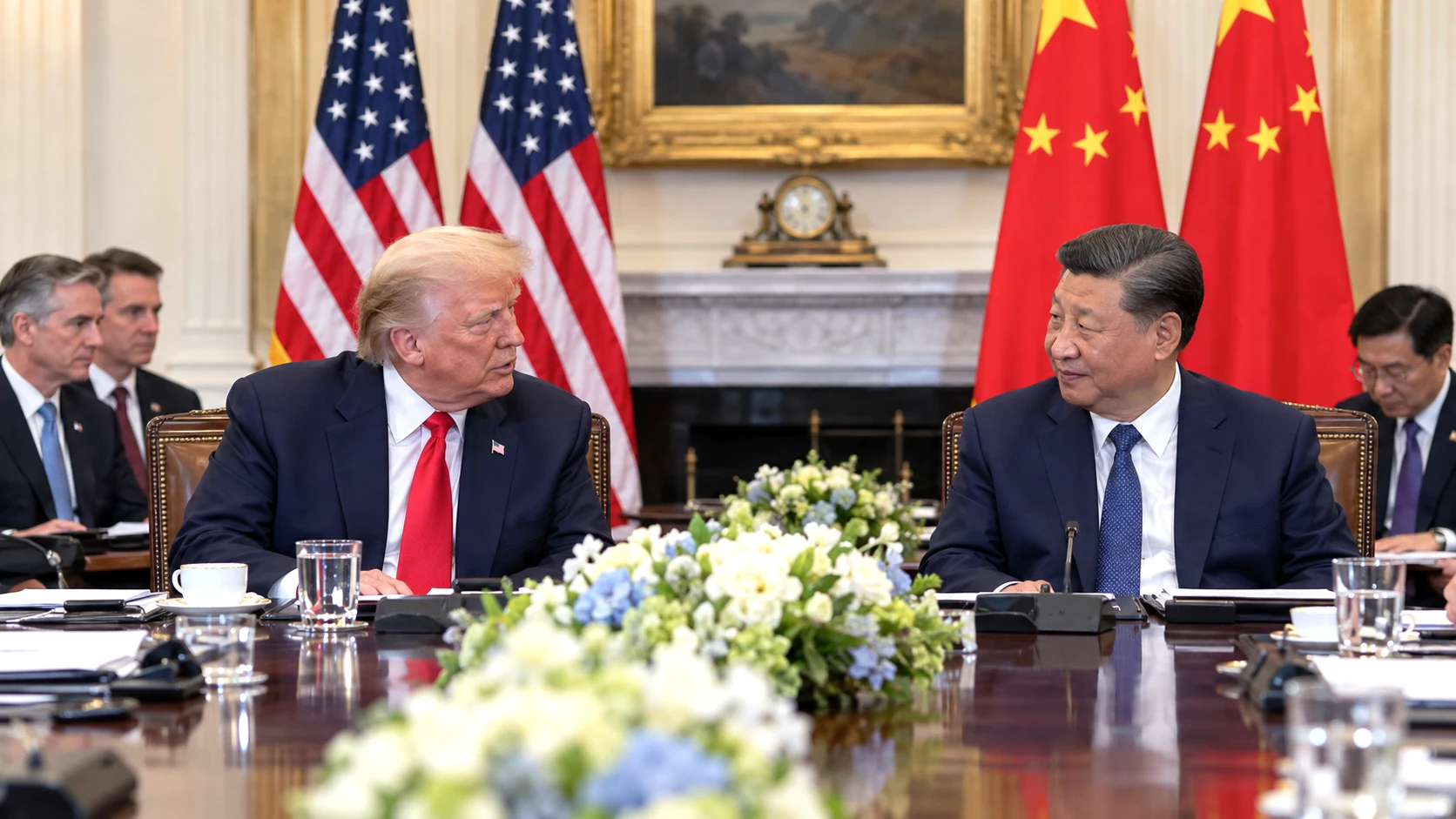
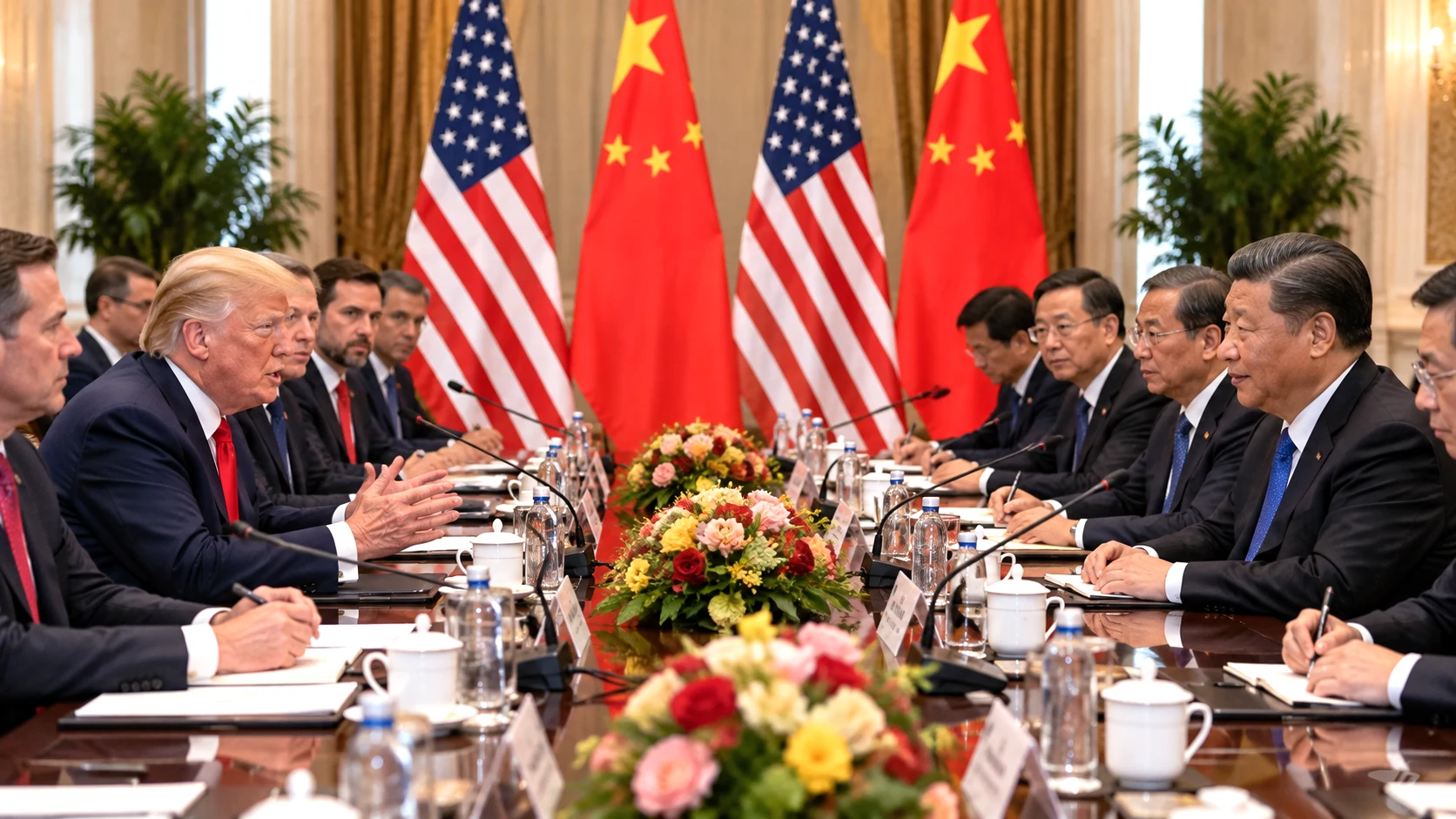
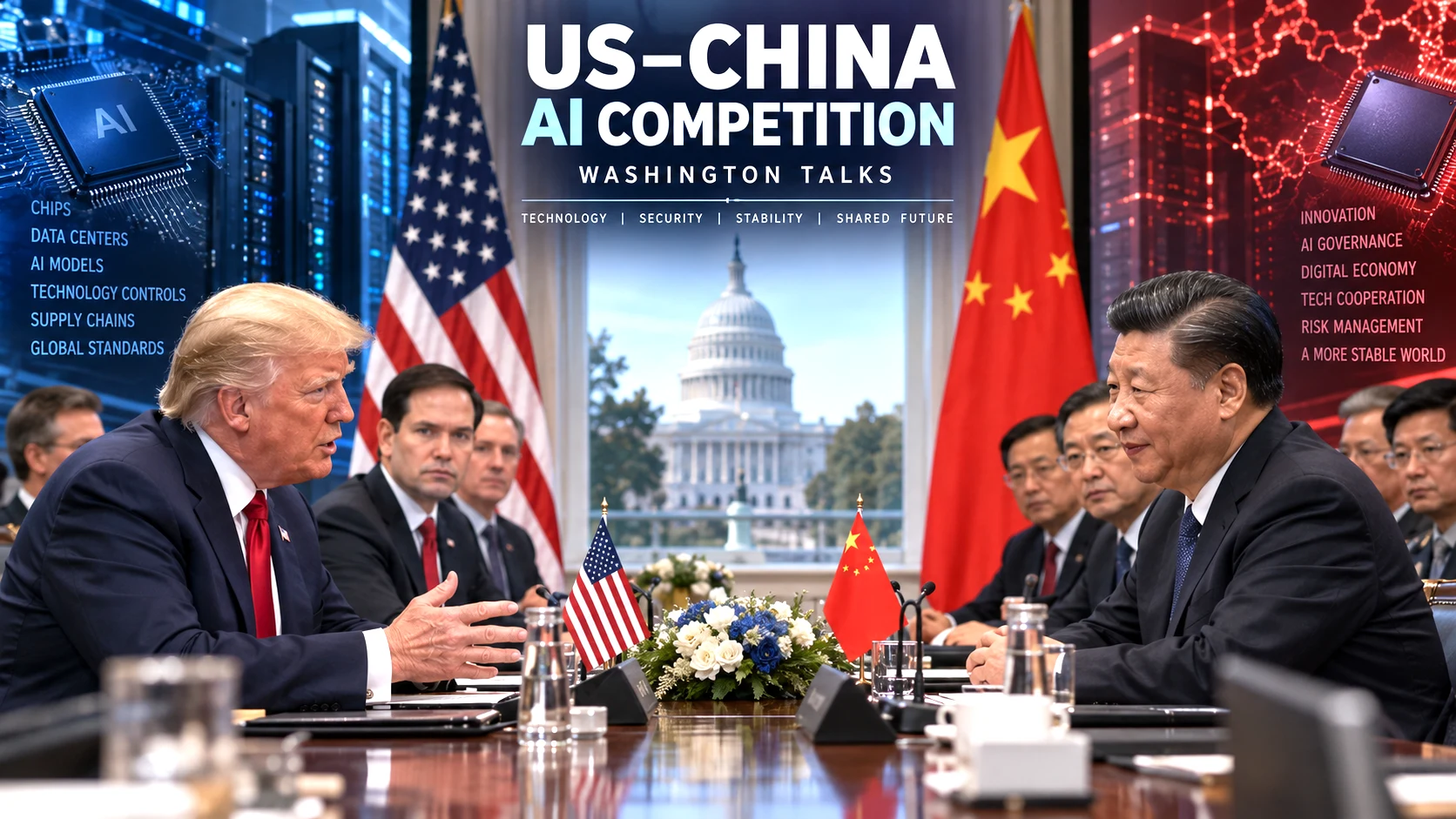
rump and Xi Jinping during White House talks on trade, artificial intelligence and global security in September 2026
Table of Contents (25 sections)
US President Donald Trump and Chinese President Xi Jinping held high-level talks at the White House on September 24, seeking to stabilise relations between the world's two largest economies while confronting unresolved disputes over trade, artificial intelligence, advanced technology, Taiwan and the Middle East.
The meeting formed the centrepiece of Xi's state visit to Washington and marked the second face-to-face summit between the two leaders in less than six months, following Trump's visit to China in May.
Despite elaborate diplomatic ceremonies and positive public language from both leaders, the talks produced no sweeping settlement of the major disputes dividing Washington and Beijing.
The clearest immediate economic development was a two-month extension of the existing US-China trade truce, giving negotiators additional time to pursue a broader agreement while leaving many tariff, agricultural-purchase, rare-earth and technology questions unresolved.
Recommended Reading
Related Stories & In-Depth Guides
Curated editorial perspectives matching this topic.
Chinese President Xi Jinping has arrived in Washington for a three-day state visit and high-stakes talks with Donald Trump. The US says the bilateral trade truce has been extended by two months to January 10, 2027.
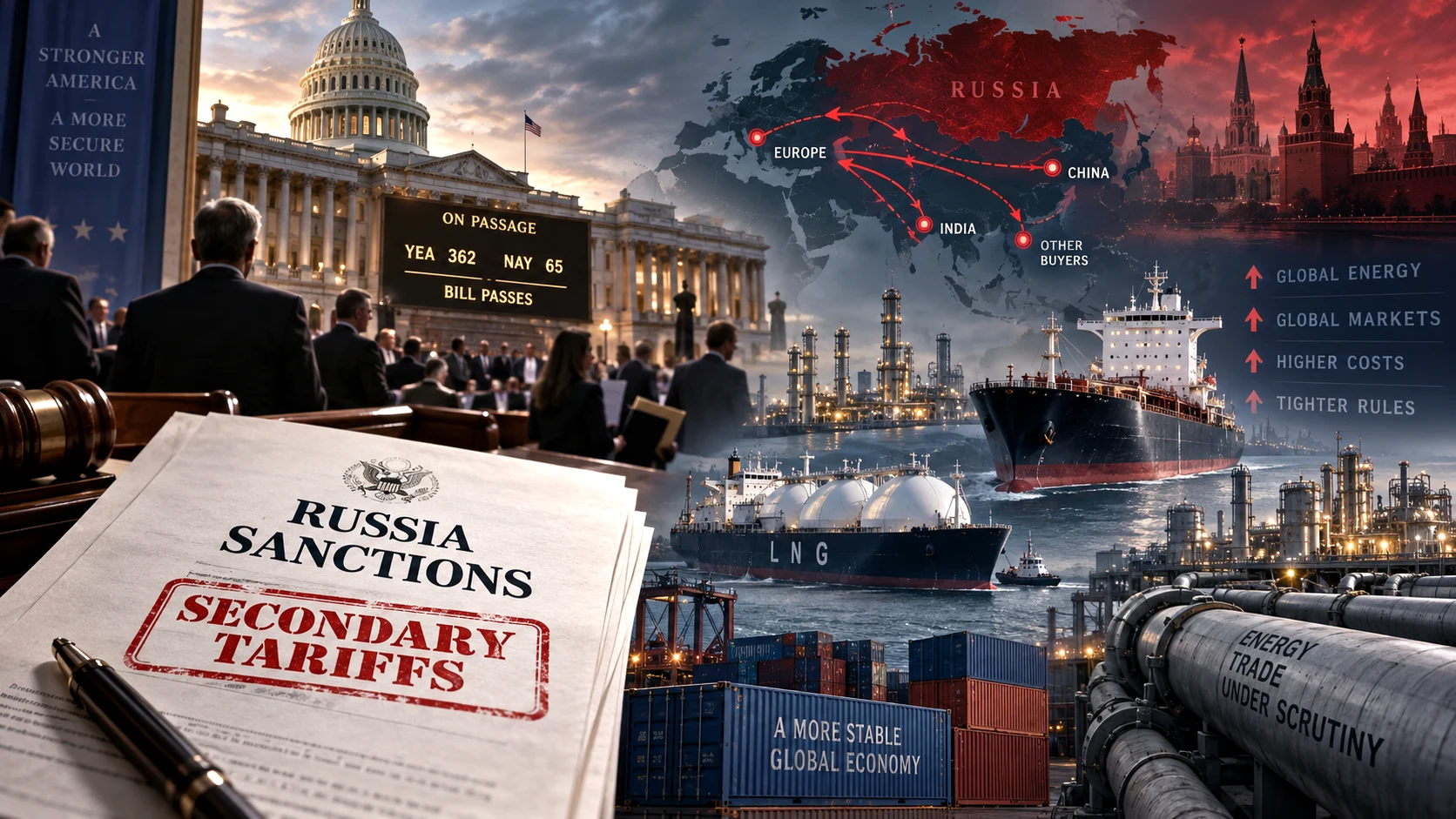
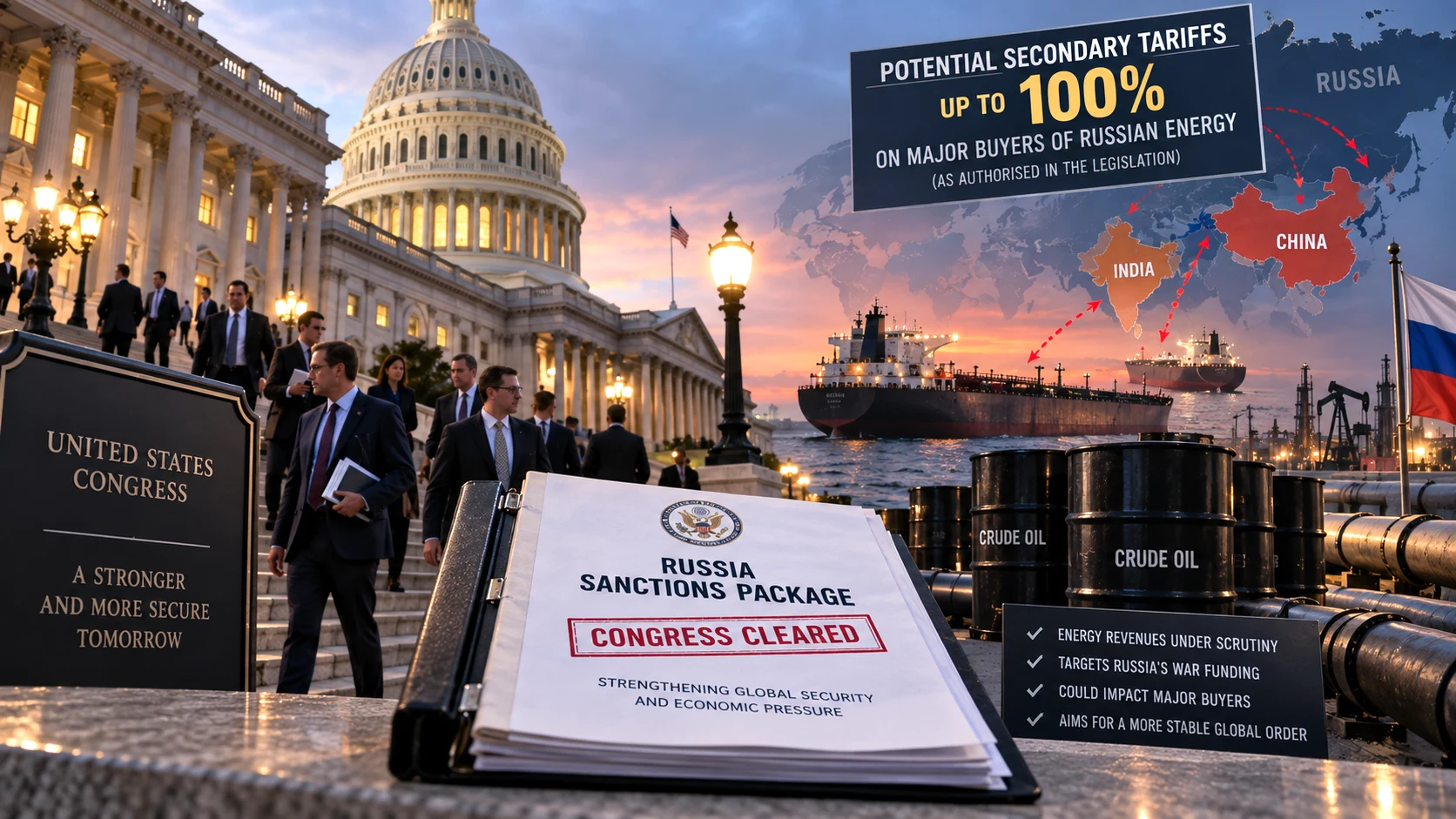
The House voted 262-159 to approve the Lindsey O. Graham Sanctioning Russia and Iran Act of 2026 after the Senate backed it 86-11 in August. The bill targets Russian banks, energy, defence and its “shadow fleet” while creating secondary tariffs for major buyers of Russian oil and gas. It now goes to
On artificial intelligence, both governments signalled willingness to continue discussions about risks and cooperation, but their public positions revealed important differences over how powerful AI should be governed.
Iran and the wider Middle East were also discussed, according to China's official readout, but neither government announced a concrete joint plan on the US-Iran conflict.
The result was therefore best understood as strategic stabilisation rather than a major geopolitical breakthrough.
Key Takeaways
Trump and Xi held formal talks at the White House on September 24, 2026.
Xi's visit is his first White House state visit in more than a decade.
The US-China trade truce has been extended by two months, postponing its previous November expiry.
The extension does not constitute a comprehensive trade settlement.
Tariffs, agricultural purchases, rare-earth supplies and technology restrictions remain unresolved.
Trump and Xi both supported continued AI dialogue, but their public approaches to AI governance differ significantly.
No formal AI safety treaty or publicly confirmed “AI hotline” agreement emerged from the summit.
Xi pressed Trump to handle Taiwan “with prudence” and urged Washington to oppose Taiwanese independence.
The White House had not announced any corresponding change in longstanding US Taiwan terminology at the time of publication.
The leaders discussed the Middle East, but no specific US-China agreement on Iran was announced.
A state dinner followed the talks, with major business and technology figures among the guests.
What Happened at the White House?
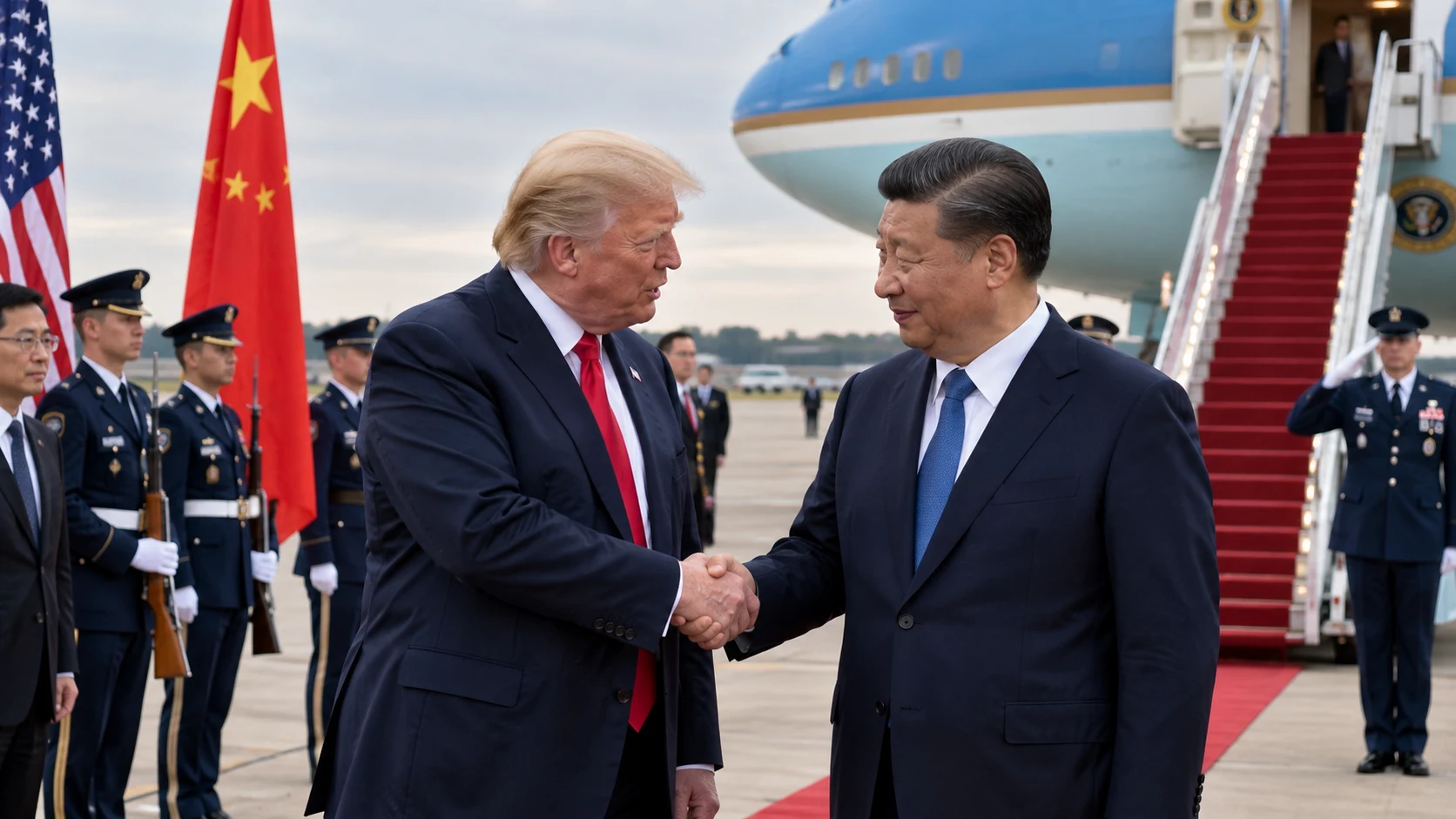
Trump welcomed Xi to the White House during a formal state visit that included a military arrival ceremony, bilateral discussions and a state dinner.
The official programme included military honours, performances and a flyover involving a B-2 bomber and F-22 fighter aircraft.
The two presidents later held substantive talks covering economic relations, technology, artificial intelligence and security issues.
China's Foreign Ministry said the leaders discussed how to develop what Beijing calls a “constructive China-US relationship of strategic stability.”
Xi argued that cooperation should remain the main feature of bilateral relations while competition should be controlled and disagreements managed.
Trump similarly presented the relationship in optimistic terms and said the countries should continue economic dialogue and seek a better agreement.
The cordial public language nevertheless contrasted with substantial unresolved disagreements.
Reuters described the summit as heavy on diplomatic symbolism but without evidence of breakthroughs on the most difficult issues.
Trade: Truce Extended, But Bigger Deal Remains Unfinished
Trade produced the clearest practical development surrounding the summit.
US Treasury Secretary Scott Bessent said Washington and Beijing extended their existing trade agreement by two months, preventing it from expiring in November.
The extension gives negotiators additional time to work on a broader settlement.
Rajatheertha had already reported the extension separately before the leaders' summit, with the revised deadline moving into January 2027.
That distinction matters.
The Trump-Xi summit did not suddenly produce a complete new trade agreement.
Instead, the leaders met against the backdrop of an extension already negotiated by their economic teams.
Major unresolved issues include:
US tariffs on Chinese products;
China's purchases of American agricultural goods;
rare-earth and critical-mineral supplies;
restrictions on advanced technology;
aircraft and industrial purchases;
market-access disputes;
and other non-tariff barriers.
Reuters reported that Beijing was meeting its previous commitment involving 25 million tonnes of soybean purchases, while US officials said China was behind on a separate commitment involving approximately $17 billion in other agricultural purchases.
Washington has also raised concerns about the pace of Chinese rare-earth deliveries.
Those unresolved questions help explain why negotiators chose a temporary extension rather than announcing a final settlement.
What Does the Two-Month Trade Extension Mean?
For businesses, the immediate effect is greater short-term predictability.
A fresh escalation in tariffs has been postponed.
But companies still face uncertainty because the extension does not establish a permanent framework.
Importers, exporters and manufacturers must continue planning around the possibility that tariff policy could change when the new deadline approaches.
The strongest conclusion is therefore:
The trade dispute has been delayed and managed, not resolved.
AI Emerges as a Presidential-Level Issue
Artificial intelligence was one of the summit's most closely watched subjects.
The issue now extends far beyond consumer chatbots.
US-China AI competition involves:
advanced semiconductor access;
data-centre computing;
frontier AI models;
cyber capabilities;
military applications;
model safety;
intellectual property;
and future economic competitiveness.
Before the summit, US and Chinese economic officials had already discussed establishing a mechanism for communication about significant AI-related safety incidents.
That raised expectations that Trump and Xi might announce a more formal AI crisis-management framework.
No such comprehensive agreement was announced after their September 24 talks.
What Did Xi Say About AI?
Xi's public position emphasised both cooperation and control.
According to China's official readout, Xi said the United States and China are both major AI powers and should continue dialogue on the technology's risks and benefits.
He argued that both countries should work to prevent misuse and abuse of AI and said advanced systems should remain under human control.
His remarks signal a willingness to establish at least limited cooperation on AI safety even while China competes directly with the United States for technological leadership.
What Did Trump Say About AI?
China's official account quoted Trump as saying AI concerns the future of humanity and that the United States and China should maintain dialogue and strengthen cooperation.
However, Trump's broader public position has been less supportive of additional regulatory guardrails.
Reuters reported that Trump has argued for leaving AI development largely where it currently stands and relying on existing US law-enforcement mechanisms rather than creating extensive new restrictions.
Xi, by contrast, publicly stressed active management of AI and keeping systems under human control.
That difference illustrates an important point:
Both leaders support dialogue, but that does not mean Washington and Beijing have agreed on how AI should be regulated.
Was an AI Safety Hotline Agreed?
Not according to the public summit information available so far.
Before the meeting, officials had discussed an AI incident-notification mechanism that could function somewhat like a crisis-communications channel between the two powers.
But no formal hotline, treaty or binding AI safety arrangement was publicly announced following the Trump-Xi meeting.
The most concrete outcome appears to be continued dialogue.
If a formal mechanism is announced later, that would represent a significant follow-up development rather than something already confirmed from the summit.
What About AI Chips?
Advanced semiconductor controls remain one of the most sensitive unresolved issues.
Washington has restricted China's access to some advanced US-designed chips and semiconductor-manufacturing technology, arguing that leading-edge computing can have military and intelligence applications.
Beijing regards many of those controls as an attempt to constrain China's technological development.
The summit did not produce a publicly announced broad rollback of US chip restrictions.
Nor did it eliminate the strategic competition between American and Chinese AI companies.
For markets and technology companies, that means the US-China AI relationship remains a combination of:
competition + limited risk-management dialogue.
Taiwan Remains One of the Sharpest Disagreements
Taiwan was another major issue in the talks.
According to China's official account, Xi urged Washington to handle the Taiwan issue carefully and pressed the United States to oppose Taiwanese independence.
That wording matters diplomatically.
The longstanding US formulation has generally been that Washington does not support Taiwan independence, which is different from explicitly saying it opposes independence.
Reuters reported there was no indication following the meeting that the Trump administration had adopted Beijing's preferred terminology.
No major change in US Taiwan policy was publicly announced after the summit.
Why Taiwan Matters to the Wider Summit
Taiwan is intertwined with several other elements of US-China competition.
The island is strategically important because of:
its democratic government;
its location in the western Pacific;
its semiconductor industry;
US security relationships in Asia;
and Beijing's claim of sovereignty over Taiwan.
China regards Taiwan as an internal sovereignty issue.
The United States maintains unofficial relations with Taipei while operating under its one-China policy framework.
Because of these competing positions, even small changes in diplomatic wording can receive considerable scrutiny.
Iran and the Middle East: Discussed, But No Joint Deal Announced
The Iran conflict was another major geopolitical subject expected at the summit.
China maintains significant political and economic links with Tehran, while the Trump administration has sought to increase pressure on Iran and simultaneously explore a negotiated end to the conflict.
Beijing had already called for restraint, renewed talks and reopening of the Strait of Hormuz.
China's official readout says Trump and Xi exchanged views on major international and regional issues including the Middle East, along with Ukraine and the Korean Peninsula.
However, the statement did not announce:
a US-China Iran peace initiative;
a Chinese commitment to pressure Tehran;
a new sanctions arrangement;
a joint Hormuz agreement;
or a specific Iran ceasefire proposal.
Reuters likewise reported no sign of a major breakthrough on Iran during the closed-door talks.
Therefore, headlines saying “Trump and Xi agree on Iran peace deal” would go beyond the available evidence.
Why China Matters in the Iran Conflict
China's importance stems partly from its economic relationship with Iran.
Beijing has substantial interests in:
Iranian energy;
regional stability;
Strait of Hormuz shipping;
Middle Eastern trade;
and keeping global energy prices manageable.
China therefore has incentives to prevent a prolonged conflict.
At the same time, Washington has previously accused Chinese entities of helping Iran circumvent some sanctions.
That makes Beijing both a potential diplomatic intermediary and a source of tension with Washington.
US-Iran Talks Are Happening on a Separate Track
The Trump-Xi summit occurred while US and Iranian negotiators were separately exploring a phased pathway toward reducing hostilities.
Reuters reported that proposals under discussion include Iran reopening the Strait of Hormuz while Washington lifts or modifies parts of its economic blockade.
Those negotiations should not be confused with the US-China summit.
China may influence the wider diplomatic environment, but the September 24 Trump-Xi meeting did not replace the direct or mediated US-Iran negotiation process.
Xi Raises the Risk of US-China Conflict
Xi also invoked the idea commonly known as the Thucydides Trap—the theory that rivalry between an established global power and a rising power can increase the risk of war.
He argued that such an outcome can be avoided and called for stronger crisis-management mechanisms and military communication.
That language illustrates a central contradiction in current US-China relations.
The two governments want:
stable trade;
predictable diplomatic relations;
and mechanisms to prevent accidental escalation.
At the same time, they remain strategic competitors in:
AI;
semiconductors;
military technology;
Taiwan;
space;
trade;
and influence across Asia and the Global South.
The summit did not eliminate that contradiction.
State Visit Heavy on Symbolism
Xi's visit was also designed to send a diplomatic message.
The White House organised a large arrival ceremony involving hundreds of US military personnel, ceremonial units and aircraft.
The leaders later participated in a formal state dinner with their spouses.
China's Foreign Ministry said Xi and Trump both used their dinner remarks to emphasise the historical relationship between the two countries and the possibility of continued cooperation despite different political systems.
Major technology executives were also expected among the guests, underscoring the increasingly close connection between diplomacy and technological competition.
Reuters reported expected attendees included senior executives associated with companies such as Alphabet, OpenAI and Nvidia.
Did the Summit Produce a Major Breakthrough?
No major comprehensive breakthrough has been announced.
What emerged instead was a set of signals pointing toward continued management of the rivalry.
What changed?
The trade truce remains alive for another two months.
Economic negotiations will continue.
Both presidents publicly supported continued AI dialogue.
Xi emphasised human control and AI-risk management.
Both leaders emphasised strategic stability and continued engagement.
What did not change?
No comprehensive trade agreement was reached.
Major tariff disputes remain.
Rare-earth and agricultural disagreements remain.
US-China technology competition continues.
No major chip-control settlement was announced.
Taiwan remains deeply disputed.
No formal AI safety treaty was announced.
No joint Iran settlement was announced.
That makes the summit significant, but not transformative.
Why Markets Are Watching the Trade Talks Closely
The US and China remain deeply connected economically despite years of trade restrictions.
Businesses need clarity on:
tariff levels;
semiconductor controls;
Chinese industrial exports;
American agricultural sales;
rare-earth access;
and cross-border investment.
Reuters noted that the temporary truce leaves companies operating against a still-changing policy backdrop.
For investors, another escalation could affect:
technology stocks;
manufacturing;
shipping;
commodities;
agriculture;
and global supply chains.
A durable agreement would therefore matter far beyond the two countries.
What Does This Mean for India?
India has an indirect but significant stake in US-China relations.
Years of strategic competition between Washington and Beijing have encouraged companies to diversify production through so-called China+1 manufacturing strategies.
India has been one of the countries seeking to attract that investment.
A more stable US-China commercial relationship could reduce some incentives for rapid supply-chain relocation, although diversification is unlikely to disappear because companies also consider resilience, labour costs, domestic demand and geopolitical risk.
Technology policy is another area India will watch.
Changes involving US semiconductor restrictions, AI cooperation or Chinese access to advanced computing could affect the global technology landscape in which Indian companies operate.
India also imports substantial amounts of energy, meaning any US-China cooperation that contributes to reduced tensions around Iran or the Strait of Hormuz could have consequences for oil prices and shipping costs.
These are potential effects rather than confirmed outcomes of the summit.
Trump and Xi Have Now Exchanged State Visits
The September meeting follows Trump's visit to China in May.
Xi highlighted the fact that the two leaders exchanged state visits within less than half a year, describing the frequency as unprecedented in the history of bilateral relations.
That level of direct presidential engagement appears intended to create a mechanism for containing disputes even when officials cannot reach agreement on substantive questions.
Personal diplomacy does not guarantee policy alignment, however.
The September summit demonstrates that frequent leader-level contact can coexist with deep structural competition.
What Happens Next?
The most consequential work now moves back to negotiating teams.
Key developments to watch include:
US-China trade negotiations before the new January deadline
possible changes to tariffs
Chinese purchases of US agricultural goods
rare-earth exports to the United States
semiconductor and AI-chip restrictions
creation of a formal AI-risk dialogue
any AI incident-notification or crisis hotline mechanism
future US arms or security decisions involving Taiwan
China's diplomatic role in the Iran conflict
further Trump-Xi meetings
The temporary trade extension means another decision point is approaching quickly.
If negotiators cannot narrow their differences, trade tensions could return even after a highly cordial state visit.
Latest Verified Position
As of September 25, 2026:
Trump and Xi held formal White House talks on September 24.
Xi is in Washington on a state visit running through September 25.
The US-China trade truce has been extended for two months.
No comprehensive US-China trade agreement has been announced.
Tariffs, agriculture, rare earths and technology restrictions remain under negotiation.
Trump and Xi both signalled support for continued AI dialogue.
Xi called for AI to remain under human control and for cooperation to prevent misuse.
No formal bilateral AI safety treaty or publicly confirmed AI emergency hotline was announced.
Xi pressed Washington over Taiwan, while no public US policy shift was announced.
The leaders discussed the Middle East, Ukraine and the Korean Peninsula.
No specific US-China agreement concerning Iran was announced.
Trump and Xi later attended a formal White House state dinner with Melania Trump and Peng Liyuan.
Frequently Asked Questions
Did Donald Trump and Xi Jinping meet at the White House?
Yes. The two leaders held formal talks at the White House on September 24, 2026, during Xi Jinping's state visit to the United States.
Did Trump and Xi sign a new trade deal?
No comprehensive new trade deal was announced. Their governments have extended the existing trade truce by two months while negotiations continue.
How long is the US-China trade truce extended?
The existing arrangement has been extended by two months, moving the next major deadline into January 2027.
Did Trump and Xi reach an AI agreement?
They agreed on the importance of continued dialogue, but no comprehensive AI treaty or binding regulatory framework was announced.
Was an AI emergency hotline created?
No formal hotline was publicly announced from the summit. Such a notification mechanism had been discussed before the meeting.
What did Xi say about artificial intelligence?
Xi said the United States and China should discuss AI's risks and benefits, prevent misuse and ensure that AI remains under human control and serves people.
Did Trump change US policy on Taiwan?
No major change was publicly announced. Xi urged Washington to oppose Taiwan independence and handle the issue cautiously, but Reuters reported no indication that the US had adopted Beijing's preferred wording.
Did Trump and Xi discuss Iran?
China's official readout says the presidents discussed the wider Middle East situation. Iran had been expected to feature prominently, but no specific joint Iran agreement was announced.
Did China agree to pressure Iran?
No such concrete commitment was publicly announced following the White House meeting.
Is the US-China trade war over?
No. The current truce limits immediate escalation, but major tariff, technology, agricultural and critical-mineral disputes remain unresolved.
Will Trump and Xi meet again?
Further high-level engagement is expected, although the precise timing of the next presidential meeting will depend on diplomatic scheduling and negotiations.
Bottom Line
Donald Trump and Xi Jinping held White House talks during Xi’s state visit. A two-month trade-truce extension preserves short-term stability, but no comprehensive deal emerged on tariffs, technology, Taiwan or Iran.
Both leaders supported continued AI dialogue, yet fundamental differences remain. The summit managed rivalry rather than resolving it.
Key Takeaway
Trump-Xi White House summit: trade truce extended.
The Rajatheertha Team publishes news, explainers, guides and updates across India and the world. Our coverage follows Rajatheertha's editorial, verification and corrections standards.
The United States and China have extended their trade truce from November 10 to January 10, 2027, giving negotiators two more months to pursue a broader deal. Existing tariffs remain, while rare earths, agriculture and tariff cuts remain under negotiation.
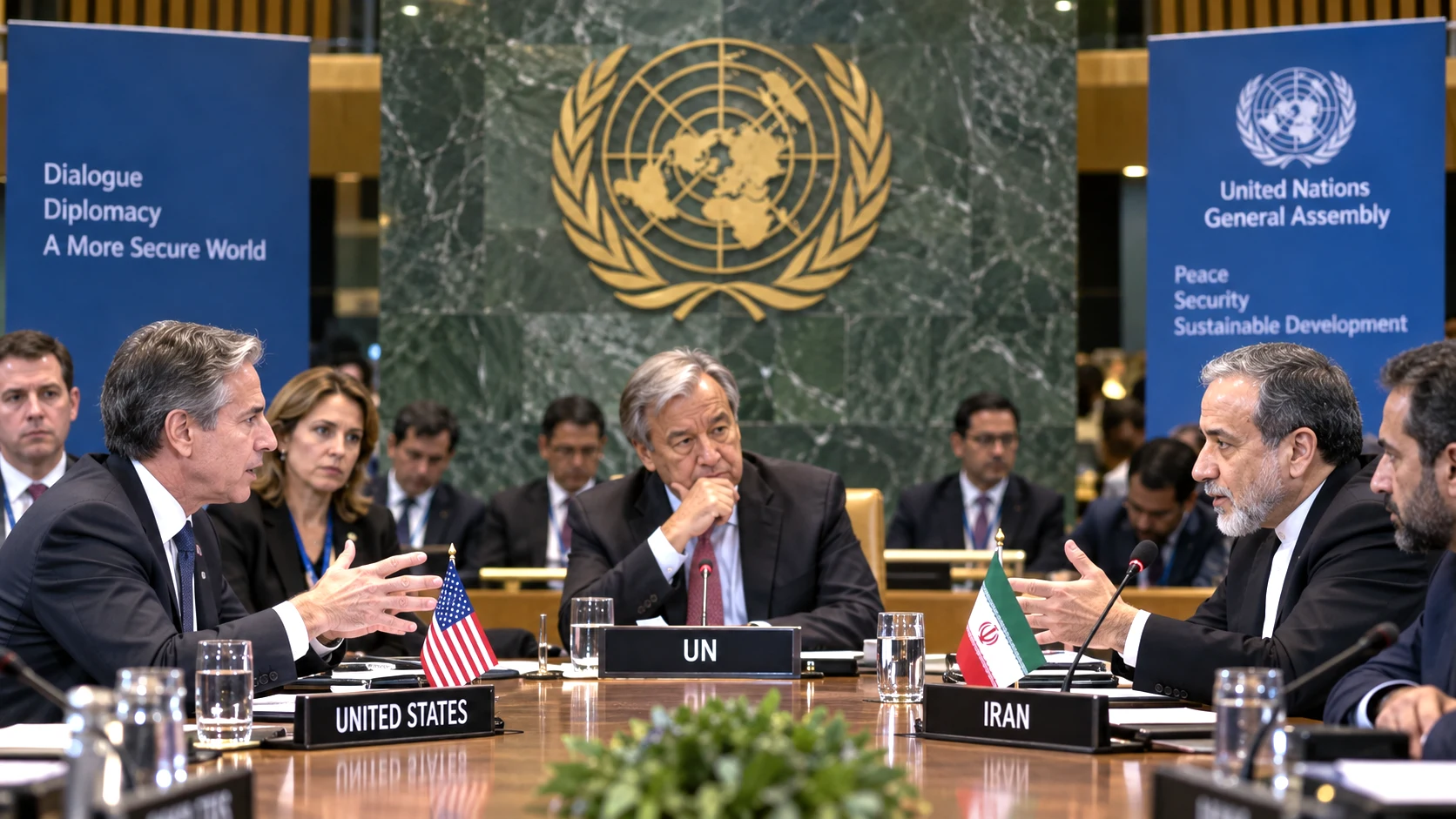
US and Iranian representatives held roughly three hours of mediated talks on the sidelines of the UN General Assembly after Donald Trump threatened Iran with further destruction if no deal is reached. Here is what was discussed and what remains unresolved.
The House approved the Lindsey O. Graham Sanctioning Russia and Iran Act of 2026 by 262-159 after the Senate passed it 86-11. The measure now awaits President Donald Trump’s signature and could subject major buyers of Russian oil or gas to additional US tariffs of up to 100%, although India and Chin
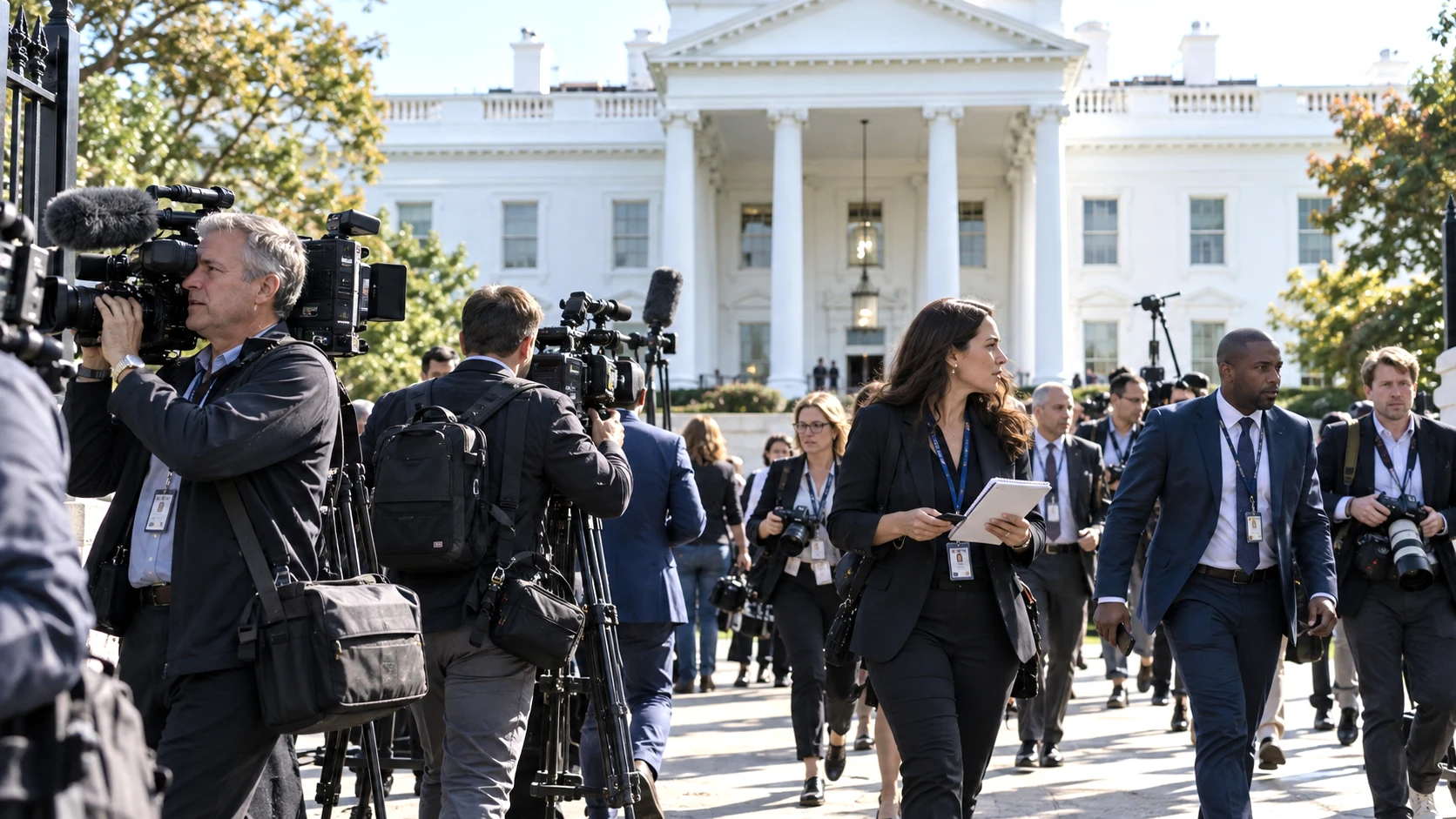
A federal judge has temporarily blocked Donald Trump's White House ban on CNN, MS NOW and Politico, ordering their press credentials restored for 14 days. The ruling focuses on due process while the wider press-freedom case continues.
Donald Trump and Xi Jinping are expected to meet in Washington on September 24, with artificial intelligence emerging as a central strategic issue alongside trade, Taiwan, Iran and fentanyl. Advanced chips, AI safety, military autonomy and allegations of technology copying are likely to shape the te
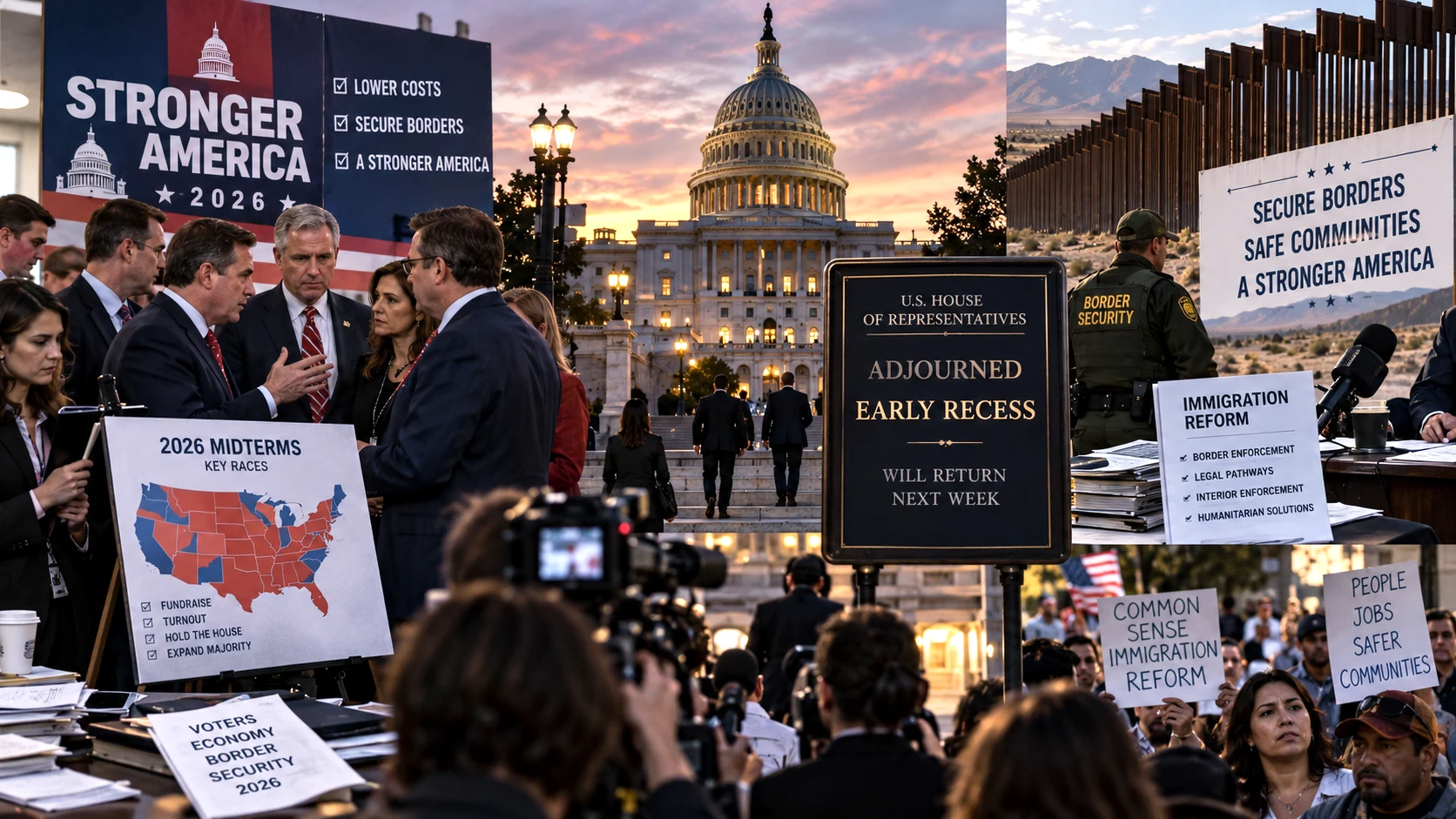
The Florida Republican says Hispanic voters who helped return Donald Trump to the White House now “feel betrayed,” while polling shows broader erosion in support for the president’s immigration approach. Separately, Speaker Mike Johnson has sent the House home early for the campaign season, drawing



0 Comments