World Spine Day 2026: 7 Causes of Back Pain, Posture Fixes and Warning Signs
World Spine Day 2026 is a reminder that back pain is common but not always caused by one identifiable spinal problem. Here are seven possible causes or contributors, practical posture and movement habits, and the warning signs that need medical attention.
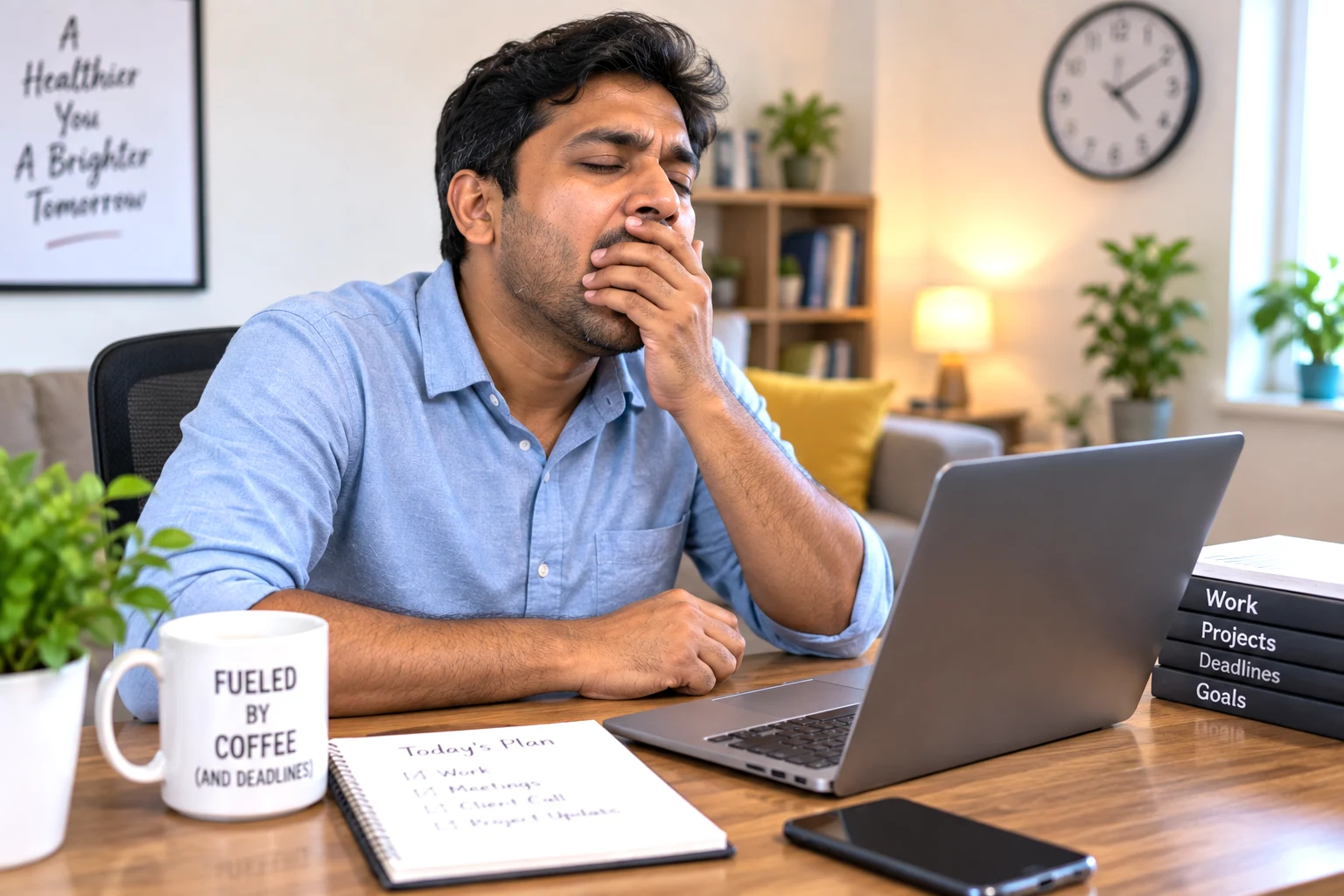
Editorial illustration for World Spine Day 2026 and back-pain awareness
Table of Contents (11 sections)
Back pain is extremely common, but having a painful back does not automatically mean that something is seriously damaged in the spine.
That distinction is worth remembering on World Spine Day, observed every year on October 16 to raise awareness about spinal health, spinal pain and disability. The 2026 campaign theme is “Spine Health for Life,” encouraging people to think about spinal health across the lifespan rather than only after symptoms appear.
The scale of the problem is substantial. The World Health Organization says low back pain affected an estimated 619 million people worldwide in 2020 and projects that the number could rise to 843 million by 2050 as populations grow and age. WHO describes low back pain as the single leading cause of disability globally.
Yet back pain is not one single disease, and it does not have one universal cause.
For many people, the exact structural reason for an episode cannot be identified. WHO estimates that about 90% of low back pain is classified as non-specific, meaning clinicians cannot confidently attribute it to one particular disease, injury or structural abnormality.
That is why understanding the possible causes, paying attention to warning signs and avoiding myths about posture can be more useful than assuming every ache means a damaged disc or “bad spine.”
Key Takeaways
Recommended Reading
Related Stories & In-Depth Guides
Curated editorial perspectives matching this topic.
On World Mental Health Day 2026, understand what burnout actually means, seven warning signs worth noticing, when work stress may need professional attention, and where people in India can seek confidential mental-health support.
Delhi's air usually worsens sharply as October progresses. Here is what AQI actually means, who faces greater health risk, when an N95 may help, how to reduce indoor exposure, and when respiratory symptoms need medical attention
World Spine Day 2026 theme: “Spine Health for Life”.
~90% of low back pain is non-specific (no single identifiable structural cause).
Seven common contributors: strain, inactivity, heavy work, disc/nerve issues, ageing, inflammatory conditions, rare serious causes.
Posture matters less than movement variety and comfort.
Seek urgent care for red-flag symptoms (bilateral weakness, bladder/bowel changes, trauma, fever, etc.).
What exactly is back pain?
Back pain can occur anywhere along the back, although pain in the lower back is especially common.
It may feel like:
an ache or stiffness
a sharp pain
pain triggered by certain movements
pain that spreads into the buttock or leg
tingling or numbness in some nerve-related conditions
pain that comes and goes
persistent pain that affects work, sleep or everyday activities
WHO defines low back pain as pain between the lower edge of the ribs and the buttocks. It can be acute, sub-acute or chronic depending on how long it lasts. Pain may remain in the back or, in some people, occur together with leg symptoms associated with irritation or involvement of a spinal nerve.
The important point is that the symptom “back pain” can arise through several different pathways.
7 possible causes or contributors to back pain
These should not be treated as a self-diagnosis checklist. The same symptom can have different explanations in different people, and many episodes remain non-specific even after assessment.
1. Muscle strain or soft-tissue overload
One of the more familiar explanations for sudden back pain is a strain involving muscles or other soft tissues.
This can happen after an unfamiliar activity, an awkward movement, lifting, repetitive physical work or suddenly doing more activity than the body is accustomed to.
The NHS lists injuries such as a pulled muscle or strain among common explanations for back pain.
The important distinction is that an episode following activity does not by itself establish the severity or exact tissue involved. Symptoms that are unusually severe, rapidly worsening or accompanied by neurological warning signs need proper assessment.
2. Too little movement or remaining in one position for long periods
Modern work can involve hours at a desk, behind a wheel or looking at screens.
Low levels of physical activity are among the recognised risk factors associated with non-specific low back pain, according to WHO. Workplace ergonomics can also matter.
That does not mean sitting itself is inherently dangerous.
A more useful message is to avoid spending very long periods in one unchanged position. Regular movement, changing position and arranging a workstation comfortably may help reduce the strain and stiffness some people experience during prolonged desk work.
This is particularly relevant for office workers, students, drivers and people working from home.
3. Heavy lifting, repetitive loading or physically demanding work
Jobs or activities that repeatedly require lifting, carrying, bending, twisting or substantial physical effort can place high demands on the back.
WHO lists high physical stress at work among the risk factors associated with non-specific low back pain and recommends attention to reducing strain during physical work as part of broader back-health management.
Good lifting habits are therefore less about keeping the spine perfectly rigid and more about managing the load sensibly.
Consider the weight and shape of an object before moving it, avoid sudden uncontrolled lifting where possible, keep frequently used heavy items accessible, and ask for assistance when a load is beyond what can be moved comfortably.
4. Disc-related problems or nerve irritation
Some back pain has a more identifiable spinal or nerve-related cause.
The NHS notes that conditions such as a slipped disc or sciatica can cause back pain. Sciatica usually refers to symptoms associated with irritation or compression affecting the sciatic nerve pathway.
WHO notes that spine-related leg pain may feel dull, sharp or electric and may sometimes occur with tingling, numbness or muscle weakness.
Pain travelling into a leg does not automatically mean an emergency, but progressive weakness, major numbness or certain bladder and bowel symptoms require urgent evaluation.
5. Changes associated with ageing and the musculoskeletal system
Back-pain patterns change across life.
WHO says low back pain can occur at any age, but prevalence generally increases with age up to around 80 years. Recurrent episodes are also more common with ageing.
Ageing can be accompanied by changes in discs, joints, bones, muscles and other tissues. However, age alone does not tell us why a particular person is experiencing pain.
Older adults should be particularly cautious about new severe pain following a fall or significant injury because fractures and other conditions may require prompt investigation.
6. Inflammatory spinal conditions
Not every persistent back problem is a simple muscular strain.
The NHS identifies ankylosing spondylitis among medical conditions that can cause back pain.
Inflammatory conditions can have a different pattern from ordinary short-lived back pain and require medical assessment rather than repeated attempts to correct posture at home.
Persistent symptoms, substantial stiffness, pain that repeatedly interferes with normal life or symptoms that are not improving deserve professional evaluation.
7. Less common but potentially serious conditions
Serious causes of back pain are uncommon, but they are the reason warning signs matter.
The NHS says back pain can, very rarely, be linked to problems such as a fracture, cancer or infection. WHO also notes that specific low back pain can result from an underlying disease, tissue damage such as a fracture, or sometimes pain referred from another organ.
This does not mean people with ordinary back pain should assume the worst.
It means that a change in the overall clinical picture — particularly neurological symptoms, major trauma, unexplained systemic symptoms or rapidly worsening pain — should not be ignored.
Is “bad posture” really causing your back pain?
Posture deserves a more careful explanation than the familiar instruction to “sit straight.”
There is no single perfect posture that guarantees a pain-free back.
Cambridge University Hospitals, part of the NHS, notes that research does not clearly prove that so-called bad posture by itself causes back or joint pain. It also explains that remaining in one position for long periods may aggravate symptoms in some people who already have pain.
That changes the practical question.
Instead of asking, “What is the one correct posture?”, ask:
“Am I comfortable?”
“Am I supported?”
“Have I been in this position too long?”
“Can I change position or move for a few minutes?”
“Is my workstation making me constantly lean, reach or twist?”
For many desk workers, variation is more realistic than trying to maintain a rigid textbook pose for eight hours.
Practical posture and workstation habits
Keep the screen in a comfortable viewing position
A monitor that is far too low, high or off to one side may encourage prolonged bending or twisting.
Arrange the screen so you can view it comfortably without repeatedly craning the neck or rotating your torso.
Sit back into the chair
If you use a chair for long periods, allow the backrest to support you rather than balancing continuously on the front edge of the seat.
Cambridge University Hospitals advises arranging seating so that the spine and pelvis are supported and avoiding prolonged static sitting.
Keep the feet supported
A comfortable setup generally allows the feet to rest on the floor or on an appropriate foot support rather than leaving the legs unsupported.
The goal is comfort and stability, not achieving a mathematically perfect joint angle.
Keep frequently used items within easy reach
Repeatedly leaning across a desk for the mouse, phone, files or other equipment can make a workstation unnecessarily awkward.
Bring commonly used items closer.
Change position regularly
This may be the most useful “posture fix” of all.
Stand for a while.
Walk briefly.
Change how you sit.
Move between tasks when possible.
The NHS posture guidance emphasises regular movement and changing position rather than remaining under static load indefinitely.
Do not turn posture into a source of anxiety
Constantly worrying that every slouch, bend or imperfect movement is damaging the spine can create unnecessary fear.
Human bodies are designed to move through different positions.
Comfortable movement and sensible variation are usually more realistic goals than trying to freeze the spine into a supposedly ideal posture.
Movement matters beyond the office chair
WHO identifies low physical activity as a risk factor for non-specific low back pain and includes physical activity, healthy body weight, good sleep, not smoking and ergonomic workplace adjustments among measures that can support people with low back pain.
This does not mean everybody should follow the same exercise programme.
Age, existing medical conditions, injuries, pregnancy, disability and current symptoms can all affect what activity is appropriate.
People who have been inactive for a long period or who have significant symptoms should seek appropriate professional guidance before making major changes.
“See a doctor if…” — back-pain warning signs
Most back pain is not caused by a medical emergency. But some combinations of symptoms require urgent attention.
Seek urgent or emergency medical care if back pain is accompanied by:
New pain, tingling, weakness or numbness affecting both legs
Loss of sensation around the genitals or anus
New difficulty controlling or emptying the bladder or bowel
Back pain after a serious accident or major trauma
Chest pain together with back pain
Severe pain that starts suddenly or is worsening rapidly
Fever, chills or feeling seriously unwell with back pain
The NHS identifies bilateral leg neurological symptoms, loss of sensation around the genitals or anus, bladder or bowel changes, chest pain and major trauma among symptoms requiring emergency assessment. Sudden severe or rapidly worsening back pain and back pain accompanied by feeling feverish or generally unwell also warrant urgent medical advice.
Emergency numbers and healthcare pathways vary by country; in India, seek the nearest appropriate emergency medical service rather than delaying because the symptoms do not fit a familiar pattern.
When should persistent back pain be checked even if it is not an emergency?
Medical review is also sensible when back pain:
does not improve over several weeks
is preventing normal daily activities
repeatedly returns or is becoming harder to manage
is associated with unexplained weight loss
is worse at night or does not ease with rest
is accompanied by a lump, swelling or visible change in the shape of the back
is particularly worrying to you
The NHS lists these among circumstances in which medical assessment should be considered.
Persistent pain deserves assessment because the goal is not simply to identify an emergency. A clinician can evaluate whether symptoms are likely to be non-specific back pain or whether another condition needs investigation.
Back pain does not always mean serious spinal damage
One of the most useful facts for World Spine Day is that pain intensity and structural damage are not always the same thing.
WHO's finding that around 90% of low back pain is non-specific means that in most cases there is no single disease or structural lesion that confidently explains the entire pain experience.
That is very different from saying the pain is imaginary.
Pain is real.
But it can be influenced by multiple physical, psychological, occupational and social factors rather than one damaged structure alone.
That is also why one posture correction, one mattress, one chair or one exercise should not be promoted as a universal cure.
What World Spine Day 2026 is really asking people to remember
The “Spine Health for Life” theme is useful because spinal health is not only an issue for people who already have severe pain.
Children and students increasingly spend long periods using screens.
Office workers may sit for much of the day.
Manual workers may face repetitive or heavy physical loads.
Older adults may encounter changing mobility, muscle strength and bone health.
Across these groups, the useful principles are straightforward: keep moving within your abilities, avoid unnecessarily long periods in one static position, make workspaces more comfortable, handle physical loads sensibly, pay attention to sleep and overall health, and seek medical advice when symptoms are persistent, severe or accompanied by warning signs.
World Spine Day should not become another opportunity to frighten people into thinking their spine is fragile.
A better message is that spinal health deserves attention throughout life — while recognising that back pain is common, often non-specific and sometimes requires professional assessment.
And when clear red flags appear, posture tips should never replace medical care.
Health Disclaimer: This article provides general health information and is not a diagnosis, treatment plan or substitute for individual medical advice. People with severe, persistent, worsening or neurological symptoms should seek assessment from an appropriately qualified healthcare professional. Emergency warning signs require prompt medical attention.
Key Takeaway
World Spine Day 2026: Back pain is common and often non-specific.
Move regularly, check red flags, and seek care when symptoms persist or worsen.
The Rajatheertha Team publishes news, explainers, guides and updates across India and the world. Our coverage follows Rajatheertha's editorial, verification and corrections standards.
Pope Leo XIV is recovering after surgery to remove the lower lobe of his right lung following a diagnosis of lung adenocarcinoma. Here is what the Vatican has confirmed, what remains unknown and why the case has renewed attention on how this common form of lung cancer is treated.
Feeling stressed or anxious? Simple habits such as slow breathing, short walks, journaling, better sleep and regular breaks from social media may help. Here are practical ways to manage everyday stress—and signs that it may be time to seek professional support.
Staying hydrated does not require obsessively counting every glass. Learn practical ways to drink more water, early dehydration signs, what drinks count, when you may need extra fluids, and common hydration myths.
Always feeling tired even after sleeping? Learn common causes of constant fatigue, including poor sleep, anaemia, thyroid problems, diabetes, vitamin deficiencies and sleep apnoea, plus when to get tested or see a doctor.
Learn the common signs and causes of vitamin D deficiency, how the 25(OH)D blood test is interpreted, vitamin D-rich foods available in India, sunlight basics and when supplements or medical advice may be needed.
Better digestion often starts with ordinary habits: more fiber-rich whole foods, enough fluids, selected fermented foods, regular meals, slower eating and movement. Here is what current evidence supports—and what gut-health trends often exaggerate.
Medicare Open Enrollment 2027: How to Compare Plans, Change Coverage and Understand ACA Deadlines







0 Comments