High cholesterol often causes no symptoms, yet over time elevated LDL cholesterol can contribute to plaque building up inside arteries and increase the risk of heart attack, stroke and other cardiovascular disease.
The encouraging part is that cholesterol levels can often be improved through changes in diet, physical activity, weight management and avoiding tobacco. Some people, however, need cholesterol-lowering medicine as well—especially when LDL is very high or their overall cardiovascular risk is elevated.
The number that usually deserves the greatest attention is LDL cholesterol, often called “bad cholesterol,” because elevated LDL directly contributes to atherosclerotic plaque formation.
HDL is commonly called “good cholesterol,” while triglycerides are another type of blood fat that also matter for cardiovascular and metabolic health.
Key Takeaways
- LDL cholesterol is the main number to focus on for heart-disease risk.
- General healthy references: Total <200, LDL <100, Triglycerides <150 mg/dL.
- High-risk patients may need much lower LDL targets (e.g., <55 mg/dL).
- Reduce saturated fat, eat more soluble fibre and pulses, exercise regularly.
- Lifestyle changes help, but many people still need medication.
- High cholesterol usually has no symptoms — testing is essential.
Quick Answer: Normal Cholesterol Levels Chart
For many adults, these are useful general reference values:
| Lipid test | General healthy reference |
|---|
| Total cholesterol | Below 200 mg/dL |
| LDL cholesterol | Below 100 mg/dL |
| Non-HDL cholesterol | Below 130 mg/dL |
| HDL cholesterol – men | 60 mg/dL or higher is desirable; below 40 is low |
| HDL cholesterol – women | 60 mg/dL or higher is desirable; below 50 is low |
| Triglycerides | Below 150 mg/dL |
These are general reference values, not universal treatment goals.
A person who has already had a heart attack, stroke or another form of atherosclerotic cardiovascular disease may need a much lower LDL target.
Current 2026 ACC/AHA guidance recommends LDL goals as low as below 55 mg/dL for many very-high-risk people with established cardiovascular disease, while some other high-risk patients may have goals below 70 mg/dL.
That is why a cholesterol report should always be interpreted together with a person's medical history and overall risk.
What Is Cholesterol?
Cholesterol is a waxy substance that your body needs for normal functions such as producing hormones and maintaining cells.
Your liver makes cholesterol naturally.
The problem develops when too much cholesterol—particularly LDL cholesterol—circulates in the bloodstream.
LDL particles can enter artery walls and contribute to atherosclerosis, the gradual accumulation of plaque that narrows and damages arteries.
Over time, this can increase the risk of:
- heart attack;
- ischaemic stroke;
- peripheral artery disease;
- and other cardiovascular complications.
What Is LDL Cholesterol?
LDL stands for low-density lipoprotein.
It transports cholesterol through the bloodstream.
When LDL levels are too high, cholesterol can accumulate inside artery walls.
That is why LDL is often called “bad cholesterol.”
General LDL categories commonly used for adults are:
| LDL | General interpretation |
|---|
| Below 100 mg/dL | Optimal |
| 100–129 mg/dL | Near optimal / above optimal |
| 130–159 mg/dL | Borderline high |
| 160–189 mg/dL | High |
| 190 mg/dL or above | Very high |
The important principle is:
For LDL, lower is generally better when cardiovascular risk is high.
What Is HDL Cholesterol?
HDL stands for high-density lipoprotein.
HDL helps transport cholesterol back toward the liver for processing and removal.
For this reason, it is commonly called “good cholesterol.”
For adults:
- HDL below 40 mg/dL in men is considered low.
- HDL below 50 mg/dL in women is considered low.
- HDL around 60 mg/dL or higher is generally considered favourable.
However, cholesterol treatment today is not focused on simply trying to push HDL as high as possible.
Reducing harmful LDL-containing particles and overall cardiovascular risk is the more important goal.
What Are Triglycerides?
Triglycerides are fats that circulate in the blood and are used by the body for energy.
They are measured as part of most lipid profiles.
General adult ranges are:
| Triglycerides | Interpretation |
|---|
| Below 150 mg/dL | Normal |
| 150–199 mg/dL | Borderline high |
| 200–499 mg/dL | High |
| 500 mg/dL or above | Very high |
Very high triglycerides are particularly important because at sufficiently high levels they can increase the risk of pancreatitis in addition to cardiovascular concerns.
The 2026 dyslipidaemia guideline notes that very severe triglyceride elevation may require specific treatment in addition to lifestyle measures.
Which Number Matters Most: LDL, HDL or Total Cholesterol?
For most people concerned about heart disease prevention, LDL cholesterol is a major treatment target.
Total cholesterol can be useful, but it combines different types of cholesterol into one number.
For example, two people could have the same total cholesterol while having very different LDL, HDL and triglyceride profiles.
That is why the complete lipid profile is more informative than total cholesterol alone.
Current guidelines also increasingly consider non-HDL cholesterol, lipoprotein(a) and sometimes apolipoprotein B when evaluating cardiovascular risk.
Can You Have High Cholesterol Without Symptoms?
Yes.
High cholesterol usually produces no symptoms.
You can feel completely healthy while LDL remains elevated for years.
That is why blood testing is necessary to identify dyslipidaemia.
Waiting until chest pain develops is not a cholesterol-screening strategy.
By the time cardiovascular symptoms occur, artery disease may already be advanced.
How to Lower Cholesterol Naturally
Lifestyle changes can make a meaningful difference, particularly when LDL or triglycerides are mildly to moderately elevated.
The most useful strategies include:
- reducing saturated and trans fats;
- eating more soluble fibre;
- choosing minimally processed foods;
- maintaining a healthy weight;
- exercising regularly;
- avoiding tobacco;
- controlling diabetes and blood pressure;
- limiting excess alcohol;
- and taking prescribed medication when lifestyle alone is insufficient.
WHO identifies healthy diet, regular physical activity, smoking cessation and appropriate medication as key tools for managing abnormal cholesterol.
1. Reduce Saturated Fat
This is one of the most important diet changes for lowering LDL.
Foods high in saturated fat can raise LDL cholesterol.
Common Indian sources can include:
- large amounts of ghee;
- butter;
- cream;
- full-fat dairy;
- fatty meat;
- processed meat;
- bakery fats;
- coconut oil;
- palm oil;
- and foods prepared with large quantities of saturated fat.
Current AHA dietary guidance recommends replacing sources of saturated fat with unsaturated fats, rather than simply adding more oil to the diet.
That distinction matters.
Switching from a spoonful of ghee to several extra spoons of vegetable oil is not automatically helpful if total calorie intake rises substantially.
2. Avoid Trans Fats as Much as Possible
Industrial trans fats are particularly harmful because they can worsen the blood lipid profile.
ICMR-NIN research has documented adverse metabolic effects from trans fats historically present in partially hydrogenated vegetable oils such as vanaspati.
Modern regulation has greatly reduced industrial trans fats in India's food supply, but it is still sensible to limit foods that are heavily fried or prepared with poor-quality reused fats.
Examples include some:
- commercially fried snacks;
- bakery shortening products;
- pastries;
- deep-fried fast foods;
- and highly processed packaged foods.
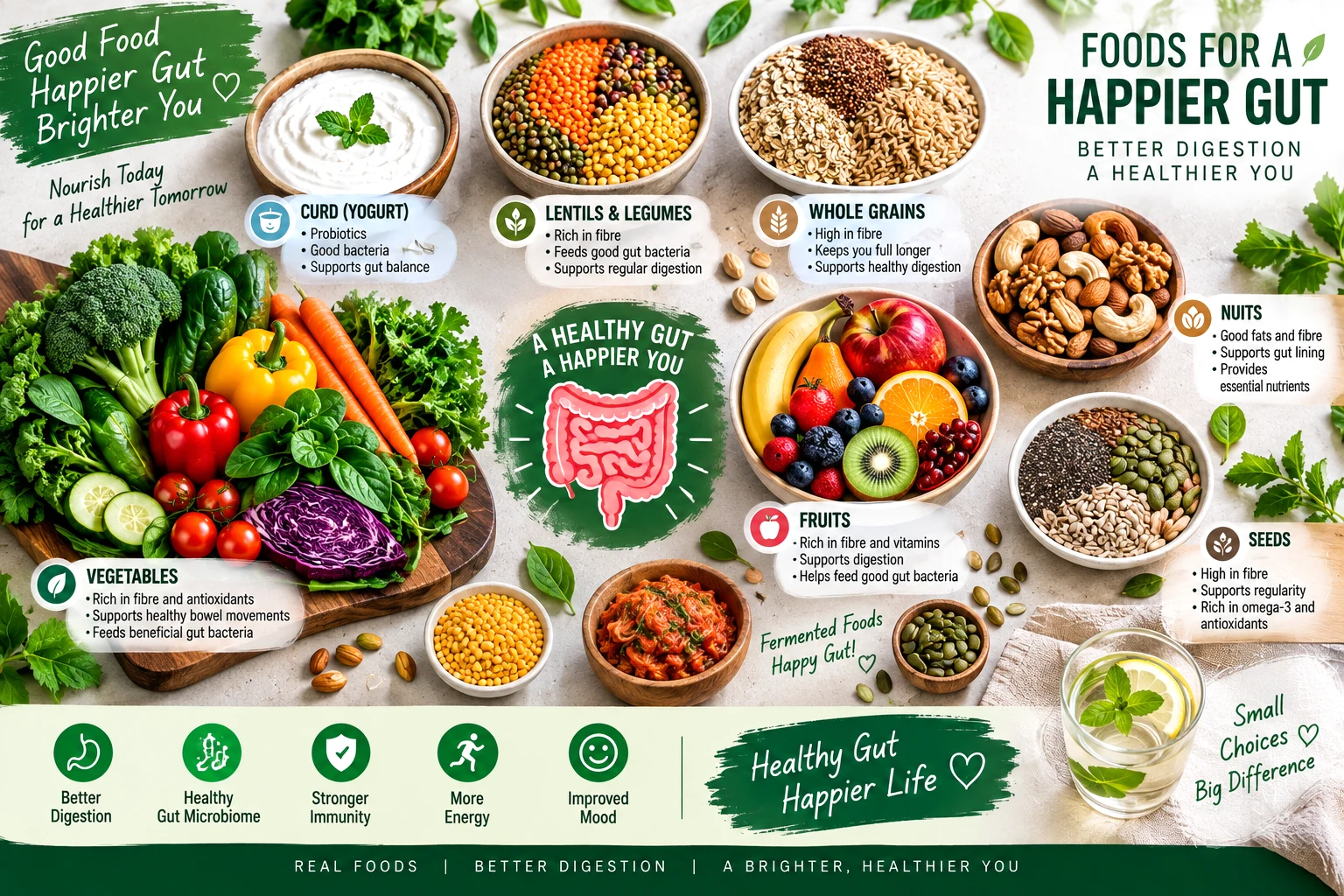
3. Eat More Soluble Fibre
Certain types of dietary fibre can help reduce LDL cholesterol.
Good Indian-friendly sources include:
- oats;
- barley;
- beans;
- rajma;
- chana;
- lentils and dal;
- peas;
- fruits;
- vegetables;
- and seeds.
CDC specifically highlights fibre-rich foods such as oatmeal and beans as useful components of a cholesterol-friendly diet.
Fibre also improves meal quality and can help with weight and glucose control.
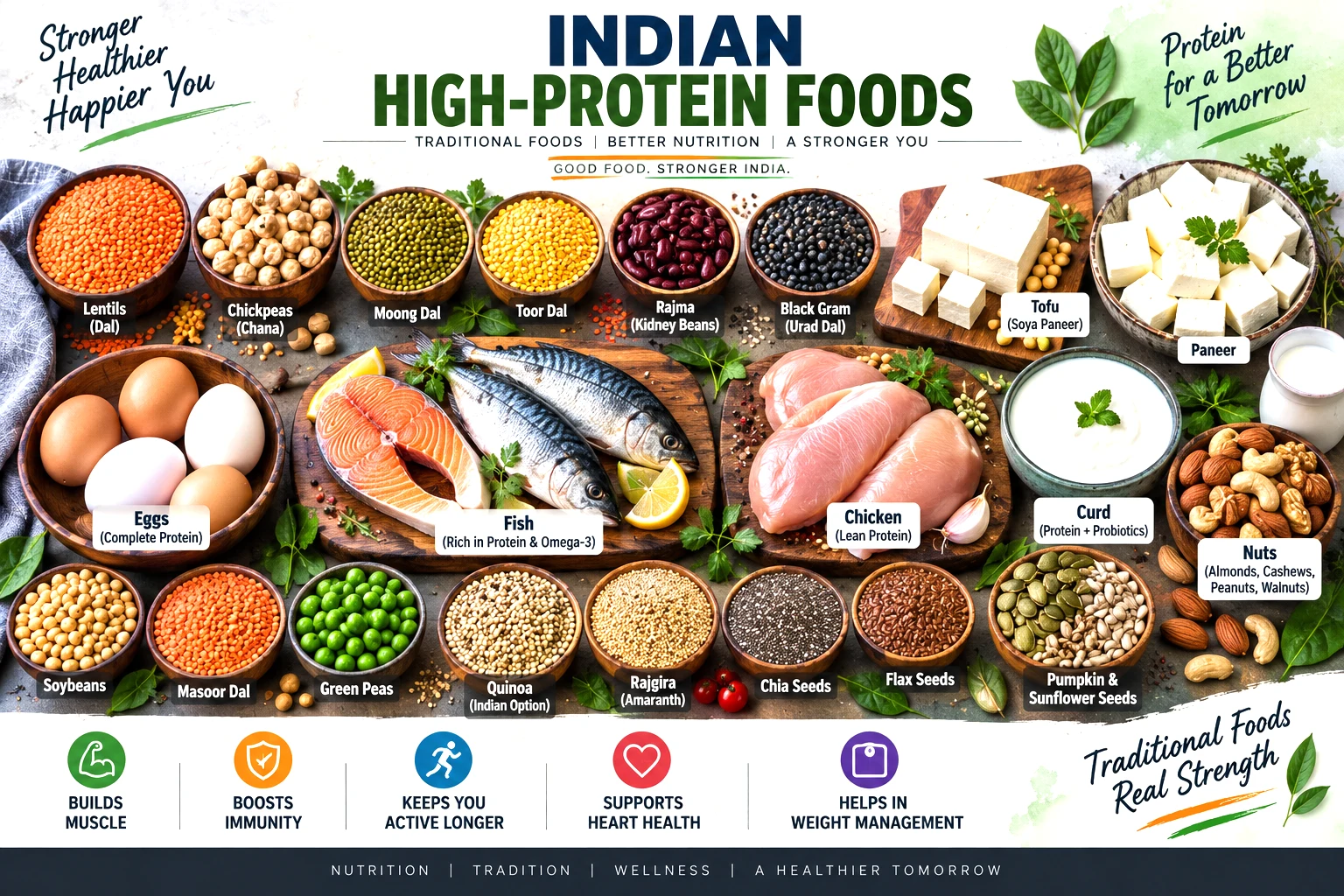
4. Eat More Pulses
Dal, chana, rajma, lobia and other pulses are particularly useful in an Indian heart-friendly diet.
They provide:
- plant protein;
- fibre;
- minerals;
- and relatively little saturated fat when prepared without excessive ghee, butter or cream.
A bowl of dal itself is not usually the problem.
The preparation method matters.
Dal cooked with modest oil and vegetables is very different nutritionally from dal finished with large amounts of butter or ghee.
5. Choose Whole Grains More Often
Current heart-health guidance recommends choosing foods made predominantly from whole grains rather than refined grains.
Useful options can include:
- whole-wheat roti;
- oats;
- barley;
- brown or less-refined rice where practical;
- millets;
- and other minimally processed grains.
That does not mean millet automatically lowers cholesterol.
Millets are still foods providing carbohydrate and calories.
The benefit comes from the overall dietary pattern and from replacing more heavily refined foods—not simply adding “healthy grains” on top of an already excessive diet.
6. Eat Plenty of Vegetables and Fruit
Vegetables and fruit provide fibre, potassium, micronutrients and many other beneficial dietary compounds.
ICMR-NIN's Dietary Guidelines for Indians emphasise diverse diets containing vegetables, fruits, pulses, whole grains, nuts and seeds as part of disease prevention.
For cholesterol management, practical options include:
- leafy greens;
- bhindi;
- beans;
- gourds;
- cabbage;
- cauliflower;
- brinjal;
- tomato;
- carrot;
- guava;
- apple;
- orange;
- papaya;
- and other seasonal produce.
Whole fruit is generally preferable to sugary fruit drinks.
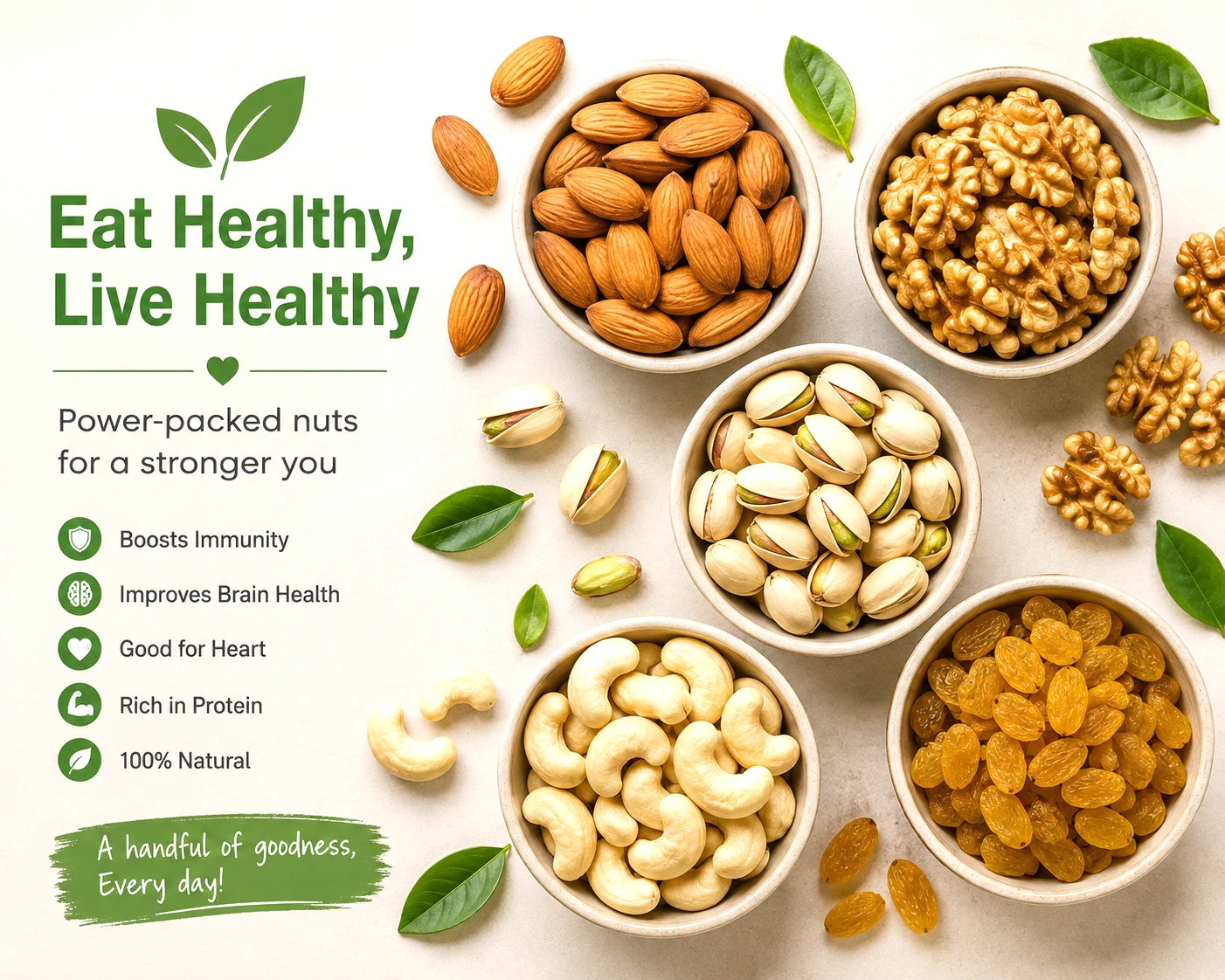
7. Include Nuts and Seeds
Nuts and seeds provide unsaturated fats, fibre and plant protein.
Examples include:
- almonds;
- walnuts;
- peanuts;
- flax seeds;
- sesame seeds;
- chia seeds;
- and other unsalted nuts or seeds.
Portion size still matters because these foods are calorie dense.
A small serving can be useful.
An unlimited bowl of nuts is not necessary for cholesterol reduction.
8. Choose Cooking Oils Sensibly
There is no single magic “cholesterol-free” cooking oil.
ICMR-NIN recommends dietary variety and has supported using different oils or combinations rather than relying excessively on one source.
Common Indian options can include oils such as:
- mustard;
- groundnut;
- rice bran;
- soybean;
- sunflower;
- sesame;
- and other unsaturated vegetable oils.
The practical rule is:
Use appropriate oils in modest quantities and avoid excessive total fat intake.
Repeated deep-frying should also be avoided.
9. What About Ghee?
Ghee is high in saturated fat.
It does not need to be treated as a poison, but large amounts are not a good strategy for someone trying to reduce LDL cholesterol.
If your LDL is elevated, replacing some ghee, butter or other saturated fat with unsaturated fat is generally more consistent with current cardiovascular dietary guidance.
The same applies to claims that adding large quantities of ghee to every meal is automatically “heart healthy.”
10. Does Eating Eggs Raise Cholesterol?
Dietary cholesterol is no longer considered the main dietary target for most people.
The overall food pattern—and especially the amount and type of saturated fat—is more important for cardiovascular risk. Current AHA dietary guidance notes that dietary cholesterol is no longer a primary target for most people.
That does not mean unlimited eggs or animal foods are appropriate for everyone.
How the egg is prepared and what it is eaten with matter.
A boiled egg alongside vegetables and whole grains is nutritionally different from eggs cooked in large quantities of butter and served with processed meat.
11. Reduce Highly Processed Foods
A heart-friendly pattern favours minimally processed foods over ultra-processed foods.
Common foods worth limiting include frequent:
- packaged fried snacks;
- biscuits;
- pastries;
- sugary breakfast cereals;
- fast food;
- deep-fried foods;
- processed meats;
- sugar-sweetened drinks;
- and desserts.
This can also help reduce triglycerides and excessive calorie intake.
12. Reduce Added Sugar If Triglycerides Are High
People often focus only on fat when discussing cholesterol.
But high sugar and refined-carbohydrate intake can contribute to elevated triglycerides.
If triglycerides are high, it is particularly useful to reduce:
- sugary drinks;
- sweets;
- added sugar;
- desserts;
- excessive refined flour;
- and other rapidly absorbed refined carbohydrates.
MedlinePlus specifically recommends limiting sugar and refined foods when triglycerides are elevated.
13. Maintain a Healthy Body Weight
Excess body weight can worsen LDL and triglyceride levels.
CDC notes that overweight and obesity can raise LDL cholesterol and interfere with the body's ability to clear it efficiently.
Even modest, sustainable weight reduction can improve several cardiovascular risk factors when someone is overweight.
Avoid crash diets.
Long-term improvements in meal quality and physical activity are generally more useful.
14. Exercise Regularly
Regular activity can help improve overall cardiovascular health and may help lower LDL and triglycerides while supporting a healthier weight.
A practical starting point for many adults is regular brisk walking combined with muscle-strengthening activity, adjusted to fitness and medical condition.
Someone with known heart disease, significant chest symptoms or major exercise limitations should discuss a safe exercise programme with a clinician.
Exercise should complement healthy eating rather than compensate for a consistently unhealthy diet.
15. Stop Smoking and Tobacco Use
Smoking substantially increases cardiovascular risk.
Even when someone has only mildly abnormal cholesterol, smoking can greatly increase the overall chance of heart attack and stroke.
CDC includes smoking cessation among the major steps for improving cholesterol-related cardiovascular risk.
Quitting tobacco is therefore one of the highest-value changes a person can make.
16. Limit Excess Alcohol
Alcohol can raise triglycerides in some people and adds calories.
Current AHA dietary guidance says people who do not drink should not start drinking for supposed cardiovascular benefit; those who do drink should limit intake.
People with very high triglycerides may receive stricter advice from their clinician.
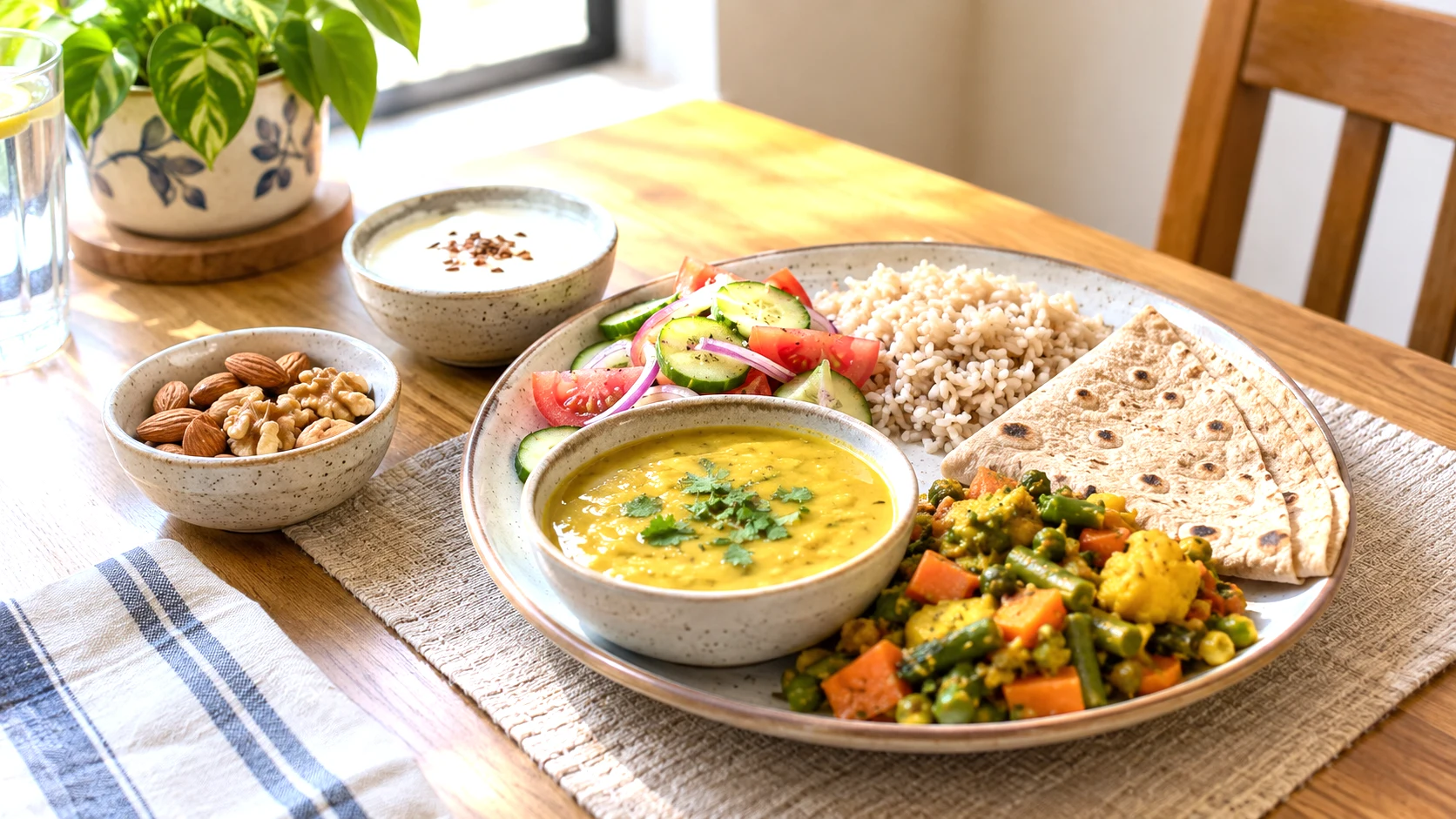
Example of a Cholesterol-Friendly Indian Day
This is only an example, not a prescription.
Breakfast
Possible options:
- vegetable oats;
- idli with sambar and vegetables;
- vegetable poha with a modest amount of oil;
- whole-grain roti with vegetable curry;
- or another minimally processed breakfast with fibre and protein.
Lunch
A balanced plate might include:
- a large vegetable portion;
- dal, chana or rajma;
- moderate rice or roti;
- curd where appropriate;
- and salad.
Snack
Instead of fried namkeen or biscuits:
- whole fruit;
- a small portion of unsalted nuts;
- roasted chana;
- or another minimally processed option.
Dinner
Possible structure:
- vegetables;
- dal, beans, fish, egg or another appropriate protein;
- moderate whole-grain or cereal portion;
- and less fried or creamy food.
The goal is not to eat one “cholesterol-lowering superfood.”
It is to create a dietary pattern that can be maintained for years.
Which Foods Should I Eat More Often?
Useful choices include:
- oats and barley;
- dal and lentils;
- chana and rajma;
- vegetables;
- whole fruit;
- whole grains;
- nuts and seeds;
- fish for people who eat it;
- appropriate low-fat or unsaturated protein sources;
- and unsaturated oils used in reasonable quantities.
Which Foods Should I Reduce?
Particularly if LDL is elevated, reduce frequent or large portions of:
- ghee;
- butter;
- cream;
- fatty meats;
- processed meats;
- vanaspati or trans-fat-containing fats;
- deep-fried foods;
- bakery shortening;
- packaged fried snacks;
- highly processed foods;
- and foods rich in saturated fat.
If triglycerides are also elevated, pay additional attention to:
- sugary drinks;
- sweets;
- alcohol;
- refined carbohydrates;
- and excess calories.
Can Garlic, Lemon Water or Fenugreek Cure High Cholesterol?
No common kitchen ingredient should be promoted as a substitute for evidence-based cholesterol management.
Garlic, methi, lemon water, cinnamon or similar foods can fit within a normal diet, but none should be relied upon to treat substantially elevated LDL or replace prescribed therapy.
The overall dietary pattern matters far more than adding one “cholesterol remedy.”
Do Cholesterol Supplements Work?
Be cautious with supplements marketed specifically for lowering cholesterol.
The 2026 ACC/AHA dyslipidaemia guideline states that dietary supplements are not recommended as a lipid-lowering treatment strategy.
That includes the idea that supplements should routinely replace statins or other prescribed medicines.
Some products can also interact with medicines or contain inconsistent doses.
When Do You Need Cholesterol Medicine?
Lifestyle measures are important for almost everyone, but not everyone can reach an appropriate risk level with lifestyle alone.
Statins remain first-line drug therapy for most people who require medication to lower LDL and cardiovascular risk.
Medication is particularly likely to be considered when:
- LDL is very high;
- there is established heart or vascular disease;
- a person has diabetes or chronic kidney disease with sufficient cardiovascular risk;
- there is a strong family history of premature cardiovascular disease;
- familial hypercholesterolaemia is suspected;
- or overall calculated cardiovascular risk is elevated.
Current 2026 guidance recommends earlier consideration of treatment in some young adults with LDL of 160 mg/dL or higher, particularly when there is a strong family history of premature cardiovascular disease.
What If LDL Is 190 or Higher?
LDL at or above 190 mg/dL is considered very high.
Such a result deserves medical assessment.
Possible explanations include inherited disorders such as familial hypercholesterolaemia.
WHO estimates familial hypercholesterolaemia affects roughly 1 in 250–300 people and is frequently undiagnosed.
If very high LDL runs in the family—especially with heart attacks or strokes at unusually young ages—family members may also need testing.
Should Everyone Aim for LDL Below 100?
Below 100 mg/dL is a useful general reference for many healthy adults.
But cholesterol treatment is increasingly risk-based rather than one-number-fits-all.
For example:
- a lower-risk healthy adult may not need the same target as someone who has already had a heart attack;
- people with established cardiovascular disease often require much more aggressive LDL lowering;
- many very-high-risk patients now have an LDL goal below 55 mg/dL under the 2026 ACC/AHA guideline.
This is why you should not compare your LDL target blindly with another person's.
What Is Non-HDL Cholesterol?
Non-HDL cholesterol represents all cholesterol carried by potentially atherogenic particles.
It is calculated as:
Total cholesterol − HDL cholesterol
For many healthy adults, a general reference value is below 130 mg/dL.
Non-HDL cholesterol can be particularly useful when triglycerides are elevated.
What Is Lipoprotein(a)?
Lipoprotein(a), usually written Lp(a), is a genetically influenced cholesterol-containing particle associated with cardiovascular risk.
Unlike LDL, lifestyle changes usually have relatively little effect on Lp(a).
The 2026 ACC/AHA guideline recommends measuring Lp(a) at least once in a lifetime to help identify people with inherited additional cardiovascular risk.
This is particularly relevant when there is unexplained premature heart disease in a family.
Do You Need to Fast Before a Cholesterol Test?
A lipid profile measures:
- total cholesterol;
- LDL;
- HDL;
- and triglycerides.
Whether fasting is necessary depends on the reason for testing and your clinician or laboratory's instructions.
In some situations a non-fasting lipid profile is sufficient, while fasting testing may be requested when triglycerides require more precise assessment or when previous results need clarification.
Follow the instructions provided with your test rather than fasting automatically.
How Often Should Cholesterol Be Tested?
Testing frequency depends on:
- age;
- family history;
- previous cholesterol results;
- diabetes;
- blood pressure;
- smoking;
- kidney disease;
- heart disease;
- and whether cholesterol treatment is being used.
MedlinePlus notes that adults with normal levels may commonly be retested at intervals such as around five years, while people with abnormal cholesterol or cardiovascular risk factors require more frequent monitoring.
Your clinician may recommend a different schedule based on risk.
High Cholesterol in Young Adults
Young age does not completely protect against cholesterol-related risk.
The 2026 guideline places greater emphasis on lifetime exposure to elevated LDL, rather than waiting until middle or older age to intervene.
Young adults with:
- LDL of 160 mg/dL or higher;
- LDL approaching or above 190 mg/dL;
- strong family history of early heart attacks;
- diabetes;
- or other major cardiovascular risk factors
should discuss their results with a healthcare professional.
When Should You See a Doctor?
Arrange medical assessment if:
- LDL is markedly elevated;
- LDL is 190 mg/dL or higher;
- triglycerides reach 500 mg/dL or higher;
- you have diabetes, kidney disease or cardiovascular disease;
- a parent or sibling had a heart attack or stroke unusually young;
- several family members have very high cholesterol;
- lifestyle changes have not sufficiently improved your results;
- or you are unsure whether medication is appropriate.
Seek urgent medical care for symptoms such as chest pain, severe breathlessness, sudden one-sided weakness, facial drooping or difficulty speaking.
Those symptoms require urgent evaluation and should not be attributed simply to “high cholesterol.”
Simple Indian Checklist to Lower Cholesterol
For most people, the fundamentals are:
- eat more vegetables and fruit;
- include dal, pulses, beans and other fibre-rich foods;
- choose whole grains more often;
- include nuts and seeds in reasonable portions;
- reduce ghee, butter and other saturated fats;
- avoid trans fats;
- use cooking oil moderately;
- cut sugary drinks and refined foods, especially if triglycerides are high;
- reduce ultra-processed and fried foods;
- maintain a healthy weight;
- exercise regularly;
- avoid tobacco;
- limit excess alcohol;
- check cholesterol periodically;
- and take prescribed medication consistently when needed.
These changes work best as a long-term pattern, not as a seven-day “cholesterol detox.”
The Most Important Numbers to Remember
For general adult reference:
- Total cholesterol: below 200 mg/dL
- LDL: below 100 mg/dL
- Triglycerides: below 150 mg/dL
- Non-HDL: below 130 mg/dL
- HDL: 60 mg/dL or higher is generally favourable
But remember:
Your personal LDL goal may be lower.
Someone at very high cardiovascular risk may need LDL below 55 mg/dL, while another person may require a different treatment strategy based on their overall risk profile.
The goal is not simply to make one laboratory number look better.
It is to reduce the long-term risk of heart attack, stroke and other cardiovascular disease.
Frequently Asked Questions
What is a normal cholesterol level?
For adults, total cholesterol below 200 mg/dL is commonly used as a healthy general reference. LDL below 100 mg/dL and triglycerides below 150 mg/dL are also desirable for many adults.
What is the normal LDL cholesterol range?
LDL below 100 mg/dL is generally considered optimal. LDL of 160–189 mg/dL is high, and 190 mg/dL or above is very high. Your individual treatment target may be lower if you have significant cardiovascular risk.
What is a good HDL level?
HDL around 60 mg/dL or higher is generally favourable. HDL below 40 mg/dL in men or below 50 mg/dL in women is considered low.
What foods lower cholesterol naturally?
A cholesterol-friendly dietary pattern includes fibre-rich foods such as oats, barley, beans, dal, chana, rajma, vegetables, fruit, whole grains, nuts and seeds, while replacing saturated fats with unsaturated fats.
Is ghee good or bad for cholesterol?
Ghee contains substantial saturated fat. If LDL is high, using large amounts is not advisable. Current heart-health guidance recommends replacing saturated-fat sources with unsaturated fats rather than treating ghee as a cholesterol-lowering food.
Can walking reduce cholesterol?
Regular physical activity can improve cardiovascular health, support weight management and help improve cholesterol and triglyceride levels. It works best alongside an appropriate diet and other lifestyle measures.
Can high cholesterol be cured without medicine?
Some people can significantly improve mild cholesterol abnormalities through lifestyle changes. Others—particularly those with very high LDL, familial hypercholesterolaemia or high cardiovascular risk—need medication as well. Statins remain first-line therapy when cholesterol-lowering medicine is indicated.
What should I do if my LDL is 190?
An LDL of 190 mg/dL or above is very high and deserves medical assessment. Do not rely solely on diet or home remedies; your clinician may also consider inherited cholesterol disorders and appropriate medication.
Bottom Line
High cholesterol usually causes no symptoms, yet elevated LDL increases long-term risk of heart attack and stroke. Focus on lowering LDL through reduced saturated fat, more soluble fibre and pulses, regular exercise and weight management.
Lifestyle changes are powerful, but many people—especially those with very high LDL or established heart disease—still need prescribed medication. Check your numbers regularly and interpret them with a clinician based on overall cardiovascular risk.
Key Takeaway
LDL is the key number — aim lower when risk is high.
Cut saturated fat; eat more fibre, pulses and vegetables.
Exercise, maintain weight and avoid tobacco.
Medicine may still be needed for very high LDL or high risk.









0 Comments