Navratri Fasting Health Guide: What to Eat, Who Should Avoid Fasting and Diabetes Tips
Navratri fasting can change normal meal timing and food choices. Here is a practical guide to balanced fasting meals, hydration and precautions for people with diabetes, high blood pressure or pregnancy.
Sharad Navratri begins on Sunday, October 11, 2026, and for millions of people across India the festival will also mean changes to normal eating patterns.
Some people avoid grains, onion and garlic. Others eat only foods traditionally permitted during vrat. Some observe one substantial meal a day, while others consume fruit, milk, nuts and lighter meals at intervals.
There is no single Navratri fasting pattern followed across India.
That is important from a health perspective because a fast based on fruit, vegetables, dairy and nuts is very different from one built mainly around fried potatoes, sabudana dishes, sweets and long periods without fluids or food.
For a healthy adult, a carefully planned religious fast may be manageable. But fasting is not automatically healthy simply because certain foods are excluded.
The more useful goal is to respect your religious practice while still giving your body adequate fluids, energy and nutrients.
People with diabetes, high blood pressure, pregnancy or other medical conditions need additional caution.
Recommended Reading
Related Stories & In-Depth Guides
Curated editorial perspectives matching this topic.
What is a normal blood pressure? See an easy BP chart, understand 120/80, 130/80 and 140/90 readings, learn hypertension symptoms, Indian diet tips, correct home measurement and when high BP needs urgent medical care.
On World Mental Health Day 2026, understand what burnout actually means, seven warning signs worth noticing, when work stress may need professional attention, and where people in India can seek confidential mental-health support.
Most importantly, anyone with diabetes, hypertension or pregnancy should discuss fasting with their doctor or qualified healthcare professional before making a significant change to normal meals or medicines.
Key Takeaways
Build meals around variety: vegetables, fruit, permitted grains/flours, dairy, nuts and seeds.
Avoid turning every meal into fried starch and sweets.
People with diabetes, hypertension or pregnancy must consult a doctor before fasting.
Official guidance: people with diabetes on insulin should not fast; others need medical advice on medicines.
Hydration and portion control matter as much as food choices.
The Health Principle Behind a Better Navratri Fast
The ICMR-National Institute of Nutrition’s Dietary Guidelines for Indians emphasise dietary variety, vegetables and fruits, nuts and seeds, and limiting foods high in added sugar, fat and salt.
Those principles remain useful even when normal grains and several everyday foods are temporarily excluded for religious reasons.
The objective should not be to reproduce a regular diet exactly.
Instead, try to avoid turning every fasting meal into a combination of:
deep-fried food,
large quantities of starch,
added sugar,
excessive salt,
and very little protein or vegetables.
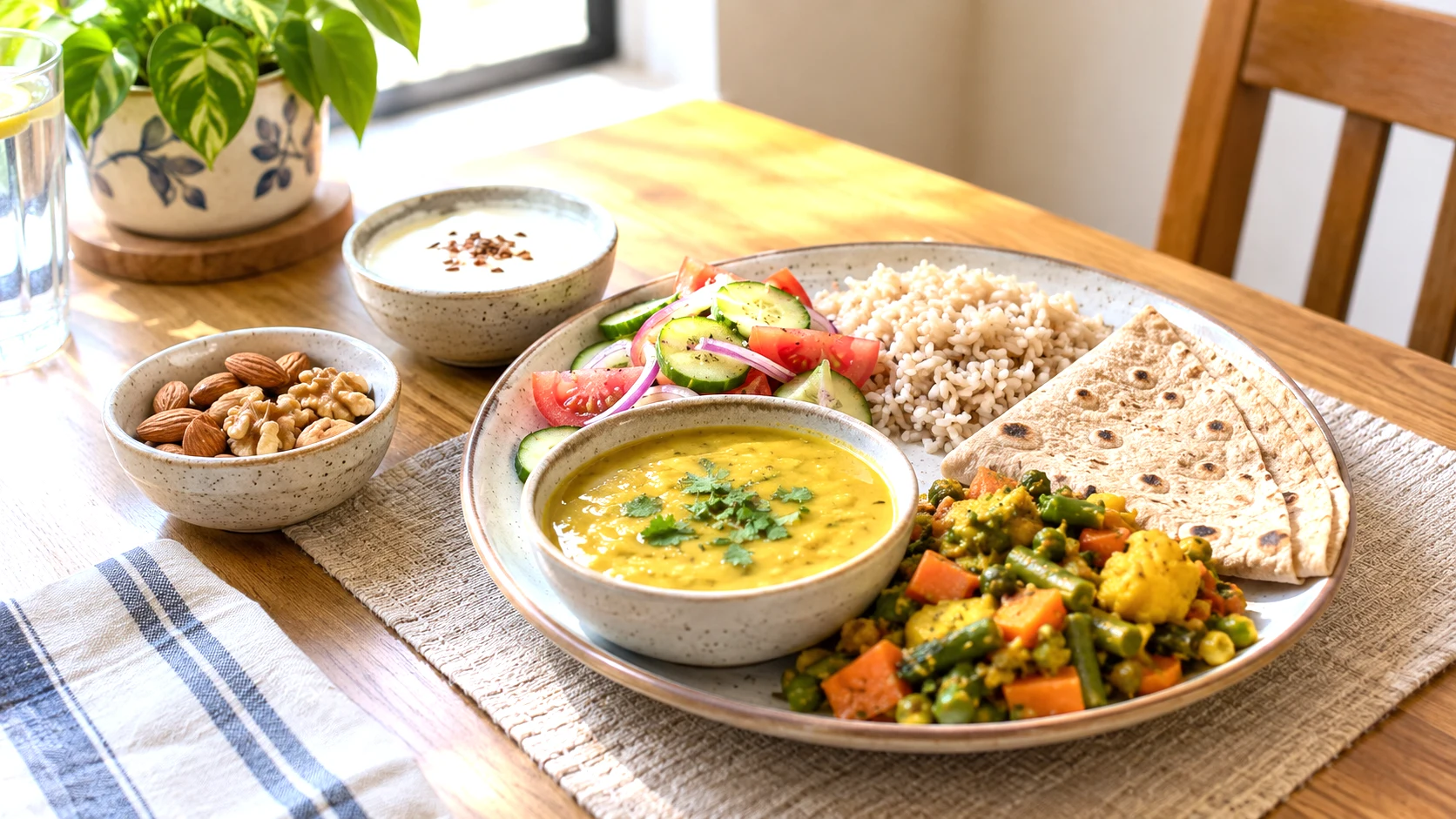
A Navratri plate can still contain variety.
Depending on the religious practices followed in your household, permitted options may include vegetables, fruit, curd, milk, paneer, nuts, seeds, amaranth or rajgira, buckwheat or kuttu, water chestnut flour or singhara atta, sama or barnyard millet, potatoes and sweet potatoes.
Not every family permits exactly the same foods, so cultural and religious practices should determine which of these are appropriate.
What to Eat During Navratri Fasting
1. Build meals around more than one food group
A common fasting mistake is relying almost entirely on potatoes, sabudana or fried flour-based foods.
These foods can be part of a fast, but balance them with other permitted foods.
For example, a meal might include:
kuttu or rajgira preparation,
vegetables,
plain curd,
and a small portion of nuts or seeds.
Another option could be:
sama rice,
vegetable curry,
curd or paneer,
and fruit.
The exact foods can change according to household customs.
The important point is variety rather than dependence on one starch.
2. Include vegetables wherever your fasting tradition permits them
Vegetables can provide fibre, vitamins, minerals and volume to meals.
Bottle gourd, pumpkin, cucumber, tomato, spinach, carrots and other permitted vegetables can help make fasting meals more balanced.
Preparation matters.
A vegetable cooked with moderate oil is nutritionally very different from the same vegetable turned into a deep-fried snack.
Boiling, roasting, steaming, sautéing or pressure-cooking can keep meals simpler.
3. Prefer whole fruit to sugary fruit drinks
Fruit is convenient during fasting because it requires little preparation and can contribute fluids, fibre and micronutrients.
Whole fruit is generally preferable to juice.
Juicing removes much of the structure and fibre that slows eating, and it becomes easier to consume the equivalent of several fruits quickly.
Packaged fruit drinks may also contain added sugars.
Water should remain the main drink for most people unless a healthcare professional has advised fluid restriction.
4. Use nuts and seeds in sensible portions
Nuts and seeds can add protein, healthy fats and micronutrients to a fasting diet.
Options may include almonds, walnuts, peanuts or seeds where permitted by tradition.
But they are energy-dense.
Eating a moderate portion is different from continuously snacking on large quantities of fried or salted nuts throughout the day.
Unsalted or lightly prepared versions are generally a simpler option.
5. Use milk, curd or paneer if you tolerate dairy
For people who consume dairy during Navratri, plain curd, milk or paneer can help add protein to a meal.
Plain curd can also be paired with vegetables, fruit or permitted grains.
Sweetened flavoured yogurt, milkshakes or desserts should not automatically be treated as healthy fasting foods merely because they contain milk.
Added sugar still counts.
People who do not tolerate dairy should choose alternatives that fit both their health needs and religious practice.
Be Careful With the “Fasting Food = Healthy Food” Assumption
Many commercial foods marketed for Navratri are technically compatible with fasting customs but are not necessarily nutritionally balanced.
A plate of fried potato chips, sabudana vada, sweetened lassi and dessert can contain substantial amounts of refined starch, fat, sugar and salt.
The fact that a food is labelled “vrat” does not change that.
Likewise, replacing regular salt with sendha namak does not mean salt intake becomes unlimited.
People with high blood pressure should be particularly careful about excessive salt regardless of which type is used.
What About Sabudana?
Sabudana is a familiar Navratri ingredient and can certainly be part of a fasting meal where permitted.
The problem usually comes from portion size and preparation.
A large serving of sabudana combined with potatoes, generous oil and very few vegetables or protein-rich foods can produce a meal dominated by starch.
A more balanced approach is to keep the portion moderate and combine it with permitted vegetables, peanuts, curd or another suitable accompaniment.
People with diabetes should not assume that sabudana is automatically suitable simply because it is commonly eaten during fasting.
Its quantity and the rest of the meal matter, and individual diabetes treatment plans differ.
Fried Foods: Keep Them Occasional
Kuttu puri, singhara puri, sabudana vada, fried potatoes and packaged fasting snacks are common festival foods.
They do not have to disappear completely for a healthy person, but making them the foundation of every fasting meal can result in very high fat and calorie intake.
Possible alternatives include:
kuttu roti instead of puri,
roasted makhana instead of deep-fried snacks,
boiled or roasted potato instead of chips,
vegetable-based dishes,
plain curd,
fruit,
and modest portions of nuts.
The aim is not dietary perfection.
It is simply to prevent nine days of fasting from becoming nine days of predominantly fried food.
Hydration Matters
People sometimes focus so heavily on what they are allowed to eat that they forget fluids.
Unless your particular religious observance restricts water, drink regularly through the day.
Needs vary according to body size, weather, physical activity, age and medical conditions.
Hot weather, exercise, fever, vomiting or diarrhoea can increase fluid loss.
Signs that deserve attention include severe thirst, dizziness, unusual weakness, confusion, very dark urine or markedly reduced urination.
Anyone with heart disease, kidney disease or another condition requiring a doctor-prescribed fluid limit should follow that medical advice instead of generic hydration recommendations.
Diabetes and Navratri Fasting: Extra Caution Is Essential
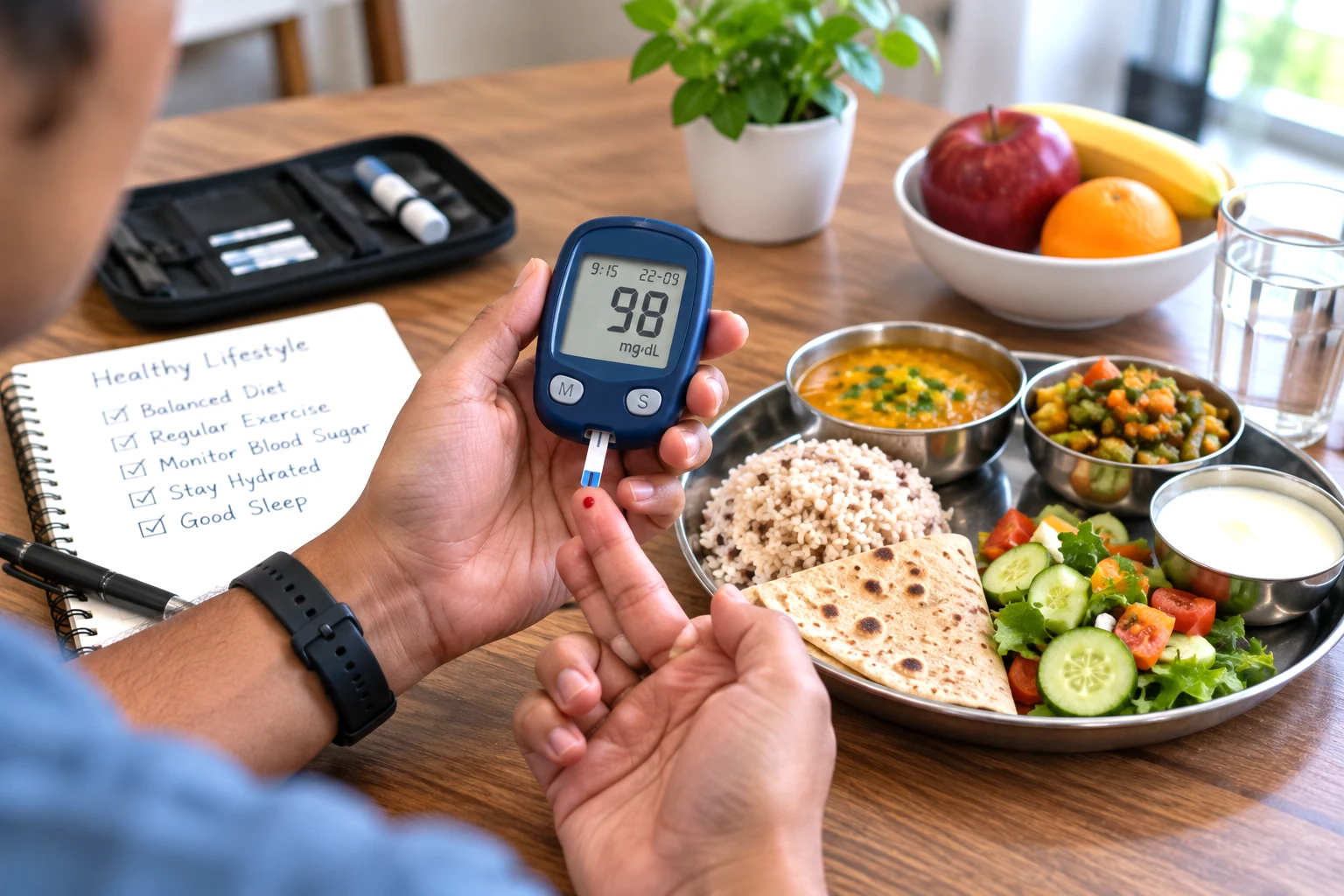
Diabetes is one area where prolonged fasting should not be treated casually.
India’s Directorate General of Health Services, under the Ministry of Health and Family Welfare, specifically addresses prolonged fasting during occasions such as Navratri.
Its guidance states that people with diabetes who use insulin should not fast. It also advises that people with diabetes should, where possible, refrain from prolonged fasting and that people with type 2 diabetes who take medication should consult their physician about medicine doses and timing.
This matters because changing meal timing without changing a treatment plan can create problems in either direction.
Blood glucose can fall too low in some circumstances or become excessively high in others.
Dehydration can add further risk.
Do not change diabetes medicines on your own
A medicine or insulin schedule designed around breakfast, lunch and dinner may not automatically fit a fasting pattern.
Do not skip, reduce, delay or rearrange diabetes medicines solely on the basis of advice from relatives, social media, online videos or general health articles.
Talk to the clinician managing your diabetes.
The safest plan depends on factors including:
type of diabetes,
medicines used,
insulin use,
usual blood-glucose control,
kidney function,
other illnesses,
age,
previous episodes of low blood sugar,
and the type and duration of fast.
Know symptoms that require action
People with diabetes should be familiar with the symptoms of low or high blood glucose that their healthcare professional has discussed with them.
Possible warning symptoms can include unusual sweating, trembling, dizziness, confusion, severe weakness, excessive thirst, frequent urination, vomiting or feeling significantly unwell.
Check glucose as directed by your healthcare professional and seek medical help if abnormal readings or concerning symptoms occur.
Religious fasting should never take priority over an acute medical emergency.
High Blood Pressure: Do Not Forget Salt and Medicines
People with hypertension sometimes focus only on avoiding normal table salt during Navratri.
That can be misleading.
Rock salt or sendha namak still contributes sodium.
Using large amounts simply because it is permitted during fasting can work against a salt-conscious diet.
Packaged vrat snacks can also contain substantial salt.
People taking blood-pressure medicine should continue their prescribed treatment unless their doctor specifically advises a change.
If fasting substantially changes when you eat or drink, ask your doctor or pharmacist whether medicine timing needs adjustment.
Do not stop blood-pressure medicine simply because you are fasting.
Pregnancy: Speak to Your Doctor Before Fasting
Pregnancy increases nutritional requirements and changes how the body responds to prolonged periods without food.
There is no single fasting recommendation suitable for every pregnant woman.
WHO guidance advises that the decision to fast during pregnancy should be made individually in consultation with a healthcare provider.
This is particularly important for women with:
gestational diabetes,
pre-existing diabetes,
high blood pressure,
anaemia,
significant nausea or vomiting,
poor weight gain,
multiple pregnancy,
or another pregnancy complication.
A pregnant woman should not assume that feeling well at the start of a fast guarantees that fasting is appropriate throughout pregnancy.
Speak with the obstetrician or healthcare professional overseeing the pregnancy before starting.
The same principle applies to breastfeeding women if fasting significantly restricts food or fluids.
Other People Who Should Be Particularly Careful
Medical advice may also be appropriate before prolonged fasting for:
older adults who are frail,
people with kidney disease,
people with liver disease,
people recovering from significant illness or surgery,
people taking medicines that need to be taken with food,
children or adolescents,
people with a history of recurrent fainting or low blood sugar,
and anyone whose doctor has prescribed a specific diet.
The question is not whether fasting is “good” or “bad” in general.
Risk depends on the individual.
A Practical Navratri Fasting Day
There is no universal meal plan, but the following example shows how permitted foods might be combined more sensibly.
Morning
Water
A piece of whole fruit
Plain milk or curd if permitted and tolerated
A modest portion of nuts
Main meal
Kuttu, rajgira or sama preparation according to your tradition
A generous vegetable dish
Plain curd or paneer
Small quantity of potato or sweet potato rather than making it the entire meal
Later snack if needed
Fruit
Roasted makhana or a small portion of nuts
Water
Evening meal
Vegetable-based dish
A permitted grain or flour preparation
Curd, milk or another suitable protein-containing food
The example is not a medical prescription.
People with diabetes, kidney disease, pregnancy or other medical conditions may require a completely different plan.
Five Simple Navratri Fasting Dos
Choose a variety of permitted foods rather than depending on potatoes or sabudana alone.
Include vegetables, fruit, nuts, seeds and suitable protein-containing foods where your tradition allows them.
Drink water regularly if your religious practice permits fluids and you do not have a medical fluid restriction.
Keep deep-fried foods, sweets and packaged vrat snacks occasional rather than making them everyday staples.
Eat reasonable portions when ending a long gap between meals instead of compensating with a very large feast.
Five Common Mistakes to Avoid
Do not assume every vrat-labelled packaged food is healthy.
Do not treat fruit juice as equivalent to whole fruit.
Do not use unlimited sendha namak because regular salt is excluded.
Do not replace ordinary meals with continuous snacking on fried potatoes, sweets and nuts.
Most importantly, do not change diabetes, blood-pressure or other prescription medicines without professional advice.
When Should You Stop Fasting and Seek Medical Help?
Do not try to push through severe symptoms simply to complete a fast.
Urgent assessment may be needed for symptoms such as:
fainting,
confusion,
severe weakness,
persistent vomiting,
difficulty breathing,
chest pain,
significant dehydration,
or concerning blood-glucose readings in someone with diabetes.
Pregnant women should also contact their maternity healthcare team if they experience worrying symptoms or have concerns about fetal movement, hydration or their ability to eat and drink adequately.
Navratri Fasting Is About the Pattern, Not One “Superfood”
There is no special ingredient that makes fasting automatically healthy.
Coconut water is not a cure.
Makhana is not a complete diet.
Fruit is not unlimited simply because it is natural.
Kuttu is not automatically suitable for every person with diabetes.
And removing ordinary grains does not automatically make a meal nutritionally superior.
Health depends on the overall pattern: what you eat, how much you eat, how foods are prepared, whether you stay appropriately hydrated and whether the fasting pattern is compatible with your medical needs.
The ICMR-NIN approach to healthy eating provides a useful principle even during a festival: variety matters, minimally processed foods generally deserve priority, and excessive added sugar, salt and high-fat processed foods should be limited.
The Bottom Line
Navratri fasting can be observed without turning the festival into either a crash diet or a nine-day cycle of fried snacks and sweets.
For otherwise healthy adults, focus on variety among the foods permitted by your tradition: vegetables, whole fruit, suitable fasting grains or flours, dairy where tolerated, nuts, seeds and adequate fluids.
Keep fried foods, sweets and heavily processed fasting products in moderation.
And treat medical conditions differently from general wellness advice.
If you have diabetes, high blood pressure, are pregnant, take medicines that depend on meal timing, or have another significant medical condition, check with your doctor or qualified healthcare professional before beginning a prolonged fast.
For people with diabetes in particular, official Indian health guidance is clear that prolonged fasting requires caution. Those using insulin should not fast, and people with type 2 diabetes receiving treatment should speak with their physician before changing meal patterns or medicine timing.
A religious fast should support spiritual observance without putting health unnecessarily at risk.
Health Disclaimer: This article provides general health and nutrition information and is not a substitute for diagnosis, treatment or individual medical advice. People with diabetes, hypertension, pregnancy or other medical conditions should consult an appropriate healthcare professional before undertaking prolonged fasting or changing medication, diet or fluid intake.
Key Takeaway
Variety over starch and fried food is the key to a healthier Navratri fast.
People with diabetes (especially on insulin), hypertension or pregnancy must seek medical advice first.
Hydration, portion control and medicine timing matter as much as food choices.
The Rajatheertha Team publishes news, explainers, guides and updates across India and the world. Our coverage follows Rajatheertha's editorial, verification and corrections standards.
What is a normal blood sugar level? See fasting, 2-hour glucose and HbA1c ranges for normal, prediabetes and diabetes, plus testing guidance and practical Indian diet tips.
Short on time and trying to eat better without overspending? This practical meal-prep guide explains weekly planning, batch cooking, budget shopping, balanced plates and easy breakfast, lunch and dinner ideas.
Better digestion often starts with ordinary habits: more fiber-rich whole foods, enough fluids, selected fermented foods, regular meals, slower eating and movement. Here is what current evidence supports—and what gut-health trends often exaggerate.
Learn normal cholesterol, LDL, HDL and triglyceride levels, which foods can help lower LDL, practical Indian diet swaps, exercise tips and when cholesterol medicine may be needed.
Health/ Air Pollution & Respiratory Health12 min read
Delhi's air usually worsens sharply as October progresses. Here is what AQI actually means, who faces greater health risk, when an N95 may help, how to reduce indoor exposure, and when respiratory symptoms need medical attention
Almonds, walnuts, pistachios, cashews and raisins all provide different nutrients. Here’s what each one contains, how much to eat, whether soaking is necessary, the best ways to include them in your diet, and what to watch out for.










0 Comments