Pope Leo XIV Lung Cancer: What His Diagnosis, Surgery and Recovery Mean
Pope Leo XIV is recovering after surgery to remove the lower lobe of his right lung following a diagnosis of lung adenocarcinoma. Here is what the Vatican has confirmed, what remains unknown and why the case has renewed attention on how this common form of lung cancer is treated.
Editorial illustration representing Pope Leo XIV lung cancer diagnosis and recovery
Table of Contents (12 sections)
Pope Leo XIV is recovering in a Rome hospital after surgery confirmed that a suspicious growth in his right lung was lung adenocarcinoma, placing an unusually public spotlight on both the Pope’s health and a form of cancer that doctors treat very differently depending on how early it is detected and whether it has spread.
The Vatican has said surgeons removed the lower lobe of the Pope’s right lung at Rome’s Agostino Gemelli University Policlinic on October 13. The operation itself lasted about 90 minutes and was completed without reported complications.
By October 15, the Holy See said the 71-year-old pontiff had spent another good night in hospital, had got out of bed and eaten breakfast. Doctors said blood tests and a chest X-ray showed results within the expected range after the operation. He had also begun walking in his room, resumed normal eating and undergone respiratory physiotherapy.
The Vatican additionally said Pope Leo had concelebrated Mass while recovering at Gemelli.
Those are encouraging postoperative details, but they are not the same thing as a final cancer prognosis.
One of the most important facts about the case remains unknown publicly: the Vatican has not announced the formal stage of Pope Leo’s cancer.
That distinction matters because the stage, tumour characteristics, lymph-node findings and final pathology will help determine whether surgery is considered sufficient or whether doctors recommend additional treatment.
Recommended Reading
Related Stories & In-Depth Guides
Curated editorial perspectives matching this topic.
World Spine Day 2026 is a reminder that back pain is common but not always caused by one identifiable spinal problem. Here are seven possible causes or contributors, practical posture and movement habits, and the warning signs that need medical attention.
Always feeling tired even after sleeping? Learn common causes of constant fatigue, including poor sleep, anaemia, thyroid problems, diabetes, vitamin deficiencies and sleep apnoea, plus when to get tested or see a doctor.
Key Takeaways
Lower lobe of right lung removed on Oct 13; surgery lasted ~90 minutes, no complications reported.
Diagnosis confirmed as lung adenocarcinoma (a non-small-cell lung cancer).
Formal cancer stage, lymph-node status and need for further treatment still not announced.
Public engagements cancelled through Oct 20; November South America trip still listed but provisional.
What exactly has been confirmed?
The sequence announced publicly is relatively clear.
Doctors had identified a suspicious lung nodule during medical examinations before Pope Leo entered hospital. He was admitted to Gemelli on October 13 for a planned operation.
During surgery, tissue examination confirmed lung adenocarcinoma, matching the diagnosis doctors had suspected from the preoperative tests.
The surgical team removed the lower lobe of his right lung using a video-assisted technique. The stated goal was a radical resection — in practical terms, removing the affected area with the intention of taking out the cancerous tissue.
Pope Leo woke normally after surgery and returned to his hospital room after postoperative observation.
The Vatican initially indicated that he was expected to remain in hospital for about a week, and no change to that expected hospitalisation period had been announced by the morning of October 15.
What the Vatican has not yet announced is equally important.
There has been no public confirmation of the tumour’s exact size, its final pathological stage, whether nearby lymph nodes contain cancer cells, whether surgical margins are clear or whether additional cancer treatment will be recommended.
Those missing details are why responsible reporting should avoid declaring the Pope “cured,” assigning him a precise survival outlook or presenting his disease as definitively early-stage until the medical team releases more information.
What is pulmonary adenocarcinoma?
Pulmonary adenocarcinoma, commonly called lung adenocarcinoma, is a form of non-small-cell lung cancer.
Non-small-cell lung cancers make up the major group of lung cancers, and adenocarcinoma is one of their principal subtypes.
The disease develops from cells in lung tissue that have acquired changes allowing them to grow uncontrollably. Adenocarcinomas frequently develop toward the outer regions of the lung, although the location differs between patients.
An important public-health point is that lung cancer should not be understood only as a disease affecting smokers.
Smoking remains the dominant preventable risk factor for lung cancer overall, but adenocarcinoma can also occur in people who have never smoked. Other risk factors can include environmental and occupational exposures, second-hand smoke, radon and biological or genetic factors.
The diagnosis of a prominent global religious leader has consequently renewed interest in a question oncologists regularly encounter: how can lung cancer arise, and how is it treated, when every patient’s disease can behave differently?
Why was part of Pope Leo’s lung removed?
The right lung contains three lobes. Pope Leo’s surgeons removed the lower one.
An operation to remove an entire lobe is known as a lobectomy.
For appropriately selected patients whose non-small-cell lung cancer appears removable, surgery can be an important potentially curative treatment. The precise operation depends on factors including tumour size, location, lung function and evidence of spread.
Some patients undergo removal of a smaller portion of lung, while others require removal of an entire lobe. More extensive surgery can occasionally be necessary depending on the cancer.
The Vatican said Pope Leo’s procedure was video-assisted. Minimally invasive video-assisted thoracic surgery allows surgeons to operate through smaller openings rather than relying solely on a traditional large open-chest incision.
Such techniques can offer recovery advantages in suitable patients, although the choice of procedure depends on the individual case and the surgical team.
The fact that surgeons were able to perform a lobectomy does not, by itself, establish the Pope’s final cancer stage.
That can only be determined after doctors combine the operative findings with pathology and other staging information.
Why the final pathology report matters
Cancer surgery has two closely connected purposes: treating the disease and providing detailed tissue that can reveal more about it.
Pathologists can examine the removed tumour and surrounding tissue to determine characteristics that imaging alone cannot always establish with certainty.
Among the questions doctors may need to answer are how large the invasive tumour is, whether cancer is present in lymph nodes, whether the edges of the removed tissue are free of cancer and whether there are other features associated with a higher risk of recurrence.
For non-small-cell lung cancer, staging broadly reflects how far the cancer has spread.
A tumour confined to the lung without lymph-node involvement is very different clinically from cancer that has reached nearby lymph nodes or distant organs.
This is why the absence of a publicly announced stage is not a minor omission. It prevents reliable conclusions about prognosis and about whether Pope Leo is likely to need further cancer-directed treatment.
Could surgery be the only treatment needed?
Possibly, but it is too early to say that in Pope Leo’s individual case.
For some patients with completely removed early-stage non-small-cell lung cancer, surgery can be the principal treatment. In other cases, doctors may recommend therapy after surgery to reduce the risk of cancer returning.
This is called adjuvant treatment.
Depending on the stage and biological characteristics of a tumour, modern non-small-cell lung cancer treatment can include chemotherapy, immunotherapy, targeted medicines or, in selected circumstances, radiation therapy.
Not every patient requires these treatments.
Modern lung-cancer care has increasingly moved away from treating all tumours of the same organ as though they were biologically identical.
Doctors can examine some tumours for molecular changes or biomarkers that help determine whether particular targeted drugs or immunotherapies are appropriate.
For that reason, a headline saying that a patient has “lung adenocarcinoma” provides only part of the medical picture.
Until Pope Leo’s doctors or the Vatican disclose the relevant findings, reporting should not predict whether he will receive chemotherapy, immunotherapy, targeted therapy or no additional systemic treatment.
How is Pope Leo recovering after the operation?
The updates so far describe a normal early postoperative course.
Doctors reported on October 14 that his scheduled blood tests and chest X-ray were compatible with the expected recovery after the procedure.
He had started respiratory physiotherapy, was walking around his room and had resumed eating normally.
These details are medically relevant after lung surgery.
Removing a lung lobe changes the mechanics of breathing, and postoperative care commonly focuses on pain control, mobility, breathing exercises, preventing complications and gradually restoring physical activity.
Getting out of bed and walking is an important part of recovery following many major operations because immobility can increase the risk of complications.
Respiratory physiotherapy can also help patients expand the remaining lung tissue, clear secretions and regain effective breathing patterns.
However, recovery from a lobectomy extends well beyond the first few successful days in hospital.
Even when minimally invasive surgery proceeds without complications, patients can require weeks to regain strength and return progressively to normal activity. Recovery varies with age, baseline lung function, other medical conditions and the extent of surgery.
Pope Leo’s doctors are therefore likely to evaluate more than whether the incision is healing. Breathing capacity, fatigue, mobility, postoperative imaging and the final cancer findings will all be relevant to his return to a demanding public schedule.
What happens to the Pope’s public engagements?
The health issue also has implications beyond the hospital.
Pope Leo’s public engagements have been cancelled through October 20 while he recovers.
As of October 15, the Vatican had not announced a change to his planned November 6-17 visit to Uruguay, Argentina and Peru.
That schedule should nevertheless be treated as provisional from a health-reporting perspective. A multi-country papal journey can involve long flights, repeated public appearances, large gatherings and physically demanding days.
Whether the trip proceeds exactly as planned will depend on the Pope’s recovery and medical advice.
It would therefore be premature either to declare the journey cancelled or to assume that his current itinerary is guaranteed.
Why this diagnosis is drawing wider attention
A papal illness inevitably attracts exceptional international attention, but the medical discussion generated by Pope Leo’s diagnosis has significance beyond the Vatican.
Lung cancer remains a major global health burden, and adenocarcinoma illustrates why simple assumptions about the disease can be misleading.
Two people with the same broad cancer label can have very different treatment plans depending on stage, tumour biology, general health and whether the cancer can be completely removed.
The Pope’s case also demonstrates how modern cancer diagnosis can unfold in stages.
A suspicious nodule may first appear on imaging or during routine medical investigation. Doctors then assess whether it can be safely sampled or removed. Tissue analysis establishes the cancer type, while detailed pathology and staging guide what happens next.
Surgery is therefore sometimes both a treatment and a source of crucial diagnostic information.
This is one reason a successful operation does not automatically answer every question about a patient’s cancer.
What remains unknown about Pope Leo’s condition
Several questions remain open as the Pope recovers.
The Vatican has not publicly disclosed the tumour’s final pathological stage.
It has not announced whether lymph nodes were involved.
It has not provided a final long-term prognosis.
And it has not announced whether Pope Leo will require chemotherapy, immunotherapy, targeted treatment, radiation therapy or simply surveillance after surgery.
Further examination of the removed tissue is expected to provide more information.
Until then, the most accurate description is also the simplest: Pope Leo XIV has undergone successful surgery in which the lower lobe of his right lung was removed after lung adenocarcinoma was confirmed, his immediate postoperative recovery has been described as normal, and important details needed to determine his longer-term treatment remain pending.
What happens next
The next major medical development is likely to come from the final pathology assessment and any additional staging information the Vatican chooses to release.
Doctors will also continue monitoring Pope Leo’s recovery from the lobectomy.
If the cancer is found to have been completely removed and confined to an early stage, the treatment pathway can look very different from one involving lymph nodes or disease outside the lung.
If additional therapy is considered appropriate, that decision would be based on the full pathology, the Pope’s physical condition and potentially the molecular characteristics of the tumour.
For the moment, the most significant positive development is that the operation was completed without reported complications and that his first days of recovery have progressed as expected.
The most significant unresolved question is not whether the surgery went well. It is what the final cancer staging shows.
That answer will provide a far clearer picture of what Pope Leo XIV’s treatment and recovery may require in the months ahead.
This article is intended as general news and health information and does not provide individual medical advice.
Key Takeaway
Pope Leo XIV recovering normally after lobectomy for lung adenocarcinoma.
Surgery successful; formal stage and need for further treatment still unknown.
The Rajatheertha Team publishes news, explainers, guides and updates across India and the world. Our coverage follows Rajatheertha's editorial, verification and corrections standards.
On World Mental Health Day 2026, understand what burnout actually means, seven warning signs worth noticing, when work stress may need professional attention, and where people in India can seek confidential mental-health support.
Health/ Air Pollution & Respiratory Health12 min read
Delhi's air usually worsens sharply as October progresses. Here is what AQI actually means, who faces greater health risk, when an N95 may help, how to reduce indoor exposure, and when respiratory symptoms need medical attention
Better digestion often starts with ordinary habits: more fiber-rich whole foods, enough fluids, selected fermented foods, regular meals, slower eating and movement. Here is what current evidence supports—and what gut-health trends often exaggerate.
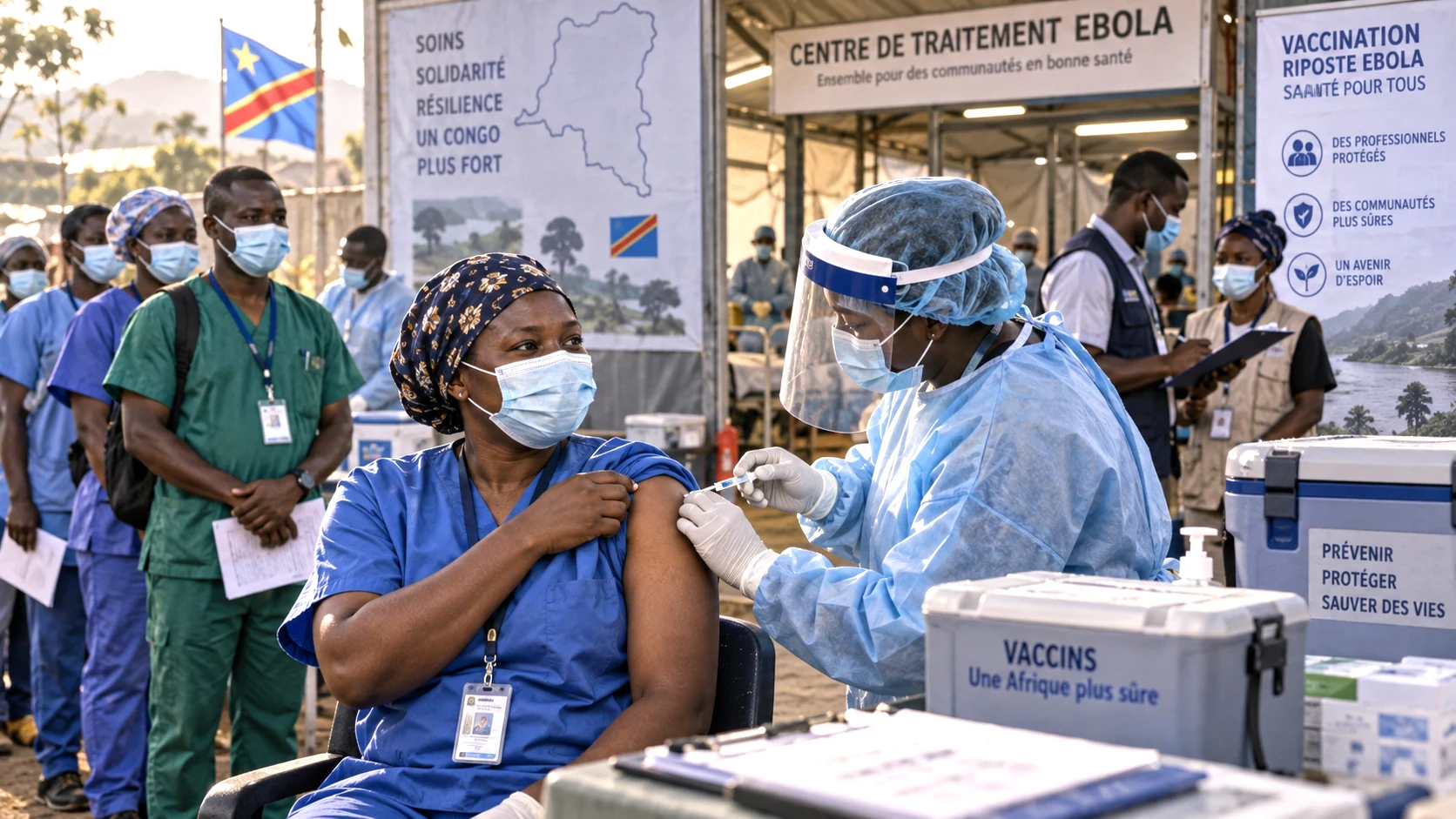
The Democratic Republic of the Congo has expanded Ebola vaccination among frontline health workers as a major study begins in Bunia to test whether the Ervebo vaccine can provide protection against the Bundibugyo virus driving the country’s largest recorded Ebola outbreak. The programme will follow
BRICS leaders have backed stronger cooperation on tuberculosis, obesity, mental health and other non-communicable diseases, while also supporting resilient health systems, disease surveillance and wider access to medicines and vaccines.
Medicare Open Enrollment for 2027 coverage runs from October 15 through December 7, 2026. Here is what beneficiaries should know about Part D costs, projected Medicare Advantage premiums, the still-unconfirmed Part B premium and the five checks to make before choosing a plan.
Medicare Open Enrollment 2027: How to Compare Plans, Change Coverage and Understand ACA Deadlines










0 Comments