Gut-Friendly Foods and Daily Habits for Better Digestion: What Actually Helps
Better digestion often starts with ordinary habits: more fiber-rich whole foods, enough fluids, selected fermented foods, regular meals, slower eating and movement. Here is what current evidence supports—and what gut-health trends often exaggerate.
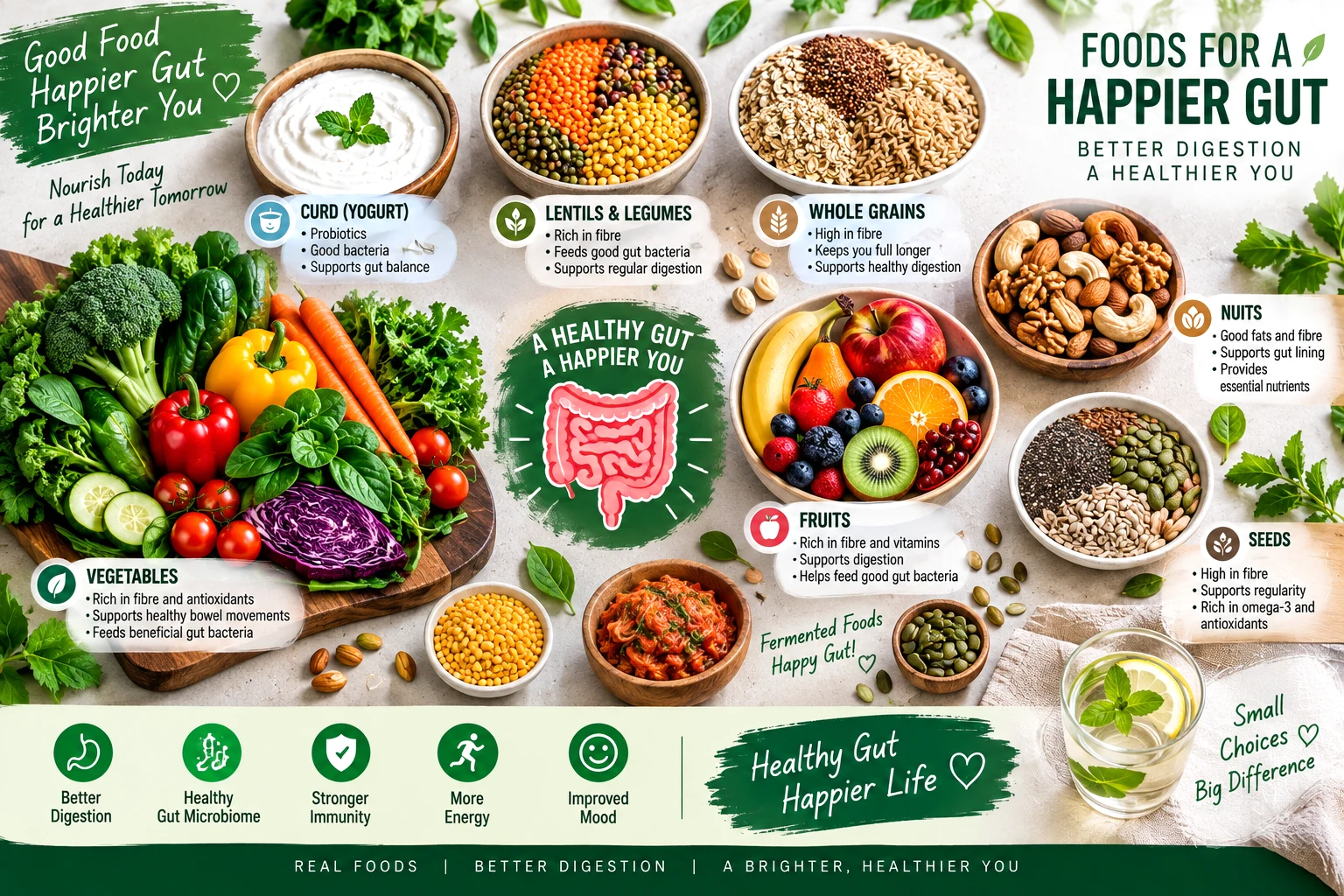
Fiber-rich fruits, vegetables, whole grains, lentils, nuts and yogurt arranged as gut-friendly foods for better digestion
Table of Contents (28 sections)
Bloating after meals, irregular bowel movements, constipation, gas and a feeling of heaviness can quickly make people start searching for the “best food for gut health.”
Social media offers plenty of answers: probiotic drinks, detoxes, powders, restrictive diets, fermented shots and supplements promising to “reset” or “heal” the gut.
The reality is less dramatic.
For most otherwise healthy adults, supporting normal digestion is usually built around a much simpler pattern: eat enough fiber from a variety of plant foods, drink adequate fluids, stay physically active, eat in a way that suits your digestive system and pay attention to persistent symptoms rather than trying to fix everything with one supposedly powerful food.
Recommended Reading
Related Stories & In-Depth Guides
Curated editorial perspectives matching this topic.
Good digestion is about more than probiotics. Learn how fibre-rich foods, curd, whole grains, fruits, vegetables and adequate fluids can support a healthy digestive system.
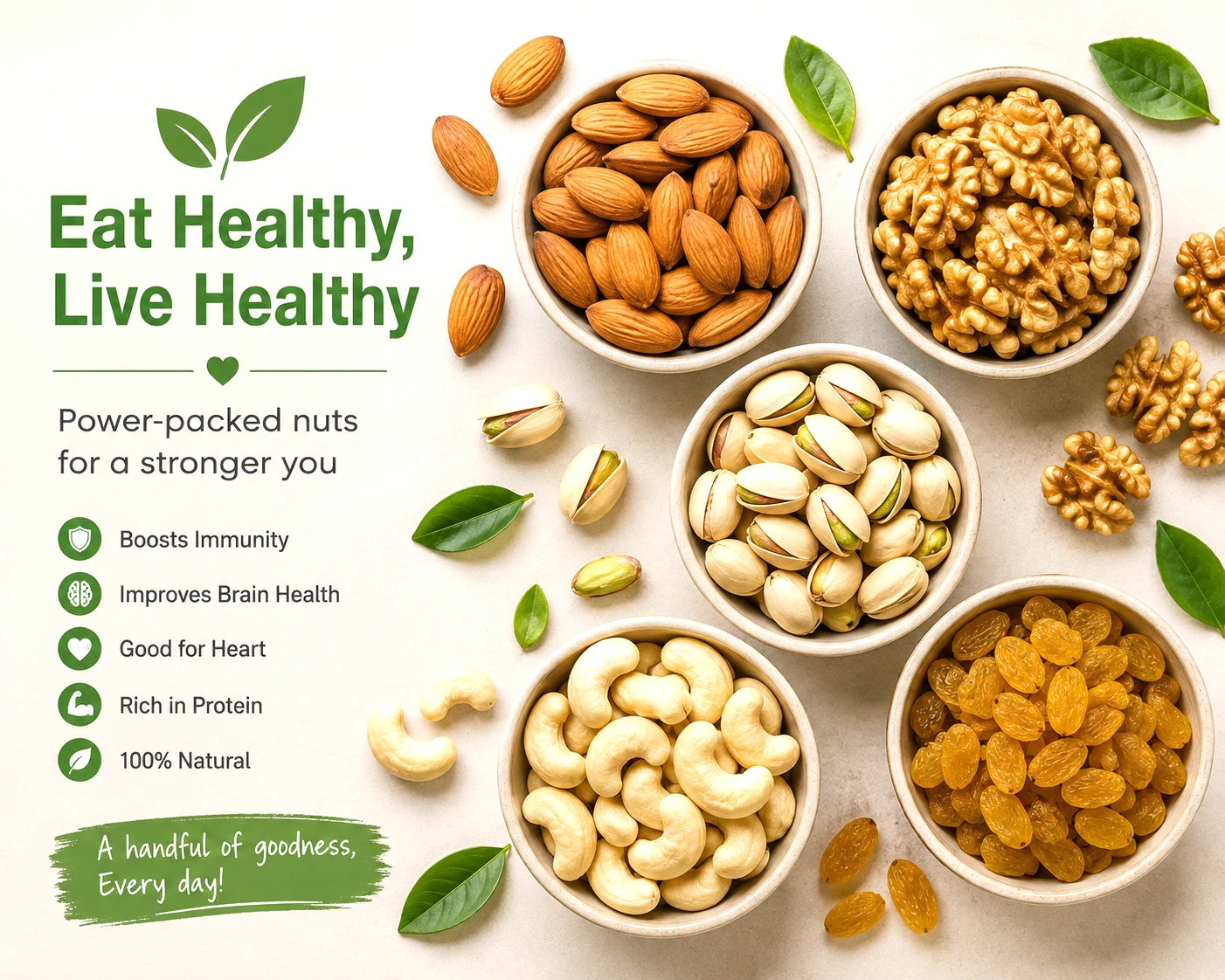
Almonds, walnuts, pistachios, cashews and raisins all provide different nutrients. Here’s what each one contains, how much to eat, whether soaking is necessary, the best ways to include them in your diet, and what to watch out for.
The World Health Organization recommends that carbohydrates come primarily from whole grains, vegetables, fruits and pulses and recommends adults consume at least 25 grams of naturally occurring dietary fiber each day.
The US National Institute of Diabetes and Digestive and Kidney Diseases similarly notes that adults may need roughly 22 to 34 grams of fiber per day depending on age and sex, particularly when preventing or managing constipation.
But better digestion is not just about eating the maximum amount of fiber possible.
How quickly you increase fiber, the foods you personally tolerate, hydration, physical activity, meal size and certain medical conditions can all change how your digestive system responds.
Here is a practical way to build a more gut-friendly daily routine without turning eating into a complicated wellness programme.
What Does “Gut-Friendly” Actually Mean?
“Gut-friendly” is not a formal medical classification.
In everyday nutrition, the phrase can reasonably describe foods and habits that help support normal digestive function, bowel regularity and a nutritionally balanced diet.
The digestive tract is also home to a large microbial community commonly called the gut microbiome.
Some dietary fibers reach the large intestine, where bacteria can ferment them and produce compounds including short-chain fatty acids. Research continues to investigate how these microbial processes relate to intestinal and broader health.
However, microbiomes vary significantly from person to person.
That is one reason a food celebrated as “great for gut health” may make one person feel comfortable while producing gas, bloating or other symptoms in another.
The goal should therefore be a diverse, nutritious and tolerable eating pattern, rather than trying to manufacture a supposedly perfect microbiome.
1. Make Fiber-Rich Foods the Foundation
If there is one everyday nutrition habit with particularly strong support for normal bowel function, it is getting adequate dietary fiber.
Fiber adds bulk and, depending on the type, can help hold water in stool or be fermented by intestinal microbes.
Useful food sources include:
oats
whole-wheat foods
brown rice and other whole grains
lentils
chickpeas
beans
peas
apples
pears
oranges
berries
carrots
broccoli
leafy vegetables
nuts
seeds
NIDDK specifically lists whole grains, legumes, fruits, vegetables and nuts as useful fiber sources.
Why variety matters
Different plant foods contain different kinds and combinations of fibers.
Instead of trying to find one “best” gut food, a more practical strategy is to regularly rotate foods from several groups.
For example:
Breakfast: oats plus fruit and nuts
Lunch: rice or roti with dal and vegetables
Snack: fruit or a small portion of nuts
Dinner: whole grains or another staple alongside vegetables and a protein source
A familiar Indian meal can therefore be highly compatible with a gut-friendly diet without requiring expensive imported products.
2. Increase Fiber Gradually, Not Overnight
More fiber is not always immediately more comfortable.
A person eating very little fiber who suddenly doubles or triples intake may experience:
bloating
gas
abdominal discomfort
changes in stool frequency
NIDDK advises increasing fiber gradually so the body has time to adjust. For people with IBS, it notes that rapidly adding too much fiber can increase gas and bloating.
A better approach is to add one or two fiber-rich foods at a time.
For example, instead of suddenly adding bran cereal, large portions of beans, chia seeds, raw vegetables and a fiber supplement on the same day, start with something manageable such as:
fruit with breakfast;
a serving of dal at lunch; or
vegetables with dinner.
Then increase variety gradually.
This is especially important for people who already experience significant bloating.
3. Drink Enough Fluid as Fiber Intake Rises
Fiber and fluid work together.
NIDDK recommends adequate water and other liquids when increasing dietary fiber because fluid can help make stools softer and easier to pass.
That does not mean everyone needs exactly the same number of litres each day.
Fluid needs vary according to factors such as:
climate
physical activity
body size
pregnancy
illness
medications
kidney or heart conditions
A practical general habit is to drink regularly through the day rather than relying on extreme hydration targets.
People who have been given a medical fluid restriction should follow their clinician's instructions rather than generic hydration advice.
4. Include Fermented Foods—but Understand What They Can and Cannot Do
Fermented foods have become one of the biggest gut-health trends.
Common examples include:
yogurt or curd
kefir
fermented vegetables
kimchi
sauerkraut
miso
some traditional fermented foods
kombucha
There is genuine scientific interest in fermented foods and their relationship with the microbiome.
A 2026 review of research on fermented-food microbiomes reported potential effects on microbial exposure and gut-host interactions, while also emphasizing important uncertainties, including differences between food products, microorganisms and individual responses.
Another review concluded that evidence around fermented foods and gut microbiome diversity is promising but that clinical validation and standardised recommendations remain limited.
Important: fermented does not automatically mean probiotic
This distinction is frequently lost online.
The NIH Office of Dietary Supplements explains that microorganisms are used to make many fermented foods, but not every fermented food contains probiotics with proven health benefits.
Some products are heated or otherwise processed after fermentation, meaning living microorganisms may no longer remain.
So it is more accurate to say:
Some fermented foods can be useful parts of a varied diet and some may contain live microorganisms, but simply being fermented does not make a food a clinically proven probiotic treatment.
5. Plain Yogurt or Curd Can Be a Simple Option
For people who tolerate dairy, plain yogurt or curd can be one of the easiest fermented foods to include.
It provides protein and other nutrients, and some products contain live cultures.
However, avoid assuming that every yogurt product has identical probiotic effects.
Microbial strains and processing differ between products. NIH notes that probiotic benefits, when demonstrated, depend partly on the particular microorganism or strain rather than simply having a large number of organisms listed on a package.
Also watch what comes with the yogurt.
A heavily sweetened dessert-style yogurt may contain substantially more added sugar than a plain version.
A practical combination could be:
plain curd + oats + fruit + nuts
rather than relying on an expensive “gut-health” product.
People with lactose intolerance or other dairy-related symptoms may need alternatives appropriate for their individual tolerance.
6. Eat a Wider Range of Plant Foods
Gut health is often marketed through supplements when ordinary food variety may be a more sensible starting point.
Rather than eating the same vegetables every day, rotate among:
leafy greens
carrots
beans
peas
lentils
chickpeas
tomatoes
gourds
broccoli
seasonal vegetables
berries
bananas
oranges
apples
pears
whole grains
nuts and seeds
This approach naturally increases exposure to different fibers, micronutrients and plant compounds.
You do not need an arbitrary challenge requiring dozens of different foods every week.
The more useful principle is simply:
choose variety where practical and build it gradually.
7. Don't Assume Every “Healthy” Food Will Agree With Your Gut
This is one of the most important lessons in digestive health.
Beans, lentils and vegetables are nutritious—but some people notice extra gas when eating large quantities.
NIDDK notes that some individuals experience more gas with high fiber intake, while high-fat foods can increase bloating for some people.
That does not mean beans or vegetables are unhealthy.
It means tolerance matters.
If one food consistently produces symptoms, consider:
reducing the portion;
changing how it is prepared;
increasing it more gradually;
keeping a food-and-symptom record.
Avoid unnecessarily removing entire food groups because of one uncomfortable meal.
8. Slow Down While Eating
“Chew every bite exactly 30 times” is not a scientifically established requirement.
But eating more slowly is still a reasonable habit.
Chewing mechanically breaks food down before swallowing, while slower eating gives you more time to experience the meal and recognise fullness.
A systematic review examining chewing and gastrointestinal and nutrition-related outcomes found that many studies suggested benefits, but the certainty of evidence for several gastrointestinal outcomes was low to very low.
So claims that extra chewing will dramatically “activate digestion” or cure bloating go beyond the evidence.
A more practical recommendation is:
take smaller bites;
chew comfortably;
avoid rushing meals;
put utensils down occasionally;
give yourself enough time to eat.
The NHS also recommends chewing with the mouth closed when trying to reduce bloating because this can reduce swallowed air.
9. Avoid Habitually Eating Huge Meals
Some people tolerate smaller meals better than very large ones, particularly when they experience bloating or indigestion.
The NHS includes smaller, more frequent meals among measures that may help some people with bloating and advises against very large meals late at night.
That does not mean everybody must eat five or six times per day.
There is no universal meal frequency that is ideal for every digestive system.
Instead, pay attention to whether your symptoms repeatedly appear after unusually large portions.
A balanced plate that leaves you comfortably satisfied may be more useful than switching between long periods without food and oversized meals.
10. Does Meal Timing Matter for Gut Health?
Meal timing is an active area of research.
The digestive system follows biological rhythms, and recent scientific reviews have examined links between irregular eating, circadian rhythms and the gut microbiome.
However, this research does not establish one perfect breakfast, lunch and dinner time that everyone must follow.
For everyday use, consistency may be more practical than chasing a precise “gut health window.”
Try to avoid making very large, late-night meals a routine if they cause discomfort.
For people with nighttime acid reflux, NIDDK says eating meals at least three hours before lying down or going to bed may improve symptoms.
That advice is specifically relevant to reflux symptoms and should not be turned into a universal rule that nobody should ever eat within three hours of sleep.
11. Move Your Body Regularly
Exercise is not usually marketed as a digestive-health product, but regular movement belongs in a healthy lifestyle.
NIDDK lists regular physical activity among measures that may help prevent or relieve constipation.
Current physical-activity guidance recommends adults work toward 150 to 300 minutes of moderate-intensity aerobic activity per week, together with muscle-strengthening activity on at least two days.
You do not need an intense workout immediately after eating.
Simple habits can include:
walking regularly;
taking movement breaks during long periods of sitting;
climbing stairs when practical;
cycling;
swimming;
strength training.
For someone who is currently inactive, starting gradually is more realistic than trying to transform their activity level overnight.
12. Give Yourself Time to Use the Toilet
Ignoring the urge to have a bowel movement can work against regularity.
NIDDK notes that bowel training may sometimes be used for constipation and explains that eating stimulates movement in the colon. Some people may find attempting a bowel movement around 15 to 45 minutes after breakfast useful.
This is not a requirement to force a bowel movement every morning.
The useful principle is to avoid repeatedly postponing the body's natural signals and to give yourself enough unhurried time.
13. Be Careful With Restrictive “Gut Reset” Diets
You do not normally need to eliminate gluten, dairy, carbohydrates, fruit or multiple vegetables merely because an online post says they cause inflammation.
Highly restrictive diets can make adequate nutrition more difficult.
Special diets do have legitimate medical uses.
For example, NIDDK notes that some people diagnosed with IBS may be advised to try approaches such as a low-FODMAP diet, ideally with appropriate medical or dietetic guidance. Different people with IBS respond differently to dietary changes.
A low-FODMAP diet is therefore not a general “clean eating” diet for everybody.
Similarly, a gluten-free diet is essential for conditions such as celiac disease but should not automatically be prescribed to every person experiencing occasional bloating.
14. Don't Depend on Probiotic Supplements Without a Reason
Probiotic supplements are heavily marketed for digestion.
But “more bacteria” does not automatically mean greater benefit.
NIH states that there are no official recommendations covering probiotic use by healthy people generally and that health effects depend on the specific microorganisms and amounts involved. A higher colony-forming-unit number alone does not establish greater benefit.
Probiotics can also be inappropriate in some medically vulnerable people, including certain individuals who are seriously ill or immunocompromised.
For an otherwise healthy person interested in digestive wellness, improving the overall diet is generally a more sensible first step than randomly buying multiple probiotic supplements.
A Simple Gut-Friendly Day of Eating
There is no single perfect gut-health menu, but the following illustrates how ordinary foods can provide variety.
Breakfast
oats or another whole grain
fruit such as banana, berries, apple or orange
plain yogurt or curd if tolerated
a small amount of nuts or seeds
Lunch
rice, millet or whole-grain roti
dal, chickpeas or another protein source
cooked vegetables
curd if desired and tolerated
Snack
fresh fruit
nuts
plain yogurt
Dinner
vegetables
a whole-grain or other staple food
lentils, beans, eggs, fish, chicken or another protein source according to preference
a comfortably sized portion rather than an oversized late-night meal
Drinks
Water should make up much of routine hydration.
You do not need expensive “detox waters” to clean the digestive tract.
7 Everyday Habits Worth Remembering
For most people looking for a practical starting point, the essentials can be kept simple:
Eat plants regularly.
Include fruits, vegetables, whole grains, pulses, nuts or seeds across the day.
Build fiber slowly.
A sudden jump can increase gas and bloating.
Drink enough fluids.
This becomes particularly important as fiber increases.
Include fermented foods if you enjoy and tolerate them.
Plain yogurt or curd can be an easy option, but fermented does not automatically mean proven probiotic.
Eat without rushing.
Chew normally and give yourself time rather than swallowing meals quickly.
Keep moving.
Regular physical activity supports overall health and may help bowel regularity.
Pay attention to patterns.
If a particular meal repeatedly causes symptoms, note the foods, portion size and timing instead of immediately eliminating multiple food groups.
What About Coffee?
Coffee affects people differently.
For some people, coffee appears to stimulate bowel activity.
For others, caffeine or coffee may aggravate reflux, indigestion or other digestive symptoms.
NIDDK lists coffee and other caffeine sources among foods and drinks commonly associated with GERD symptoms in some individuals.
There is therefore no need to label coffee universally “good” or “bad” for the gut.
Your own symptoms matter.
What About Spicy Food?
The same principle applies.
Spicy foods do not automatically damage a healthy digestive tract, but they may worsen symptoms in some people, particularly those experiencing reflux or indigestion.
If you repeatedly notice symptoms after a particular food, reducing it temporarily and observing the response can be more informative than following a generic internet list.
What About Apple Cider Vinegar?
Apple cider vinegar is frequently promoted online for digestion and gut bacteria.
It is fermented, but that does not mean it should automatically be described as a proven probiotic food.
NIH specifically explains that while foods including apple cider vinegar can result from fermentation, the microorganisms in many fermented products have not necessarily been demonstrated to provide probiotic health benefits.
There is no need to drink concentrated vinegar to maintain normal digestion.
What About Kombucha?
Kombucha is another fermented product that may contain microorganisms and fermentation products.
But, again, “fermented” and “clinically proven probiotic” are not interchangeable labels.
Research on fermented foods is developing, and individual products can vary considerably.
If you enjoy kombucha, think of it as a beverage choice rather than a required treatment for the gut.
Fiber vs Probiotics: Which Matters More?
This should not necessarily be an either-or question.
For everyday eating, fiber-rich whole foods deserve greater attention than the idea of adding a probiotic product while leaving the rest of the diet unchanged.
WHO specifically recommends whole grains, fruits, vegetables and pulses as primary carbohydrate sources and at least 25 grams of naturally occurring fiber daily for adults.
Probiotic effects, by comparison, can be highly strain- and product-specific.
A bowl of yogurt cannot compensate for a consistently low-fiber diet dominated by highly processed foods.
Can Better Food Completely Fix Bloating?
No.
Occasional bloating is common and may relate to food, swallowed air, constipation or other factors.
But persistent or severe bloating can also accompany medical conditions.
Similarly, constipation, diarrhea, abdominal discomfort and indigestion can have many causes.
Dietary changes may help some symptoms, but they should not be used to self-diagnose conditions such as IBS, food intolerance, celiac disease, inflammatory bowel disease or other gastrointestinal disorders.
When Digestive Symptoms Need Medical Attention
Gut-health advice should not delay appropriate medical evaluation.
NIDDK advises seeking medical care for concerning symptoms including:
rectal bleeding or blood in the stool;
black or tarry stools;
unexplained weight loss;
severe or constant abdominal pain;
persistent vomiting;
difficulty or pain when swallowing;
long-lasting abdominal swelling;
symptoms that do not improve.
Severe gastrointestinal bleeding or other acute symptoms can require urgent medical attention.
The Bottom Line
Better digestion usually does not require a miracle food.
For many people, the most useful starting points are also the least glamorous:
eat a varied diet rich in naturally fiber-containing foods, increase fiber gradually, drink adequate fluids, include fermented foods you tolerate, avoid rushing through meals, stay active and develop a regular eating routine that works for you.
There is growing scientific interest in the gut microbiome, fermented foods and meal timing, but the research does not support treating one food, probiotic strain or meal schedule as a universal solution.
And perhaps the most important gut-health habit is knowing when ordinary digestive discomfort has stopped being ordinary.
Persistent pain, bleeding, unexplained weight loss or major changes in bowel habits deserve proper medical evaluation—not another social-media gut cleanse.
Frequently Asked Questions
What are the best foods for gut health and digestion?
Useful everyday choices include whole grains, oats, fruits, vegetables, lentils, chickpeas, beans, nuts and seeds. Some fermented foods such as yogurt may also fit into a gut-friendly diet. The overall dietary pattern matters more than one “best” food.
How much fiber should adults eat every day?
WHO recommends at least 25 grams of naturally occurring dietary fiber per day for adults. Other recommendations vary with age and sex; NIDDK cites approximately 22–34 grams daily for adults.
Can eating too much fiber cause bloating?
Yes. Rapidly increasing fiber can cause gas or bloating in some people. Adding fiber gradually can make the transition easier.
Is curd good for digestion?
Curd or yogurt can be a nutritious fermented food for people who tolerate it, and some products contain live cultures. However, not every fermented food or yogurt product has the same microorganisms or proven probiotic effects.
Are all fermented foods probiotics?
No. NIH states that although microbes are used to produce fermented foods, not all fermented products contain live microorganisms with demonstrated probiotic benefits.
Is kombucha necessary for good gut health?
No. Kombucha can be consumed as part of the diet if desired and tolerated, but there is no requirement to drink it for normal gut health.
Does chewing food more improve digestion?
Chewing is an important part of eating, but research does not establish a specific number of chews required for better digestion. A systematic review found the certainty of evidence for several gastrointestinal effects of chewing to be low or very low.
What is the best time to eat for digestion?
There is no single scientifically established meal schedule that suits everyone. Regular eating patterns may be practical, while people with nighttime reflux may benefit from finishing meals at least three hours before lying down.
Should I take a probiotic supplement every day?
Not necessarily. NIH says there are no official recommendations for routine probiotic use by all healthy people, and benefits depend on the specific strain and dose.
Is a low-FODMAP diet good for everyone?
No. Low-FODMAP diets may help some people with IBS but are not intended as a universal gut-health diet. Medical or dietetic guidance can help ensure the diet is used appropriately.
Does drinking more water improve digestion?
Adequate fluid supports normal health and can help fiber work more effectively, particularly for constipation. However, individual fluid requirements vary.
Does walking help digestion?
Regular physical activity may help people with constipation and has many additional health benefits.
Bottom Line
Better digestion is built on simple, sustainable habits: more fiber from varied plant foods, gradual increases, enough fluids, tolerated fermented foods, slower eating and regular movement. No single food or supplement is a miracle fix.
The Rajatheertha Team publishes news, explainers, guides and updates across India and the world. Our coverage follows Rajatheertha's editorial, verification and corrections standards.
Struggling to sleep well? Learn practical, evidence-based habits for better sleep, including a consistent schedule, less screen time, a relaxing bedtime routine, a cool bedroom, smarter caffeine timing and better daytime habits.
Feeling stressed or anxious? Simple habits such as slow breathing, short walks, journaling, better sleep and regular breaks from social media may help. Here are practical ways to manage everyday stress—and signs that it may be time to seek professional support.
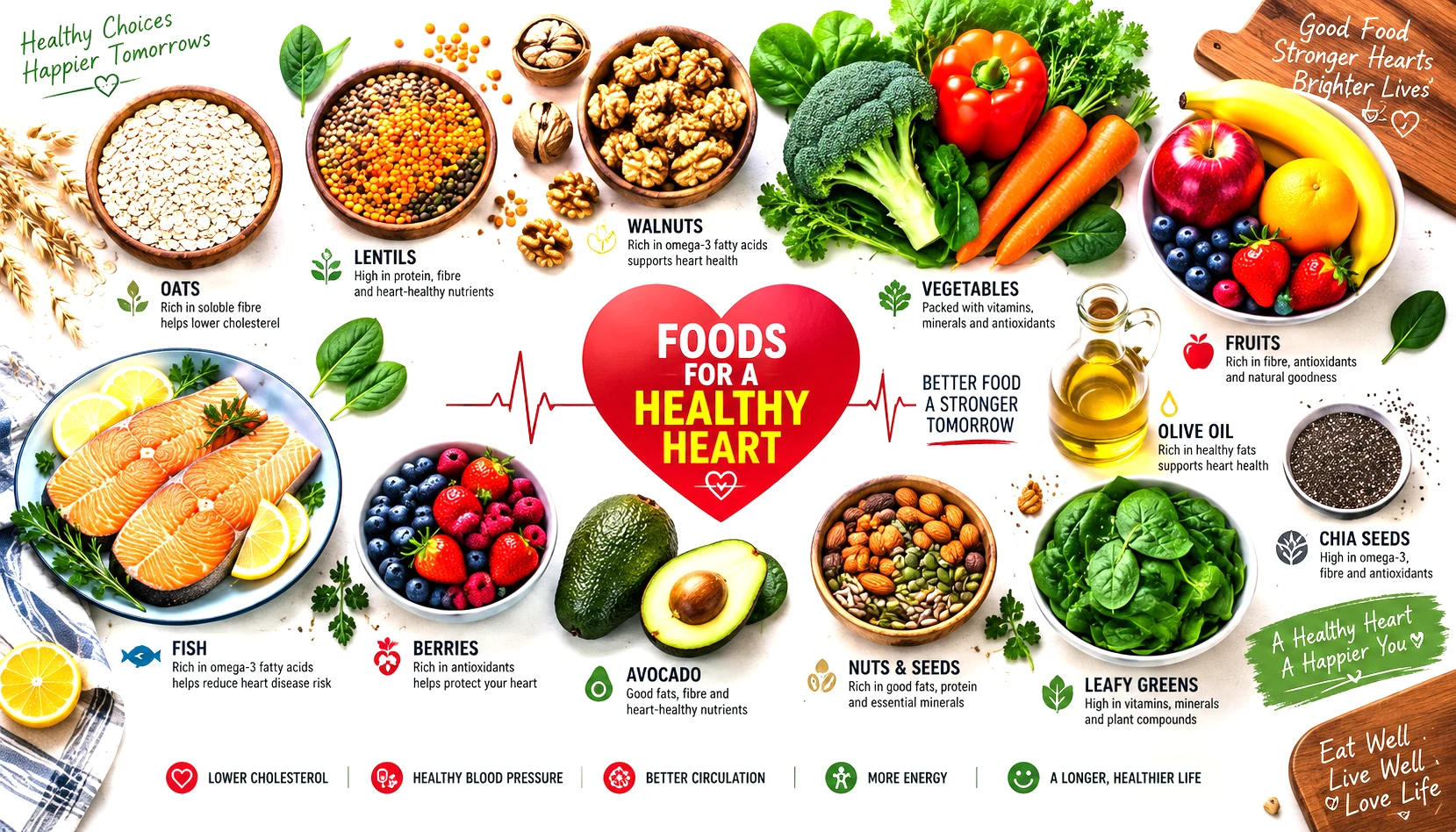
A heart-friendly diet does not depend on one superfood. Discover 12 everyday foods—from oats and dal to nuts, vegetables and fish—that can form part of a balanced, heart-healthy eating pattern.
Feeling dependent on coffee to get through the morning? A routine built around daylight, water, movement, adequate sleep and a balanced protein-rich breakfast may support alertness without repeatedly reaching for caffeine.
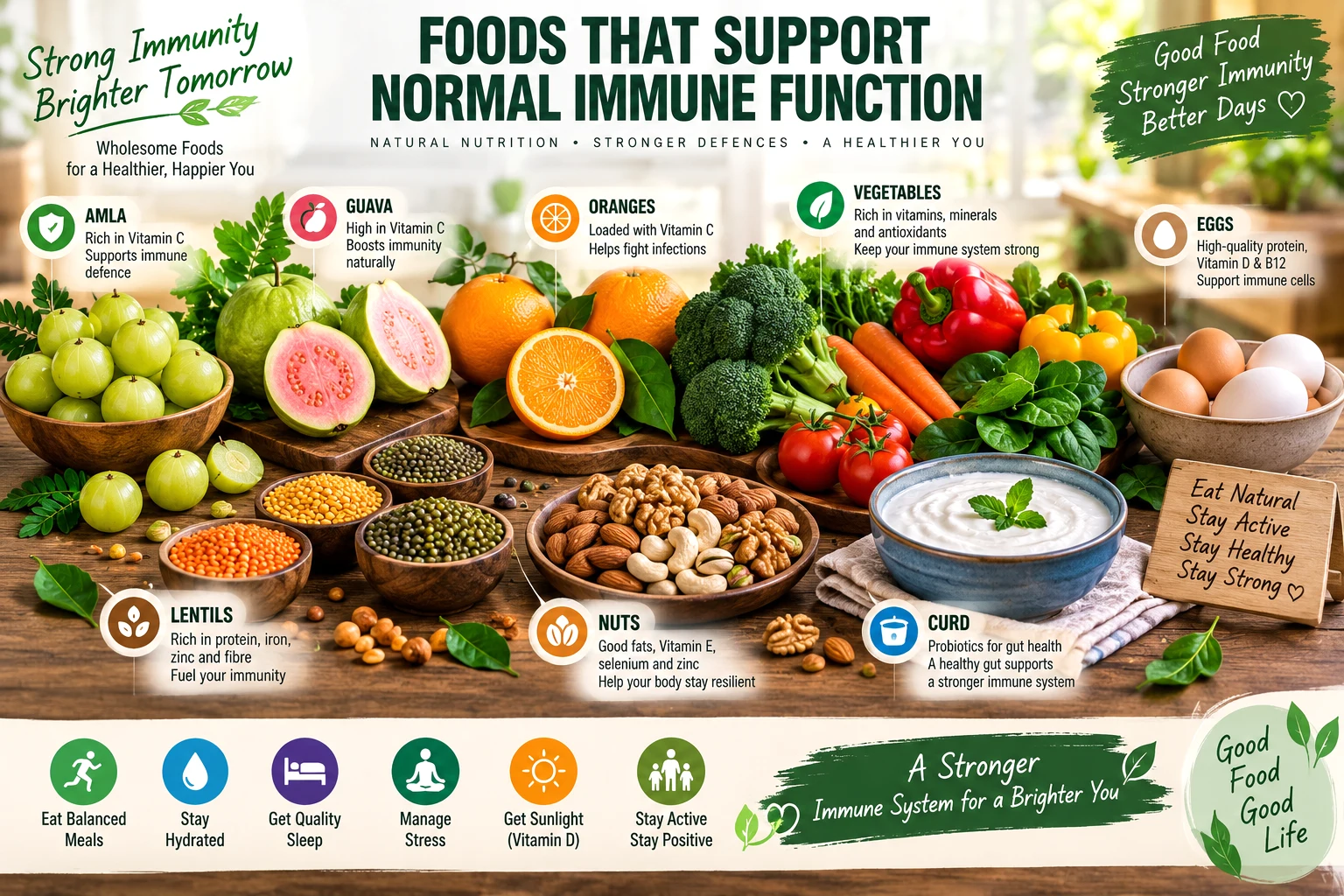
No food can instantly “boost” immunity, but adequate protein, vitamins A, C, D and E, zinc, selenium and other nutrients help normal immune function. Here are practical foods to include.
Short on time and trying to eat better without overspending? This practical meal-prep guide explains weekly planning, batch cooking, budget shopping, balanced plates and easy breakfast, lunch and dinner ideas.









0 Comments