
Table of Contents (33 sections)
Vitamin D is important for calcium absorption, normal bone mineralisation and muscle function.
Learn the common signs and causes of vitamin D deficiency, how the 25(OH)D blood test is interpreted, vitamin D-rich foods available in India, sunlight basics and when supplements or medical advice may be needed.


Vitamin D is important for calcium absorption, normal bone mineralisation and muscle function.
Curated editorial perspectives matching this topic.

Learn normal cholesterol, LDL, HDL and triglyceride levels, which foods can help lower LDL, practical Indian diet swaps, exercise tips and when cholesterol medicine may be needed.

BRICS leaders have backed stronger cooperation on tuberculosis, obesity, mental health and other non-communicable diseases, while also supporting resilient health systems, disease surveillance and wider access to medicines and vaccines.
Unlike most vitamins, the body can make vitamin D when ultraviolet B radiation from sunlight reaches exposed skin. Vitamin D is also obtained from a limited number of foods, fortified foods and supplements.
Yet living in a sunny country does not automatically guarantee adequate vitamin D.
Vitamin D deficiency has been widely reported in India, and researchers at the ICMR-National Institute of Nutrition continue to study vitamin D nutrition and its effects on bone, muscle and other tissues.
Indoor lifestyles, limited skin exposure to sunlight, darker skin pigmentation, ageing, dietary patterns, obesity and some medical conditions can all influence vitamin D status.
The important point is that vitamin D deficiency cannot usually be diagnosed from symptoms alone.
Some people have no obvious symptoms. Others may develop bone pain or muscle weakness when deficiency becomes significant.
The most commonly used blood test is serum 25-hydroxyvitamin D, written as 25(OH)D.
Possible signs associated with significant vitamin D deficiency can include:
Symptoms such as tiredness are often mentioned in discussions of vitamin D deficiency, but fatigue has many possible causes and is not specific enough to diagnose low vitamin D.
A blood test and clinical assessment may be needed when deficiency is genuinely suspected.
Vitamin D status is generally assessed using the 25(OH)D blood test.
One widely used interpretation from the U.S. National Academies and NIH Office of Dietary Supplements is:
| 25(OH)D level | General interpretation |
|---|---|
| Below 12 ng/mL | Too low; associated with vitamin D deficiency |
| 12 to below 20 ng/mL | Generally considered inadequate for many people |
| 20 ng/mL or above | Adequate for most healthy people for bone and overall health |
| Above 50 ng/mL | May be associated with adverse effects |
The same results may be reported in nmol/L instead of ng/mL.
For reference:
20 ng/mL = 50 nmol/L.
This is an area where readers often encounter conflicting information.
Older guidelines and many laboratories have commonly used:
However, the evidence does not establish one universal 25(OH)D concentration that provides the best health outcomes for every person.
The 2024 Endocrine Society guideline specifically moved away from endorsing a universal target blood level for disease prevention in otherwise healthy people and advised against routine vitamin D testing in healthy adults without another medical reason for testing.
Therefore, a vitamin D result should be interpreted using:
A number on a laboratory report should not automatically determine a treatment dose without clinical context.
Vitamin D helps the intestine absorb calcium and helps maintain calcium and phosphate concentrations required for normal bone mineralisation.
It is also involved in normal bone remodelling and muscle function.
When vitamin D becomes severely deficient, the body may be unable to mineralise bone normally.
In children, this can result in rickets.
In adolescents and adults, severe deficiency can contribute to osteomalacia, in which bones become poorly mineralised and weaker.
1. Bone pain
Significant deficiency can contribute to poorly mineralised bone and bone discomfort.
Bone pain is more concerning when persistent or accompanied by muscle weakness, fractures or other bone-health problems.
2. Muscle weakness
Vitamin D has an important role in normal muscle function.
Low levels can be associated with weakness or muscle problems, particularly when deficiency is substantial.
3. Muscle aches
Some people with clinically important deficiency experience muscle discomfort.
However, muscle pain is extremely common and can result from exercise, medications, infections, thyroid disease and many other causes.
4. Fragile or weakened bones
Long-standing deficiency can impair normal bone mineralisation.
In adults, severe deficiency can cause osteomalacia.
5. Rickets in children
Severe vitamin D deficiency in children can result in rickets, where growing bones do not mineralise correctly.
Rickets can cause skeletal abnormalities, bone pain and growth problems.
Yes.
A person can have a low 25(OH)D result without experiencing obvious symptoms.
This is one reason vitamin D discussions online can become confusing: vague symptoms such as fatigue, body aches and low energy are common in many unrelated conditions.
Symptoms alone cannot confirm vitamin D deficiency.
Likewise, feeling well does not tell you your exact vitamin D concentration.
India receives abundant sunlight in many regions, but sunshine being available outdoors does not necessarily mean enough UVB reaches a person's skin to produce vitamin D.
Vitamin D production can be influenced by:
NIH notes that darker skin contains more melanin, which reduces the skin's ability to produce vitamin D from the same amount of UV exposure. Older adults also produce vitamin D less efficiently through the skin.
Indoor work and home-based lifestyles can further reduce exposure.
ICMR-NIN researchers have described vitamin D deficiency as widely reported in India despite the country's sunlight availability.
Vitamin D deficiency or inadequacy can develop for several reasons.
Limited sunlight exposure
People who spend most of the day indoors may produce less vitamin D through their skin.
This can include office workers, homebound individuals and people whose work involves little outdoor activity.
Darker skin
Higher concentrations of melanin reduce vitamin D production from UVB exposure.
This means two people spending the same amount of time outdoors may not make identical amounts of vitamin D.
Older age
The skin's ability to produce vitamin D declines with age.
Older adults may also spend less time outdoors.
Low intake of vitamin D-rich foods
Relatively few foods naturally contain substantial vitamin D.
People who eat little fish, eggs or fortified foods may obtain limited dietary vitamin D.
Conditions that reduce fat absorption
Vitamin D is fat soluble.
Conditions affecting normal fat absorption can therefore interfere with vitamin D absorption.
Examples include certain forms of:
Obesity
People with obesity often have lower circulating 25(OH)D concentrations.
Vitamin D can be distributed into body fat, which affects the amount circulating in the bloodstream.
Bariatric surgery
Some weight-loss operations alter the gastrointestinal tract and can reduce absorption of vitamin D and other nutrients.
Kidney problems
The kidneys are involved in converting vitamin D into its active hormonal form.
Certain kidney diseases can therefore affect vitamin D metabolism.
Certain medicines
Some medications can affect vitamin D absorption or metabolism.
NIH lists examples including corticosteroids and the weight-loss medicine orlistat.
People taking long-term medicines should not stop them because of a vitamin D concern; instead, discuss possible interactions with their clinician.
The usual test is:
25-hydroxyvitamin D — 25(OH)D
This is the main blood marker used to assess vitamin D status.
The test called 1,25-dihydroxyvitamin D is the biologically active form, but it is generally not the correct routine test for vitamin D nutritional status.
Its concentration is tightly regulated and may remain normal until deficiency becomes severe.
If you are ordering or reviewing a vitamin D test, make sure you know which form was measured.
No.
The 2024 Endocrine Society guideline recommends against routine 25(OH)D screening in otherwise healthy adults who do not have an established reason for testing.
This applies even though vitamin D testing has become very common.
Testing may be more clinically useful when a healthcare professional suspects a problem because of symptoms, bone disease, abnormal calcium results, malabsorption or another medical condition.
The decision should be based on individual circumstances rather than automatically adding vitamin D to every health check-up.
A clinical review may be appropriate if you have:
This is different from screening every healthy person without symptoms or risk factors.
There are three broad sources:
The right combination depends on your diet, lifestyle, medical history and whether you have a confirmed deficiency.
UVB radiation from sunlight can trigger vitamin D production in exposed skin.
However, there is no single number of minutes of sun exposure that is appropriate for everyone.
Vitamin D production varies according to:
This is particularly relevant in India because UV exposure differs considerably between regions and seasons.
Sunlight through a closed glass window does not effectively produce vitamin D because UVB does not pass through ordinary glass.
Does that mean you should stay in strong sun without protection?
No.
UV radiation also damages skin and contributes to skin cancer.
Trying to correct vitamin D deficiency by deliberately causing prolonged or unprotected UV exposure is not a safe strategy.
Outdoor activity can contribute to vitamin D production, but sun safety still matters.
Few foods naturally contain large amounts of vitamin D.
Fatty fish
Some of the richest natural dietary sources are fatty fish.
Examples include:
Fish liver oils can also contain substantial vitamin D, although they should not be consumed in large amounts without considering their other vitamin content.
Egg yolks
Egg yolk contains some vitamin D.
The quantity is lower than in fatty fish, so eggs can contribute but may not provide the entire requirement alone.
Fortified milk
Some milk products are fortified with vitamin D.
In India, fortification varies by manufacturer, so check the label instead of assuming every milk packet contains added vitamin D.
Fortified plant-based milk
Some soy, almond, oat or other plant-based drinks have vitamin D added.
Again, check the nutrition label because fortification is not universal.
Fortified breakfast cereals and other foods
Some packaged products contain added vitamin D.
The label should state the amount per serving.
Mushrooms
Mushrooms naturally contain variable quantities of vitamin D2.
UV-exposed mushrooms can contain substantially more vitamin D than untreated mushrooms.
Cheese
Cheese can contain small amounts of vitamin D, although it should not be relied upon as a major source.
For vegetarians, useful options can include:
Vegetarians who consume eggs can also obtain a modest amount from egg yolks.
Because natural vegetarian food sources are limited, checking whether foods are actually fortified becomes more important.
Widely used dietary reference intakes recommend approximately:
| Age | Recommended daily intake |
|---|---|
| Adults 19–70 years | 600 IU (15 mcg) |
| Adults over 70 | 800 IU (20 mcg) |
These are general dietary reference amounts for healthy populations.
They are not the same as a treatment dose for someone with confirmed deficiency.
Treatment may require a different amount for a limited period under medical supervision.
Not necessarily.
The Endocrine Society's 2024 guideline advises healthy adults younger than 75 against routinely taking vitamin D above the usual recommended dietary intake solely for disease prevention.
The guideline identified certain groups that may have specific reasons for different supplementation strategies, including children, pregnancy, adults over 75 and some people with high-risk prediabetes.
That is different from treatment of a person who has a diagnosed vitamin D deficiency or another established medical indication.
Treatment depends on factors including:
Clinicians may use vitamin D2 or vitamin D3.
Both forms can increase 25(OH)D, although evidence indicates vitamin D3 generally raises and maintains blood concentrations more effectively than vitamin D2.
Someone with confirmed deficiency may be prescribed a higher dose for a limited period and then moved to an appropriate maintenance intake.
The exact regimen should be determined medically rather than copied from another person's prescription or a social-media post.
High-dose vitamin D products are commonly available in India.
Their availability does not mean everyone should take them routinely.
A high-dose weekly or intermittent product may be prescribed in particular circumstances, but taking it indefinitely without medical supervision can result in excessive vitamin D exposure.
More is not always better.
Yes.
Vitamin D is fat soluble and excessive supplementation can cause toxicity.
Very high vitamin D intake can cause excessive calcium in the blood, known as hypercalcaemia.
Possible symptoms include:
In severe cases, vitamin D toxicity can contribute to:
Vitamin D toxicity is almost always caused by excessive supplement intake rather than normal sunlight exposure.
For adults, the generally established tolerable upper intake level is 4,000 IU, or 100 mcg, per day from all sources, unless a healthcare professional is deliberately prescribing a different dose for treatment.
This upper limit should not be interpreted as a target.
Most healthy younger adults require substantially less.
A doctor may temporarily prescribe more than the general upper limit when treating a deficiency, but that is different from long-term self-supplementation.
Vitamin D supplementation can correct a genuine deficiency.
But fatigue alone does not prove that vitamin D is the cause.
Tiredness may result from:
If persistent fatigue is your main concern, focusing only on vitamin D could delay identification of another cause.
Vitamin D has roles in immune biology, but that does not mean high-dose supplements prevent every infection.
Associations between vitamin D concentrations and many diseases have been observed, but the Endocrine Society notes that the optimal intake and blood concentration for preventing many non-skeletal diseases remain uncertain.
Avoid products claiming that high-dose vitamin D can “boost immunity” enough to prevent or cure infections.
Vitamin D status has been studied in relation to many chronic diseases.
However, observational associations do not prove that taking additional vitamin D prevents those diseases.
NIH notes that clinical trial evidence does not support many of the broad health claims sometimes made for high-dose vitamin D supplementation in people who are already vitamin D sufficient.
The best-supported established role remains maintaining normal calcium metabolism, bone mineralisation and related musculoskeletal health.
There is no single answer.
The time required depends on:
Someone with mild inadequacy and someone with severe osteomalacia will not require identical management.
Follow the treatment and retesting plan recommended by your clinician rather than repeating blood tests too frequently.
Not everyone needs repeated testing.
The Endocrine Society advises against routine follow-up testing in generally healthy people who do not have an established indication.
Someone being treated for clinically important deficiency, malabsorption, significant bone disease or another relevant condition may require monitoring based on their doctor's judgement.
For generally healthy adults, a sensible approach is:
Step 1: Look at your food pattern
Include vitamin D-containing or fortified foods where practical.
Step 2: Maintain an active outdoor lifestyle
Regular outdoor activity can contribute to vitamin D production, but avoid excessive UV exposure and sunburn.
Step 3: Do not diagnose yourself from symptoms
Body pain or fatigue alone does not prove vitamin D deficiency.
Step 4: Test when there is a medical reason
Discuss a 25(OH)D test if you have significant symptoms or health conditions that increase the likelihood of deficiency.
Step 5: Do not copy someone else’s high-dose prescription
Treatment depends on individual circumstances.
Step 6: Avoid indefinite megadoses
More vitamin D is not automatically healthier.
Consider medical advice if you have:
Seek prompt medical care if you are taking large quantities of vitamin D and develop symptoms such as repeated vomiting, confusion, marked weakness, excessive thirst or excessive urination, as these can occur with high calcium levels from vitamin D toxicity.
Vitamin D deficiency is common enough to deserve attention, but it is also easy to oversimplify.
Remember:
The goal is not to achieve the highest possible vitamin D number.
The goal is to maintain enough vitamin D for normal health without unnecessary testing or excessive supplementation.
What are the most common symptoms of vitamin D deficiency?
Significant deficiency may cause bone pain, muscle weakness and impaired bone mineralisation. Many people with low vitamin D have no obvious symptoms.
What is a normal vitamin D level?
NIH guidance considers 20 ng/mL or above adequate for most healthy people for bone and overall health, while levels below 12 ng/mL are associated with deficiency. However, laboratories and professional groups differ on exact cut-offs, and the optimal level for every health outcome has not been established.
Which test detects vitamin D deficiency?
The usual test is serum 25-hydroxyvitamin D, or 25(OH)D. The active 1,25-dihydroxyvitamin D test is generally not used to assess ordinary nutritional vitamin D status.
How can I increase vitamin D naturally?
Useful approaches include sensible outdoor exposure and foods such as fatty fish, egg yolks and vitamin D-fortified foods. UV-exposed mushrooms can provide vitamin D2.
Which Indian foods contain vitamin D?
Useful options include sardines, mackerel and other fatty fish, egg yolks, fortified milk or plant drinks, fortified cereals and some mushrooms. Always check labels because fortification varies between products.
Can vegetarians get enough vitamin D?
They can obtain vitamin D from fortified dairy or plant drinks, fortified foods and mushrooms, but natural vegetarian food sources are relatively limited. Some people may need an appropriately selected supplement.
Should I take 60,000 IU vitamin D every week?
Do not start or continue a high-dose regimen simply because it is commonly available. High-dose vitamin D may be used medically for deficiency, but the dose and duration should be appropriate to the individual. Excessive long-term supplementation can cause toxicity.
Can too much vitamin D damage the kidneys?
Yes. Excessive supplement use can cause hypercalcaemia, kidney stones and, in severe toxicity, kidney failure.
Does everyone in India need a vitamin D test?
No. Current Endocrine Society guidance recommends against routine 25(OH)D screening in otherwise healthy adults without another medical indication.
Vitamin D deficiency is common in India despite abundant sunlight. Significant deficiency can cause bone pain, muscle weakness and impaired bone mineralisation, but many people have no obvious symptoms.
The standard test is 25(OH)D. Sensible outdoor activity, vitamin D-rich or fortified foods and medically supervised supplementation when needed are the practical ways to maintain adequate levels. Avoid indefinite high-dose self-supplementation.
Bone pain and muscle weakness can signal deficiency.
Test with 25(OH)D when clinically indicated.
Sunlight + fatty fish + fortified foods help.
Do not take high-dose vitamin D indefinitely without advice.
The Rajatheertha Team publishes news, explainers, guides and updates across India and the world. Our coverage follows Rajatheertha's editorial, verification and corrections standards.
Rajatheertha follows strict editorial standards. If you have corrections, updates or editorial queries, contact our desk.
Submit an Editorial Correction →
Always feeling tired even after sleeping? Learn common causes of constant fatigue, including poor sleep, anaemia, thyroid problems, diabetes, vitamin deficiencies and sleep apnoea, plus when to get tested or see a doctor.

The Democratic Republic of the Congo has expanded Ebola vaccination among frontline health workers as a major study begins in Bunia to test whether the Ervebo vaccine can provide protection against the Bundibugyo virus driving the country’s largest recorded Ebola outbreak. The programme will follow

Fiji recorded 2,016 new HIV diagnoses in 2025, up 27% from the previous year, while UNAIDS estimates around 9,100 people were living with HIV. The government is expanding testing, treatment, PrEP and harm-reduction services as health authorities call for a coordinated national response.

Britain's record-breaking 2026 summer has exposed a growing weakness in its health system: hospitals designed to retain warmth during cold winters are increasingly struggling with extreme summer heat. Patients and medical workers have faced sweltering wards, record emergency-department demand and di
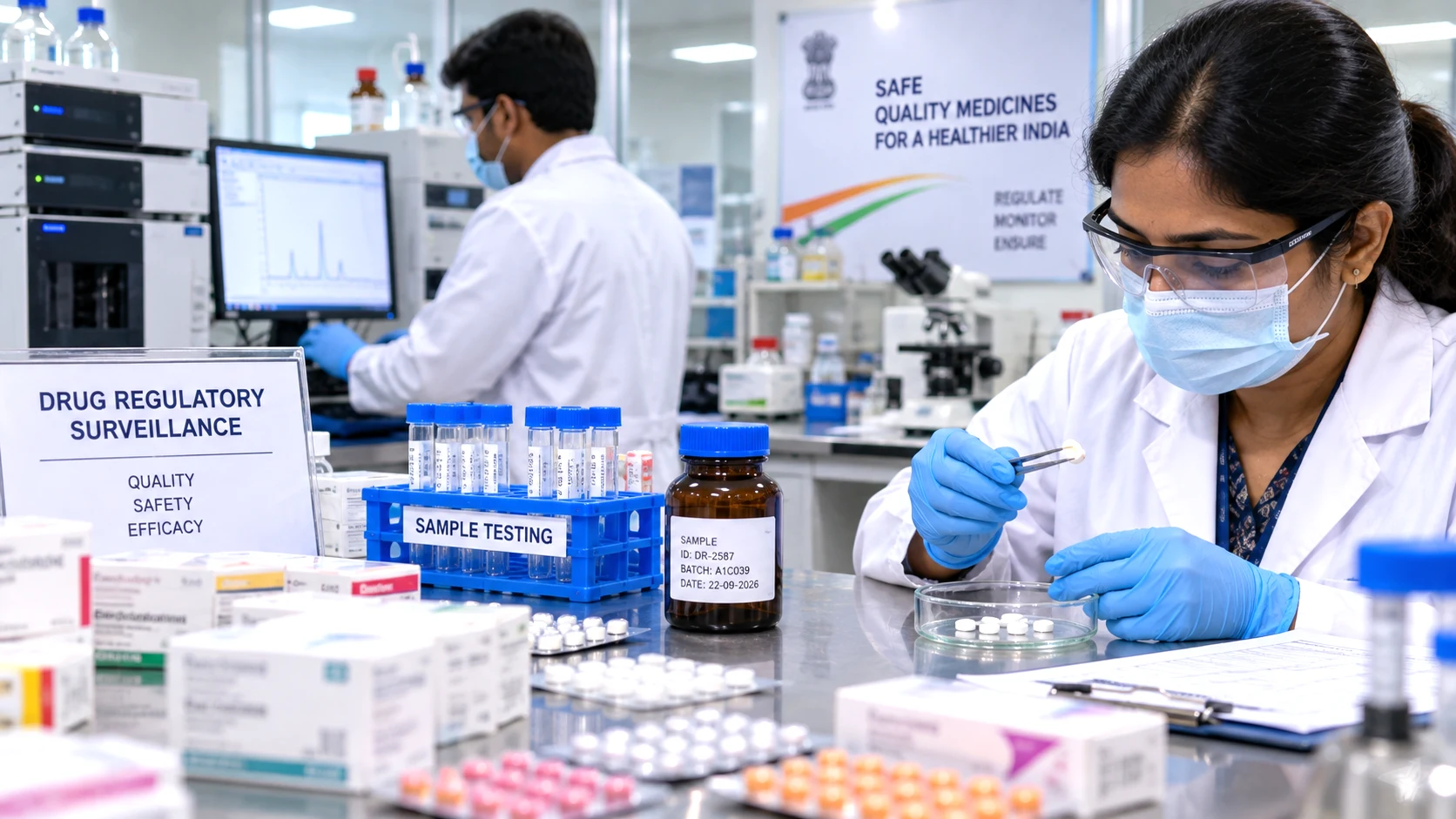
CDSCO's August 2026 surveillance identified 220 drug samples as Not of Standard Quality—29 through central laboratories and 191 through state laboratories. One spurious sample was also detected in Delhi.

What is a normal blood pressure? See an easy BP chart, understand 120/80, 130/80 and 140/90 readings, learn hypertension symptoms, Indian diet tips, correct home measurement and when high BP needs urgent medical care.
0 Comments