High Blood Pressure (Hypertension): Normal BP Range, Symptoms & Lifestyle Tips
What is a normal blood pressure? See an easy BP chart, understand 120/80, 130/80 and 140/90 readings, learn hypertension symptoms, Indian diet tips, correct home measurement and when high BP needs urgent medical care.
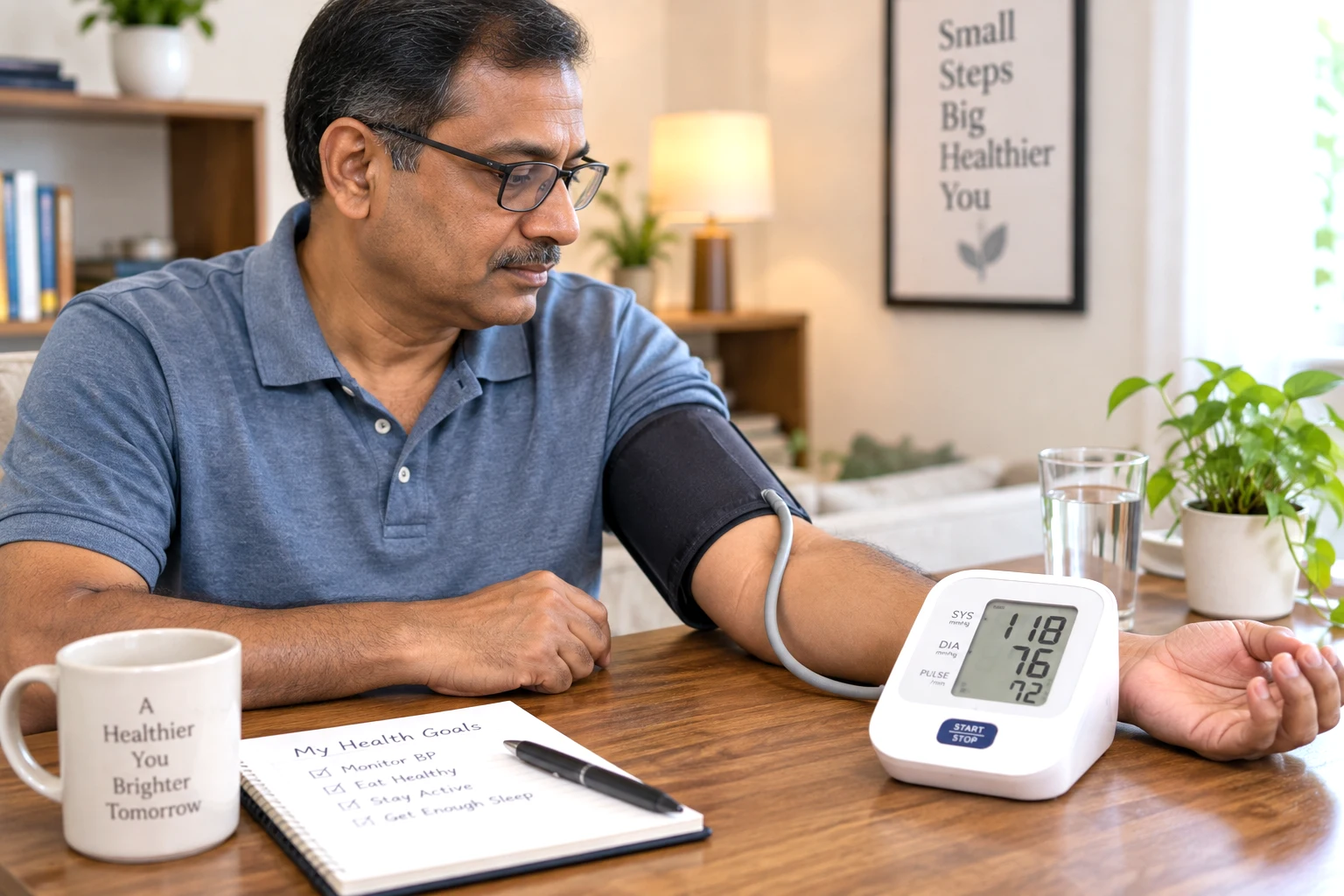
Adult measuring blood pressure correctly with an upper-arm monitor in a calm home or clinic setting
Table of Contents (24 sections)
High blood pressure, also called hypertension, is one of the most common long-term health conditions—and one of the easiest to miss because most people with high blood pressure have no symptoms.
The only reliable way to know your blood pressure is to measure it correctly.
For adults, a blood pressure below 120/80 mmHg is generally considered normal. However, different medical guidelines use slightly different thresholds for when to formally label hypertension.
The American Heart Association classifies 130–139 systolic or 80–89 diastolic as Stage 1 hypertension. The World Health Organization and Indian government guidance generally diagnose hypertension when readings are repeatedly 140/90 mmHg or higher, usually confirmed on separate occasions.
Recommended Reading
Related Stories & In-Depth Guides
Curated editorial perspectives matching this topic.
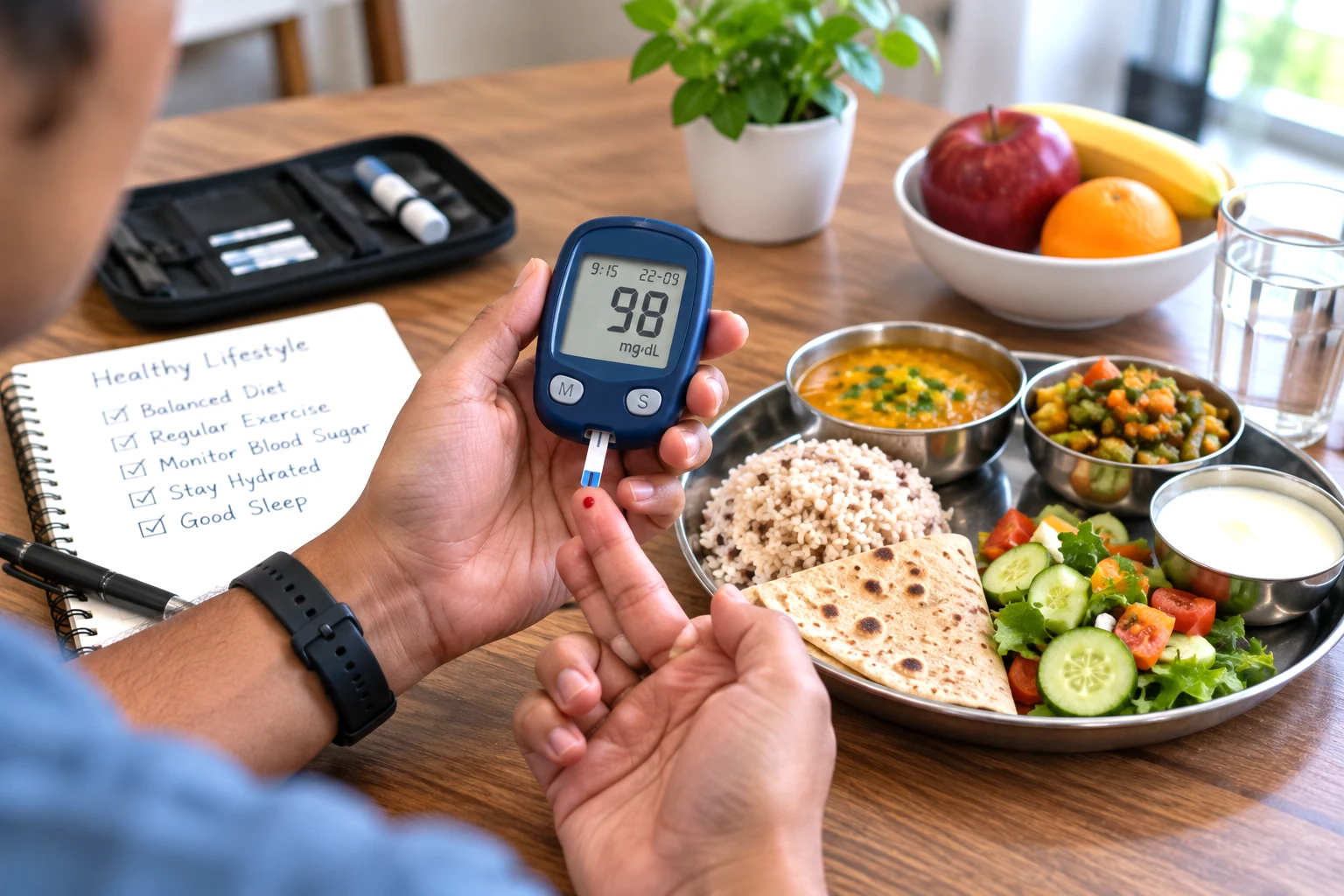
What is a normal blood sugar level? See fasting, 2-hour glucose and HbA1c ranges for normal, prediabetes and diabetes, plus testing guidance and practical Indian diet tips.
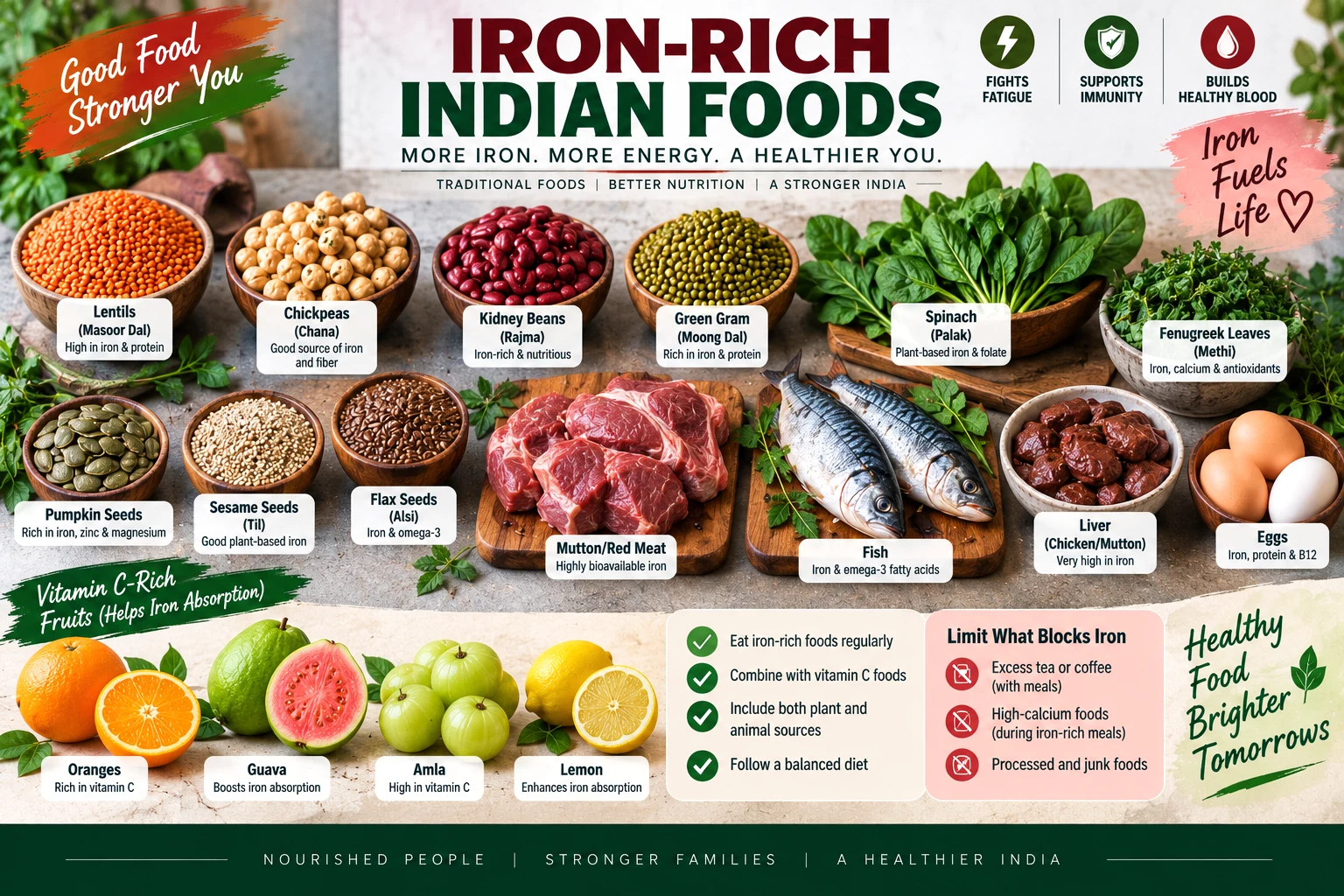
Iron is found in meat, seafood, lentils, beans, leafy greens, nuts and fortified foods — but absorption differs. Learn how vitamin C can help and why anaemia needs proper diagnosis.
This guide explains what those numbers mean, why online “BP charts by age” can be misleading, how to measure blood pressure properly, practical Indian diet and lifestyle changes, and when a high reading needs urgent medical attention.
Key Takeaways
Blood pressure below 120/80 mmHg is generally considered normal.
130–139 or 80–89 is Stage 1 under AHA classification.
Repeated readings of 140/90 or higher meet the usual WHO/Indian hypertension threshold.
Most people with hypertension have no symptoms.
Correct home measurement technique is essential.
Lifestyle changes plus prescribed treatment form the foundation of control.
Quick Answer: Normal Blood Pressure Chart for Adults
Blood pressure
General interpretation
Below 120/80 mmHg
Normal
120–129 and below 80
Elevated blood pressure under AHA classification
130–139 or 80–89
Stage 1 hypertension under AHA classification
140 or higher or 90 or higher
Stage 2 under AHA classification; also meets the usual WHO/Indian hypertension threshold when repeatedly confirmed
Above 180 and/or 120
Severe hypertension; requires prompt medical assessment
Above 180 and/or 120 with concerning symptoms
Possible hypertensive emergency — seek emergency medical care
A single higher-than-normal reading does not always mean you have hypertension.
Stress, recent activity, caffeine, smoking, pain, an incorrect cuff size and poor measurement technique can temporarily change the result.
Diagnosis should be based on properly measured and usually repeated readings.
What Do the Two Blood Pressure Numbers Mean?
A blood pressure result is written as two numbers, such as:
120/80 mmHg
The top number is called systolic blood pressure.
It measures the pressure inside your arteries when your heart contracts and pumps blood.
The bottom number is called diastolic blood pressure.
It measures the pressure while the heart relaxes between beats.
For example:
118/76 mmHg means:
systolic pressure: 118
diastolic pressure: 76
Both numbers matter.
A person can have high blood pressure because the systolic number is high, the diastolic number is high, or both are high.
Is 120/80 Normal Blood Pressure?
A reading around 120/80 has traditionally been widely used as a reference point, but current American Heart Association classification defines normal blood pressure more precisely as:
systolic below 120 AND diastolic below 80 mmHg.
So:
115/75 → normal
118/79 → normal
125/78 → elevated under AHA classification
135/85 → Stage 1 under AHA classification
145/92 → hypertension range under both AHA and WHO/Indian thresholds
These examples are for general adult interpretation and are not individual medical diagnoses.
Why Do Some Websites Say Hypertension Starts at 130/80 While Others Say 140/90?
This is one of the biggest sources of confusion.
The American Heart Association/American College of Cardiology framework classifies:
normal: below 120/80
elevated: 120–129 and below 80
Stage 1: 130–139 or 80–89
Stage 2: 140/90 or above.
The World Health Organization, including its India information, defines hypertension as repeated blood pressure of 140/90 mmHg or higher, measured on different days.
Indian Ministry of Health hypertension treatment guidance likewise uses 140–159/90–99 mmHg as Grade 1 hypertension.
These approaches are not necessarily contradictory.
The 130/80 threshold helps identify people whose cardiovascular risk is already increasing and who may benefit from lifestyle changes or, in some higher-risk cases, medication.
The 140/90 threshold remains a widely used diagnostic and treatment threshold internationally.
Your doctor may consider your overall cardiovascular risk—not just one number—when deciding what treatment is appropriate.
Blood Pressure Chart by Age: Does Normal BP Increase as You Get Older?
Many internet charts show increasingly high “normal” blood pressure values for older adults.
That can be misleading.
Major adult guidelines do not say that a blood pressure of 140/90 simply becomes normal because a person is 60 or 70.
A useful adult age chart is therefore:
Age
Healthy adult BP reference
18–39 years
Below 120/80 mmHg
40–59 years
Below 120/80 mmHg
60 years and above
Below 120/80 mmHg remains the normal category
The basic definition of normal adult blood pressure does not change every decade.
What can change with age is the appropriate treatment target.
An older adult who is frail, prone to falls, taking several medicines or living with kidney, heart or other conditions may need an individualised target.
That decision should be made with a healthcare professional rather than from an age-based internet chart.
Children also use different blood-pressure assessment methods, and pregnancy has separate considerations.
Why High Blood Pressure Is Called a Silent Condition
Most people with hypertension feel completely normal.
There may be no headache, dizziness, palpitations or other warning symptom.
WHO notes that many people with hypertension do not know they have it, making routine measurement important.
This is why statements such as:
“I don't have headaches, so my BP must be normal”
are unreliable.
You can have persistently high blood pressure for years without obvious symptoms.
During that time, it can gradually increase the risk of damage to the heart, brain, kidneys and blood vessels.
What Symptoms Can High Blood Pressure Cause?
Ordinary hypertension usually causes no symptoms.
Very high blood pressure, particularly around 180/120 mmHg or higher, may sometimes be associated with symptoms such as:
severe headache;
chest pain;
dizziness;
difficulty breathing;
blurred vision or other visual changes;
nausea or vomiting;
confusion;
unusual anxiety;
abnormal heartbeat;
or nosebleeds.
These symptoms are not specific to hypertension and can have other causes.
Do not wait for symptoms before checking your blood pressure.
When Is High Blood Pressure an Emergency?
A very high reading deserves particular attention.
If your blood pressure is above 180 systolic and/or 120 diastolic, sit quietly and repeat the measurement after several minutes using correct technique.
If it remains extremely high, contact a healthcare professional urgently.
If a reading above this level occurs together with symptoms such as:
chest pain;
shortness of breath;
weakness or numbness;
difficulty speaking;
major vision changes;
confusion;
or other severe neurological or cardiovascular symptoms,
seek emergency medical care immediately.
Do not attempt to rapidly lower extremely high blood pressure with extra medication unless a clinician has specifically instructed you to do so.
How to Measure Blood Pressure Correctly at Home
Poor measurement technique can produce misleading readings.
For a more reliable home reading:
Avoid exercise, smoking and caffeinated drinks for about 30 minutes before checking.
Empty your bladder.
Sit quietly for at least five minutes.
Sit in a chair with your back supported.
Keep both feet flat on the floor and do not cross your legs.
Place the cuff on bare skin rather than over clothing.
Support your arm so the cuff is around heart level.
Do not talk or use your phone during measurement.
Use a properly fitting upper-arm cuff.
Take two readings around one minute apart and record them.
One reading is only a snapshot.
Tracking measurements over several days gives your healthcare professional much more useful information.
Why Cuff Size Matters
A cuff that is too small for your upper arm can produce an artificially high reading.
A cuff that is too large can also reduce accuracy.
If you are buying a home BP monitor, choose a validated upper-arm device with an appropriate cuff size.
Wrist devices may be useful in some situations but are generally more sensitive to positioning.
What Can Temporarily Increase Blood Pressure?
Blood pressure changes throughout the day.
Temporary increases may occur with:
exercise;
stress or anxiety;
pain;
caffeine;
smoking;
a full bladder;
lack of rest before measurement;
some cold and decongestant medicines;
some anti-inflammatory painkillers;
and incorrect measurement technique.
This is another reason not to diagnose yourself from one isolated high reading.
What Causes High Blood Pressure?
In many adults there is no single identifiable cause.
Risk tends to increase through a combination of genetics, ageing and lifestyle factors.
WHO lists common risk factors including:
older age;
family history and genetics;
overweight or obesity;
physical inactivity;
high salt intake;
and excessive alcohol consumption.
Diabetes, kidney disease and other health conditions can also increase cardiovascular risk.
Some people develop secondary hypertension, where another medical condition or medicine contributes directly to the high blood pressure.
Why Uncontrolled BP Matters
Untreated hypertension can gradually damage blood vessels and organs.
Potential complications include:
stroke;
heart attack;
heart failure;
kidney damage;
and other cardiovascular complications.
The goal of treatment is therefore not simply to produce a better number on the BP machine.
It is to reduce long-term risk of serious disease.
How to Control High Blood Pressure Naturally
Lifestyle measures are important whether your blood pressure is mildly elevated or you already take medication.
However, lifestyle changes are not a guaranteed substitute for prescribed treatment.
Many people need both.
1. Reduce salt intake
One of the most useful changes for many Indian households is reducing total salt consumption.
WHO recommends adults consume less than 5 grams of salt per day, equivalent to less than about one teaspoon from all food sources combined.
That includes salt already present in packaged and prepared foods—not just what you add with a spoon.
Indian Ministry of Health guidance specifically highlights high-salt foods such as:
pickles;
chutneys;
sauces and ketchup;
papad;
chips and salty snacks;
salted biscuits;
cheese and salted butter;
bakery products;
and dried salted fish.
Instant noodles, packaged soups, namkeen and restaurant foods can also contribute substantial sodium.
A food does not need to taste extremely salty to contain a lot of sodium.
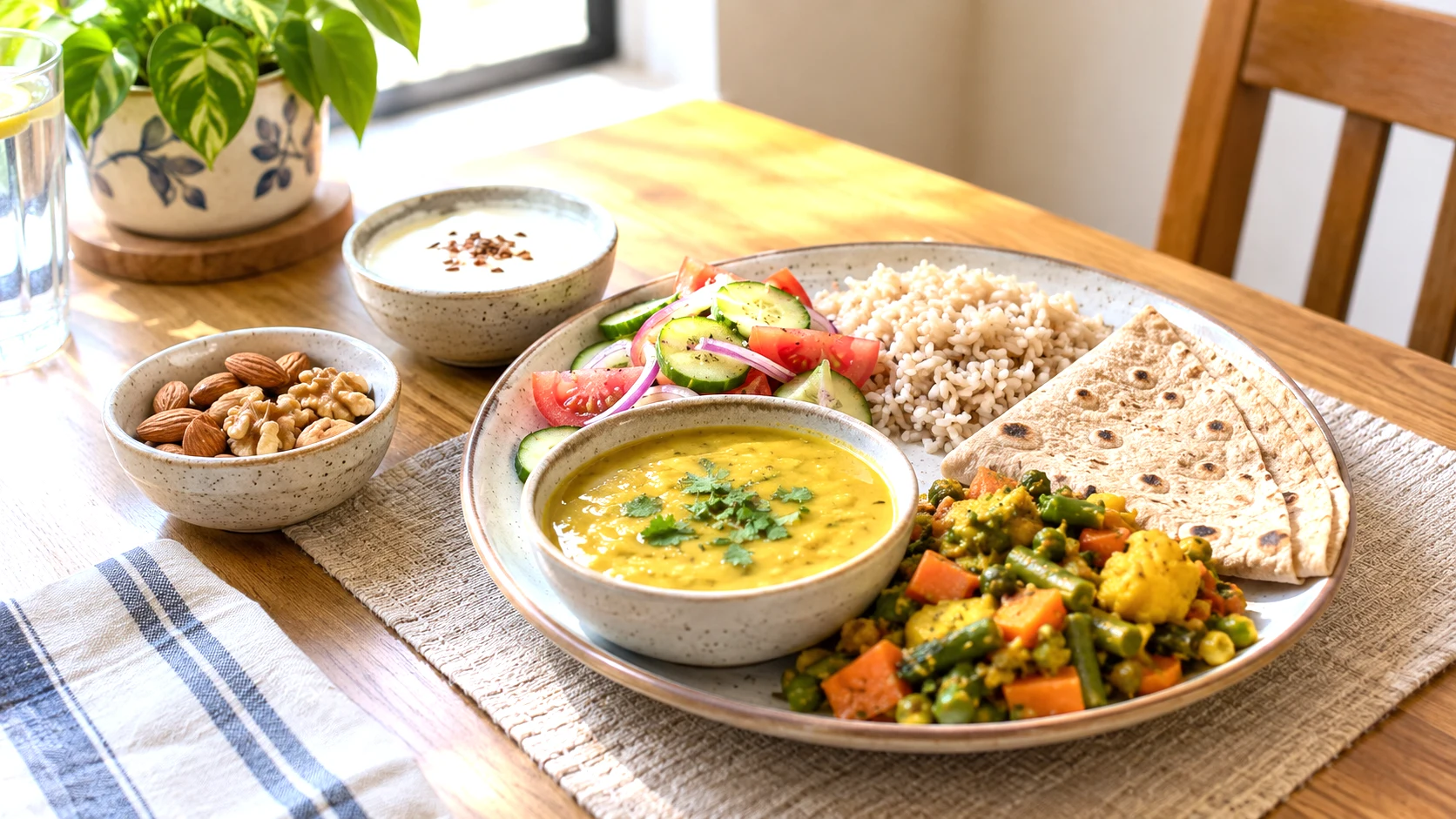
2. Build meals around vegetables and minimally processed foods
A BP-friendly Indian meal does not require a special imported diet.
A practical pattern can include:
plenty of vegetables;
fruit;
dal and other pulses;
beans;
whole grains or appropriately portioned rice/roti;
unsalted nuts and seeds;
curd or other suitable dairy;
fish, eggs or lean meat for people who eat them;
and less fried and highly processed food.
The overall goal is a diet rich in minimally processed plant foods and lower in sodium, saturated fat and trans fat.
3. Be careful with hidden salt
Cutting table salt is useful, but hidden sodium can still keep intake high.
Common sources include:
packaged snacks;
ready-made masalas containing added salt;
sauces;
instant foods;
restaurant gravies;
bakery products;
processed meats;
salted nuts;
packaged savouries;
and pickles.
Checking food labels can help.
4. Exercise regularly
WHO recommends adults aim for at least 150 minutes of moderate-intensity aerobic activity per week, or 75 minutes of vigorous activity, along with muscle-strengthening activity on two or more days where appropriate.
Moderate activity can include brisk walking, cycling, swimming or similar exercise.
Someone who has been inactive for a long time or has significant heart disease should discuss a safe exercise plan with a clinician before suddenly beginning strenuous activity.
5. Work toward a healthy body weight
If someone is overweight or obese, losing weight can help reduce blood pressure and improve other cardiovascular risk factors.
Crash diets are unnecessary.
Sustainable changes in food portions, activity and eating patterns are generally more useful than extreme short-term plans.
6. Avoid tobacco
Smoking and tobacco use substantially increase cardiovascular risk.
Stopping tobacco is important even if it does not immediately change every BP reading.
WHO includes quitting tobacco among the major lifestyle measures recommended for people with hypertension.
7. Limit alcohol
Drinking too much alcohol can raise blood pressure and interfere with good control.
WHO advises limiting alcohol consumption as part of hypertension prevention and treatment.
People who do not drink do not need to start drinking for supposed heart benefits.
8. Manage stress and sleep
Stress can temporarily increase blood pressure and can also make healthy eating, exercise and medication adherence more difficult.
Regular physical activity, adequate sleep, relaxation practices and addressing chronic sources of stress can support overall cardiovascular health.
Stress management should complement—not replace—medical treatment.
Do People with Hypertension Always Need Medicine?
No, but many do.
The decision depends on:
how high the average blood pressure is;
cardiovascular risk;
age and overall health;
diabetes;
kidney disease;
previous heart attack or stroke;
and how blood pressure responds to lifestyle changes.
The 2025 AHA/ACC guidance recommends medication plus lifestyle measures for adults with an average BP of 140/90 or higher, and for selected people at lower readings such as 130/80 or above when cardiovascular risk is sufficiently high.
WHO likewise notes that many people will require medication despite making healthy lifestyle changes.
Do not stop a prescribed BP medicine simply because recent readings are normal.
The medication may be the reason the blood pressure is controlled.
What Blood Pressure Should Someone with Hypertension Aim For?
The answer depends on the individual.
WHO notes that for many people, treatment aims to keep blood pressure below 140/90 mmHg.
A target below 130/80 mmHg may be recommended for people with conditions such as:
cardiovascular disease;
diabetes;
chronic kidney disease;
or high cardiovascular risk.
Targets can be adjusted depending on age, frailty, side effects and other clinical factors.
Should Older People Allow Their BP to Stay High?
Not simply because of age.
High systolic blood pressure becomes more common as arteries stiffen with ageing, but common does not mean harmless.
An older adult's treatment plan may need greater care because lowering blood pressure too aggressively can sometimes contribute to dizziness, falls or medication side effects.
The correct target therefore depends on the person's overall condition, but persistent high blood pressure should still be medically assessed.
How Often Should You Check Your BP?
People already diagnosed with hypertension may be asked to monitor at home more frequently, especially when:
starting treatment;
changing medicines;
checking whether treatment is working;
or investigating variable clinic readings.
For people without known hypertension, periodic measurement during routine healthcare visits is useful because the condition frequently has no symptoms.
If you repeatedly see readings above your usual range, arrange a medical review rather than waiting for symptoms.
When Should You Make a Doctor’s Appointment?
Consider medical evaluation if:
readings repeatedly reach 140/90 mmHg or higher;
readings are repeatedly around or above 130/80, especially if you have diabetes, kidney disease, previous heart disease or stroke;
your blood pressure suddenly becomes much higher than usual;
you experience dizziness or fainting while taking BP medicines;
your home readings differ substantially from clinic results;
or you are unsure whether your home monitor is accurate.
Pregnancy requires separate blood-pressure assessment and should not be managed using a general adult internet chart alone.
Simple Indian Hypertension Checklist
For everyday BP management:
measure blood pressure correctly;
keep a written or digital BP log;
keep total salt below about 5 g/day unless your clinician advises differently;
reduce pickle, papad, namkeen and packaged high-sodium foods;
eat more vegetables, fruit and minimally processed foods;
stay physically active;
maintain a healthy weight where possible;
avoid tobacco;
limit alcohol;
take prescribed medication consistently;
and keep follow-up appointments.
The most effective approach is usually a combination of these measures rather than searching for one food or home remedy that promises to “cure” hypertension.
Frequently Asked Questions
What is normal blood pressure for adults?
Blood pressure below 120/80 mmHg is classified as normal by current AHA guidance.
Is 130/80 high blood pressure?
Under AHA classification, 130 systolic or 80 diastolic reaches Stage 1 hypertension. WHO and Indian guidance generally use repeated readings of 140/90 mmHg or higher for the formal diagnosis of hypertension.
Is 140/90 dangerous?
A single 140/90 reading is not usually an emergency, but repeatedly measuring at or above this level meets the commonly used WHO/Indian threshold for hypertension and should be medically assessed.
Does high BP cause headaches?
Most people with hypertension have no symptoms. Severe hypertension can sometimes cause headache, vision changes, chest pain or other symptoms, but absence of headache does not mean your BP is normal.
What should I do if my BP is above 180/120?
Repeat the measurement after sitting quietly. If it remains above 180/120, seek prompt medical advice. If it is accompanied by chest pain, breathing difficulty, weakness, numbness, vision changes, difficulty speaking or other severe symptoms, seek emergency medical care.
Does normal blood pressure change with age?
The standard adult “normal” category remains below 120/80. Older adults may require individualised treatment targets based on health, frailty and medication tolerance, but high readings do not automatically become normal because of age.
Bottom Line
A blood pressure below 120/80 mmHg is generally considered normal for adults. Repeated readings of 140/90 mmHg or higher meet the usual WHO and Indian threshold for hypertension.
Most people with high blood pressure have no symptoms, so correct measurement and lifestyle measures—especially reducing salt, improving diet and staying active—are essential. Seek medical advice for persistently elevated readings or any reading above 180/120 with concerning symptoms.
Key Takeaway
Normal BP: below 120/80 mmHg.
140/90 or higher on repeated readings signals hypertension.
Most people have no symptoms — measure regularly.
Lifestyle changes plus prescribed treatment work best.
The Rajatheertha Team publishes news, explainers, guides and updates across India and the world. Our coverage follows Rajatheertha's editorial, verification and corrections standards.
Learn normal cholesterol, LDL, HDL and triglyceride levels, which foods can help lower LDL, practical Indian diet swaps, exercise tips and when cholesterol medicine may be needed.
Learn the common signs and causes of vitamin D deficiency, how the 25(OH)D blood test is interpreted, vitamin D-rich foods available in India, sunlight basics and when supplements or medical advice may be needed.
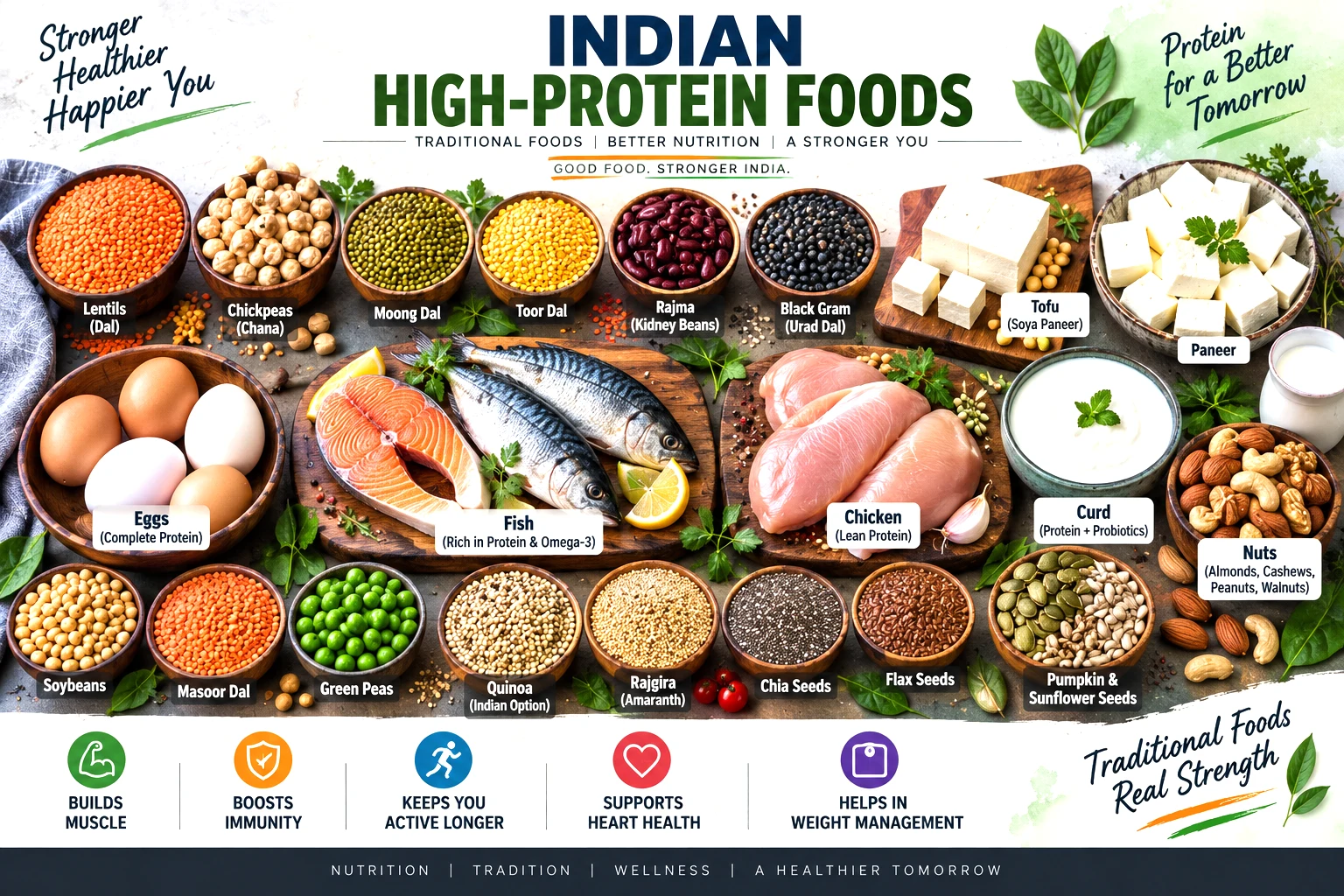
From dal, soy and paneer to eggs, fish and chicken, Indian diets offer plenty of protein options. Here’s how to build balanced meals without depending entirely on supplements.
Always feeling tired even after sleeping? Learn common causes of constant fatigue, including poor sleep, anaemia, thyroid problems, diabetes, vitamin deficiencies and sleep apnoea, plus when to get tested or see a doctor.
Almonds, walnuts, pistachios, cashews and raisins all provide different nutrients. Here’s what each one contains, how much to eat, whether soaking is necessary, the best ways to include them in your diet, and what to watch out for.
Starting fitness at home does not require expensive equipment or hour-long workouts. This beginner-friendly guide explains a simple bodyweight routine, a four-week progression plan and practical ways to make exercise a habit you can maintain.






0 Comments