BRICS New Delhi Declaration Puts TB, Obesity and Mental Health High on Health Agenda
BRICS leaders have backed stronger cooperation on tuberculosis, obesity, mental health and other non-communicable diseases, while also supporting resilient health systems, disease surveillance and wider access to medicines and vaccines.
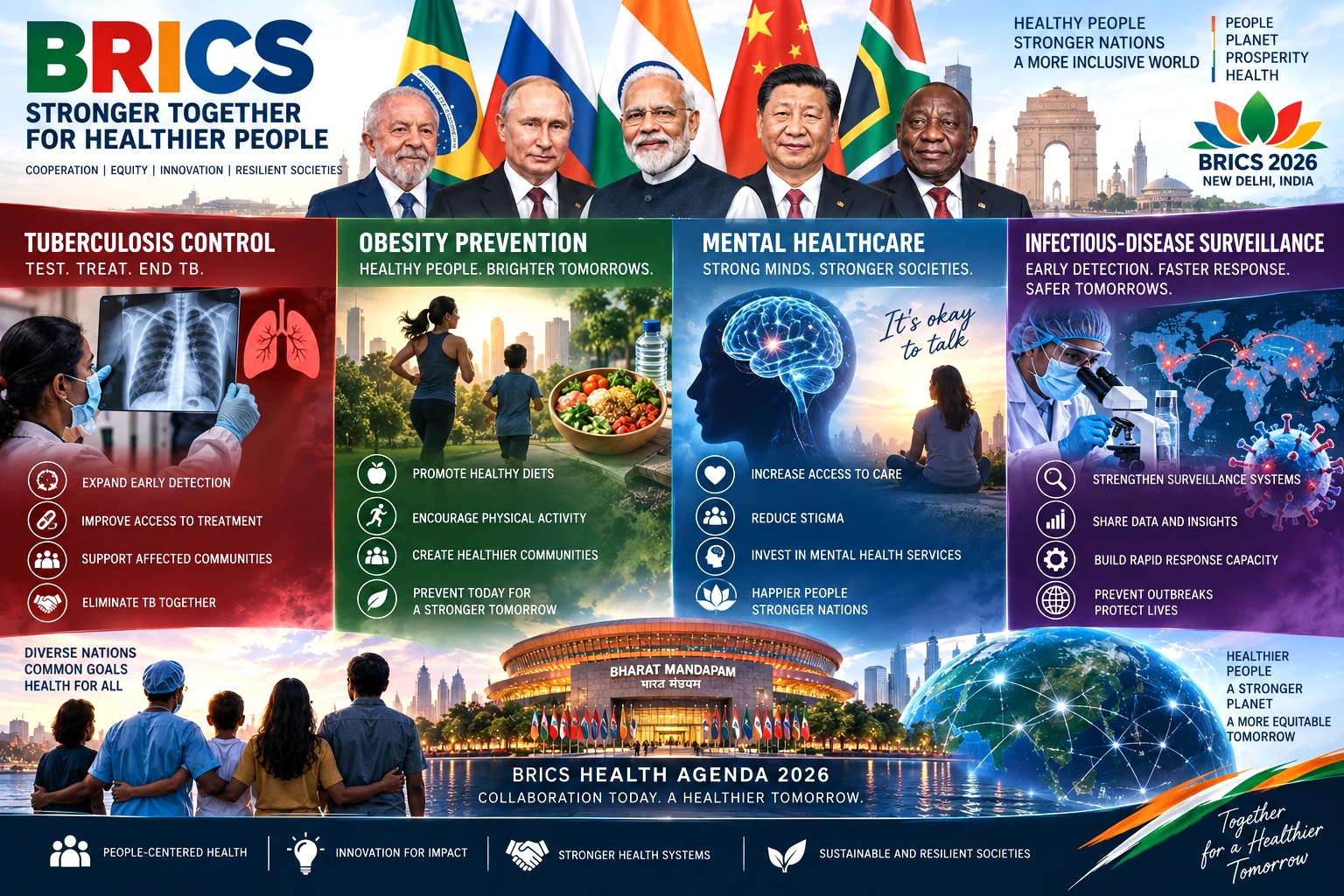
BRICS health priorities including tuberculosis control, obesity prevention, mental healthcare and infectious-disease surveillance
Table of Contents (18 sections)
Tuberculosis, obesity and mental health have moved higher on the BRICS policy agenda after leaders meeting in New Delhi backed deeper cooperation on some of the most persistent health challenges facing their populations.
The New Delhi Declaration, adopted at the 18th BRICS Summit, places public health within a wider resilience agenda that also covers infectious diseases, health-system preparedness, access to medicines, vaccines and other medical products.
The focus is significant because BRICS brings together countries with very different health systems but several overlapping challenges.
Tuberculosis remains a major infectious-disease burden in parts of the grouping. At the same time, obesity, cardiovascular disease, diabetes, cancer and other non-communicable diseases are becoming increasingly important public-health concerns.
Mental health adds another layer, involving not only access to clinical treatment but also prevention, early identification, social support and integration with primary healthcare.
Recommended Reading
Related Stories & In-Depth Guides
Curated editorial perspectives matching this topic.
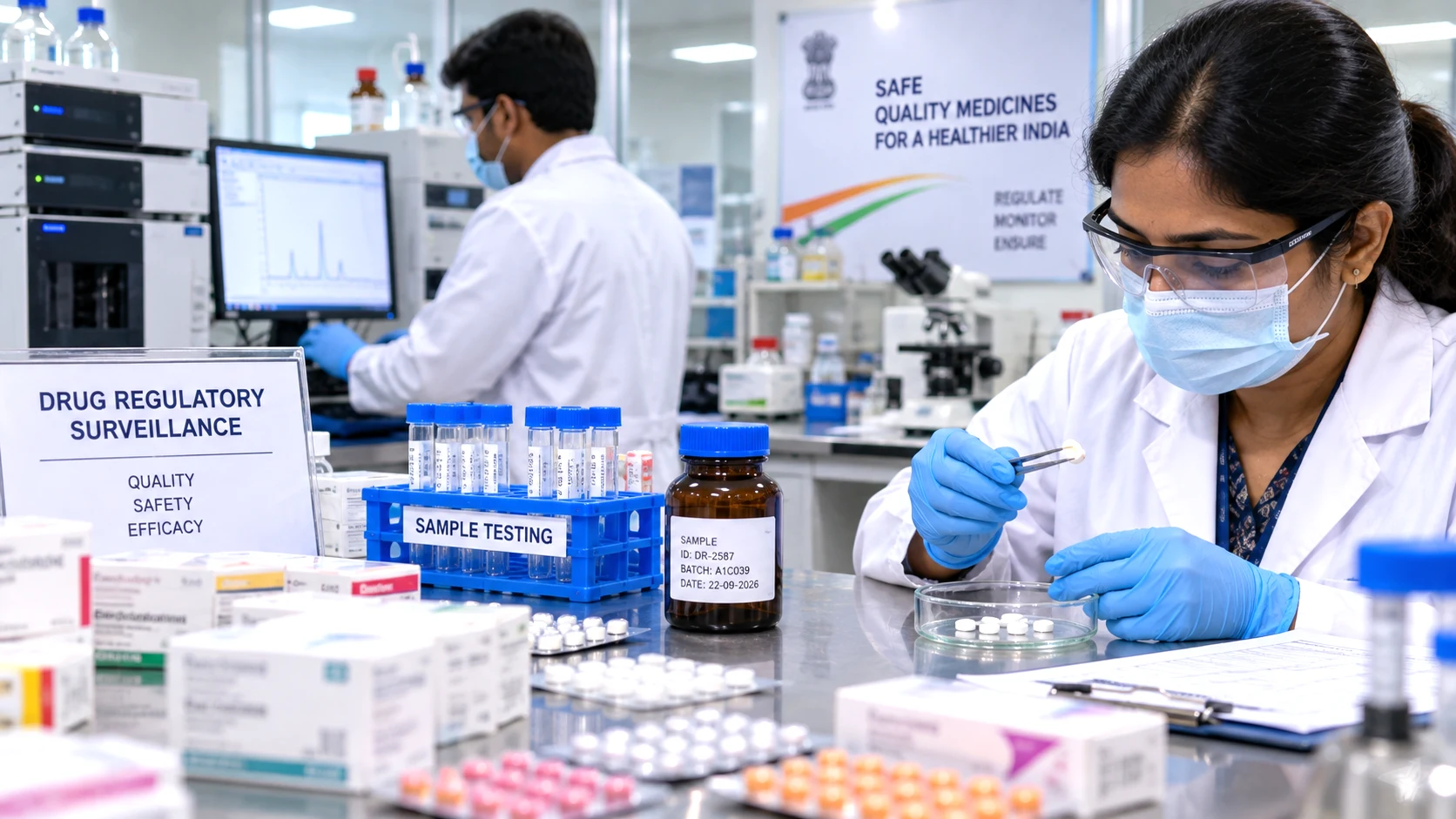
CDSCO's August 2026 surveillance identified 220 drug samples as Not of Standard Quality—29 through central laboratories and 191 through state laboratories. One spurious sample was also detected in Delhi.
Learn normal cholesterol, LDL, HDL and triglyceride levels, which foods can help lower LDL, practical Indian diet swaps, exercise tips and when cholesterol medicine may be needed.
The summit’s health commitments do not create a common BRICS healthcare system. Instead, they establish areas in which governments intend to increase cooperation, exchange knowledge and strengthen preparedness.
Key Takeaways
The 2026 New Delhi Declaration identifies tuberculosis, obesity, mental health and non-communicable diseases among important areas for stronger BRICS health cooperation.
BRICS leaders also backed work on infectious-disease surveillance, including an integrated early-warning system.
The World Health Organization welcomed health commitments emerging from India’s BRICS presidency and the New Delhi summit.
The declaration should be understood as a framework for cooperation, not as evidence that BRICS has created a single health programme or binding treatment policy for all member countries.
Separately in India, food labelling remains an important public-health issue, with FSSAI rules and proposals aimed at helping consumers understand packaged-food nutrition information more clearly.
Tuberculosis Remains a Major BRICS Priority
Tuberculosis has long required international cooperation because controlling it depends on diagnosis, treatment access, surveillance, drug resistance monitoring and continuity of care.
The New Delhi health agenda reinforces cooperation against TB rather than treating it as a problem that individual countries can address in isolation.
For countries carrying a substantial disease burden, earlier detection remains particularly important.
People with undiagnosed active tuberculosis can continue transmitting the infection, while interrupted or inadequate treatment can make disease control more difficult.
Drug-resistant tuberculosis presents an additional challenge because treatment can become longer and more complex.
BRICS cooperation can potentially support areas such as research, diagnostics, treatment strategies, surveillance and sharing of public-health experience.
But summit commitments alone do not reduce infections.
Their impact will depend on what member governments subsequently implement through national programmes and joint initiatives.
Obesity Moves Further Into the Public-Health Debate
The declaration’s attention to obesity reflects a different kind of health challenge.
Unlike an infectious outbreak, obesity develops through a complex combination of diet, physical activity, genetics, socioeconomic conditions, the food environment and other factors.
It is associated with increased risk of several chronic conditions, including type 2 diabetes and cardiovascular disease.
The public-health response therefore extends beyond telling individuals to eat less or exercise more.
Governments increasingly examine food environments, nutritional information, urban design, physical activity, school meals and preventive healthcare when developing obesity policies.
That makes obesity relevant not only to health ministries but also to food regulation, education, urban policy and consumer protection.
The BRICS focus can provide another platform for countries to compare approaches and identify interventions that work in different social and economic environments.
Mental Health Receives Greater Recognition
Mental health is another area highlighted in BRICS health cooperation.
This matters because mental healthcare has historically received less attention and fewer resources than many physical-health services in numerous countries.
The challenges can include shortages of trained professionals, limited access outside major cities, treatment costs, stigma and insufficient integration between mental-health services and general healthcare.
A stronger public-health approach can involve incorporating mental-health screening and treatment into primary care rather than relying entirely on specialist hospitals.
Prevention is also important.
Workplace stress, social isolation, substance misuse, economic insecurity and exposure to violence can all interact with mental wellbeing.
The inclusion of mental health alongside other major health priorities reflects growing recognition that it is part of overall health rather than a separate or secondary concern.
Non-Communicable Diseases Are a Wider Challenge
Obesity and mental health sit within a broader BRICS discussion about non-communicable diseases.
NCDs include major conditions such as cardiovascular diseases, cancers, chronic respiratory diseases and diabetes.
Unlike many infectious diseases, they generally cannot be controlled through a single vaccination campaign or short treatment programme.
Prevention and management can require years of sustained healthcare.
That puts pressure on primary-care systems, hospitals, medicine supply chains and household finances.
As populations age and lifestyles change, countries can face a double burden: continuing infectious diseases alongside rapidly growing chronic disease.
India and several other BRICS members therefore have to strengthen both sides of their health systems simultaneously.
Disease Surveillance Is Another Major Theme
The summit’s health agenda is not limited to chronic disease.
Prime Minister Narendra Modi announced an initiative for an integrated early-warning system for infectious diseases, intended to strengthen cooperation and preparedness among BRICS countries.
The idea reflects one of the clearest lessons from recent global health emergencies: an outbreak detected early is generally easier to investigate and contain than one discovered after widespread transmission.
Effective early-warning systems depend on more than software.
They require reliable local reporting, laboratories, trained health workers, data sharing and mechanisms for authorities to respond when unusual patterns appear.
Cross-border cooperation becomes particularly important because infectious diseases do not stop at national boundaries.
Pandemic Preparedness Remains Part of the Resilience Agenda
The COVID-19 pandemic demonstrated how rapidly a health emergency can become an economic and social crisis.
Hospitals were only one part of the problem.
Countries also experienced shortages of medicines and protective equipment, disrupted international transport, interrupted manufacturing and enormous pressure on public finances.
The BRICS emphasis on resilient health systems reflects that experience.
Preparedness can include laboratory capacity, surveillance, emergency planning, manufacturing capability and reliable access to essential health products.
Diversified supply chains can also matter.
If the production of an essential medicine, vaccine ingredient or medical device is heavily concentrated in a small number of locations, a disruption can affect many countries simultaneously.
Health resilience therefore overlaps with the broader supply-chain agenda discussed at the New Delhi summit.
Access to Medicines Remains Important
Affordable access to medicines and vaccines remains particularly relevant for emerging and developing economies.
BRICS includes countries with substantial pharmaceutical manufacturing capacity as well as enormous healthcare markets.
That creates opportunities for cooperation in manufacturing, research and supply.
But affordability is only one part of access.
Medicines must also be available where patients need them, meet appropriate quality standards and reach health systems through reliable procurement and distribution.
Regulatory cooperation can potentially make some of those processes more efficient, although individual countries retain their own health and drug-regulation systems.
The New Delhi commitments should therefore be viewed as a framework for collaboration rather than a replacement for national regulators.
WHO Welcomes the Health Focus
The World Health Organization has welcomed the increased attention to health within the BRICS agenda, including efforts involving non-communicable diseases and other major public-health priorities.
WHO engagement is relevant because many of the issues identified by BRICS — TB, chronic disease, mental health, disease surveillance and access to health products — already involve international programmes and established global health targets.
BRICS can complement those efforts by creating additional cooperation among its members.
It does not replace WHO.
The two structures serve different purposes: WHO is the United Nations’ specialised health agency, while BRICS is an intergovernmental grouping whose agenda extends far beyond health.
India’s Health Challenges Give the Agenda Domestic Relevance
For India, the summit’s priorities closely overlap with domestic public-health challenges.
The country must simultaneously address infectious diseases such as tuberculosis and a growing burden of chronic conditions.
That requires a health system capable of prevention, early diagnosis and long-term treatment.
It also increases the importance of primary healthcare.
A patient with hypertension, diabetes, depression or another chronic condition may require repeated monitoring rather than a single episode of hospital treatment.
Preventive healthcare can therefore reduce both illness and longer-term pressure on hospitals.
This is one reason nutrition, food information and lifestyle-related health risks increasingly appear in the same policy conversation as conventional medical care.
Food Labelling Is a Separate but Related Indian Debate
Alongside the BRICS summit, India continues to debate how packaged foods should communicate nutritional information to consumers.
That issue falls under the Food Safety and Standards Authority of India, or FSSAI, and is separate from the New Delhi Declaration.
The two subjects should not be merged into one policy announcement.
BRICS health commitments concern international cooperation among member countries.
FSSAI food-labelling policy is part of India’s domestic food-regulation framework.
They intersect conceptually because nutrition and obesity are public-health issues, but the legal and institutional processes are different.
Why Front-of-Pack Information Matters
Traditional nutrition panels can contain useful information, but consumers do not always have time to study detailed tables while shopping.
That has led regulators and health organisations around the world to consider clearer front-of-pack information.
The underlying objective is to make important nutritional characteristics easier to identify.
Sugar, salt and saturated fat are among the nutrients commonly discussed in public-health approaches to packaged foods.
But designing a useful labelling system is not straightforward.
A label must be simple enough for consumers to understand while still accurately representing the nutritional characteristics of different products.
Rules also need clear serving-size definitions and consistent measurement standards.
Labels Alone Cannot Solve Obesity
Clearer food information can help consumers make choices, but obesity cannot realistically be addressed through labels alone.
Food affordability influences diet.
So does availability.
Children’s food environments, marketing, working hours, physical activity, sleep, urban design and socioeconomic circumstances can all affect health outcomes.
Genetics and individual medical factors also matter.
Reducing obesity to personal discipline therefore oversimplifies a complex public-health issue.
A broader strategy can combine consumer information with preventive healthcare, physical activity, nutrition education and healthier food environments.
This is where the BRICS discussion about obesity becomes more meaningful: the problem cuts across multiple parts of government and society.
Public-Health Policy Needs Evidence
Whether governments are dealing with TB, obesity, mental health or food regulation, interventions need evidence.
A policy can sound sensible without necessarily producing the intended result.
For example, a food label may attract attention but fail to change purchasing behaviour.
A mental-health programme may exist nationally but remain inaccessible in rural areas.
A TB programme may provide treatment while still missing people who have not been diagnosed.
Public-health policy therefore requires measurement after implementation.
Governments need to know not only whether a programme was launched but whether disease detection improved, treatment reached patients and health outcomes changed.
BRICS Can Share Approaches, but Health Systems Remain National
One advantage of international health cooperation is the ability to compare experience.
A successful screening programme in one country may offer useful lessons elsewhere.
Digital health systems can provide models for managing large populations.
Pharmaceutical manufacturing partnerships can strengthen access to medicines.
Research collaboration can improve understanding of diseases affecting several member countries.
But policies cannot always be copied directly.
BRICS countries differ in population, income, healthcare financing, demographics, infrastructure and disease patterns.
A programme that works in one health system may require significant adaptation in another.
The declaration therefore provides political support for cooperation rather than imposing a uniform health model.
What Happens Next
The practical test will come after the summit.
For tuberculosis, progress can be judged through stronger detection, treatment completion, prevention and reductions in disease burden.
For obesity and other NCDs, governments will need long-term strategies because meaningful population-level changes generally take time.
Mental-health commitments will depend heavily on whether countries expand actual access to care, including through primary healthcare and community services.
The infectious-disease early-warning initiative will require technical cooperation and functioning information-sharing mechanisms if it is to become more than a summit commitment.
India’s domestic food-labelling debate will proceed separately through its regulatory system.
Bottom Line
The health component of the New Delhi Declaration reflects a broader definition of resilience.
BRICS countries are not dealing with one health challenge.
They face infectious diseases such as tuberculosis, increasing burdens from obesity and other non-communicable diseases, unmet mental-health needs and the continuing possibility of new outbreaks.
The declaration gives these issues greater political visibility and supports deeper cooperation among member countries.
WHO’s welcome for the health focus adds international support, but the real measure of success will be implementation.
For India, the agenda also connects with domestic questions about preventive healthcare, nutrition and clearer food information.
The important distinction is that BRICS health commitments and FSSAI food-labelling policy are separate processes.
Both, however, point toward the same larger public-health principle: preventing disease requires action before patients reach hospitals.
Key Takeaway
The New Delhi Declaration prioritises tuberculosis, obesity, mental health and non-communicable diseases for stronger BRICS cooperation.
Leaders also backed infectious-disease surveillance, including an integrated early-warning system, and wider access to medicines and vaccines.
WHO has welcomed the health focus.
These are frameworks for cooperation, not a single common healthcare system.
India’s domestic food-labelling debate remains a separate regulatory process under FSSAI.
The Rajatheertha Team publishes news, explainers, guides and updates across India and the world. Our coverage follows Rajatheertha's editorial, verification and corrections standards.
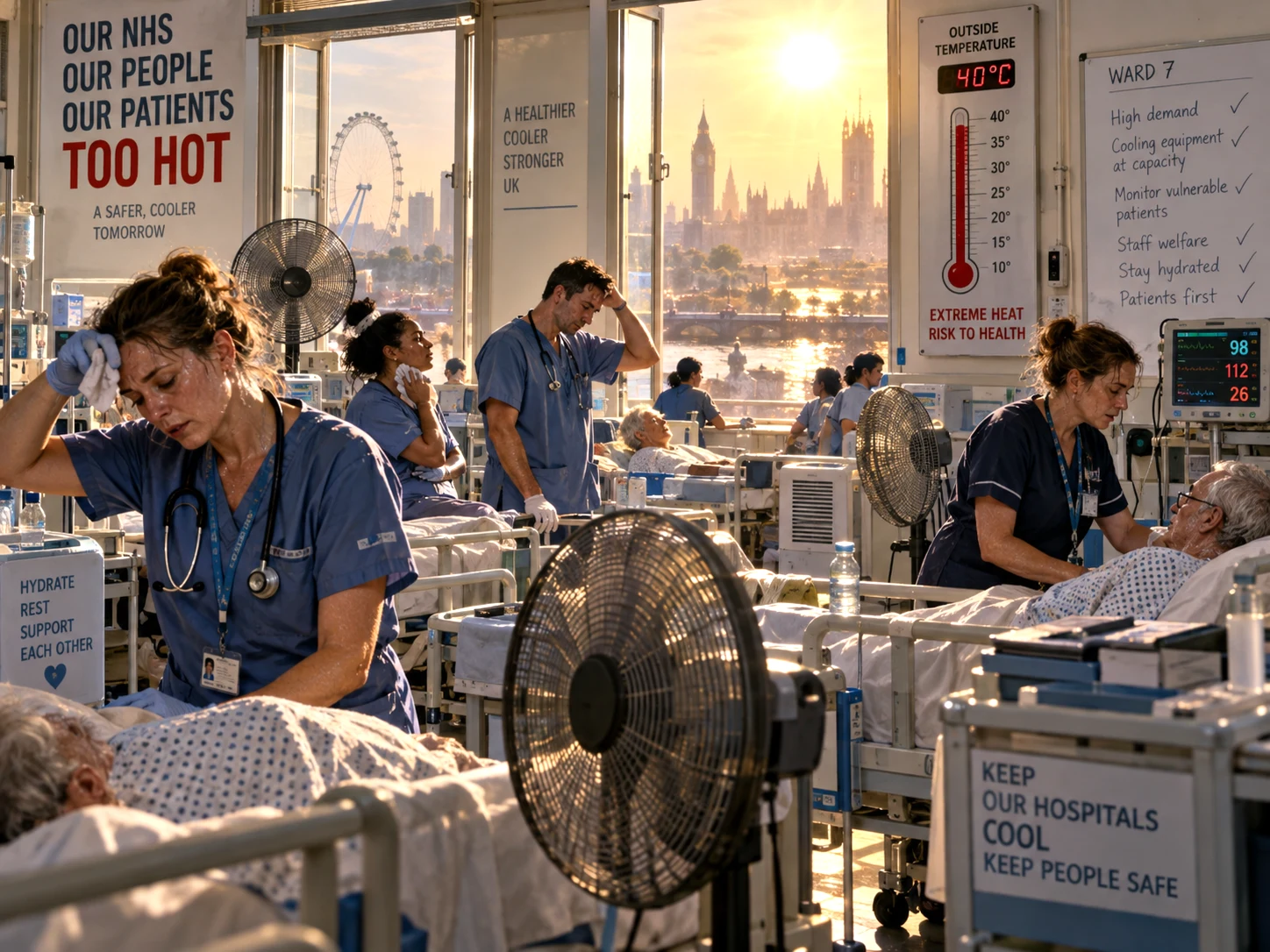
Britain's record-breaking 2026 summer has exposed a growing weakness in its health system: hospitals designed to retain warmth during cold winters are increasingly struggling with extreme summer heat. Patients and medical workers have faced sweltering wards, record emergency-department demand and di
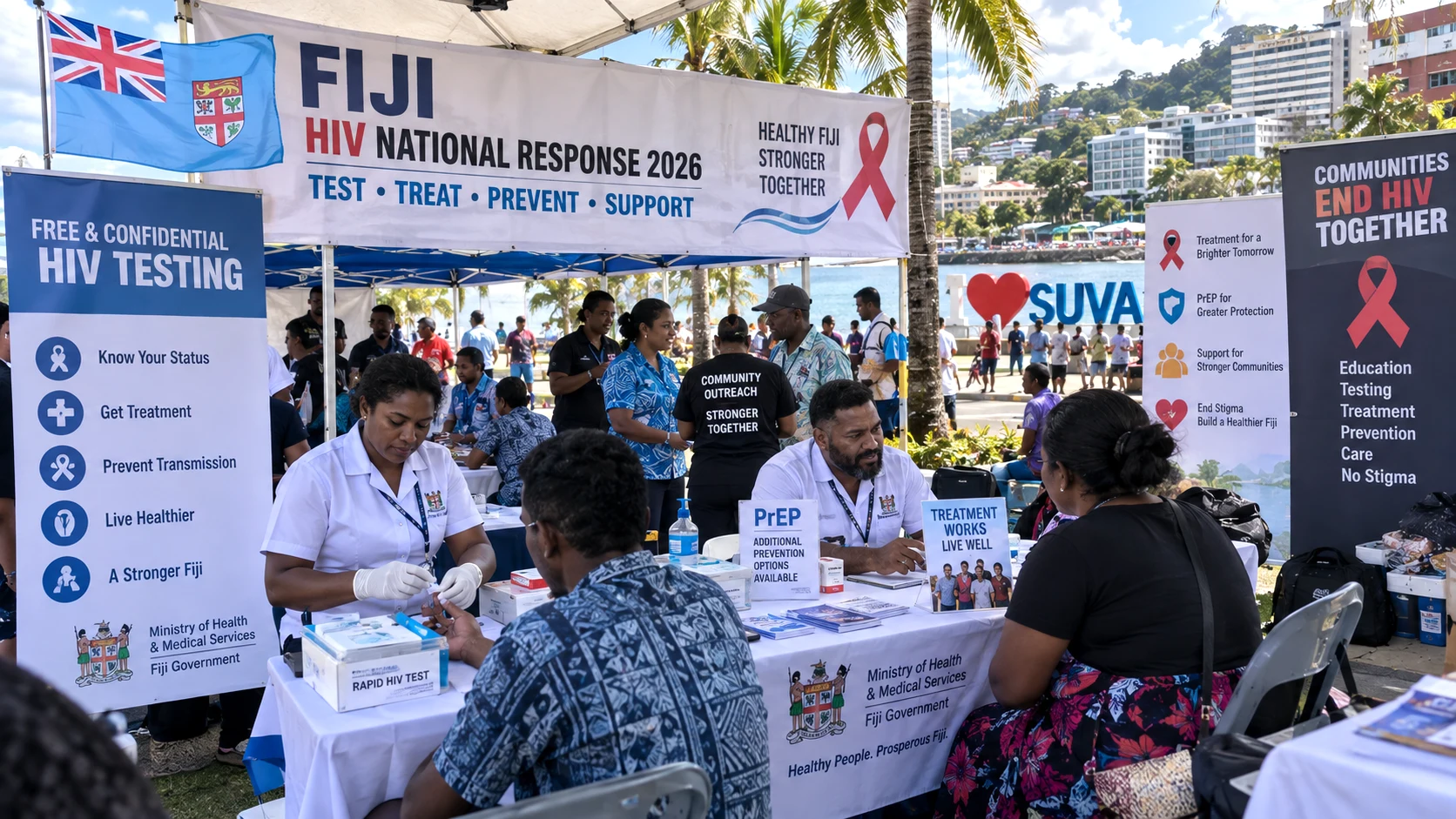
Fiji recorded 2,016 new HIV diagnoses in 2025, up 27% from the previous year, while UNAIDS estimates around 9,100 people were living with HIV. The government is expanding testing, treatment, PrEP and harm-reduction services as health authorities call for a coordinated national response.
Learn the common signs and causes of vitamin D deficiency, how the 25(OH)D blood test is interpreted, vitamin D-rich foods available in India, sunlight basics and when supplements or medical advice may be needed.
Always feeling tired even after sleeping? Learn common causes of constant fatigue, including poor sleep, anaemia, thyroid problems, diabetes, vitamin deficiencies and sleep apnoea, plus when to get tested or see a doctor.
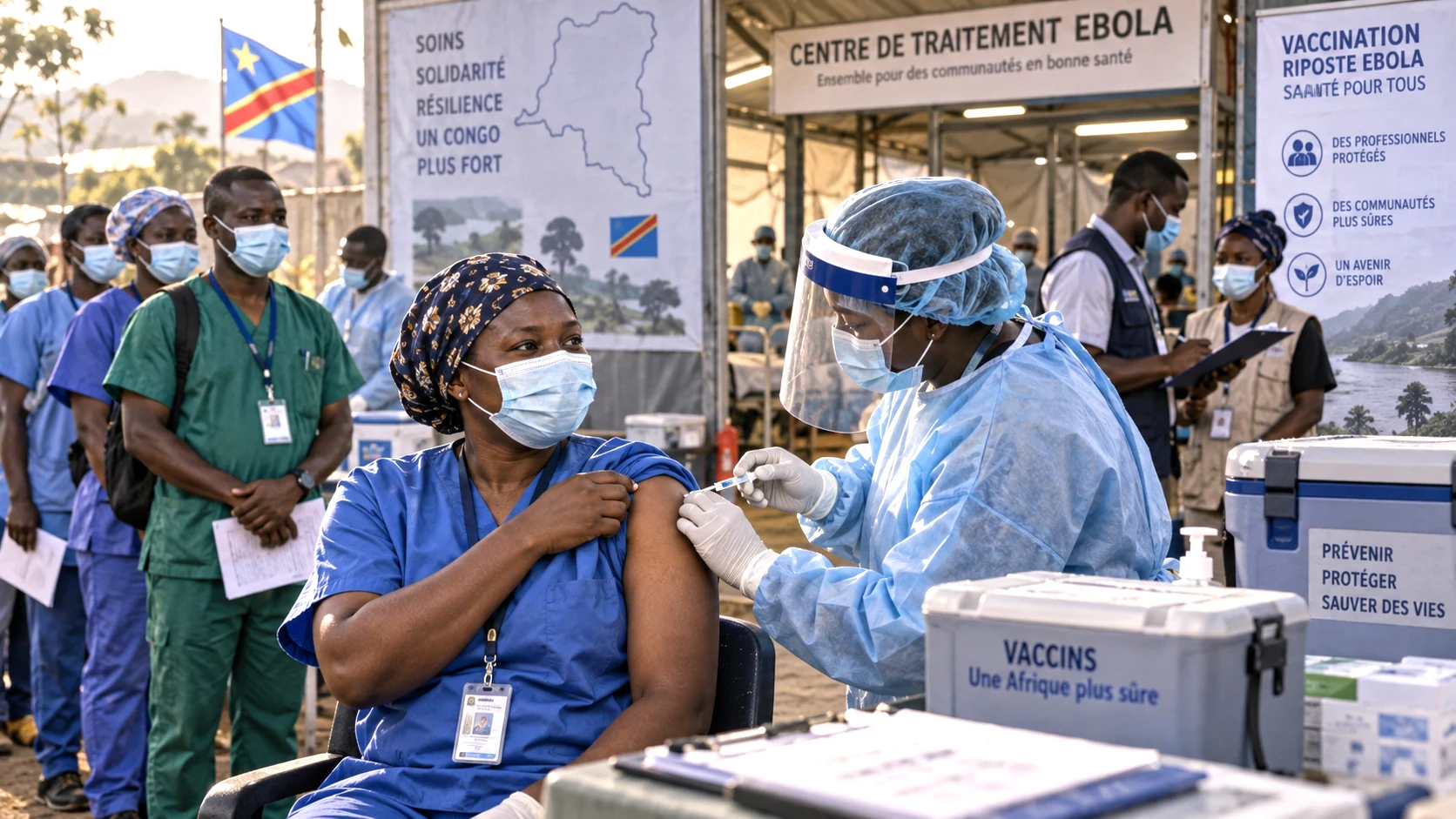
The Democratic Republic of the Congo has expanded Ebola vaccination among frontline health workers as a major study begins in Bunia to test whether the Ervebo vaccine can provide protection against the Bundibugyo virus driving the country’s largest recorded Ebola outbreak. The programme will follow
Feeling stressed or anxious? Simple habits such as slow breathing, short walks, journaling, better sleep and regular breaks from social media may help. Here are practical ways to manage everyday stress—and signs that it may be time to seek professional support.







0 Comments