US-Canada Trade War Explodes: Canada Hits Back After Trump’s 50% Tariffs
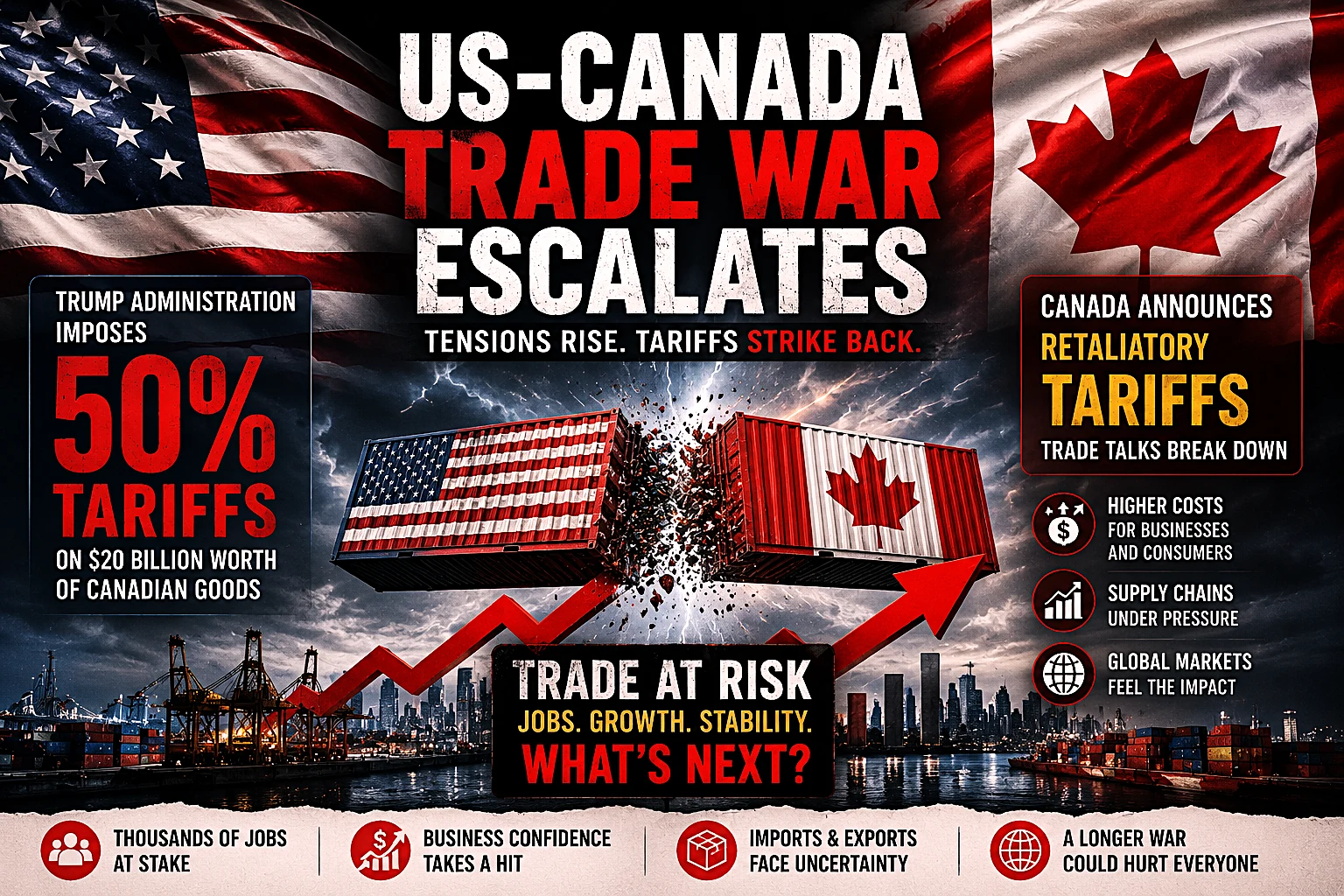
The US-Canada trade dispute has entered a dangerous new phase. After Washington imposed 50% tariffs on roughly $20 billion of Canadian goods, Canada announced dollar-for-dollar retaliation beginning September 8.
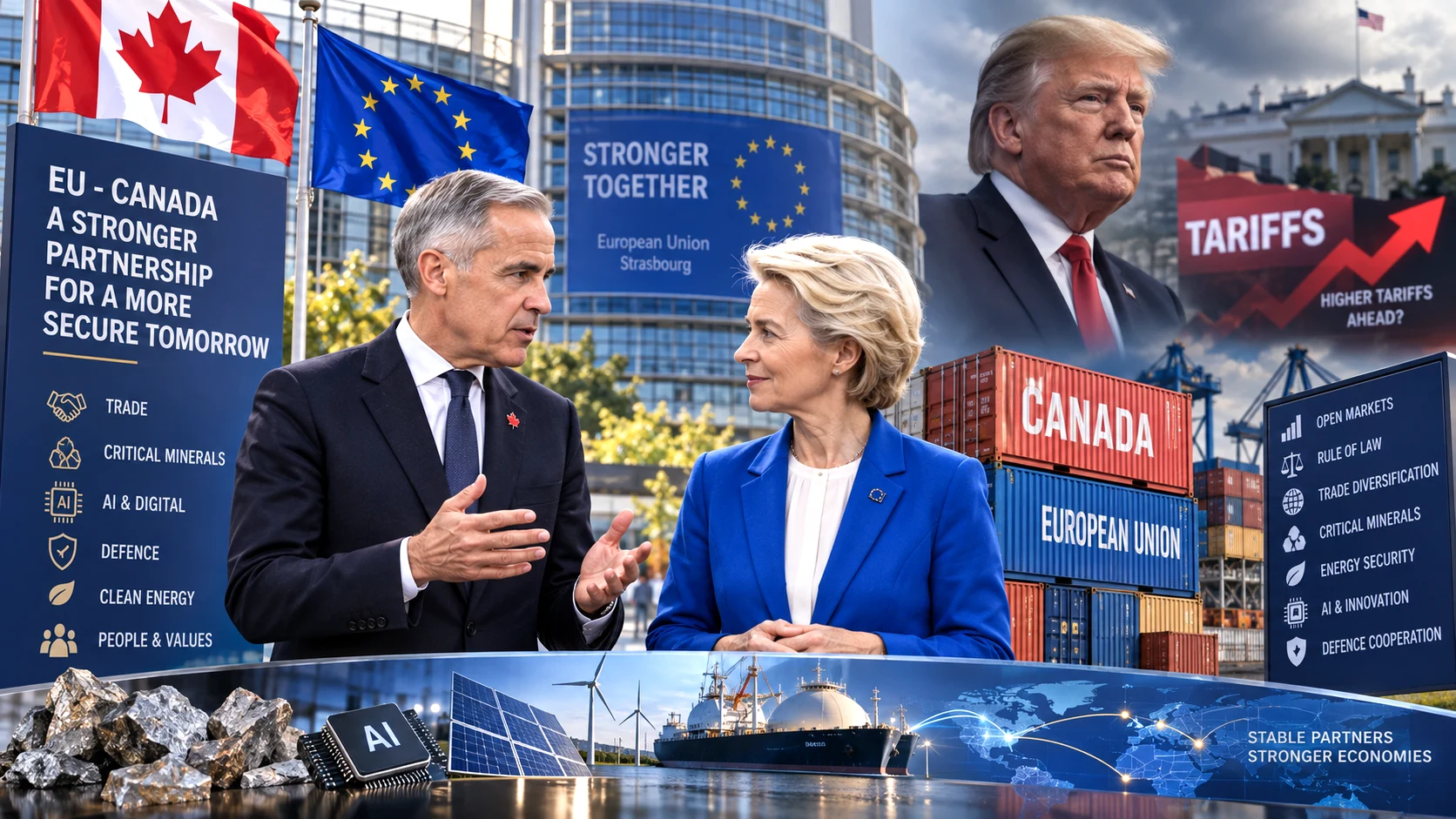
European Commission President Ursula von der Leyen has proposed opening the door for Canada to become the EU’s first “associate member,” but the status does not yet legally exist and has not been approved by the bloc’s 27 governments. Mark Carney welcomed the ambition in Strasbourg as Donald Trump w
Clocks go back on October 25, 2026 in the UK and most of Europe, while most of the US changes on November 1. Check the exact times, country-by-country dates, US exceptions and what happens to the time difference.
Prime Minister Mark Carney has announced retaliatory tariffs against American products on what his government describes as a dollar-for-dollar basis.
The new Canadian measures are scheduled to take effect on September 8.
What began as a trade dispute has now developed into a serious economic confrontation between two neighbours whose economies are deeply intertwined.
Trump’s 50% Tariffs Are Already in Effect
The latest escalation came after negotiators failed to reach a new agreement.
The United States imposed a massive 50% tariff on a broad range of Canadian imports.
The measures affect hundreds of product categories, including goods such as:
Dairy products
Alcohol
Furniture
Building materials
Textiles
Electronics
Sporting goods
And numerous other products
Some USMCA-compliant trade remains treated differently depending on the applicable tariff measure, making the overall tariff structure complicated.
But the political message from Washington is unmistakable:
President Donald Trump is prepared to use extremely high tariffs to pressure Canada.
Canada Says: Dollar for Dollar
Ottawa isn’t accepting the move quietly.
Carney has pledged retaliation.
Canada plans tariffs on American goods beginning September 8, with products including American steel, electronics and other categories expected to be targeted.
The Canadian government has framed the response as defensive rather than an attempt to start a trade confrontation.
That creates a classic tariff cycle:
US taxes Canadian goods → Canada taxes American goods → Businesses pay more → Supply chains become more expensive → Consumers potentially face higher prices.
And if either country retaliates again, the cycle can continue.
Why Did the Trade Talks Collapse?
This is perhaps the most surprising part of the story.
The two countries had been negotiating intensely and appeared close to an agreement.
Then everything fell apart.
According to reporting on the negotiations, significant disagreements remained over automobiles, tariffs and conditions Canada considered unacceptable.
Canada also objected to proposals it believed could restrict its ability to independently manage aspects of future economic and trade policy.
The result was dramatic:
No agreement
New tariffs
Canadian retaliation
Another deterioration in one of the world’s most important bilateral trading relationships
The Auto Industry Could Become the Biggest Battlefield
If this trade war gets worse, watch the automobile industry.
The Canadian and American auto sectors aren’t really two completely separate manufacturing systems.
They are deeply integrated.
A component can be manufactured in one country, cross the border, be installed into another component, cross again, and eventually become part of a finished vehicle.
That’s why tariffs can become especially damaging.
Imagine a component worth $1,000.
If tariffs make it significantly more expensive every time it enters the United States, manufacturers eventually face a choice:
Absorb the additional cost
or
Pass some of it to customers
Either option creates economic pressure.
Trump Is Threatening Another 50% Auto Tariff
And the situation could become considerably more serious.
Trump has threatened additional 50% tariffs on Canadian cars and trucks, alongside measures affecting auto parts and steel, from January 2027.
If implemented, those tariffs could hit one of Canada’s most important industries.
But American manufacturers could feel the consequences too.
That’s because American factories rely heavily on Canadian components, materials and integrated supply chains.
In a deeply connected economy, hurting your trading partner can also increase costs at home.
Why American Consumers Should Care
Tariffs sound like something businesses or governments pay.
Ultimately, however, consumers can feel their effects.
When importing a product becomes more expensive, companies can:
Reduce profit margins
Find alternative suppliers
Cut costs elsewhere
Or raise prices
That means a tariff on Canadian goods can potentially affect the price Americans pay for products involving Canadian materials or imports.
Construction is one area to watch.
Canada is an important supplier of materials used by American builders.
Higher input costs can add further pressure to already expensive housing projects.
Canada Will Feel Pain Too
This isn’t a one-sided economic problem.
Canada depends heavily on the United States as an export market.
If Canadian goods become dramatically more expensive for American buyers because of tariffs, US companies may search for alternatives.
That can hurt:
Canadian manufacturers
Exporters
Workers
Border communities
Transportation companies
Businesses whose survival depends on American customers
Canada’s retaliation can also increase costs for Canadian businesses importing US products.
That’s why trade wars rarely produce simple winners.
A $20 Billion Tariff Fight Can Become Much Bigger
The immediate US measures affect roughly $20 billion in Canadian goods, according to Reuters reporting.
But focusing only on that number misses the larger danger.
The United States and Canada trade enormous amounts of goods and services every year.
If the confrontation spreads further into automobiles, steel, aluminium, energy, agriculture, critical minerals or other strategic industries, the economic consequences could become much larger.
That is what markets and businesses will be watching.
The Real Problem: These Economies Were Built to Work Together
The US-Canada border may separate two countries politically.
Economically, however, countless industries operate across it.
Factories were built assuming components could move efficiently between the two markets.
Energy infrastructure crosses the border.
Agricultural supply chains cross it.
Trucking networks cross it.
Workers and businesses on both sides depend on predictable trade.
A tariff war disrupts that assumption.
Companies suddenly have to ask:
Will our product face another tariff next month?
Should we change suppliers?
Should we move production?
Should we delay investment?
Will another retaliation arrive?
That uncertainty itself can damage investment.
Canada Is Talking About Sovereignty, Not Just Money
The dispute has also moved beyond economics.
Carney has portrayed some US demands as unacceptable to Canada’s independence and economic sovereignty.
Canadian political leaders have increasingly framed the confrontation as a question of defending the country’s ability to make its own decisions.
That makes compromise harder.
Once a tariff dispute becomes connected to national sovereignty and identity, leaders face greater domestic political pressure not to appear weak.
Could Canada Use Critical Minerals as Leverage?
Canada possesses something the United States badly needs: critical minerals.
These materials are important for:
Electric vehicles
Batteries
Electronics
Defence systems
Advanced manufacturing
Clean-energy technologies
Canada also has significant energy and natural-resource exports connected to the American economy.
That gives Ottawa potential leverage if the dispute becomes significantly more aggressive.
However, using strategic exports as retaliation would represent another major escalation and should not be treated as confirmed policy unless formally announced.
What About the USMCA?
Another enormous question hangs over the dispute:
What happens to North American free trade?
The United States-Mexico-Canada Agreement (USMCA) was designed to provide a stable framework for trade across North America.
The latest confrontation raises questions about how durable that framework will remain if the US and Canada continue imposing or threatening large tariffs against one another.
For companies that built supply chains around predictable North American trade, that uncertainty is serious.
Who Actually Wins a Trade War?
Politicians often present tariffs as a way to protect domestic workers and industries.
Sometimes tariffs can provide protection to specific domestic producers.
But broad trade wars create a much more complicated picture.
A protected steel producer may benefit.
A manufacturer that needs expensive steel may suffer.
An importer may lose.
A competing domestic company may gain.
A consumer may pay more.
An exporter may then get hit by retaliation.
That’s why the final economic impact isn’t captured by simply asking:
“Who imposed the bigger tariff?”
The real question is:
Who ultimately absorbs the higher costs?
From Friends to Economic Rivals?
Perhaps the most remarkable aspect of this story is the countries involved.
This isn’t a US trade confrontation with a distant geopolitical competitor.
It’s Canada.
The two countries share one of the world’s longest international borders.
Their economies have been deeply integrated for generations.
Their defence and security relationships are extensive.
Millions of people travel between them.
Businesses operate on both sides.
That’s what makes the current deterioration so significant.
Two of the world’s closest economic partners are increasingly treating trade as a weapon against one another.
What Happens on September 8?
That’s the next date to watch.
Canada’s newly announced retaliatory tariffs are scheduled to begin on:
September 8, 2026
Until then, there remains time for diplomacy.
But current signals suggest neither government wants to appear as though it is backing down.
If Canada’s tariffs take effect as announced, businesses on both sides will begin dealing with another layer of costs.
Then attention will shift to Washington.
Does Trump retaliate against Canada’s retaliation?
If the answer is yes, the trade war could enter another, even more dangerous round.
The Bigger Question: Can the US and Canada Still Find a Deal?
Ultimately, tariffs can be imposed quickly.
Rebuilding trust is much harder.
Both economies have strong reasons to negotiate.
American companies benefit from Canadian customers and materials.
Canadian companies depend heavily on access to the enormous US market.
Consumers on both sides benefit from efficient cross-border trade.
That economic reality creates pressure for compromise.
But politics is pushing in the opposite direction.
For now, the message from both capitals is increasingly confrontational.
Washington says Canada must accept its trade demands.
Ottawa says it will defend Canadian economic sovereignty.
And caught between those positions are millions of businesses, workers and consumers.
The US-Canada relationship has survived disagreements for generations.
But this time, the stakes are unusually high.
A 50% tariff wall is going up between two economies that spent decades tearing trade barriers down.
And unless negotiations restart, September 8 could mark the beginning of an even bigger North American trade battle.
The Rajatheertha Team publishes news, explainers, guides and updates across India and the world. Our coverage follows Rajatheertha's editorial, verification and corrections standards.
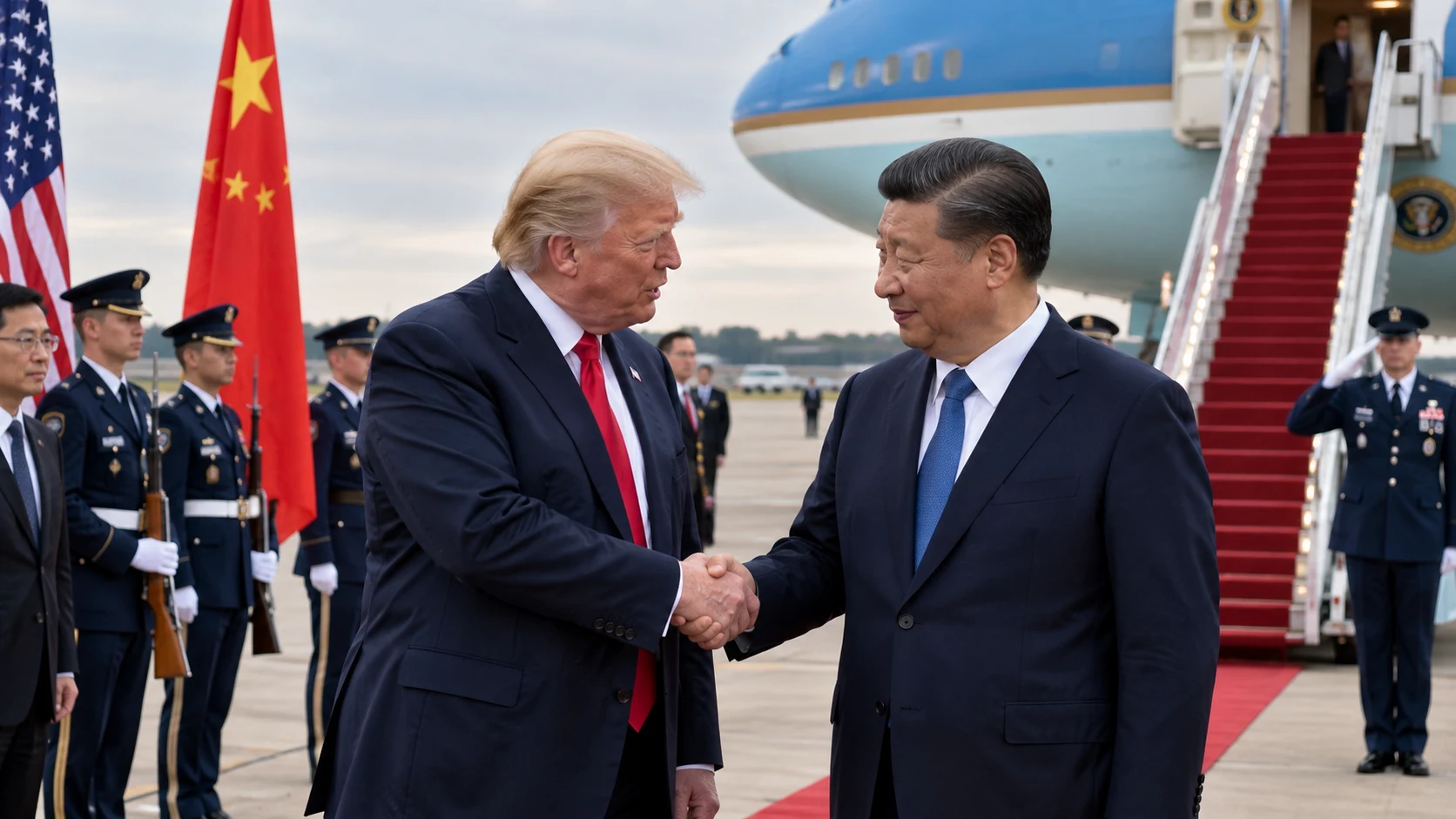
Chinese President Xi Jinping has arrived in Washington for a three-day state visit and high-stakes talks with Donald Trump. The US says the bilateral trade truce has been extended by two months to January 10, 2027.
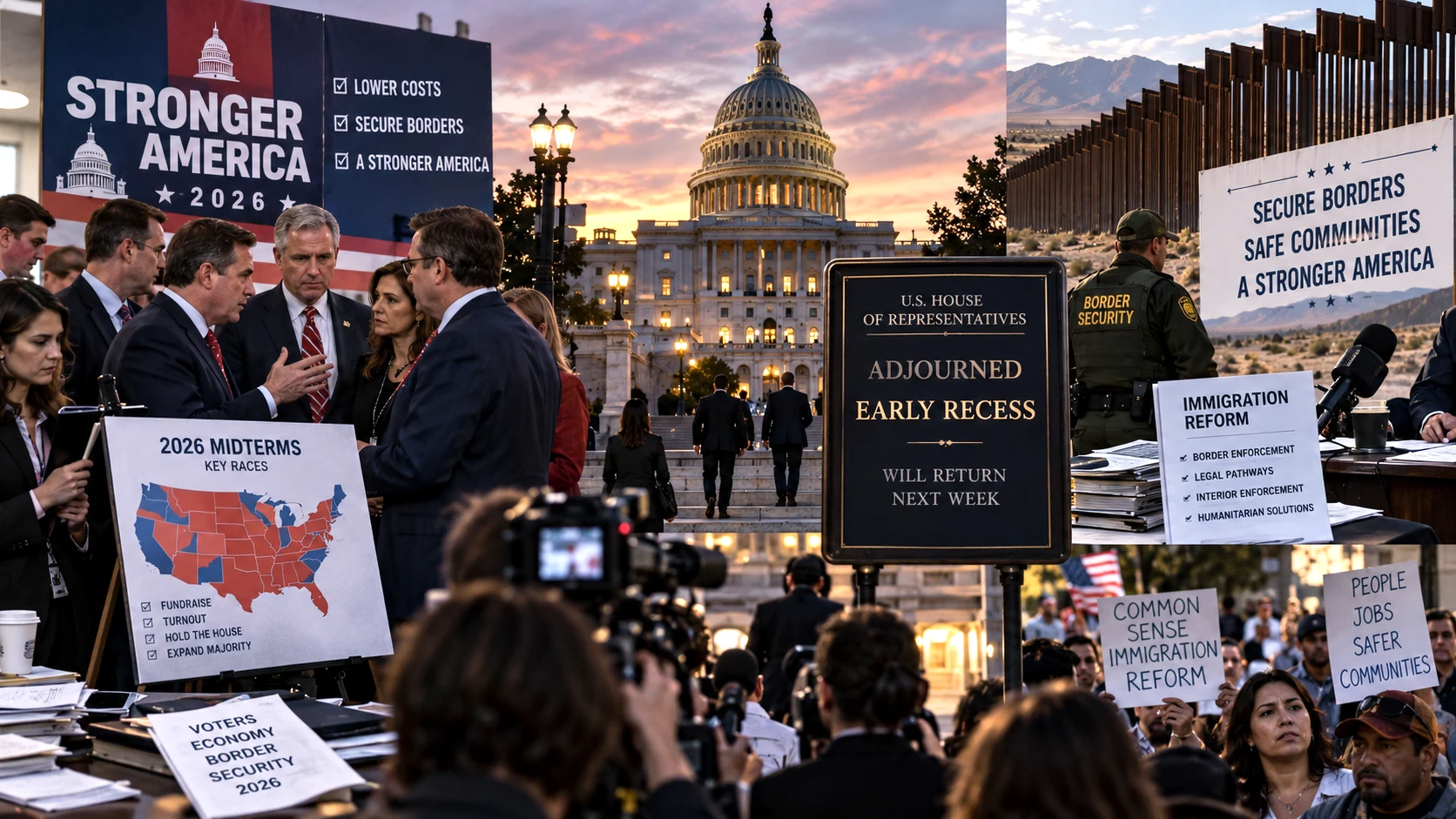
The Florida Republican says Hispanic voters who helped return Donald Trump to the White House now “feel betrayed,” while polling shows broader erosion in support for the president’s immigration approach. Separately, Speaker Mike Johnson has sent the House home early for the campaign season, drawing
Donald Trump says the United States will not resume military strikes on Iran before the November 3 midterm elections, but the blockade, sanctions and Hormuz dispute remain unresolved. Here is what the pause means for oil markets, diplomacy and India.
New White House Press Secretary Katie Zacharia is facing scrutiny over how she has described her legal background. Pepperdine confirms her law degree, while the California State Bar says it has no record of her being licensed. New reporting says she took but did not pass the California bar exam.
US and Iranian representatives held roughly three hours of mediated talks on the sidelines of the UN General Assembly after Donald Trump threatened Iran with further destruction if no deal is reached. Here is what was discussed and what remains unresolved.
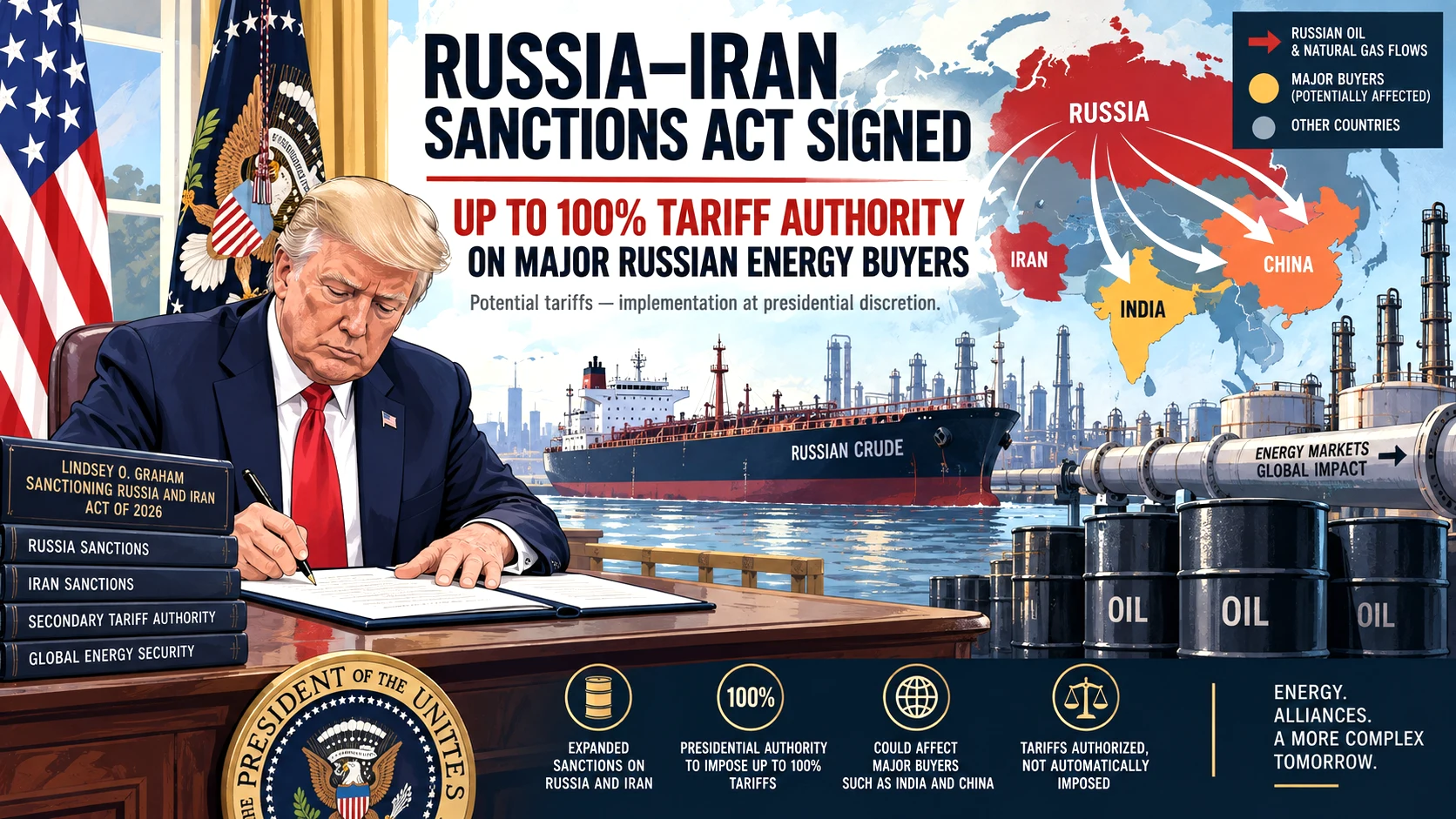
The new US law targets Russia’s energy, financial and defence networks and allows additional tariffs of up to 100% on goods from the largest buyers of Russian oil and gas. India faces significant exposure because of its large Russian crude imports, but a 100% tariff on Indian goods has not been impo







0 Comments