Canada-EU Alliance Takes Shape as Carney Backs Closer Ties and Trump Threatens Europe With Tariffs
European Commission President Ursula von der Leyen has proposed opening the door for Canada to become the EU’s first “associate member,” but the status does not yet legally exist and has not been approved by the bloc’s 27 governments. Mark Carney welcomed the ambition in Strasbourg as Donald Trump w
Canada and the European Union exploring a deeper strategic partnership amid US tariff threats
Table of Contents (20 sections)
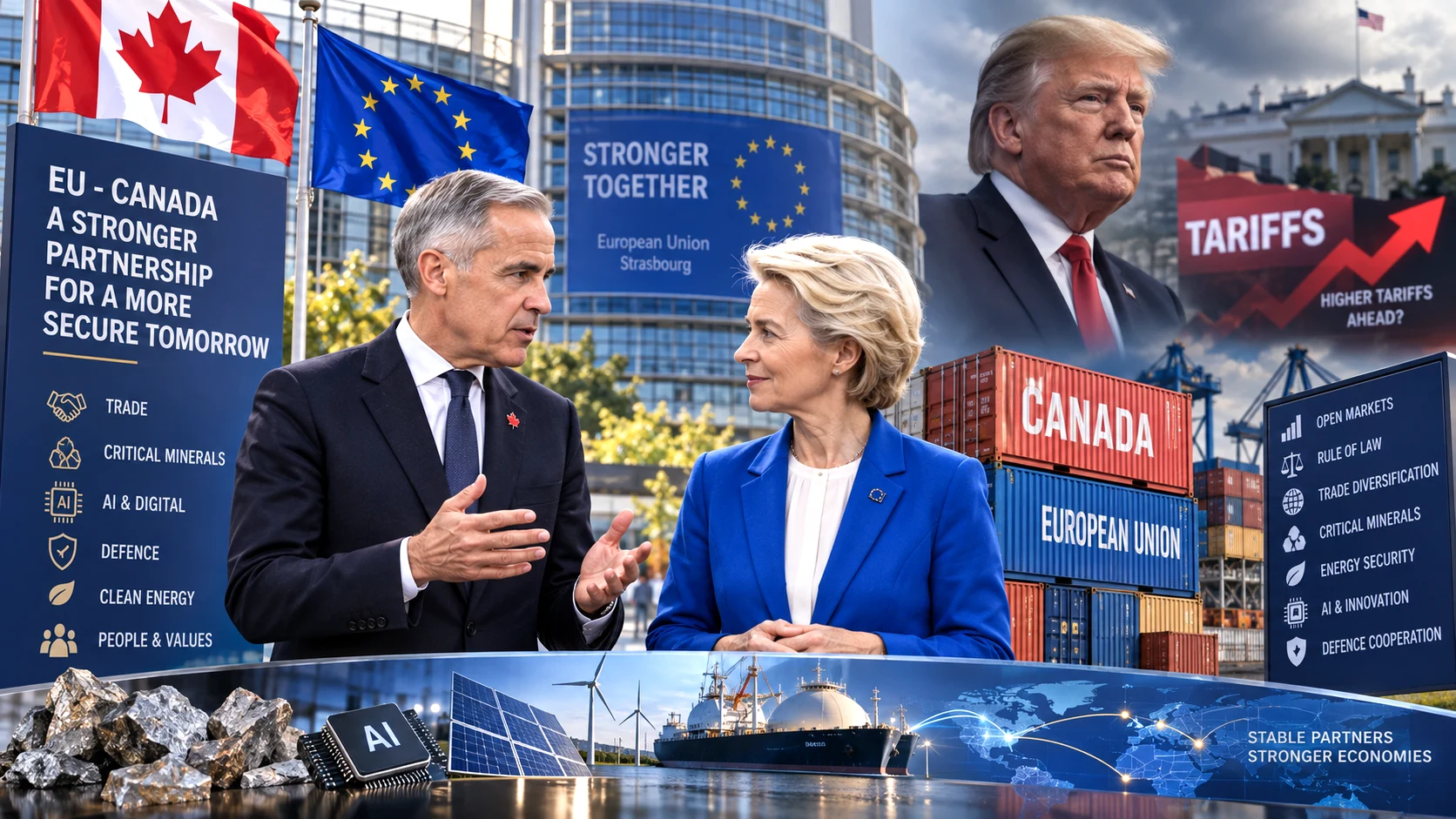
Canada and the European Union are exploring a potentially unprecedented political and economic relationship as Prime Minister Mark Carney seeks to reduce his country’s vulnerability to US pressure and President Donald Trump threatens Europe with additional tariffs if the initiative is directed against American interests.
Carney addressed the European Parliament in Strasbourg on September 17, telling lawmakers that Canada and Europe should build a deeper alliance around economic security, defence, technology, energy and democratic sovereignty.
His speech followed European Commission President Ursula von der Leyen’s surprise proposal a day earlier to open the door for Canada to become the European Union’s first “associate member.”
The proposal is politically significant, but its status needs careful explanation.
Canada has not joined the European Union, has not formally applied for conventional EU membership and has not received an accession offer comparable with those made to candidate countries.
Recommended Reading
Related Stories & In-Depth Guides
Curated editorial perspectives matching this topic.
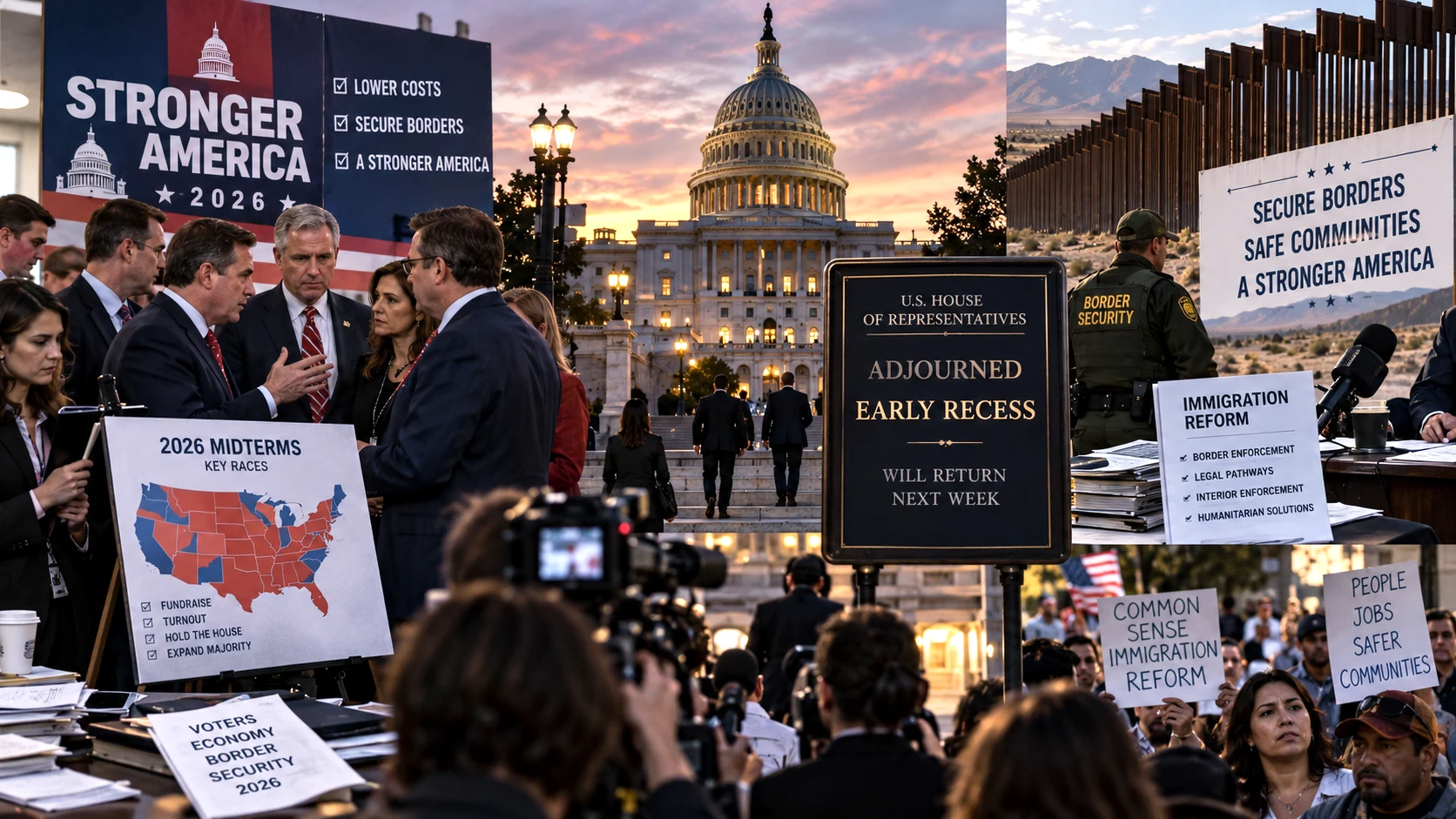
The Florida Republican says Hispanic voters who helped return Donald Trump to the White House now “feel betrayed,” while polling shows broader erosion in support for the president’s immigration approach. Separately, Speaker Mike Johnson has sent the House home early for the campaign season, drawing
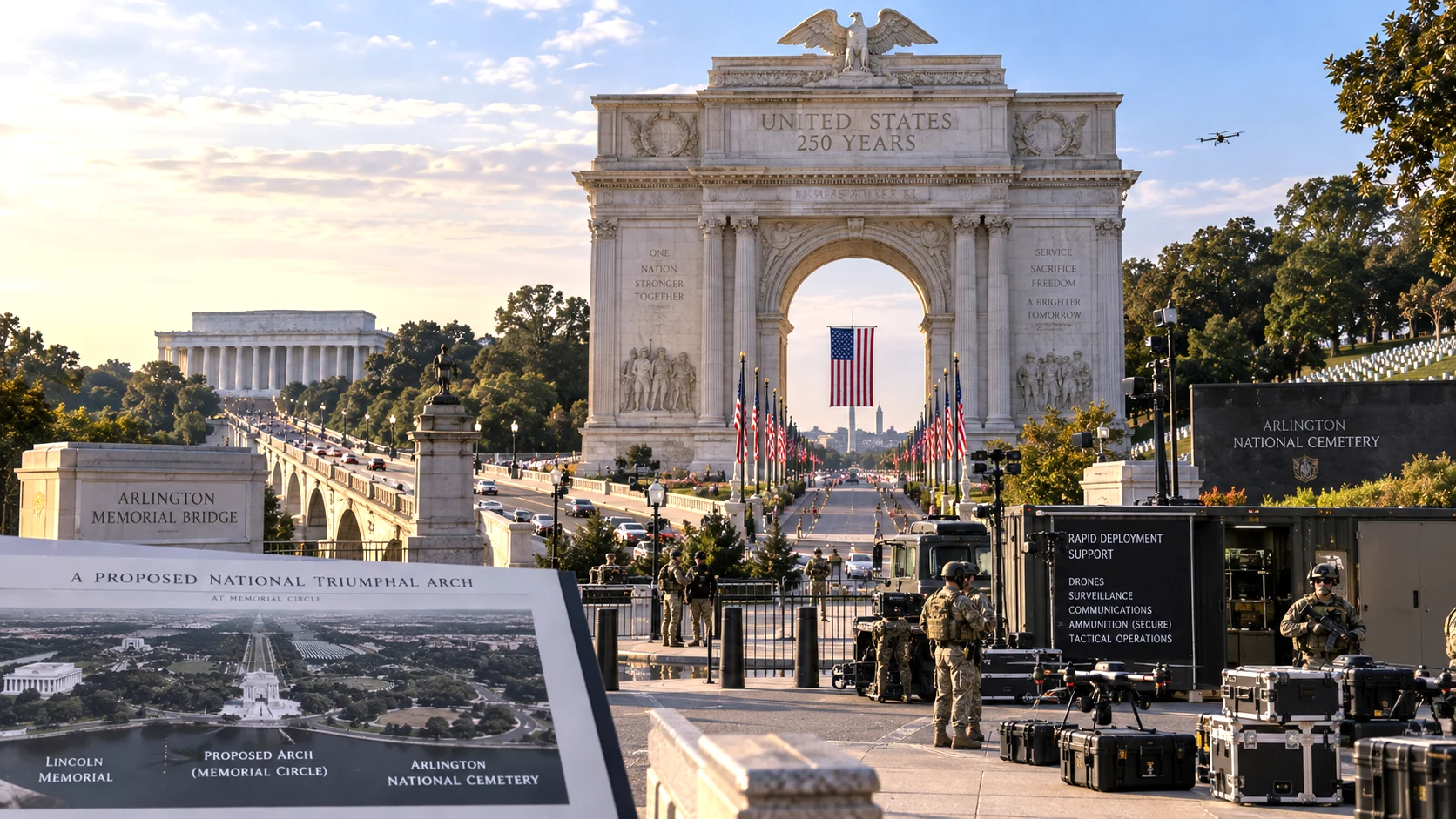
President Donald Trump says his proposed 250-foot triumphal arch near Arlington National Cemetery will now be designed as a dual-purpose military facility capable of housing drones, sniper positions and ammunition. The announcement adds a national-security dimension to an already controversial Washi
“Associate membership” is a new concept in this context. It has not yet been defined in EU law as the specific status being discussed for Canada, and von der Leyen’s proposal still needs to be developed and accepted politically by member states.
Key Takeaways
Canadian Prime Minister Mark Carney addressed the European Parliament in Strasbourg on September 17 and called for a much deeper Canada-EU economic, security and technology partnership.
European Commission President Ursula von der Leyen proposed on September 16 that Canada could become the EU’s first “associate member.”
This is not yet a formal EU membership offer approved by all 27 member states. “Associate member” is a new and undefined concept, and EU governments would have to agree on what such a relationship means.
Carney welcomed the ambition but focused more heavily on the substance of a future alliance than on the “associate member” label.
Proposed areas of deeper integration include defence production, critical minerals, energy, AI, semiconductors and computing, financial services, digital trade, research, space and opportunities for young Canadians and Europeans to live, work and study across the Atlantic.
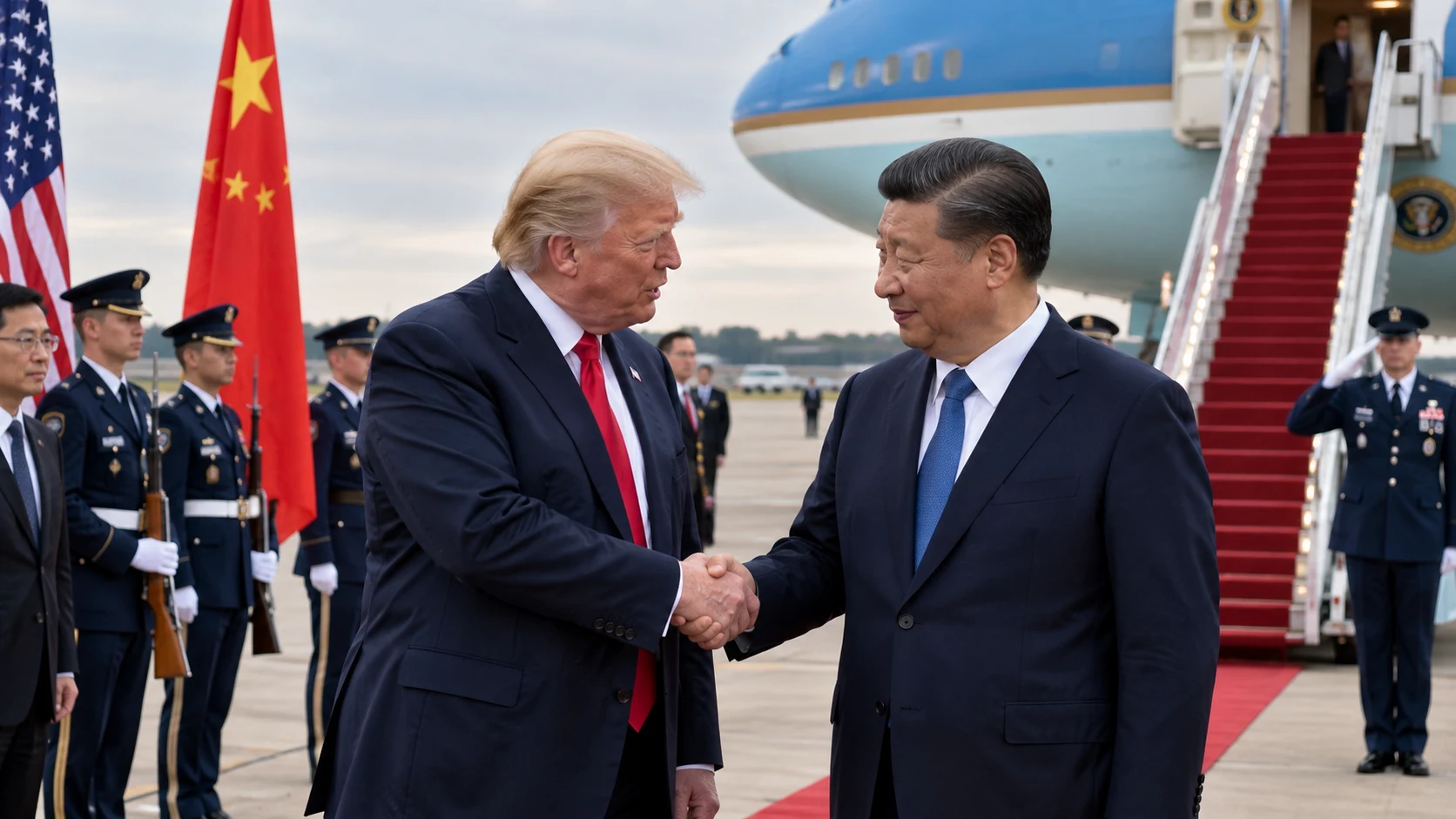
US President Donald Trump called the proposal “laughable” and said that if he considers it a hostile act, he could impose “very serious” tariffs or restrict some trade with Europe.
Trump’s warning was conditional: he said a plan pursued with a “good intention” would be acceptable but threatened heavy tariffs if he concluded the intention was hostile.
The initiative comes amid a serious deterioration in US-Canada relations over tariffs, trade demands and Trump’s repeated rhetoric about Canada becoming the 51st US state.
Canada has already moved closer to Europe in defence, becoming the first non-European participant in the EU’s SAFE defence procurement initiative earlier in 2026.
Von der Leyen Opens Door to ‘Associate Membership’
Von der Leyen unveiled the idea during her State of the European Union address on September 16, with Carney present in Strasbourg.
She said the EU wanted to move beyond its existing Comprehensive Economic and Trade Agreement with Canada and create what she described as an “Alliance for the Future.”
Her proposal covers intelligent manufacturing, technology, defence industry integration, the Arctic, energy, critical minerals, batteries, artificial intelligence, quantum technology, cybersecurity and wider economic security.
Von der Leyen then proposed working with Canada on opening the door to it becoming the EU’s first associate member.
She presented the initiative as a partnership designed to increase common strength rather than an alliance directed against another country.
That distinction has become particularly important because Trump interpreted the proposal very differently.
Trump Warns Europe of ‘Very Serious Tariffs’
Speaking to reporters on September 16, Trump sharply criticised the proposed arrangement.
He called the idea of Canadian associate membership “laughable” and said Washington could retaliate if he concluded the initiative was hostile to the United States.
“If they do that, if I think it's at all a hostile act, I will put very serious tariffs,” Trump said, also suggesting Washington could stop trading with Europe in some areas.
Trump added an important condition: if European leaders had good intentions, he said that would be acceptable; if he judged their intentions to be bad, he threatened “very heavy tariffs.”
The president therefore did not simply declare that Canada-EU cooperation itself was already a hostile act.
His threat was conditional on how he interpreted the purpose and eventual structure of the relationship.
That nuance matters because the EU and Canadian governments say their objective is greater resilience and sovereignty, not an anti-US coalition.
Carney: Canada Will Choose Its Own Partnerships
Carney responded without backing away from closer relations with Europe.
After addressing the European Parliament, he said Canadians would not accept another country dictating their language, culture or the international agreements Canada chooses to make.
His formal speech made the same argument in broader terms.
Carney said the world had entered a period in which trade, financial systems, technology and supply chains could be used as instruments of coercion.
He argued that sovereignty now requires reliable access not only to food, fuel and defence but also to artificial intelligence, semiconductors, critical minerals, payments systems, energy technologies and secure communications.
His solution is greater cooperation between middle powers and trusted democratic partners.
“Europe and Canada are stronger together,” was the central theme of the address.
Carney Welcomes the Proposal — But Does Not Focus on the Label
The statement that Canada has simply accepted an invitation to become an “associate member” would go slightly too far.
Carney explicitly said Canada welcomed the ambition behind von der Leyen’s proposal.
But he did not make the label itself the centrepiece of his speech.
Speaking to reporters afterwards, he said the EU would decide how any new relationship should ultimately be described and that the substance of the arrangement was more important than its title.
Canada’s own official account similarly describes the objective as a “new form of partnership” and a “unique alliance” rather than declaring that associate membership has already been agreed.
What Canada Wants From a Deeper EU Alliance
Carney laid out a broad agenda that could move Canada and Europe significantly beyond a traditional free-trade relationship.
His proposals include deeper cooperation in:
critical minerals;
defence industrial capacity;
artificial intelligence and computing infrastructure;
energy security;
space;
payment systems;
digital trade;
financial services;
research and development;
broadband links;
education and youth mobility.
He also proposed easier opportunities for young Canadians and Europeans to live, work and study on either side of the Atlantic.
Canada wants to participate more deeply in programmes such as Erasmus+ and future European research initiatives, according to Carney’s speech.
The ambition therefore extends considerably beyond reducing tariffs.
It is closer to an integrated economic and strategic partnership.
No, Canada Is Not Becoming a Normal EU Member
A crucial distinction is that Ottawa is not seeking conventional EU membership.
Canada’s ambassador-designate to the EU, Jonathan Wilkinson, told AP that full membership would require Canada to surrender elements of sovereignty and that Ottawa instead wants to get as close as possible to Europe while strengthening Canadian independence.
Full EU membership normally entails a complex accession process, acceptance of EU law and unanimous agreement by existing member countries.
That is not what is currently being proposed.
The prospective Canada arrangement would instead have to be designed as an unprecedented form of association.
‘Associate Member’ Has No Agreed Rulebook Yet
This is probably the biggest qualification to the headline.
No country currently holds the specific status von der Leyen is describing.
There is no established rulebook explaining:
what voting rights Canada would have;
whether it would gain single-market access;
whether free movement would apply;
which EU rules Canada would accept;
whether Canada would contribute to the EU budget;
what institutions would govern disputes;
or precisely which EU countries would need to approve the arrangement.
AP reports that the concept remains undefined, while Reuters cites EU diplomats expressing uncertainty and noting that member states had not previously agreed on the proposal.
One diplomat told Reuters that nobody really knew what the label would mean in practice. Another criticised the proposal because it had not first been discussed with member governments.
The initiative is therefore a political proposal at this stage, not a completed treaty.
EU Governments Still Have a Say
Von der Leyen heads the European Commission, an enormously influential EU institution, but she cannot unilaterally create a new constitutional relationship with Canada.
Reuters reports that the proposal would need support from EU member states before it could proceed.
France has already defended Europe’s right to decide its own partnerships.
French Europe Minister Benjamin Haddad said it was not for the United States or any other outside power to choose Europe’s political and geopolitical direction.
Ireland has also welcomed exploration of the proposal.
Other governments appear more cautious, particularly because the legal and commercial implications are not yet known.
Existing Canada-EU Relationship Is Already Extensive
The proposed alliance would build on substantial existing economic ties.
Canada and the EU already trade under CETA, the Comprehensive Economic and Trade Agreement.
Von der Leyen said goods trade between the two sides has increased by around 75% since CETA came into operation.
Canada’s government says total EU-Canada trade in goods and services reached approximately C$178 billion in 2025, making the EU Canada’s second-largest global trading partner for goods and services.
The new plan is therefore less about creating a relationship from scratch than about taking an existing partnership into areas traditionally associated with strategic and political integration.
Canada Already Joined EU Defence Procurement Programme
Defence offers a practical example of how quickly the relationship has changed.
In February 2026, Canada became the first non-European country to join the European Union’s Security Action for Europe, or SAFE, initiative, opening access for Canadian defence companies to European procurement opportunities.
In June, a Canadian company secured a procurement agreement through the framework to supply tactical radios for Poland’s Cyber Command.
Carney highlighted SAFE in his European Parliament speech as evidence that deeper functional integration is already possible without Canada becoming a full EU member.
Why Critical Minerals Matter
One of the clearest areas of mutual interest is critical minerals.
Europe needs reliable supplies of materials used in electric vehicles, batteries, semiconductors, clean-energy systems and defence equipment.
Canada possesses substantial reserves of minerals critical to those industries.
Carney said Canada has deposits of more than 30 critical minerals and argued that Canadian resources and European processing and industrial capabilities could be combined into more secure supply chains.
Reducing dependence on a limited number of major suppliers has become a strategic priority for both Ottawa and Brussels.
AI, Semiconductors and Digital Infrastructure Are Also Central
Carney also wants cooperation in AI and computing capacity.
His speech proposed pooling sovereign computing resources, coordinating AI standards and developing more secure digital links between Europe and Asia through Canadian geography.
Semiconductors are part of the same strategic-autonomy argument.
Neither Canada nor Europe wants crucial technologies to depend entirely on a small group of external suppliers or on governments capable of using supply chains as geopolitical leverage.
That concern has become a central theme in industrial policy across Western economies.
How Much of This Is Fallout From Trump?
The user-provided description that the initiative is partly fallout from worsening US-Canada relations is well supported.
Canada has traditionally built much of its economy around exceptionally deep integration with the United States.
Roughly 70% of Canadian exports still go to the US market, according to AP.
But Trump’s tariffs, demands for economic concessions and repeated comments about Canada becoming the 51st US state have sharply worsened political relations and increased pressure on Ottawa to diversify.
Carney has repeatedly argued that Canada must become less vulnerable to any one country having overwhelming leverage over its economy.
Europe has become central to that strategy.
Fresh US Action Against Canada Came the Same Day
The tension is not theoretical.
On September 16, Trump signed a presidential memorandum directing US agencies to restore what the White House calls reciprocity in federal procurement, specifically criticising Canada’s “Buy Canadian” policies and barriers faced by American companies.
That step came at the same time von der Leyen was proposing a much closer EU-Canada partnership.
The overlap reinforces how trade policy, sovereignty and geopolitics have become inseparable in the changing Canada-US relationship.
Is This an Anti-US Alliance?
Both Canada and the European Commission say no.
Von der Leyen described the initiative as being for mutual strength rather than directed against another country.
Carney similarly rejected the idea of building a new “third bloc” merely to compete with the United States and China.
He instead framed the project as collective resilience — allowing democracies to cooperate closely enough that no outside power can dictate their choices.
That does not mean Washington will view the consequences as neutral.
If deeper Canada-EU integration shifts trade, defence procurement, technology investment or supply chains away from the United States, the economic effects could still create competition with American companies.
That is why the eventual details will matter more than the diplomatic language.
Trump’s Threat Could Complicate EU Debate
Trump’s threatened tariffs introduce an additional calculation for European governments.
The EU and United States already have a substantial and politically sensitive trade relationship.
If Washington were to impose another major round of tariffs specifically because of the Canada initiative, some European governments could become more cautious about an undefined new form of association.
At the same time, overt US pressure may strengthen arguments from leaders who say Europe needs greater strategic autonomy.
France’s response illustrates that dynamic: rather than accepting Trump’s objection, a French minister publicly insisted that European geopolitical choices belong to Europe.
October Summit Could Clarify the Plan
The next major milestone is expected to be the Canada-EU summit in Montreal in late October.
AP reports that officials hope the shape of the proposed relationship will become clearer by then and that the two sides may also settle on terminology.
Carney’s government has said negotiations should focus first on what the partnership actually accomplishes.
That makes the October meeting more consequential than the “associate member” label alone.
Specific agreements on trade, technology, defence, labour mobility or research would demonstrate whether the proposal is evolving from political symbolism into a durable institutional framework.
Bottom Line
The story is real, but the phrase “the EU invited Canada to become an associate member” requires an important qualification.
European Commission President Ursula von der Leyen has proposed making Canada the EU’s first associate member and says she wants to develop an “Alliance for the Future” reaching far beyond the existing CETA trade agreement.
But there is no completed associate-membership agreement, no defined legal status and no approval yet from all EU governments.
Canadian Prime Minister Mark Carney welcomed the initiative in his September 17 address to the European Parliament while focusing on a broader strategic partnership covering defence, critical minerals, artificial intelligence, energy, digital trade, finance, research and mobility.
Trump has reacted sharply.
He called the proposal “laughable,” said it could amount to a hostile act depending on its intent and threatened very serious tariffs or trade restrictions against Europe if he concluded the project was directed against US interests.
The initiative is also clearly connected to the deterioration in Washington-Ottawa relations. Trump’s tariffs, economic demands and repeated rhetoric questioning Canadian sovereignty have encouraged Carney’s government to reduce its dependence on the United States and deepen relationships elsewhere.
The most accurate description as of September 17 is therefore:
Canada and the EU are exploring an unprecedented, much deeper strategic alliance that could eventually be called “associate membership,” while Trump is threatening trade retaliation if he judges the arrangement hostile to the United States. The proposal is politically significant but remains at an early and legally undefined stage.
Key Takeaway
Von der Leyen proposes Canada as EU’s first “associate member.”
Carney backs deeper alliance; status remains undefined.
Trump threatens “very serious” tariffs if he views plan as hostile.
Canada already deepening defence and economic ties with Europe.
The Rajatheertha Team publishes news, explainers, guides and updates across India and the world. Our coverage follows Rajatheertha's editorial, verification and corrections standards.
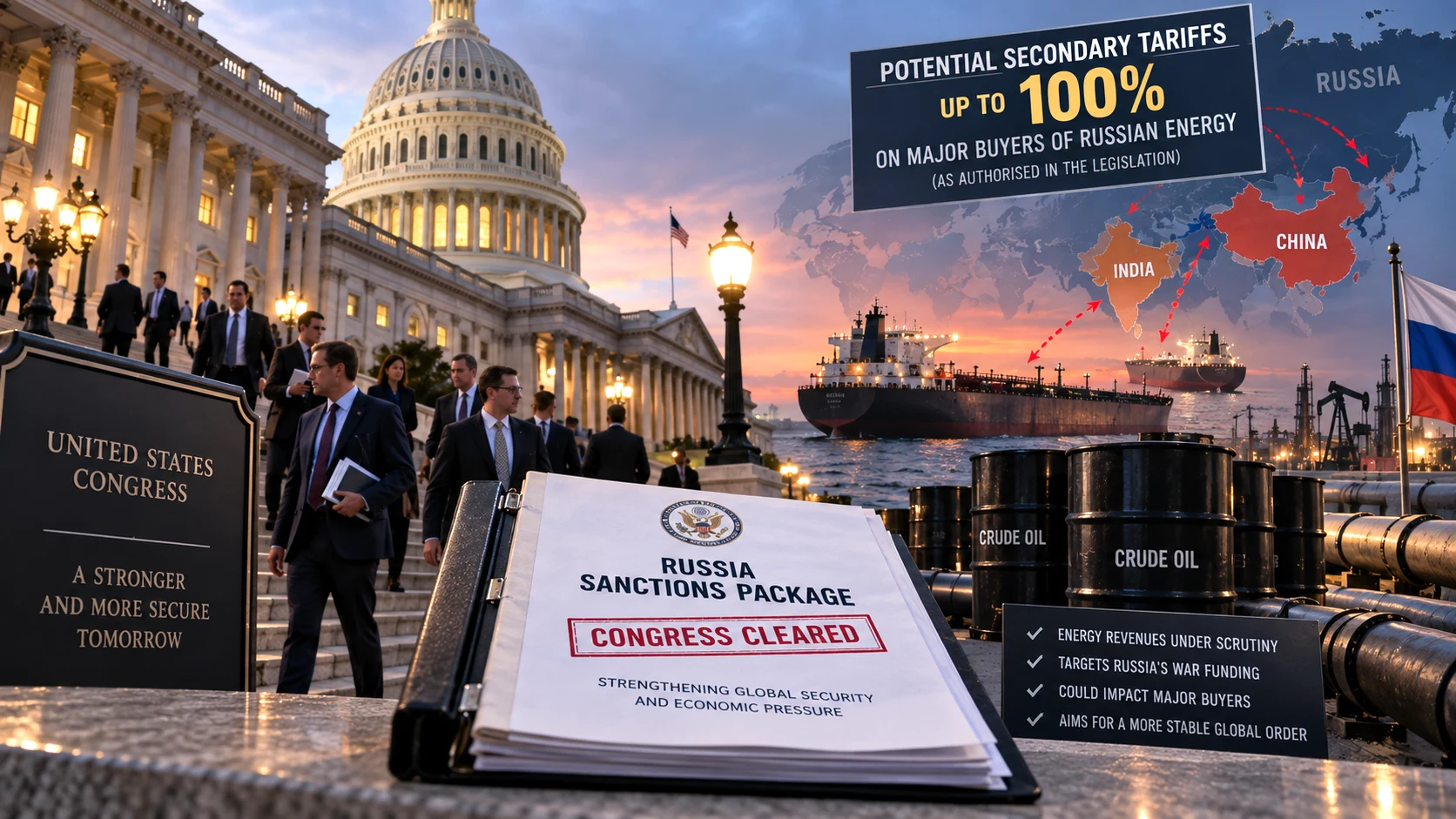
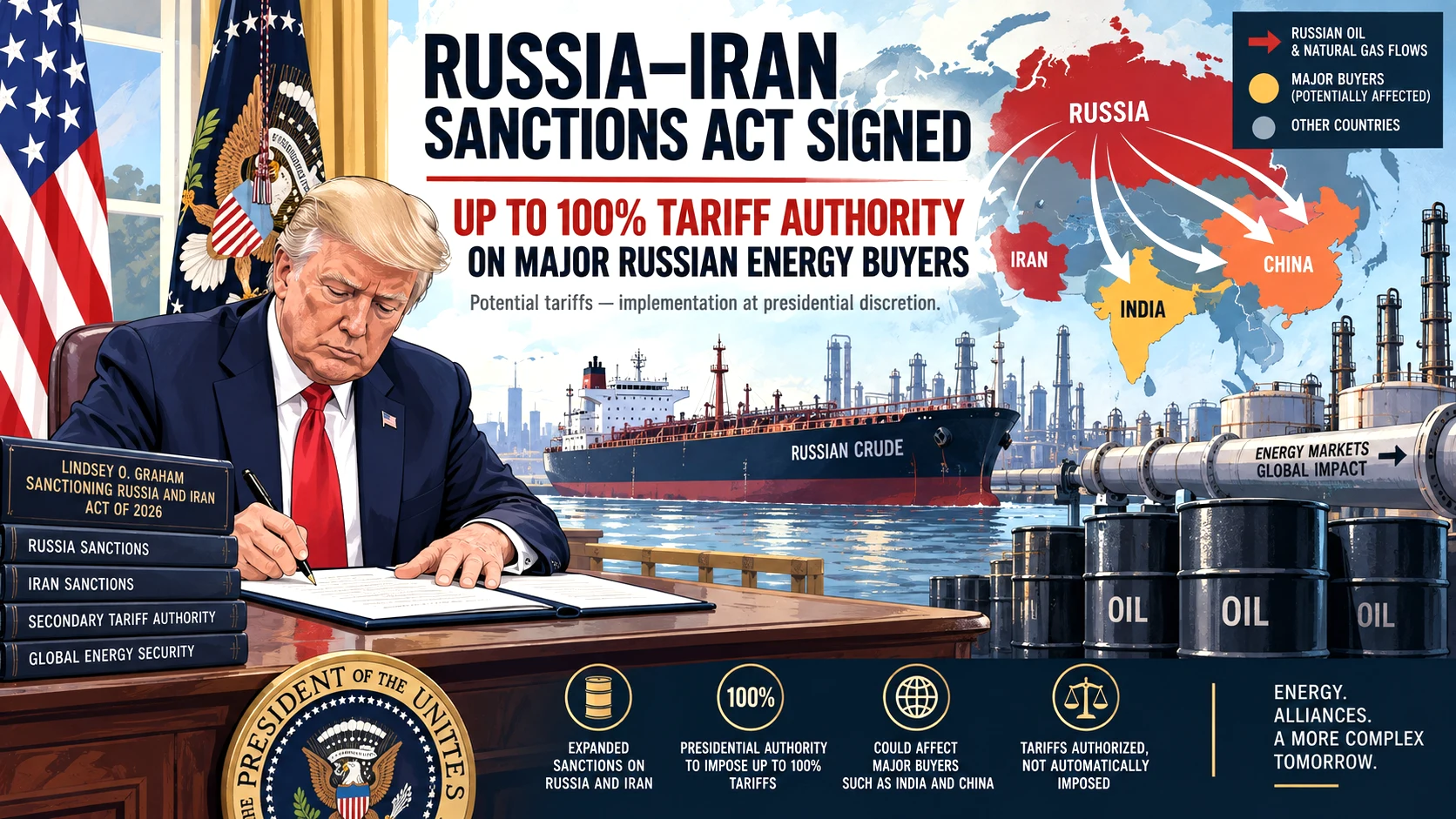
The House approved the Lindsey O. Graham Sanctioning Russia and Iran Act of 2026 by 262-159 after the Senate passed it 86-11. The measure now awaits President Donald Trump’s signature and could subject major buyers of Russian oil or gas to additional US tariffs of up to 100%, although India and Chin
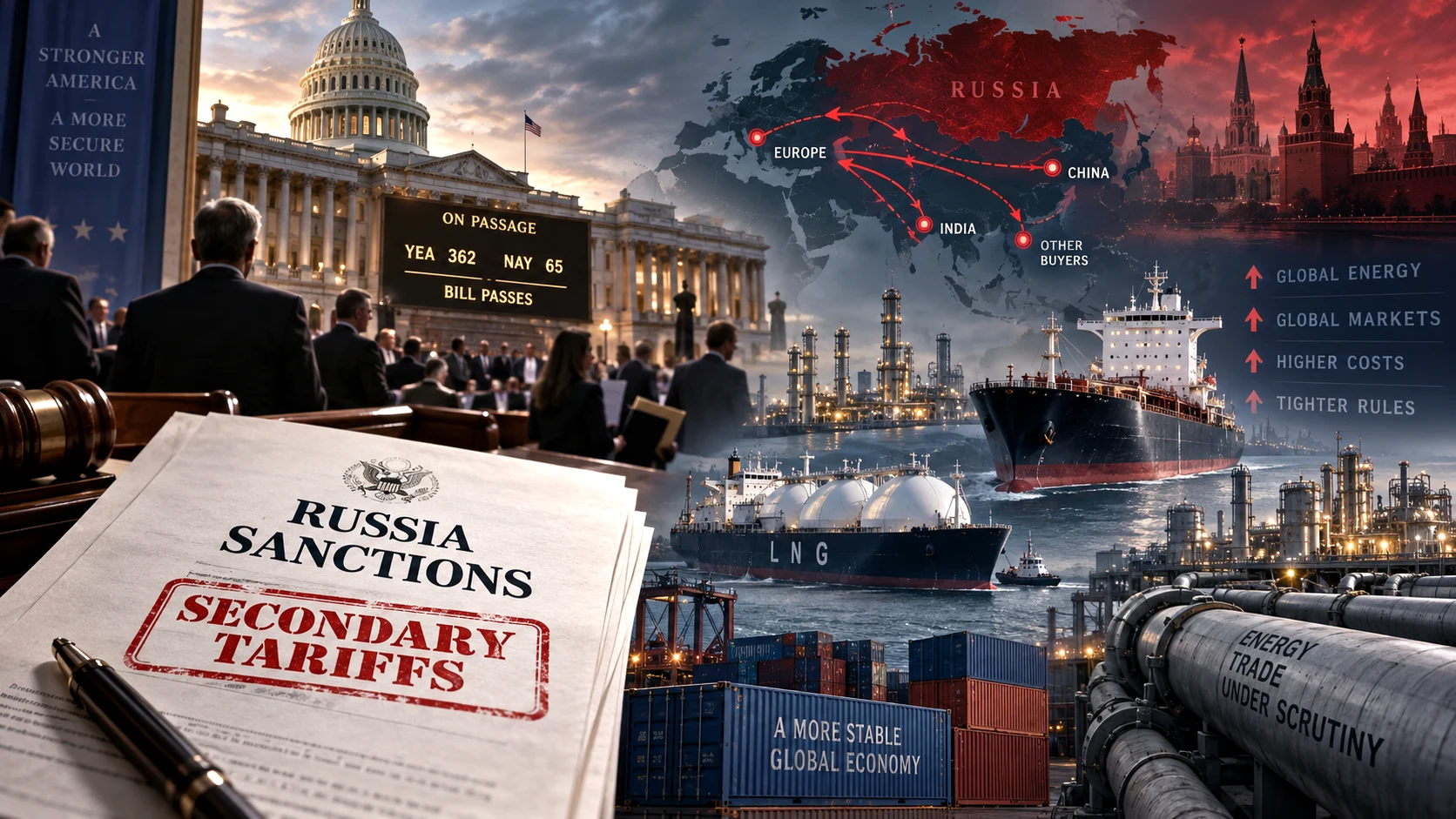
The new US law targets Russia’s energy, financial and defence networks and allows additional tariffs of up to 100% on goods from the largest buyers of Russian oil and gas. India faces significant exposure because of its large Russian crude imports, but a 100% tariff on Indian goods has not been impo
The House voted 262-159 to approve the Lindsey O. Graham Sanctioning Russia and Iran Act of 2026 after the Senate backed it 86-11 in August. The bill targets Russian banks, energy, defence and its “shadow fleet” while creating secondary tariffs for major buyers of Russian oil and gas. It now goes to
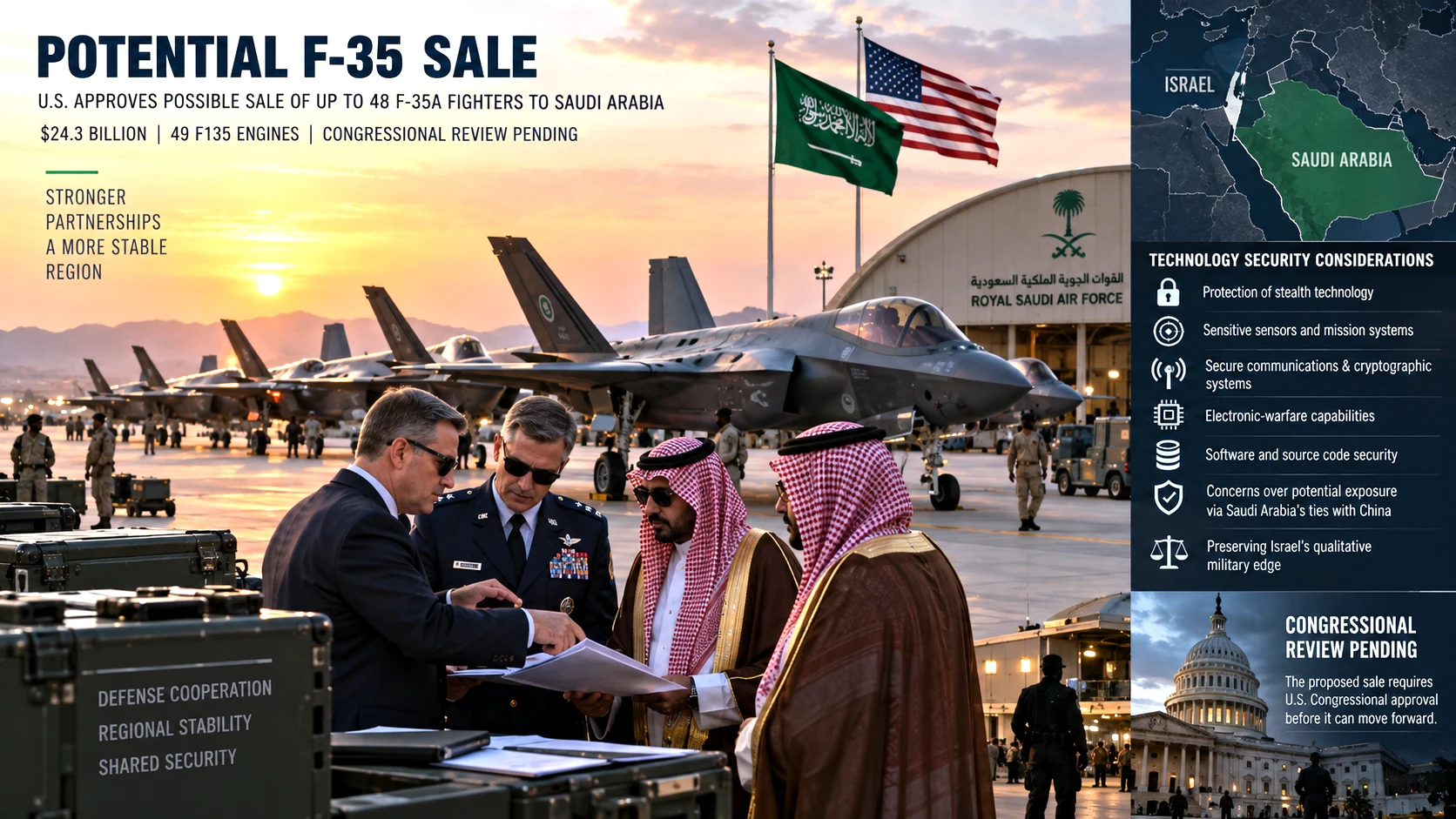
The Trump administration has formally notified Congress of a proposed sale of 48 F-35A stealth fighters and 49 engines to Saudi Arabia. The deal is not yet completed, while separate US intelligence assessments have reportedly warned that China could try to gain access to sensitive F-35 technology th
A Houthi ballistic missile aimed at Riyadh was intercepted by Saudi air defences as explosions and smoke were reported near the Saudi capital’s main airport, marking a sharp escalation in the renewed Saudi-Houthi confrontation. The attack comes alongside strikes on Saudi energy infrastructure, inten
A huge Ukrainian long-range attack sent hundreds of drones toward Moscow and other parts of Russia early Sunday, damaging the Moscow Oil Refinery, disrupting civilian areas and putting Russian air defences under intense pressure. Russian officials described it as the largest drone attack yet directe




0 Comments