US Midterms 2026: Republican María Elvira Salazar Says Trump Immigration Enforcement Has ‘Gone Too Far’
The Florida Republican says Hispanic voters who helped return Donald Trump to the White House now “feel betrayed,” while polling shows broader erosion in support for the president’s immigration approach. Separately, Speaker Mike Johnson has sent the House home early for the campaign season, drawing
Republican midterm campaign pressures, immigration policy debate and the early House recess ahead of the 2026 elections
Table of Contents (13 sections)
Two developments in Washington are offering an unusually clear view of the political pressures facing Republicans as the United States enters the final stretch of the 2026 midterm campaign.
In Florida, Republican Rep. María Elvira Salazar has publicly challenged President Donald Trump over immigration enforcement, an issue that played an important role in Trump’s return to the White House in 2024.
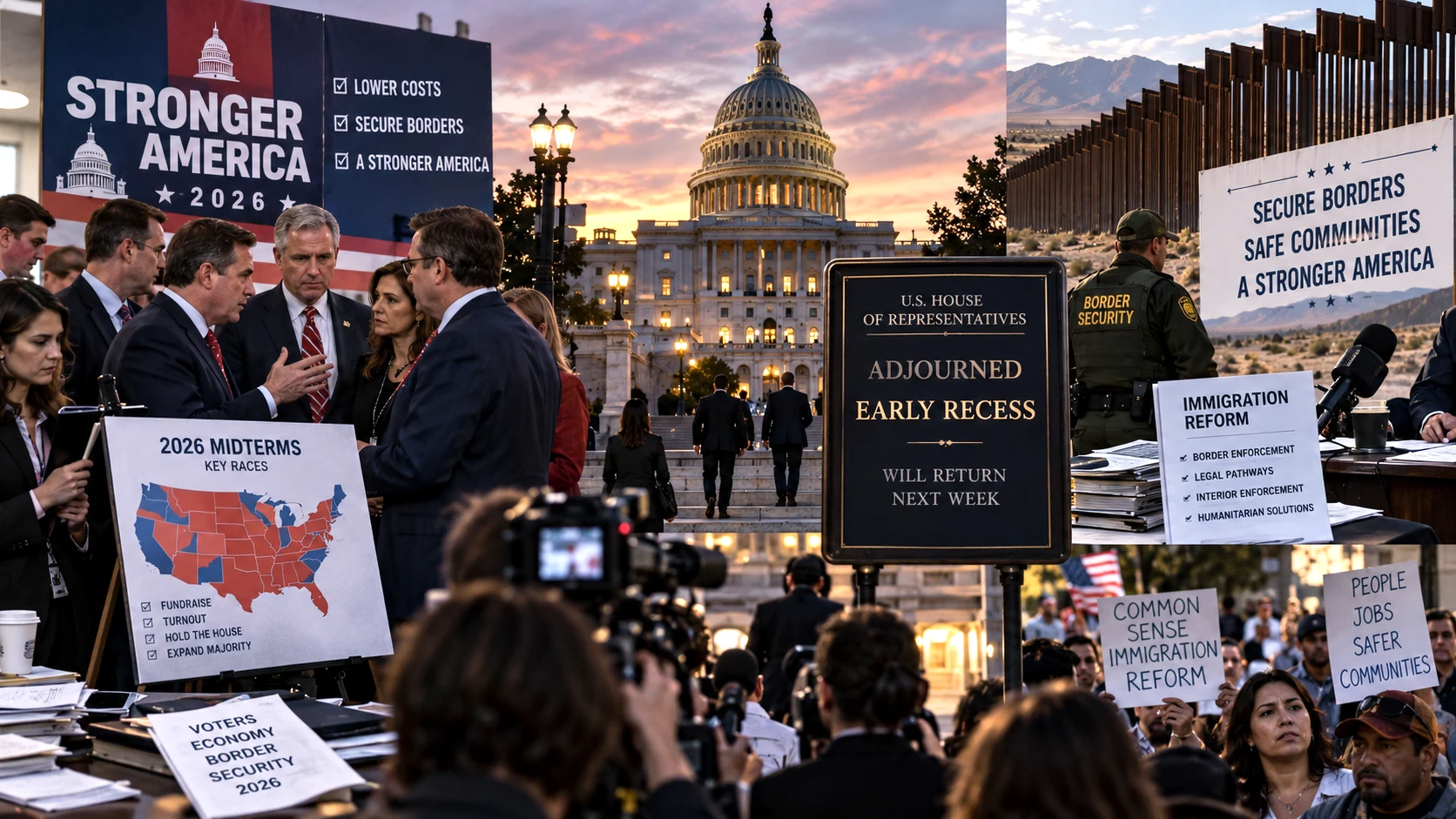
At the same time, House Speaker Mike Johnson has recessed the House earlier than originally planned, allowing lawmakers to return home and campaign ahead of the November 3 elections while critics point to unfinished legislative business.
Neither development, by itself, determines the outcome of the midterms.
Together, however, they illustrate two problems Republicans are navigating: declining public approval for Trump on several issues, including immigration, and pressure on vulnerable lawmakers to establish some distance from the White House or from Washington itself.
Key Takeaways
Republican Rep. María Elvira Salazar released a bilingual campaign ad on September 17 directly challenging President Donald Trump over immigration enforcement.
Recommended Reading
Related Stories & In-Depth Guides
Curated editorial perspectives matching this topic.
European Commission President Ursula von der Leyen has proposed opening the door for Canada to become the EU’s first “associate member,” but the status does not yet legally exist and has not been approved by the bloc’s 27 governments. Mark Carney welcomed the ambition in Strasbourg as Donald Trump w
Iran’s Revolutionary Guards Navy says the Togo-flagged oil-products tanker caught fire and stopped after attempting what Tehran called an “illegal passage” on September 17. No independent confirmation of the strike, casualties or cargo damage was immediately available as shipping through the strateg
Salazar said some enforcement measures had “gone too far” and argued that Hispanic voters who backed Trump in 2024 “feel betrayed today.”
Her statement is campaign messaging, not the wording of a nationwide poll. However, several surveys show significant dissatisfaction among Hispanic voters with immigration enforcement.
July ICE data broadly supports Salazar’s numerical point: 49,571 people were arrested, and more than half had neither criminal convictions nor pending criminal charges.
Salazar represents Florida’s heavily Hispanic 27th Congressional District and faces Democrat Eliott Rodriguez in November. Reuters says nonpartisan analysts currently rate the race “likely Republican,” rather than a toss-up.
Speaker Mike Johnson recessed the House on September 16, sending members home to campaign until after the November 3 election while keeping them subject to 48-hour recall.
Republican Rep. Thomas Massie and Democratic Leader Hakeem Jeffries were among those criticizing the shortened House schedule, while Johnson defended the chamber’s legislative record.
A September Reuters/Ipsos poll gave Democrats a 44%-37% advantage on the national congressional generic ballot, but national polling does not directly predict individual House or Senate races.
Salazar Directly Challenges Trump in New Campaign Ad
Salazar released her first general-election advertisement on September 17.
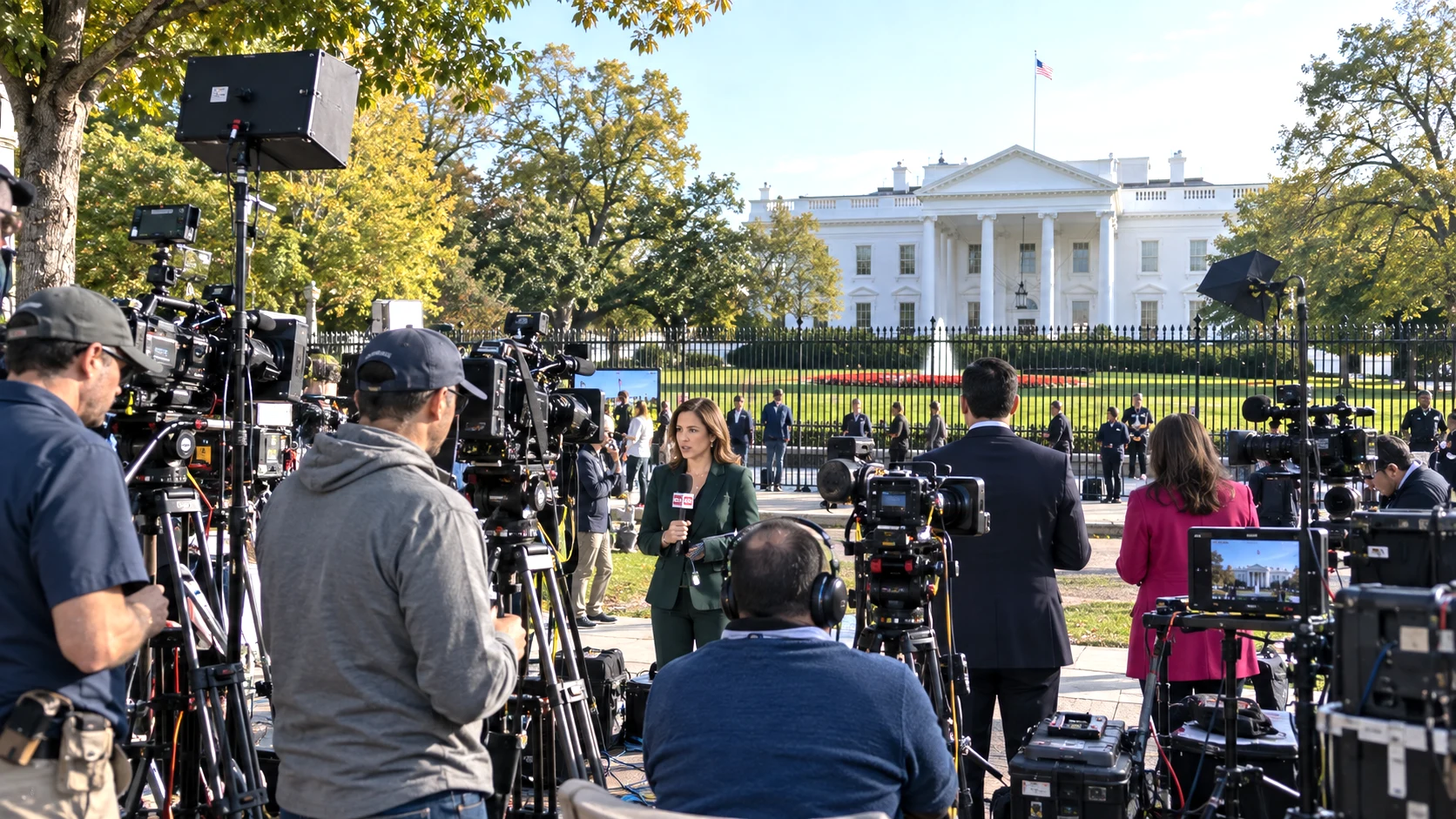
The 30-second spot was recorded outside the White House and produced in both English and Spanish.
Rather than attacking Trump broadly, Salazar focuses specifically on immigration enforcement.
She tells the president that some of his administration’s measures have “gone too far” and says Hispanic voters who helped Trump win in 2024 “feel betrayed today.”
That is notable because Salazar is not a Democratic critic of Trump. She is a Republican incumbent who has received Trump’s endorsement and represents a South Florida constituency where Republicans made substantial gains with Hispanic voters in recent elections.
Reuters described her advertisement as a rare public criticism of the White House from a congressional ally.
‘Feel Betrayed’ Is Salazar’s Political Assessment, Not a Poll Question
One factual distinction is important.
There is credible polling showing significant dissatisfaction among Hispanic voters with Trump’s immigration policies, but the statement that Hispanic voters “feel betrayed” comes from Salazar herself.
It should not be presented as though a national survey asked Hispanic voters that exact question and found that all, or even most, described themselves as betrayed.
Polling does, however, provide evidence supporting the broader political concern behind her message.
A Pew Research Center survey conducted in April found 65% of Hispanic adults believed the Trump administration was doing too much on deportations.
Earlier Pew research also found that Hispanic Republicans had become more critical of the administration's immigration approach, although views remained sharply divided by party and by 2024 presidential vote.
A UnidosUS bipartisan poll released in May found that 25% of Hispanic voters who supported Trump in 2024 said they would not vote for him again if given another opportunity. The same survey had Hispanic voters favoring Democrats over Republicans, 54%-27%, in a hypothetical 2026 House vote, with 19% undecided.
UnidosUS is a Latino civil-rights and advocacy organisation, so its findings should be identified as polling commissioned by that organisation rather than treated as the sole measure of Hispanic opinion.
Its September 15 analysis nevertheless highlights another important factor: it estimates that about 38% of Hispanic voters form a “moveable middle” of undecided, independent or cross-party voters.
That suggests the Hispanic electorate cannot accurately be described as moving uniformly toward either party.
Salazar’s ICE Arrest Statistic Is Broadly Supported
Salazar also cited immigration-enforcement data in her advertisement, saying roughly half of around 50,000 people detained in July had no criminal record.
The underlying numbers are substantially supported by government data obtained and analysed by news organisations.
ICE recorded 49,571 arrests in July, the highest monthly figure of Trump’s second presidency at that point. More than half of those arrested had neither a criminal conviction nor pending criminal charges.
CBS News found July was the first month of Trump’s second term in which people with only civil immigration violations represented more than half of ICE arrests.
There is nevertheless an important terminology distinction.
Having no criminal conviction or pending criminal charge does not necessarily mean a person has lawful immigration status. Immigration violations can be civil rather than criminal matters.
The Department of Homeland Security has defended its enforcement approach by arguing that immigration law is being enforced against people eligible for removal and has disputed portrayals that suggest the absence of a criminal record makes an individual immune from immigration enforcement.
Therefore, both facts can coexist: many July arrestees lacked criminal convictions or charges, and the administration maintains that they could nevertheless be subject to immigration enforcement.
Why Salazar’s District Matters
Salazar represents Florida’s 27th Congressional District in the Miami area, including communities with a large Cuban-American and broader Hispanic population.
The district is approximately three-quarters Hispanic.
She won reelection comfortably in 2024 but is now facing Democratic nominee Eliott Rodriguez, himself a Cuban-American and a longtime former television news anchor.
Reuters reports that nonpartisan election analysts currently classify the contest as “likely Republican.” That means Democrats see an opportunity, but the district should not presently be described as a confirmed toss-up.
The political significance of Salazar’s advertisement is therefore wider than her individual race.
Republicans made important gains with Hispanic voters during Trump’s 2024 campaign. A Republican incumbent in a heavily Hispanic district now publicly telling the president that his immigration strategy has overreached is evidence that at least some GOP campaigns see electoral risk in the current policy.
It does not prove that Hispanic voters as a whole have abandoned Republicans.
Immigration Approval Has Fallen Nationally
Salazar's concern also comes against a weakening national environment for the president.
Reuters reported that a September poll found only 39% of Americans approving of Trump's handling of immigration, down from 50% shortly after his return to office in January 2025.
Trump's overall approval was 35% in a Reuters/Ipsos survey conducted September 11-14.
The four-day survey included 1,143 Americans and carried a margin of error of about three percentage points.
Republican candidates in some competitive districts have consequently begun separating themselves from parts of Trump's agenda.
Reuters noted that Iowa Republicans Zach Nunn and Mariannette Miller-Meeks, both facing competitive reelection races, recently joined Democrats in voting to limit Trump's war powers relating to Iran.
Again, that does not establish a uniform Republican break with the president. Trump remains the dominant figure in the party and is actively framing the November election as a referendum on his administration.
House Goes Home Early for Midterm Campaign
A separate controversy is developing over the congressional calendar.
Speaker Mike Johnson recessed the House on Wednesday, September 16, sending representatives back to their districts to campaign ahead of the November elections.
Members remain subject to a 48-hour notice to return to Washington if necessary.
The adjournment came after Johnson had already cancelled voting sessions that had been expected during the final two weeks of September.
A Washington Post report earlier this month said the House had initially been scheduled to work for another three weeks before the election but that Johnson reduced that to one.
The decision effectively leaves little opportunity for substantial House legislative activity before voters go to the polls.
Criticism Came From Both Parties — Including a Republican
Criticism of the recess was not exclusively Democratic.
Republican Rep. Thomas Massie of Kentucky delivered a lengthy House-floor attack on the decision, arguing that Congress was leaving while major issues remained unresolved.
Among the matters Massie wanted considered were his effort to impeach Defense Secretary Pete Hegseth over the Iran war and further action related to the Jeffrey Epstein files.
Johnson rejected Massie's impeachment effort as a political “stunt” and defended the House's overall productivity.
House Democratic Leader Hakeem Jeffries separately accused Republicans of failing to address affordability and other voter concerns.
Those statements are political arguments from opposing lawmakers and should be reported as such, rather than as objective assessments of Congress's performance.
How Much Time Has the House Actually Lost?
AP reported that, according to one tally, the House has cancelled 28 scheduled days while adding four, producing a net reduction of 24 legislative days this year.
That amounts to roughly one-quarter of the originally scheduled total.
Johnson, however, argues that the House has completed its work and describes this Congress as among the most productive in decades.
Before leaving Washington, the House passed several measures, including major Russia sanctions legislation.
The debate therefore involves both measurable facts — fewer scheduled voting days — and competing political judgments about whether the work accomplished during those days was sufficient.
Democrats Lead Latest Reuters/Ipsos Generic Ballot
The broader national polling environment currently favors Democrats, although there are major limitations to interpreting that advantage.
A Reuters/Ipsos poll released September 14 found:
Democrats: 44%
Republicans: 37%
when respondents were asked which party they would support in a congressional election.
The seven-point Democratic advantage was the widest Reuters/Ipsos had recorded since Trump returned to the White House in January 2025.
But a national generic ballot is not a forecast of House seats.
House control is determined district by district, while Senate races are contested state by state. Candidate quality, turnout, district boundaries and regional political conditions can produce outcomes substantially different from the national vote.
Republicans also retain structural advantages in a number of congressional contests.
The correct conclusion is that the national political environment has become more difficult for Republicans — not that Democratic control of Congress is already assured.
Early Voting Is Beginning
The campaign has now moved from political positioning into actual voting.
Early voting for the November 3 midterm elections began on September 18 in Virginia and selected other states, beginning a roughly six-week period in which Americans will determine control of Congress.
Both the House and Senate are at stake.
If Democrats capture either chamber, they would gain greater ability to block legislation, conduct investigations and exercise oversight during the final two years of Trump's current term.
If Republicans retain both, the administration would have a clearer path for its legislative programme.
Bottom Line
Salazar's new advertisement is a genuine and politically significant break with President Trump's immigration approach.
Her statement that Hispanic voters “feel betrayed” should be treated as her campaign's assessment, rather than a universal description of Hispanic opinion.
But it is not unsupported political rhetoric in a vacuum.
Multiple surveys show increasing concern among Hispanic voters about deportation policy, while a Reuters/Ipsos poll shows Trump's national immigration approval has fallen to 39%.
At the same time, Speaker Mike Johnson's decision to send the House home early has generated criticism over unfinished congressional business, including from within his own Republican conference.
With Democrats leading 44%-37% in the latest Reuters/Ipsos generic congressional ballot and early voting beginning, Republicans enter the final weeks of the 2026 midterms facing a more challenging national environment than they did earlier in Trump's second term.
That does not establish the election outcome.
But Salazar's unusual campaign message and the decision to move lawmakers rapidly back into their districts show how seriously both parties are treating the final stretch before November 3.
Key Takeaway
Salazar criticises Trump immigration enforcement in bilingual campaign ad.
Hispanic voters “feel betrayed” is her assessment, supported by broader polling trends.
House recesses early for midterm campaigning amid bipartisan criticism.
Democrats lead generic ballot 44%-37%; outcome remains undecided.
The Rajatheertha Team publishes news, explainers, guides and updates across India and the world. Our coverage follows Rajatheertha's editorial, verification and corrections standards.
President Donald Trump says his proposed 250-foot triumphal arch near Arlington National Cemetery will now be designed as a dual-purpose military facility capable of housing drones, sniper positions and ammunition. The announcement adds a national-security dimension to an already controversial Washi
The House approved the Lindsey O. Graham Sanctioning Russia and Iran Act of 2026 by 262-159 after the Senate passed it 86-11. The measure now awaits President Donald Trump’s signature and could subject major buyers of Russian oil or gas to additional US tariffs of up to 100%, although India and Chin
The House voted 262-159 to approve the Lindsey O. Graham Sanctioning Russia and Iran Act of 2026 after the Senate backed it 86-11 in August. The bill targets Russian banks, energy, defence and its “shadow fleet” while creating secondary tariffs for major buyers of Russian oil and gas. It now goes to
The Trump administration has formally notified Congress of a proposed sale of 48 F-35A stealth fighters and 49 engines to Saudi Arabia. The deal is not yet completed, while separate US intelligence assessments have reportedly warned that China could try to gain access to sensitive F-35 technology th
A Houthi ballistic missile aimed at Riyadh was intercepted by Saudi air defences as explosions and smoke were reported near the Saudi capital’s main airport, marking a sharp escalation in the renewed Saudi-Houthi confrontation. The attack comes alongside strikes on Saudi energy infrastructure, inten
A huge Ukrainian long-range attack sent hundreds of drones toward Moscow and other parts of Russia early Sunday, damaging the Moscow Oil Refinery, disrupting civilian areas and putting Russian air defences under intense pressure. Russian officials described it as the largest drone attack yet directe












0 Comments