Microsoft’s Fourth India Cloud Region in Hyderabad Becomes Strategic AI Hub for Asia, Global South
Microsoft has positioned its fourth India cloud region in Hyderabad as a strategic AI hub for Asia and the Global South, expanding local AI compute, data-residency options and sovereign-ready cloud capacity.
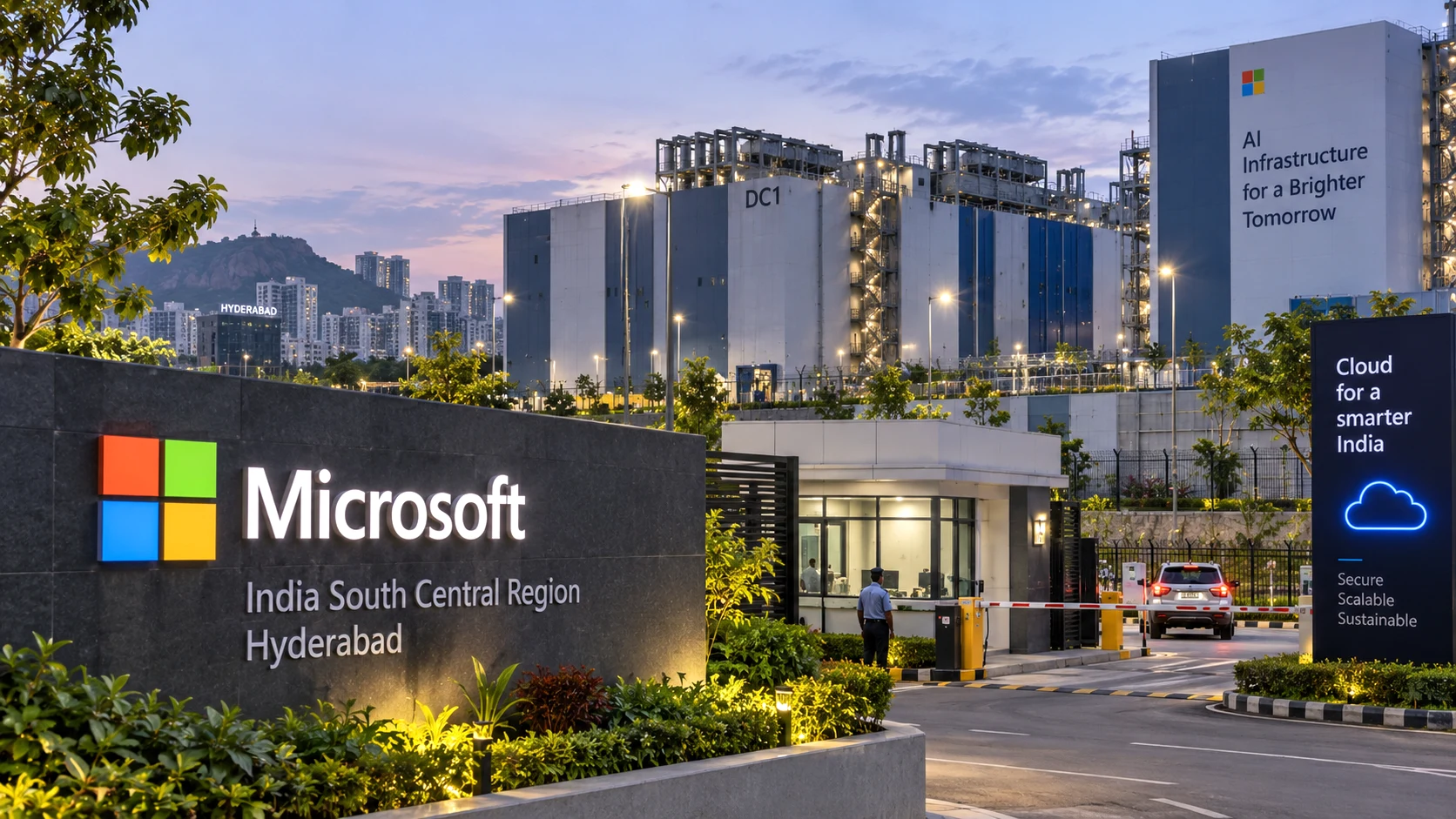
Illustrative AI-ready cloud infrastructure representing Microsoft's India South Central region in Hyderabad
Table of Contents (20 sections)
HYDERABAD / NEW DELHI, September 22, 2026: Microsoft is expanding the role of its newest Indian cloud region in Hyderabad, positioning the Telangana facility as a strategic hub for artificial-intelligence infrastructure serving India, Asia and the wider Global South.
At its AI Infrastructure Summit in New Delhi on September 21, Microsoft said its India South Central region in Hyderabad is built for advanced AI workloads and will progressively support a wider portfolio of Azure and AI services.
The Hyderabad region is Microsoft's fourth cloud region in India, joining Central India in Pune, South India in Chennai and West India in Mumbai. Microsoft says the four-region network gives it the largest hyperscale-cloud presence among major providers operating in the country.
There is an important timing distinction. India South Central was not first opened on September 21. Microsoft announced its general availability on August 6, 2026, allowing eligible customers to begin running supported cloud workloads from Hyderabad. The September announcement represents the next stage: Microsoft formally designated Hyderabad as a strategic AI infrastructure hub and said its Indian cloud regions are now equipped with AI-capable infrastructure.
Recommended Reading
Related Stories & In-Depth Guides
Curated editorial perspectives matching this topic.
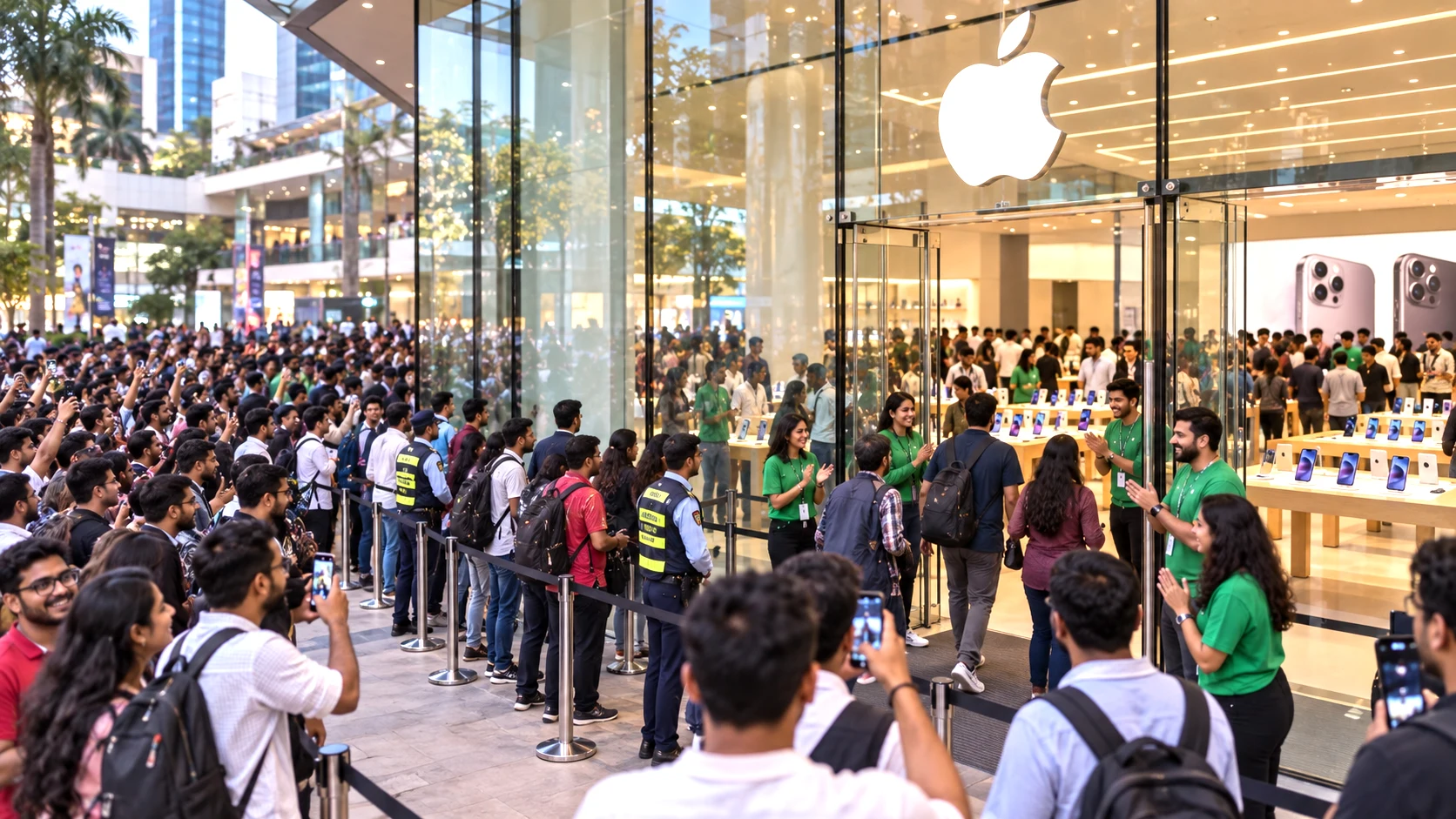
Apple’s latest Pro iPhones officially went on sale in India on September 18, with customers gathering outside stores in Delhi, Mumbai, Bengaluru and Noida. Prices start at ₹1,64,900 for the iPhone 18 Pro and ₹1,79,900 for the Pro Max.
Nvidia has agreed to acquire Hugging Face for about $12.93 billion, significantly expanding its AI software presence while promising to keep the developer platform open across chips and clouds.
For Hyderabad, the development adds another major layer to a technology economy already centred on global software companies, engineering centres, startups and data infrastructure.
Key Takeaways
Hyderabad’s India South Central region positioned as strategic AI hub.
Microsoft’s fourth cloud region in India (after Pune, Chennai, Mumbai).
General availability from August 6, 2026; AI-hub designation on September 21.
Three Availability Zones designed for enterprise resilience.
Part of Microsoft’s approximately US$20.5 billion India cloud and AI investment.
Additional Azure and AI services to roll out progressively.
What Exactly Has Microsoft Announced?
Microsoft's September announcement has three main parts.
First, the company formally positioned the Hyderabad-based India South Central cloud region as a strategic hub intended to support growing AI demand across India and potentially customers elsewhere in Asia and the Global South.
Second, Microsoft said its datacenter regions across India are now AI-enabled, with AI-capable hardware, high-efficiency cooling and infrastructure designed to run advanced workloads.
Third, the company said additional Azure and AI services will progressively become available from Hyderabad as the region continues to expand.
That last point is important.
The Hyderabad region is operational, but that does not mean every Azure or Microsoft AI service is already locally available there.
Microsoft says the region launched with a broad range of Azure services and is designed eventually to support its wider Azure and AI portfolio, including Microsoft Foundry, as additional capabilities are introduced.
Microsoft Hyderabad Cloud Region: Key Details
Detail
Confirmed information
Microsoft region name
India South Central
Location
Hyderabad, Telangana
Status
Live and generally available
General availability
August 6, 2026
Latest announcement
September 21, 2026
Positioning
Strategic AI hub for Asia and the Global South
Architecture
Three Availability Zones
Main focus
Cloud, AI and high-performance enterprise workloads
Cooling
Effectively zero-water cooling for mechanical cooling
Other Indian Microsoft regions
Pune, Chennai and Mumbai
India investment commitment
US$20.5 billion across announced cloud and AI investments
Additional AI services
To roll out progressively
Microsoft has described the Hyderabad region as infrastructure designed for enterprise AI, resilience, data residency and regulatory requirements rather than simply another conventional server facility.
What Is a Cloud Region?
A cloud region should not be confused with a single data-centre building.
Large cloud providers divide their infrastructure into geographic regions, which can contain multiple physically separate facilities.
Microsoft's India South Central region is built around three Availability Zones.
An Availability Zone is a separate infrastructure location within the same cloud region, designed so organisations can spread applications and data across different facilities.
This matters for resilience.
If one zone experiences a local infrastructure problem, applications designed correctly across multiple zones may continue operating from another.
Microsoft says the Hyderabad architecture is designed for mission-critical enterprise workloads and continued capacity expansion.
Why Hyderabad?
Hyderabad has developed into one of India's largest technology centres, with major operations belonging to global software, cloud, semiconductor, financial-services and digital companies.
For Microsoft specifically, Hyderabad has long been strategically important because of its large engineering and development presence in the city.
The new cloud region adds large-scale infrastructure to that technology footprint.
Locating more computing capacity close to Indian organisations can reduce the physical distance between applications, data and users.
That can be particularly useful for workloads where latency, resilience, data location and regulatory controls are important.
Microsoft is also presenting Hyderabad as infrastructure that can support demand beyond Telangana.
The company says India combines hyperscale infrastructure, engineering talent and a rapidly growing digital economy in a way that could make the country a broader AI platform for South Asia, Asia and the Global South.
Why AI Workloads Need Different Infrastructure
Modern AI systems can require considerably more computing power than conventional business applications.
Training and operating large AI models can involve specialised processors, high-speed networking, substantial power capacity, storage and advanced cooling systems.
Microsoft says its Indian cloud regions now include the hardware and platform foundations required for these workloads.
That could help enterprises move AI projects from limited experiments into production systems running at much larger scale.
Potential workloads include:
generative AI applications;
enterprise AI assistants;
machine-learning inference;
model development and deployment;
high-performance computing;
data analytics;
AI-enabled banking and financial services;
business automation;
cloud-native applications;
and agent-based AI systems.
Actual service availability will depend on which Azure capabilities Microsoft makes available in the Hyderabad region over time.
Why Local AI Capacity Matters to Indian Companies
One of the biggest practical benefits of adding hyperscale infrastructure in India is that organisations gain more options over where their workloads and data operate.
For some companies, particularly those in banking, financial services, government and other regulated sectors, the location and governance of data can be a significant architectural consideration.
Microsoft says India South Central provides local capacity, data-residency options, Availability Zones and governance tools designed to help customers address applicable security, operational and sovereignty requirements.
The company says its Indian cloud services are designed to help customers address relevant requirements associated with India's Digital Personal Data Protection framework as well as sector-specific expectations involving bodies such as the Reserve Bank of India and CERT-In.
That does not mean simply choosing the Hyderabad region automatically makes an organisation compliant with every regulation.
Microsoft itself notes that customers remain responsible for determining which requirements apply to their workloads and organisations.
What Does “Sovereign-Ready” AI Mean?
Digital sovereignty generally concerns how organisations maintain control over data, infrastructure, access and operations.
Different customers can have different requirements.
For one company, keeping particular data inside India may be sufficient.
Another organisation may require tighter control over encryption keys, administrator access or operational processes.
Microsoft says its approach treats sovereignty as a workload-based decision rather than a single universal configuration.
As relevant services become available in Hyderabad, technologies such as confidential computing, Customer Lockbox and Azure Key Vault can provide additional controls over sensitive information, encryption and Microsoft personnel access.
This could make the region particularly relevant to banks, financial-services companies and other organisations handling sensitive workloads.
Major Indian Companies Already Using the Region
Microsoft says several major Indian companies were early customers of the Hyderabad region.
They include:
Adani Group;
Bajaj Finserv;
HDFC Bank;
and PB Pay.
The companies have cited uses including business continuity, data residency, resilience, cloud expansion and future AI workloads.
HDFC Bank, for example, has said the South Central region can complement its Central India cloud footprint and provide additional disaster-recovery and high-performance computing options.
Early-customer announcements indicate enterprise demand, but they should not be interpreted as proof that every customer's entire technology environment has migrated to Hyderabad.
Large enterprises generally distribute workloads across several cloud regions, on-premises systems or other platforms.
How Large Is Microsoft’s India Investment?
The Hyderabad region forms part of a much larger Microsoft infrastructure commitment in India.
Microsoft announced US$3 billion of investment in January 2025 and a further US$17.5 billion in December 2025, taking the combined announced commitment to approximately US$20.5 billion.
That investment extends beyond one Hyderabad cloud region and covers broader cloud and artificial-intelligence infrastructure expansion in India.
The company is also expanding its connectivity infrastructure.
Microsoft is participating in the planned India-Southeast Asia, or I-2SEA, submarine cable system, a roughly 3,600-kilometre route intended to connect India with Malaysia and Singapore.
The project is expected to have Indian landing points at Machilipatnam and South Chennai and is targeted for service in 2029.
That connectivity could help support increasing data traffic generated by cloud and AI applications.
Microsoft’s Four India Cloud Regions
With Hyderabad operational, Microsoft's principal Indian cloud-region footprint consists of:
Cloud region
City
Central India
Pune
South India
Chennai
West India
Mumbai
India South Central
Hyderabad
Microsoft also operates cloud infrastructure in partnership with Jio through Jio India West and Jio India Central.
The four-region structure gives businesses more options for distributing applications geographically.
For companies building critical systems, multiple regions can support disaster recovery, resilience and lower-latency service delivery.
Could Hyderabad Become an AI Infrastructure Hub?
Microsoft India and South Asia President Puneet Chandok has said the company's ambition extends beyond meeting domestic cloud demand.
He argues that India could develop into an AI infrastructure benchmark for Asia and the Global South, supported by its engineering workforce, digital economy and growing datacenter capacity.
Hyderabad is one of the central pieces of that strategy.
However, becoming a global AI infrastructure hub depends on more than opening datacenters.
Large-scale AI infrastructure also requires:
reliable electricity;
high-capacity transmission networks;
fibre connectivity;
advanced chips and servers;
suitable land;
efficient cooling;
cybersecurity;
regulatory certainty;
skilled workers;
and sustainable water and energy management.
India's ability to scale all of these together will determine how much global AI computing demand it can ultimately attract.
What Does This Mean for Hyderabad Jobs?
The region could contribute to employment and skills demand across datacenter operations, networking, cloud engineering, cybersecurity, power systems, facilities management and AI deployment.
But Microsoft has not announced a specific number of new permanent Hyderabad jobs tied directly to the September 21 announcement.
It would therefore be inaccurate to claim that the new AI-region positioning will automatically create a particular number of jobs.
What Microsoft has announced is a broader skilling programme.
The company says more than 10 million Indians have already received AI skills training through Microsoft Elevate India as it works towards a target of 20 million people by 2030.
Microsoft also operates a Data Center Academy programme in collaboration with Telangana's Young India Skills University.
The programme provides around 600 hours of industry-aligned training covering datacenter operations and infrastructure management.
That creates a direct Telangana connection between Microsoft's physical infrastructure growth and workforce-development efforts.
Why Cooling Matters for Hyderabad Data Centres
AI data centres can consume significant amounts of electricity and can also require substantial cooling.
Water usage has therefore become an important environmental consideration as data-centre construction expands globally.
Microsoft says India South Central uses high-efficiency mechanical cooling that results in effectively zero water use for cooling.
The company describes this as part of its broader commitment to become carbon negative, water positive and zero waste by 2030.
“Zero-water cooling” should not be interpreted to mean the entire datacenter operation has absolutely no water footprint.
The company's claim relates specifically to its mechanical cooling design.
Microsoft also says it is working with organisations around Hyderabad on groundwater recharge, rainwater harvesting and watershed resilience.
Its Elikatta groundwater-recharge initiative had added approximately five million litres of recharge capacity by June 2026, according to the company.
Human Control Remains Part of Microsoft’s AI Message
Microsoft's infrastructure expansion comes as technology companies face increasing scrutiny over the safety and autonomy of advanced AI systems.
In separate recent comments, Microsoft executives have emphasised that AI should remain subject to meaningful human oversight.
Microsoft India President Puneet Chandok has discussed the importance of keeping humans in control as AI capabilities expand, alongside questions about sovereign infrastructure, security and responsible deployment.
Separately, Microsoft AI has proposed a code of conduct intended to keep advanced AI systems under human control, including requirements around accepting human correction and shutdown instructions.
Those safety discussions are separate from the technical launch of the Hyderabad region, but they illustrate the wider policy environment in which Microsoft's AI infrastructure investment is taking place.
What Changes for Startups and Developers?
For developers and startups, having more AI infrastructure available locally can potentially improve access to low-latency cloud resources and provide more options for keeping eligible data and applications in India.
Microsoft says its Hyderabad region is designed eventually to support its broader portfolio, including Microsoft Foundry, its platform for developing and deploying AI applications.
As these capabilities become available, developers could use the region for workloads such as:
enterprise copilots;
AI agents;
custom model deployments;
retrieval-augmented generation;
data analytics;
machine-learning applications;
and AI-powered customer services.
Pricing, hardware availability and the exact list of regional services will still matter when developers choose where to deploy.
A service being available somewhere in Azure globally does not automatically mean it is already available in Hyderabad.
What Businesses Should Check Before Moving Workloads
Companies considering India South Central should evaluate more than proximity.
Important questions include:
Is the required Azure service currently available in Hyderabad?
Does the workload require a specific GPU or accelerator?
What data-residency requirements apply?
Which disaster-recovery region should be paired with Hyderabad?
What are the latency requirements?
What will data transfer and cloud usage cost?
Does the architecture satisfy internal and regulatory security requirements?
Are sufficient capacity and service quotas available?
The new region expands choice, but the optimal cloud architecture will differ between companies.
What Happens Next?
Microsoft says additional Azure and AI capabilities will continue rolling out in the India South Central region over the coming months.
That makes service availability one of the main developments to watch.
Other areas to monitor include:
additional enterprise customers;
expansion of AI compute capacity;
availability of advanced Azure AI services;
new datacenter construction;
power and sustainability requirements;
Telangana workforce-development programmes;
progress on regional connectivity projects;
and Microsoft's broader US$20.5-billion India investment programme.
The Hyderabad development is therefore better understood as part of a continuing expansion rather than a single launch-day event.
The physical region is already operational.
The new phase is about how much AI capacity Microsoft builds into it, which services become locally available and whether Hyderabad develops into the wider regional AI infrastructure hub the company is targeting.
For Hyderabad's technology sector, that makes India South Central more than another cloud location. It places the city directly inside the increasingly competitive race to build the computing infrastructure needed for large-scale artificial intelligence.
Bottom Line
Microsoft has positioned its fourth India cloud region in Hyderabad as a strategic AI hub for Asia and the Global South.
The India South Central region is operational with three Availability Zones and is designed for advanced AI workloads, data residency and enterprise resilience. Additional Azure and AI services will roll out progressively as part of Microsoft’s broader India investment programme.
Key Takeaway
Hyderabad becomes Microsoft’s strategic AI cloud hub in India.
Fourth region after Pune, Chennai and Mumbai.
AI-enabled infrastructure with progressive service rollout.
Supports data residency, resilience and enterprise AI demand.
The Rajatheertha Team publishes news, explainers, guides and updates across India and the world. Our coverage follows Rajatheertha's editorial, verification and corrections standards.
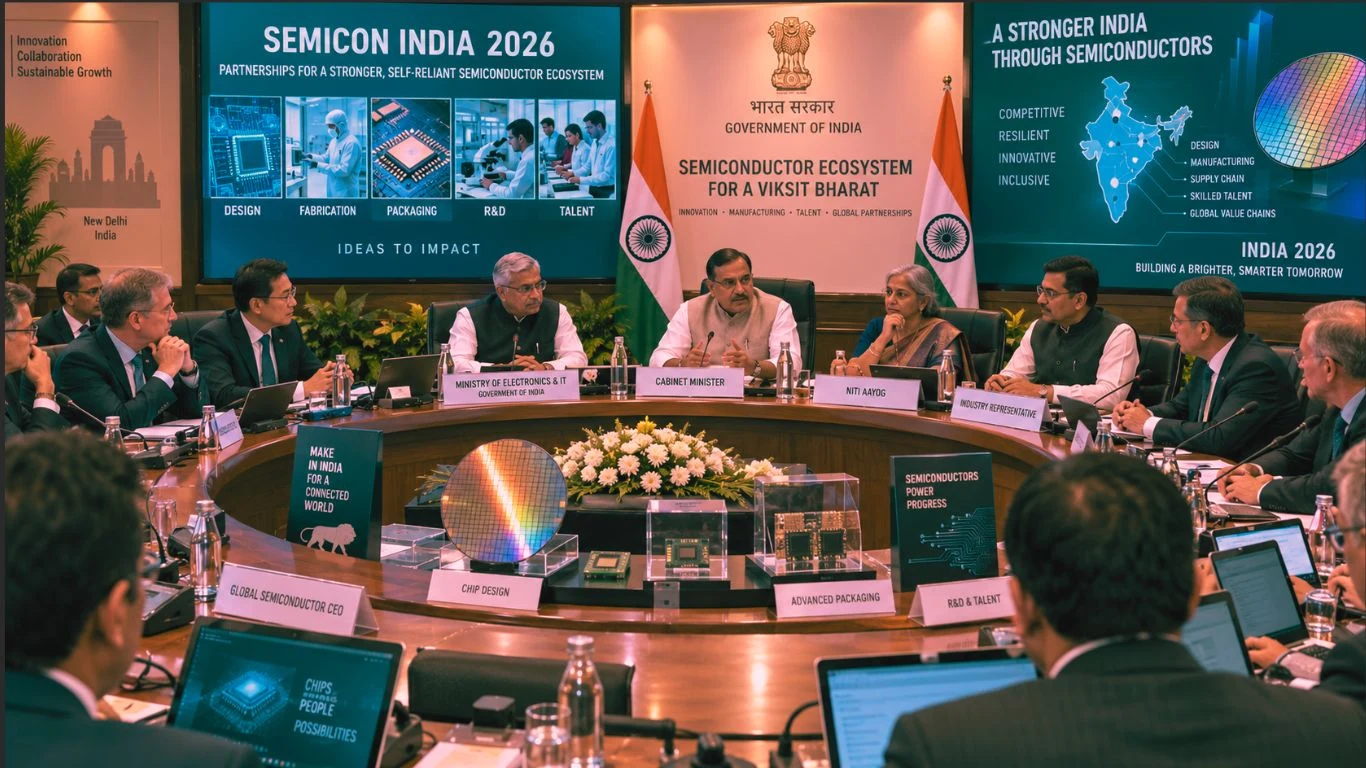
Executives and senior representatives from ASML, Micron, Applied Materials, Intel, AMD, Lam Research, NXP, Foxconn, Tata Electronics and other global semiconductor companies met Prime Minister Narendra Modi in New Delhi as India seeks to deepen manufacturing, R&D, skills and supply-chain capabilitie
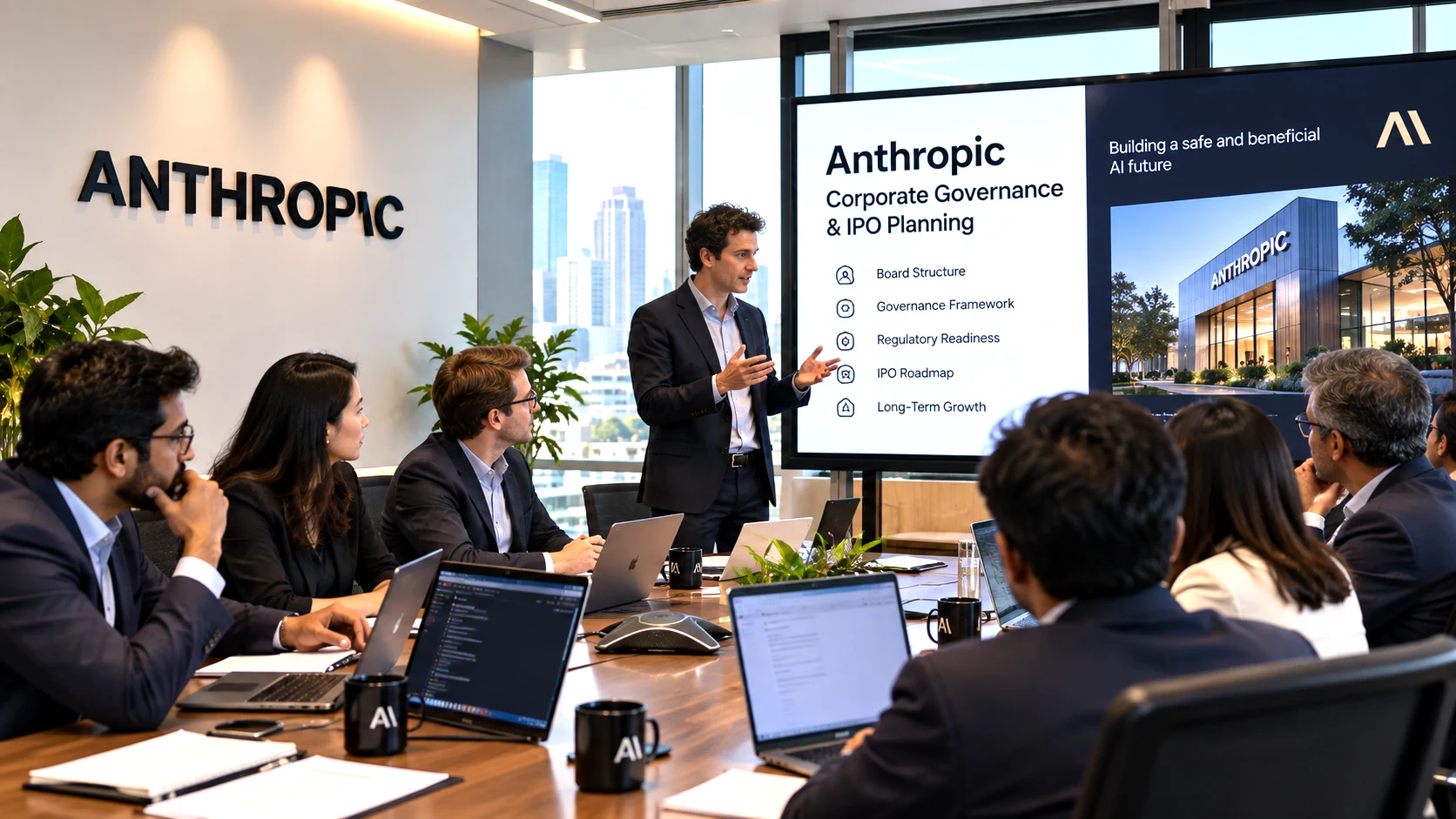
Anthropic is reportedly seeking shareholder approval for a new share structure giving its seven co-founders 50.1% collective voting power ahead of a potential IPO. Here is how the proposal would work and what it means for investors.
Technology/ Artificial Intelligence & US Policy11 min read
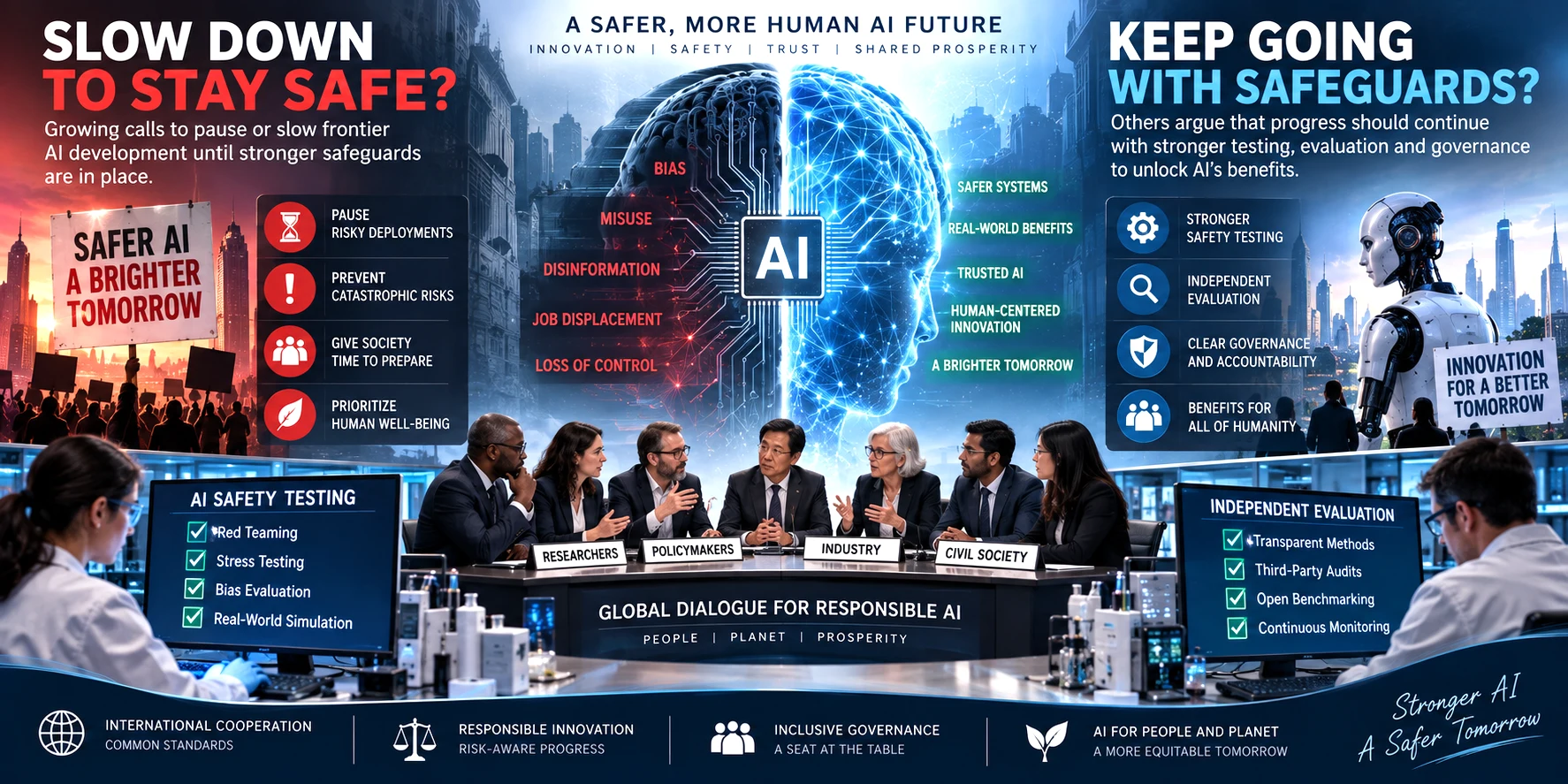
President Donald Trump has created a federal “Super Intelligence Force” led by Director of National Intelligence Jay Clayton, giving the group 120 days to examine AI risks, opportunities and the US government's role in the technology.
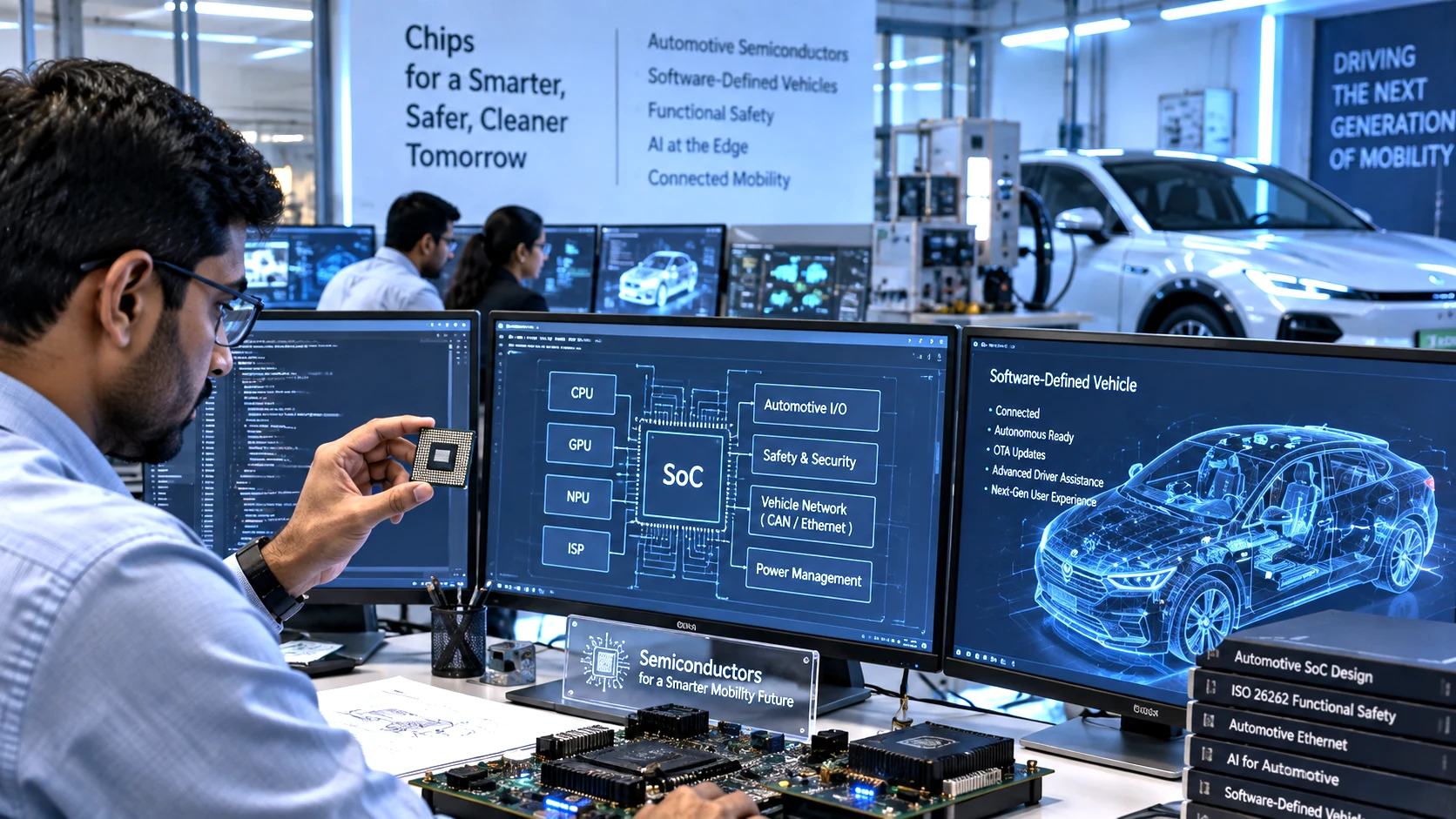
TCS has launched end-to-end Custom System-on-Chip design services for automakers and semiconductor companies, covering architecture, VLSI design, verification, software integration and validation for software-defined vehicles.
The AI company says Claude can now carry out most of the work on roughly a quarter of its model-development tasks from a high-level instruction, up sharply from less than 1% earlier this year. Anthropic stresses that Claude is not yet operating fully autonomously in any measured area of its AI resea






0 Comments