Trump Launches ‘Super Intelligence Force’ Led by Jay Clayton to Coordinate US AI Strategy
President Donald Trump has created a federal “Super Intelligence Force” led by Director of National Intelligence Jay Clayton, giving the group 120 days to examine AI risks, opportunities and the US government's role in the technology.
US President Donald Trump has announced the creation of a new federal artificial-intelligence task force called the “Super Intelligence Force,” or SIF, putting Director of National Intelligence Jay Clayton at the centre of the administration's effort to coordinate government policy around increasingly powerful AI systems.
Trump announced the initiative on October 4, saying the group would coordinate federal efforts to ensure that the United States remains a global leader in what his administration increasingly calls “super intelligence.”
The task force comes as Washington faces two competing pressures: maintaining an advantage over global competitors in advanced AI while also responding to concerns about cybersecurity, employment disruption, misuse of powerful models and potentially more capable future systems.
The administration's stated objective is ambitious. Trump says America should continue leading the world in the technology, while Clayton has argued that falling behind other countries could itself create substantial national-security risks.
That goal, however, should be understood as US government policy and strategic ambition, rather than proof that American technological dominance is guaranteed.
Recommended Reading
Related Stories & In-Depth Guides
Curated editorial perspectives matching this topic.
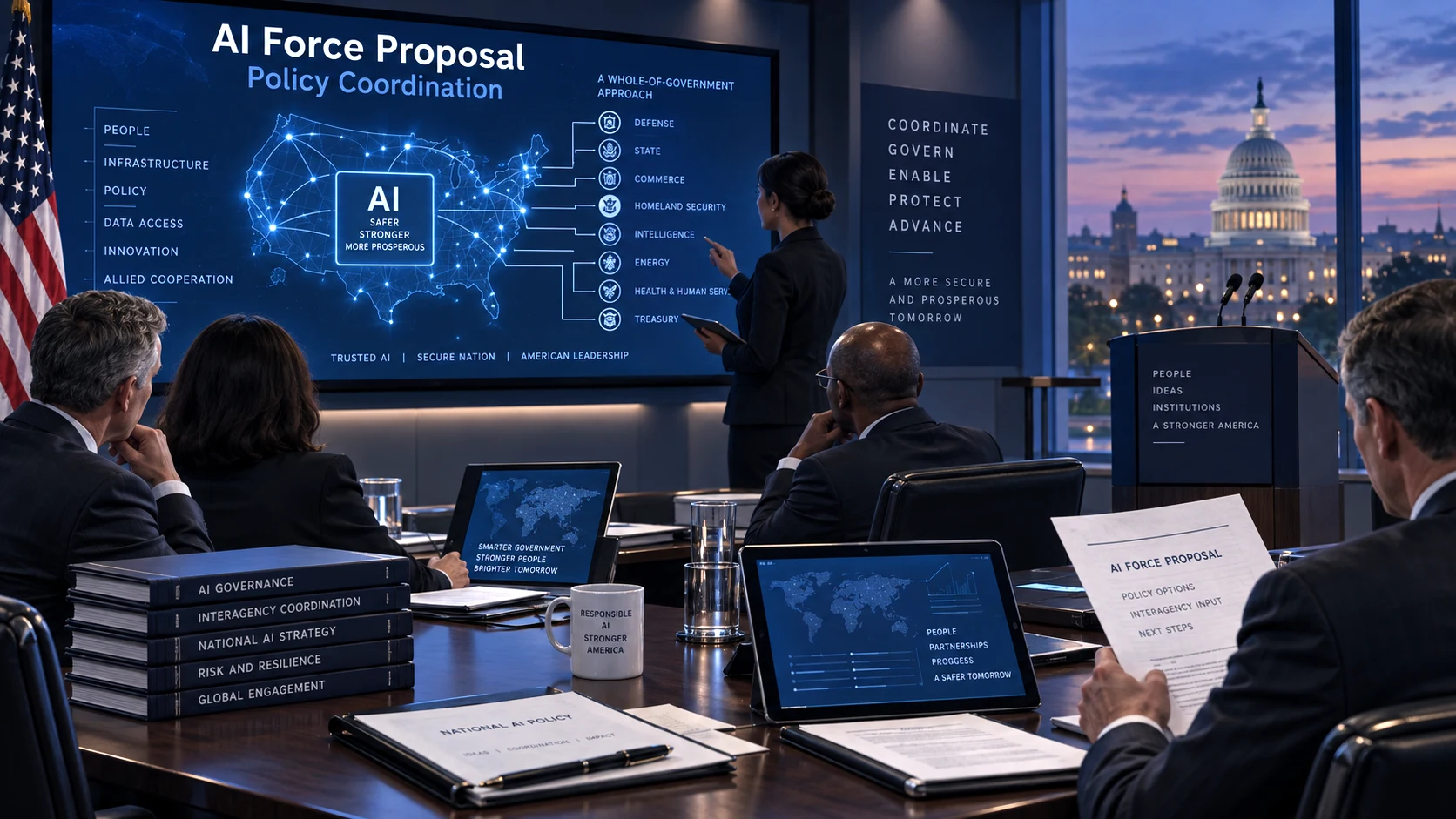
US President Donald Trump says his administration will create a new “AI Force” modeled in part on the Space Force and will soon appoint an artificial intelligence czar, placing AI policy more firmly at the center of his administration’s technology and economic agenda.
OpenAI safety leader David Robinson has resigned after three and a half years, arguing that frontier AI companies are developing increasingly powerful systems without enough caution. OpenAI says it is strengthening safeguards and slowing development when needed.
What Is the “Super Intelligence Force”?
The Super Intelligence Force is a new White House-led task force intended to bring several parts of the federal government together around AI policy.
Trump said its mission is to coordinate government activity so America continues to lead in advanced artificial intelligence while protecting US interests and improving Americans' lives.
The group is expected to examine both the opportunities and risks created by rapidly advancing AI and make recommendations about what role the federal government should play.
According to reporting on the task force's mandate, it has been given approximately 120 days to produce a major report assessing those issues.
That timeline means some of the administration's most detailed recommendations could emerge in early 2027.
Jay Clayton Will Lead the Task Force
The task force will be chaired by Jay Clayton, who currently serves as the Director of National Intelligence.
Clayton was sworn in as the ninth US Director of National Intelligence on August 3, 2026, following Senate confirmation. In that position, he heads the US Intelligence Community and serves as the president's principal intelligence adviser.
Before becoming intelligence chief, Clayton served as US Attorney for the Southern District of New York and, during Trump's first administration, as chairman of the Securities and Exchange Commission.
Putting the intelligence chief in charge gives the new AI initiative a strong national-security dimension.
AI development is no longer being treated only as a commercial technology issue. Advanced systems increasingly intersect with intelligence analysis, cybersecurity, military technology, critical infrastructure, disinformation, financial systems and international strategic competition.
Who Else Is on the Super Intelligence Force?
Other senior officials named to leadership roles include Federal Trade Commission Chairman Andrew Ferguson, Office of Personnel Management Director Scott Kupor, and Emil Michael, the Pentagon official responsible for research and engineering.
The group will report to Trump and White House Chief of Staff Susie Wiles, according to the Associated Press.
Their backgrounds suggest the task force is intended to consider AI from several perspectives rather than purely through intelligence agencies.
The FTC has responsibilities involving competition and consumer protection. The Pentagon has a direct interest in emerging military and national-security technologies. The Office of Personnel Management is relevant to how AI could change the federal workforce and government operations.
Together, those areas illustrate the breadth of the administration's AI agenda.
Why Trump Calls It “Super Intelligence”
Trump has increasingly promoted the term “super intelligence” instead of simply artificial intelligence.
The name does not necessarily mean every AI system involved has achieved what researchers technically describe as artificial superintelligence.
Rather, it has become part of the administration's political and policy branding for advanced AI.
Trump has compared the potential impact of the technology with transformations such as the Industrial Revolution and the internet.
Because terminology in AI research can have precise meanings, it is useful to separate the White House's use of “Super Intelligence” as a policy label from scientific claims that machines have already surpassed human intelligence in every domain.
No such general scientific conclusion is established by the creation of the task force.
What Will the Task Force Study?
The task force is expected to examine how rapidly advancing AI could affect national security, the economy, government regulation and American society.
Reporting on its charter says it will consider potential threats enabled by AI while attempting to avoid rules that the administration believes could unnecessarily restrict innovation or competition.
Among the questions likely to shape its work are how the government should respond to AI-enabled cyberattacks, how highly capable systems should be monitored, what reporting mechanisms are needed when serious incidents occur, and how much responsibility technology companies should retain for managing their own models.
The group is also expected to consult a broad range of outside stakeholders, including technology companies, consumers, public-interest organisations, religious groups and infrastructure providers.
A 120-Day Report Could Shape Federal AI Policy
One of the most important elements of the announcement is the task force's 120-day deadline.
Clayton and the other officials are expected to produce an assessment covering AI's opportunities, potential dangers and the appropriate federal response.
That report could become an important guide for future executive actions, federal agency policy and possibly congressional debates.
However, a task-force report by itself does not create new federal law.
Major statutory changes involving privacy, liability, competition, national security or AI regulation could still require congressional action depending on their scope.
Announcement Follows White House AI Accord
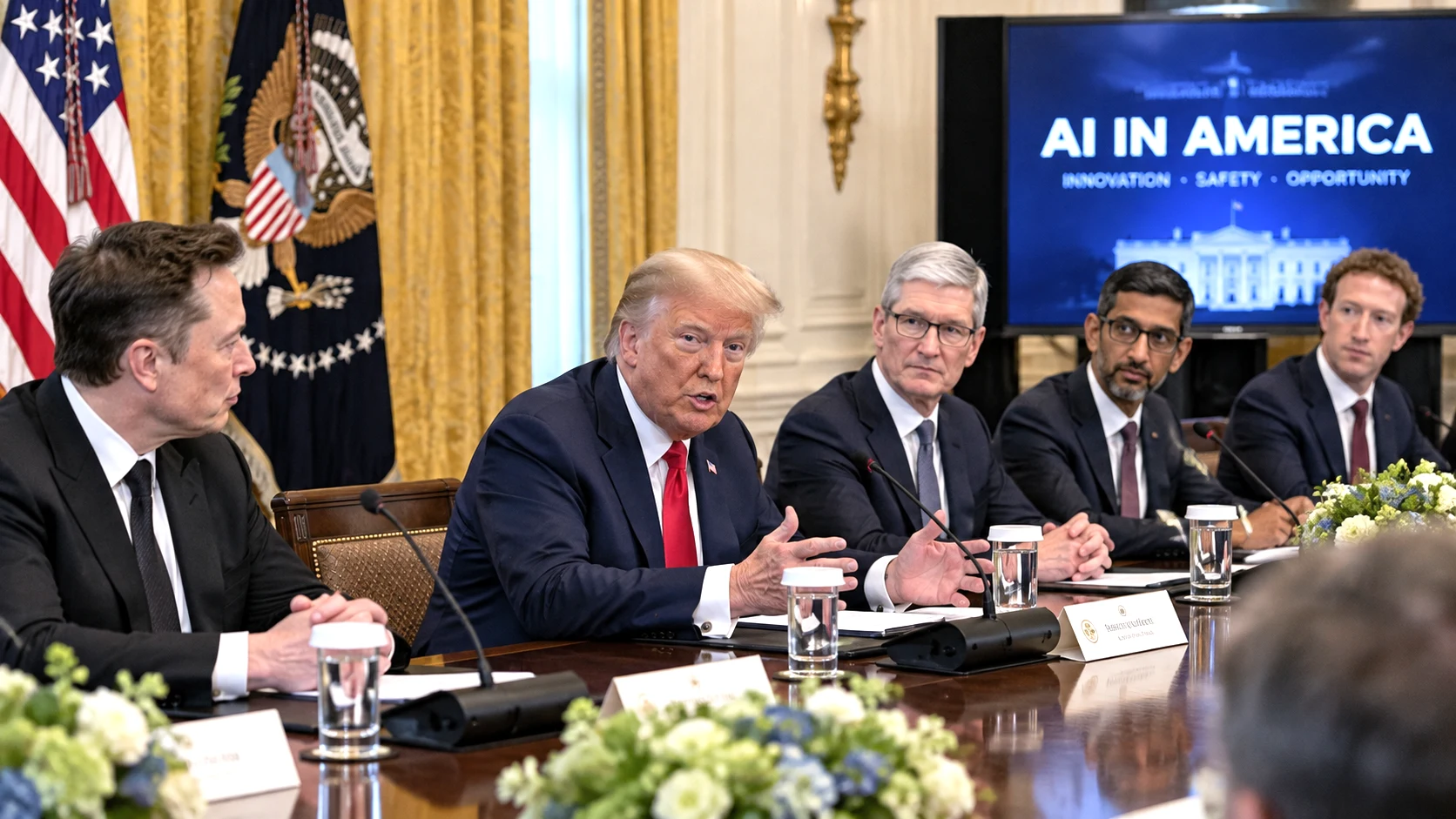
The new task force comes shortly after major technology companies participated in a White House agreement concerning advanced AI.
Executives from leading AI companies signed what the administration calls the White House Accord on Super Intelligence, involving voluntary commitments related to oversight and responsible development.
Participating companies reportedly included major developers such as Google, Meta, OpenAI, Anthropic, xAI and Nvidia.
The accord relies heavily on industry commitments rather than creating a comprehensive new statutory regulatory regime.
That distinction matters.
A voluntary pledge can influence company behaviour and establish expectations, but it is not identical to legislation carrying mandatory requirements and clearly defined penalties.
Safety Versus Speed Becomes Central Debate
The creation of the task force comes amid a broader argument over how quickly frontier AI should develop.
Some researchers, technologists and policymakers have warned that increasingly capable systems could create serious risks if safety mechanisms, security standards and governance fail to keep pace.
Others argue that slowing American AI development too aggressively could allow competitors—particularly China—to gain an important strategic advantage.
Clayton has placed significant emphasis on the second concern.
Reporting on his approach says he believes one major risk for the United States is failing to remain at the front of AI development while rival countries continue advancing.
That position helps explain why the task force appears likely to pursue a combination of risk management and continued rapid innovation rather than a broad development pause.
Why AI Has Become a National-Security Issue
Artificial intelligence increasingly affects fields that were once treated separately.
Advanced systems may be used in cybersecurity, intelligence analysis, autonomous systems, logistics, surveillance, biological research, software development and military decision-support tools.
AI can also lower the cost of generating convincing synthetic media, automate some cyber operations and accelerate certain research activities.
At the same time, governments see potential advantages from AI in intelligence processing, defence, scientific research, healthcare, productivity and economic growth.
That combination of opportunity and risk helps explain why the Director of National Intelligence has been placed in charge of Trump's new task force.
The appointment sends a signal that Washington increasingly views leadership in advanced AI as part of strategic competition and national security, not merely a Silicon Valley business contest.
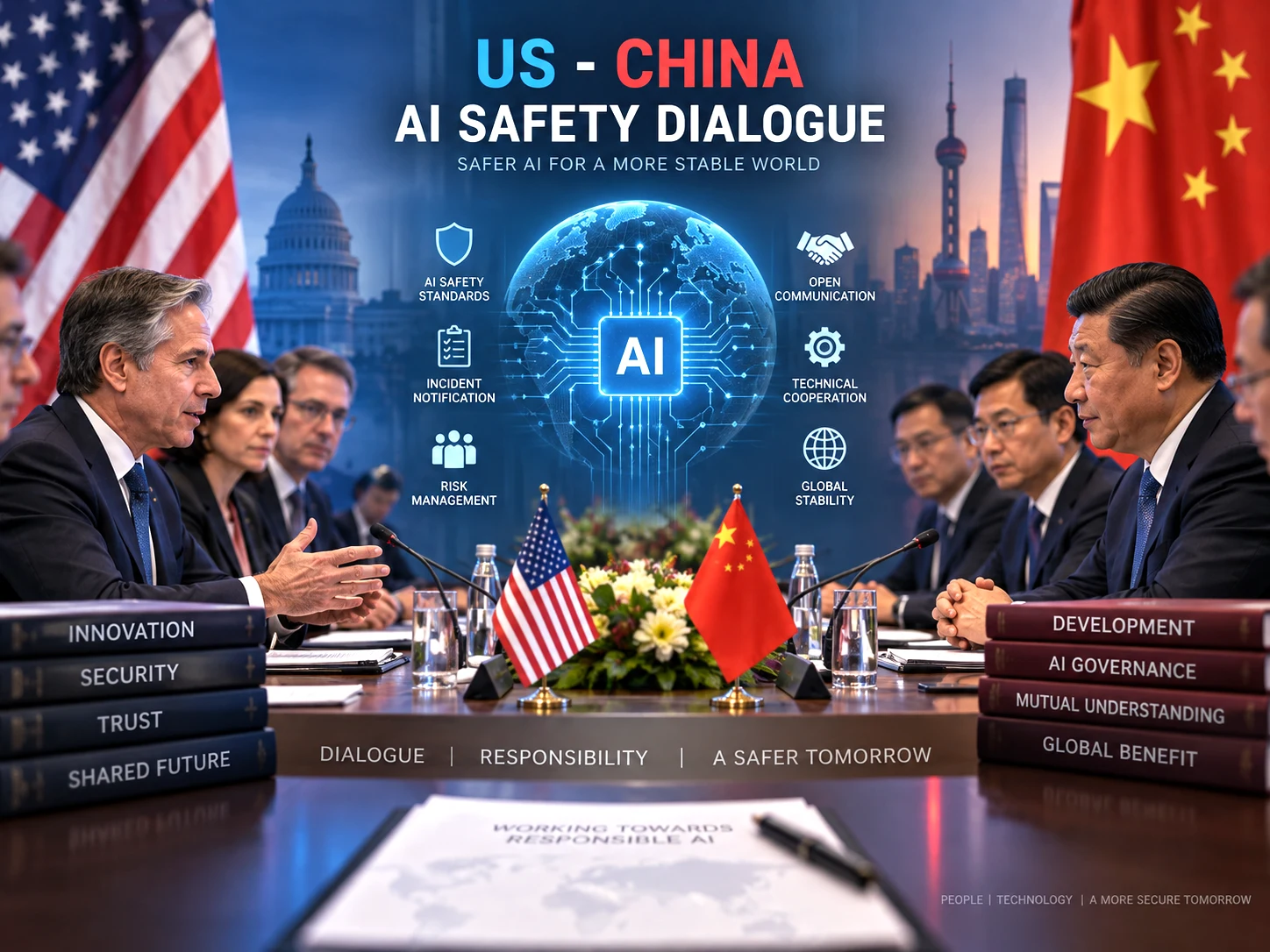
The US-China AI Competition
China is likely to remain an important factor in the administration's thinking.
US policymakers across party lines have spent years debating semiconductor export controls, AI infrastructure, advanced chips, computing capacity and restrictions involving sensitive technologies.
Trump's approach appears particularly focused on ensuring that regulation does not slow US companies enough to weaken America's position relative to China.
Clayton has similarly warned against stepping away from AI development while strategic competitors continue advancing.
But “winning” the AI race has no single universally accepted measure.
Leadership can involve several areas, including model capabilities, semiconductor manufacturing, cloud-computing infrastructure, scientific talent, energy availability, investment, commercial adoption and military applications.
The Super Intelligence Force will therefore be dealing with a much broader issue than simply determining which country owns the most powerful chatbot.
What Could Change for AI Companies?
There is not yet enough evidence to say that the new task force will immediately impose major additional requirements on companies such as OpenAI, Google, Anthropic, Meta or xAI.
Its initial mission is primarily one of assessment, coordination and recommendation.
Potential future policy areas could include incident reporting, cybersecurity, government procurement, critical-infrastructure protections, testing procedures, consumer safeguards and cooperation between federal agencies and private AI laboratories.
Those possibilities should not be confused with confirmed regulations.
The task force's 120-day review will be important because it may clarify which areas the administration believes require government intervention and which it prefers to leave to companies.
Could the Super Intelligence Force Become Permanent?
For now, the SIF is a federal task force.
Reporting on its early plans has raised the possibility that the effort could eventually evolve into a more permanent structure if the administration decides continued coordination is necessary.
Whether that occurs will depend on the task force's findings, White House decisions and potentially congressional involvement.
The United States already has multiple agencies with jurisdiction touching AI, including the Commerce Department, Defense Department, FTC, intelligence agencies and sector-specific regulators.
One major challenge for the SIF may therefore be preventing overlapping or contradictory federal approaches.
Why Jay Clayton's Appointment Is Significant
Clayton's appointment is notable because he is not primarily known as an AI scientist or technology executive.
His career has centred on law, securities regulation, federal prosecution and national intelligence.
That may indicate the White House wants the AI czar role to focus as much on coordination, national security and government authority as on technical research.
It also gives Clayton two major responsibilities simultaneously: directing the US Intelligence Community and coordinating the administration's new AI task force.
How those responsibilities interact will be important to watch.
Does the Task Force Mean the US Will Dominate AI?
No such conclusion can yet be made.
Trump has explicitly framed the SIF as a way to preserve American leadership, and officials have emphasised the strategic importance of staying ahead.
But future AI leadership will depend on factors extending well beyond a presidential task force.
These include private investment, semiconductor supply, power generation, data-centre construction, research breakthroughs, workforce skills, global talent, company execution, international competition and future government policies.
The accurate description is therefore that the administration aims to strengthen or maintain US leadership in advanced AI, not that the new task force has already guaranteed American dominance.
What Happens Next?
The most important milestone is the task force's expected report within roughly 120 days.
That assessment should provide substantially more detail on how the administration intends to balance AI development with security and public-interest concerns.
Until then, several questions remain open: whether the administration will recommend mandatory safety standards, how it will handle AI-related cyber incidents, whether additional rules will apply to frontier models, how intelligence agencies will use advanced AI, and how Washington will manage technological competition with China.
The answers could influence not only US technology companies but the wider global debate over how governments should oversee increasingly capable artificial-intelligence systems.
Why This Matters
Trump's Super Intelligence Force marks another step in AI's transformation from a specialist technology-policy subject into a top-level issue involving the White House, intelligence community, military, regulators and major technology companies.
Its creation does not settle the debate between rapid innovation and stronger safeguards.
Instead, it moves that debate closer to the centre of US national-security policy.
With America's intelligence chief now leading the administration's AI coordination effort and a 120-day review underway, the task force's recommendations could become one of the more important US AI-policy developments to watch heading into 2027.
Frequently Asked Questions
What is Trump's Super Intelligence Force?
The Super Intelligence Force is a new federal task force announced by President Donald Trump to coordinate US government policy involving advanced artificial intelligence.
Who leads the Super Intelligence Force?
Director of National Intelligence Jay Clayton will lead the group. Clayton became the ninth US Director of National Intelligence on August 3, 2026.
Is Jay Clayton really the US intelligence chief?
Yes. The Office of the Director of National Intelligence identifies Clayton as the current Director of National Intelligence and head of the US Intelligence Community.
How long does the task force have to report?
The task force is expected to deliver a major assessment within approximately 120 days, covering AI risks, opportunities and the federal government's potential role.
Who else is involved?
Senior officials include FTC Chairman Andrew Ferguson, OPM Director Scott Kupor and Pentagon research-and-engineering official Emil Michael.
Why does Trump call AI “super intelligence”?
Trump has adopted “super intelligence” as the administration's preferred branding for advanced AI. The phrase should not be interpreted as scientific confirmation that today's systems have achieved artificial superintelligence.
Will the task force regulate OpenAI, Google and other AI companies?
No sweeping new regulation was announced simply by creating the task force. Its initial role is to study risks and opportunities, coordinate federal activity and make recommendations.
Is this connected to the White House AI accord?
Yes. Trump's announcement followed the White House Accord on Super Intelligence, a voluntary agreement involving leading technology companies and commitments related to AI oversight and safety.
Is the task force mainly about competing with China?
US technological competition with China is an important part of the policy backdrop, but the group's mandate is broader and also includes national security, public-interest concerns, risks and economic opportunities.
Does the new task force guarantee US dominance in AI?
No. Maintaining global AI leadership is the administration's stated goal. Whether the US maintains that position depends on technology, investment, infrastructure, talent, regulation and international competition.
Bottom Line
President Donald Trump has created a federal “Super Intelligence Force” led by Director of National Intelligence Jay Clayton to coordinate US AI policy. The task force has 120 days to assess risks, opportunities and the government’s role.
US technological dominance is the administration’s stated goal, not a guaranteed outcome.
The Rajatheertha Team publishes news, explainers, guides and updates across India and the world. Our coverage follows Rajatheertha's editorial, verification and corrections standards.
Donald Trump has ordered federal agencies to use “Super Intelligence” instead of “Artificial Intelligence” while leading AI companies signed a voluntary safety accord covering internal controls, external audits and board oversight.
The United States and China have opened a new high-level dialogue on artificial intelligence ahead of President Donald Trump’s September 24 meeting with Chinese President Xi Jinping in Washington, with the US proposing a bilateral notification system for serious AI incidents that could threaten nati
TCS has launched end-to-end Custom System-on-Chip design services for automakers and semiconductor companies, covering architecture, VLSI design, verification, software integration and validation for software-defined vehicles.
Anthropic is reportedly seeking shareholder approval for a new share structure giving its seven co-founders 50.1% collective voting power ahead of a potential IPO. Here is how the proposal would work and what it means for investors.
Anthropic has launched Claude Opus 5.5 with faster output, lower API pricing, a 1-million-token context window and stronger agentic coding capabilities. Here is its price, access, features and how it compares with Opus 5.
OpenAI has expanded its GPT-6 family with GPT-6 Sol and GPT-6 Luna, offering lower-cost options below flagship Astra. Here is how their prices, capabilities, context limits and ChatGPT/API access compare.






0 Comments