TCS Launches Custom Chip Design Services for Software-Defined Vehicles: What the New SoC Offering Does
TCS has launched end-to-end Custom System-on-Chip design services for automakers and semiconductor companies, covering architecture, VLSI design, verification, software integration and validation for software-defined vehicles.
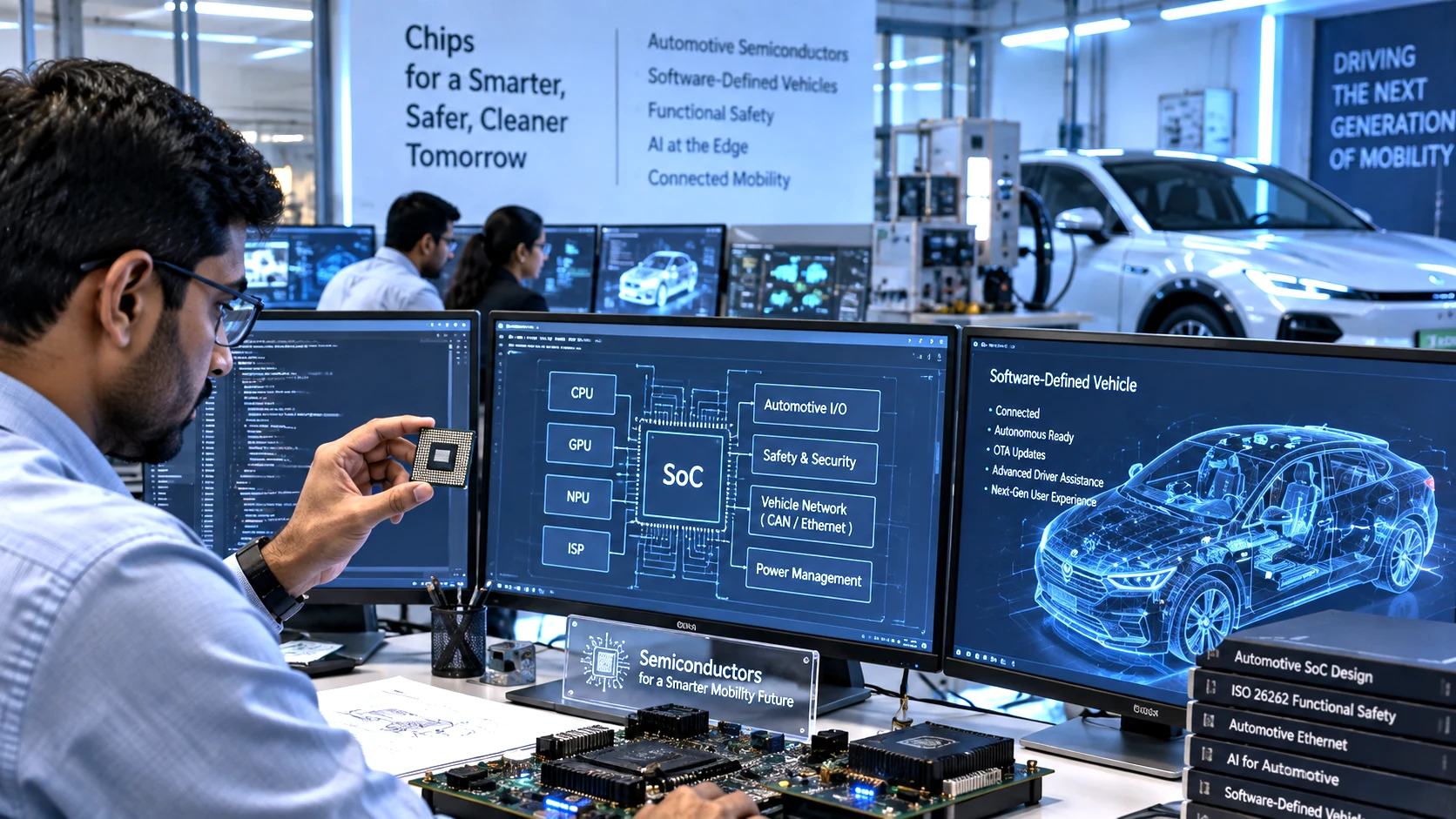
Illustrative automotive semiconductor engineering for custom system-on-chip designs used in software-defined vehicles
Table of Contents (20 sections)
MUMBAI / BENGALURU, September 22, 2026: Tata Consultancy Services has launched a new set of Custom System-on-Chip Design Services aimed at automakers and semiconductor companies as the automotive industry moves towards software-defined, AI-enabled and increasingly centralised vehicle computing architectures.
Announced on September 17, 2026, the offering is designed to help automotive original equipment manufacturers conceive, design, verify, implement and validate custom semiconductor chips for future vehicle platforms.
TCS says the service spans the silicon-development lifecycle, including chip architecture, Very Large-Scale Integration design, hardware-software co-design, implementation, software integration and final system validation.
The move reflects a wider change in automotive engineering. Cars are moving from architectures built around many separate electronic control units towards fewer but more powerful central computers, zonal controllers, advanced driver-assistance systems, connected services and increasingly complex software.
Recommended Reading
Related Stories & In-Depth Guides
Curated editorial perspectives matching this topic.
Anthropic is reportedly seeking shareholder approval for a new share structure giving its seven co-founders 50.1% collective voting power ahead of a potential IPO. Here is how the proposal would work and what it means for investors.
Apple’s latest Pro iPhones officially went on sale in India on September 18, with customers gathering outside stores in Delhi, Mumbai, Bengaluru and Noida. Prices start at ₹1,64,900 for the iPhone 18 Pro and ₹1,79,900 for the Pro Max.
For automakers, that can make the chip underneath the software almost as strategically important as the software itself.
However, the announcement should not be interpreted as TCS entering semiconductor fabrication or opening a chip factory.
TCS is offering engineering and design services. The company has not announced that it will manufacture the physical semiconductor wafers itself.
Key Takeaways
TCS launches Custom System-on-Chip Design Services for automotive and semiconductor customers.
Offering covers architecture, VLSI, verification, implementation, software integration and system validation.
Targets software-defined, AI-enabled and centralised vehicle computing platforms.
No named customer, contract value or production-chip programme announced.
Service is design and engineering, not chip fabrication.
Builds on TCS’s existing semiconductor engineering capabilities.
TCS Custom SoC Design Services: Key Details
Detail
Confirmed information
Company
Tata Consultancy Services
Offering
Custom System-on-Chip Design Services
Announcement date
September 17, 2026
Primary customers
Automotive OEMs and semiconductor ecosystem companies
Centralised computing, ADAS, electric mobility, connected vehicles and other automotive workloads
Named automotive customer
None announced with launch
Contract value
Not disclosed
Chip manufacturing/fabrication
Not announced as part of the offering
TCS describes the service as an end-to-end engineering capability intended to give automakers greater control over their silicon roadmaps and potentially shorten development cycles.
What Is a System-on-Chip?
A System-on-Chip, commonly called an SoC, combines multiple computing functions into a single semiconductor device.
Depending on its design, an SoC can incorporate components such as:
processor cores;
graphics or AI accelerators;
memory controllers;
communication interfaces;
security functions;
signal-processing blocks;
vehicle-network interfaces;
and specialised hardware for particular workloads.
Instead of building a computing system from many separate chips, designers can integrate several important functions into one package or silicon architecture.
Automotive SoCs are increasingly important because modern vehicles have to process large amounts of information from cameras, radar, sensors, infotainment systems, vehicle networks and driver-assistance software.
As those requirements grow, automakers may want chips designed around their own vehicle architecture rather than relying entirely on generic processors.
Why Are Automakers Interested in Custom Chips?
Historically, vehicle manufacturers bought a large share of their electronic components from semiconductor and automotive suppliers.
That model remains important, but the growing role of software is changing how some automakers think about computing hardware.
A software-defined vehicle may receive new functions through software updates during its lifetime.
It can also depend on increasingly sophisticated computing for:
driver assistance;
digital cockpits;
infotainment;
connectivity;
battery and energy management;
cybersecurity;
vehicle diagnostics;
autonomous-driving functions;
and AI workloads.
TCS says custom SoCs can allow automakers to align computing capabilities more closely with their own software requirements and vehicle roadmaps while improving performance per watt.
That could become important for electric vehicles in particular because computing efficiency affects power consumption.
However, designing a custom automotive SoC is expensive and technically demanding. It only makes commercial sense when the expected benefits justify the design, verification and manufacturing costs.
What Exactly Will TCS Do?
TCS's offering covers multiple stages that occur before a chip becomes part of a production vehicle.
1. System and chip architecture
The process begins with understanding what the vehicle has to do.
Engineers examine the software platform, expected workloads, performance requirements, safety requirements and overall vehicle architecture.
Only then is the architecture of the proposed SoC defined.
2. VLSI design
Very Large-Scale Integration engineering involves designing highly complex integrated circuits containing very large numbers of electronic components.
This can cover logic design and other stages required to translate the chip architecture into something that can eventually be implemented in silicon.
3. Verification
Chip designs must be extensively verified before manufacturing.
Finding a fundamental design error after fabrication can be extremely expensive because semiconductor production involves lengthy development cycles and high manufacturing costs.
Verification attempts to establish that the design behaves as intended across expected operating conditions.
4. Implementation
The verified logical design then has to be translated into a physical implementation suitable for semiconductor manufacturing.
5. Hardware-software integration
For software-defined vehicles, chip and software development cannot be treated as completely separate programmes.
Vehicle software has to work efficiently with the processors, accelerators, memory systems and interfaces available in the silicon.
TCS therefore includes hardware-software co-design and software integration as part of the offering.
6. System validation
The final objective is not simply to produce a functioning chip design.
The SoC has to operate correctly within the broader vehicle platform.
TCS says its service therefore extends into system-level validation rather than ending with isolated semiconductor design.
What Is TCS’s “Chip-to-System” Approach?
TCS describes its methodology as chip-to-system engineering.
Instead of beginning with the semiconductor in isolation, engineers first examine the complete product environment in which the silicon will operate.
For a vehicle, that can include:
software architecture;
vehicle functions;
workload requirements;
power consumption;
communication architecture;
processing requirements;
safety expectations;
and system performance.
Those requirements then influence the SoC architecture.
TCS argues that this approach can help customers avoid making semiconductor decisions without considering the rest of the vehicle system.
That distinction becomes increasingly important as automobile development merges traditionally separate disciplines such as mechanical engineering, electronics, cloud connectivity, embedded software and artificial intelligence.
What Is a Software-Defined Vehicle?
There is no single universal definition, but a software-defined vehicle is broadly a car in which software plays a much larger role in determining functionality and user experience than in traditional vehicle architectures.
Older vehicles often contain dozens of specialised electronic control units, each responsible for a particular function.
Newer architectures increasingly move towards centralised computing and zonal systems.
A zonal architecture groups electronic functions according to physical areas of the vehicle, while higher-level computing platforms can run multiple applications centrally.
This can potentially reduce wiring complexity and make software easier to update and manage.
The transition is also connected with over-the-air updates.
Instead of every major feature being fixed when a car leaves the factory, some software capabilities may be improved or introduced during the vehicle's operational life.
TCS says centralised computing, zonal networks, ADAS, electric mobility and connected features are among the trends driving demand for specialised automotive computing.
Why AI Is Increasing Demand for Automotive Computing
AI is adding another layer to vehicle-computing requirements.
Driver-assistance systems may need to analyse information from multiple cameras and sensors with extremely low latency.
Future AI-enabled vehicle functions may also need specialised accelerators that can perform large numbers of calculations efficiently.
Using general-purpose processors for every task can be inefficient.
Purpose-built silicon can allow particular workloads to run faster or use less power.
TCS says the computing architecture underneath AI-driven software-defined vehicles will increasingly help differentiate competing vehicle platforms.
That does not mean every future vehicle manufacturer will design its own chip.
Many automakers will continue buying standard or semi-custom automotive processors from established semiconductor suppliers.
The custom-silicon model is one option, particularly for companies that have sufficient scale or specialised computing requirements.
Is TCS Manufacturing Automotive Chips?
No manufacturing facility has been announced as part of this service.
This is an important distinction.
The semiconductor value chain includes several separate activities:
chip architecture;
circuit and logic design;
verification;
physical implementation;
intellectual-property integration;
fabrication;
packaging;
testing;
software integration;
system deployment.
TCS is expanding its engineering role across the design and system-integration side of that chain.
A semiconductor foundry would still be required to physically manufacture a completed chip design.
TCS's broader semiconductor engineering business already includes capabilities extending from silicon implementation and verification to advanced packaging, chiplets, RISC-V-based subsystems and system integration.
The new automotive offering packages these capabilities around the specific requirements of software-defined vehicle programmes.
Has TCS Announced Any Customers?
TCS did not name a specific automaker, Tier-1 automotive supplier or semiconductor company as a customer for the newly launched Custom SoC Design Services in its announcement.
It also did not disclose:
a contract value;
an order pipeline;
expected revenue;
a production-chip programme;
the semiconductor process node customers will use;
or a launch vehicle containing a TCS-designed custom SoC.
That means it would be premature to connect the announcement with any specific car brand unless TCS or that manufacturer later confirms a project.
The service currently represents a new commercial engineering offering rather than an announced production-chip contract.
How Does This Fit into India’s Semiconductor Push?
TCS's announcement arrives as India continues trying to expand its role across semiconductor design, fabrication, packaging and electronics manufacturing.
The India Semiconductor Mission says its objective is to develop the country as a global hub for semiconductor manufacturing and design.
India's Design Linked Incentive framework specifically includes semiconductor designs such as integrated circuits, chipsets, SoCs, systems and intellectual-property cores.
TCS's service is separate from those government programmes, and the company has not said the automotive offering was created under a particular incentive scheme.
But the launch illustrates a broader point: India's semiconductor opportunity is not limited to building fabrication plants.
Chip architecture, VLSI engineering, verification, embedded software and system design are also major parts of the semiconductor value chain.
TCS Already Has Wider Semiconductor Engineering Capabilities
The automotive launch builds on an existing semiconductor-engineering practice at TCS rather than starting from zero.
TCS says its NextGen Chip Engineering Services cover the integrated-circuit design lifecycle from concept through tapeout and include experience with advanced silicon technologies.
Its broader capabilities include areas such as:
low-power design;
design-flow automation;
RISC-V custom subsystems;
SoCs;
chiplets;
die-to-die interfaces;
advanced packaging;
firmware;
compiler development;
system integration;
and semiconductor verification.
At DVCon India 2026, TCS also highlighted work involving AI-native custom SoCs, multi-die verification, advanced packaging and functional-safety engineering.
The automotive service therefore appears to bring existing semiconductor and vehicle-engineering capabilities together into a dedicated commercial proposition for carmakers.
Does This Mean TCS Will Compete with Nvidia, Qualcomm or NXP?
Not directly in the same way.
Companies such as Qualcomm, Nvidia, NXP, Infineon and other semiconductor vendors develop and sell their own automotive chip platforms and products.
TCS's newly announced model is primarily an engineering-services model.
It is offering expertise to help customers build custom silicon rather than announcing a standard TCS-branded automotive processor that carmakers can purchase off the shelf.
There can still be overlap in parts of the engineering ecosystem, but the business models are different.
TCS may potentially work with semiconductor companies, automakers and suppliers that use intellectual property or manufacturing technologies from multiple other companies.
Why Would an Automaker Want More Control over Silicon?
As vehicle differentiation shifts towards software, automakers increasingly have to decide how much control they want over the underlying computing platform.
Using an off-the-shelf chip can reduce development risk and expense.
Custom silicon may provide greater control over:
performance;
energy efficiency;
security;
integration;
product differentiation;
software optimisation;
and long-term hardware roadmaps.
For a manufacturer developing several vehicle models on the same electrical and software platform, a custom SoC could potentially be reused across multiple products.
However, custom chips also introduce significant development risk.
Automotive electronics have demanding reliability and safety requirements, while semiconductor projects can take years to design and validate.
For many manufacturers, partnerships with experienced semiconductor suppliers may remain the more economical choice.
What Could This Mean for Indian Engineering Jobs?
TCS has not announced a specific hiring target linked to the new service.
It would therefore be inaccurate to claim that the launch will directly create a particular number of semiconductor jobs.
Nevertheless, chip-design programmes require skills in areas including:
VLSI;
digital design;
verification;
embedded systems;
automotive software;
electronic system architecture;
firmware;
functional safety;
and hardware-software integration.
Demand for these skills is already increasing as India's semiconductor ecosystem expands.
Industry participants have also pointed to specialised engineering talent as one of the significant constraints facing the country's chip-design ambitions.
TCS's expansion into more specialised silicon-engineering programmes could therefore contribute to demand for advanced semiconductor and automotive engineering expertise, although the company has not quantified that effect.
What Does the Launch Mean for TCS Investors?
For investors, the announcement expands the type of high-value engineering work TCS can pursue.
Automotive semiconductor development can involve multi-year programmes spanning hardware, embedded software, verification and system integration.
That could make semiconductor engineering strategically attractive for a technology-services company.
But the current announcement does not provide enough information to calculate a meaningful revenue impact.
TCS has disclosed no customer order, deal value, project pipeline or expected contribution from the Custom SoC Design Services business.
Investors should therefore distinguish between the strategic opportunity and actual booked revenue.
Future developments that would provide stronger evidence of commercial traction include:
named automotive customers;
multi-year engineering contracts;
announced production SoCs;
partnerships with semiconductor foundries;
design wins in production vehicles;
and disclosed revenue or order values.
What Happens Next?
The next phase will be about whether TCS converts its semiconductor-engineering capabilities into production programmes with major automotive or chip companies.
Important developments to watch include:
the first named automotive customer;
partnerships with semiconductor manufacturers or IP companies;
details of automotive SoCs entering verification or tapeout;
The September 17 announcement establishes the service offering.
Its longer-term importance will depend on whether automakers choose TCS to help create custom silicon that eventually reaches production vehicles.
For now, the clearest takeaway is that TCS is moving deeper into the intersection of semiconductor engineering, automotive software and vehicle-system design, aiming to help carmakers gain greater control over the chips that will power increasingly software-defined vehicles.
Frequently Asked Questions
What did TCS launch?
TCS launched Custom System-on-Chip Design Services for automotive OEMs and semiconductor ecosystem companies on September 17, 2026.
What does the TCS custom SoC service include?
It covers SoC architecture, design, verification, implementation, software integration and system validation, supported by semiconductor engineering, VLSI and hardware-software co-design capabilities.
What are the chips intended for?
The service targets next-generation software-defined vehicles and applications involving centralised computing, zonal architectures, ADAS, electric mobility, connectivity and other advanced automotive workloads.
Is TCS going to manufacture semiconductor chips?
TCS has announced design and engineering services, not a semiconductor fabrication plant. Physical chip manufacturing would require a foundry or manufacturing partner.
Has TCS announced an automaker customer?
No specific automotive or semiconductor customer was named in the launch announcement.
Why are custom chips important for software-defined vehicles?
They can allow automakers to optimise computing hardware around their own software, performance, power-efficiency and product requirements rather than relying exclusively on general-purpose processors.
Bottom Line
TCS has launched end-to-end Custom System-on-Chip design services for automakers and semiconductor companies.
The offering covers architecture, VLSI design, verification, software integration and system validation for software-defined vehicles. It is an engineering service, not chip manufacturing, and no named customer or contract value has been disclosed.
Key Takeaway
TCS enters custom automotive SoC design services.
End-to-end coverage from architecture to system validation.
The Rajatheertha Team publishes news, explainers, guides and updates across India and the world. Our coverage follows Rajatheertha's editorial, verification and corrections standards.
President Donald Trump has created a federal “Super Intelligence Force” led by Director of National Intelligence Jay Clayton, giving the group 120 days to examine AI risks, opportunities and the US government's role in the technology.
The United States and China have opened a new high-level dialogue on artificial intelligence ahead of President Donald Trump’s September 24 meeting with Chinese President Xi Jinping in Washington, with the US proposing a bilateral notification system for serious AI incidents that could threaten nati
US President Donald Trump says his administration will create a new “AI Force” modeled in part on the Space Force and will soon appoint an artificial intelligence czar, placing AI policy more firmly at the center of his administration’s technology and economic agenda.
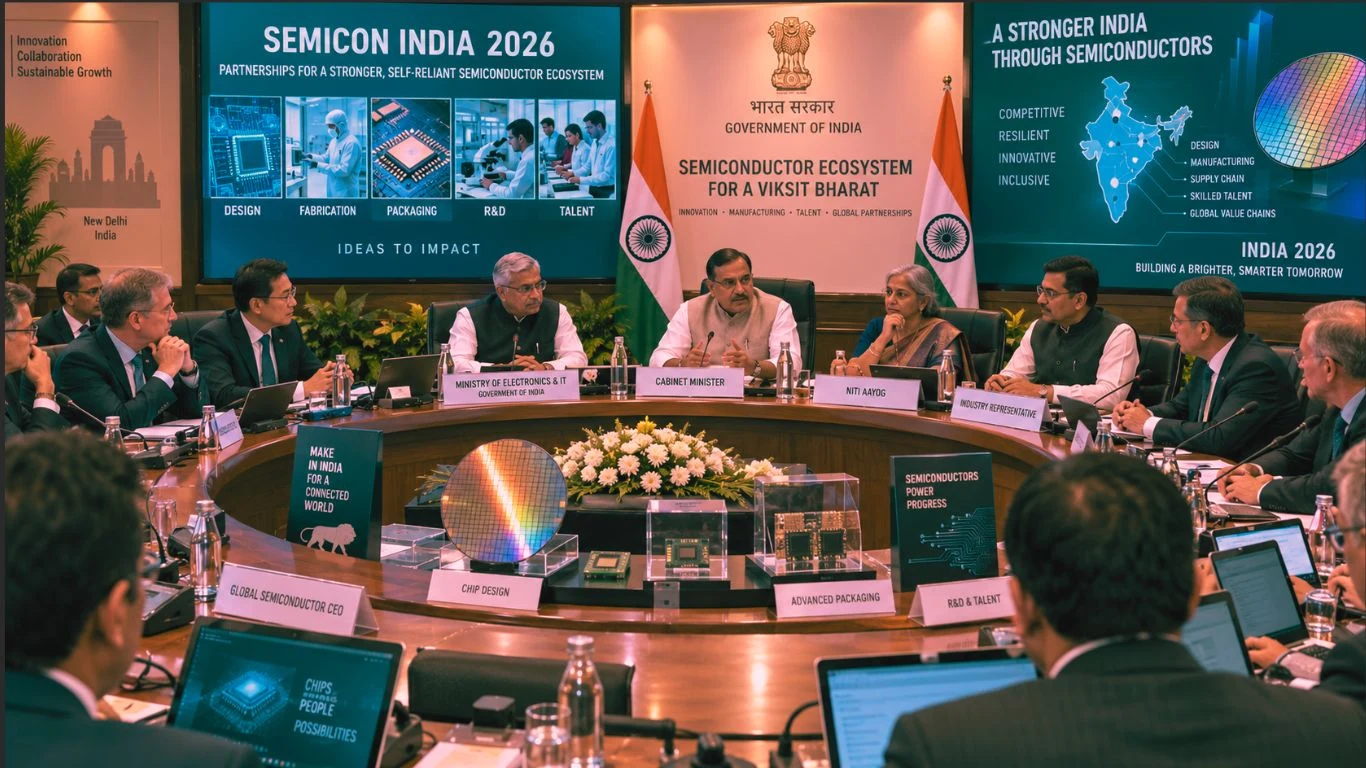
Executives and senior representatives from ASML, Micron, Applied Materials, Intel, AMD, Lam Research, NXP, Foxconn, Tata Electronics and other global semiconductor companies met Prime Minister Narendra Modi in New Delhi as India seeks to deepen manufacturing, R&D, skills and supply-chain capabilitie
Nvidia has agreed to acquire Hugging Face for about $12.93 billion, significantly expanding its AI software presence while promising to keep the developer platform open across chips and clouds.
Technology/ Artificial Intelligence & AI Safety13 min read
OpenAI safety leader David Robinson has resigned after three and a half years, arguing that frontier AI companies are developing increasingly powerful systems without enough caution. OpenAI says it is strengthening safeguards and slowing development when needed.











0 Comments