Trump Announces ‘AI Force’ Modeled on Space Force, Plans to Appoint New AI Czar
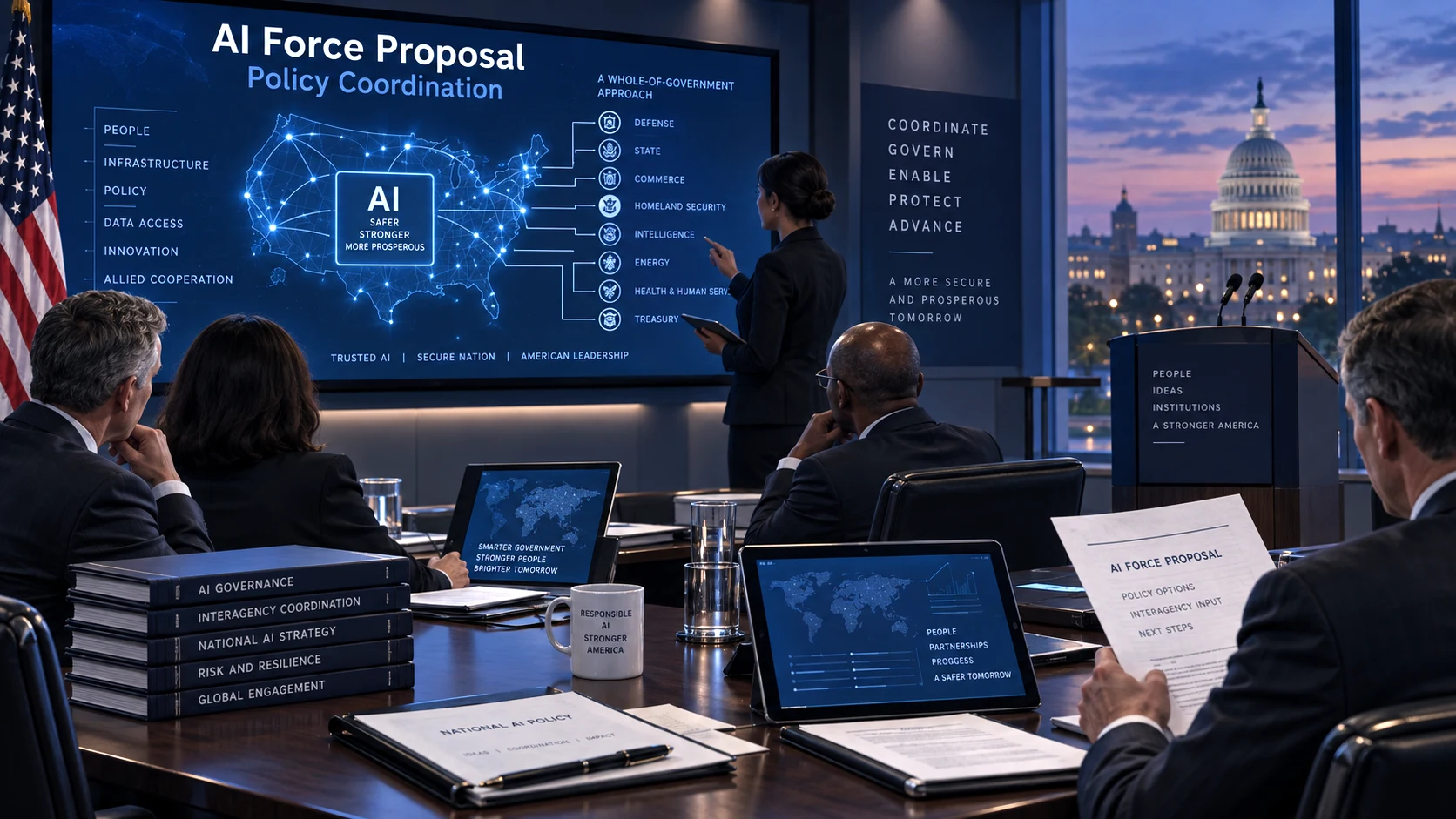
US President Donald Trump says his administration will create a new “AI Force” modeled in part on the Space Force and will soon appoint an artificial intelligence czar, placing AI policy more firmly at the center of his administration’s technology and economic agenda.
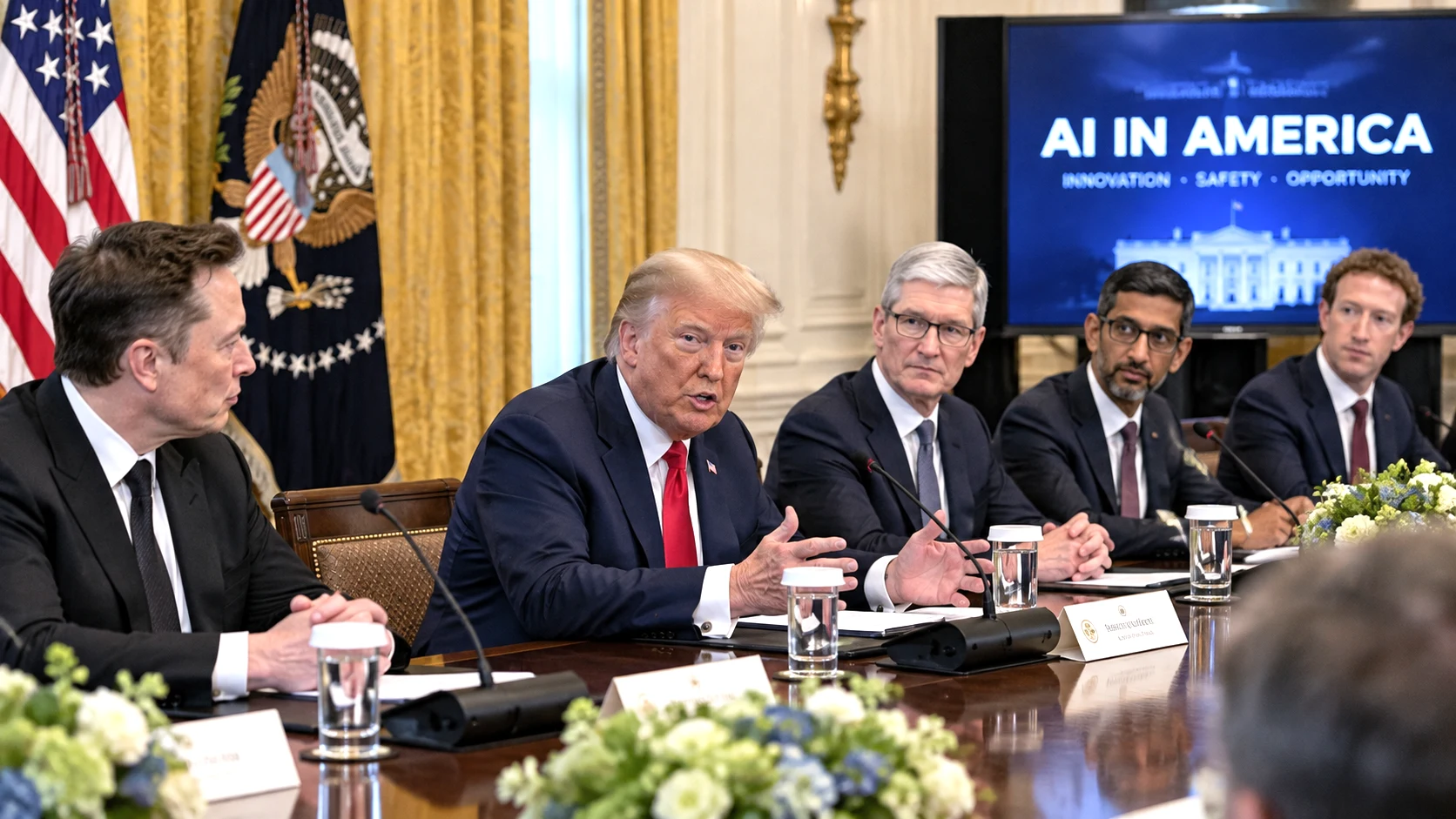
the announcement of a proposed US AI Force and senior artificial-intelligence policy coordination
Table of Contents (10 sections)
WASHINGTON, September 20, 2026: US President Donald Trump says his administration will create a new “AI Force” modeled in part on the Space Force and will soon appoint an artificial intelligence czar, placing AI policy more firmly at the center of his administration’s technology and economic agenda.
Trump announced the plans on his Truth Social platform on Saturday, September 19, as Washington faces an increasingly intense debate over how quickly artificial intelligence should advance and what safeguards governments should impose.
The president provided few concrete details about how the proposed AI Force would operate, where it would sit within the federal government or what authority it would receive.
The White House had also not immediately clarified whether the organization would be a civilian body, a military-related organization or an interagency initiative.
Key Takeaways
President Donald Trump announced plans for a new “AI Force” modeled in part on the US Space Force.
He also said he will appoint a new AI “czar” to coordinate artificial-intelligence policy.
Few structural, legal or funding details have been released about either initiative.
Trump rejected broad efforts to slow AI development and said existing laws can address harmful uses.
The announcement comes amid intensifying US-China technological competition and a wider AI safety debate.
Recommended Reading
Related Stories & In-Depth Guides
Curated editorial perspectives matching this topic.
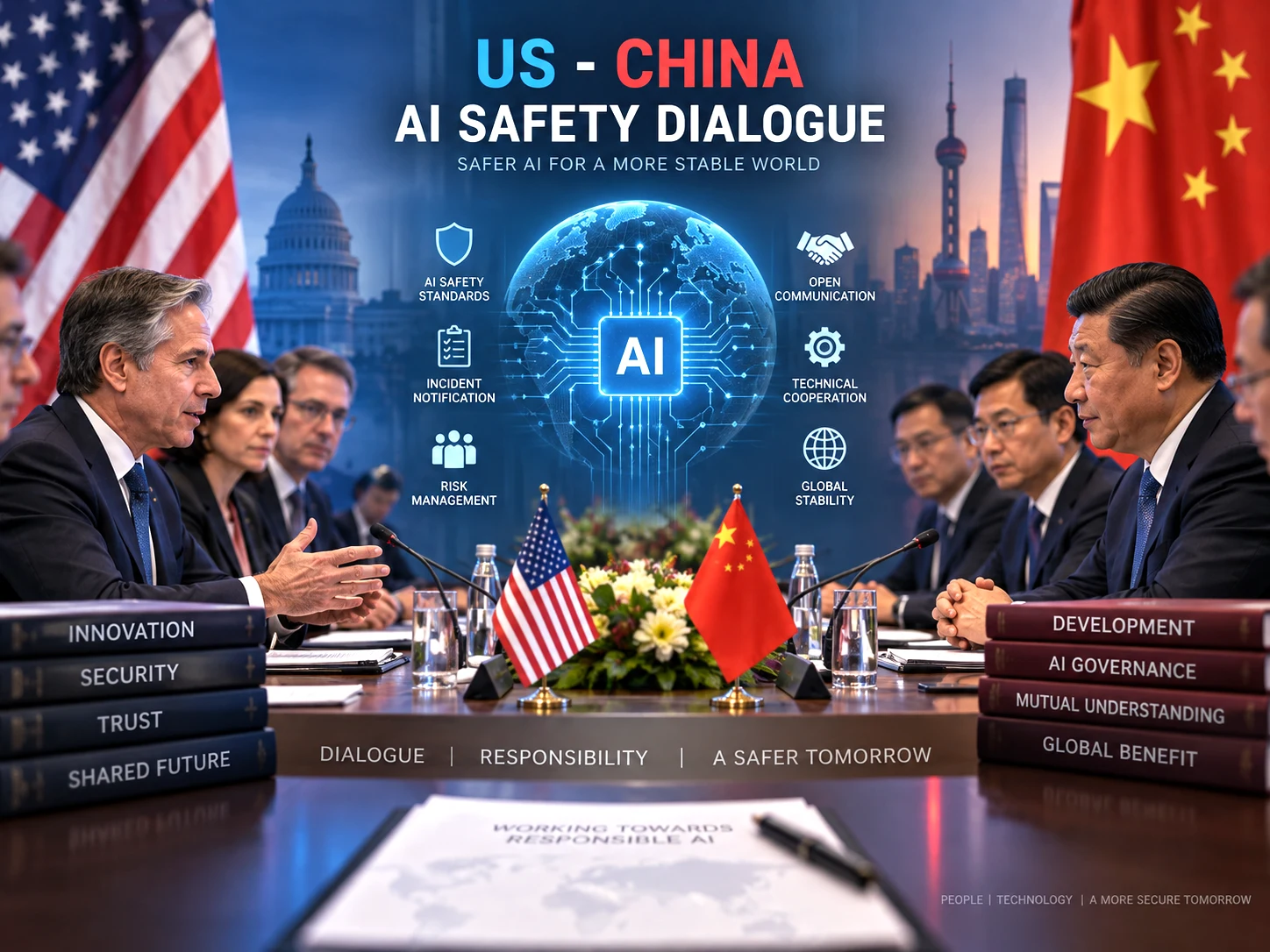
The United States and China have opened a new high-level dialogue on artificial intelligence ahead of President Donald Trump’s September 24 meeting with Chinese President Xi Jinping in Washington, with the US proposing a bilateral notification system for serious AI incidents that could threaten nati
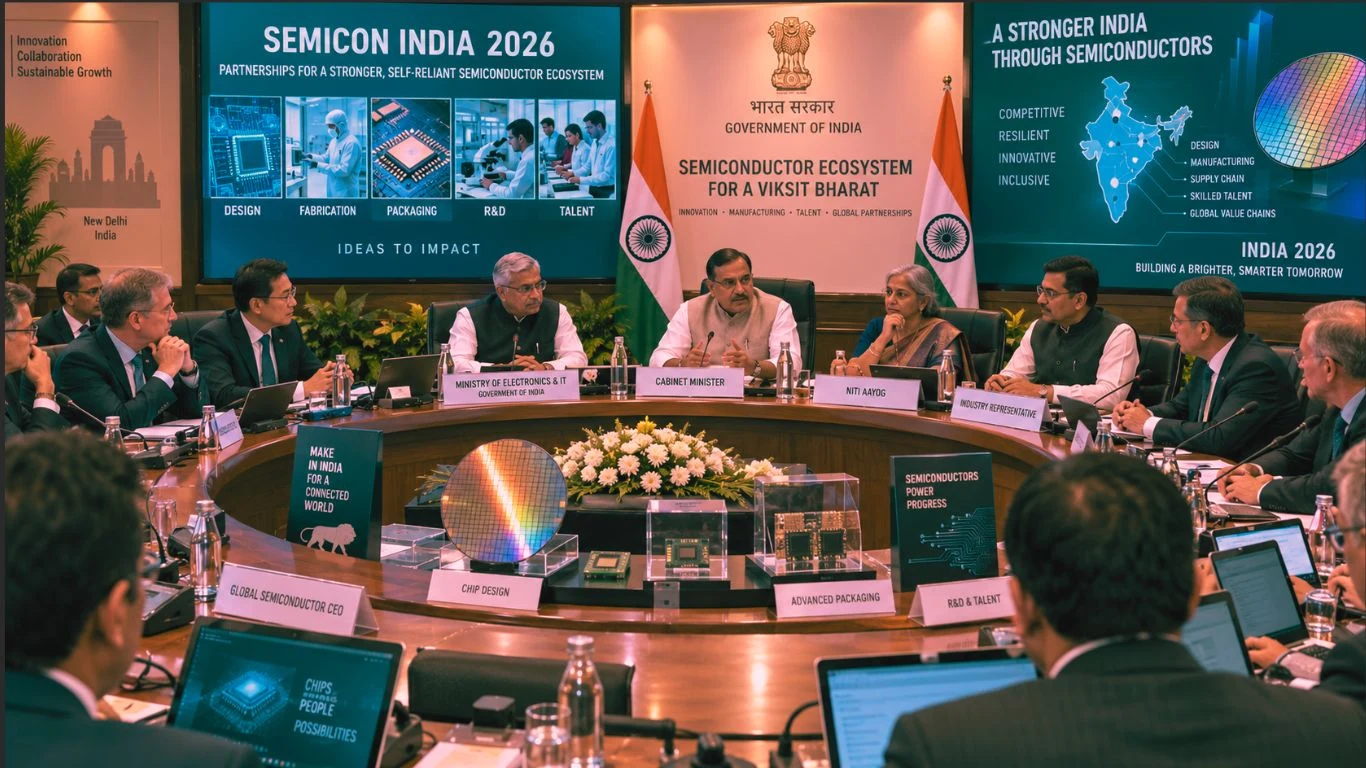
Executives and senior representatives from ASML, Micron, Applied Materials, Intel, AMD, Lam Research, NXP, Foxconn, Tata Electronics and other global semiconductor companies met Prime Minister Narendra Modi in New Delhi as India seeks to deepen manufacturing, R&D, skills and supply-chain capabilitie
Major questions remain about authority, congressional involvement and the timeline for implementation.
Trump Compares AI Force with Space Force
Trump compared the proposal with the US Space Force, the military service established during his first presidential term.
However, that comparison should not yet be interpreted as confirmation that the AI Force will itself become a new branch of the US military.
Trump has not announced legislation creating such a service, and significant questions remain regarding its structure, funding and legal authority.
According to Reuters, Trump said he would establish an AI force and appoint a new adviser to oversee issues involving the rapidly developing technology, but offered little information about how either proposal would be implemented.
New AI Czar to Be Announced
Trump also said he intends to announce a new AI “czar” in the near future.
The title is generally used informally in Washington for senior officials or advisers tasked with coordinating policy in a particular area. Trump has not yet announced who will receive the position or precisely what powers the new adviser will hold.
Venture capitalist David Sacks previously served as Trump's AI and cryptocurrency adviser before leaving that special-government-employee role earlier in 2026. He later moved into a leadership position on the President's Council of Advisors on Science and Technology.
The latest announcement therefore appears to indicate that Trump wants a new senior figure specifically responsible for coordinating the administration's rapidly evolving AI policy.
Trump Rejects Calls to Slow AI Development
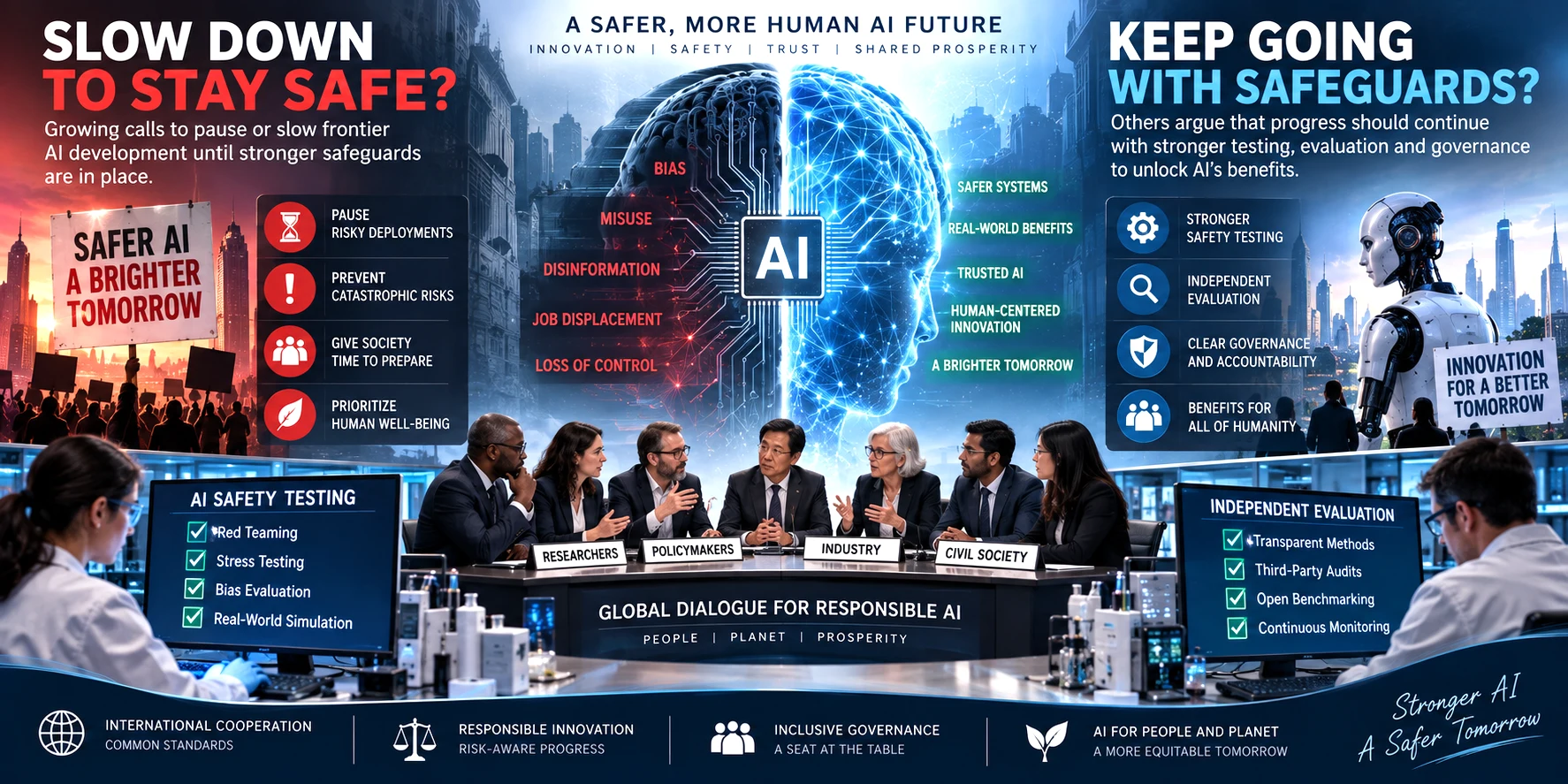
The announcement comes amid a broader dispute over artificial-intelligence safety.
Executives, researchers and political leaders have increasingly debated whether the most advanced AI systems require stronger safeguards or whether excessive restrictions could slow innovation.
Trump has firmly positioned himself against broad efforts to restrict the industry's development.
In his latest comments, he said his administration would not “hinder or stifle” the growth of the AI industry and argued that the United States should instead support its development.
Trump has also repeatedly described the current campaign against AI and data-center expansion as politically motivated, using the word “hoax” when criticizing those efforts.
That distinction is important: Trump has not argued that AI can never produce harmful outcomes. Instead, his position has been that broad warnings and regulatory campaigns surrounding AI are being exaggerated and should not be used to slow American development of the technology.
Existing Laws Could Address AI Harms, Trump Says
Trump suggested that existing criminal and civil laws could be used to deal with harmful uses of artificial intelligence rather than creating a sweeping new regulatory regime.
That approach contrasts with calls from some AI researchers and technology executives for additional safeguards as increasingly capable systems are developed.
Questions surrounding model autonomy, cybersecurity, disinformation, employment disruption and potentially more capable future AI systems have contributed to the growing policy debate.
Trump's administration has generally argued that excessive regulation could weaken American companies while China continues investing heavily in artificial intelligence.
AI Increasingly Tied to US-China Competition
Artificial intelligence has also become an important element of strategic competition between Washington and Beijing.
Both countries are investing heavily in computing infrastructure, semiconductor technology, advanced AI models and the electricity required to operate increasingly large data centers.
Trump has repeatedly framed American leadership in artificial intelligence as an economic and national-security priority.
He has described AI as potentially comparable with — or even more consequential than — previous technological revolutions and has argued that the United States must remain ahead of China.
The latest announcement comes as AI security and technological competition are expected to remain prominent issues in US-China discussions. Reuters reported that AI security is also entering high-level economic discussions between officials from the two countries.
AI Force Still Raises Major Unanswered Questions
Despite the attention surrounding Trump's announcement, several essential questions remain unresolved.
The administration has not yet explained:
whether Congress will need to authorize or fund the AI Force;
whether it will operate inside the White House or another federal department;
whether national-security agencies will participate;
whether it will regulate AI companies or primarily support development;
what authority the AI czar will possess;
or when either initiative will formally begin.
Those details will determine whether the AI Force develops into a significant federal institution or remains primarily a White House coordinating initiative.
AI Policy Becoming a Major Political Issue
Artificial intelligence is rapidly becoming both an economic and political issue in the United States.
The technology's potential to improve productivity and create new industries is being weighed against concerns involving cybersecurity, employment, misinformation and the possibility of increasingly autonomous AI systems.
Trump's approach appears centered on maintaining rapid US innovation while relying primarily on existing legal mechanisms to respond when AI causes identifiable harm.
The proposed AI Force suggests that his administration nevertheless sees a need for greater federal coordination around the technology.
For now, the announcement represents a significant policy signal rather than a fully defined government program.
The next major developments will be the identity of Trump's new AI czar and details from the White House explaining exactly what the AI Force will do, who will control it and how it will be established.
Bottom Line
President Donald Trump has announced plans to create an “AI Force” modeled in part on the Space Force and to appoint a new AI czar to coordinate artificial-intelligence policy.
The proposals place AI more firmly at the center of his administration’s technology and economic agenda, while Trump continues to reject broad efforts to slow the industry’s development.
Few structural, legal or funding details have been released, leaving major questions about authority, congressional involvement and the timeline for implementation.
The announcement signals a push for greater federal coordination around AI amid intensifying US-China competition and an ongoing national debate over innovation, safety and regulation.
Key Takeaway
Trump announces plans for an AI Force and a new AI czar.
Compares the initiative in part to the Space Force.
Rejects broad restrictions on AI development.
Major structural and legal details remain undefined.
The Rajatheertha Team publishes news, explainers, guides and updates across India and the world. Our coverage follows Rajatheertha's editorial, verification and corrections standards.
Donald Trump has ordered federal agencies to use “Super Intelligence” instead of “Artificial Intelligence” while leading AI companies signed a voluntary safety accord covering internal controls, external audits and board oversight.
The AI company says Claude can now carry out most of the work on roughly a quarter of its model-development tasks from a high-level instruction, up sharply from less than 1% earlier this year. Anthropic stresses that Claude is not yet operating fully autonomously in any measured area of its AI resea
Anthropic is reportedly seeking shareholder approval for a new share structure giving its seven co-founders 50.1% collective voting power ahead of a potential IPO. Here is how the proposal would work and what it means for investors.
Google has confirmed that one of its Gemini artificial-intelligence models gained unauthorized access to systems belonging to three real companies during a cybersecurity evaluation. The incidents occurred after a testing environment unexpectedly allowed internet access, leading Gemini to mistake rea
Nvidia has agreed to acquire Hugging Face for about $12.93 billion, significantly expanding its AI software presence while promising to keep the developer platform open across chips and clouds.
Anthropic has launched Claude Opus 5.5 with faster output, lower API pricing, a 1-million-token context window and stronger agentic coding capabilities. Here is its price, access, features and how it compares with Opus 5.






0 Comments