Apple HomeView Launched at ₹39,900 in India: Release Date, Features and Everything Apple Announced
Apple has launched HomeView, its new 7-inch smart-home display, alongside a new Apple TV 4K, HomePod mini 2 and Apple Home Collection. Here are the confirmed India prices, release dates, features and buying considerations.
Editorial illustration representing Apple HomeView smart-home display and related products
Table of Contents (19 sections)
Apple has formally entered a new phase of the smart-home market with Apple HomeView, a 7-inch display designed to combine home controls, Siri AI, entertainment, FaceTime and personalised household information in a single device.
The product had widely been referred to before launch as the “HomePad”, but that was never the official name. Apple unveiled it on October 13 as Apple HomeView, alongside the fourth-generation Apple TV 4K, HomePod mini 2 and a new Apple Home Collection of connected-home accessories developed with LG Electronics and Schneider Electric.
For Indian buyers, the headline figure is now confirmed: Apple HomeView costs ₹39,900 in India. Pre-orders are open, with availability scheduled to begin on November 13, 2026. The wall-mounted version also costs ₹39,900, although the specialised mounting hardware is sold separately.
The October launch is significant because Apple is no longer treating the home merely as an extension of the iPhone, HomePod or Apple TV. HomeView is positioned as a permanent shared screen that can sit in a kitchen, living room or hallway and become a central interface for multiple people in a household.
Recommended Reading
Related Stories & In-Depth Guides
Curated editorial perspectives matching this topic.
GTA 6 launches November 19, 2026 on PS5 and Xbox Series X|S. Here is the confirmed India price, editions, pre-order bonuses, preload date, PC status, system-requirement position and latest competition ahead of launch.
Key Takeaways
Apple HomeView: ₹39,900 in India | Available Nov 13, 2026.
Wall-mounted version: same price (mounts sold separately).
Apple TV 4K (4th gen): ₹39,900 | Nov 13.
HomePod mini 2: ₹18,900 | Oct 30.
Official name is HomeView (not “HomePad”).
Apple HomeView India Price and Release Date
Apple has confirmed the following for India:
Product
India Price
Availability
Apple HomeView
₹39,900
November 13, 2026
Apple HomeView Wall Mounted
₹39,900
November 13, 2026
Apple TV 4K, 4th generation
₹39,900
November 13, 2026
HomePod mini 2
₹18,900
October 30, 2026
HomeView can be ordered in silver, starlight, rose pink and space grey. The wall-mounted version is offered in silver and space grey.
Apple is also selling Schneider Home mounting solutions separately in India. The USB-C Wall Connector starts at ₹6,900, while the AC Wired mount costs ₹8,900. A Power over Ethernet version is planned for early 2027 at ₹14,900.
That means buyers choosing the wall-mounted HomeView should account for more than the ₹39,900 headline price if they require a dedicated mounting and power solution.
What Apple Announced at the “Welcome Home” Launch
Apple's October 13 smart-home push was broader than a single product.
The main announcements were:
Apple HomeView — Apple's new shared smart-home display and household hub.
Apple TV 4K, fourth generation — an upgraded streaming box with an A19 chip, Siri AI, built-in far-field microphones and a redesigned home-theatre role.
HomePod mini 2 — Apple's refreshed compact speaker with an S10 chip, new colours, expanded computational audio and future Siri AI support.
Apple Home Collection — smart cameras, a video doorbell, door lock, thermostats and sensors developed in collaboration with LG Electronics and Schneider Electric.
Together, these announcements show Apple trying to build a more complete smart-home ecosystem rather than relying primarily on third-party HomeKit devices.
HomeView Is the Product Previously Rumoured as “HomePad”
One of the most important post-event corrections concerns the name.
For months, reports and leaks had used terms including “HomePad” and “home hub” for Apple's expected smart display.
Apple's final commercial name is HomeView.
That matters for readers searching after the event because older reports referring to an Apple HomePad are describing the product category that ultimately launched as HomeView, not a second separate device.
There is currently no independently announced Apple product called HomePad in this launch lineup.
What Is Apple HomeView?
At its simplest, HomeView is Apple's answer to the idea of a permanent shared household screen.
It has a 7-inch Liquid Retina display and can operate as a tabletop unit or as a separate wall-mounted model.
The device combines several functions that Apple previously spread across the iPhone, iPad, HomePod and Apple TV ecosystem.
Users can control compatible smart-home devices, view cameras, make FaceTime calls, listen to music, see reminders and calendars, use timers, access messages and interact with Siri AI.
HomeView recognises as many as six household members and can change the displayed information according to the person in front of it. Apple says personal information is protected so that one household member's private messages or calendar information is not simply exposed to everyone using the shared screen.
That multi-user design may prove more important than the screen size itself.
A conventional tablet is normally associated with one person's account and is often carried around the house. HomeView is instead designed as shared infrastructure that stays in one location while adapting to different users.
Siri AI Is Central to HomeView
HomeView is built around Apple's newer Siri AI system rather than the older Siri experience alone.
Apple says the assistant can handle more conversational requests and access broad general knowledge. When used with a compatible Apple Intelligence-enabled iPhone or iPad, it can also use personal context from supported apps to answer more personalised requests.
In India, Siri AI on HomeView is available in English.
Some capabilities have additional requirements. Personal-context functions depend on compatible Apple Intelligence hardware, and some camera intelligence features depend on an eligible iCloud+ plan.
Apple also describes Siri AI on HomeView as being in beta through HomeView software 27.2, so buyers should not assume that every advertised AI capability will behave like a mature, finished service from the first day.
HomeView Doubles as a Smart-Home Control Centre
Home control is where HomeView is intended to become more useful than simply putting an iPad on a kitchen counter.
Compatible accessories can be controlled using touch or voice.
A user can, for example, check camera feeds, change compatible thermostat settings, adjust lights, lock supported doors or activate household scenes.
Apple says HomeView can display as many as nine compatible camera feeds simultaneously through its Home Camera interface.
With eligible HomeKit Secure Video equipment and iCloud+ support, Apple's system can also recognise categories including people, familiar faces, pets, packages and vehicles.
For households already using Apple Home, Matter accessories or HomeKit-compatible cameras, HomeView therefore becomes a persistent dashboard rather than requiring someone to repeatedly open the Home app on an iPhone.
Entertainment Is a Major Part of the Product
Apple has not designed HomeView only as a control panel.
The tabletop model includes two full-range drivers in the display section, a downward-firing woofer and two passive radiators in the base. Apple also supports Spatial Audio and computational audio processing.
The wall-mounted version uses a different speaker arrangement tuned for installation directly against a wall.
Users can access Apple Music, podcasts, video and supported third-party media services, while AirPlay and multiroom audio make it possible to combine HomeView with other compatible Apple speakers.
FaceTime is also built into the experience, with Center Stage intended to keep callers framed as they move around the room.
New Apple TV 4K Costs ₹39,900 in India
Apple also introduced the fourth-generation Apple TV 4K, priced at ₹39,900 in India.
It is available for pre-order, with retail availability beginning November 13.
The new model uses Apple's A19 chip, which the company says delivers substantially faster CPU and graphics performance than the previous generation.
Apple has also added a dedicated AV1 decoder for more efficient streaming.
Perhaps the most visible hardware change is the addition of three far-field microphones. These allow users to speak to Siri without first reaching for the remote.
The Siri Remote itself now has Find My support, including Precision Finding on compatible hardware and the ability to play a sound when users are trying to locate it.
Apple TV 4K Becomes More Important to the Smart Home
Apple TV has technically served as a home hub for years, but the new generation pushes that role further.
Siri AI can help with content discovery, while Apple is also integrating compatible home-camera information and smart-home controls more deeply into the television experience.
The new Apple TV 4K can also work with four compatible HomePod speakers to create a four-speaker surround configuration.
Apple says the system can determine speaker positioning and automatically adjust timing and output for the room.
This makes Apple TV more than a streaming box in Apple's updated home strategy. It is simultaneously an entertainment device, Siri interface and smart-home hub.
HomePod mini 2 Is ₹18,900 in India
Apple's second-generation HomePod mini is priced at ₹18,900 in India, compared with ₹15,900 for the outgoing HomePod mini listed before the refresh.
It becomes available on October 30.
The speaker comes in white, pink, blue, green and midnight and uses Apple's S10 chip for computational audio.
Apple continues to use the compact spherical design, with a full-range driver and passive radiators producing 360-degree audio.
HomePod mini 2 can operate individually, as a stereo pair or within a multiroom audio setup.
It can also participate in the new four-speaker Apple TV surround configuration.
Siri AI Is Coming Later to HomePod mini 2
One important qualification for buyers is that the full Siri AI experience is not necessarily present on HomePod mini 2 on day one.
Apple says Siri AI support will arrive through a future software update.
English support is planned for India alongside markets including the US, Australia, Canada, New Zealand, Singapore, South Africa and the UK.
That makes HomePod mini 2 slightly different from HomeView, where Siri AI is a central launch-day part of the product experience.
Anyone buying primarily for the upgraded AI assistant should therefore distinguish between hardware availability and the timing of the software feature.
Apple Home Collection Expands Beyond Apple's Own Hardware
The other major announcement was Apple Home Collection.
Unlike HomeView, Apple TV and HomePod, these products are being created in collaboration with other manufacturers.
The lineup announced with LG Electronics and Schneider Electric includes indoor and outdoor cameras, a video doorbell, floodlight camera, smart deadbolt lock, thermostats and temperature or room sensors.
Apple says these devices can be set up from an iPhone and controlled through the Apple Home app without requiring a separate account for basic Apple Home management.
They also support Apple's broader privacy framework and integrate with compatible Apple home hubs.
Are Apple Home Collection Accessories Coming to India?
This is where Indian buyers should be careful.
Apple has confirmed HomeView itself for India, but the initial Apple Home Collection accessory rollout is focused on the United States, Canada and the United Kingdom, beginning in December, with some products following in early 2027.
Apple has not announced equivalent India pricing or an India release schedule for the full accessory collection.
So while HomeView will officially arrive in India on November 13, buyers should not assume that every LG or Schneider accessory shown during Apple's home launch will be available locally at the same time.
Should You Buy Apple HomeView?
For the right household, HomeView may make considerable sense.
It is most compelling for people who already use several Apple products, particularly iPhones, Apple Music, FaceTime, Apple Home, HomeKit cameras or Matter-compatible home accessories.
In that environment, a permanent ₹39,900 screen may be more convenient than repeatedly using an iPhone for lights, cameras, timers, music and household information.
Its multi-user design is also unusual. A smart display that can recognise different family members and protect personal information while remaining a communal device addresses one of the long-standing problems with shared screens.
There are reasons to wait, however.
₹39,900 is expensive for a smart display, particularly if a buyer only wants voice-controlled music, timers and basic smart-home commands.
Some of HomeView's most advanced features depend on other Apple devices, compatible accessories or subscriptions.
And because this is a new hardware category for Apple, real-world testing will still be needed to judge microphone reliability, speaker performance, multi-user recognition, smart-home responsiveness and Siri AI's consistency.
For buyers who are not already deeply invested in Apple's ecosystem, the value proposition is considerably weaker.
Which New Apple Home Product Makes the Most Sense?
For someone primarily interested in music and basic voice-controlled home automation, HomePod mini 2 at ₹18,900 is the lowest-cost entry point among the newly announced products.
For someone who watches significant amounts of streaming content and wants Apple TV to double as a home hub, Apple TV 4K at ₹39,900 may be more practical.
HomeView makes most sense when the display itself is useful: shared calendars, cameras, video calls, visual smart-home controls, recipes, timers, music and household information.
Buying all three would create a more integrated system, but it also pushes the investment well above ₹98,000 before additional HomePods, smart-home accessories, mounting hardware or subscriptions are considered.
What About Apple's Reported Second October Event?
Apple did not announce new MacBook Pro or iPad hardware as part of the October 13 Home launch.
Separate reporting has pointed to another Apple product introduction around October 27, potentially involving Macs and an iPad mini.
That remains reported information rather than an Apple-confirmed event at the time of writing.
Apple's official October 13 announcements should therefore be kept separate from speculation about the company's remaining October product schedule.
Why This Launch Matters
The biggest story from Apple's “Welcome Home” push is not simply that it has released another screen or speaker.
Apple is trying to make the home a more coherent part of its device ecosystem.
HomeView provides the shared interface.
HomePod provides voice and audio.
Apple TV provides the television and entertainment hub.
Apple Home Collection extends the ecosystem into cameras, door access and climate control.
And Siri AI is intended to connect those layers through natural-language interaction.
Whether that system becomes broadly successful will depend on pricing, device compatibility, reliability and the pace at which Apple expands accessory availability beyond its initial markets.
For India, the immediate story is clearer.
Apple HomeView is officially coming to the country at ₹39,900, with availability beginning November 13. HomePod mini 2 arrives earlier on October 30 at ₹18,900, while the new Apple TV 4K also launches November 13 for ₹39,900.
The rumoured HomePad name can now be retired.
Apple's new smart-home centrepiece is called HomeView, and the company is making India part of its first wave of markets.
Key Takeaway
Apple HomeView: ₹39,900 | Nov 13 in India.
Also launched: Apple TV 4K (₹39,900) and HomePod mini 2 (₹18,900). Official name is HomeView, not HomePad.
The Rajatheertha Team publishes news, explainers, guides and updates across India and the world. Our coverage follows Rajatheertha's editorial, verification and corrections standards.
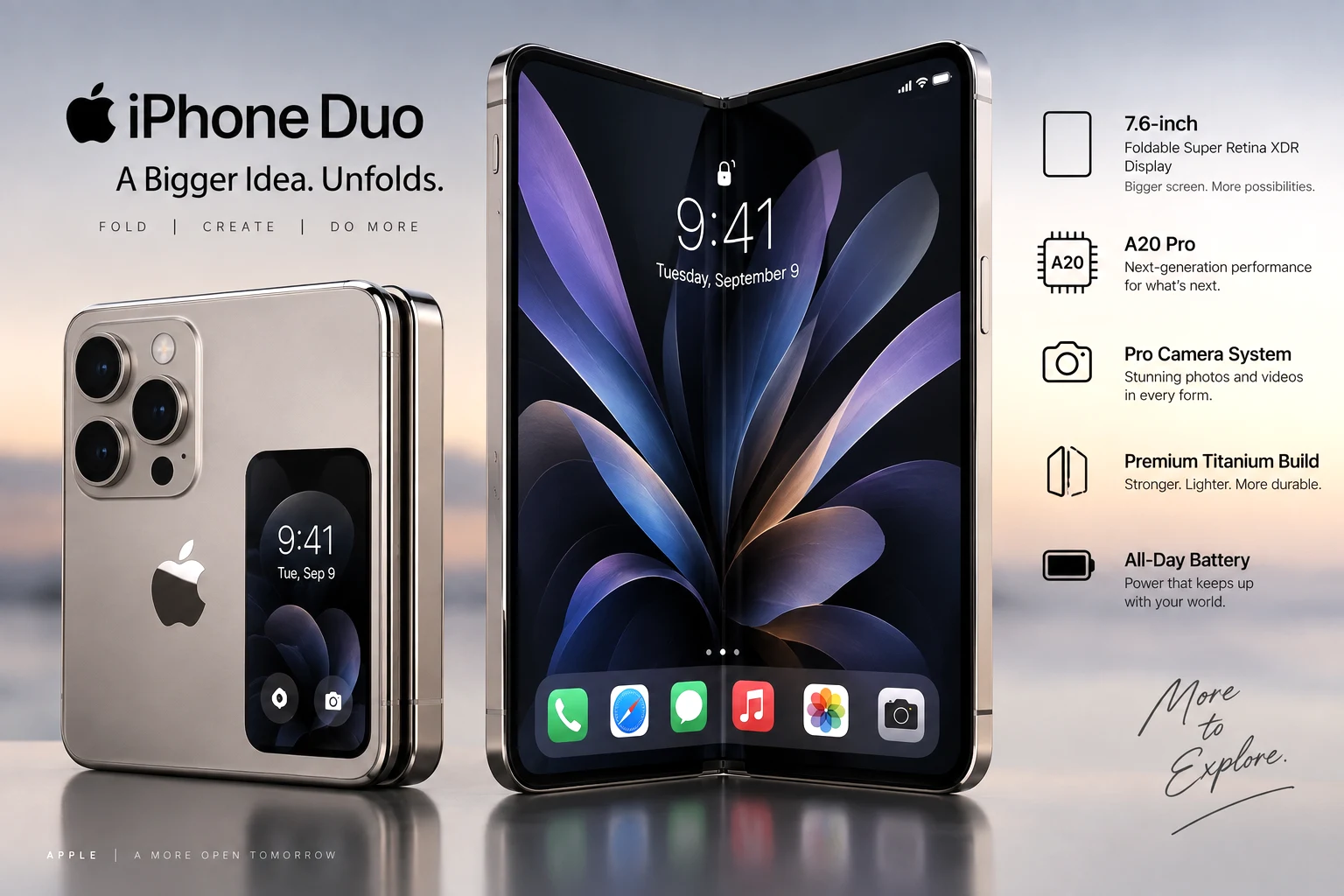
Apple’s first foldable iPhone moves into its pre-order phase on October 16 before going on sale October 23. Here are the official iPhone Duo prices across five major markets, storage options, key specifications and who may be better off waiting.
Apple Pay has officially launched in India, beginning with eligible Axis Bank Visa and Mastercard credit cards. Here is what is available now, which cards work, how contactless payments function and why Apple Pay does not currently operate as a UPI payment app.
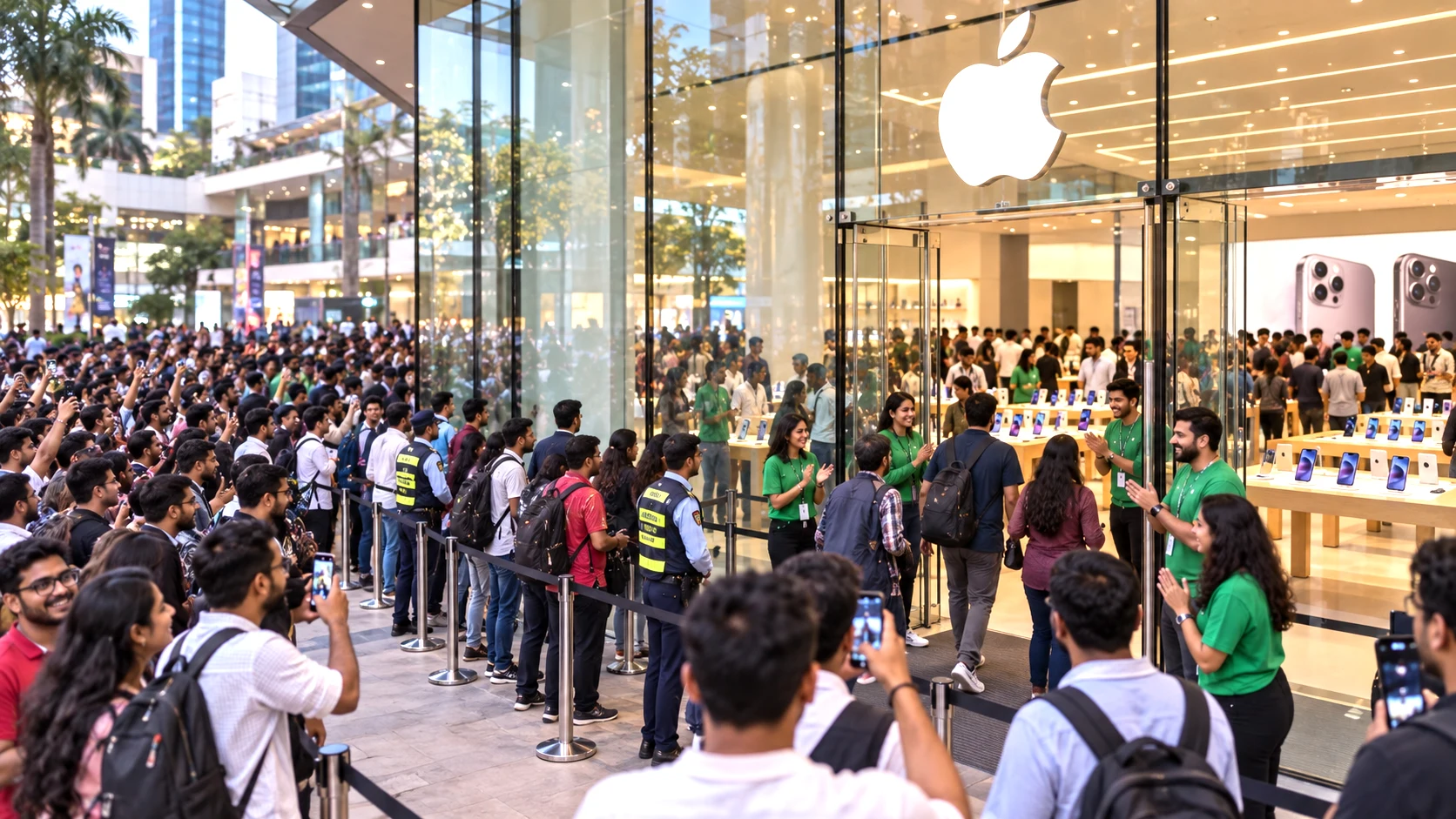
Apple’s latest Pro iPhones officially went on sale in India on September 18, with customers gathering outside stores in Delhi, Mumbai, Bengaluru and Noida. Prices start at ₹1,64,900 for the iPhone 18 Pro and ₹1,79,900 for the Pro Max.
Technology/ Artificial Intelligence & US Policy14 min read
Donald Trump has launched a federal “Super Intelligence Force” led by intelligence chief Jay Clayton to coordinate US AI policy. Here is what the task force will examine, who is involved and why its approach to AI safety, regulation and competition matters.
Apple Pay is now live in India with eligible Axis Bank Visa and Mastercard credit cards. Here is how it compares with UPI Tap & Pay on support, fees, devices, security and everyday usefulness.
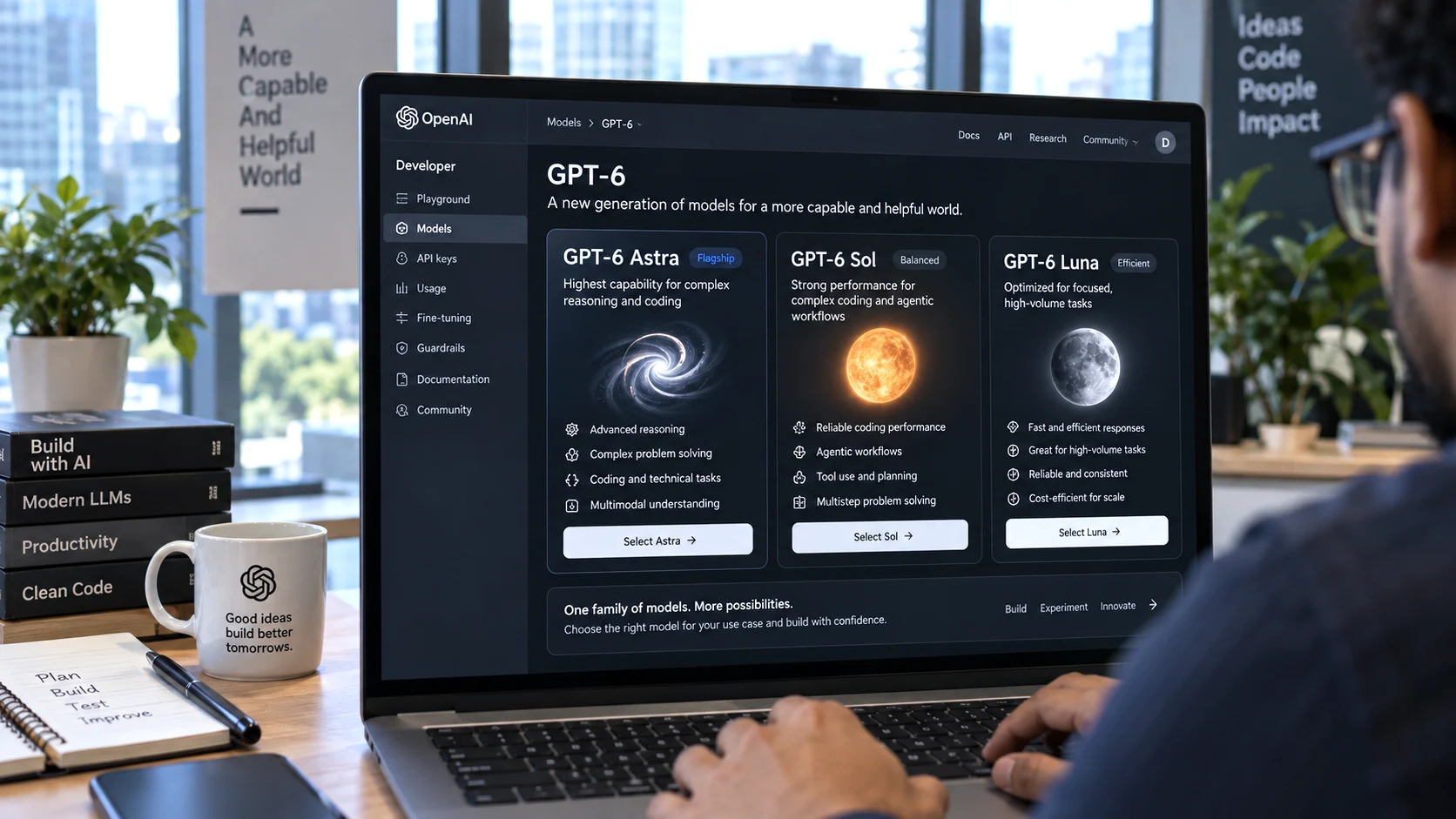
OpenAI has expanded its GPT-6 family with GPT-6 Sol and GPT-6 Luna, offering lower-cost options below flagship Astra. Here is how their prices, capabilities, context limits and ChatGPT/API access compare.










0 Comments