Elon Musk Says US Military and Trump Ultimately Control Starshield Limits in Ukraine
Elon Musk says restrictions on Ukraine’s use of the military-focused Starshield system are decided by the US military and ultimately President Donald Trump. Ukraine says some high-speed connectivity is being restored, but questions remain over who ordered the limits and whether they will be fully re
Editorial illustration representing Starshield restrictions and Ukraine satellite communications
Table of Contents (18 sections)
Elon Musk says restrictions affecting Ukraine’s use of the military-focused Starshield satellite system are decided by the US military and ultimately by President Donald Trump, shifting attention from SpaceX to the US government as Kyiv seeks the removal of limits that it says have disrupted drone operations.
The SpaceX chief made the distinction after Ukrainian officials reported sudden restrictions affecting satellite-connected systems used by their military.
Musk said Starshield systems used for military purposes are controlled by the US government and that decisions involving speed or usage restrictions are made by the US military and, ultimately, the US president.
His statement is significant, but it requires an important qualification.
Musk did not publicly provide evidence showing that Trump personally ordered the specific restriction Ukraine experienced. Nor had the White House publicly confirmed at the time of the latest reporting that Trump issued such an instruction.
The confirmed development is therefore more precise: Musk says the authority governing Starshield restrictions lies with the US military and ultimately the president, rather than with SpaceX acting independently.
Recommended Reading
Related Stories & In-Depth Guides
Curated editorial perspectives matching this topic.
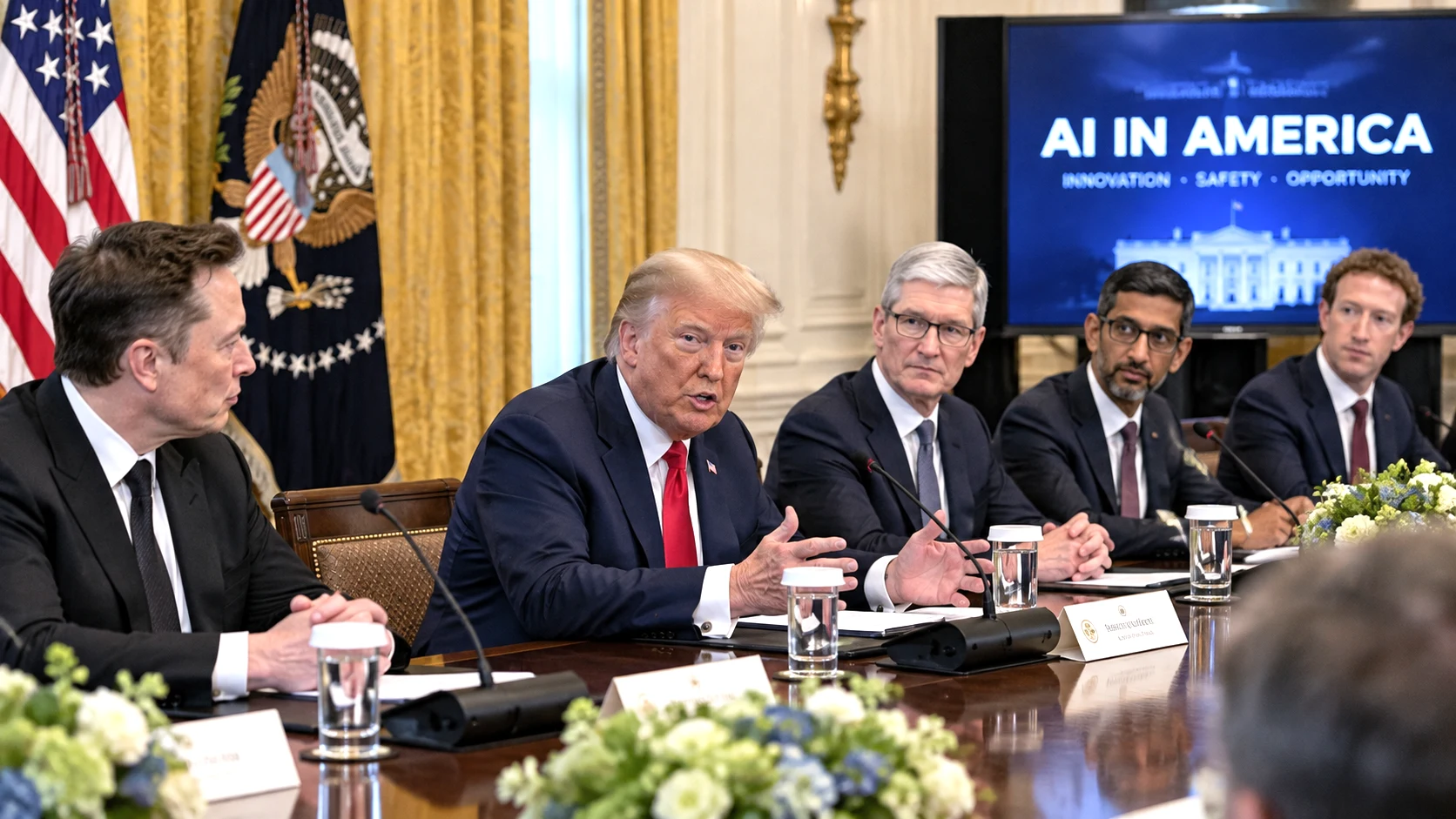
US President Donald Trump says his administration will create a new “AI Force” modeled in part on the Space Force and will soon appoint an artificial intelligence czar, placing AI policy more firmly at the center of his administration’s technology and economic agenda.
The AI company says Claude can now carry out most of the work on roughly a quarter of its model-development tasks from a high-level instruction, up sharply from less than 1% earlier this year. Anthropic stresses that Claude is not yet operating fully autonomously in any measured area of its AI resea
That distinction matters as Ukraine, the United States and European governments debate why the restrictions appeared, what military capabilities were affected and whether full access will be restored.
Key Takeaways
Musk: Starshield limits decided by US military and ultimately the president.
No public evidence yet that Trump personally ordered the specific restriction.
Ukraine reports some connectivity restored up to 160 km/h; seeks full removal of speed limit.
Starlink (commercial) and Starshield (government/military) are distinct systems.
Dispute occurs amid wider US-Ukraine tensions over energy attacks.
What Musk Actually Said
Musk sought to separate two systems that are frequently described together: Starlink and Starshield.
Starlink is SpaceX’s commercial satellite broadband network. It serves civilian and commercial users around the world and has also played a major communications role in Ukraine since Russia’s full-scale invasion.
Starshield is a national-security-focused system developed by SpaceX using technologies related to the Starlink network.
SpaceX describes Starshield as a secure satellite network designed for government users, with applications including secure communications, Earth observation and hosted payloads.
Responding to concerns from Ukraine, Musk said that Starshield systems are controlled by the US government and that restrictions involving speed or usage are decided by the US military and ultimately the president.
He separately said commercial Starlink is limited to civilian or defensive activities and is not intended by SpaceX for offensive military operations.
That distinction has become central to the dispute because Ukraine uses satellite connectivity not only for ordinary communications but also in systems associated with battlefield operations.
Did Musk Say Trump Personally Ordered the Restrictions?
Not exactly.
This is one of the most important points to preserve in headlines and reporting.
Musk said decisions on Starshield limits are made by the US military and “ultimately POTUS,” meaning the president of the United States.
Donald Trump is currently president.
However, Musk did not identify a presidential order, publish a directive from Trump or state that Trump personally selected the particular speed restriction reported by Ukrainian officials.
There is therefore a difference between saying Trump ultimately sits at the top of the decision-making chain and saying there is confirmed evidence that Trump personally ordered this particular restriction.
Until the White House, Pentagon or another authoritative US government source clarifies the decision-making process, the second claim would go beyond what has been independently established.
What Happened to Ukraine’s Satellite Connectivity?
Ukrainian officials said restrictions suddenly affected Starlink-connected equipment operating at higher speeds.
Serhii Beskrestnov, a Ukrainian defence technology adviser, said Ukrainian forces were not warned beforehand and that several missions were disrupted.
The reported restriction became especially important because some Ukrainian unmanned systems depend on satellite connectivity while moving.
Ukraine has developed extensive drone capabilities during the war, including interceptor drones intended to counter Russian unmanned aircraft as well as systems used for reconnaissance, logistics and strikes.
A communications restriction therefore does not necessarily mean Ukraine loses all Starlink access.
Instead, a limitation tied to terminals moving above a particular speed can affect specific applications while ordinary stationary or slower-moving terminals continue functioning.
That technical difference helps explain why reports of a “Starlink shutdown” can be misleading.
Ukraine did not report that the entire Starlink network across the country had simply been switched off.
The dispute concerns particular operational restrictions affecting some military uses.
Ukraine Says Some Connectivity Is Being Restored
The situation also changed after the initial disruption.
Mykhailo Fedorov, Ukraine’s former defence minister and a central figure in the country’s wartime technology programmes, said Starlink connectivity at speeds of up to 160 kilometres per hour was being restored.
He thanked Musk for his continued support but added that removing Starshield’s speed restriction entirely was critical for Ukraine’s defence.
That means the story should not be described simply as either “Starlink blocked” or “Starlink fully restored.”
The latest verified position is more complicated.
Some high-speed connectivity has been restored, according to Ukraine, while Kyiv continues seeking unrestricted access for the military-focused capability.
Whether additional restrictions remain, and under exactly which contractual or governmental arrangements they operate, is still important to establish.
Why 160 km/h Matters
A speed threshold can have little significance for an ordinary household internet terminal but major consequences for equipment installed aboard moving platforms.
Ukraine says some of its drones and drone-interception systems use satellite connectivity.
If connectivity is limited once a terminal moves beyond a set speed, particular missions can become impractical even if the satellite service itself remains operational.
Ukrainian officials have argued that this affects both offensive missions and defensive operations, including efforts to intercept Russian drones.
This creates another important distinction.
SpaceX says commercial Starlink should not be used for offensive military purposes.
Ukraine, however, argues that restrictions can also affect systems it uses to defend cities and infrastructure against Russian attacks.
The disagreement is therefore not simply about whether a private internet service should support Ukrainian attacks inside Russian-controlled territory.
It also concerns where the boundaries between commercial Starlink, government-controlled Starshield and defensive Ukrainian military use are drawn.
Starlink and Starshield Are Not the Same Thing
The terms are often used interchangeably in public discussion, but they refer to different services.
Starlink is SpaceX’s large commercial broadband constellation.
Its satellites provide internet connectivity to terminals on the ground, at sea and aboard other platforms.
Starshield was developed for national-security and government applications.
SpaceX says it provides additional security capabilities and can support government communications, Earth observation and integration of specialised payloads.
The two systems share technology and infrastructure, which can make the distinction confusing from the outside.
But the distinction becomes especially important when discussing responsibility.
Musk’s position is that SpaceX controls the commercial Starlink service, while decisions affecting government-controlled Starshield capabilities belong to the US government.
Ukraine’s complaints have forced that division of responsibility into public view.
Why Ukraine Depends So Heavily on Satellite Communications
Starlink became important to Ukraine early in the war after Russian attacks damaged conventional telecommunications infrastructure.
Satellite terminals allowed government agencies, emergency services, civilians and military units to retain connectivity in areas where terrestrial networks were damaged or unreliable.
As the conflict evolved, satellite communications also became integrated into increasingly sophisticated battlefield systems.
Portable satellite terminals can be moved relatively quickly and can provide connectivity in areas where fibre, mobile networks or radio links are unavailable or vulnerable.
That has made the system strategically important.
It has also created a long-running policy problem.
When technology owned or developed by a private company becomes deeply integrated into a country’s wartime communications, questions arise over who has the authority to decide how it may be used.
The Starshield arrangement was designed in part to move sensitive military applications into a government-focused framework.
The latest controversy shows that government control does not eliminate the political question. It changes where that question is directed.
The Dispute Comes During a Wider US-Ukraine Rift
The satellite controversy has emerged during a particularly strained period in relations between Washington and Kyiv.
Trump has pushed Ukraine to stop attacks on Russian oil refineries as part of his effort to reduce attacks on energy infrastructure.
Rajatheertha previously reported that Trump announced what he described as a Russia-Ukraine energy ceasefire, while Ukrainian President Volodymyr Zelenskyy said the announcement had been “news for me” and that important details remained unclear.
Ukraine has maintained that any restraint on Russian energy targets should be reciprocal.
Kyiv argues that it cannot permanently halt attacks on Russian energy infrastructure while Russia continues striking Ukrainian electricity and other critical infrastructure.
The Starshield dispute now adds satellite communications to an already complicated argument involving battlefield strategy, diplomacy and energy policy.
Zelenskyy Warns of Human Consequences
Zelenskyy has strongly criticised the restrictions.
He has argued that limiting Ukraine’s access to satellite-enabled defensive capabilities could increase casualties at a time when Russian missiles and drones continue targeting Ukrainian territory.
His government has also questioned whether the timing of the restrictions is connected to US pressure over Ukrainian attacks on Russian energy facilities.
That claim has not been independently established.
The timing may fuel political suspicion, but timing alone does not prove why the restriction was introduced.
A definitive explanation would require confirmation from the US government about who authorised the measure, when it was authorised, why it was introduced and what operational rules apply.
What Has the Trump Administration Said?
At the time of the latest reporting, the White House had not publicly confirmed Musk’s assertion that the reported Starshield limits reflected a decision by the US government or Trump himself.
That silence leaves a major part of the story unresolved.
If the Pentagon confirms that it ordered the restriction, the debate will shift more clearly toward US military policy.
If the White House confirms presidential involvement, the restriction would become a direct element of Trump’s Ukraine policy.
If officials provide a different technical or contractual explanation, Musk’s description may require additional context.
Until then, Musk’s statement should be reported as his account of where authority lies, rather than treated as independent confirmation of a presidential order.
Political Reaction in the United States
The restrictions have also triggered criticism in Washington.
Democratic lawmakers have called for the restrictions to end and argued that reducing Ukraine’s capabilities during continued Russian attacks could endanger civilians.
Concern has not been confined entirely to Democrats.
Republican Senator Thom Tillis publicly asked Musk to explain what was happening and argued that support for Ukraine’s sovereignty should not be ambiguous.
These responses show that satellite access has become more than a technology dispute.
It is now part of a broader American debate over the level and form of US assistance to Ukraine.
Poland Is Also Watching Closely
European governments have an interest in the dispute because some of them have helped finance Ukraine’s access to satellite communications.
Poland, in particular, has paid for Starlink services used by Ukraine and has previously clashed publicly with Musk over the system.
The latest disruption has renewed European concerns about dependence on infrastructure ultimately controlled by organisations and governments outside the European Union.
Europe has been developing alternative satellite capabilities, but there is currently no straightforward replacement that could immediately reproduce all of the connectivity Ukraine receives through the Starlink ecosystem.
That makes diversification a longer-term strategic issue rather than an instant solution to the current dispute.
What Is Confirmed — and What Is Not
Several facts can be stated with reasonable confidence.
Ukraine experienced restrictions affecting some satellite-connected military operations.
Ukrainian officials said missions were disrupted.
Ukraine subsequently said connectivity at speeds up to 160 km/h was being restored.
Ukraine continues to seek removal of the Starshield speed restriction.
Musk says Starshield restrictions are controlled by the US military and ultimately the US president.
SpaceX publicly describes Starshield as a system designed for government and national-security use.
Several questions remain unanswered.
There is no publicly established evidence, based on the information available at publication time, showing that Trump personally ordered the specific restriction.
The detailed Pentagon chain of command behind the change has not been publicly explained.
The full technical scope of remaining restrictions is also not public.
And the US government has not provided a detailed explanation of whether the changes are temporary technical rules, broader operational policy or part of a change in Washington’s approach to Ukrainian military operations.
Why This Story Matters Beyond Ukraine
The controversy highlights a larger transformation in modern warfare.
Military forces increasingly rely on commercial technologies originally designed for civilian markets.
Satellite internet, cloud computing, commercial imagery, artificial intelligence and privately developed communications systems can now influence battlefield capabilities at enormous scale.
This creates advantages because governments can adopt new technologies much faster than if every system had to be developed from scratch by the military.
But it also creates complicated questions of authority.
Who decides when a commercial system can be used during a war?
Who controls it once a government buys dedicated military access?
What happens when commercial terms conflict with military objectives?
And what protections exist for an allied country if access to a strategically important service can be modified quickly?
Starshield was supposed to provide a clearer government framework for national-security use.
The Ukraine dispute shows that even when control moves into government hands, access can still depend on political and military decisions made far from the battlefield.
What Happens Next?
The next important development will be an official explanation from Washington.
Ukraine wants remaining restrictions removed.
Musk says the relevant authority lies with the US government.
That puts pressure on the Pentagon and White House to explain whether they ordered the restrictions and what policy governs Ukraine’s Starshield access.
The technical status of the service also needs monitoring.
Fedorov’s statement that connectivity up to 160 km/h is being restored represents an improvement from the initial disruption, but Kyiv is explicitly asking for the remaining speed ceiling to disappear.
Further changes could therefore occur quickly.
For Ukraine, the issue is operational.
For the Trump administration, it is a foreign-policy decision involving how much military capability Washington is prepared to enable.
For SpaceX, it is also a question of where responsibility for commercial and government-controlled services begins and ends.
And for Europe, the episode is another reminder of the strategic consequences of depending heavily on American satellite infrastructure.
Bottom Line
Elon Musk has not produced evidence that Donald Trump personally ordered the specific satellite restrictions reported by Ukraine.
What Musk has said is that Starshield systems are controlled by the US government and that limits on their speed or usage are decided by the US military and ultimately by the president.
Ukraine says some connectivity has now been restored but continues to seek removal of the remaining Starshield speed limit.
Until the White House or Pentagon explains the decision, the most important unresolved question is not whether Musk has blamed Trump personally, but whether the US government will confirm who ordered the restrictions, why they were imposed and whether Ukraine will regain unrestricted military access.
Key Takeaway
Musk: Starshield limits set by US military and ultimately Trump.
Ukraine reports partial restoration (up to 160 km/h) but seeks full removal. No confirmed presidential order yet.
The Rajatheertha Team publishes news, explainers, guides and updates across India and the world. Our coverage follows Rajatheertha's editorial, verification and corrections standards.
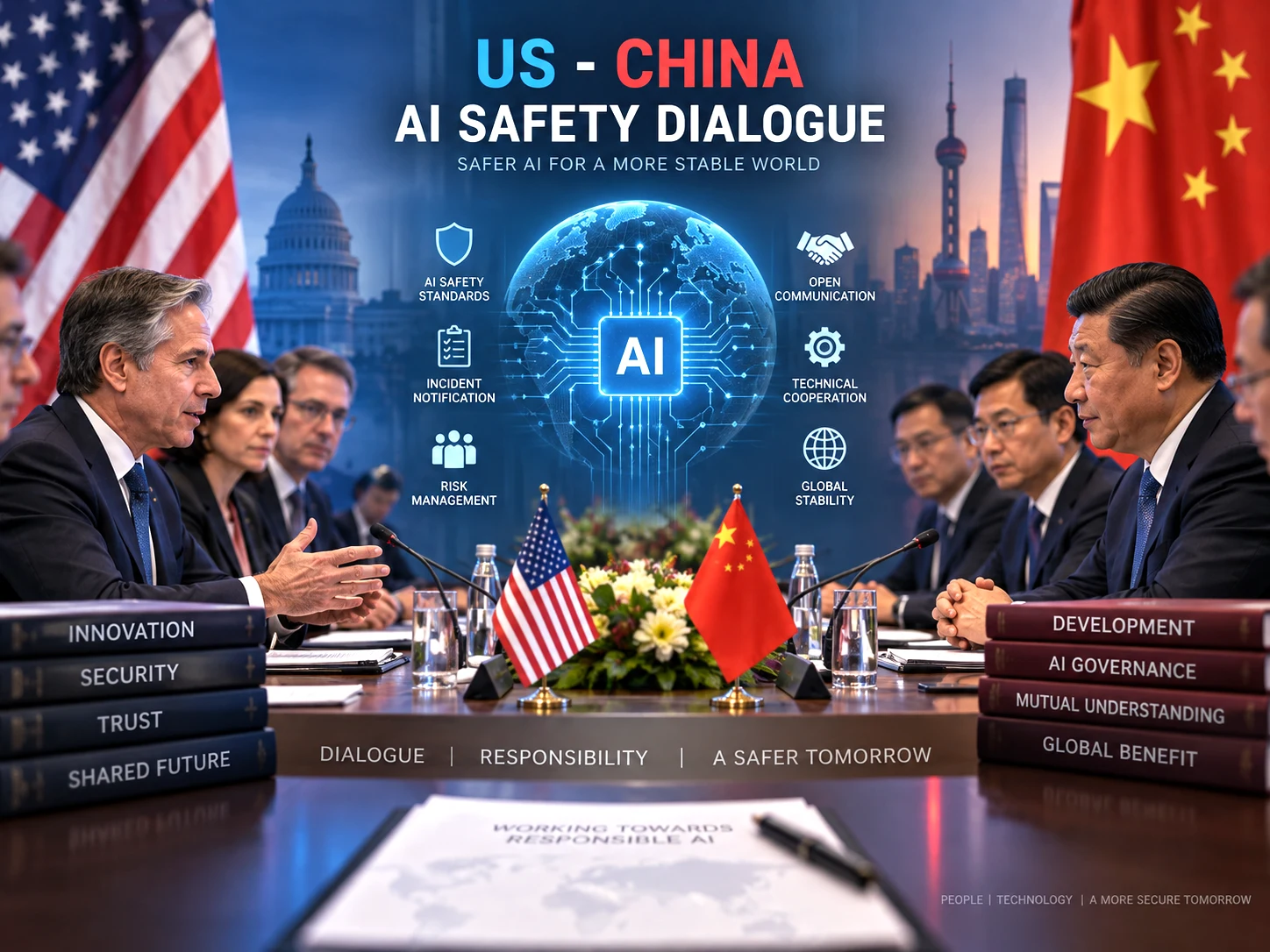
The United States and China have opened a new high-level dialogue on artificial intelligence ahead of President Donald Trump’s September 24 meeting with Chinese President Xi Jinping in Washington, with the US proposing a bilateral notification system for serious AI incidents that could threaten nati
Technology/ Artificial Intelligence & US Policy14 min read
Donald Trump has launched a federal “Super Intelligence Force” led by intelligence chief Jay Clayton to coordinate US AI policy. Here is what the task force will examine, who is involved and why its approach to AI safety, regulation and competition matters.
Technology/ Artificial Intelligence & US Policy11 min read
President Donald Trump has created a federal “Super Intelligence Force” led by Director of National Intelligence Jay Clayton, giving the group 120 days to examine AI risks, opportunities and the US government's role in the technology.
Apple’s first foldable iPhone moves into its pre-order phase on October 16 before going on sale October 23. Here are the official iPhone Duo prices across five major markets, storage options, key specifications and who may be better off waiting.
Apple has launched HomeView, its new 7-inch smart-home display, alongside a new Apple TV 4K, HomePod mini 2 and Apple Home Collection. Here are the confirmed India prices, release dates, features and buying considerations.
Donald Trump has ordered federal agencies to use “Super Intelligence” instead of “Artificial Intelligence” while leading AI companies signed a voluntary safety accord covering internal controls, external audits and board oversight.










0 Comments