Drug-Free India by 2029: Amit Shah Outlines Three-Year Roadmap Against Narcotics
Union Home Minister Amit Shah says India has prepared a roadmap aimed at achieving a drug-free nation by 2029, targeting trafficking networks, narco-financing, synthetic drugs, addiction prevention and rehabilitation.
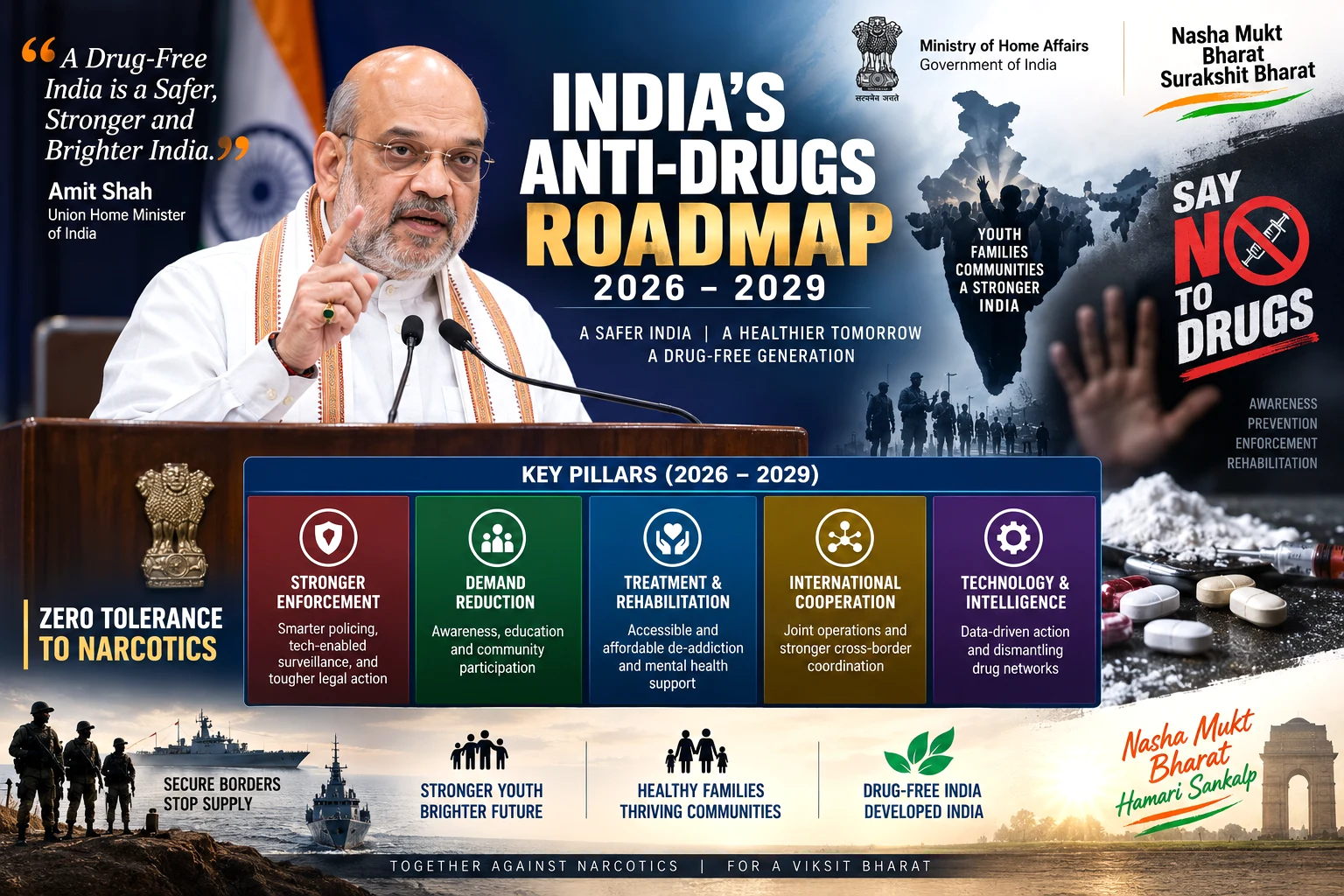
Union Home Minister Amit Shah discussing India’s 2026–2029 roadmap against narcotics trafficking and drug abuse
Table of Contents (22 sections)
Union Home Minister Amit Shah has reiterated the government’s goal of moving towards a “Nasha Mukt Bharat,” or Drug-Free India, by 2029, highlighting a three-year national roadmap to tackle narcotics trafficking, drug abuse and the financial networks supporting organised crime.
Shah said narcotics are not merely a law-and-order problem but a threat to India’s future generations and national security. He has also stressed that money generated through the illegal drug trade can be connected to organised crime and terror financing.
The government’s strategy is built around the Vision Document on Narcotics Control 2026–2029, released in June 2026.
The roadmap brings together enforcement, intelligence, synthetic drug control, prevention, treatment and rehabilitation, institutional capacity, technology and coordination between the Centre and states.
Recommended Reading
Related Stories & In-Depth Guides
Curated editorial perspectives matching this topic.
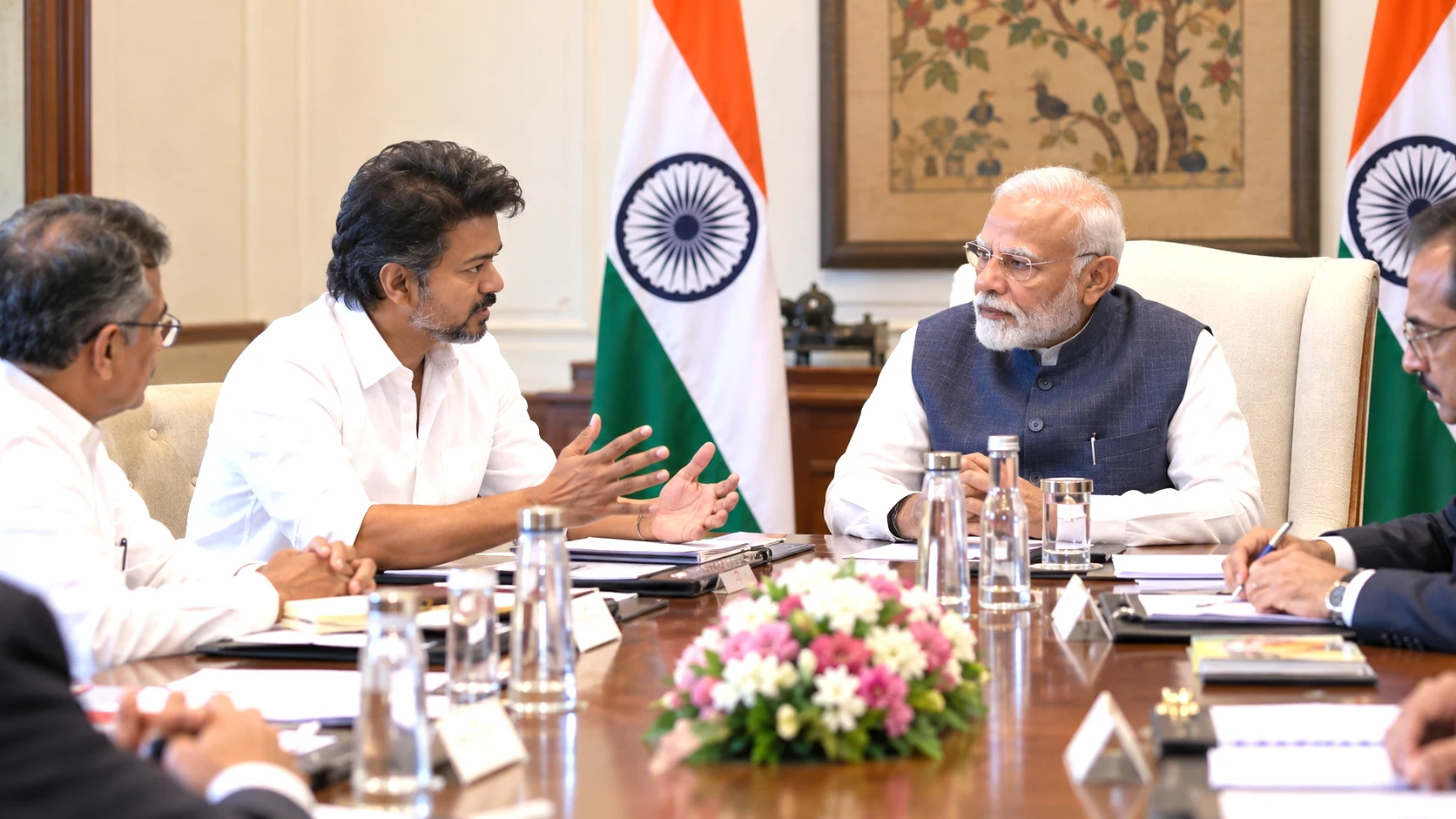
Tamil Nadu Chief Minister C Joseph Vijay's first official meeting with Prime Minister Narendra Modi focused on issues ranging from Mekedatu and fishermen to state funds and Tamil identity. With the two leaders expected to share a Chennai stage on October 11, here is what the meetings mean politicall
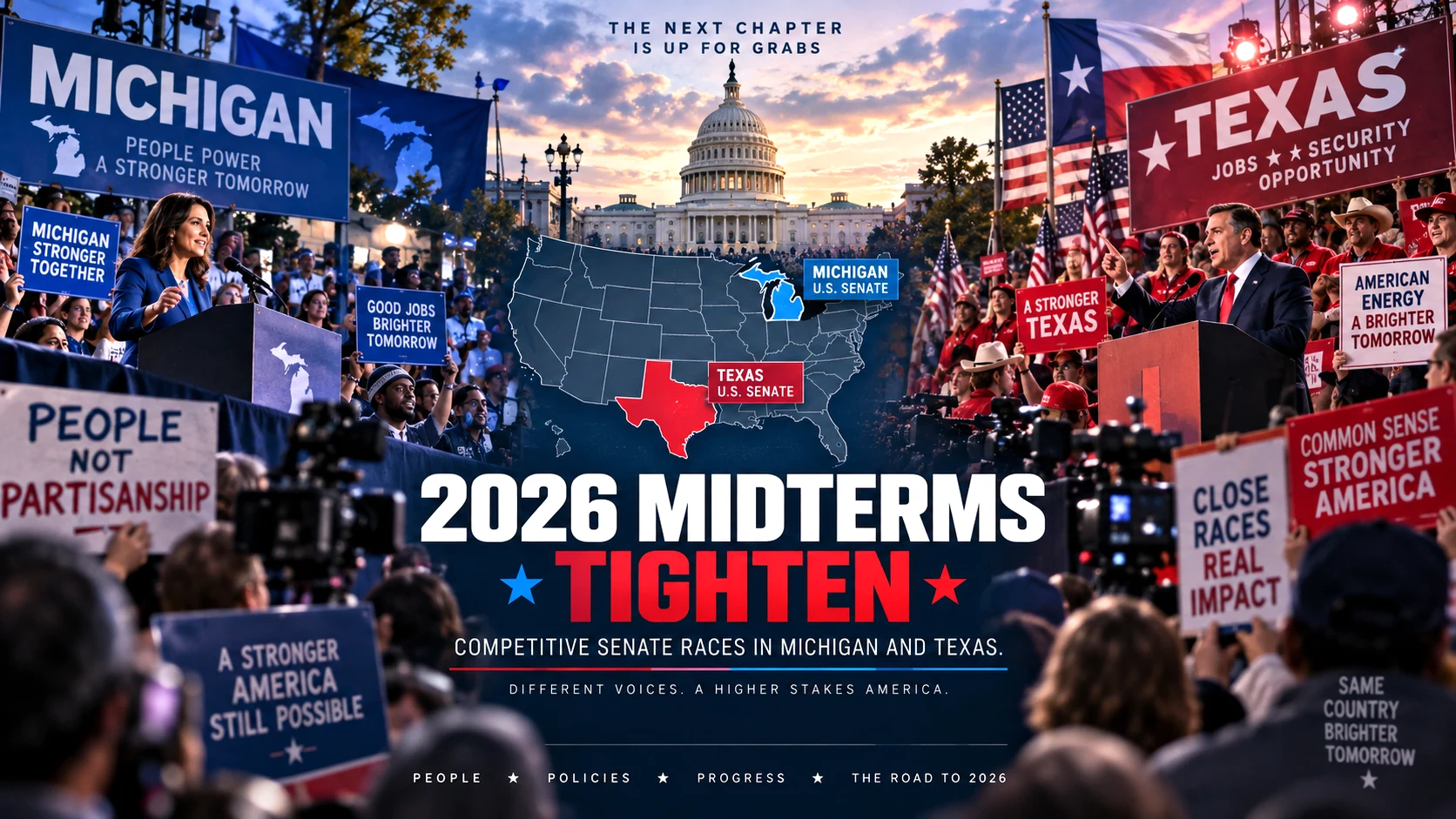
Fresh polling gives Abdul El-Sayed narrow leads over Mike Rogers in Michigan and James Talarico a slim advantage over Ken Paxton in Texas, but both Senate contests remain within polling margins of error. Republicans are pouring money and senior surrogates into battlegrounds as control of Congress ha
But the 2029 date should be understood correctly.
It is an official government objective and policy target, not a declaration that India’s drug problem has already been solved or a guarantee that narcotics will disappear entirely by that date.
Table of Contents
What Amit Shah said
Is the 2029 Drug-Free India roadmap real?
What is the 2026–2029 Vision Document?
Four major pillars of the strategy
Why the government links narcotics with terrorism
New technology being used against traffickers
Targeting drug money and financial networks
What happens to people suffering from addiction?
Focus on schools, colleges and young people
India’s recent drug seizures
Can India really become drug-free by 2029?
What happens next?
Key takeaway
What Did Amit Shah Say About a Drug-Free India?
Amit Shah has said that the government has established a roadmap running up to 2029 to intensify India’s fight against narcotics.
The central argument behind the policy is that drug trafficking should not be viewed only as a policing issue.
According to the Home Minister, narcotics threaten young people and future generations, while the illegal money generated by drug trafficking can feed larger criminal and national security networks.
This is why the government increasingly uses the term “narco-terrorism” when discussing parts of the illegal drug economy.
Shah has argued that India needs to attack the entire narcotics ecosystem rather than focus only on catching individual users or small-scale sellers.
That means identifying the source of drugs, trafficking routes, distributors, financiers, kingpins and the methods used to move illicit money.
Is the Drug-Free India by 2029 Roadmap Real?
Yes.
This is not merely a social media slogan.
The Government of India formally released the Vision Document on Narcotics Control (2026–2029) on 26 June 2026.
The document provides a three-year framework for the Centre, states, Union Territories and relevant enforcement and administrative agencies.
Earlier in 2026, the Ministry of Home Affairs had also stated in Parliament that stakeholders were being asked to prepare a three-year roadmap covering 2026–2029 with time-bound reviews.
The objective is to dismantle drug networks from their sources through distribution while simultaneously tackling substance abuse.
The government’s approach therefore combines enforcement with prevention and rehabilitation.
What Is the Vision Document on Narcotics Control 2026–2029?
The Vision Document is intended to provide a common national strategy rather than allowing different agencies to fight narcotics independently.
It assigns action points and timelines to relevant central ministries, departments, agencies, states and union territories.
The strategy also recognises that drug trafficking itself is changing.
Modern trafficking networks may use:
Darknet marketplaces
Cryptocurrency and digital payments
Courier and parcel networks
Maritime routes
Container cargo
Drones
International trafficking networks
Technology-enabled distribution systems
The government’s response therefore includes stronger intelligence sharing, financial investigations, forensic capacity and technology-based enforcement.
Four Major Pillars of India’s 2026–2029 Drug Strategy
The official Vision Document identifies four broad focus areas.
1. Enforcement, Intelligence and Operations
The first priority is disrupting drug trafficking networks.
Instead of focusing exclusively on individual seizures, agencies are being pushed towards identifying the entire chain.
The government wants greater intelligence sharing between agencies and stronger coordination between central and state authorities.
2. Precursors and Synthetic Drugs Control
Synthetic drugs present a different challenge from traditional narcotics.
Some can be manufactured using chemical precursors and distributed through highly organised networks.
Authorities therefore want closer monitoring of precursor chemicals, clandestine laboratories and emerging psychoactive substances.
The strategy also recognises that traffickers can quickly change substances and distribution methods when enforcement agencies catch up with existing ones.
3. Demand and Harm Reduction
Enforcement alone cannot eliminate drug abuse.
Reducing demand is another major component of the strategy.
That includes awareness campaigns, early identification of substance-use problems, counselling, treatment and rehabilitation.
The government’s Nasha Mukt Bharat Abhiyaan is an important part of this effort.
The broader idea is straightforward:
Stopping traffickers addresses supply
Education and prevention address demand
Treatment and rehabilitation help people already affected by substance dependence
4. Capacity Building and Coordination
India’s anti-narcotics system involves numerous agencies.
The roadmap therefore seeks stronger coordination between the Narcotics Control Bureau, state police forces, Anti-Narcotics Task Forces, forensic laboratories and other government institutions.
Training is also planned for law enforcement personnel, forensic experts, healthcare professionals, teachers and others involved in prevention or enforcement.
Why Is Amit Shah Linking Narcotics With Terrorism?
This is one of the strongest elements of Shah’s message.
The Home Minister has repeatedly argued that narcotics trafficking is linked not only to crime but also to narco-terror financing and cross-border criminal networks.
The concern is that profits generated through illegal narcotics can enter underground financial networks and potentially support organised crime or terrorism.
However, this needs precise reporting.
It would be inaccurate to say that every rupee generated from every narcotics offence funds terrorism.
The government’s position is broader: certain drug-trafficking networks can intersect with organised crime, money laundering, cross-border networks and terror financing.
That is why financial investigation has become an important part of the anti-drug strategy.
Follow the Money: Government Targets Drug Financiers
Modern anti-narcotics enforcement is increasingly about money as well as physical drugs.
Indian authorities have developed or expanded mechanisms that can help investigators follow suspicious financial flows.
These include financial intelligence systems and digital tools used for investigations involving virtual digital assets.
The government’s February 2026 parliamentary response specifically referred to mechanisms including NATGRID, the Sahyog Portal and the Financial Intelligence Unit’s FINEX system.
Financial institutions can generate Suspicious Transaction Reports where activity may potentially be associated with crimes, including drug trafficking, money laundering or terror financing.
The goal is to move beyond arresting couriers and identify the people financing and profiting from trafficking networks.
AI and Technology Could Play a Bigger Role
The 2026–2029 roadmap is also notably technology-focused.
Drug traffickers are increasingly capable of using encrypted communications, cryptocurrencies, darknet services, drones and complex transport networks.
Authorities therefore want enforcement to become more technologically sophisticated.
Reported measures in the national vision include plans for AI and machine-learning-based passenger profiling to help identify high-risk passengers, drug couriers and emerging trafficking patterns at airports.
The strategy also includes stronger cyber-forensic capabilities for darknet-enabled drug trafficking.
The National Forensic Sciences University and the Narcotics Control Bureau have entered into cooperation covering areas such as advanced forensic support, cyber forensics, new psychoactive substances, drug profiling, AI and drone-related forensics.
The objective is not simply to increase manpower.
It is to improve intelligence.
What About People Who Are Addicted to Drugs?
This is another important distinction in the government’s policy.
Amit Shah has repeatedly called for a ruthless approach towards traffickers but a humane or sympathetic approach towards people affected by drug use.
That separates two very different groups.
A person running an organised narcotics trafficking network is not treated in policy terms the same way as a young person struggling with substance dependence.
The government’s stated approach is:
Strong enforcement against manufacturers, traffickers, financiers and kingpins
Treatment, rehabilitation and social support for people suffering from addiction
That distinction matters because drug dependence can require medical, psychological and social intervention.
Punishment alone does not address every dimension of addiction.
Focus on Students, Schools and Universities
Young people are central to the 2026–2029 strategy.
The government’s Vision Document includes awareness and preventive programmes in educational institutions and communities.
Measures include training teachers, counsellors and healthcare professionals.
The framework also envisages:
Drug-free campus initiatives
Anti-drug committees
Anti-drug officers
Early identification mechanisms
Counselling
Referral systems
Awareness programmes
Student-welfare interventions
The government has also proposed phased drug-screening mechanisms in higher-education institutions, according to reporting based on the Vision Document.
Such measures will need to be implemented carefully, particularly around consent, privacy, health support and the rights of students.
Nasha Mukt Bharat Abhiyaan Already Has a Large Reach
The broader anti-drug campaign did not begin in 2026.
The Nasha Mukt Bharat Abhiyaan was launched on 15 August 2020.
It initially focused on 272 districts identified as particularly vulnerable and was subsequently extended nationwide.
By April 2026, the Ministry of Social Justice and Empowerment said the programme had sensitised more than 26 crore people, including over 9.5 crore youth and 6.47 crore women, through more than 8.3 lakh activities.
These are government-reported outreach figures.
They demonstrate the scale of the awareness programme, although outreach numbers alone do not prove that drug use has fallen by an equivalent amount.
That distinction is important when measuring success.
What Do India’s Drug-Seizure Numbers Show?
Government data show the enormous scale of narcotics enforcement.
According to a Ministry of Home Affairs response in Parliament, drug-law-enforcement agencies reported seizures of approximately:
16.10 lakh kg in 2021
12.54 lakh kg in 2022
13.90 lakh kg in 2023
13.31 lakh kg in 2024
11.86 lakh kg in 2025 up to November
The reported value of seizures varied significantly by year.
These numbers show substantial enforcement activity.
But seizure data require careful interpretation.
A rise in seizures can indicate stronger enforcement.
It can also reflect a large underlying illegal supply.
Likewise, falling seizures do not automatically prove that drug trafficking has declined.
For that reason, enforcement statistics need to be considered alongside prevalence, treatment, trafficking-network disruption, convictions and other indicators.
Destroying Seized Narcotics
The government has also intensified efforts to destroy drugs that have already been seized.
When the 2026–2029 Vision Document was launched in June, Amit Shah also launched a drug-disposal campaign involving approximately 209,500 kg of narcotics valued by the government at around ₹6,000 crore.
Proper disposal is an important but less visible part of narcotics control.
Seized drugs must be securely documented, processed as evidence where necessary, and ultimately destroyed in accordance with legal procedures.
Can India Really Become Drug-Free by 2029?
This is where a news report must distinguish ambition from outcome.
The government has established 2029 as a major target.
It has a national vision document.
It has assigned responsibilities and timelines.
It is strengthening enforcement, intelligence, financial investigation, prevention and rehabilitation.
But no responsible report can guarantee today that India will be completely free of illicit drugs in 2029.
Drug trafficking is a global criminal market.
India also faces geographic challenges from international trafficking routes and evolving synthetic-drug markets.
Darknet sales, cryptocurrency payments, drones and transnational networks make enforcement increasingly complex.
Therefore, the 2029 target should be evaluated through measurable results.
These include whether India can:
Disrupt major trafficking networks
Identify and prosecute kingpins
Trace and seize illicit finances
Improve conviction outcomes
Reduce drug availability
Prevent young people from beginning drug use
Expand access to treatment
Improve rehabilitation
Strengthen border and maritime interdiction
Respond quickly to new synthetic drugs
Those outcomes will ultimately determine how successful the roadmap is.
Enforcement and Rehabilitation Must Work Together
One of the strongest features of the policy is its recognition that the narcotics problem has both criminal and public-health dimensions.
Destroying a trafficking network does not automatically help every person already dependent on drugs.
Likewise, rehabilitation programmes alone cannot stop criminal organisations from bringing narcotics into the country.
Both sides therefore have to operate together.
India’s 2026–2029 strategy can be summarised as:
Reduce supply. Reduce demand. Disrupt the money. Protect young people. Treat affected users. Strengthen enforcement.
The challenge will be turning those objectives into measurable results across every state and district.
What Happens Next?
The Vision Document is intended to guide action through 2029.
Central ministries, agencies, states and Union Territories have been assigned responsibilities and timelines.
The government has also said progress will be reviewed and the strategy adjusted where necessary.
That review process will be important.
A roadmap matters only if implementation can be measured.
For the public, the key questions over the next three years will therefore be whether major trafficking networks are actually dismantled, whether young people’s exposure to drugs declines, whether treatment becomes easier to access, and whether financial investigations succeed in disrupting the profits behind the narcotics trade.
Key Takeaway
The claim that India has a roadmap aimed at a Drug-Free Bharat by 2029 is genuine.
The government formally released its Vision Document on Narcotics Control 2026–2029 in June.
Amit Shah has framed narcotics as a threat not only to public health and future generations but also to internal security because some trafficking networks can intersect with organised crime and terror financing.
The strategy combines enforcement, intelligence, synthetic drug control, financial investigation, prevention, treatment, rehabilitation and Centre-state coordination.
But 2029 is a target — not a guaranteed result.
The real test will be whether the roadmap produces measurable reductions in trafficking and drug abuse while improving treatment and rehabilitation for people affected by addiction.
Editorial Note: This article describes the Government of India’s stated policy objectives and official roadmap. “Drug-Free India by 2029” is a government target and should not be interpreted as a guaranteed future outcome. Links between narcotics and terror financing refer to organised criminal and narco-terror networks and should not be interpreted to mean that every narcotics offence directly finances terrorism.
The Rajatheertha Team publishes news, explainers, guides and updates across India and the world. Our coverage follows Rajatheertha's editorial, verification and corrections standards.
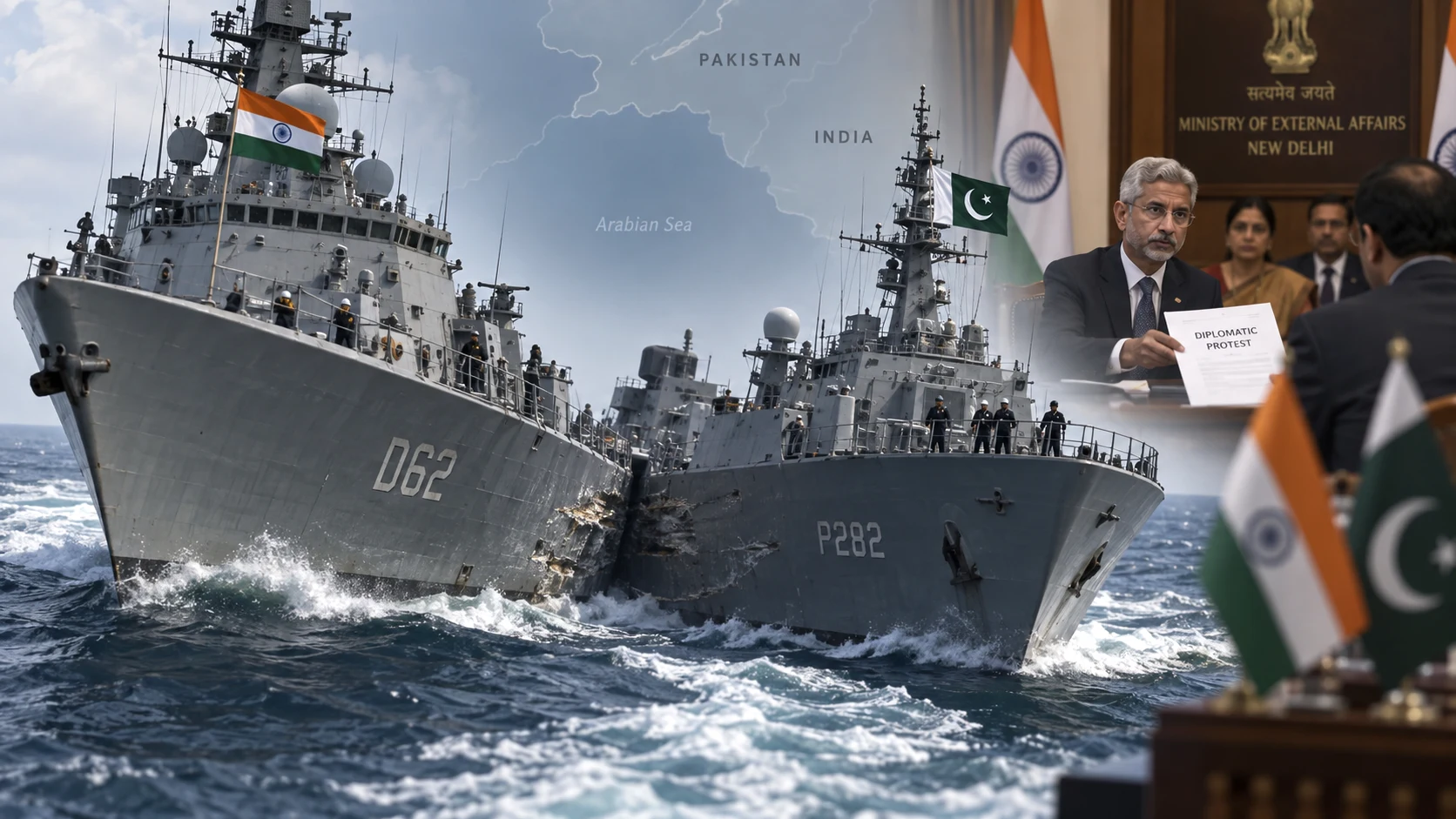
The September 15 collision occurred in international waters in the northern Arabian Sea and caused no major damage, according to India’s Ministry of External Affairs. New Delhi says the Pakistani naval vessel’s conduct breached Article 10 of a 1991 bilateral military agreement.
Prime Minister Narendra Modi warned BRICS leaders that the “weaponisation of technology and critical minerals” could obstruct shared development, as the New Delhi Declaration backed resilient supply chains and wider technology cooperation.
President Donald Trump announced the restrictions on September 18, accusing the three outlets of publishing what he called “fake news”; journalists from all three organizations were turned away from the White House the following day.
LK Advani, Jagdeep Dhankhar, S Jaishankar and several other prominent Delhi voters have had their SIR records verified and reserved for inclusion in the final electoral roll. Here is what “cleared” means and what ordinary voters should do before key deadlines.
Opposition parties are preparing a fresh parliamentary notice seeking CEC Gyanesh Kumar’s removal amid the SIR controversy. Here is what Article 324 says, how many MPs are needed and why removal requires a high constitutional threshold.
The Election Commission says all final decisions taken by the full Commission over the past year, including SIR-related measures, were unanimous despite reported objections raised during internal deliberations. Here is what the dispute means for voters.



0 Comments