India Summons Pakistan Diplomat After Naval Ships Collide in Arabian Sea, Calls Conduct ‘Unprofessional’
The September 15 collision occurred in international waters in the northern Arabian Sea and caused no major damage, according to India’s Ministry of External Affairs. New Delhi says the Pakistani naval vessel’s conduct breached Article 10 of a 1991 bilateral military agreement.
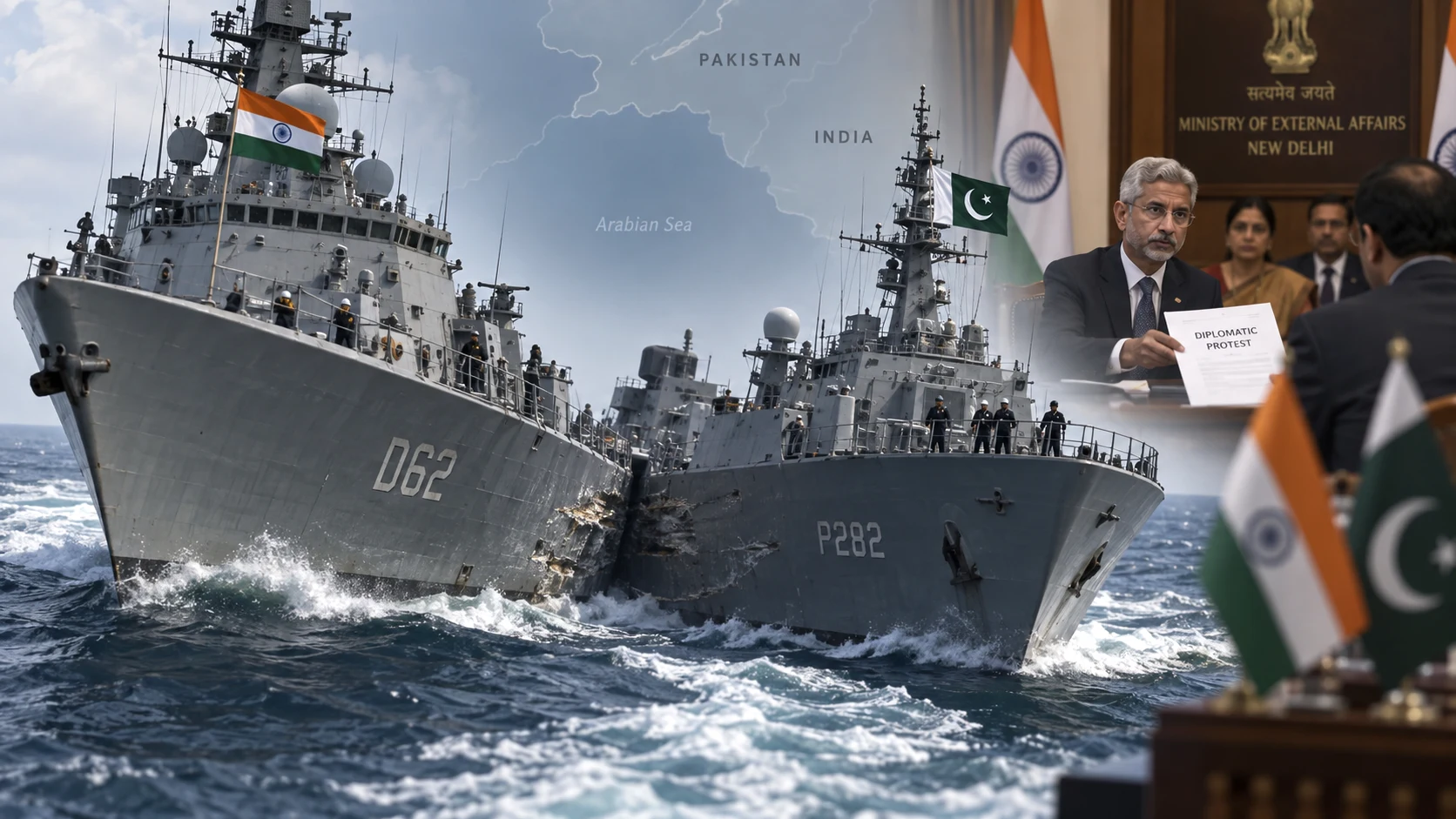
India has lodged a strong diplomatic protest with Pakistan after naval vessels from the two countries collided in international waters in the northern Arabian Sea, in an unusual military encounter that New Delhi described as the result of “unacceptable and unprofessional conduct” by a Pakistani naval unit.
The collision occurred on the evening of September 15 while a frontline Indian Navy warship was conducting what Indian sources described as a routine surveillance mission. According to those sources, a Pakistan Navy ship approached at high speed and manoeuvred in an unsafe manner before the two vessels collided.
India’s Ministry of External Affairs confirmed on September 16 that the incident occurred in international waters and did not cause any major damage. The ministry did not publicly identify the ships involved or provide technical details about the damage, their exact positions or the manoeuvres immediately preceding the collision.
The diplomatic response was immediate.
Pakistan’s Charge d’Affaires in New Delhi was summoned to the Ministry of External Affairs, where India lodged what it described as a strong protest over the conduct of Pakistani naval units.
Key Takeaways
Recommended Reading
Related Stories & In-Depth Guides
Curated editorial perspectives matching this topic.
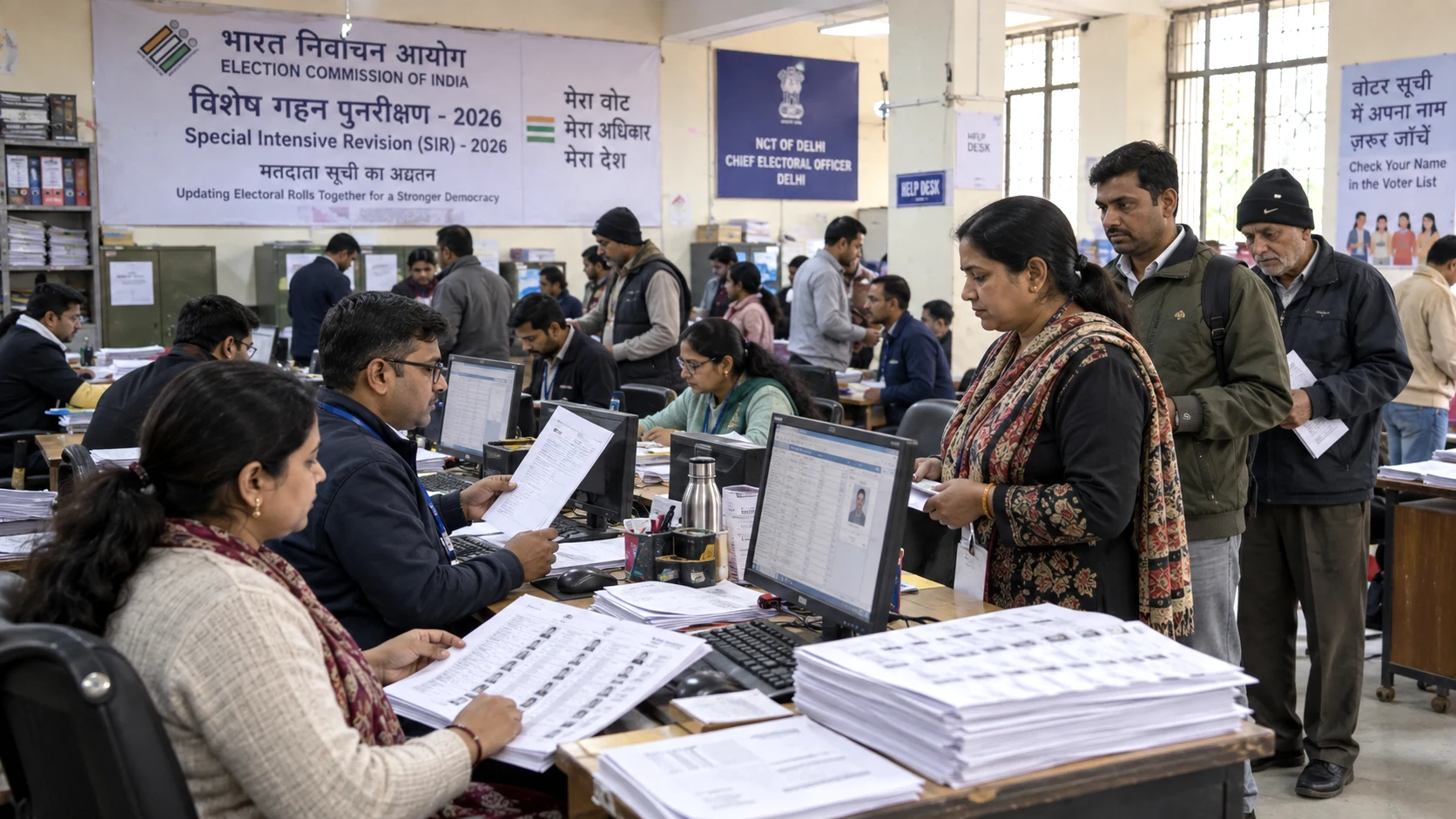
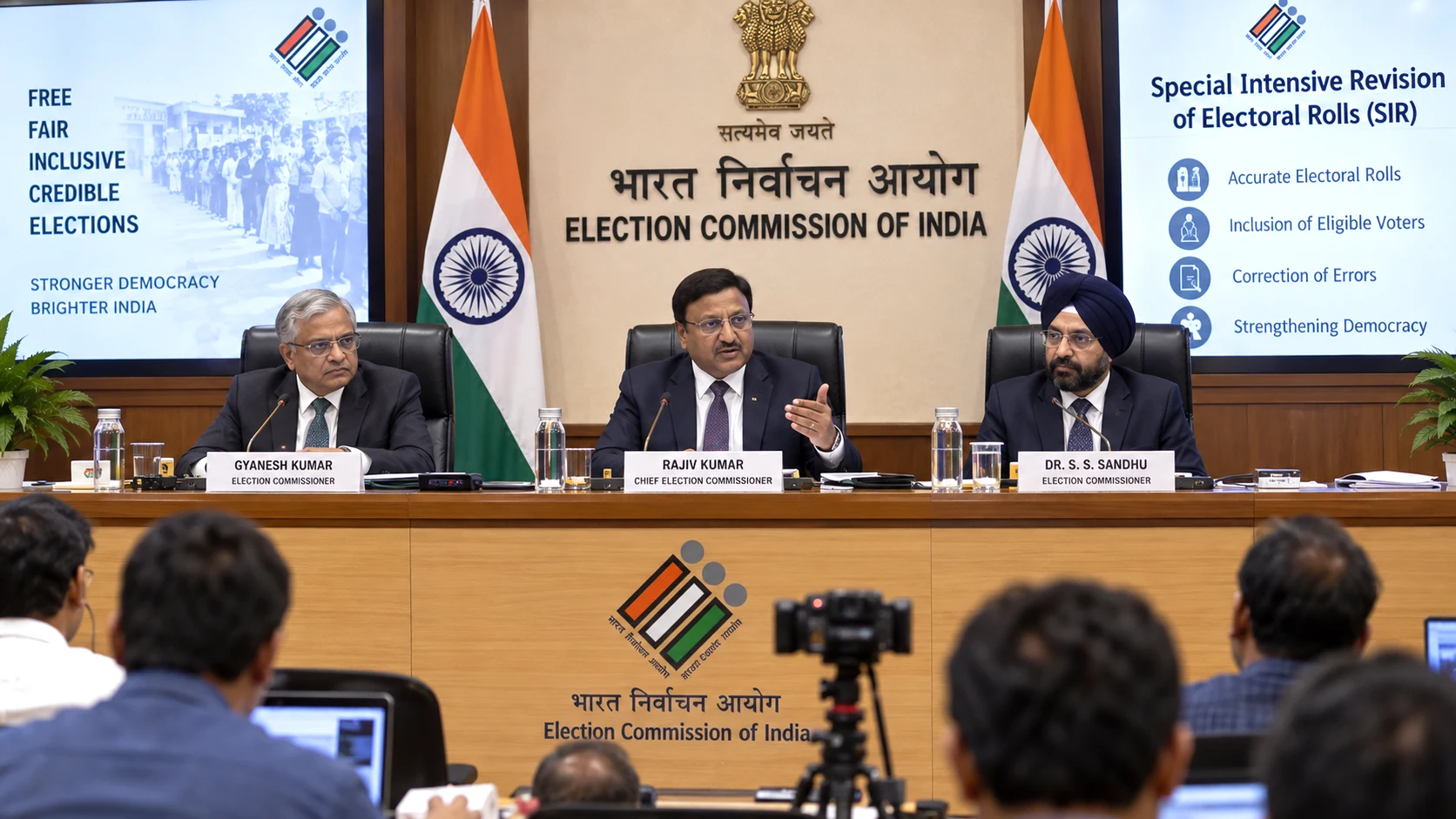
LK Advani, Jagdeep Dhankhar, S Jaishankar and several other prominent Delhi voters have had their SIR records verified and reserved for inclusion in the final electoral roll. Here is what “cleared” means and what ordinary voters should do before key deadlines.
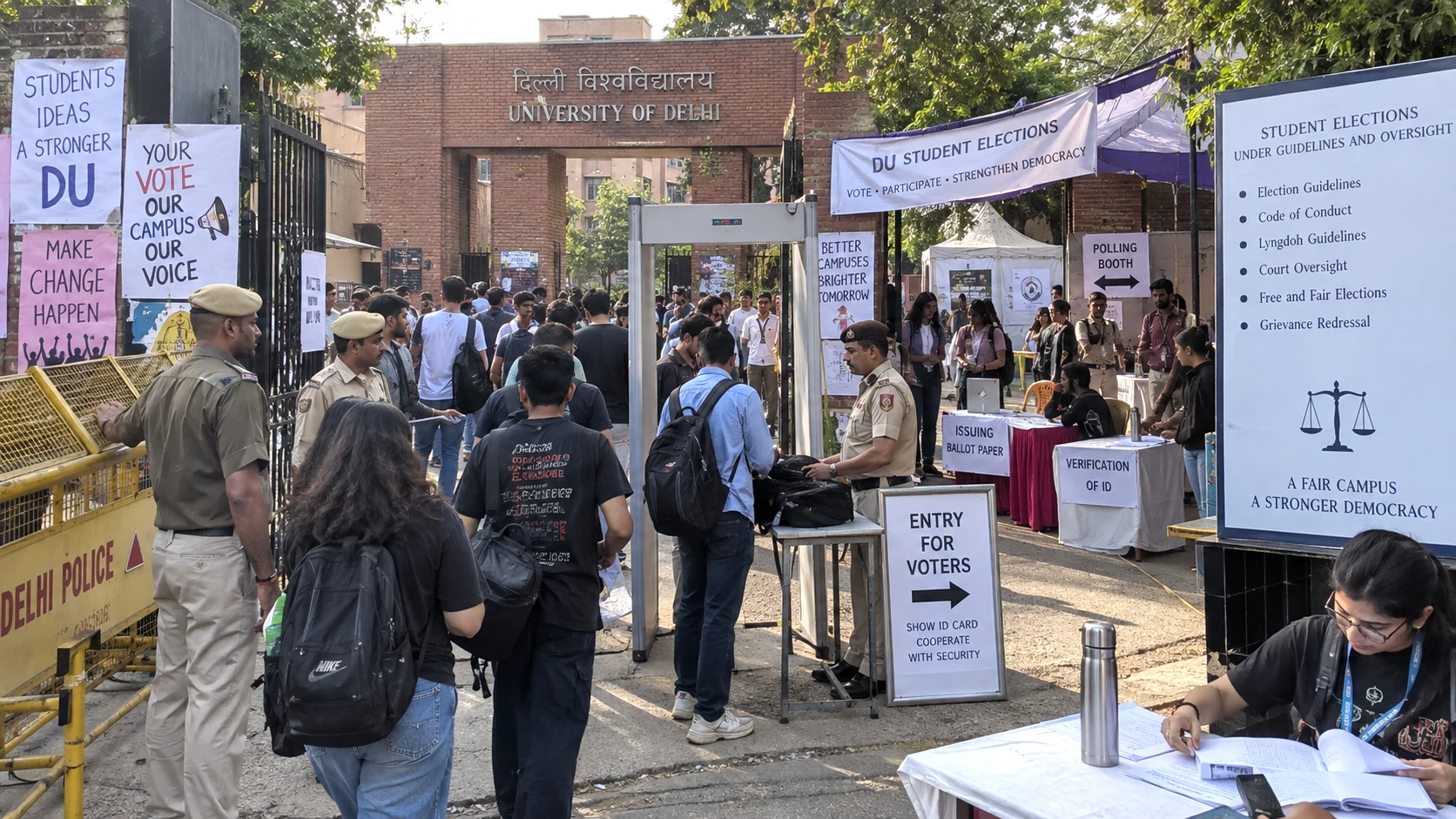
More than 1.51 lakh Delhi University students are eligible to vote for four DUSU posts on September 18. Over 2,000 police and paramilitary personnel have been deployed, while the Delhi High Court has sought reports on alleged campaign violence and election-code violations before deciding whether fur
An Indian Navy vessel and a Pakistan Navy ship collided in international waters in the northern Arabian Sea on the evening of September 15.
Indian sources said the Pakistan Navy vessel approached a frontline Indian warship at high speed and manoeuvred in an unsafe and unprofessional manner.
The Ministry of External Affairs said the incident caused no major damage.
India summoned Pakistan’s Charge d’Affaires in New Delhi on September 16 and lodged a formal protest.
The MEA said the Pakistani vessel’s conduct was in direct contravention of Article 10 of the April 1991 India-Pakistan agreement on advance notice of military exercises, manoeuvres and troop movements.
India has also instructed its Charge d’Affaires in Islamabad to lodge a parallel protest with Pakistan’s Foreign Ministry.
The MEA did not identify either warship in its public statement. Some subsequent defence reporting has named the Pakistani vessel, but those identities should not be treated as officially confirmed at this stage.
Pakistan had not issued an immediate public response to India’s protest at the time of the latest reports.
What Happened in the Arabian Sea?
The incident took place on September 15 in the northern Arabian Sea.
Indian officials familiar with the episode told news organisations that a Pakistani naval vessel closed in at high speed on a frontline Indian Navy warship engaged in routine surveillance.
They described the Pakistani ship’s manoeuvring as “unprofessional and unsafe” and said it resulted in the collision.
That description represents the Indian account of the sequence leading to the impact.
Pakistan had not publicly presented its own detailed version of the incident in the latest material available at the time of writing. Associated Press reported that there was no immediate Pakistani response to India’s protest.
Until both sides provide fuller operational accounts or additional evidence emerges, the precise navigation sequence should therefore be attributed to Indian officials rather than presented as an independently established reconstruction.
MEA Confirms Collision Caused No Major Damage
The Ministry of External Affairs issued an official statement confirming the collision and India’s diplomatic protest.
The ministry said the incident occurred in international waters and “did not cause any major damage”.
That is an important qualification.
Despite the seriousness of two military vessels belonging to India and Pakistan making physical contact at sea, there has been no official Indian announcement of major structural damage or a wider military confrontation resulting from the episode.
The development should therefore not be described as a naval battle or armed clash.
It was a collision between military vessels that has triggered a diplomatic dispute over maritime conduct.
Pakistan’s Top Diplomat in Delhi Summoned
India summoned the Charge d’Affaires of the Pakistan High Commission in New Delhi on September 16.
A Charge d’Affaires is currently Pakistan’s senior diplomatic representative in India.
The MEA said a strong protest was lodged with him over what New Delhi characterised as the “unacceptable and unprofessional conduct” of Pakistani naval units at sea.
The Pakistani diplomat was asked to convey India’s concerns to the relevant authorities in Islamabad.
New Delhi specifically called for military units to exercise due care and respect existing bilateral agreements to prevent a repeat of the incident.
India Also Lodges Protest in Islamabad
The diplomatic action is not limited to New Delhi.
The MEA said India’s Charge d’Affaires in Islamabad had also been instructed to approach Pakistan’s Ministry of Foreign Affairs and lodge a similar protest.
India has therefore formally raised the incident through diplomatic channels in both capitals.
No additional punitive or military measure had been announced publicly in the official statement reviewed for this report.
India Cites 1991 Bilateral Agreement
A central element of India’s protest is the Agreement between India and Pakistan on Advance Notice on Military Exercises, Manoeuvres and Troops Movements, concluded in April 1991.
The MEA said the conduct of the Pakistani naval ship was in “direct contravention” of Article 10 of that agreement.
The agreement is one of several confidence-building arrangements developed between the two countries to reduce the risk that military activity or miscalculation could trigger a larger confrontation.
Because New Delhi is explicitly citing Article 10, the current disagreement is not being framed by India simply as an ordinary maritime accident.
India is treating the episode as a breach of an existing bilateral military understanding.
Whether Pakistan accepts that interpretation remains unclear pending an official response from Islamabad.
High-Speed Manoeuvre Claim Comes From Indian Sources
Reports describing the Pakistani vessel as operating at “high speed” are supported by Indian defence and government sources.
The Indian Express reported that the Pakistani ship crossed the Indian warship at high speed while the Indian vessel was engaged in routine surveillance.
The Tribune similarly reported that the Pakistan Navy ship closed in at high speed and was manoeuvring in what Indian sources described as an unsafe and unprofessional manner.
The distinction in attribution matters.
The MEA’s formal statement confirms the collision, India’s protest, the absence of major damage and its allegation of a treaty breach. The more detailed account of the Pakistani ship’s speed and specific manoeuvring comes from Indian sources familiar with the incident.
Ship Identities Not Officially Disclosed
Neither the Indian Navy vessel nor the Pakistan Navy ship was identified by name in the MEA’s public statement.
Some defence reporting has subsequently identified the Pakistani vessel as PNS Hunain, a Yarmook-class corvette.
However, that identification was not included in the official MEA statement reviewed for this report.
The Indian vessel has also not been publicly named by the ministry.
Until the navies or governments formally confirm the identities, they are best described simply as an Indian Navy warship and a Pakistan Navy vessel.
That avoids turning secondary-source identification into an official fact.
Why a Naval Collision Between India and Pakistan Matters
Military vessels routinely operate in the Arabian Sea, including for surveillance, exercises, patrols and maritime-security missions.
Close interactions between vessels are therefore possible.
What makes the September 15 incident politically sensitive is that the two ships belonged to India and Pakistan, two nuclear-armed neighbouring states with a long record of military confrontation and periods of severe diplomatic tension.
A navigational incident between their armed forces creates the possibility of misunderstanding or rapid escalation even when the initial physical damage is limited.
The bilateral agreements cited by India are partly intended to reduce precisely that risk.
The significance of the episode therefore lies less in the reported physical damage and more in the possibility that unsafe military interaction at sea could generate a wider diplomatic or security crisis.
Similar India-Pakistan Naval Dispute Occurred in 2011
The current dispute also has a historical precedent.
In June 2011, India and Pakistan exchanged protests following an encounter involving Indian warship INS Godavari and Pakistani naval vessel PNS Babur while ships were operating in connection with the merchant vessel MV Suez in the Gulf of Aden.
Pakistan accused INS Godavari of dangerous manoeuvring, while India rejected that allegation and accused PNS Babur of risky conduct.
India’s protest at the time also cited Article 10 of the same 1991 agreement, along with international navigational-safety rules.
The competing versions of that earlier episode illustrate why maritime incidents between rival navies require careful attribution rather than assuming one side’s operational account is automatically uncontested.
Current Incident Comes Amid Sensitive Bilateral Relations
The collision occurs against the broader backdrop of strained India-Pakistan relations.
That political environment increases the sensitivity of any direct encounter between the two militaries.
However, there is currently no verified evidence that the September 15 collision has developed into a broader naval confrontation.
India has responded through formal diplomatic channels and publicly called for military units to exercise greater care.
Pakistan’s eventual response will be important in determining whether the episode remains a contained maritime dispute or develops into a wider diplomatic exchange.
No Evidence of a Deliberate Attack Announced
India has used strong language about the Pakistani ship’s conduct, including the terms “unacceptable” and “unprofessional”.
Indian sources have also described the manoeuvre as unsafe.
However, the MEA statement reviewed for this report did not accuse Pakistan of deliberately attacking the Indian vessel.
That distinction should be maintained.
The available evidence supports reporting a collision allegedly caused by unsafe Pakistani manoeuvring according to India, not a deliberate naval strike.
Claims that the ships were involved in combat or that Pakistan intentionally rammed an Indian vessel would go beyond what the official public record currently establishes.
No Major Damage Reported
The absence of major damage is one of the few technical facts the MEA has publicly confirmed.
The ministry has not provided a detailed damage assessment.
It has also not publicly released photographs or video showing the collision in its September 16 statement.
Reports citing officials have said no significant damage resulted from the contact.
The lack of major damage may help keep the immediate military risk limited, but New Delhi’s decision to summon Pakistan’s senior diplomat demonstrates that India considers the conduct itself serious.
Pakistan’s Response Still Awaited
As of the latest reporting on September 16, Pakistan had not issued an immediate public response to India’s allegations.
Associated Press reported no immediate reaction from Pakistan to the collision or the Indian diplomatic protest.
Until Islamabad responds, it remains unknown whether Pakistan will dispute India’s reconstruction, accept responsibility for a navigational error or present a different account of the encounter.
That means reporting should not assume that India’s operational description represents an agreed bilateral version of events.
The collision itself and India’s formal protest are confirmed.
Responsibility for the precise navigation sequence remains based primarily on India’s account at this stage.
What Happens Next
The immediate next development is likely to be Pakistan’s official response.
Islamabad could respond through its Foreign Ministry, Pakistan Navy or diplomatic channels.
India and Pakistan may also examine navigation records, ship logs and other operational information to determine the sequence leading to the collision.
New Delhi has already made its diplomatic demand clear: Pakistan’s military units should exercise due care and respect the existing agreements intended to prevent such incidents.
Whether any additional bilateral military communication takes place has not yet been announced publicly.
Bottom Line
An Indian Navy warship and a Pakistan Navy vessel collided in international waters in the northern Arabian Sea on the evening of September 15.
Indian sources say the Pakistani vessel approached at high speed and manoeuvred in an unsafe and unprofessional manner while the Indian warship was conducting routine surveillance.
India’s Ministry of External Affairs has officially confirmed the collision, said it caused no major damage and described the Pakistani naval conduct as “unacceptable and unprofessional”.
On September 16, the MEA summoned Pakistan’s Charge d’Affaires in New Delhi and lodged a strong formal protest.
India says the Pakistani ship’s conduct directly contravened Article 10 of the April 1991 bilateral agreement covering advance notice of military exercises, manoeuvres and troop movements. The Indian Charge d’Affaires in Islamabad has also been instructed to lodge a protest with Pakistan’s Foreign Ministry.
No major damage has been officially reported, the ships were not identified by name in the MEA statement, and Pakistan had not issued an immediate public response at the latest update.
The incident is therefore a serious diplomatic and military-safety development, but there is currently no verified basis to describe it as an armed confrontation or deliberate naval attack.
Key Takeaway
Indian and Pakistani naval vessels collided in the northern Arabian Sea on September 15.
India says the Pakistani ship manoeuvred unsafely and breached a 1991 bilateral agreement.
The MEA summoned Pakistan’s diplomat and lodged a formal protest; no major damage was reported.
Pakistan had not issued an immediate public response.
The Rajatheertha Team publishes news, explainers, guides and updates across India and the world. Our coverage follows Rajatheertha's editorial, verification and corrections standards.
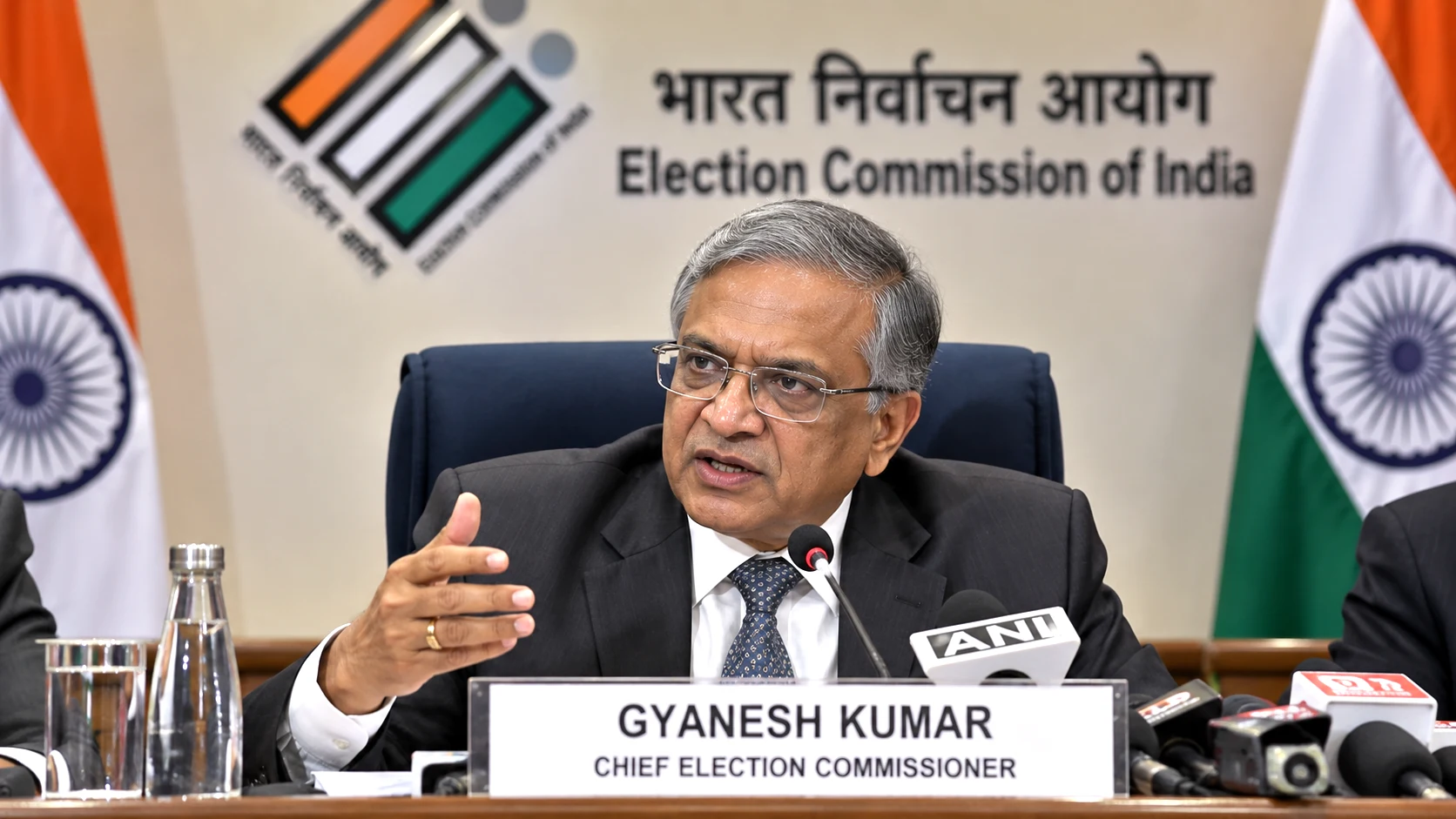
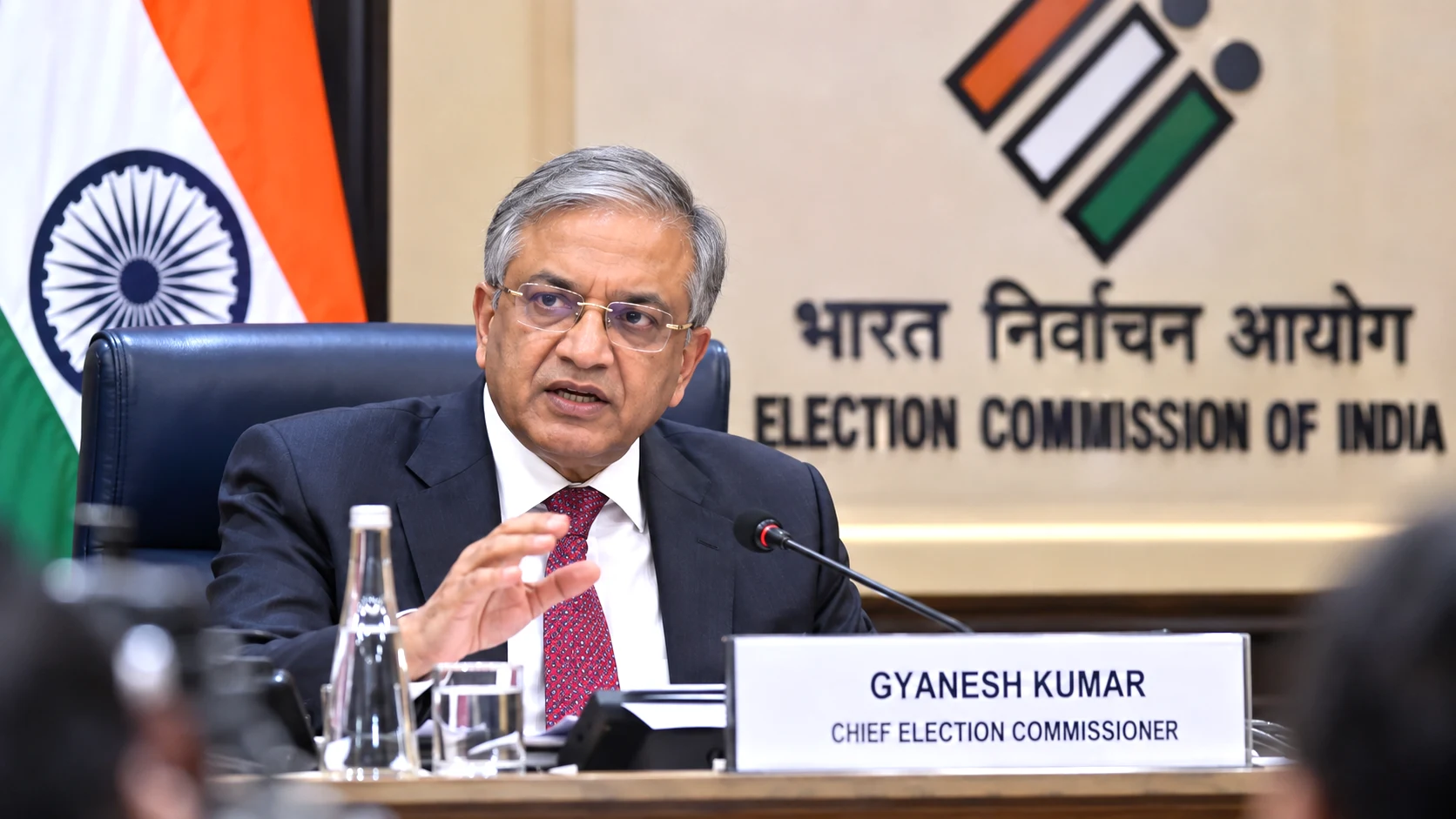
Opposition parties have intensified calls for CEC Gyanesh Kumar’s removal after a report said two Election Commissioners raised repeated objections over SIR and electoral-roll decisions. Some leaders have also demanded his arrest, while the ECI says all final decisions were unanimous.
The Election Commission says all final decisions taken by the full Commission over the past year, including SIR-related measures, were unanimous despite reported objections raised during internal deliberations. Here is what the dispute means for voters.
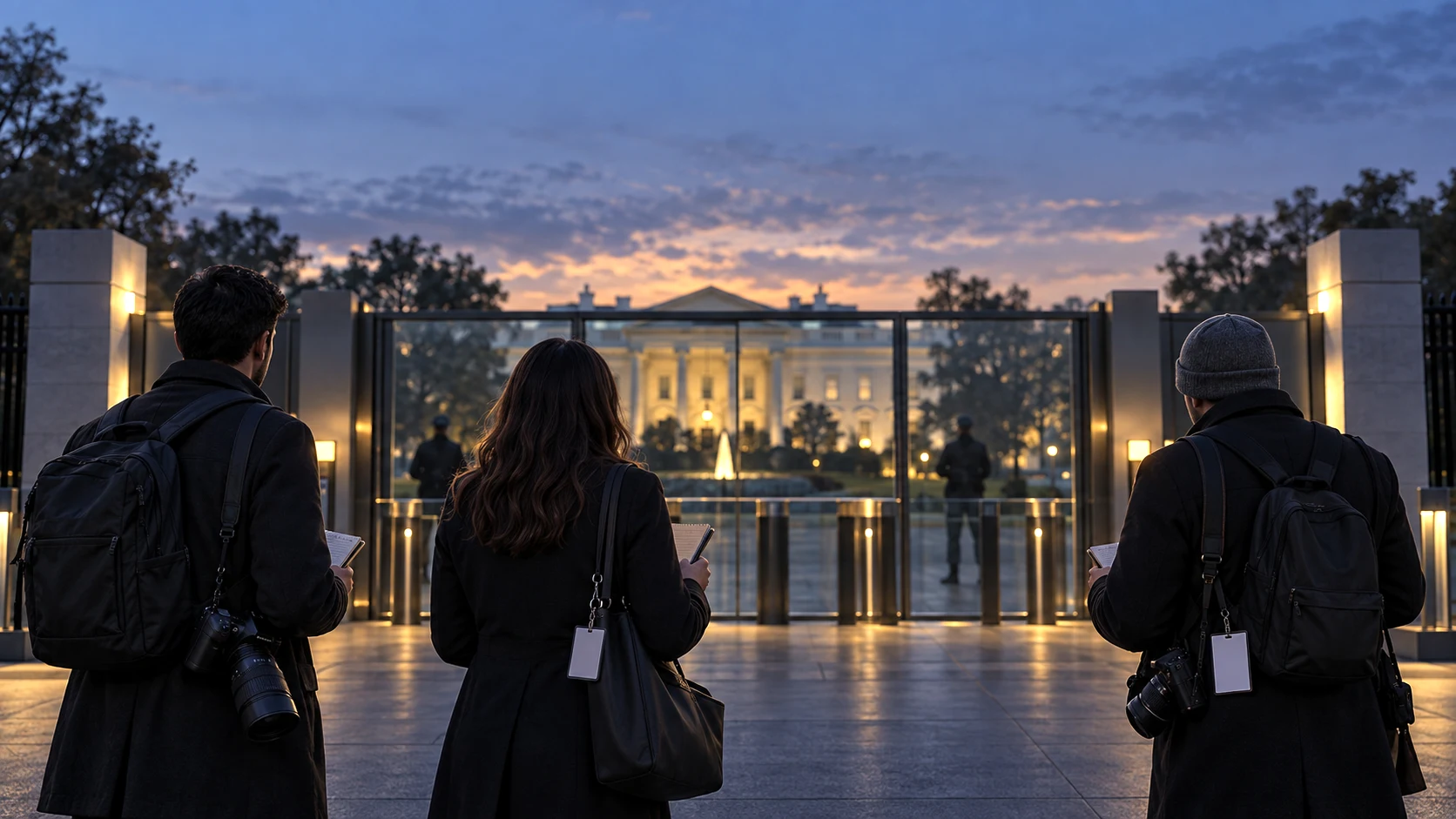
President Donald Trump announced the restrictions on September 18, accusing the three outlets of publishing what he called “fake news”; journalists from all three organizations were turned away from the White House the following day.
Prime Minister Narendra Modi warned BRICS leaders that the “weaponisation of technology and critical minerals” could obstruct shared development, as the New Delhi Declaration backed resilient supply chains and wider technology cooperation.
Opposition parties are preparing a fresh parliamentary notice seeking CEC Gyanesh Kumar’s removal amid the SIR controversy. Here is what Article 324 says, how many MPs are needed and why removal requires a high constitutional threshold.
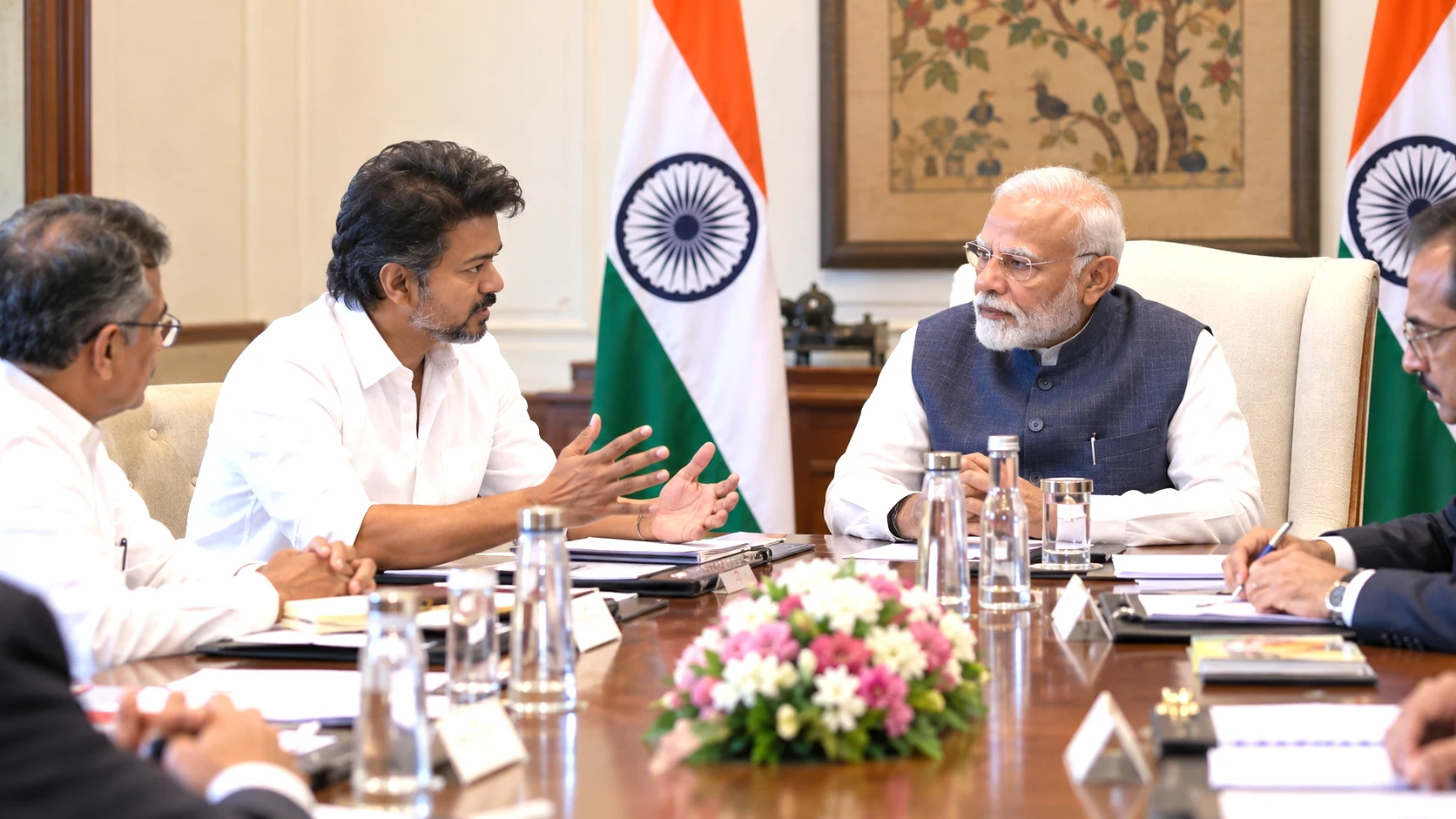
Tamil Nadu Chief Minister C Joseph Vijay's first official meeting with Prime Minister Narendra Modi focused on issues ranging from Mekedatu and fishermen to state funds and Tamil identity. With the two leaders expected to share a Chennai stage on October 11, here is what the meetings mean politicall




0 Comments