Modi-Xi Bilateral and BRICS Consensus Talks Take Centre Stage in New Delhi
Prime Minister Narendra Modi’s scheduled meeting with Chinese President Xi Jinping is the diplomatic highlight of BRICS Day 1, while member states have reached consensus on a leaders’ declaration after difficult negotiations over West Asia.
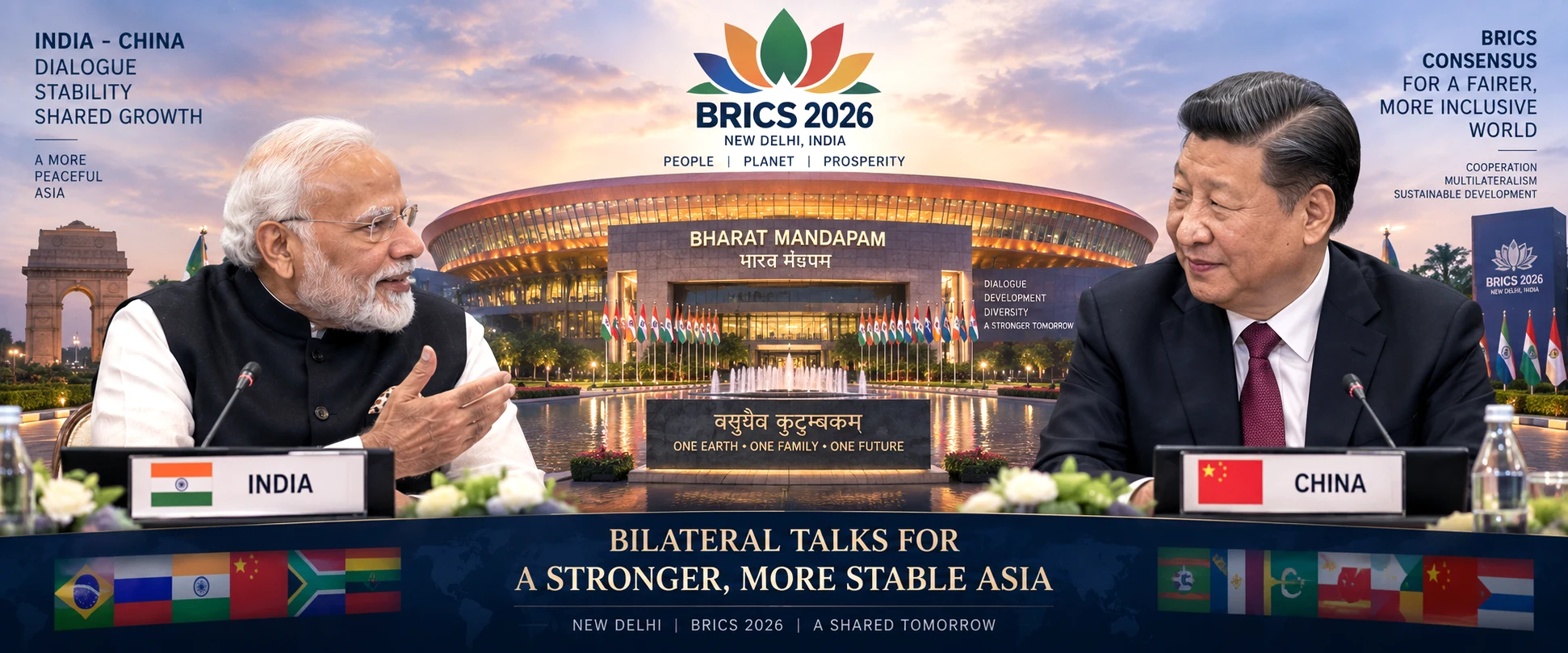
Prime Minister Narendra Modi’s scheduled bilateral meeting with Chinese President Xi Jinping has emerged as the central diplomatic event on the first day of the BRICS leaders’ summit in New Delhi, as India seeks to consolidate a cautious improvement in relations with China while building consensus among an increasingly diverse group of emerging economies.
Xi arrived in New Delhi on Saturday for his first visit to India in seven years. His meeting with Modi is scheduled for Saturday evening and will be their third meeting in three years, according to China’s Foreign Ministry.
The bilateral comes alongside another important development inside BRICS: negotiators have reached consensus on a New Delhi leaders’ declaration after prolonged discussions, with differences over the conflict in West Asia among the most difficult issues to resolve.
Together, the Modi-Xi talks and the declaration negotiations capture the two major diplomatic tests facing India as BRICS chair: managing one of its most complicated bilateral relationships while finding common ground among countries with sharply different strategic interests.
Recommended Reading
Related Stories & In-Depth Guides
Curated editorial perspectives matching this topic.
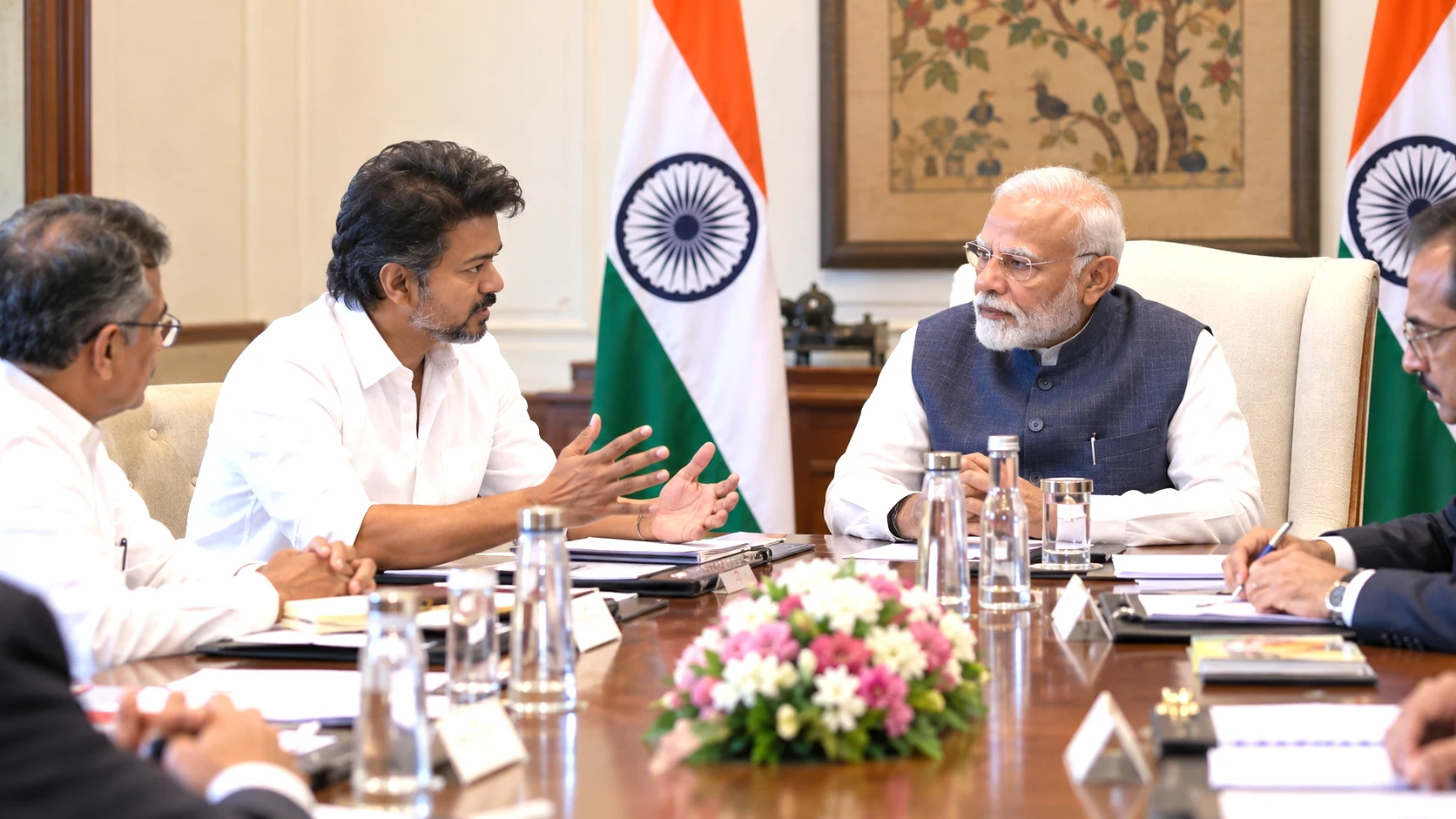
Tamil Nadu Chief Minister C Joseph Vijay's first official meeting with Prime Minister Narendra Modi focused on issues ranging from Mekedatu and fishermen to state funds and Tamil identity. With the two leaders expected to share a Chennai stage on October 11, here is what the meetings mean politicall
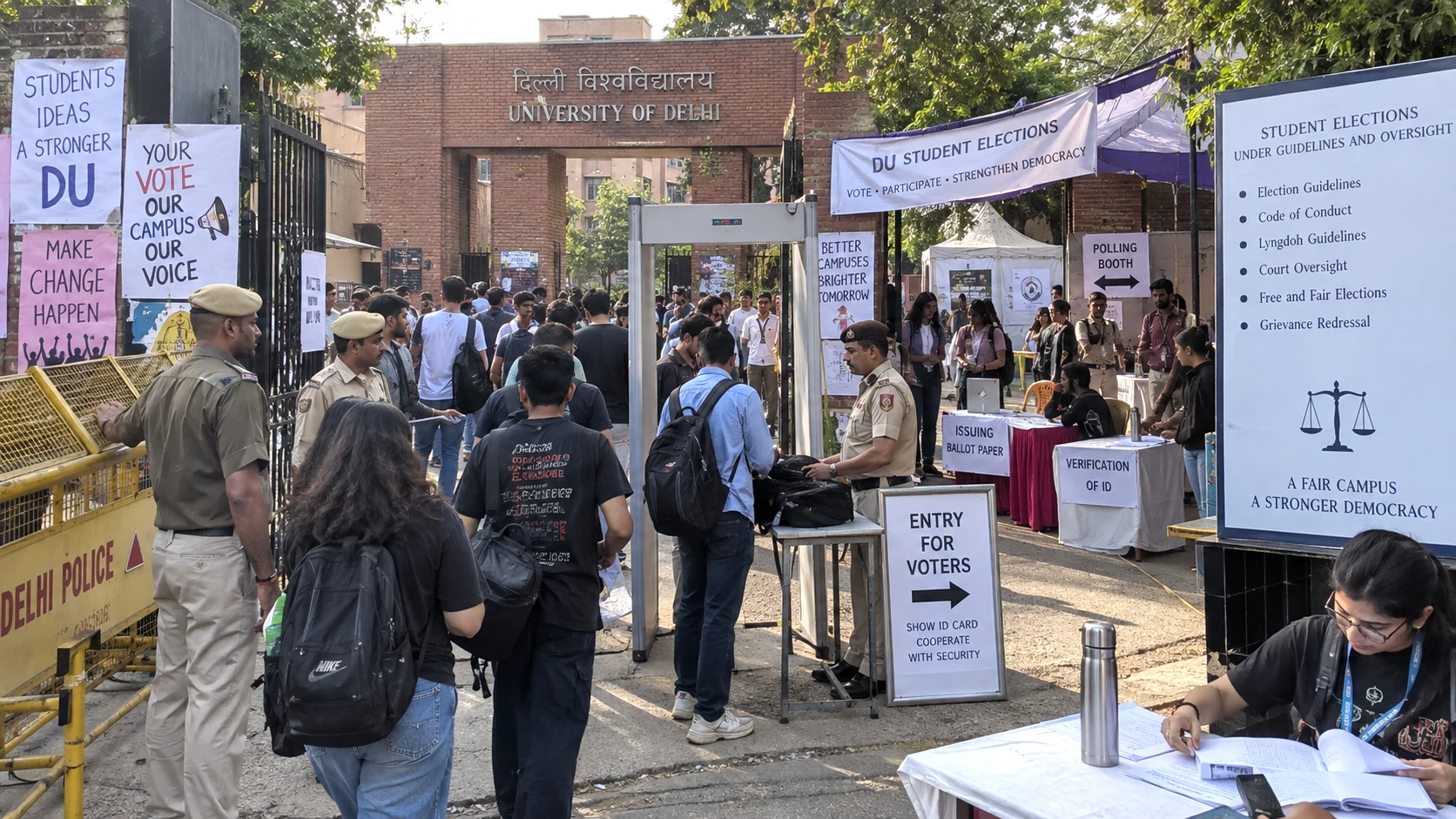
More than 1.51 lakh Delhi University students are eligible to vote for four DUSU posts on September 18. Over 2,000 police and paramilitary personnel have been deployed, while the Delhi High Court has sought reports on alleged campaign violence and election-code violations before deciding whether fur
Key Takeaways
Prime Minister Narendra Modi and Chinese President Xi Jinping are scheduled to meet on Saturday evening in New Delhi, with India-China ties and border stability in focus.
Modi met Russian President Vladimir Putin and Iranian President Masoud Pezeshkian on Friday ahead of the main leaders’ summit.
BRICS negotiators reached consensus on the New Delhi leaders’ declaration after more than four days of negotiations, with West Asia among the difficult issues.
The summit has already expressed concern over escalating Middle East conflicts and criticised sanctions imposed without UN Security Council authorisation.
Modi has argued that BRICS is “not against anyone” and called for the Global South to move from being a rule-taker towards having a stronger role in shaping global governance.
Modi-Xi Meeting Becomes Day 1’s Main Bilateral
Xi’s return to India carries significance beyond the BRICS programme.
It is his first visit to the country since 2019, before India-China relations deteriorated following the deadly 2020 border confrontation.
Twenty Indian soldiers and four Chinese soldiers were killed in the Galwan Valley clash, after which the two countries deployed large numbers of troops along sections of their disputed Himalayan frontier.
Relations have gradually improved since the two sides reached new patrolling arrangements and moved forward with disengagement at remaining friction points in eastern Ladakh in 2024.
Modi and Xi have subsequently met at multilateral gatherings, creating a channel for high-level political engagement.
Saturday’s talks in New Delhi therefore offer an opportunity to assess whether that diplomatic thaw can develop into a more stable relationship.
China said ahead of the meeting that it was willing to view bilateral relations from a strategic and long-term perspective, manage differences appropriately and work towards constructive relations with India.
The language is positive, but substantial differences remain.
Border Talks Remain Critical to India-China Relationship
The border question remains fundamental to any durable improvement.
India has consistently linked the broader bilateral relationship to peace and stability along the Line of Actual Control.
Recent diplomatic and military discussions have sought to strengthen mechanisms that can reduce the risk of misunderstandings or local confrontations escalating.
The Modi-Xi meeting is expected to review that process, although the exact outcome should be judged only from official statements issued after the talks.
The meeting itself does not mean the boundary dispute has been resolved.
India and China continue to disagree over significant sections of their long frontier, and restoring confidence after the events of 2020 is likely to require sustained engagement.
That makes practical border-management arrangements particularly important.
The immediate objective is not necessarily a comprehensive boundary settlement but a more predictable environment in which disagreements can be handled without producing another military crisis.
Trade Adds Another Layer to Modi-Xi Talks
Economic relations present a different contradiction.
India and China remain major trading partners despite strategic tensions.
At the same time, India runs a substantial merchandise trade deficit with China and has raised concerns about market access for Indian companies.
The Indian Express reported that the deficit has expanded considerably since Xi’s previous India visit and that economic issues, including access to Chinese markets, are expected to feature prominently in the bilateral relationship.
A possible strategic economic dialogue has also been discussed.
Such a mechanism could provide a structured channel for addressing trade imbalances, investment, market access and other commercial concerns.
However, any claim of a new economic agreement should wait for an official announcement.
The broader economic relationship remains closely connected to political confidence.
India tightened scrutiny of Chinese investments and businesses after relations deteriorated following the border crisis.
Any substantial economic normalisation is therefore likely to develop alongside, rather than separately from, progress on political and security issues.
Modi’s BRICS Diplomacy Started Before Xi Meeting
The Xi bilateral is only one part of a much wider diplomatic schedule surrounding the summit.
Modi met Russian President Vladimir Putin on Friday on the margins of the 18th BRICS Summit.
According to the Prime Minister’s Office, Modi and Putin reviewed cooperation covering political relations, economics, defence, energy, space, skill mobility and people-to-people ties.
They also discussed India-Russia cooperation within BRICS under India’s 2026 chairship.
The meeting came as Russia continues to face extensive Western sanctions over its war in Ukraine, while India maintains longstanding economic, energy and defence ties with Moscow.
This places New Delhi in a distinctive diplomatic position.
India has expanded strategic cooperation with the United States and Europe while continuing its relationship with Russia.
BRICS provides another venue in which those overlapping partnerships become visible.
Modi-Pezeshkian Talks Put West Asia in Focus
Modi also met Iranian President Masoud Pezeshkian on Friday.
The two leaders discussed bilateral relations and developments in West Asia.
According to the Indian government, Modi reiterated India’s position that disputes should be addressed through dialogue and diplomacy and stressed the importance of lasting peace and stability, freedom of navigation and commerce, and the safety of seafarers.
The meeting was their second in less than two weeks following talks on the sidelines of the Shanghai Cooperation Organisation summit in Bishkek on August 31.
Iran’s presence inside BRICS makes the current West Asia conflict particularly difficult for the grouping.
The conflict has implications for energy markets, maritime trade and relations among BRICS members themselves.
That complexity was reflected directly in negotiations over the summit declaration.
BRICS Negotiators Reach Consensus After Difficult Talks
Negotiations over the New Delhi Leaders’ Declaration continued for more than four days before consensus was reached early on Saturday, according to ThePrint.
West Asia had been a central sticking point.
Finding language acceptable to all members was difficult because BRICS contains countries with different relationships, security interests and diplomatic positions in the region.
ThePrint reported that negotiators eventually found common ground around language deploring forms of “unprovoked aggression.”
The significance lies not merely in the wording.
In May, BRICS foreign ministers had been unable to agree on a joint statement over differences concerning the Iran conflict, forcing India to issue a chair’s summary instead.
Reaching consensus at the leaders’ summit therefore gives India an important diplomatic outcome from its chairship.
West Asia Conflict Tests BRICS Unity
The wider BRICS meeting has already reflected concern about the conflict.
According to Associated Press reporting from the summit, the grouping expressed concern about escalating tensions in the Middle East and criticised unilateral sanctions not authorised by the United Nations Security Council.
The leaders also expressed concern about attacks on civilian infrastructure and peaceful nuclear facilities covered by International Atomic Energy Agency safeguards.
The language illustrates how BRICS attempts to establish common positions without requiring every member to share the same foreign policy.
That balancing act has become more difficult as the organisation expands.
Iran is a BRICS member.
The UAE is also a member.
India maintains important relationships across the region, including with Iran, Gulf countries, Israel and Western partners.
Producing a consensus document under those circumstances requires language that members with significantly different strategic interests can accept.
Terrorism and Global Institutional Reform Also Expected in Declaration
West Asia is not the only major issue being addressed.
The Indian Express reported that the New Delhi declaration is expected to include common positions on terrorism, reform of global institutions and strengthening multilateralism.
Support for greater representation for emerging and developing countries in international institutions has long been part of the BRICS agenda.
India has repeatedly argued for reform of the United Nations Security Council and other global institutions to better reflect contemporary economic and geopolitical realities.
For New Delhi, this connects directly to its broader argument that countries of the Global South should have greater influence over the rules and institutions governing the international system.
Modi Says BRICS Is Not Directed Against the West
That argument does not mean India wants BRICS presented simply as an anti-Western alliance.
Modi explicitly sought to make that distinction in his summit remarks.
According to AP, the Prime Minister said BRICS is “not against anyone” and argued that the grouping had reached a stage where the Global South should become more influential in shaping global governance.
This distinction is central to India’s BRICS strategy.
Russia and China often present BRICS as part of a broader shift away from Western dominance in global institutions.
India generally frames the grouping differently: as a platform for reform, greater representation and cooperation among emerging economies without requiring confrontation with Western countries.
That reflects India’s wider foreign policy.
New Delhi participates in BRICS alongside China, Russia and Iran while also participating in the Quad with the United States, Japan and Australia and maintaining extensive economic and strategic relationships with Europe.
India’s position therefore depends on preserving strategic flexibility.
Global South Positioning Is a Major Indian Objective
The phrase Global South has become increasingly prominent in Indian diplomacy.
It broadly refers to developing and emerging economies across Asia, Africa, Latin America and other regions, though it is not a formal political bloc.
India has sought to position itself as a bridge between these countries and established global powers.
BRICS provides one platform for that strategy.
The grouping now includes Brazil, Russia, India, China, South Africa, Egypt, Ethiopia, Indonesia, Iran and the United Arab Emirates among its members represented at the summit.
That gives BRICS significant economic, demographic and political weight.
But expansion also increases internal diversity.
Members have different political systems, alliances, economic priorities and security concerns.
Consensus consequently becomes more difficult precisely as the grouping becomes larger.
India’s ability to secure agreement on a leaders’ declaration despite disagreements over West Asia is therefore relevant to its broader effort to present BRICS as a functioning platform rather than simply a collection of dissatisfied powers.
Russia and China Have Their Own BRICS Priorities
India is not the only member seeking to shape the organisation.
Russia and China have advocated a stronger multipolar international system and greater independence from Western-dominated financial structures.
Iran has pushed for greater use of national currencies in international trade.
Xi told the summit that BRICS countries should play a stronger role in maintaining peace and stability, according to reporting cited by AP.
These positions overlap with India’s support for reform in some areas but are not identical to New Delhi’s approach.
That distinction matters when interpreting BRICS.
The grouping should not automatically be treated as having a single geopolitical strategy merely because its members can agree on a summit declaration.
Consensus documents generally reflect positions that all participants can accept, not necessarily identical national policies.
Maritime Security Gains Importance
The disruption caused by conflict in West Asia has also increased attention on shipping and maritime security.
Modi proposed a BRICS seafarers’ network aimed at improving the safety and welfare of maritime workers amid growing risks to global shipping.
The issue has direct relevance for India.
As a major energy importer and trading economy, India depends heavily on secure maritime routes.
Disruption around critical waterways can affect crude-oil supplies, freight costs, insurance premiums and broader supply chains.
This gives the geopolitical debate at BRICS an immediate economic dimension.
The consequences of conflict are not limited to diplomatic statements; they can move through shipping networks into energy and consumer markets.
Why the Modi-Xi Meeting Matters Beyond BRICS
For India, however, the bilateral with Xi remains distinct from the wider summit agenda.
BRICS cooperation does not eliminate India-China competition.
The two countries continue to have unresolved territorial disputes, competing strategic interests and economic disagreements.
At the same time, both have incentives to prevent their relationship from deteriorating into persistent confrontation.
Stable border conditions can reduce military risk.
Predictable political communication can make economic engagement easier.
Regular leader-level meetings can provide a mechanism for resolving disputes before they escalate.
The test for Saturday’s talks is therefore not whether Modi and Xi announce a dramatic transformation.
It is whether the meeting produces measurable steps that strengthen the gradual stabilisation already underway.
India’s Diplomatic Balancing Act on Display
The sequence of meetings surrounding the summit illustrates the breadth of India’s foreign relationships.
Within roughly the same BRICS diplomatic window, Modi has engaged with Putin and Pezeshkian and is scheduled to meet Xi, while India continues to maintain major partnerships with the United States, Europe, Japan, Australia and Gulf countries.
That approach is often described as strategic autonomy.
Rather than aligning exclusively with one geopolitical camp, India seeks partnerships based on different national interests.
BRICS is one component of that strategy rather than its entirety.
This also explains Modi’s insistence that the grouping should not be defined principally by opposition to the West.
For India, the usefulness of BRICS depends partly on its ability to advance Global South interests without restricting New Delhi’s relationships elsewhere.
What to Watch From the Modi-Xi Meeting
The most important information will come after the bilateral concludes.
Official statements from India and China will show whether the leaders reached understandings on specific issues.
The areas to watch include border management, high-level diplomatic engagement, economic dialogue, market access, people-to-people links and mechanisms intended to prevent future military confrontations.
It will also be important to compare the language used by both governments.
India and China sometimes emphasise different aspects of the same bilateral meeting.
Any claims about agreements should therefore be based on the actual official readouts rather than expectations published before the talks.
What to Watch From the BRICS Declaration
The final declaration will provide the clearest measure of how much consensus India managed to build.
Particular attention will fall on language concerning:
West Asia and current conflicts;
civilian and nuclear infrastructure;
unilateral sanctions;
terrorism;
reform of international institutions;
multilateralism;
trade and financial cooperation;
maritime security; and
representation of developing countries.
Negotiators reaching consensus is an important step.
The final published document will establish precisely what the leaders collectively endorsed.
A High-Stakes Day for Indian Diplomacy
Day 1 of the New Delhi summit brings together two different diplomatic challenges.
One is bilateral and highly specific: Can India and China continue repairing a relationship severely damaged by the 2020 border crisis without ignoring the disputes that remain?
The other is multilateral: Can an expanded BRICS containing countries with competing geopolitical interests still reach meaningful common positions?
The scheduled Modi-Xi meeting will provide evidence on the first question.
The New Delhi declaration will provide evidence on the second.
India’s objective is broader than either event individually.
As BRICS chair, New Delhi is trying to demonstrate that it can maintain strategic partnerships across geopolitical divides, preserve its own autonomy and give developing economies a stronger role in international decision-making.
The summit has already produced one significant result: despite difficult negotiations over West Asia, BRICS members found consensus on a leaders’ declaration.
Attention now turns to the Modi-Xi meeting and the specific outcomes that follow it.
Key Takeaway
Prime Minister Narendra Modi’s scheduled bilateral with Chinese President Xi Jinping is the central diplomatic event of BRICS Day 1 in New Delhi.
The meeting comes as India and China cautiously stabilise ties after the 2020 border crisis.
BRICS negotiators have reached consensus on the New Delhi leaders’ declaration after difficult talks, particularly over West Asia.
Modi has also held talks with Vladimir Putin and Masoud Pezeshkian, highlighting India’s multi-alignment approach.
The day tests both India-China bilateral progress and BRICS’ ability to produce consensus among diverse members.
The Rajatheertha Team publishes news, explainers, guides and updates across India and the world. Our coverage follows Rajatheertha's editorial, verification and corrections standards.
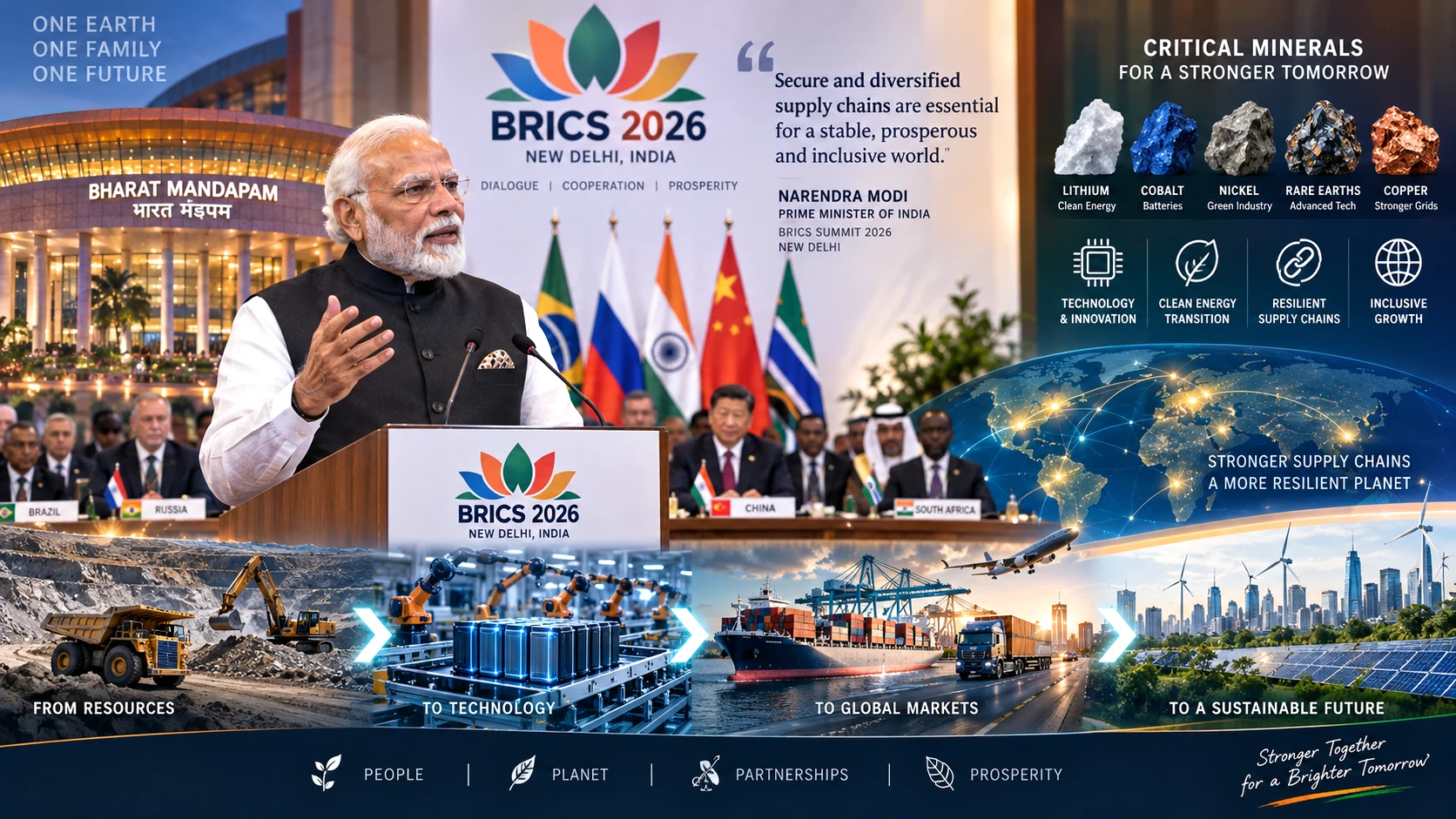
Prime Minister Narendra Modi warned BRICS leaders that the “weaponisation of technology and critical minerals” could obstruct shared development, as the New Delhi Declaration backed resilient supply chains and wider technology cooperation.
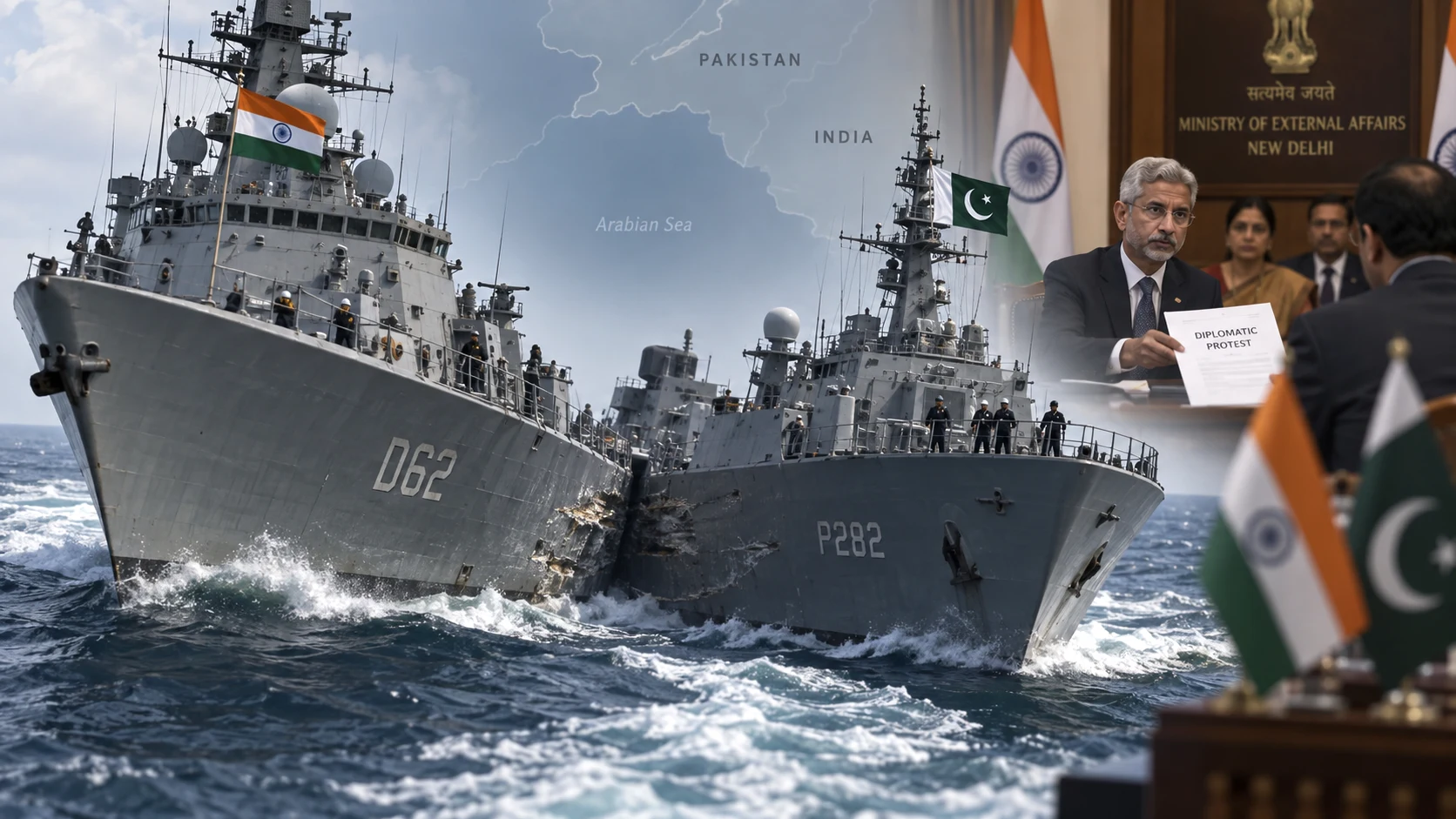
The September 15 collision occurred in international waters in the northern Arabian Sea and caused no major damage, according to India’s Ministry of External Affairs. New Delhi says the Pakistani naval vessel’s conduct breached Article 10 of a 1991 bilateral military agreement.
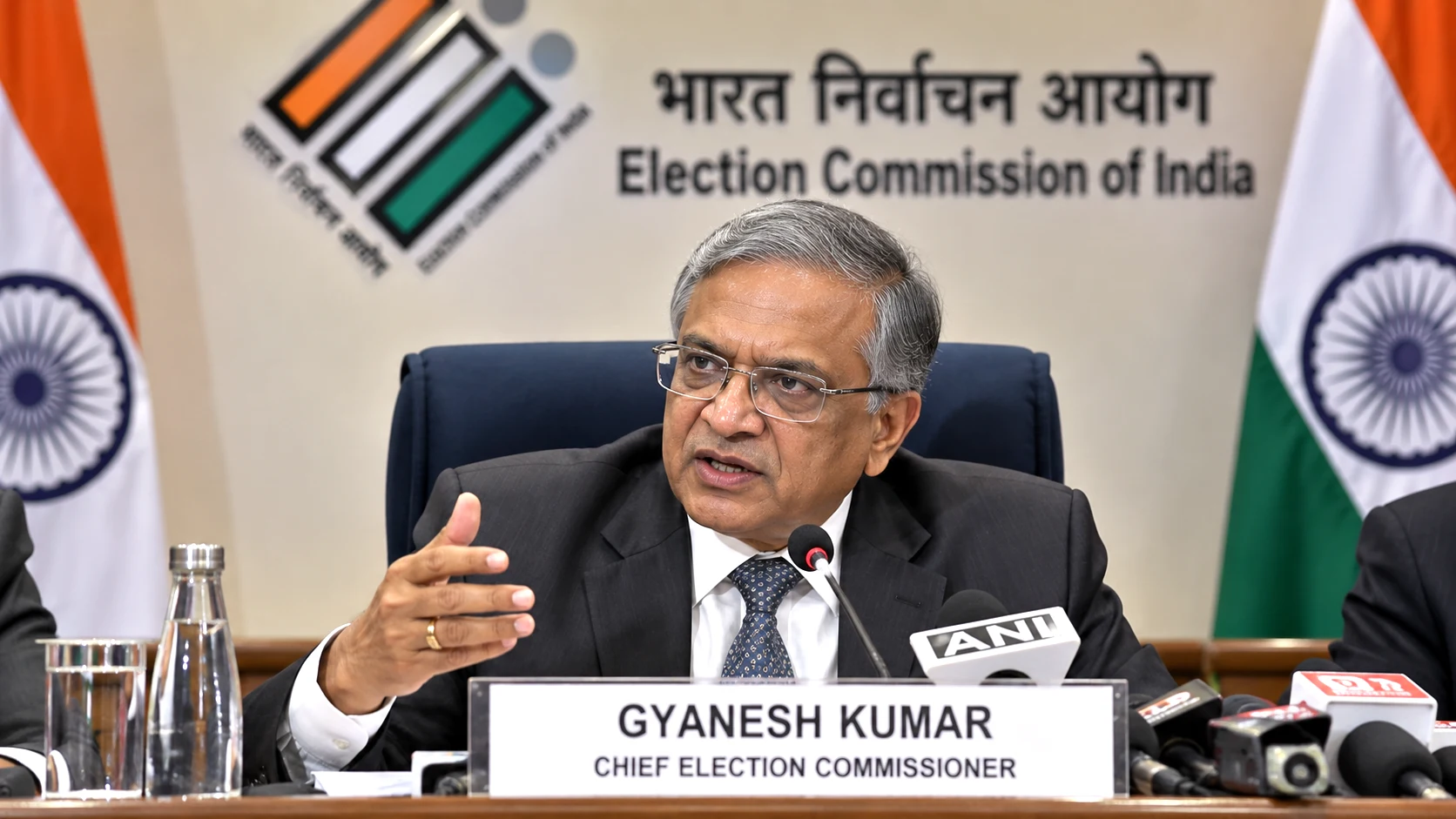
Opposition parties have intensified calls for CEC Gyanesh Kumar’s removal after a report said two Election Commissioners raised repeated objections over SIR and electoral-roll decisions. Some leaders have also demanded his arrest, while the ECI says all final decisions were unanimous.
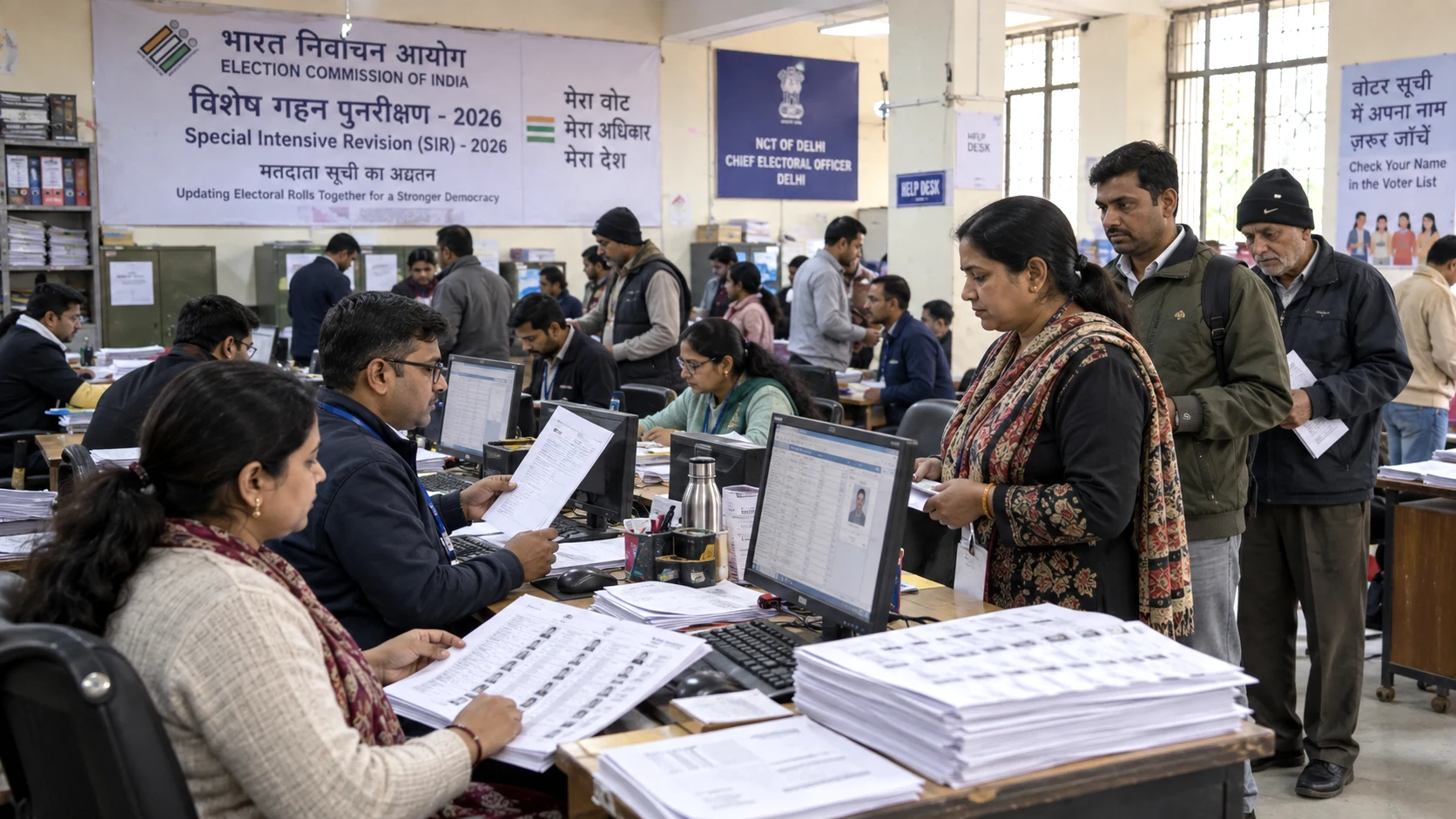
LK Advani, Jagdeep Dhankhar, S Jaishankar and several other prominent Delhi voters have had their SIR records verified and reserved for inclusion in the final electoral roll. Here is what “cleared” means and what ordinary voters should do before key deadlines.
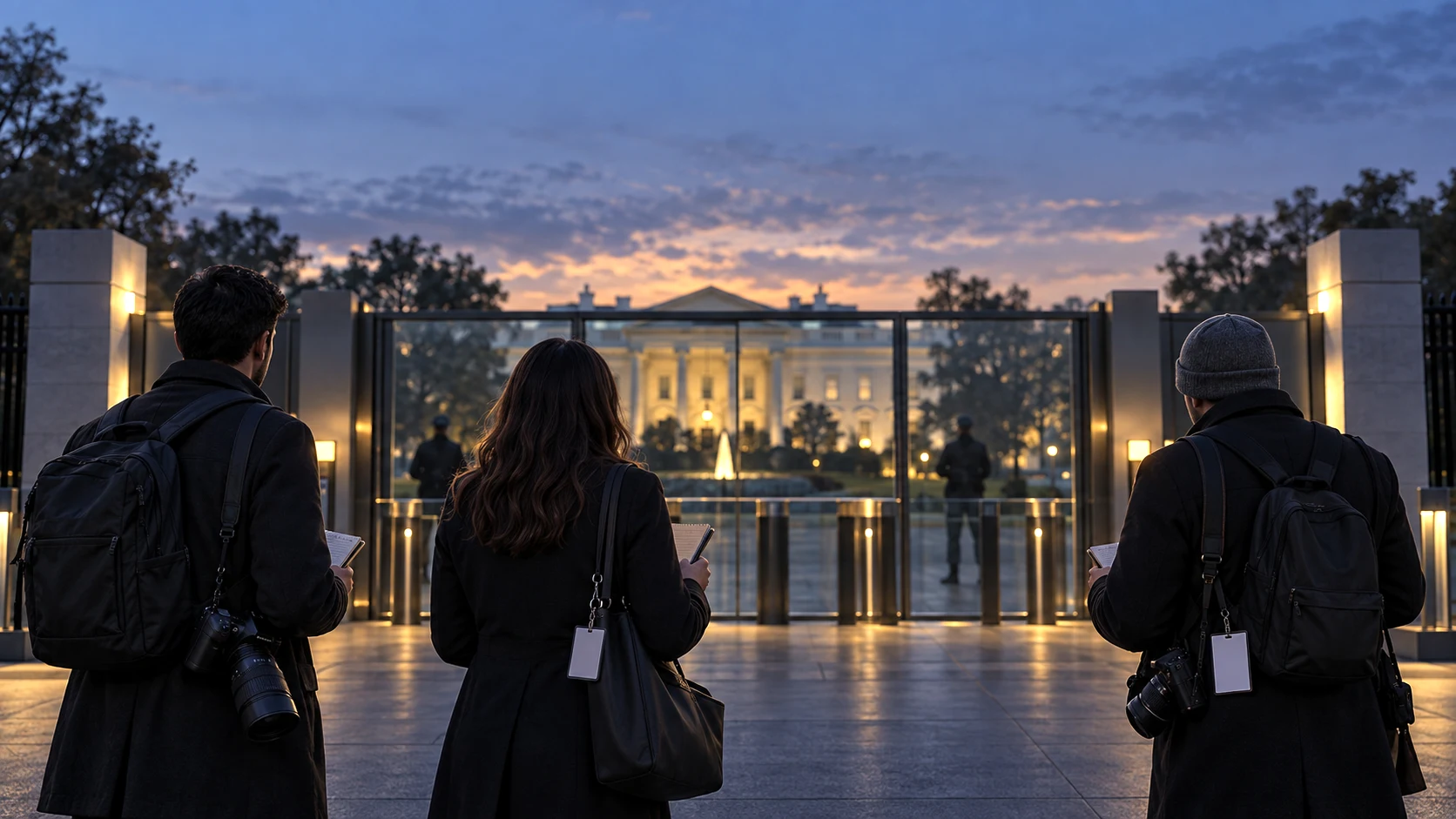
President Donald Trump announced the restrictions on September 18, accusing the three outlets of publishing what he called “fake news”; journalists from all three organizations were turned away from the White House the following day.
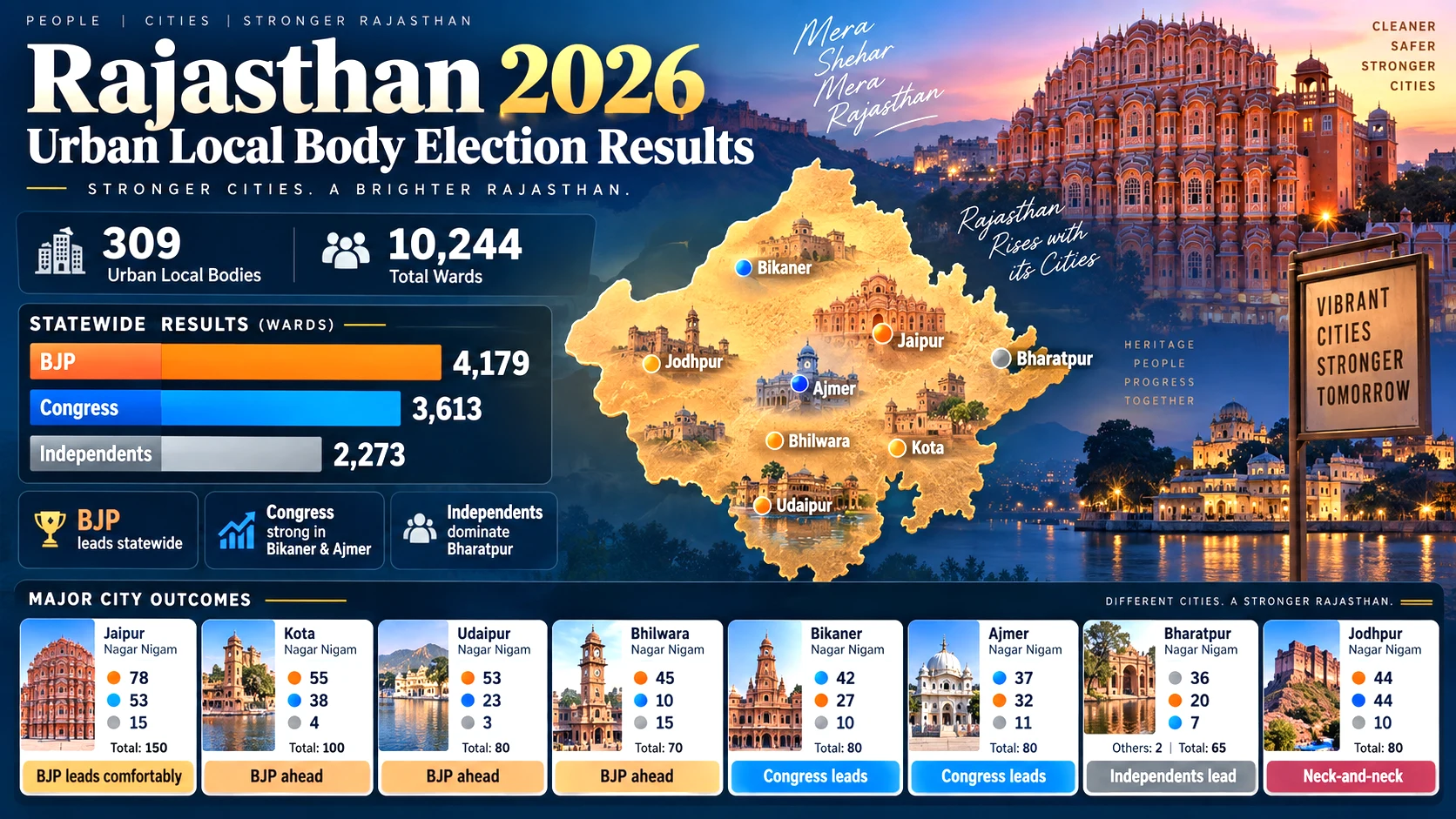
The BJP emerged as the single largest party in Rajasthan’s 2026 urban local body elections, ahead of the Congress, while more than 2,270 Independent victories complicated the picture in Bharatpur, Jodhpur, Ajmer, Pali and other civic bodies.

0 Comments