Opposition Prepares Fresh Motion to Remove CEC Gyanesh Kumar: What Article 324 Says
Opposition parties are preparing a fresh parliamentary notice seeking CEC Gyanesh Kumar’s removal amid the SIR controversy. Here is what Article 324 says, how many MPs are needed and why removal requires a high constitutional threshold.
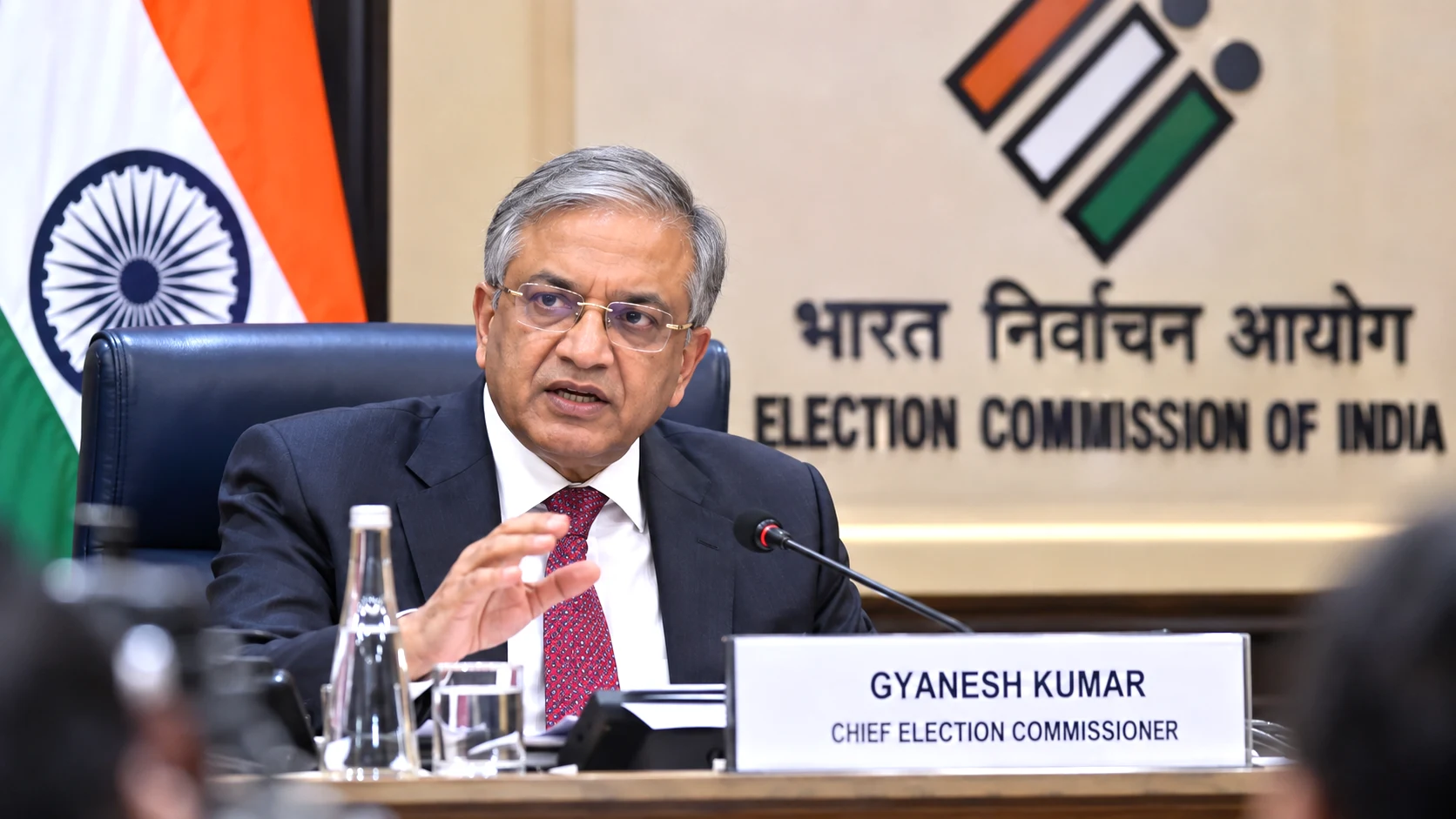
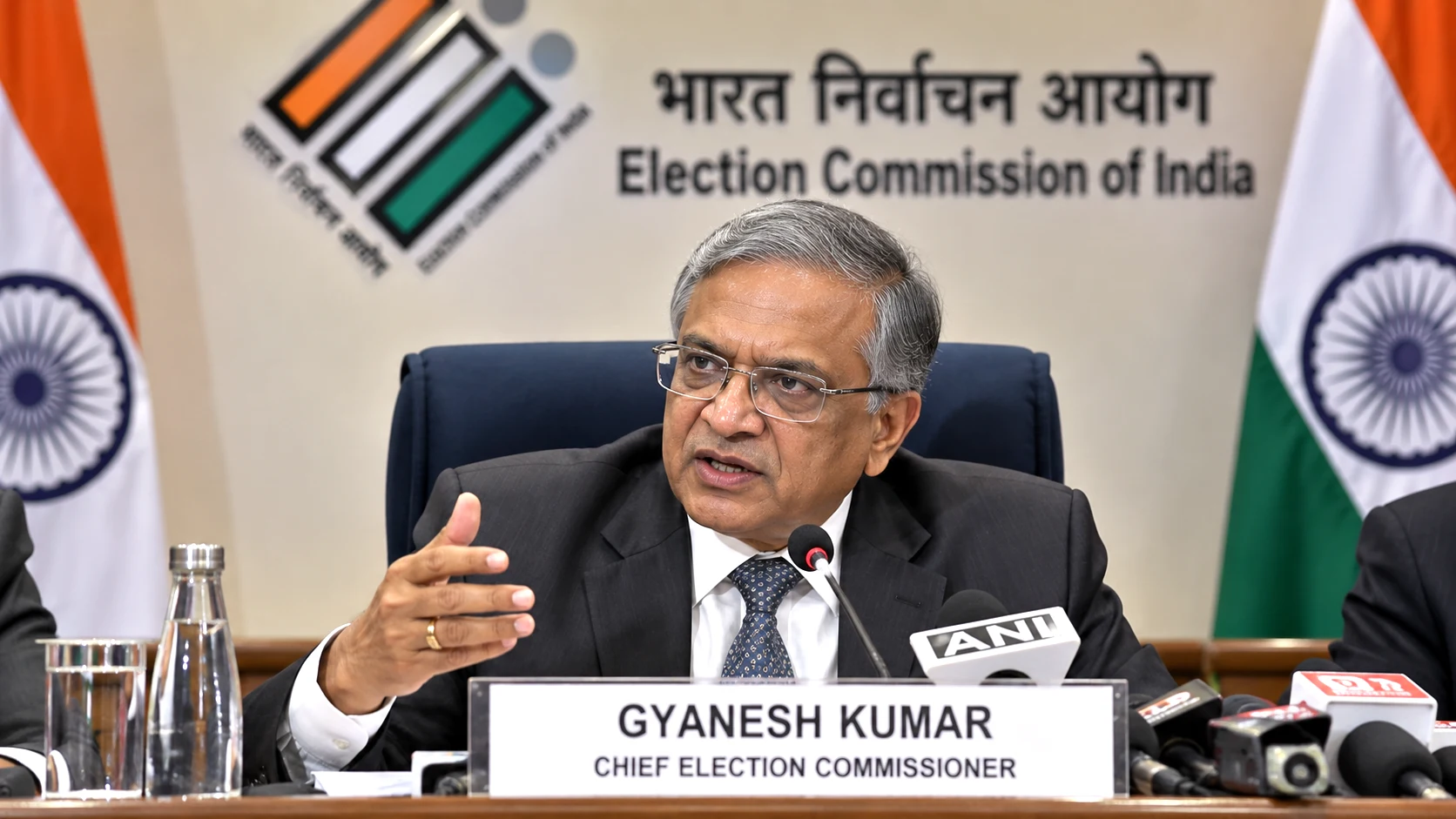
Chief Election Commissioner Gyanesh Kumar as Opposition parties prepare a fresh parliamentary motion seeking his removal
Table of Contents (25 sections)
Opposition parties are preparing a fresh parliamentary attempt to seek the removal of Chief Election Commissioner Gyanesh Kumar, escalating a political confrontation over the Election Commission's handling of electoral rolls and reported disagreements within the three-member poll panel.
As of September 25, the fresh notice has not yet been formally submitted.
Congress sources have said a joint Opposition draft is being prepared with legal experts and notices are expected to be submitted in both the Lok Sabha and Rajya Sabha. Several reports indicate the move could come as early as next week.
Recommended Reading
Related Stories & In-Depth Guides
Curated editorial perspectives matching this topic.
The Election Commission says all final decisions taken by the full Commission over the past year, including SIR-related measures, were unanimous despite reported objections raised during internal deliberations. Here is what the dispute means for voters.
Tamil Nadu Chief Minister C Joseph Vijay's first official meeting with Prime Minister Narendra Modi focused on issues ranging from Mekedatu and fishermen to state funds and Tamil identity. With the two leaders expected to share a Chennai stage on October 11, here is what the meetings mean politicall
It would be the Opposition's third effort in 2026 to initiate removal proceedings against Kumar.
The development follows an Indian Express investigation reporting that Election Commissioners Sukhbir Singh Sandhu and Vivek Joshi recorded objections at least 14 times over roughly 10 months concerning electoral-roll processes, including changes involving voter-registration forms, additions and deletions, and aspects of the Election Commission's technology systems.
The Election Commission has pushed back against suggestions that these internal objections show that its final institutional decisions lacked approval. It says differing views are a normal part of deliberation and that the final decisions of the full Commission during the period were unanimous.
That distinction is important: reported internal objections are not, by themselves, a legal finding of misconduct by the CEC.
The Opposition would have to pass through a much more demanding constitutional process before Gyanesh Kumar could actually be removed.
Is the Opposition Motion Already Filed?
No.
Reports on September 24 and 25 say Opposition parties are preparing and vetting a new notice for both Houses rather than that Parliament has already admitted a new motion.
Congress sources told The Indian Express that legal experts were working on the draft on behalf of the joint Opposition. The Times of India reported that submission was expected next week.
This means headlines saying “CEC impeachment begins” or “Parliament moves to remove Gyanesh Kumar” would currently overstate the procedural position.
The accurate status is:
Opposition parties are preparing a fresh notice seeking his removal.
Why Is the Opposition Seeking Gyanesh Kumar's Removal?
The immediate trigger is the latest controversy over decision-making within the Election Commission during the Special Intensive Revision, or SIR, of electoral rolls.
The Indian Express reported that Commissioners Sandhu and Joshi recorded objections on multiple occasions involving issues such as electoral forms, voter additions and deletions, access to electoral-roll information and technology systems.
Opposition leaders argue that those reports reinforce their broader allegations concerning the independence and functioning of the Election Commission.
Congress leader Rahul Gandhi has demanded Kumar's resignation and made wider allegations concerning India's electoral process. Those remain political allegations and have not been established as judicial findings.
The BJP has rejected the Opposition's conclusions. Party spokesperson Sudhanshu Trivedi questioned the evidence behind Rahul Gandhi's allegations and argued that Opposition parties were relying on media reports to attack the Election Commission.
What Has the Election Commission Said?
The Election Commission says the reported disagreements should not be interpreted as proof that final decisions were taken improperly.
Its response stated that differing opinions and written observations are a routine part of institutional deliberation and said that the final decisions taken by the full Commission over the past year were unanimous.
That position is consistent with the statutory framework governing the Commission.
Section 18 of the Chief Election Commissioner and Other Election Commissioners Act, 2023 says Election Commission business should, as far as possible, be conducted unanimously. Where the commissioners differ, the matter is decided according to the majority view.
Therefore, internal disagreement during deliberations is not automatically unlawful.
The legal and political dispute concerns the nature of the reported objections, how decisions were processed and whether the circumstances alleged by the Opposition could amount to grounds sufficient for removal.
That question has not been adjudicated.
Is This Really an “Impeachment” of the CEC?
Not technically.
Political parties and news organisations frequently use “impeachment” as shorthand because the CEC's removal process resembles the exceptionally high procedure used for removing a Supreme Court judge.
But the Constitution uses the language of removal, not impeachment, for the Chief Election Commissioner.
Article 324(5) provides that the CEC cannot be removed except in the same manner and on the same grounds as a Supreme Court judge.
Section 11(2) of the 2023 law repeats the same constitutional safeguard.
For a legally precise headline, “motion to remove CEC Gyanesh Kumar” is preferable to “impeach Gyanesh Kumar.”
What Does Article 324(5) Say?
Article 324 is the constitutional provision governing the Election Commission of India.
Clause 5 gives the Chief Election Commissioner a particularly strong protection against removal.
It provides that the CEC may not be removed except in the manner and on the grounds applicable to a Supreme Court judge.
That safeguard is intended to prevent a government from removing the head of the Election Commission simply because it disagrees with the Commission's decisions.
The President therefore cannot simply dismiss a CEC through an ordinary executive order.
What Are the Grounds for Removal?
Because Article 324(5) incorporates the standard applicable to Supreme Court judges, Article 124(4) becomes central.
The constitutional grounds are:
proved misbehaviour or incapacity.
Article 124(4) also establishes the extraordinary parliamentary majority required before the President can order removal.
Political disagreement, criticism of an Election Commission decision or the filing of a removal notice does not itself establish “proved misbehaviour.”
There must first be a formal process capable of examining and proving the allegations.
How Many MPs Are Needed to Start the Process?
Under the procedure applied to removal of Supreme Court judges, a notice requires:
House
Minimum MPs required to sign notice
Lok Sabha
100 MPs
Rajya Sabha
50 MPs
Section 3 of the Judges (Inquiry) Act, 1968 sets these thresholds for initiating the judicial-removal process that Article 324(5) uses as the model for CEC removal.
Having the required signatures, however, does not automatically start an inquiry.
The presiding officer has another important role.
Can the Speaker or Rajya Sabha Chairman Reject the Notice?
Yes.
After receiving a properly supported notice, the Lok Sabha Speaker or Rajya Sabha Chairman may admit it or refuse to admit it after considering the material available.
That stage has already mattered in the Gyanesh Kumar controversy.
Opposition parties submitted notices on March 12 with 130 Lok Sabha MPs and 63 Rajya Sabha MPs supporting the attempt.
Those notices were subsequently rejected by the respective presiding officers.
According to The Indian Express, the Rajya Sabha Chairman's April 6 order concluded that the allegations did not establish a prima facie case of the kind of “misbehaviour” required by Articles 324(5) and 124(4).
What Happened to the April 24 Notice?
There is another procedural wrinkle.
Reports say 73 Opposition Rajya Sabha MPs submitted another notice on April 24, and that notice remains pending in the Upper House.
The latest notice now being drafted is therefore being described as the Opposition's third attempt.
That chronology is useful because the latest development is not simply a revival of the March motion.
It is a fresh effort expected to include the more recent allegations surrounding internal objections within the Election Commission.
What Happens if a Fresh Motion Is Admitted?
Admission is only the beginning.
Under the judicial-removal framework, an inquiry committee is then constituted to investigate the charges.
The Judges (Inquiry) Act provides for a three-member committee consisting of a Supreme Court judge, a Chief Justice of a High Court, and a distinguished jurist.
The person facing removal must be given an opportunity to respond to the allegations.
The inquiry therefore serves an important purpose: Parliament does not jump directly from political accusations to a final vote on removal.
What if the Inquiry Does Not Prove the Charges?
If the investigating committee concludes that misbehaviour or incapacity has not been proved, the removal process does not proceed to the final parliamentary stage.
Under the Judges (Inquiry) Act framework, no further steps are taken on that removal motion when the committee finds the charges unproved.
This is why describing the mere filing of a notice as an “impeachment” or imminent removal can create a misleading impression.
There are several substantive procedural barriers before a final vote can occur.
What Majority Is Required to Remove a CEC?
This is the most difficult stage.
Article 124(4) requires the removal address to be passed in each House of Parliament by two simultaneous thresholds:
Requirement
Majority needed
Total House strength
Majority of the total membership of the House
MPs actually voting
At least two-thirds of members present and voting
Both requirements must be met independently in both the Lok Sabha and Rajya Sabha.
An ordinary majority is therefore not enough.
Neither is passing the motion in only one House.
This exceptionally high bar means removal would require political support extending significantly beyond a narrow parliamentary bloc.
What Happens After Parliament Passes It?
If both Houses approve the address with the constitutionally required special majorities during the same session, it is presented to the President.
The President then issues the formal order of removal.
Until those stages are completed, the CEC remains in office.
A notice, an admitted motion, an inquiry or even a committee finding does not independently remove the Chief Election Commissioner.
Can the Prime Minister or Union Cabinet Remove the CEC?
No.
The constitutional protection in Article 324(5) is specifically intended to prevent ordinary executive removal.
The CEC cannot simply be dismissed by the Prime Minister, Union Cabinet or Law Ministry.
Removal requires the special parliamentary process modelled on Article 124(4), followed by the President's formal order.
Are Other Election Commissioners Protected in the Same Way?
Not exactly.
The Constitution gives the CEC stronger removal protection.
Section 11 of the 2023 Act states that the CEC can be removed only in the same manner as a Supreme Court judge, while other Election Commissioners cannot be removed except on the recommendation of the CEC.
This distinction was designed to protect the institutional independence of the Election Commission while giving the CEC a particularly secure tenure.
Has an Indian CEC Ever Been Removed Through This Process?
No Chief Election Commissioner has been removed through the full constitutional procedure.
The Indian Express notes that no CEC has previously been successfully removed using this mechanism.
That historical record illustrates just how high the constitutional threshold is.
It does not mean removal is legally impossible, but it does mean the process is deliberately difficult.
Does the Latest EC “Dissent” Report Automatically Prove Misbehaviour?
No.
The investigation reports that Sandhu and Joshi recorded repeated objections to various processes and decisions.
The Opposition argues that those records strengthen its case against Kumar.
The Election Commission, however, says those observations were part of ordinary institutional deliberation and that final decisions were taken unanimously.
Neither political interpretation by itself establishes proved misbehaviour under Article 124(4).
That determination would require the constitutional removal process and examination of evidence.
Could the Motion Remove the Entire Election Commission?
No.
The proposed action is directed at Chief Election Commissioner Gyanesh Kumar.
The Election Commission is a constitutional institution consisting of the CEC and other Election Commissioners.
Removal of one commissioner would not abolish the Election Commission or automatically remove the other commissioners.
What Happens to SIR if a Removal Motion Is Filed?
Filing a notice does not automatically suspend the Special Intensive Revision.
SIR remains an Election Commission process unless the Commission itself changes its directions or a competent court issues relevant orders.
The removal proceeding against an office-holder and judicial or administrative challenges to particular Election Commission decisions are separate legal questions.
Why This Political Fight Matters
The controversy goes beyond the position of one CEC.
Article 324 gives the Election Commission responsibility for the preparation of electoral rolls and the conduct of elections to Parliament, state legislatures and the offices of President and Vice-President.
For that reason, confidence in the Commission's independence and internal procedures has consequences for the credibility of India's electoral system.
At the same time, constitutional safeguards protecting the CEC from easy political removal exist precisely so that an Election Commissioner cannot be dismissed merely because political parties dislike the Commission's decisions.
The current controversy therefore brings two principles into tension: accountability of a constitutional authority and protection of that authority from partisan pressure.
What Happens Next?
The immediate issue to watch is whether the joint Opposition actually submits the fresh notices and exactly what allegations the final draft contains.
Reports indicate legal experts are preparing the text and that the latest findings concerning internal Election Commission objections are expected to form part of the case.
After submission, the critical procedural question would be whether the Lok Sabha Speaker and Rajya Sabha Chairman admit the notices.
Only then could the matter advance toward a formal inquiry.
Latest Verified Position — September 25, 2026
The Opposition is preparing, not yet prosecuting, a fresh removal motion against CEC Gyanesh Kumar.
Reports describe it as a joint Opposition initiative expected to be submitted in both Houses, potentially next week.
This would be the third attempt this year. The March 12 notices were rejected, while a later Rajya Sabha notice signed by 73 Opposition MPs on April 24 is reported to remain pending.
The fresh attempt follows reports that Election Commissioners Sandhu and Joshi raised objections on record at least 14 times concerning electoral-roll and SIR-related processes.
The Election Commission says such differing views are part of normal deliberation and maintains that its final decisions were unanimous.
Under Article 324(5), Gyanesh Kumar cannot be removed except through the same stringent constitutional mechanism applicable to a Supreme Court judge.
Frequently Asked Questions
Has the Opposition filed a new motion against Gyanesh Kumar?
Not yet according to the latest verified reports. The notice is being drafted and vetted and could be submitted next week.
How many MPs are required to begin a CEC removal process?
The judicial-removal procedure requires at least 100 Lok Sabha MPs or 50 Rajya Sabha MPs to sign a notice before the relevant presiding officer considers whether to admit it.
Can the Speaker reject the motion even if 100 MPs sign it?
Yes. Meeting the signature threshold does not guarantee admission. The Speaker or Rajya Sabha Chairman may admit or reject the notice after considering the available material.
What constitutional article protects the CEC?
Article 324(5) says the CEC can be removed only in the same manner and on the same grounds as a Supreme Court judge.
What grounds can be used to remove a CEC?
The constitutional grounds are proved misbehaviour or incapacity.
Does Parliament need a two-thirds majority?
Yes, but that is only part of the requirement. Each House must also obtain a majority of its total membership, as well as at least two-thirds of those present and voting.
Can the President remove the CEC directly?
No. The President can issue the removal order only after the constitutional parliamentary requirements have been completed.
Has any CEC ever been removed this way?
No CEC has successfully been removed through this process in India's history.
Did the two Election Commissioners oppose every SIR decision?
No such conclusion has been established. Reporting says they raised multiple objections during internal processes, while the ECI says final Commission decisions were unanimous.
Bottom Line
Opposition parties are preparing a fresh parliamentary notice seeking the removal of CEC Gyanesh Kumar amid the SIR controversy. The notice has not yet been filed.
Under Article 324(5), removal requires the same high constitutional threshold as removing a Supreme Court judge — proved misbehaviour or incapacity, an inquiry, and special majorities in both Houses. No CEC has ever been removed through this process.
Key Takeaway
Opposition preparing fresh CEC removal notice (not yet filed).
Article 324(5) sets a high constitutional bar.
Requires proved misbehaviour/incapacity + special majority.
The Rajatheertha Team publishes news, explainers, guides and updates across India and the world. Our coverage follows Rajatheertha's editorial, verification and corrections standards.
LK Advani, Jagdeep Dhankhar, S Jaishankar and several other prominent Delhi voters have had their SIR records verified and reserved for inclusion in the final electoral roll. Here is what “cleared” means and what ordinary voters should do before key deadlines.
Opposition parties have intensified calls for CEC Gyanesh Kumar’s removal after a report said two Election Commissioners raised repeated objections over SIR and electoral-roll decisions. Some leaders have also demanded his arrest, while the ECI says all final decisions were unanimous.
The Supreme Court has delivered differing opinions over whether challenges to the 2023 CEC appointment law require a Constitution Bench. The case now goes to the CJI for consideration of a larger bench, while the law remains in force.
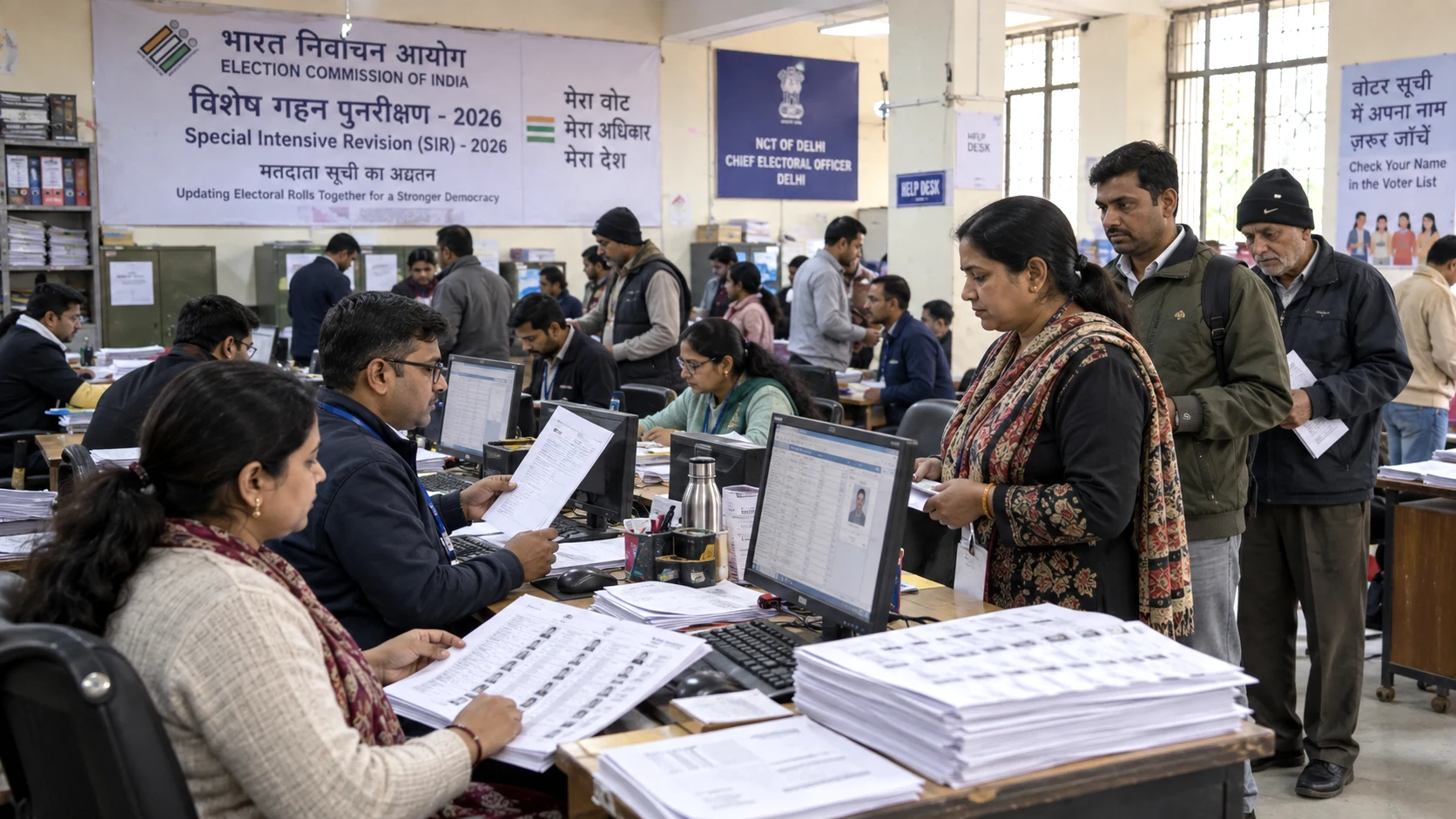
Receiving a Delhi SIR notice does not automatically remove a voter from the electoral roll, the CEO's office has clarified. Voters can respond, submit documents and receive a hearing before any decision is taken.
The September 15 collision occurred in international waters in the northern Arabian Sea and caused no major damage, according to India’s Ministry of External Affairs. New Delhi says the Pakistani naval vessel’s conduct breached Article 10 of a 1991 bilateral military agreement.
President Donald Trump announced the restrictions on September 18, accusing the three outlets of publishing what he called “fake news”; journalists from all three organizations were turned away from the White House the following day.





0 Comments