DUSU Elections 2026: Voting Underway Amid Tight Security; Delhi High Court Warns Counting Could Be Stayed
More than 1.51 lakh Delhi University students are eligible to vote for four DUSU posts on September 18. Over 2,000 police and paramilitary personnel have been deployed, while the Delhi High Court has sought reports on alleged campaign violence and election-code violations before deciding whether fur
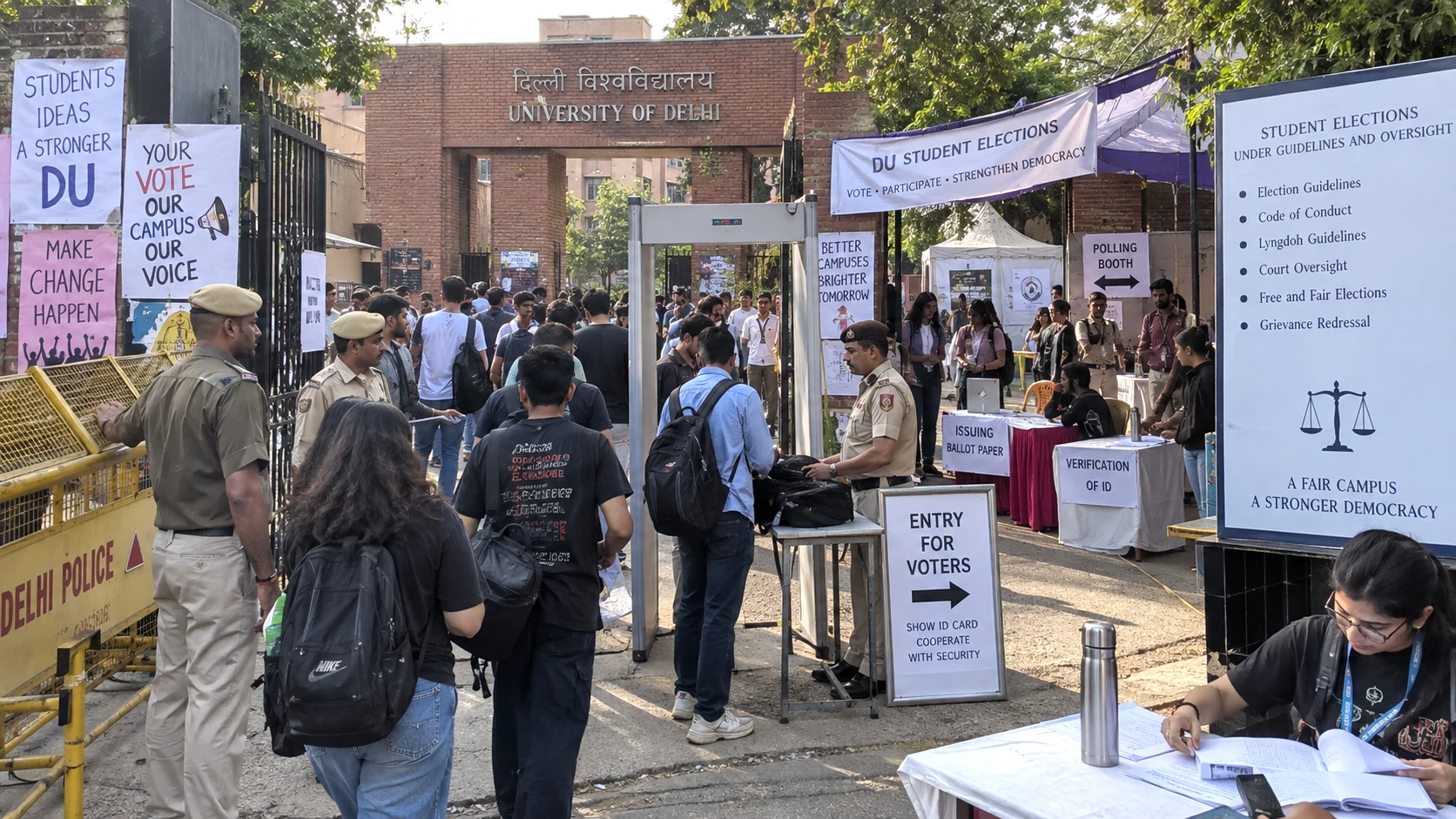
Delhi University student elections underway under heightened security and judicial scrutiny
Table of Contents (13 sections)
Voting is underway for the Delhi University Students’ Union (DUSU) elections 2026-27 amid heightened security and judicial scrutiny following allegations of violence, vandalism and violations during the campaign period.
Polling began at 8:30 am on Friday, September 18, for students enrolled in day colleges. Evening-college students are scheduled to vote between 3 pm and 7:30 pm. Counting is currently scheduled for Saturday, September 19.
According to election information reported from Delhi University, 1,51,842 students are eligible to cast their votes. The university has arranged 158 polling booths and 12 control rooms and is using more than 1,100 electronic voting machines for the election.
Twenty candidates are contesting the four central DUSU positions — president, vice-president, secretary and joint secretary. Seven are in the presidential race, five are contesting for vice-president, while four candidates each are contesting for secretary and joint secretary.
The election is taking place under unusually close security supervision after the Delhi High Court expressed serious concern about incidents reported during campaigning.
Key Takeaways
Voting for the Delhi University Students’ Union elections began on September 18, 2026.
Delhi University says 1,51,842 students are eligible to vote.
Twenty candidates are contesting the four central posts of president, vice-president, secretary and joint secretary.
Recommended Reading
Related Stories & In-Depth Guides
Curated editorial perspectives matching this topic.
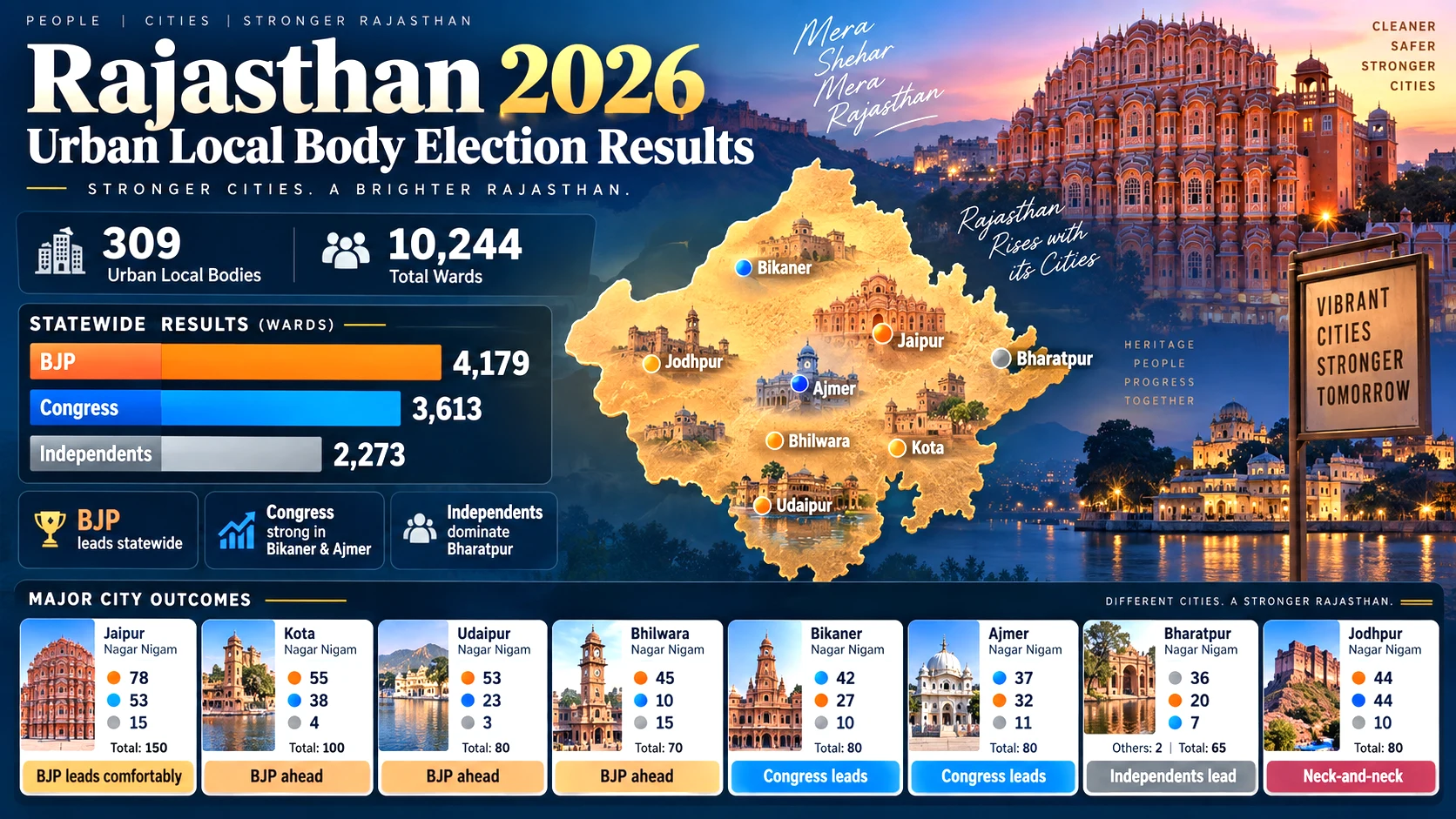
The BJP emerged as the single largest party in Rajasthan’s 2026 urban local body elections, ahead of the Congress, while more than 2,270 Independent victories complicated the picture in Bharatpur, Jodhpur, Ajmer, Pali and other civic bodies.
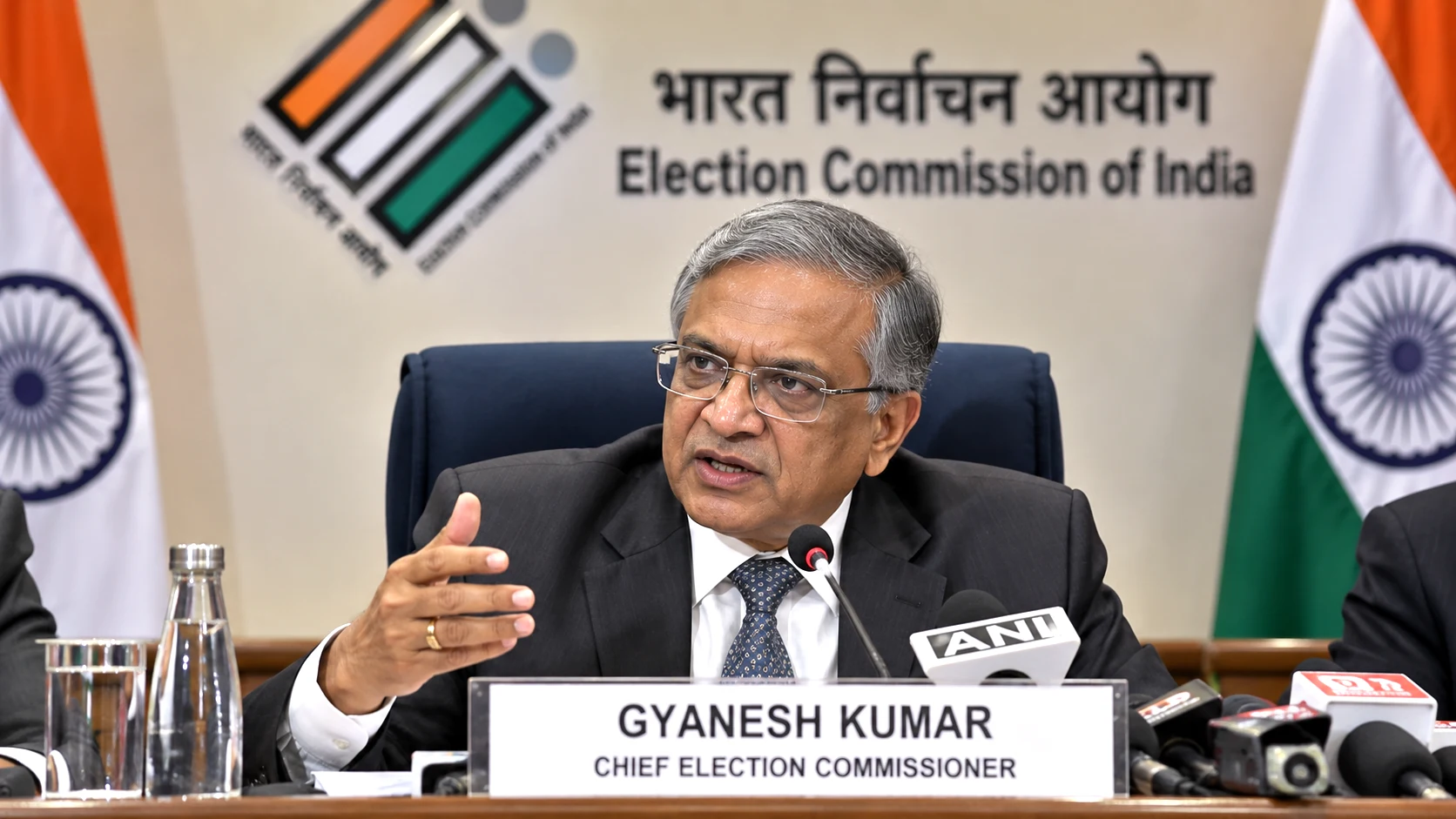
Opposition parties have intensified calls for CEC Gyanesh Kumar’s removal after a report said two Election Commissioners raised repeated objections over SIR and electoral-roll decisions. Some leaders have also demanded his arrest, while the ECI says all final decisions were unanimous.
More than 2,000 police and paramilitary personnel have been deployed across North and South Campus and surrounding areas.
Polling is being conducted in two shifts: 8:30 am–1 pm for day colleges and 3 pm–7:30 pm for evening colleges.
Counting is scheduled for September 19 at the University Sports Stadium.
The Delhi High Court has not stopped polling.
The court warned on September 17 that it could stay counting or declaration of results if it is dissatisfied with action taken over alleged violence, vandalism and violations of election rules.
Delhi University and Delhi Police were directed to file status reports before the court on September 18.
More Than 2,000 Security Personnel Deployed
Delhi Police have deployed more than 2,000 police and paramilitary personnel across Delhi University’s North and South campuses, according to a police official quoted by PTI.
Security personnel have been positioned around colleges, polling centres and other sensitive locations.
Police have also deployed foot patrols, motorcycle teams and PCR vehicles, while paramilitary personnel have been stationed at strategic points.
Authorities said the measures are aimed at regulating movement, preventing overcrowding and stopping unauthorised gatherings or possible clashes during polling.
Vehicular movement has also been restricted on some roads around North Campus, including Chhatra Marg, Probyn Road and University Road. The restrictions are expected to remain in place through the counting process and declaration of results.
Delhi University had separately instructed college principals to maintain heightened security and coordinate directly with police during the election period.
Vice-Chancellor Yogesh Singh told university officials and college authorities ahead of polling that the elections should be conducted in a fair, transparent and peaceful manner.
High Court Has Not Stopped DUSU Election
The legal position needs to be stated carefully.
The Delhi High Court has not stayed or postponed the September 18 DUSU polling.
A Division Bench of Chief Justice Devendra Kumar Upadhyaya and Justice Tejas Karia specifically allowed the election process to continue when it heard the matter on September 17.
However, the Bench warned that it could take stronger action — including staying the counting of votes or declaration of results — if Delhi University, Delhi Police and other authorities fail to demonstrate sufficient action against alleged violations.
The court directed DU and Delhi Police to submit status reports on September 18 explaining what action had been taken following reports of unruly conduct, violence and violations of the Lyngdoh Committee recommendations and DUSU election code.
The matter was listed for further consideration at noon on September 18.
As of the time of this report, counting remains scheduled for September 19 and has not been stayed.
What Prompted High Court Intervention?
The High Court proceedings arose from an application filed by advocate Prashant Manchanda in an ongoing case concerning implementation of election rules.
The application alleged several violations during campaigning, including:
large vehicle cavalcades;
rallies and roadshows;
use of printed campaign materials;
entry of outsiders;
excessive numbers of supporters;
vehicles allegedly operating without registration plates;
vandalism and clashes; and
alleged incidents involving weapons and violence
These are allegations placed before the court.
The High Court has not made a final finding that every allegation is established or that any particular candidate or organisation is legally responsible.
That distinction is important when reporting the case neutrally.
Court Questions Enforcement of Election Rules
The Bench expressed concern over what it described as an apparent failure by the authorities and sections of the student community to ensure orderly elections.
It questioned Delhi University and the police about campaign photographs showing vehicles allegedly being used in breach of election restrictions and asked why identifiable violations had not resulted in stronger action.
The court also referred to the Lyngdoh Committee recommendations, which regulate student-union election campaigning, expenditure and conduct.
The High Court's intervention is therefore focused not on choosing between competing student organisations but on whether the rules governing the election were adequately enforced.
Government Says Action Will Be Taken
During the September 17 hearing, Additional Solicitor General Chetan Sharma, appearing for the Centre, described incidents brought before the court as reprehensible and said those found violating the law would face action.
He also told the court that campaigning had ended and that the university had been peaceful since then.
The Bench nevertheless asked for documented status reports rather than relying only on oral assurances.
Any decision affecting vote counting will depend on the court's assessment of those reports.
Who Is Contesting?
The election includes candidates from several major student organisations.
The Akhil Bharatiya Vidyarthi Parishad (ABVP) has fielded Yash Dabas for president.
The National Students’ Union of India (NSUI) has nominated Vijay Shankar Meena for the same post.
The joint AISA-SFI panel has fielded Ananya Raturi for president. Other presidential candidates are also in the contest, bringing the total number of candidates for the post to seven.
Overall, the election features:
7 candidates for president
5 for vice-president
4 for secretary
4 for joint secretary
Student Housing and Safety Among Major Issues
Campus safety and accommodation emerged as significant issues during the 2026 campaign.
The September 5 building collapse in Satya Niketan, in which seven people died including five Delhi University students, renewed attention on the shortage and safety of student accommodation outside university hostels.
Major student organisations subsequently included hostel availability, rental housing, student safety and campus infrastructure among their campaign priorities.
Other recurring issues include scholarships, academic facilities, women’s safety, transport and student welfare.
Voting Arrangements
Delhi University has arranged separate polling periods for day and evening colleges.
Day colleges: 8:30 am to 1 pm
Evening colleges: 3 pm to 7:30 pm
Students are required to establish their eligibility and identity before voting.
University election notices also provide specific arrangements for eligible first-year students who may not yet have received their regular college identity cards.
After polling ends, EVMs are to be sealed in the presence of election officials and student representatives and transported to the Multipurpose Hall at the University Sports Stadium.
Counting Scheduled for September 19 — For Now
Under the existing election schedule, counting is due to take place on September 19 at the Multipurpose Hall of the University Sports Stadium in North Campus.
Security personnel are also scheduled to remain deployed during counting and the declaration of results.
But the Delhi High Court's September 17 warning introduces an important qualification.
If the Bench is dissatisfied with the status reports from the university and police, it has indicated that it may consider staying the counting or declaration of results.
Therefore, it would currently be inaccurate to report that “the High Court has stopped DUSU counting”.
It has warned that it could do so.
What Happened in the 2025 Election?
In the previous DUSU election, ABVP won three of the four central posts, including the presidency, while NSUI won the vice-president's position.
The 2026 vote will determine whether that balance continues or shifts.
No outcome should be assumed before votes are counted.
Bottom Line
Voting for the 2026-27 Delhi University Students’ Union election is proceeding on September 18 under extensive security arrangements.
More than 1.51 lakh students are eligible to choose representatives for the four central posts, with 20 candidates in the contest.
More than 2,000 police and paramilitary personnel have been deployed to safeguard polling centres and sensitive areas.
At the same time, the Delhi High Court is closely scrutinising alleged campaign violations.
The court has not halted polling, but it has warned that counting or declaration of results could be stayed if it is not satisfied with the action taken by Delhi University and Delhi Police.
The legally accurate position as polling continues is therefore:
The DUSU election is underway, counting remains scheduled for September 19, and the High Court has reserved the possibility of further orders after reviewing reports on the alleged campaign violations.
Key Takeaway
DUSU voting underway for 1.51 lakh eligible students.
Over 2,000 security personnel deployed across campuses.
Delhi High Court has not stopped polling but may stay counting.
The Rajatheertha Team publishes news, explainers, guides and updates across India and the world. Our coverage follows Rajatheertha's editorial, verification and corrections standards.
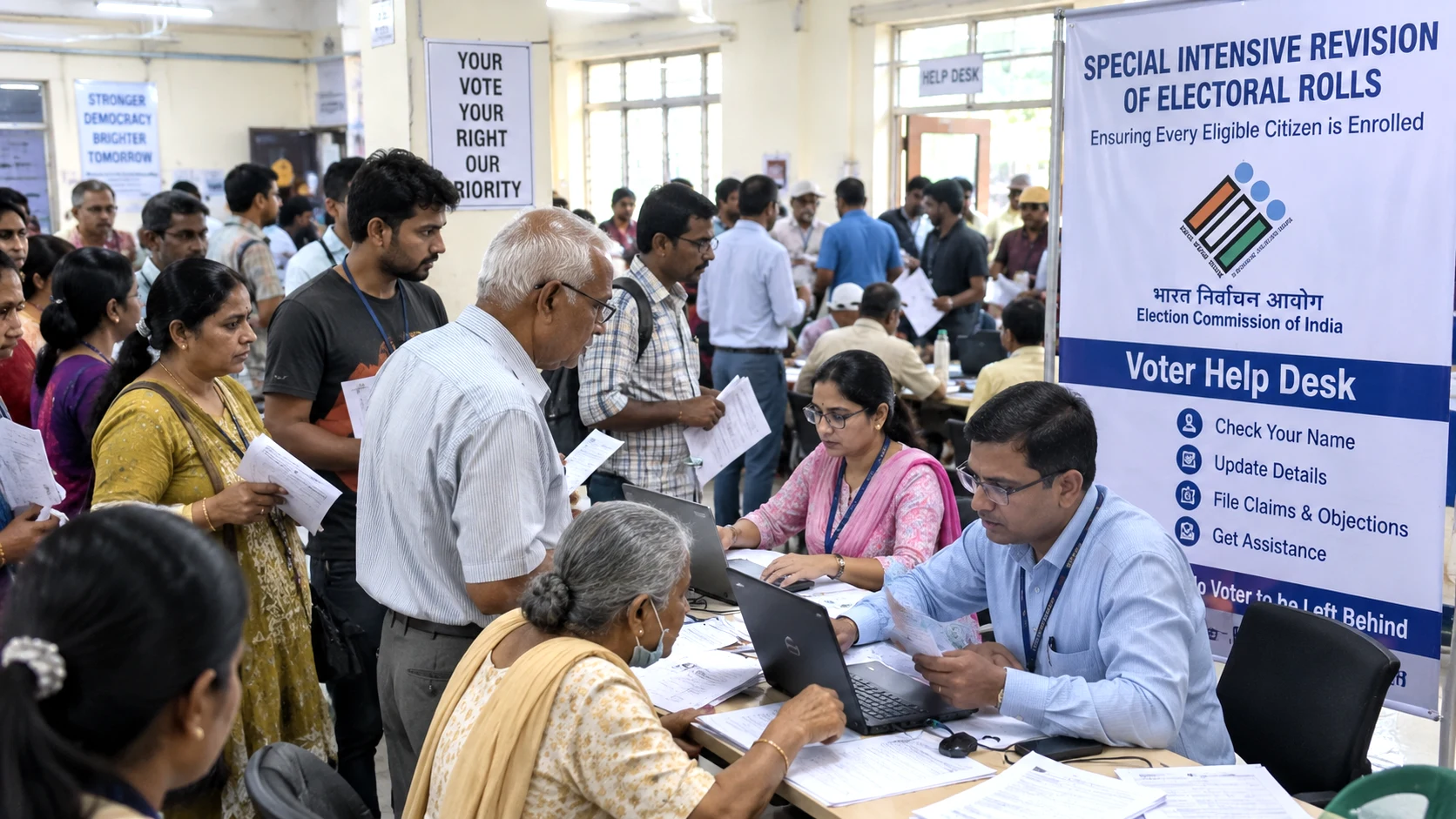
Receiving a Delhi SIR notice does not automatically remove a voter from the electoral roll, the CEO's office has clarified. Voters can respond, submit documents and receive a hearing before any decision is taken.
The Supreme Court has delivered differing opinions over whether challenges to the 2023 CEC appointment law require a Constitution Bench. The case now goes to the CJI for consideration of a larger bench, while the law remains in force.
LK Advani, Jagdeep Dhankhar, S Jaishankar and several other prominent Delhi voters have had their SIR records verified and reserved for inclusion in the final electoral roll. Here is what “cleared” means and what ordinary voters should do before key deadlines.
The Election Commission says all final decisions taken by the full Commission over the past year, including SIR-related measures, were unanimous despite reported objections raised during internal deliberations. Here is what the dispute means for voters.
President Donald Trump announced the restrictions on September 18, accusing the three outlets of publishing what he called “fake news”; journalists from all three organizations were turned away from the White House the following day.
Prime Minister Narendra Modi warned BRICS leaders that the “weaponisation of technology and critical minerals” could obstruct shared development, as the New Delhi Declaration backed resilient supply chains and wider technology cooperation.




0 Comments