PM Modi Warns Against ‘Weaponisation’ of Technology and Critical Minerals at BRICS
Prime Minister Narendra Modi warned BRICS leaders that the “weaponisation of technology and critical minerals” could obstruct shared development, as the New Delhi Declaration backed resilient supply chains and wider technology cooperation.
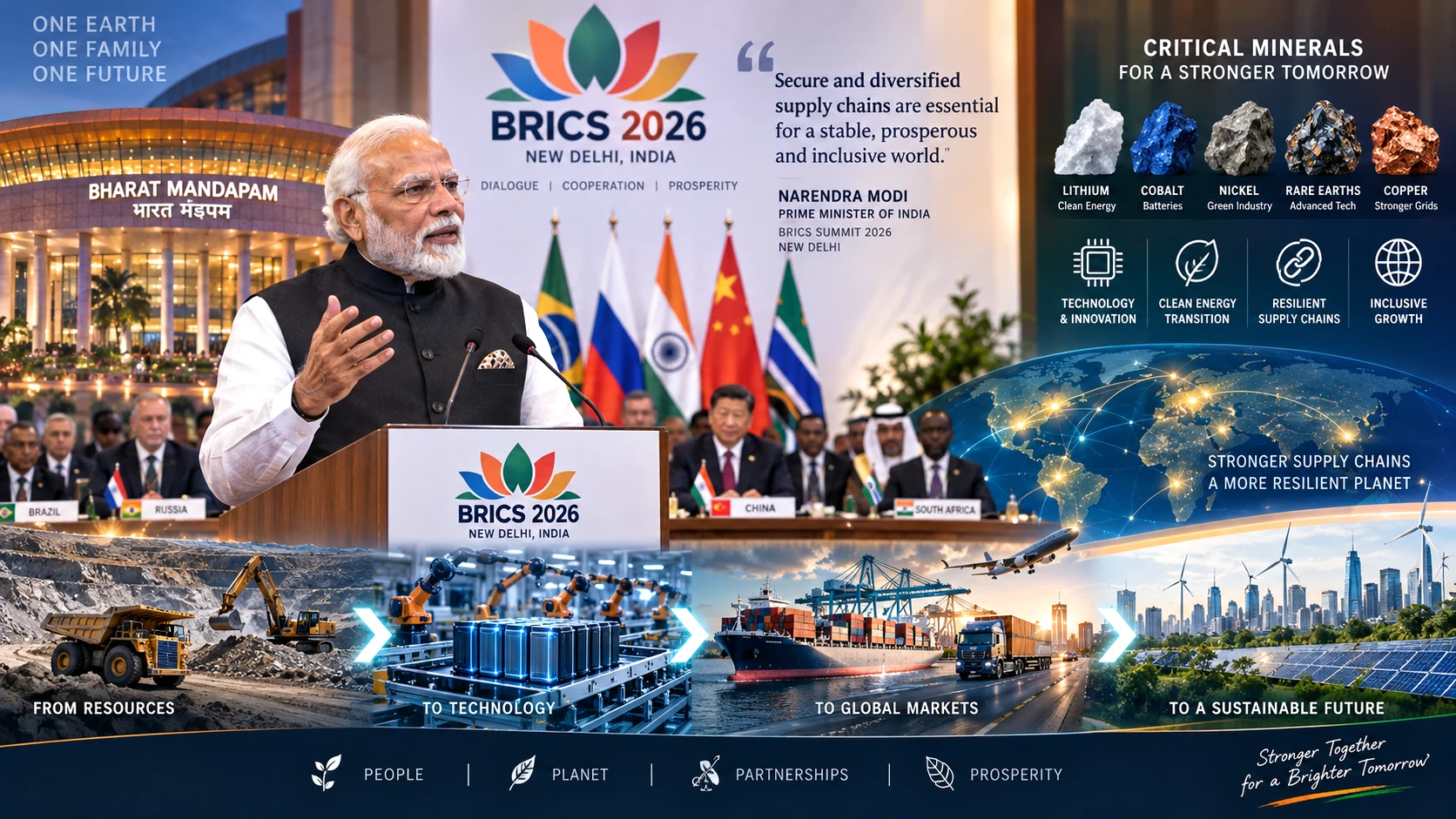
Prime Minister Narendra Modi warned BRICS leaders on Sunday that the “weaponisation of technology and critical minerals” could become an obstacle to shared development, placing access to strategic resources and resilient supply chains at the centre of his remarks on the final day of the summit in New Delhi.
Speaking as leaders of the expanded grouping concluded two days of meetings, Modi connected the issue to a broader problem facing the global economy: crises that begin in one region can rapidly affect countries far beyond it through energy markets, technology networks, trade and supply chains.
His remarks came as BRICS adopted the New Delhi Declaration, which includes commitments on critical minerals, energy security, digital infrastructure, artificial intelligence and supply-chain resilience. The declaration specifically calls for critical-mineral supply chains that are reliable, responsible, diversified, resilient, fair, sustainable and just.
The message was broader than a warning about minerals alone. Modi’s argument was that control over technologies or essential resources should not be used in ways that undermine the development prospects of other countries.
Recommended Reading
Related Stories & In-Depth Guides
Curated editorial perspectives matching this topic.
Prime Minister Narendra Modi’s scheduled meeting with Chinese President Xi Jinping is the diplomatic highlight of BRICS Day 1, while member states have reached consensus on a leaders’ declaration after difficult negotiations over West Asia.
President Donald Trump announced the restrictions on September 18, accusing the three outlets of publishing what he called “fake news”; journalists from all three organizations were turned away from the White House the following day.
For India, that debate has direct strategic importance. Critical minerals are essential inputs for sectors ranging from clean energy and electric mobility to electronics and advanced manufacturing. Access to technology is similarly becoming intertwined with national security, industrial policy and geopolitical competition.
Key Takeaways
Prime Minister Narendra Modi warned at the BRICS Summit on September 13 that the “weaponisation of technology and critical minerals” could obstruct shared development and prosperity.
He linked that concern to wider vulnerabilities exposed by conflicts, pandemics, climate disasters and supply-chain disruptions.
The New Delhi Declaration calls for reliable, diversified, resilient, fair and sustainable critical-mineral supply chains while recognising countries’ sovereign rights over their mineral resources.
BRICS also agreed to deepen cooperation in areas including energy, digital infrastructure, artificial intelligence and food security.
Separately, Home Minister Amit Shah said the BJP-led NDA intends to implement a Uniform Civil Code in all 21 NDA-governed states before 2029. That is a political commitment announced by Shah, not a completed nationwide UCC implementation.
What Modi Said on BRICS Day 2
Modi addressed the second day of the 18th BRICS Summit against the backdrop of wars, trade disruptions and increasing competition over strategic resources.
He said conflicts and tensions around the world were having increasingly far-reaching consequences for ordinary people. He also pointed to pandemics, climate disasters and supply-chain disruptions as evidence that crises can no longer be treated as isolated regional events.
Within that argument came his warning over technology and critical minerals.
The concern is increasingly relevant because both have become central to economic and strategic competition.
Modern economies rely on sophisticated technology networks that cross national borders. Semiconductor production, telecommunications, artificial intelligence, cloud infrastructure, batteries and renewable-energy systems all depend on complicated international supply chains.
Critical minerals sit underneath many of those industries.
Disruption at one point in the chain can therefore affect manufacturing and investment elsewhere.
Why Critical Minerals Have Become Strategically Important
The term “critical minerals” generally refers to minerals considered important for economic or strategic purposes where supply could be vulnerable to disruption.
The exact list differs between governments.
Their importance has increased as countries expand electric mobility, renewable energy, battery manufacturing, electronics and other advanced industries.
The BRICS New Delhi Declaration reflects that concern.
It recognises the role of critical minerals in zero- and low-emission energy technologies, energy security and resilient energy supply chains. It also says mineral-producing countries should benefit through value addition and economic diversification while retaining sovereign rights over their natural resources.
That wording is significant for many developing economies.
A country can possess important mineral reserves while capturing only a small share of the economic value if raw materials are exported for processing elsewhere.
The declaration therefore connects supply security with a second question: who benefits economically from mineral extraction and processing?
Resilience Is Not the Same as Isolation
The summit’s language on resilience does not amount to a call for countries to produce everything domestically.
Modern technology and energy supply chains are too interconnected for that to be realistic in most sectors.
Instead, diversification can reduce dependence on a single country, supplier, transport corridor or processing centre.
That can involve developing alternative sources, expanding domestic processing, building strategic partnerships and improving transparency across supply chains.
The New Delhi Declaration supports resilient energy supply chains and greater BRICS cooperation in the energy sector. It also encourages collaboration on standards and certification frameworks for zero- and low-emissions hydrogen.
The practical test will be whether these commitments lead to investment and cooperation after the summit.
A declaration establishes a common political position. It does not by itself create new mines, processing facilities, semiconductor plants or transport networks.
Technology Access Becomes Part of the Geopolitical Debate
Modi’s use of the word “weaponisation” also reflects a larger shift in international politics.
Technology restrictions are increasingly part of strategic competition between major powers.
Export controls, investment restrictions, data rules and limits on access to advanced components can now have consequences extending well beyond the technology industry itself.
For developing economies, the concern is that intensifying competition among major powers could make access to important technologies more difficult or expensive.
BRICS members do not necessarily agree on every aspect of technology governance.
They have different political systems, digital regulations, industrial capacities and strategic relationships.
The New Delhi Declaration nevertheless identifies several areas where cooperation is possible.
It calls for information and communications technologies to be used for peaceful and developmental purposes and emphasises accessibility, sustainability and interoperability. It also addresses cybersecurity, malicious software, data security, misinformation, disinformation and deepfakes.
Artificial Intelligence Is Part of the BRICS Agenda
Artificial intelligence is becoming another area where technological capacity and geopolitical influence overlap.
BRICS leaders included AI among the fields in which they want greater cooperation.
The challenge is that access to advanced AI does not depend only on software.
It can require specialised semiconductors, large-scale computing infrastructure, electricity, data centres, skilled workers and significant investment.
That makes AI closely connected to the same questions Modi raised about technology access and supply-chain resilience.
For emerging economies, the policy question is therefore not simply whether AI should be adopted.
It is also whether countries can obtain the infrastructure, skills and technology needed to participate meaningfully in its development and use.
Supply-Chain Disruption Is No Longer Only an Economic Issue
The COVID-19 pandemic demonstrated how quickly shortages in one part of the world could affect industries elsewhere.
Subsequent geopolitical conflicts have reinforced the lesson.
Energy routes can be disrupted by war. Shipping corridors can become unsafe. Export controls can limit access to technology. Climate disasters can interrupt production.
Modi used that interconnectedness to argue for stronger cooperation.
AP reported that he told BRICS leaders that pandemics, climate disasters and supply-chain disruptions showed that no crisis remains confined to one region in today’s interconnected world.
That helps explain why resilience was one of the central themes of India’s 2026 BRICS chairship.
The summit itself was held under the theme “Building for Resilience, Innovation, Cooperation and Sustainability.”
BRICS Backs Cooperation Across Several Strategic Sectors
The summit’s final agenda extends beyond critical minerals.
BRICS leaders backed cooperation covering food security, energy, digital infrastructure, artificial intelligence and climate action. They also supported greater use of local currencies in trade and stronger cross-border payment systems.
Those commitments need to be interpreted carefully.
BRICS agreement on greater use of local currencies, for example, does not mean the grouping has established a common currency or replaced the US dollar.
Similarly, cooperation on AI does not create a unified BRICS AI regulatory system.
The declaration establishes areas where governments intend to work together.
The actual economic significance will depend on the programmes, financing mechanisms and agreements that follow.
Modi Pushes BRICS From Agreements to Implementation
In his closing remarks, Modi argued that summit decisions should produce practical results rather than remain confined to official documents.
He urged members to translate their commitments into tangible, time-bound action and described BRICS as an “ecosystem of solutions.”
That distinction matters.
Multilateral summits routinely produce declarations covering a large number of subjects. The difficult stage comes afterwards, when governments have to turn broad commitments into functioning programmes.
Critical-mineral cooperation is a good example.
Creating a more resilient supply chain could require geological exploration, mining investment, processing capacity, environmental standards, transport infrastructure, technology transfers and long-term commercial agreements.
Each of those steps involves national regulations and economic interests that extend well beyond summit diplomacy.
BRICS Agrees on Infectious-Disease Early Warning Initiative
Modi also announced an agreement to establish an integrated early-warning system for infectious diseases.
He presented the initiative in the context of lessons from recent global health crises and the need for stronger preparedness.
The proposal fits the summit’s broader resilience agenda.
Disease outbreaks can produce consequences far beyond public health, affecting travel, trade, education, manufacturing and international supply chains.
As with other BRICS initiatives announced in New Delhi, the next question is implementation: how participating countries build the system, share information and coordinate responses.
Global South Remains Central to India’s Message
India has consistently linked its BRICS chairship to greater representation for developing economies.
That approach is visible in the critical-minerals discussion.
Many resource-rich developing countries want to move beyond simply exporting raw commodities and instead capture more value through domestic processing and manufacturing.
The New Delhi Declaration explicitly recognises value addition and economic diversification in resource-rich countries.
This gives the critical-minerals debate a development dimension in addition to its strategic one.
For consumer economies, resilience means reliable access.
For resource-producing economies, it can also mean receiving a greater share of the economic benefits.
Reconciling those objectives will be central to any meaningful BRICS cooperation in the sector.
Amit Shah Makes Separate UCC Commitment
Away from the BRICS summit, Union Home Minister Amit Shah made a separate domestic political statement on Sunday concerning the Uniform Civil Code.
Shah said the BJP-led National Democratic Alliance intends to implement the UCC in all 21 states governed by the NDA before 2029.
The statement should be understood as a political commitment about future implementation, not as confirmation that a nationwide UCC is already in force.
A Uniform Civil Code generally refers to replacing religion-specific personal laws in areas such as marriage, divorce, inheritance and succession with a common civil-law framework.
The issue has long been part of the BJP’s political programme and remains politically and legally contentious.
UCC Has Already Advanced in Some BJP-Ruled States
Shah’s latest remarks build on moves already taken by individual states.
In March, Gujarat passed its Uniform Civil Code Bill. At the time, Shah congratulated Chief Minister Bhupendra Patel and legislators who supported it and said uniform law for citizens had been a longstanding commitment of the BJP.
Uttarakhand had earlier moved ahead with its own UCC framework.
The important distinction is that state-level UCC measures and a single nationwide code are not necessarily the same legal process.
Shah’s September 13 statement specifically sets out the NDA’s political objective for states under its control before 2029.
How that commitment is implemented will depend on legislation and legal processes in the individual states concerned.
Two Different Political Messages on the Same Day
Modi’s BRICS remarks and Shah’s UCC announcement belong to different policy arenas and should not be presented as though they were part of one government programme.
Modi was speaking to international leaders about global economic resilience, technology, strategic resources and development.
Shah was addressing a domestic political and legal issue concerning personal laws in NDA-governed states.
They nevertheless illustrate two major areas of political activity for the government: India’s positioning in an increasingly competitive international system and the BJP’s continuing pursuit of longstanding domestic policy commitments.
Conflating the two would obscure rather than clarify their significance.
What Happens Next
With the New Delhi summit concluded, attention now shifts from BRICS declarations to implementation.
China takes over the BRICS chairship for the next term, while the commitments adopted in New Delhi will continue through working groups and cooperation mechanisms.
For critical minerals, the key indicators will be whether members establish concrete projects, diversify processing and supply networks, and develop practical standards or investment partnerships.
For technology, the test will be whether promises of wider cooperation translate into meaningful access, infrastructure and capacity building.
The UCC question will follow a separate domestic timeline. Shah has set a political target of implementation across NDA-governed states before 2029, but the pace and form of legislation will depend on individual states and any legal challenges that follow.
Bottom Line
Modi’s warning at BRICS was grounded in a changing economic reality: technology, minerals, energy and supply chains are increasingly intertwined with geopolitics.
The New Delhi Declaration shows that BRICS members have found common language around more resilient critical-mineral and energy supply chains and wider technological cooperation.
What it does not prove is that those vulnerabilities have already been solved.
The summit established priorities. Implementation will determine their value.
Separately, Shah’s UCC statement represents a significant BJP political commitment ahead of 2029, but it remains a target for future state-level action rather than a completed uniform legal framework across all NDA-governed states.
Key Takeaway
Prime Minister Narendra Modi warned BRICS leaders that the weaponisation of technology and critical minerals could hinder shared development.
The New Delhi Declaration backs diversified, resilient critical-mineral supply chains and wider cooperation on energy, digital infrastructure and AI.
Separately, Home Minister Amit Shah announced the NDA’s intention to implement the Uniform Civil Code in all 21 NDA-governed states before 2029 — a political target, not a completed nationwide code.
The two developments belong to distinct policy arenas: one international and economic, the other domestic and legal.
The Rajatheertha Team publishes news, explainers, guides and updates across India and the world. Our coverage follows Rajatheertha's editorial, verification and corrections standards.
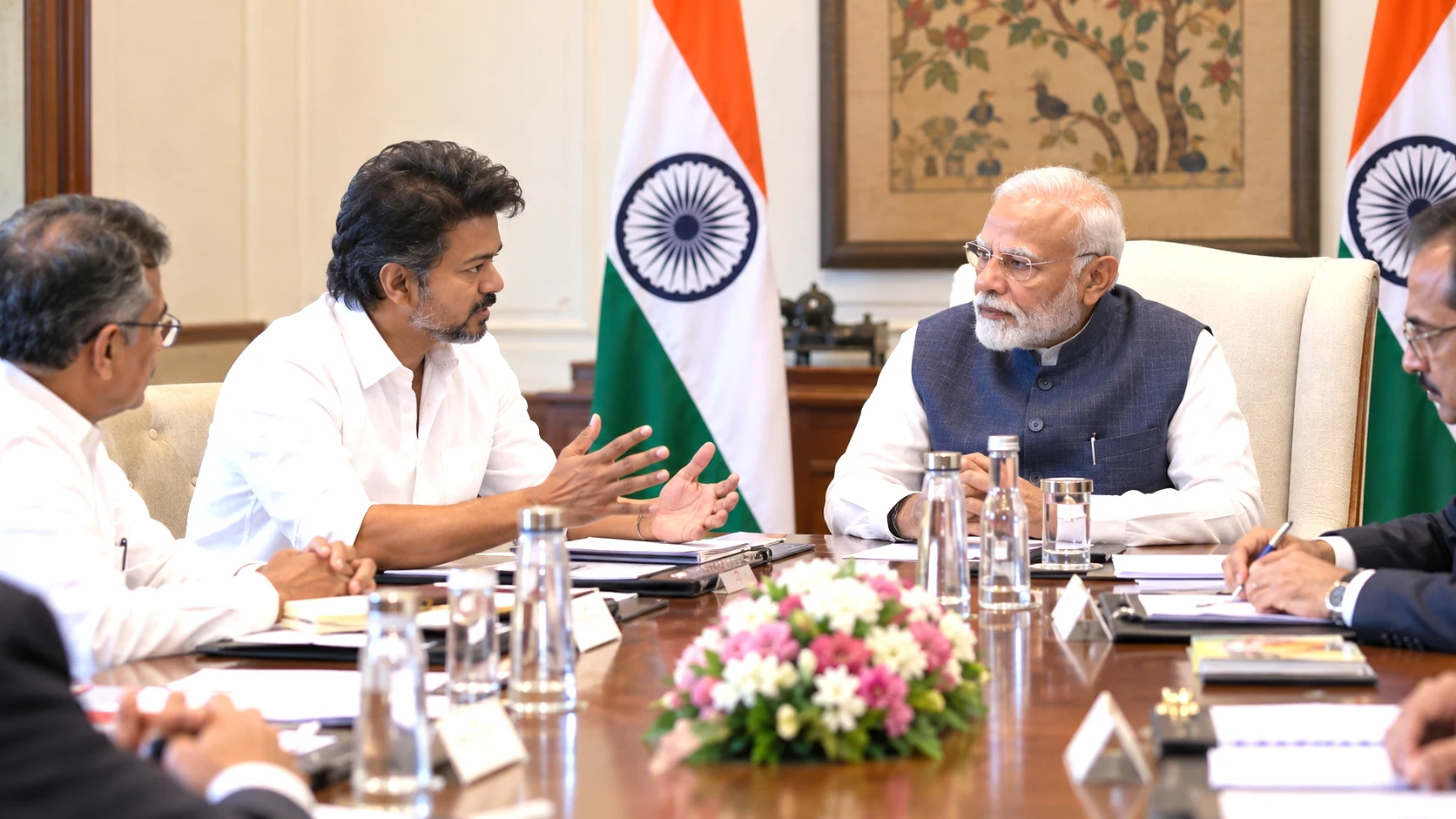
Tamil Nadu Chief Minister C Joseph Vijay's first official meeting with Prime Minister Narendra Modi focused on issues ranging from Mekedatu and fishermen to state funds and Tamil identity. With the two leaders expected to share a Chennai stage on October 11, here is what the meetings mean politicall
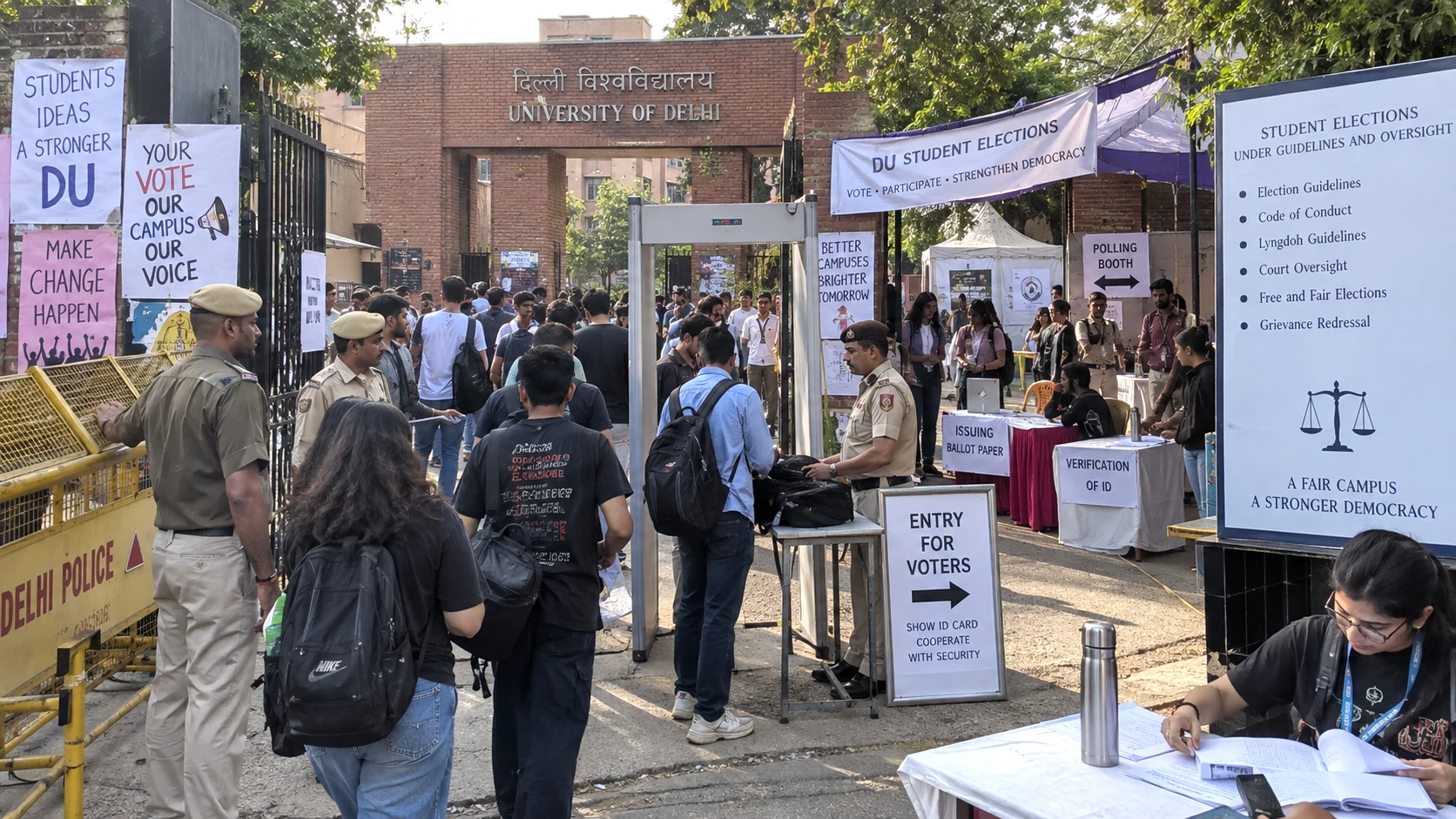
More than 1.51 lakh Delhi University students are eligible to vote for four DUSU posts on September 18. Over 2,000 police and paramilitary personnel have been deployed, while the Delhi High Court has sought reports on alleged campaign violence and election-code violations before deciding whether fur
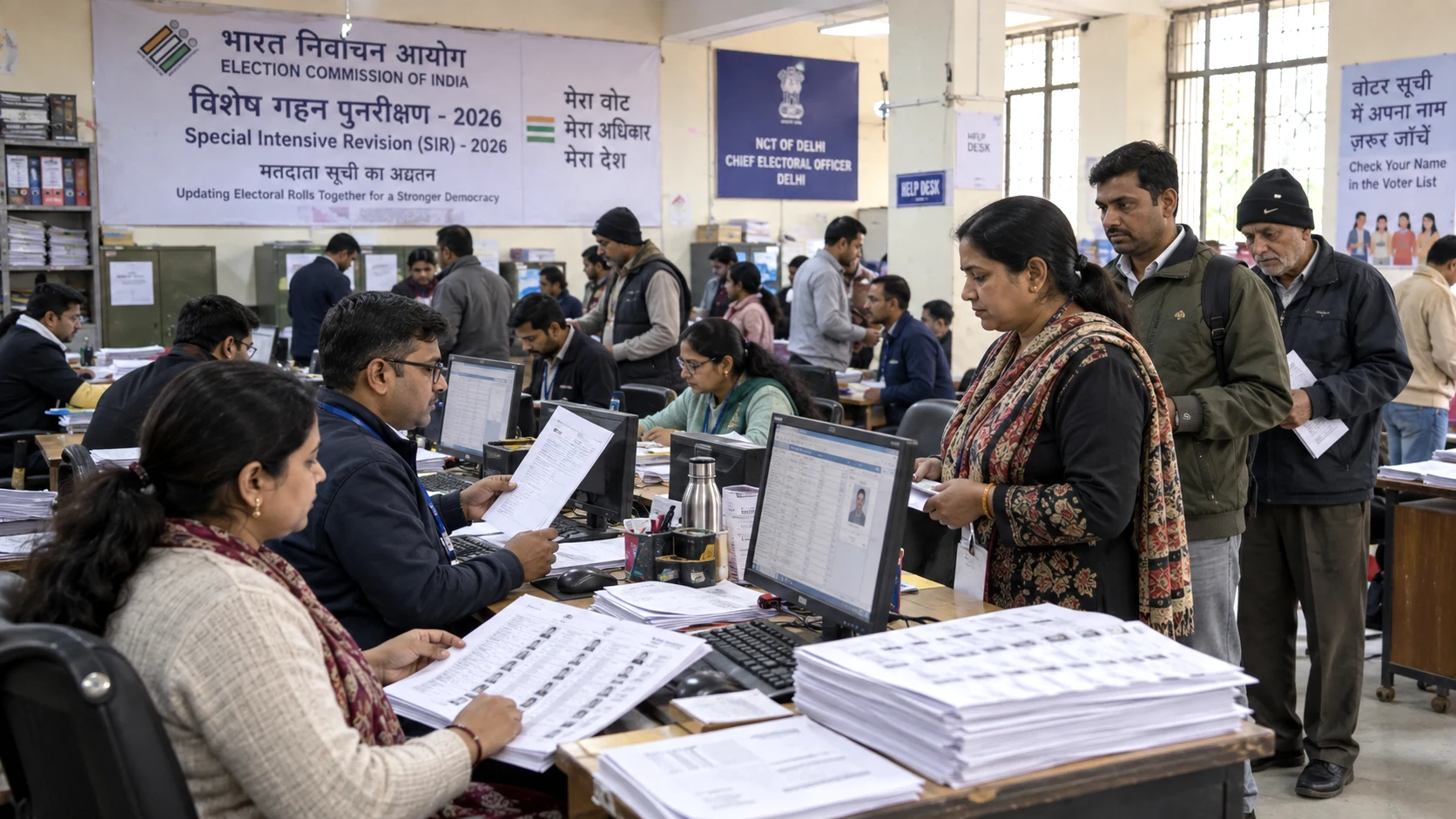
LK Advani, Jagdeep Dhankhar, S Jaishankar and several other prominent Delhi voters have had their SIR records verified and reserved for inclusion in the final electoral roll. Here is what “cleared” means and what ordinary voters should do before key deadlines.
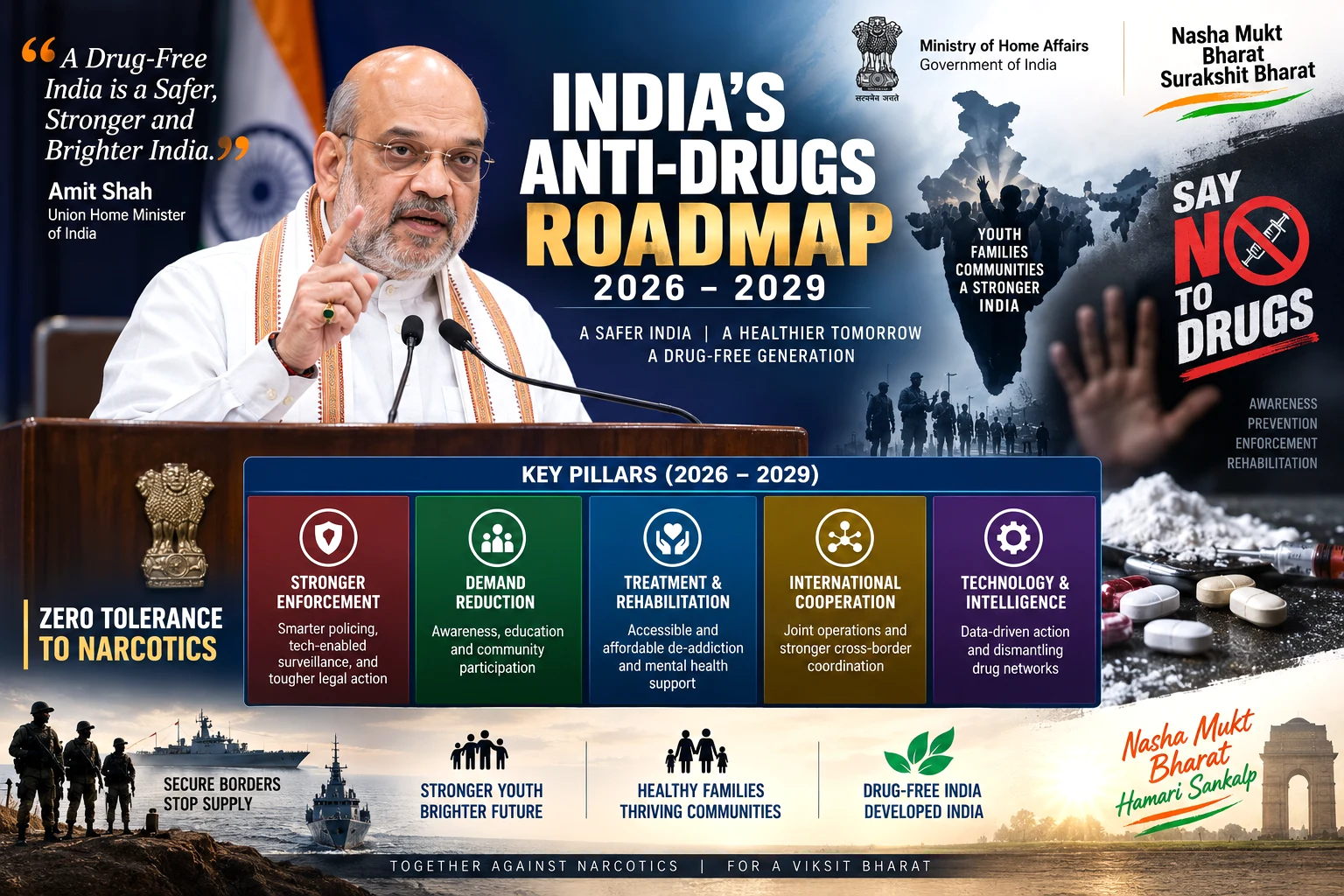
Union Home Minister Amit Shah says India has prepared a roadmap aimed at achieving a drug-free nation by 2029, targeting trafficking networks, narco-financing, synthetic drugs, addiction prevention and rehabilitation.
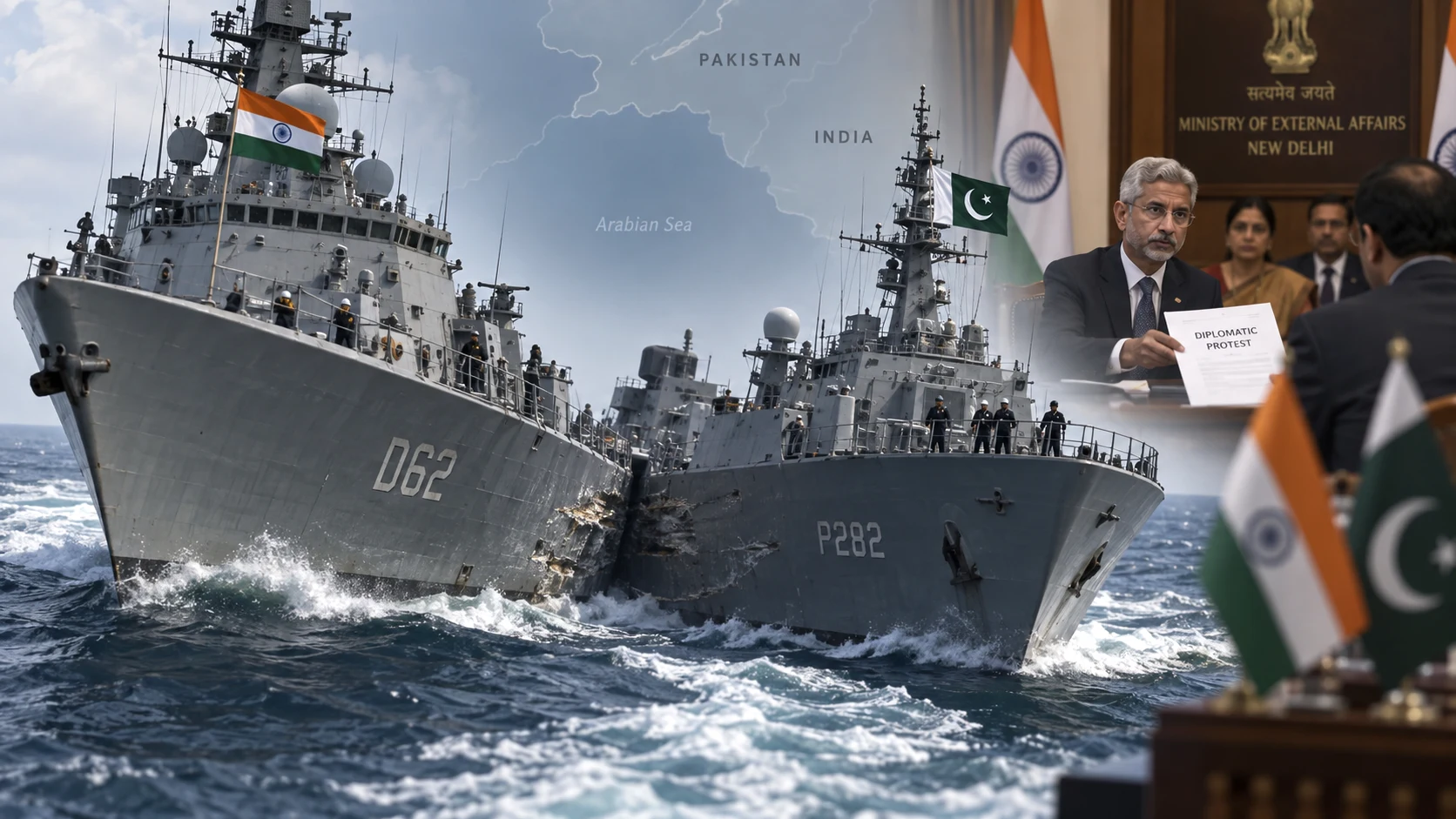
The September 15 collision occurred in international waters in the northern Arabian Sea and caused no major damage, according to India’s Ministry of External Affairs. New Delhi says the Pakistani naval vessel’s conduct breached Article 10 of a 1991 bilateral military agreement.
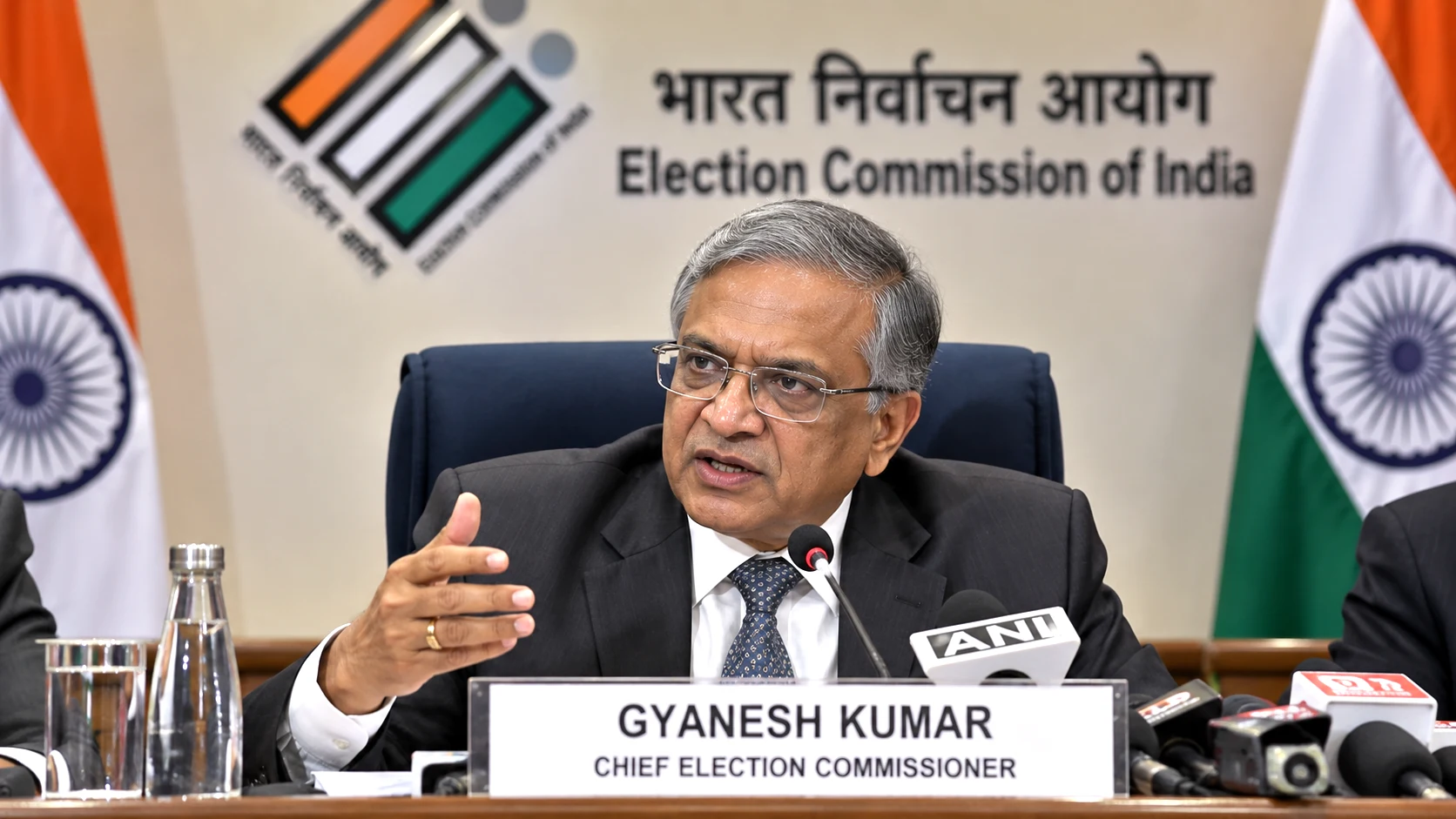
Opposition parties have intensified calls for CEC Gyanesh Kumar’s removal after a report said two Election Commissioners raised repeated objections over SIR and electoral-roll decisions. Some leaders have also demanded his arrest, while the ECI says all final decisions were unanimous.



0 Comments