US Midterms Tighten: Democrats Edge Ahead in Michigan and Texas as Trump, Vance Intensify GOP Push
Fresh polling gives Abdul El-Sayed narrow leads over Mike Rogers in Michigan and James Talarico a slim advantage over Ken Paxton in Texas, but both Senate contests remain within polling margins of error. Republicans are pouring money and senior surrogates into battlegrounds as control of Congress ha
the tightening 2026 US midterm elections, with competitive Senate races in Michigan and Texas and intensified Republican campaigning
Table of Contents (22 sections)
With the 2026 US midterm elections entering their final weeks, two Senate races that would normally present very different political terrain are telling a similar story: Democrats are competitive, Republicans are spending heavily to defend their position, and neither party can safely treat the current polling as predictive.
In Michigan, Democrat Abdul El-Sayed holds narrow leads over Republican Mike Rogers in two polls released on September 17.
In Texas, Democrat James Talarico is also running slightly ahead of Republican Ken Paxton in recent polling — a notable development in a state that has not elected a Democratic US senator since the early 1990s.
Recommended Reading
Related Stories & In-Depth Guides
Curated editorial perspectives matching this topic.
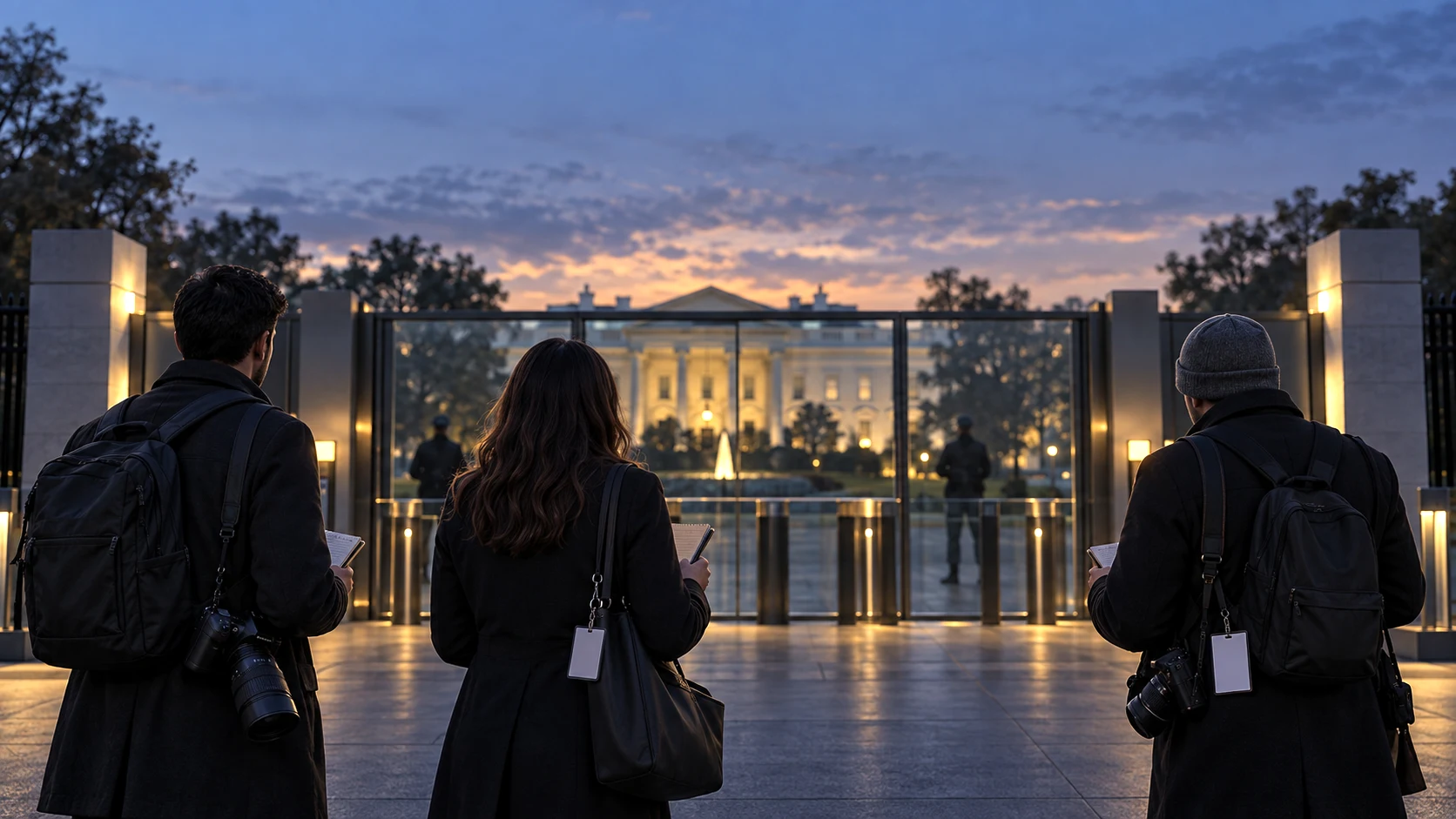
President Donald Trump announced the restrictions on September 18, accusing the three outlets of publishing what he called “fake news”; journalists from all three organizations were turned away from the White House the following day.
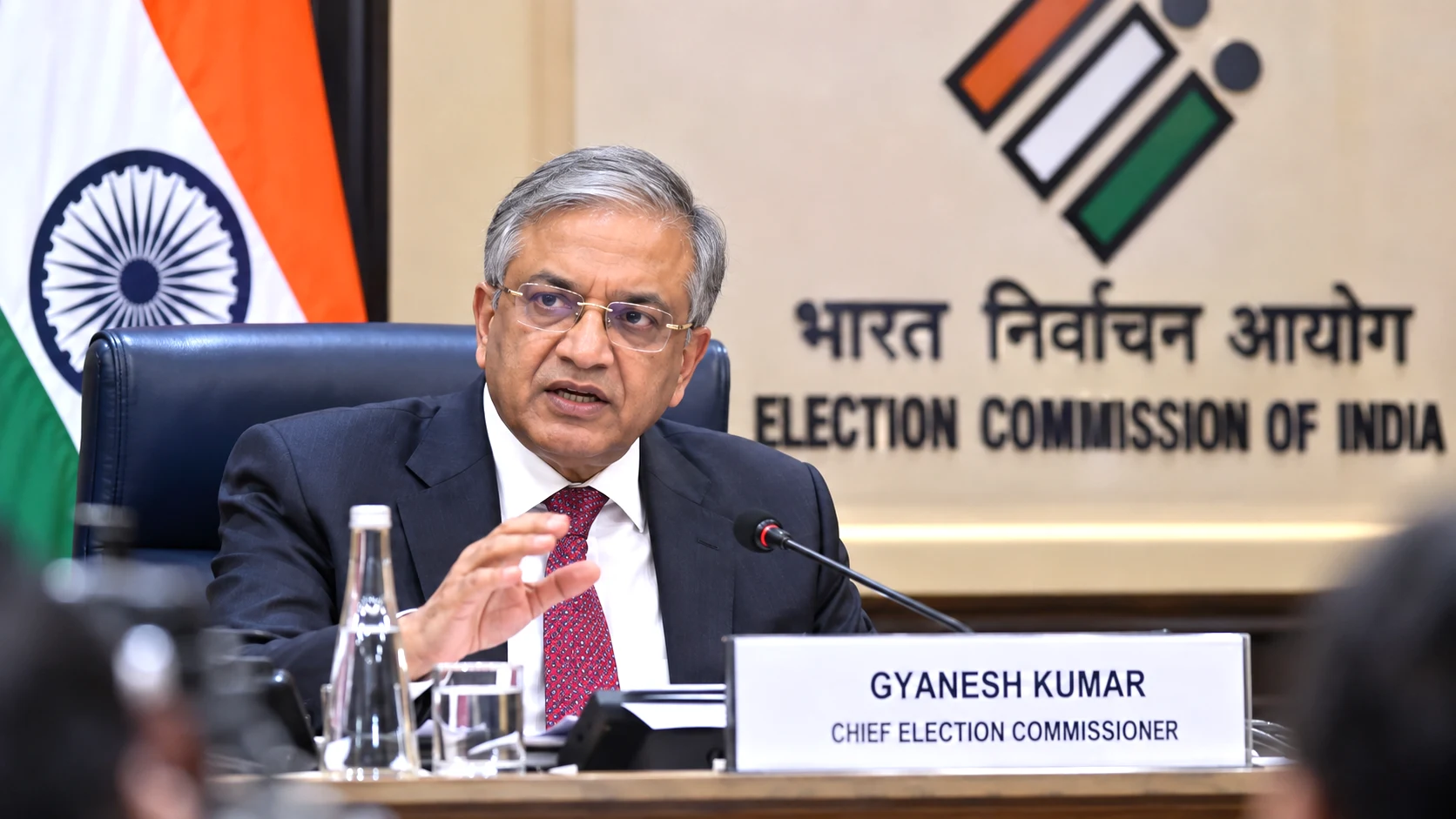
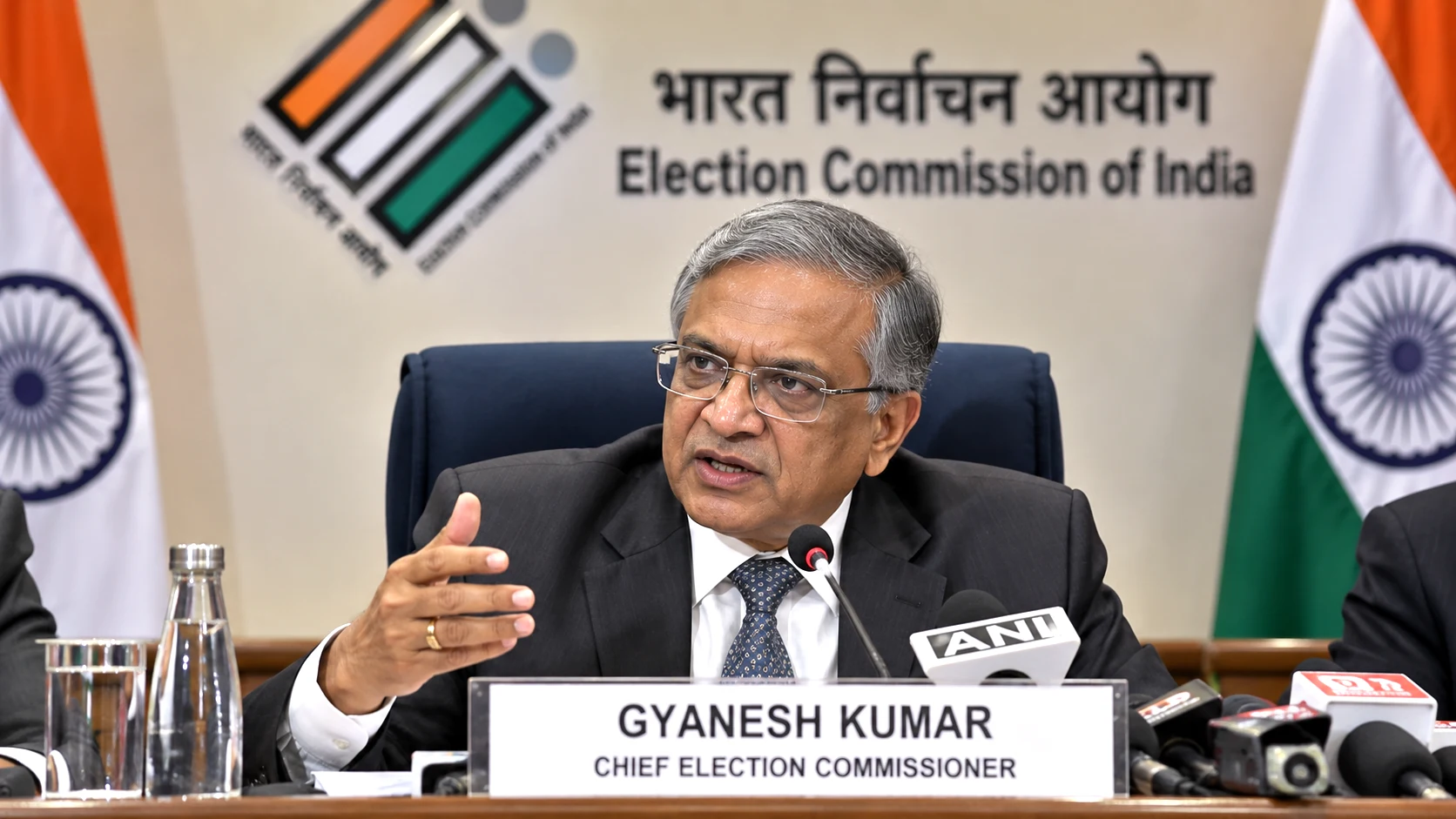
Opposition parties are preparing a fresh parliamentary notice seeking CEC Gyanesh Kumar’s removal amid the SIR controversy. Here is what Article 324 says, how many MPs are needed and why removal requires a high constitutional threshold.
But describing Democrats as clearly “winning” either contest would overstate what the surveys show.
Both races remain close enough that normal polling error could produce a different leader on Election Day.
At the same time, President Donald Trump, Vice President JD Vance and Republican-aligned political groups are dramatically increasing their involvement as the GOP tries to protect its congressional majorities.
The House battlefield is also difficult for Republicans, although current independent ratings do not support the broader claim that large numbers of genuinely deep-red districts are suddenly poised to turn Democratic.
Key Takeaways
Two new Michigan polls show Democrat Abdul El-Sayed narrowly ahead of Republican Mike Rogers, but neither lead is statistically decisive.
An Emerson College/Nexstar poll released September 17 has El-Sayed at 48% and Rogers at 46%, with a ±3-point credibility interval.
A Washington Post-Schar School poll separately puts El-Sayed ahead 48%-45%, also within its ±3.9-point margin of error.
In Texas, Emerson has Democrat James Talarico at 47% and Republican Ken Paxton at 46%, effectively a dead heat.
A separate AARP poll released September 10 showed Talarico ahead 48%-44%, though Paxton retained a substantial advantage among voters aged 50 and older.
Michigan’s Jewish electorate is divided rather than uniformly backing one candidate. More than 500 Jewish voters and leaders have reportedly signed a letter supporting El-Sayed, while another coalition of rabbis and Jewish leaders has demanded changes in his approach to Israel and some have said they may support Rogers.
Vice President JD Vance has campaigned for Rogers and made El-Sayed a prominent target, including calling him “very, very evil” at an earlier Michigan event.
President Donald Trump is stepping up direct campaigning for Republican candidates and Trump-aligned groups are spending more than $130 million across major congressional races.
House Speaker Mike Johnson ended House voting earlier than scheduled before the pre-election recess. The House is not expected back until after the November midterms, drawing criticism over unfinished legislative business.
Republicans face a difficult House environment, but claims that the party is collapsing in “deep-red” districts go too far. Cook Political Report still rates 180 House seats Solid Republican.
El-Sayed Holds Narrow Michigan Lead
An Emerson College Polling/Nexstar Media survey released on September 17 gives El-Sayed 48% support among likely Michigan voters, compared with 46% for Rogers.
Four percent remain undecided.
The poll surveyed 1,000 likely voters from September 12-14 and has a credibility interval of approximately ±3 percentage points. That means El-Sayed’s two-point advantage falls within the survey’s statistical uncertainty.
A separate Washington Post-Schar School survey points in the same general direction.
That poll gives El-Sayed 48% and Rogers 45%, a three-point Democratic advantage. But its margin of error is ±3.9 percentage points, once again making the race statistically close rather than a clear Democratic lead.
The agreement between two polls that El-Sayed is slightly ahead is politically meaningful.
It is not equivalent to proving he will win.
Michigan Political Environment Looks Better for Democrats Than Senate Margin Suggests
The Michigan surveys contain another notable finding.
Emerson found President Trump with a 40% approval rating and 55% disapproval among likely voters. The economy was by far the most frequently cited issue, at 47%.
The Washington Post-Schar poll similarly found that 53% of likely voters want Democrats to control the Senate.
Yet El-Sayed received support from 48%, suggesting that some voters who prefer Democratic Senate control remain hesitant about the party’s nominee.
That gap helps explain why Republicans continue to view Michigan as one of their strongest opportunities to capture a Democratic-held Senate seat even in an otherwise challenging political environment.
Rogers narrowly lost Michigan’s 2024 Senate race and enters the 2026 contest with established statewide name recognition.
El-Sayed, meanwhile, emerged from a divisive Democratic primary and is running as one of the more progressive nominees in a major battleground.
Jewish Support for El-Sayed Is Growing — But Michigan’s Jewish Community Is Divided
The claim that Jewish leaders are now rallying behind El-Sayed is partly true but requires substantial context.
Former Democratic congressman Sander Levin, one of the most prominent figures in Michigan Jewish Democratic politics, endorsed El-Sayed this week despite saying they have “significant disagreement” over Israel and the Israeli-Palestinian conflict.
Former senator Al Franken and more than two dozen other Jewish Americans also signed an earlier open letter backing El-Sayed.
That group acknowledged disagreements over Israel but argued that El-Sayed remained the better choice in the Senate race.
A newer open letter has reportedly attracted signatures from more than 500 Jewish leaders and voters in Michigan supporting El-Sayed despite some reservations about his positions and political allies.
But this is only one side of a deeply divided debate.
Other Michigan Rabbis Have Threatened to Withhold Support
Another coalition of Michigan rabbis, cantors and Jewish community leaders launched a campaign called Nonnegotiable Michigan earlier this month.
Its signatories called on candidates — with El-Sayed clearly at the centre of the debate — to make commitments on Jewish safety, Jewish identity, participation in American political life and Jewish sovereignty in Israel.
Some Jewish Democrats have said they may vote for Rogers instead.
The Michigan Democratic Jewish Caucus has also previously withheld an endorsement while urging El-Sayed to repair relations with Jewish voters.
The accurate picture is therefore not:
“Michigan Jewish leaders have united behind El-Sayed.”
It is:
Michigan’s Jewish political community is divided, with a growing group publicly supporting El-Sayed while other rabbis and community leaders continue to voice serious objections or consider backing Rogers.
Republicans Have Made El-Sayed a National Target
El-Sayed’s candidacy has become much more than a Michigan campaign issue for Republicans.
At the Republican midterm convention and other campaign events, party leaders have repeatedly used him as an example of what they portray as the Democratic Party’s movement towards the ideological left.
Associated Press reported that Trump and senior Republicans repeatedly targeted El-Sayed over his progressive political positions, criticism of Israel and associations with controversial left-wing figures.
Some attacks have gone significantly further.
AP reported that Republicans have circulated unsupported allegations linking him to terrorist organisations — claims for which evidence has not been established.
El-Sayed would become the first Muslim elected to the US Senate if he wins.
His religion has consequently become part of the political environment surrounding the contest, although both his campaign and neutral reporting distinguish legitimate scrutiny of his policy positions from attacks based on Muslim identity.
JD Vance Has Personally Targeted El-Sayed
Vice President JD Vance has become one of the most visible Republican surrogates in the Michigan contest.
During a Michigan campaign appearance for Rogers, Vance spent substantial time attacking El-Sayed and described him as “very, very evil,” according to Reuters.
Republicans are attempting to portray El-Sayed as too ideologically progressive for Michigan.
El-Sayed, for his part, has tried to move the campaign towards economic issues, including healthcare, affordability, energy prices and the effects of US-Canada trade tensions on Michigan.
This is one of the central strategic conflicts in the race:
Republicans want the contest to become a referendum on El-Sayed’s ideology and political associations.
Democrats want it to become a referendum on Trump, economic conditions and Republican control of Washington.
Kamala Harris Will Campaign With El-Sayed
Democratic leaders are also increasing their involvement.
Former Vice President Kamala Harris is scheduled to campaign with El-Sayed in Michigan, including at an event focused on Black maternal health.
It will be their first joint public appearance since Harris endorsed him following the Democratic primary.
Democrats have an obvious strategic reason for committing resources to Michigan.
The seat is currently held by retiring Democratic Senator Gary Peters, meaning Democrats must defend it while simultaneously trying to gain Republican seats elsewhere.
AP notes that Democrats need to hold Michigan and flip four additional seats to secure a Senate majority under the current electoral arithmetic.
Texas Suddenly Looks Competitive
The more surprising Senate contest is Texas.
An Emerson College/Nexstar poll conducted September 12-14 has Democrat James Talarico at 47% and Republican Ken Paxton at 46%.
Libertarian Ted Brown receives 2%, while 4% remain undecided.
The poll surveyed 1,000 likely voters and carries an approximate ±3-point credibility interval.
That makes the race a statistical dead heat.
Talarico’s one-point advantage should therefore not be reported as a secure lead.
But simply having a competitive Senate race this late in the campaign represents a major departure from recent Texas political history.
Another Texas Poll Has Talarico Up Four
AARP released another poll on September 10 showing Talarico at 48% and Paxton at 44% among likely voters.
That poll surveyed 895 likely Texas voters and had a margin of error of ±3.3 percentage points.
One important warning sign for Democrats appeared beneath the topline.
Among voters aged 50 and older — a group that traditionally turns out at particularly high rates — Paxton led 53%-40%.
Talarico’s strength was considerably greater among younger voters.
That means the outcome could depend heavily on whether younger Democratic-leaning voters actually participate at the rates assumed by likely-voter models.
Hispanic Voters Could Be Critical in Texas
The September Emerson poll found another potentially important movement.
Hispanic voters supported Talarico over Paxton 54%-39%, despite Texas Hispanic voters having shifted substantially towards Trump in 2024.
Those voters also disapproved of Trump 53%-41% in the poll.
Whether that represents a durable electoral reversal or simply one survey snapshot remains uncertain.
But it helps explain why Republicans are treating Texas as a genuine Senate battleground rather than assuming historical voting patterns will automatically deliver Paxton a victory.
Trump Is Directly Intervening in Texas
Trump has made clear that he intends to help Paxton.
At the Republican midterm convention in Dallas on September 9, Trump praised Paxton and pledged to campaign aggressively in competitive states and districts.
He urged Republican voters to behave as though Trump himself were on the November ballot.
Trump’s political operation is also spending heavily.
Reuters reported that Trump- and Elon Musk-linked groups have directed millions of dollars towards Texas, including about $10 million from MAGA Inc. and additional spending by Musk’s America PAC.
The Texas race has consequently become one of the clearest examples of Republicans deploying national resources to protect territory that would ordinarily be considered safely Republican.
Trump Returns to Campaign Trail in North Carolina
Trump is not limiting his midterm involvement to Texas.
On September 16, he campaigned in North Carolina for Republican Senate nominee Michael Whatley, who is running against former Democratic governor Roy Cooper.
The seat is open because Republican Senator Thom Tillis is retiring.
Trump again urged supporters to act as though he personally were on the ballot.
Earlier this month, Trump said he intended to make “a lot” of campaign stops for Republican candidates before November.
That creates both an opportunity and a risk for Republicans.
Trump can mobilise voters who may otherwise participate less frequently in midterm elections.
But in battleground states where his approval rating is weak, tying candidates too closely to him can also make it harder to win independents and moderate voters.
More Than $130 Million From Trump-Aligned Groups
Republicans are backing the campaign push with enormous outside spending.
Associated Press reported on September 17 that Trump-aligned political organisations have committed more than $130 million to supporting Republican candidates.
The No Going Back PAC alone has committed approximately $98.5 million, with significant spending aimed at the Michigan Senate contest and competitive House seats.
Reuters separately reported that Trump-linked groups had reserved more than $74 million in television advertising across major House and Senate races, including roughly $15.7 million targeting the Michigan contest.
The spending demonstrates that Republican strategists are not treating the current environment as secure.
Are Republicans Really in Trouble in ‘Deep-Red’ House Seats?
This claim needs qualification.
Republicans are clearly defending more territory than they would prefer.
But describing a large number of deep-red districts as suddenly competitive exaggerates the current evidence.
The Cook Political Report’s September House ratings list:
185 Solid Democratic seats
12 Likely Democratic
9 Lean Democratic
21 Toss Ups
7 Lean Republican
21 Likely Republican
180 Solid Republican
So the overwhelming majority of truly Republican-dominated districts remain rated safe.
The danger is concentrated primarily in seats that Trump carried by relatively modest margins.
Battleground Poll Shows Seven-Point Swing Towards Democrats
There is nevertheless real evidence of a difficult national environment for House Republicans.
A September 17 Cook Political Report battleground survey covers 37 competitive districts rated Toss Up, Lean Republican or Lean Democratic.
Those districts voted for Trump by an average of about five percentage points in 2024.
Today, voters in the same group of districts prefer Democratic congressional candidates 49%-47%.
That represents an approximately seven-point shift towards Democrats relative to Trump’s 2024 performance.
But Cook also notes an important limitation: Democratic gains are likely to be concentrated in districts Trump carried by roughly 10 points or less.
About 86% of Republican-held seats were carried by Trump by more than 10 points.
So Republicans are on the defensive in a larger field, but there is currently little evidence of a wholesale Democratic breakthrough into the deepest Republican territory.
House Speaker Johnson Sends Members Home Early
The political tension increased this week after House Speaker Mike Johnson cancelled scheduled Thursday votes and allowed lawmakers to begin their pre-election recess early.
The House is not expected to return until after the November midterm elections.
Critics accused Johnson of shutting down House business despite unresolved issues.
Among the disputes was Republican Rep. Thomas Massie’s attempt to force action on a resolution seeking the impeachment of Defense Secretary Pete Hegseth over the Iran war.
Massie also criticised the chamber over unfinished work involving Jeffrey Epstein-related records and economic issues.
Johnson disputes the argument that the House is abandoning its responsibilities.
He has described the current Congress as highly productive and pointed to legislation passed by the Republican majority, including sanctions legislation and major elements of Trump’s domestic agenda.
Johnson also dismissed Massie’s Hegseth impeachment effort as a political “stunt”.
The early adjournment therefore has two competing interpretations.
Critics describe it as lawmakers leaving Washington while major issues remain unresolved.
Republican leadership says members are returning to their districts after completing scheduled legislative priorities.
What is objectively clear is that votes scheduled for Thursday were cancelled and lawmakers began their election recess earlier than originally planned.
Senate Control Remains Extremely Competitive
Michigan and Texas matter because control of the Senate could turn on only a handful of races.
Democrats need to protect their own vulnerable seats while defeating Republican incumbents or nominees in several states.
Michigan is particularly important because Republicans are trying to convert a currently Democratic seat.
Texas represents the reverse: Democrats are attempting to turn a historically Republican seat into a pickup opportunity.
Other major contests, including North Carolina and Maine, further complicate the map.
The result is a Senate battlefield in which both parties are defending territory at the same time.
Economic Issues Remain Central
Despite the enormous attention being paid to ideological and cultural disputes, polling consistently shows economic concerns dominating voter priorities.
In Michigan, Emerson found the economy was the top issue for 47% of voters.
In Texas, 36% listed the economy first, substantially ahead of immigration at 14%.
Republicans also face political pressure from Trump’s trade confrontation with Canada.
Reuters reported that rising prices and retaliatory Canadian tariffs are creating particular difficulties in northern states such as Michigan and Maine, where cross-border commerce is economically important.
Mike Rogers has largely defended Trump’s approach while arguing that his relationship with the president would help Michigan.
Other Republicans, including Maine Senator Susan Collins, have distanced themselves from elements of Trump’s tariff policy.
Bottom Line
The central premise is supported: Republicans are facing a more difficult 2026 midterm landscape than they would normally expect, including in traditionally Republican territory.
But several parts need careful wording.
In Michigan, Abdul El-Sayed has narrow polling advantages over Mike Rogers — 48%-46% in Emerson and 48%-45% in the Washington Post-Schar poll — but both contests remain within polling uncertainty.
In Texas, James Talarico leads Ken Paxton 47%-46% in Emerson, effectively making the race a statistical tie, while a recent AARP survey placed Talarico ahead 48%-44%.
Michigan’s Jewish political community is not united behind either candidate. Prominent Jewish Democrats and hundreds of supporters are backing El-Sayed, while another group of rabbis and community leaders continues to press him over Israel and Jewish-safety concerns.
JD Vance and Trump have made El-Sayed a prominent Republican target, while Trump is simultaneously campaigning for candidates such as Ken Paxton and Michael Whatley. Trump-aligned groups are backing that effort with more than $130 million in political spending.
Meanwhile, Speaker Mike Johnson’s decision to end House voting early before the election recess has generated fresh criticism over unfinished congressional business, although Johnson argues the Republican House has delivered a substantial legislative record.
The strongest evidence of Republican vulnerability comes from competitive territory rather than the deepest-red districts: Cook Political Report’s latest battleground survey shows Democrats leading 49%-47% across 37 competitive House districts that Trump collectively carried by about five points in 2024.
With less than two months until voting concludes, Michigan, Texas, North Carolina and the most competitive House districts are becoming central tests of whether dissatisfaction with Trump and the economy produces a change in congressional control — or whether Republican spending and turnout mobilisation are enough to preserve the GOP majority.
Key Takeaway
Narrow Democratic leads in Michigan and Texas Senate races remain within polling error.
Trump, Vance and GOP groups intensify campaigning with heavy spending.
House environment difficult for Republicans, but deep-red seats largely secure.
The Rajatheertha Team publishes news, explainers, guides and updates across India and the world. Our coverage follows Rajatheertha's editorial, verification and corrections standards.
Opposition parties have intensified calls for CEC Gyanesh Kumar’s removal after a report said two Election Commissioners raised repeated objections over SIR and electoral-roll decisions. Some leaders have also demanded his arrest, while the ECI says all final decisions were unanimous.
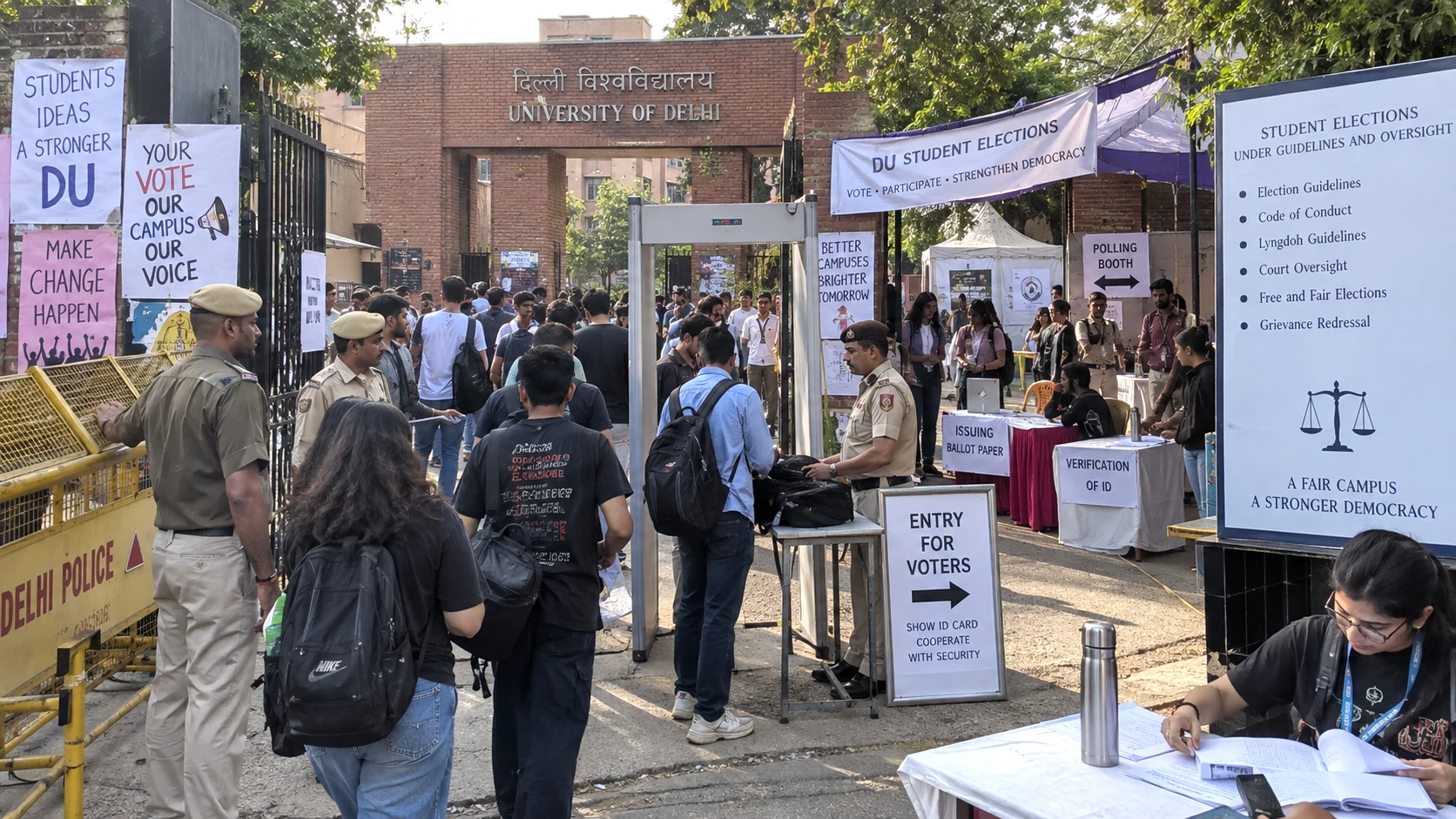
More than 1.51 lakh Delhi University students are eligible to vote for four DUSU posts on September 18. Over 2,000 police and paramilitary personnel have been deployed, while the Delhi High Court has sought reports on alleged campaign violence and election-code violations before deciding whether fur
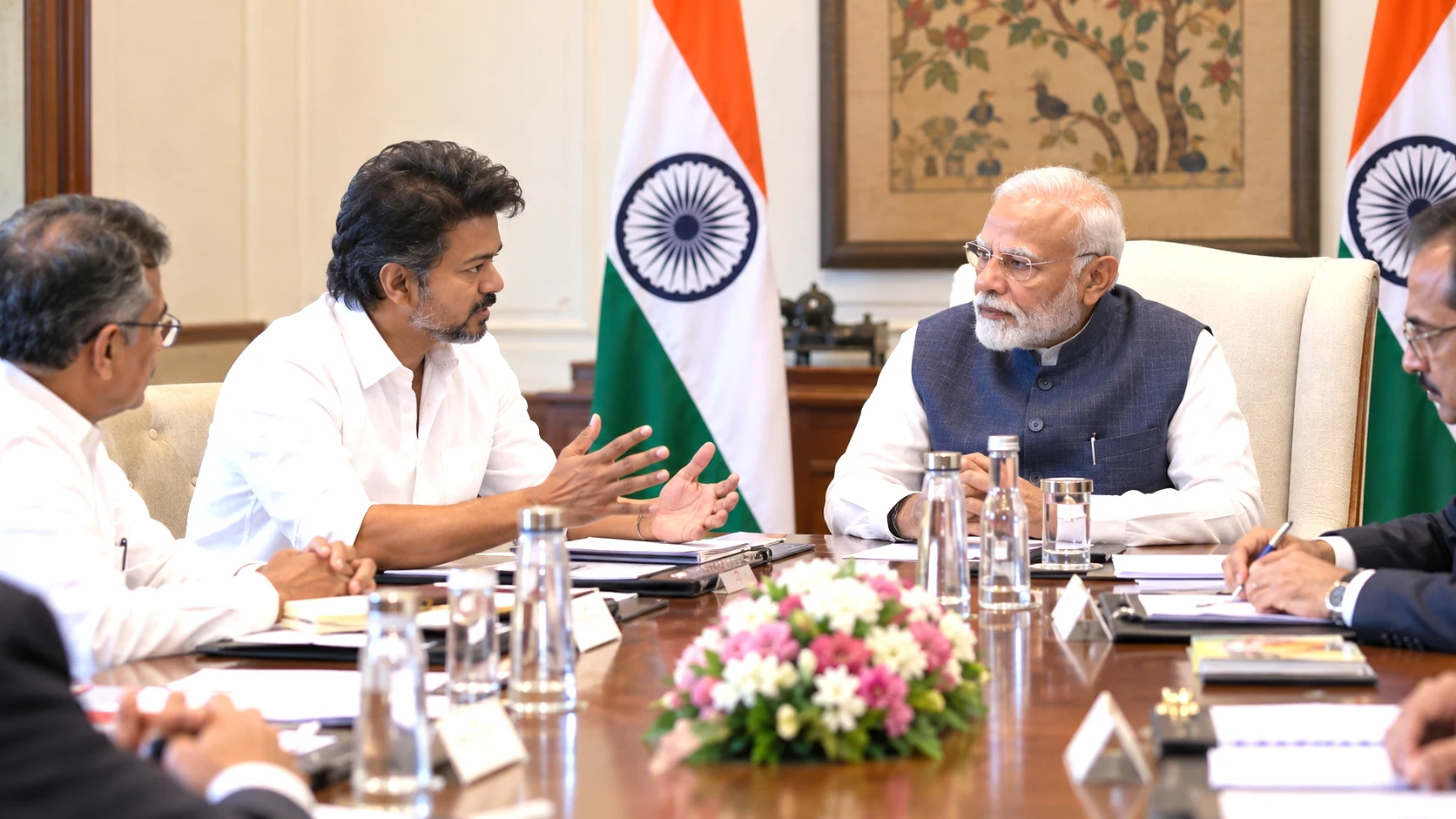
Tamil Nadu Chief Minister C Joseph Vijay's first official meeting with Prime Minister Narendra Modi focused on issues ranging from Mekedatu and fishermen to state funds and Tamil identity. With the two leaders expected to share a Chennai stage on October 11, here is what the meetings mean politicall
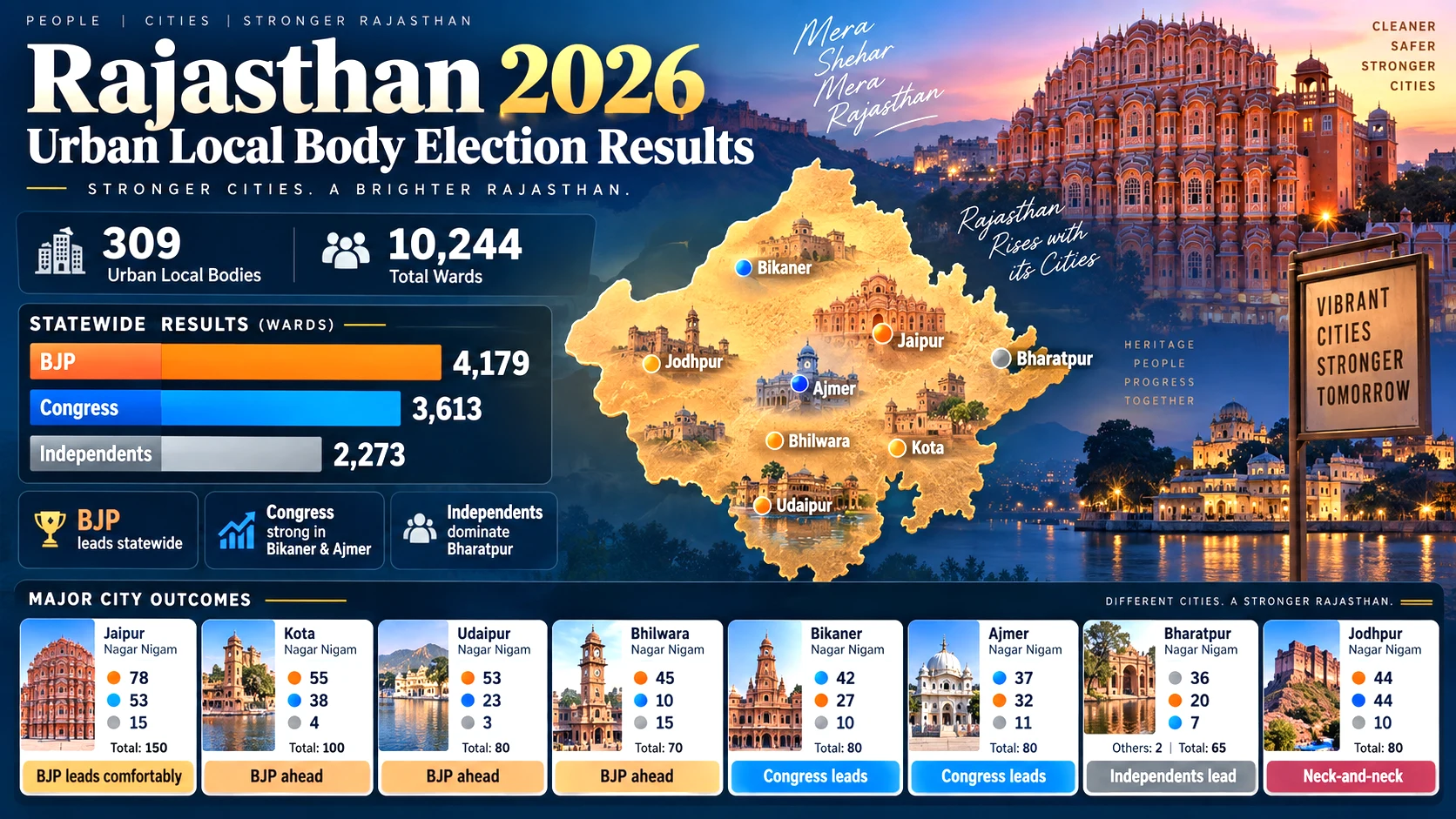
The BJP emerged as the single largest party in Rajasthan’s 2026 urban local body elections, ahead of the Congress, while more than 2,270 Independent victories complicated the picture in Bharatpur, Jodhpur, Ajmer, Pali and other civic bodies.
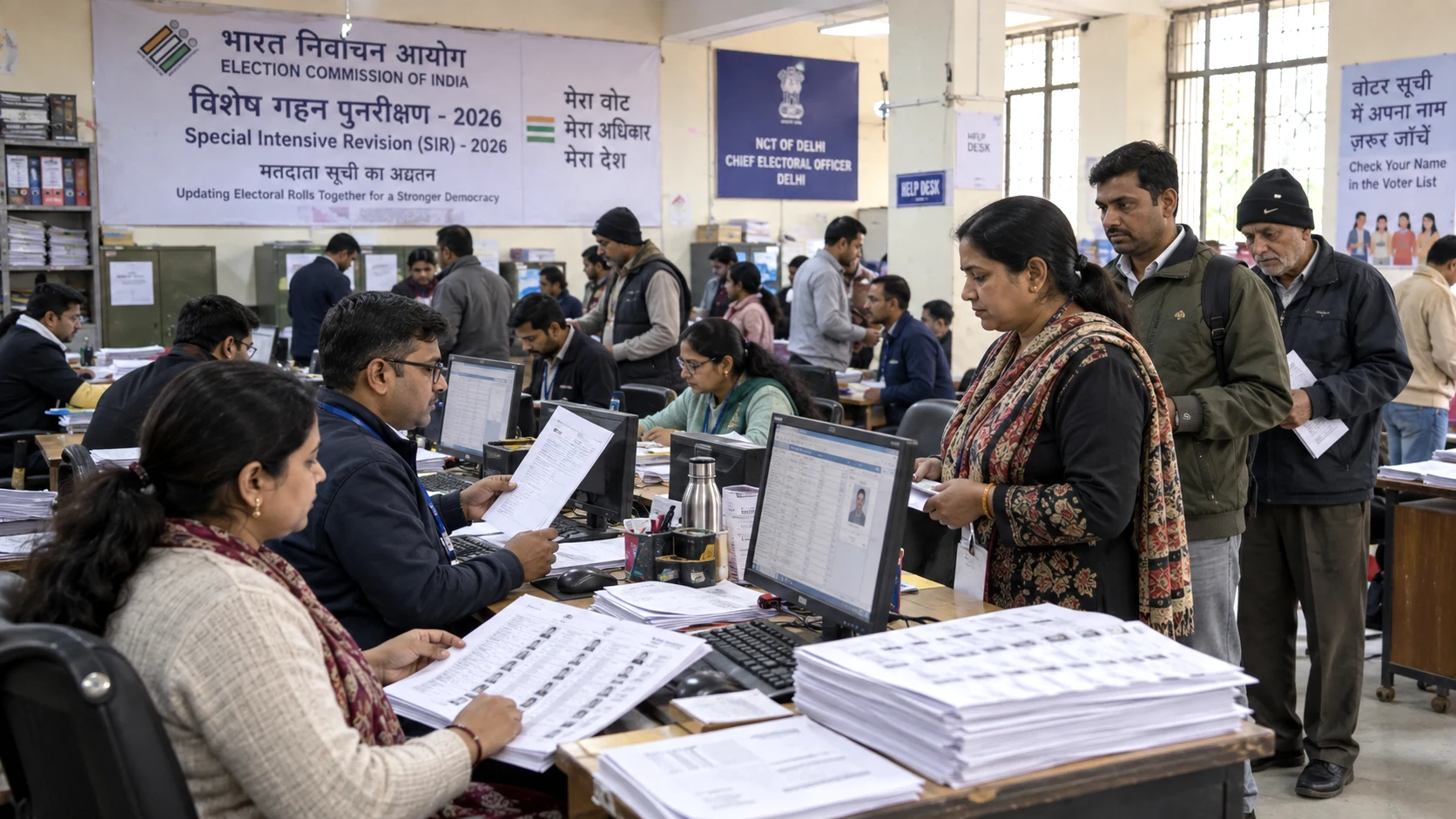
LK Advani, Jagdeep Dhankhar, S Jaishankar and several other prominent Delhi voters have had their SIR records verified and reserved for inclusion in the final electoral roll. Here is what “cleared” means and what ordinary voters should do before key deadlines.





0 Comments