Opposition Steps Up Calls to Remove CEC Gyanesh Kumar; Some Leaders Demand Arrest After ECI Dissent Report
Opposition parties have intensified calls for CEC Gyanesh Kumar’s removal after a report said two Election Commissioners raised repeated objections over SIR and electoral-roll decisions. Some leaders have also demanded his arrest, while the ECI says all final decisions were unanimous.
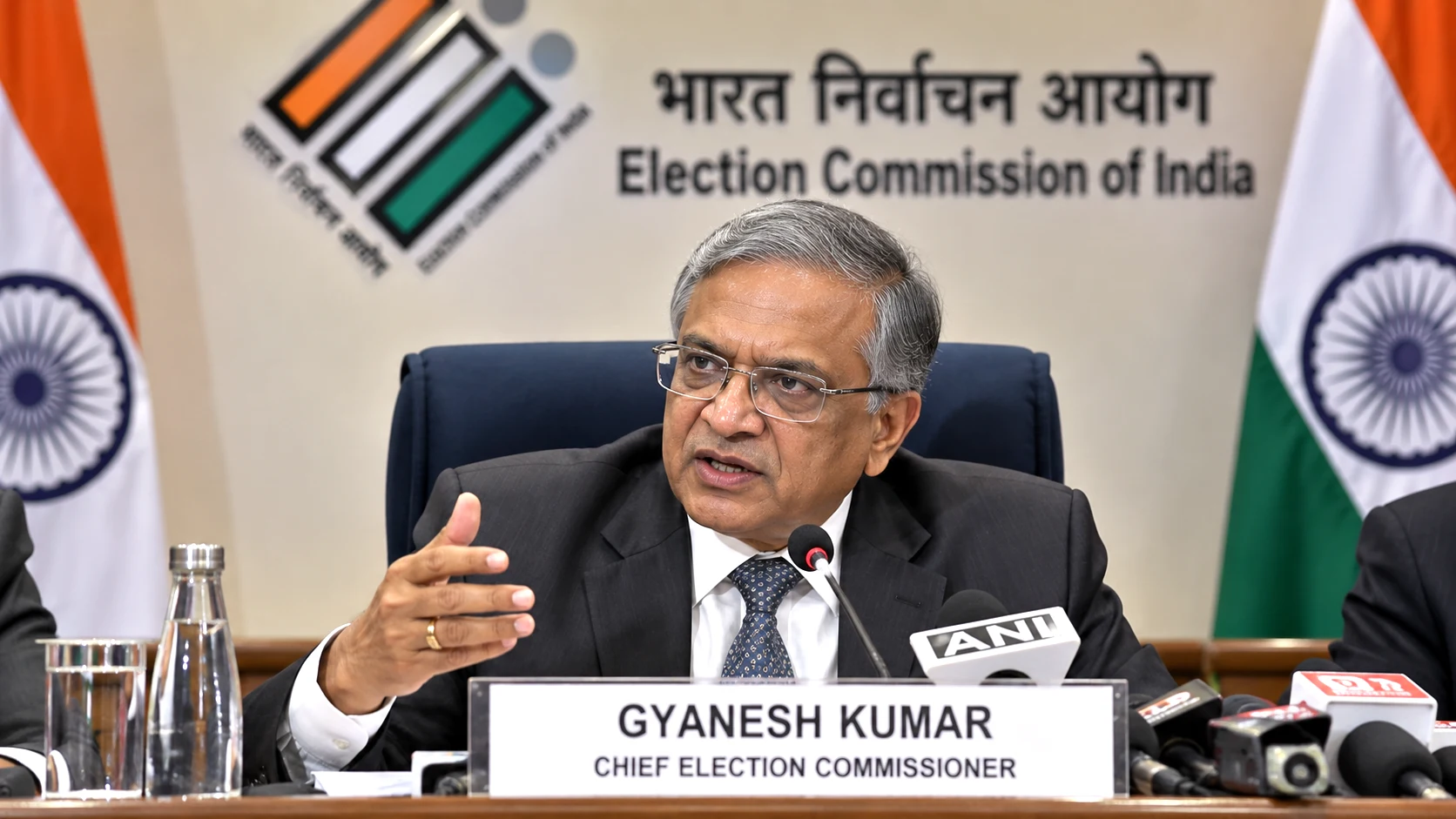
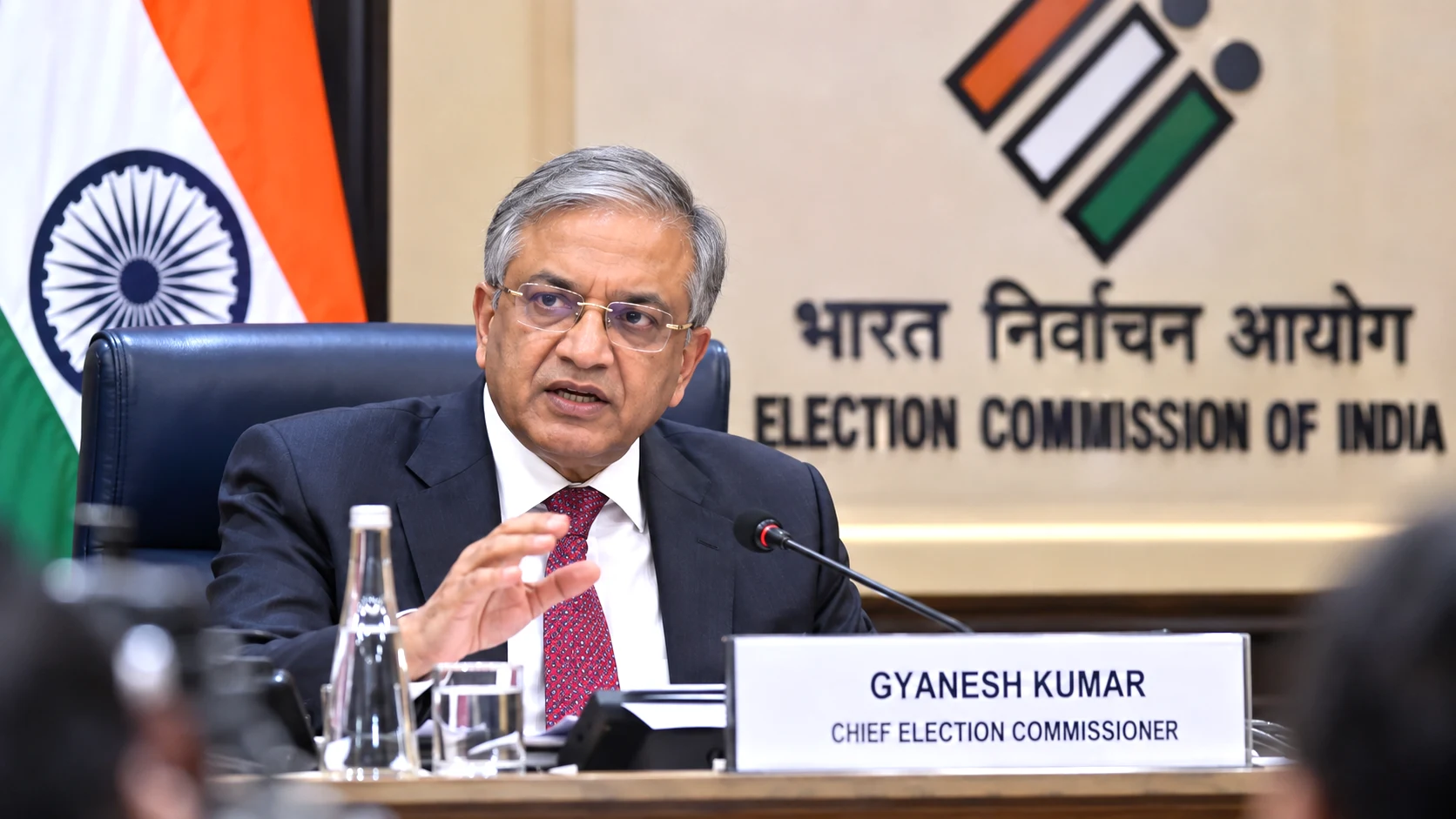
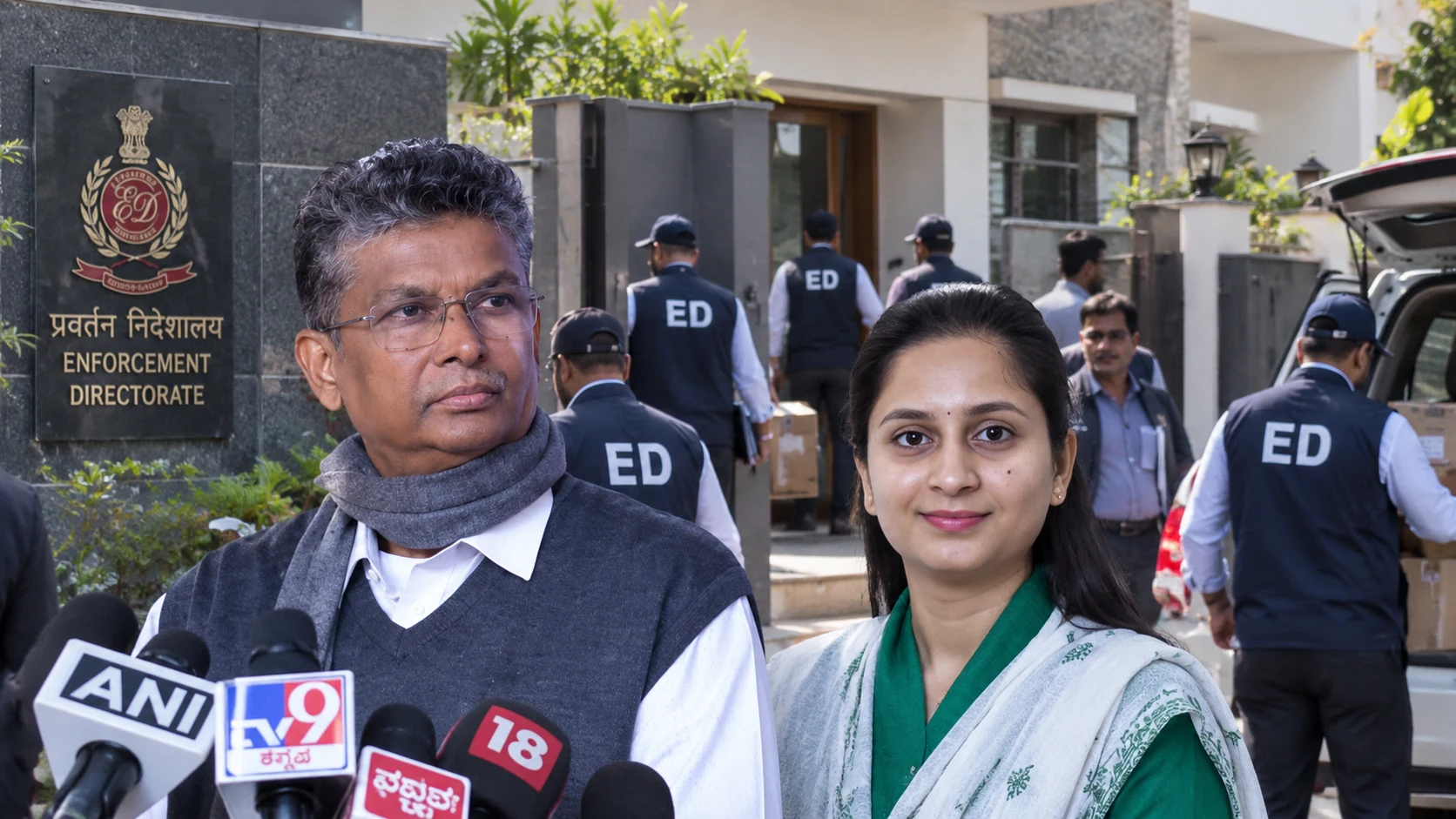
Chief Election Commissioner Gyanesh Kumar amid political controversy over reported internal objections within the Election Commission
Table of Contents (29 sections)
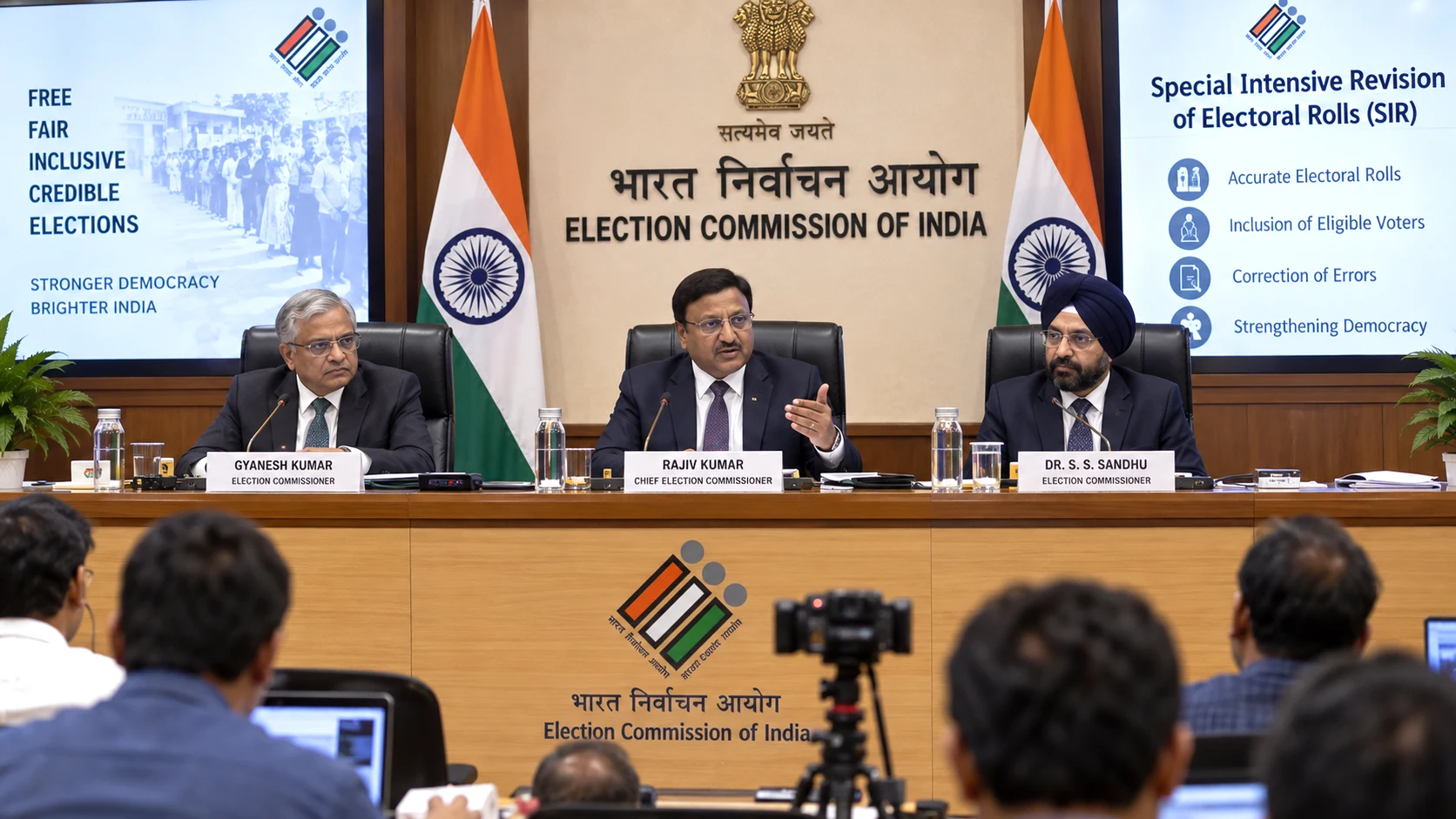
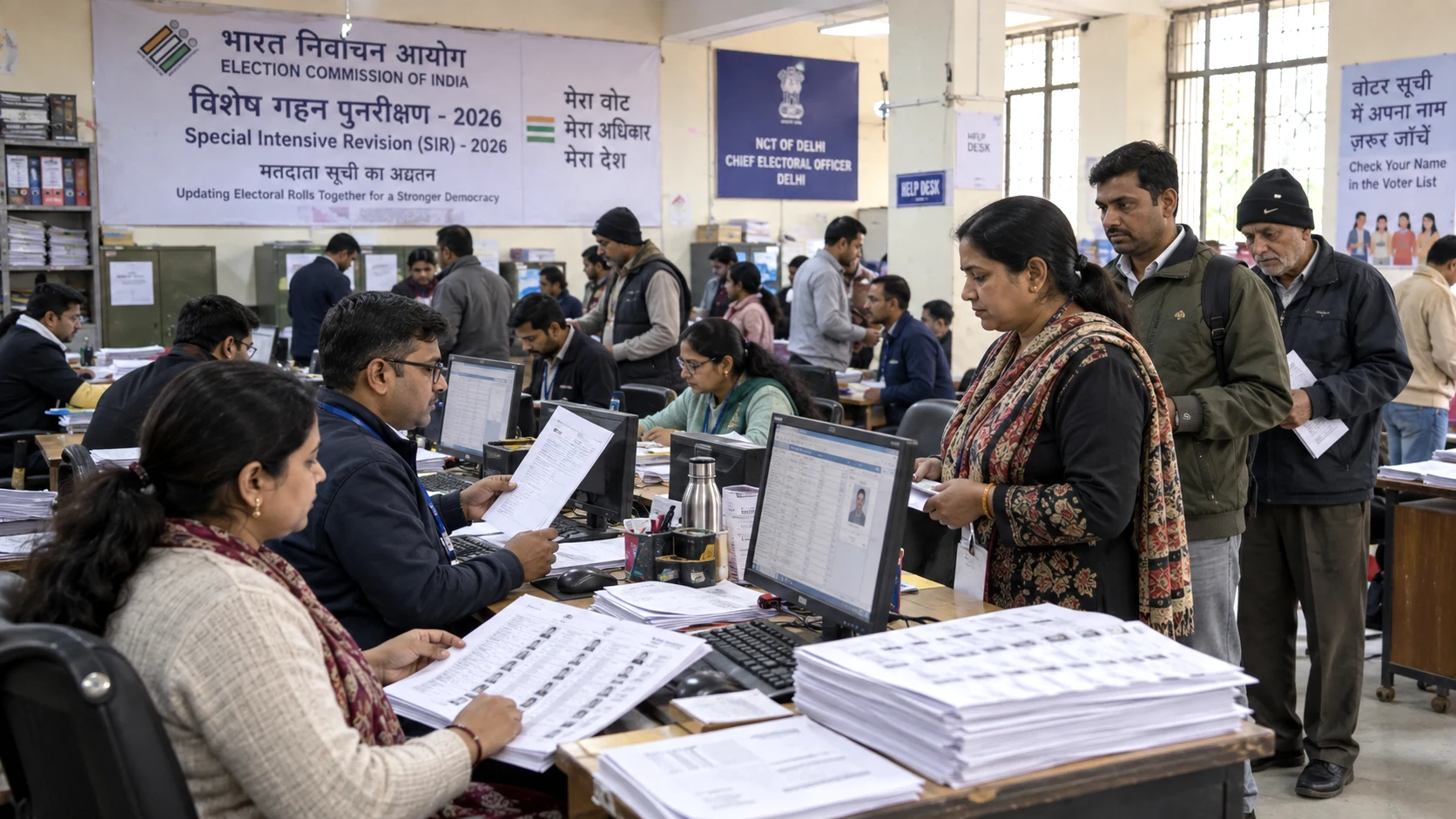
India's political confrontation over the Election Commission has intensified after an investigation reported that Election Commissioners Sukhbir Singh Sandhu and Vivek Joshi recorded objections at least 14 times over roughly 10 months to decisions and procedures involving voter registration, deletion and restoration of names, electoral-roll software and the nationwide Special Intensive Revision, or SIR.
Recommended Reading
Related Stories & In-Depth Guides
Curated editorial perspectives matching this topic.
President Donald Trump announced the restrictions on September 18, accusing the three outlets of publishing what he called “fake news”; journalists from all three organizations were turned away from the White House the following day.
Opposition parties are preparing a fresh parliamentary notice seeking CEC Gyanesh Kumar’s removal amid the SIR controversy. Here is what Article 324 says, how many MPs are needed and why removal requires a high constitutional threshold.
Opposition parties have responded by demanding the removal or resignation of Chief Election Commissioner Gyanesh Kumar, an independent investigation into the poll body's functioning and, in several cases, suspension or rollback of the SIR exercise.
A smaller group of prominent Opposition leaders—including Mamata Banerjee, Arvind Kejriwal and Uddhav Thackeray—went further and called for Kumar's arrest or prosecution.
Those calls are political demands.
As of the morning of September 24, 2026, no court order directing Kumar's arrest and no judicial finding establishing criminal wrongdoing by the Chief Election Commissioner has been identified in the reporting reviewed for this article.
The Election Commission has strongly pushed back against suggestions that the reported objections prove that its decisions were illegally imposed by one member.
It says differing opinions, written observations and technical suggestions are normal features of institutional decision-making and maintains that all final decisions of the full Commission over the past year, including SIR-related decisions, were unanimous.
The dispute therefore centres on a critical question:
Were the reported objections simply part of an internal deliberative process before unanimous final decisions, as the Election Commission says, or do they show that important operational actions were taken without the knowledge or approval of a majority of the three-member Commission, as the investigation reports?
That issue has not yet been finally resolved by an independent judicial or parliamentary inquiry.
Key Takeaways
Two Election Commissioners reportedly recorded objections at least 14 times over ~10 months.
Issues involved Form 6, deletions/restorations, database access and SIR procedures.
ECI says all final decisions were unanimous and internal notes are normal deliberation.
Opposition parties demand Gyanesh Kumar’s removal/resignation and inquiry.
Mamata Banerjee, Arvind Kejriwal and Uddhav Thackeray called for his arrest.
No verified arrest order or finding of criminal guilt against Kumar.
A 73-MP Rajya Sabha removal notice from April 24 remains pending.
The immediate trigger was an investigation by The Indian Express, which reported that Sandhu and Joshi had put objections on record on at least 14 occasions during the previous 10 months.
The reported disagreements covered issues at the core of electoral-roll administration, including:
changes affecting Form 6 for new voter registration;
deletion and restoration of names during SIR;
appeals concerning electoral-roll decisions;
access to the central voter database;
control of electoral-roll software;
communications allegedly issued without approval of the full Commission.
The newspaper reported that in one exchange Sandhu described an action as “unauthorised and illegal”, while the two Commissioners also raised concerns about what they viewed as increasing centralisation of electoral-roll database access.
These are reported internal objections, not findings by a court that the Election Commission acted illegally.
What Does the Election Commission Say?
The Election Commission disputes the broader interpretation being placed on the internal notes.
Its response is that Commissioners routinely:
raise questions;
seek clarifications;
suggest technical changes;
examine draft proposals;
and put observations on file.
The ECI says those discussions are part of normal institutional checks and balances.
Most importantly, it maintains that official orders and final decisions were ultimately approved unanimously by the full Commission.
The Commission has also argued that isolating particular internal notes without considering later approvals or changes gives only part of the decision-making picture.
That distinction is central to the dispute.
An objection during development of a policy is not automatically the same thing as dissent from the final policy.
However, The Indian Express investigation also reported instances in which Sandhu and Joshi complained that communications or operational decisions had already been made without the Commission's approval.
The competing accounts therefore require careful separation.
Did Two Election Commissioners Formally “Dissent” From Every SIR Decision?
No.
That would overstate what has been established.
The investigation says the Commissioners raised repeated objections concerning specific decisions, procedures and administrative actions.
The ECI, meanwhile, says the Commission's final orders were unanimous.
It is therefore inaccurate to write simply that “two Election Commissioners voted against SIR” unless evidence of such a final recorded vote is produced.
The more accurate description is:
Two of the Commission's three members reportedly recorded repeated objections to elements of the SIR and electoral-roll administration, while the ECI says its eventual final decisions were unanimous.
Why Form 6 Became a Major Issue
One of the most detailed disagreements concerned Form 6, the statutory form used by people applying for inclusion in an electoral roll.
The Indian Express reported that the online form began asking applicants to indicate whether they, their parents or grandparents appeared in the electoral roll used for the previous intensive revision.
According to internal records cited by the newspaper, Vivek Joshi had argued that Form 6 was prescribed under the Registration of Electors Rules, 1960 and could not simply be altered through an SIR administrative exercise without changing the underlying rules.
Sandhu subsequently described the change as unauthorised and said it should be removed.
Whether and how that disagreement was ultimately regularised is now part of the broader controversy.
What Was the Concern About Voter Database Access?
The Commissioners also reportedly questioned whether control over electoral-roll databases was becoming increasingly centralised.
India's electoral-roll system has traditionally relied heavily on Electoral Registration Officers, or EROs, who are statutory authorities responsible for maintaining rolls at the constituency level.
The investigation reported that Joshi raised concerns about a “gradual centralisation” of the electoral database and proposed an audit to ensure that only legally authorised officials could alter voter records.
Sandhu later reportedly raised similar concerns over whether state-level officials retained full access to the system.
The ECI has not accepted the Opposition's conclusion that these concerns establish electoral manipulation.
Opposition Shifts Attack From Entire ECI to Gyanesh Kumar
One notable change in the political response is that several Opposition parties are now drawing a distinction between the Election Commission as an institution and Gyanesh Kumar personally as its chairman.
The Indian Express reported that opposition leaders coordinated their response and increasingly argued that Sandhu and Joshi's reported objections meant the entire three-member Commission should not be treated as collectively responsible for every disputed decision.
The principal demands include:
Gyanesh Kumar's removal or resignation;
an independent or Supreme Court-monitored inquiry;
suspension or cancellation of disputed SIR measures;
examination of Election Commission decisions made during the disputed period.
Some parties are also demanding fresh elections in particular states, although no court or election authority has accepted those demands.
Who Has Demanded Gyanesh Kumar's Arrest?
The distinction between removal and arrest is important.
Mamata Banerjee
Former West Bengal chief minister Mamata Banerjee called for Kumar's arrest and demanded fresh Assembly elections in West Bengal using the pre-SIR electoral roll.
She alleged that the electoral process had been manipulated.
Those are Banerjee's political allegations and have not been established as findings by a court.
Arvind Kejriwal
AAP national convener Arvind Kejriwal also demanded Kumar's arrest and called for the SIR exercise to be cancelled.
He additionally demanded criminal proceedings, including a treason or sedition-type prosecution.
Again, this is a political demand. No such conviction or judicial determination has been made.
Uddhav Thackeray
Shiv Sena (UBT) chief Uddhav Thackeray said Kumar should be removed and jailed.
He also demanded fresh elections in Maharashtra, West Bengal and Tamil Nadu.
No authority has accepted Thackeray's demand for those elections to be annulled.
What Has Congress Demanded?
Congress leaders have focused primarily on Kumar's removal, resignation and investigation.
Congress president Mallikarjun Kharge revived attention around an existing parliamentary notice seeking Kumar's removal.
Congress general secretary K C Venugopal called for Kumar's immediate removal and a Supreme Court-monitored investigation.
Senior spokesperson Abhishek Manu Singhvi said Kumar should resign, while Jairam Ramesh launched strong political allegations against him and senior members of the Union government.
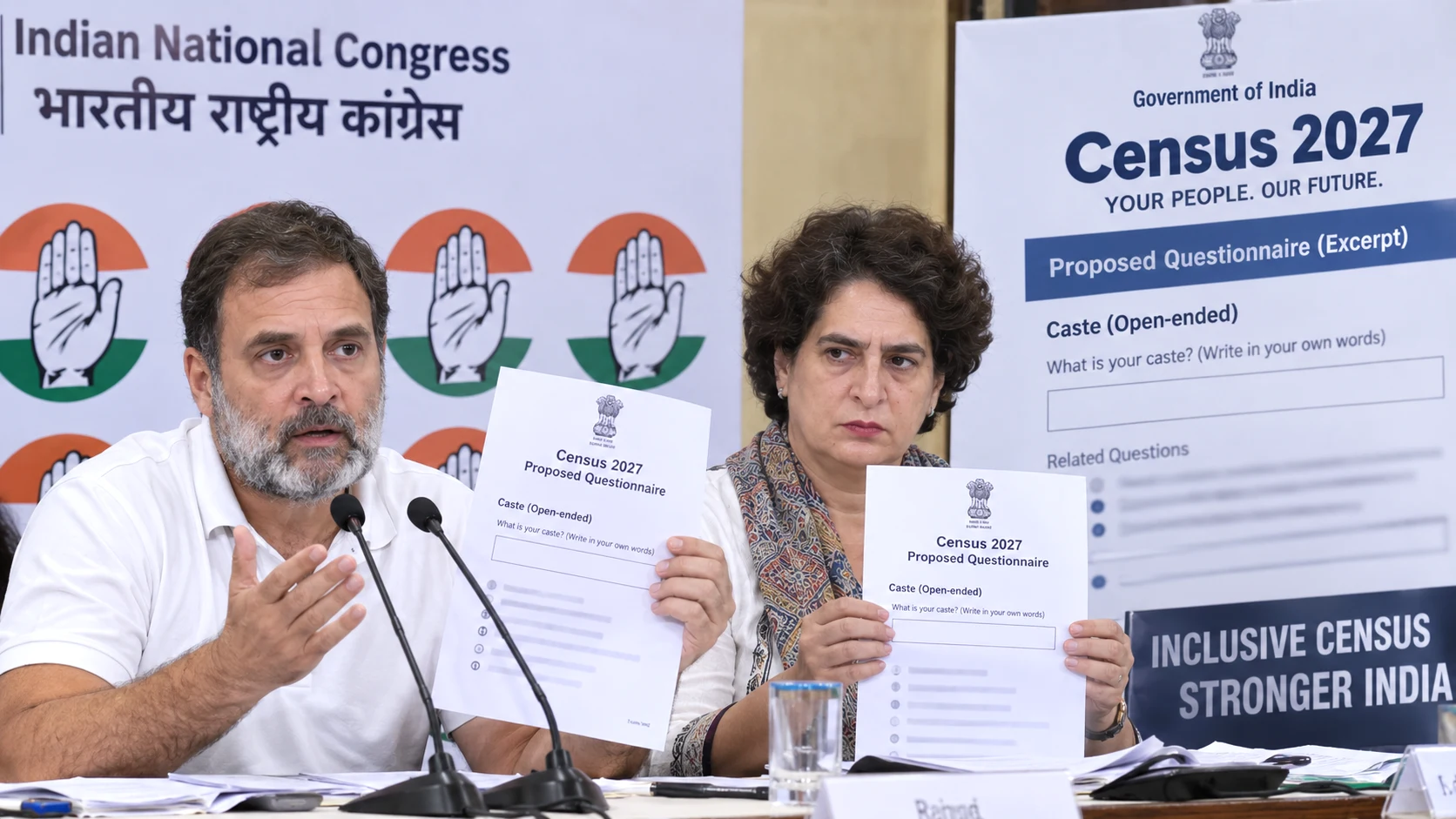
Rahul Gandhi separately renewed his “vote chori” allegations and described the alleged conduct as treason. Those allegations remain politically contested and should not be presented as established fact.
Is There Already a Motion to Remove Gyanesh Kumar?
There is already an important parliamentary development from earlier this year.
On April 24, 2026, 73 Opposition members of the Rajya Sabha submitted a fresh notice seeking Kumar's removal on allegations of “proved misbehaviour”.
That notice remains pending before the Rajya Sabha Chairman, according to the latest reporting.
Kharge has now asked why no decision has yet been taken on it.
The April notice followed an earlier removal effort involving members of both Houses, which was rejected by the Lok Sabha Speaker and Rajya Sabha Chairman.
Fresh reporting on September 24 says Opposition parties are discussing another coordinated removal motion following the latest internal-objection revelations.
Can the Opposition Simply “Sack” the CEC?
No.
The Chief Election Commissioner has strong constitutional protection against removal.
Article 324(5) of the Constitution says the CEC cannot be removed except in the same manner and on the same grounds as a judge of the Supreme Court.
That protection exists to preserve the Election Commission's independence from ordinary political pressure.
A parliamentary demand, press conference or party resolution therefore does not remove a CEC from office.
How Does the CEC Removal Process Work?
The constitutional standard is much higher than a normal no-confidence vote.
A Supreme Court judge—and therefore, through Article 324(5), the CEC—may be removed on the ground of proved misbehaviour or incapacity.
The parliamentary mechanism associated with judicial removal normally begins with a notice supported by at least:
100 Lok Sabha MPs, or
50 Rajya Sabha MPs.
The presiding officer then considers whether to admit the motion.
If admitted under the judge-removal framework, an inquiry process follows. Only after the required findings can Parliament consider the removal resolution.
The final constitutional threshold requires a special majority in each House: a majority of the total membership of that House and at least two-thirds of members present and voting.
The April Rajya Sabha notice, signed by 73 MPs, therefore exceeded the numerical threshold for submitting such a notice.
That does not mean Kumar has been removed or that the allegations have been proved.
Admission, inquiry and the required parliamentary votes are separate stages.
Is “Impeachment” the Correct Legal Term?
Politicians and news organisations often use “impeachment” as shorthand.
The Constitution itself speaks of removal from office.
For precise reporting, “removal proceedings” or “notice seeking removal of the CEC” is preferable.
What Does the BJP Say?
The Bharatiya Janata Party has rejected the Opposition's interpretation of the reported disagreements.
BJP spokesperson Sambit Patra argued that differences of opinion within a multi-member Election Commission are evidence of democratic deliberation rather than dictatorship.
He said critics would accuse the Commissioners of being “yes men” if they never disagreed, while now treating evidence of disagreement as proof that the institution had failed.
The BJP's position broadly aligns with the Election Commission's defence that internal debate is normal and that final decisions were unanimous.
The Opposition rejects that explanation and argues that the reported objections concern actions already taken, not merely preliminary discussions.
Does the Report Prove Elections Were Rigged?
No.
The internal-objection report raises significant questions about process, institutional decision-making and electoral-roll administration, but it does not by itself prove that a particular election result was fraudulently altered.
For example, in West Bengal, SIR deletions exceeded the victory margin in several constituencies, but an earlier Indian Express analysis found those seats were divided between political parties rather than all favouring one side.
Any claim that an election result was legally invalid would require evidence specific to that election and must be addressed through the procedures available under election law and, where applicable, the courts.
Political allegations such as “vote chori” should therefore remain attributed.
What Does This Mean for the SIR Exercise?
The Opposition is calling for the Special Intensive Revision to be halted or rolled back.
That has not happened automatically because of the controversy.
The Election Commission continues to defend the exercise and its legal authority.
Courts are separately hearing challenges to aspects of SIR, including questions concerning voter notices, deletions and appeals.
In West Bengal, the Election Commission recently told the Supreme Court that of roughly 27.16 lakh voters deleted, more than 22 lakh had appealed seeking reinstatement.
In Delhi, the Supreme Court is also considering transparency questions surrounding notices issued during SIR.
The current political dispute does not by itself cancel voter-roll revisions.
What Does Section 18 of the 2023 Election Commissioners Act Say?
The internal disagreement matters legally because the Election Commission is a multi-member constitutional body.
The Indian Express reported that Section 18 of the Chief Election Commissioner and Other Election Commissioners (Appointment, Conditions of Service and Term of Office) Act, 2023 says Commission business should, as far as possible, be transacted unanimously.
Where the Commissioners differ, the decision is to follow the majority view.
The same provision allows the Commission to settle its procedure and allocation of business by unanimous decision.
That is why reports that two of three Commissioners questioned actions allegedly taken without their approval have generated significant constitutional debate.
The ECI's answer is that the eventual official decisions were unanimous.
Why the Difference Between “Internal Objection” and “Final Dissent” Matters
Consider two possible scenarios.
In the first, a proposal is circulated, two Commissioners object, officials modify it, and all three Commissioners then approve the revised final decision.
That would be normal deliberation.
In the second, an operational action is executed in the Commission's name despite two Commissioners objecting or without their knowledge, and no valid majority authorisation exists.
That would raise a different and potentially more serious institutional question.
The current controversy turns partly on which description more accurately reflects the specific incidents reported.
That is why the underlying files, final approvals and chronology matter more than political slogans from either side.
Separate Supreme Court Development Adds to Scrutiny
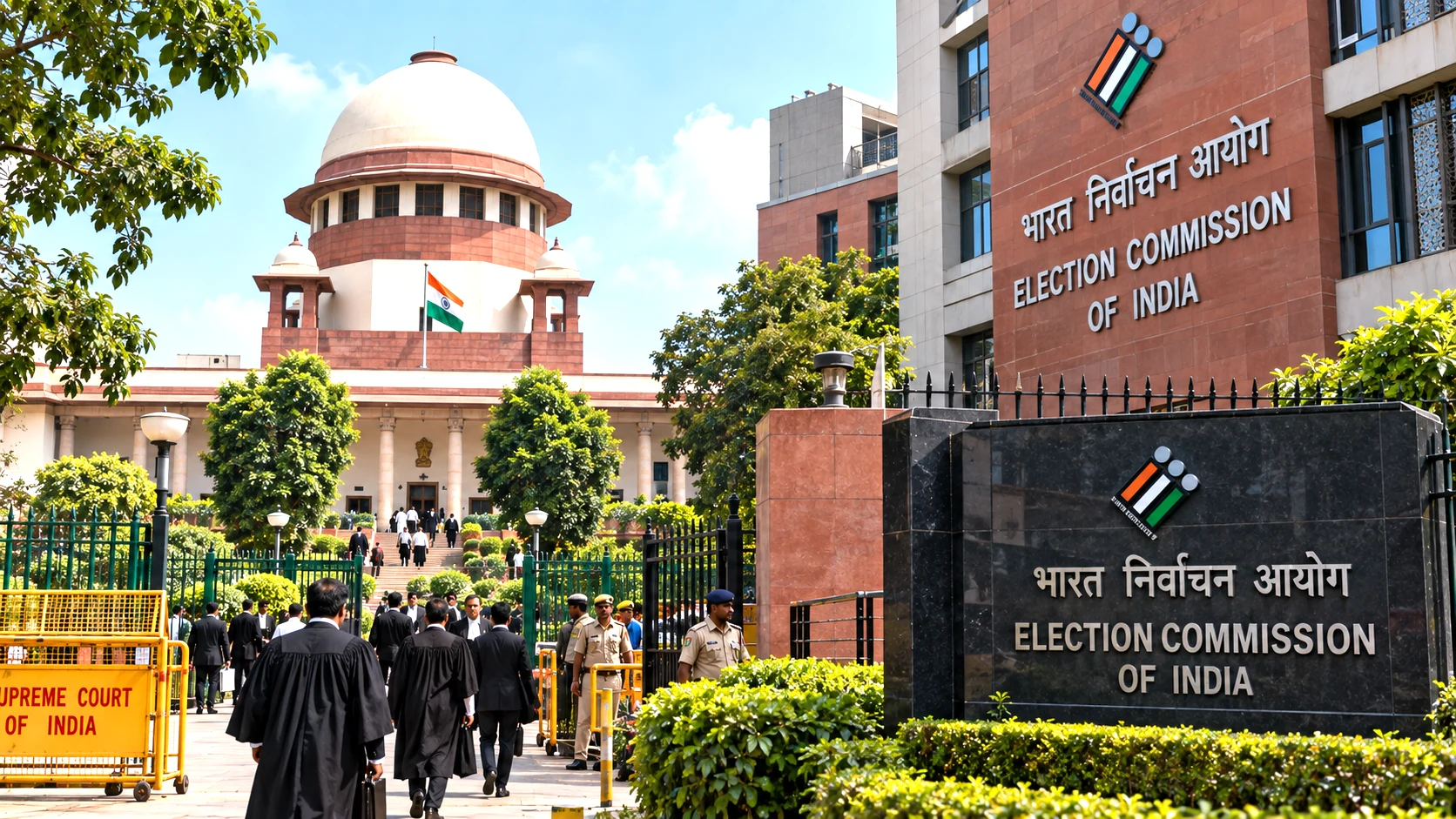
The political row coincided with a separate major Supreme Court development concerning how Election Commissioners themselves are appointed.
On September 23, a two-judge bench comprising Justices Dipankar Datta and Satish Chandra Sharma delivered differing opinions over challenges to the 2023 Election Commissioners appointment law.
The matter is now headed to a larger Constitution Bench.
The disputed law establishes a selection committee consisting of:
the Prime Minister;
the Leader of Opposition in the Lok Sabha;
and a Union Cabinet Minister nominated by the Prime Minister.
Critics argue that this gives the executive a built-in two-to-one advantage.
The Union government defends Parliament's constitutional authority to legislate the appointment mechanism.
Importantly, the Supreme Court development does not mean the 2023 law has been struck down and does not automatically remove Gyanesh Kumar.
The law continues to operate while the constitutional challenge is considered.
Justice Datta Raises Independence Concerns
In his opinion, Justice Dipankar Datta stressed that it is not enough for the Election Commission to be independent; it must also appear to be independent.
He raised concerns about whether a Cabinet Minister nominated by the Prime Minister could realistically operate as an independent counterweight to the Prime Minister in the selection committee.
Justice Satish Chandra Sharma took a different approach on whether the constitutional issue required determination by a five-judge bench.
Those observations concern the constitutional validity of the appointment framework.
They are separate from the allegations arising from the SIR internal-objection report.
The two controversies should not be conflated.
Is Gyanesh Kumar Still Chief Election Commissioner?
Yes.
As of September 24, Gyanesh Kumar remains Chief Election Commissioner of India.
Opposition demands, the pending removal notice and calls for criminal investigation do not themselves suspend or remove him.
No verified legal order reviewed for this article has removed him from office.
Has Gyanesh Kumar Been Arrested?
No verified report reviewed for this article establishes that Kumar has been arrested.
Political leaders have demanded his arrest.
That is different from:
an FIR being registered;
an investigating agency finding evidence;
a court issuing an arrest order;
an arrest taking place;
or guilt being established.
Those distinctions are particularly important in a politically charged constitutional dispute.
Are Sandhu and Joshi Whistleblowers Against the CEC?
That description goes beyond the confirmed facts.
They reportedly placed objections and concerns on official files and, in certain cases, communicated concerns to senior officials.
They have not been shown in the sources reviewed here publicly endorsing Opposition allegations of election manipulation or calling for Kumar's removal.
It is therefore more accurate to call them Election Commissioners who reportedly recorded internal objections rather than attach political labels to them.
Could Previous Elections Be Cancelled Because of the Report?
Not automatically.
Several Opposition leaders have demanded fresh elections in states such as Maharashtra, West Bengal and Tamil Nadu.
Those demands have no automatic legal effect.
Election results are governed by constitutional and statutory procedures and can generally be challenged through legally prescribed election disputes.
The internal-objection report by itself does not nullify an election.
What Happens Next?
The controversy now has several parallel tracks.
Politically, Opposition parties are expected to keep pressing Kumar to resign and are discussing further parliamentary action.
In Parliament, attention will focus on the April 24 removal notice that remains pending before the Rajya Sabha Chairman.
Separately, a Constitution Bench is expected to consider the challenge to the 2023 appointment law.
Within the Election Commission, scrutiny is likely to focus on documentary evidence showing:
which proposals received objections;
whether those proposals were subsequently changed;
when final approval was given;
whether actions were implemented before approval;
and whether statutory majority requirements were followed.
Those records will be more important for determining institutional responsibility than partisan accusations alone.
Latest Verified Position — September 24, 2026
The latest established position is:
Two Election Commissioners reportedly recorded at least 14 objections over around 10 months concerning electoral-roll and SIR-related actions.
The Election Commission says all final decisions during the past year were unanimous and that internal differences are part of normal deliberation.
Opposition parties broadly want Gyanesh Kumar removed or to resign, while also seeking probes and changes to the SIR process.
Mamata Banerjee, Arvind Kejriwal and Uddhav Thackeray are among those who specifically demanded his arrest or imprisonment.
There is no verified arrest order or finding of criminal guilt against Kumar in the reporting reviewed for this article.
A 73-MP Rajya Sabha notice seeking his removal, submitted on April 24, remains pending.
Gyanesh Kumar remains CEC.
The SIR exercise has not automatically been cancelled by the controversy.
A separate Supreme Court challenge to the 2023 CEC/EC appointment law is moving to a larger Constitution Bench; the law remains operative for now.
Frequently Asked Questions
Why is the Opposition demanding Gyanesh Kumar's removal?
The immediate trigger is an Indian Express investigation reporting that Election Commissioners Sukhbir Singh Sandhu and Vivek Joshi recorded objections at least 14 times to decisions or procedures involving SIR and electoral-roll administration.
Did all Opposition leaders demand Gyanesh Kumar's arrest?
No. Removal, resignation and investigation are the broader Opposition demands. Some leaders—including Mamata Banerjee, Arvind Kejriwal and Uddhav Thackeray—specifically called for arrest or imprisonment.
Has Gyanesh Kumar been arrested?
No verified arrest has been reported in the sources reviewed here.
Has an FIR been filed against the CEC over these revelations?
Political leaders including Kapil Sibal have demanded an FIR, but a demand for an FIR should not be reported as though a criminal case or finding has already been established.
Did two Election Commissioners oppose the entire SIR?
The evidence is more specific. They reportedly raised repeated objections to particular decisions, procedures and operational actions. The ECI says the final decisions of the full Commission were unanimous.
Can the government simply remove the Chief Election Commissioner?
No. Article 324(5) gives the CEC constitutional protection and says removal must occur in the same manner and on the same grounds as removal of a Supreme Court judge.
Is there already a removal notice against Gyanesh Kumar?
Yes. Seventy-three Opposition Rajya Sabha MPs submitted a fresh notice on April 24, 2026. Latest reporting says it remains pending before the Rajya Sabha Chairman.
Has SIR been cancelled?
No. Opposition parties have demanded that the exercise be halted or reversed, but no automatic cancellation has resulted from the latest controversy.
Did the Election Commission admit that its decisions were divided?
It acknowledged differing internal views and observations but says those were part of deliberation and that all final Commission decisions were unanimous.
Does the report prove “vote chori”?
No. “Vote chori” is an Opposition political allegation. The reported internal objections raise serious questions about processes but do not, on their own, establish that election results were fraudulently manipulated.
Has the Supreme Court struck down the law under which Gyanesh Kumar was appointed?
No. Challenges to the 2023 appointment law are moving to a larger bench, but the statute remains in force at present.
Bottom Line
Opposition parties have intensified demands for CEC Gyanesh Kumar’s removal after reports that two Election Commissioners recorded repeated objections over SIR and electoral-roll decisions. Some leaders have also called for his arrest.
The Election Commission maintains that all final decisions were unanimous and that internal notes form part of normal deliberation. Kumar remains in office. No verified arrest order or finding of criminal guilt exists. A pending Rajya Sabha removal notice continues to await consideration.
Key Takeaway
Opposition demands CEC Gyanesh Kumar’s removal after internal-objection report.
Some leaders seek his arrest; no verified arrest or finding of guilt.
The Rajatheertha Team publishes news, explainers, guides and updates across India and the world. Our coverage follows Rajatheertha's editorial, verification and corrections standards.
Fresh polling gives Abdul El-Sayed narrow leads over Mike Rogers in Michigan and James Talarico a slim advantage over Ken Paxton in Texas, but both Senate contests remain within polling margins of error. Republicans are pouring money and senior surrogates into battlegrounds as control of Congress ha
The Election Commission says all final decisions taken by the full Commission over the past year, including SIR-related measures, were unanimous despite reported objections raised during internal deliberations. Here is what the dispute means for voters.
LK Advani, Jagdeep Dhankhar, S Jaishankar and several other prominent Delhi voters have had their SIR records verified and reserved for inclusion in the final electoral roll. Here is what “cleared” means and what ordinary voters should do before key deadlines.
The Supreme Court has delivered differing opinions over whether challenges to the 2023 CEC appointment law require a Constitution Bench. The case now goes to the CJI for consideration of a larger bench, while the law remains in force.
The September 15 collision occurred in international waters in the northern Arabian Sea and caused no major damage, according to India’s Ministry of External Affairs. New Delhi says the Pakistani naval vessel’s conduct breached Article 10 of a 1991 bilateral military agreement.






0 Comments