Flydubai Cockpit Attack: Indian Captain Smit Machchhar Injured as Dubai-Tel Aviv Flight Diverts to Saudi Arabia
Indian flydubai captain Smit Machchhar was seriously injured during a cockpit altercation on Dubai-Tel Aviv flight FZ1073, which plunged more than 14,000 feet before being diverted safely to Tabuk. Investigators have not yet established the co-pilot's motive.
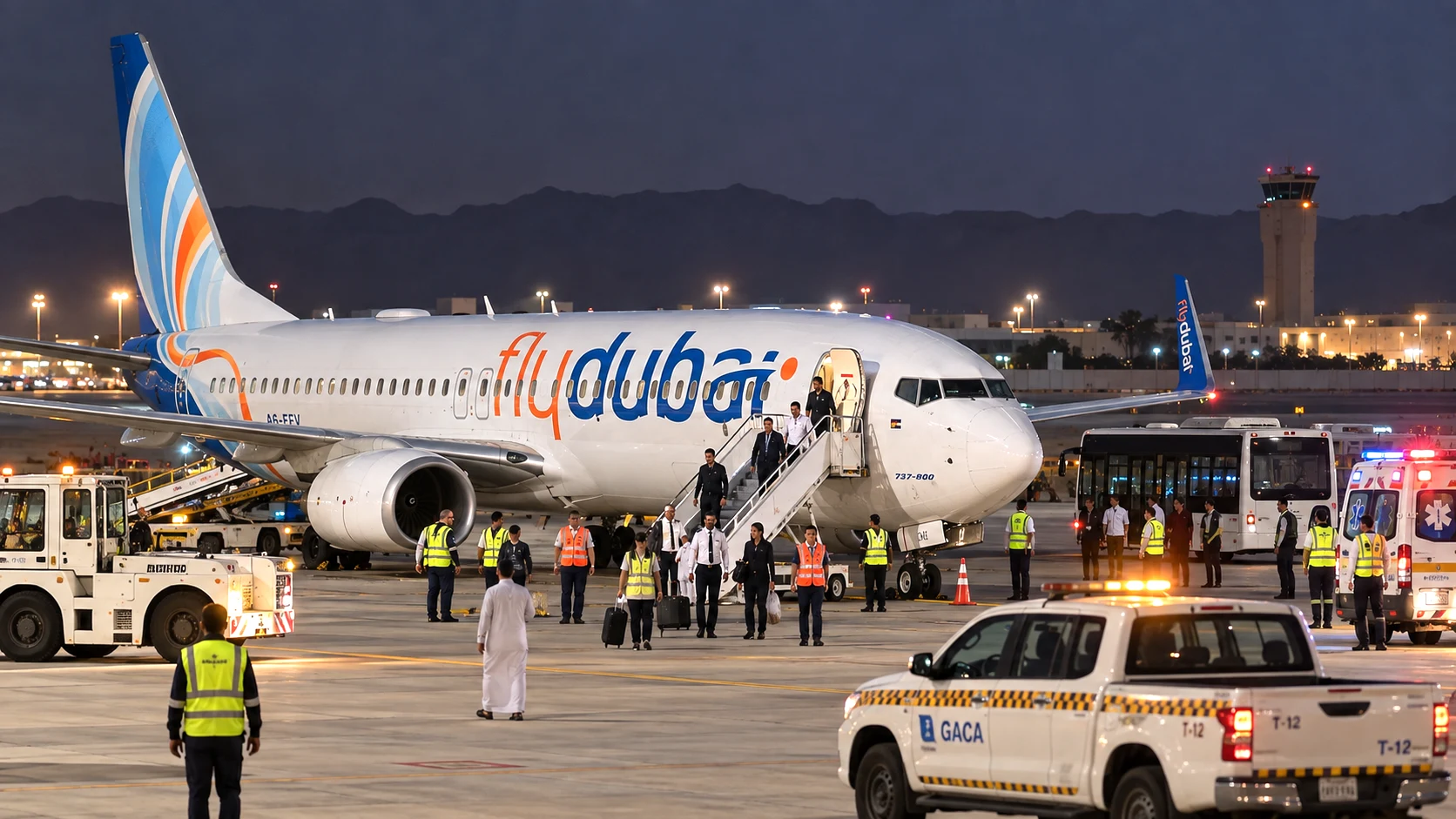
Flydubai Boeing 737 after a cockpit emergency forced flight FZ1073 from Dubai to Tel Aviv to divert to Tabuk, Saudi Arabia
Table of Contents (25 sections)
A flydubai passenger aircraft travelling from Dubai to Tel Aviv was forced to make an emergency diversion to Saudi Arabia after a violent confrontation erupted inside the cockpit, leaving Indian captain Smit Machchhar seriously injured and sending the Boeing 737 into a dramatic loss of altitude.
Flight FZ1073, operating from Dubai International Airport to Ben Gurion International Airport on September 30, ultimately landed safely at Tabuk Airport in northwestern Saudi Arabia after other flydubai pilots travelling aboard the aircraft took control.
Flydubai has confirmed that an “altercation occurred in the flight deck” and that other on-duty flydubai crew travelling on the flight secured the aircraft and landed it safely. The airline says all passengers and crew were accounted for. It has also stressed that the reasons and motive behind the incident remain under formal investigation and warned against premature speculation.
Recommended Reading
Related Stories & In-Depth Guides
Curated editorial perspectives matching this topic.
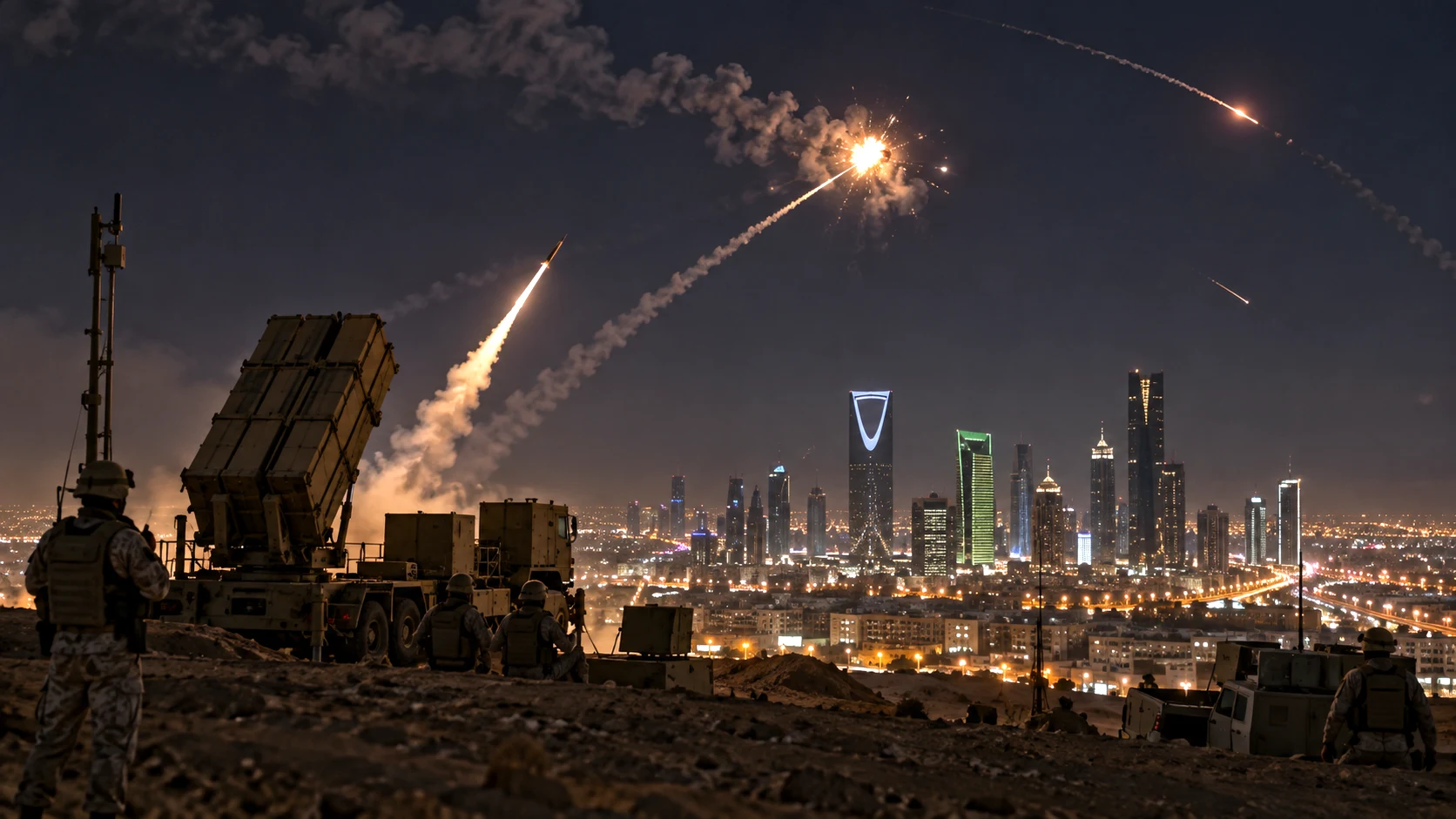
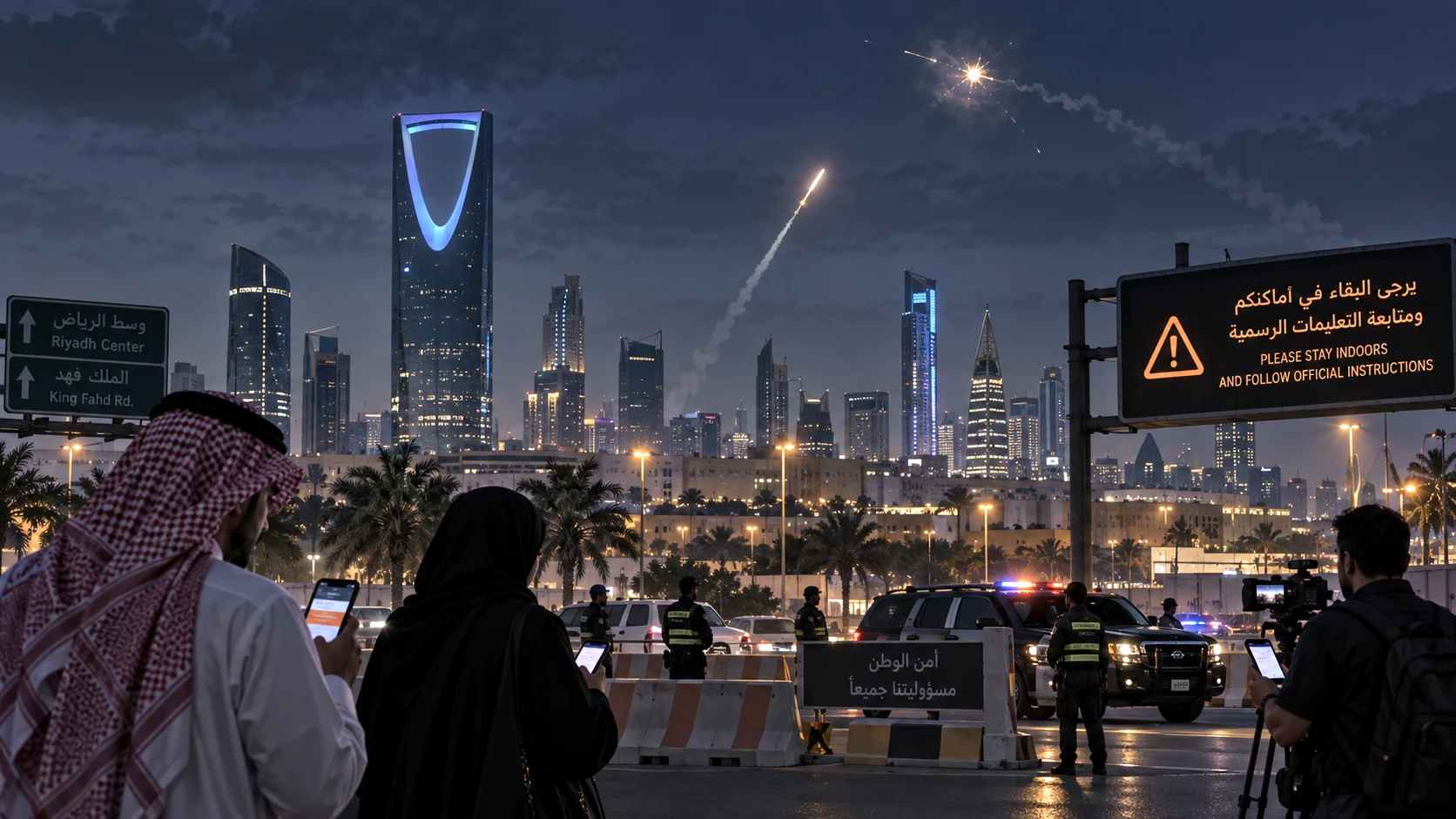
A Houthi ballistic missile aimed at Riyadh was intercepted by Saudi air defences as explosions and smoke were reported near the Saudi capital’s main airport, marking a sharp escalation in the renewed Saudi-Houthi confrontation. The attack comes alongside strikes on Saudi energy infrastructure, inten
European Commission President Ursula von der Leyen has proposed opening the door for Canada to become the EU’s first “associate member,” but the status does not yet legally exist and has not been approved by the bloc’s 27 governments. Mark Carney welcomed the ambition in Strasbourg as Donald Trump w
Israeli officials have given a more detailed and much more serious account. They allege that the co-pilot stabbed Machchhar and attempted to bring down the aircraft before passengers and crew intervened.
That allegation has not yet been established by a completed aviation or criminal investigation, making attribution essential.
What Happened on Flydubai Flight FZ1073?
FZ1073 departed Dubai at about 03:05 UTC on September 30 and initially climbed to a cruising altitude of approximately 34,000 feet, according to Flightradar24.
At about 05:21 UTC, tracking data began showing severe altitude fluctuations.
The aircraft then descended extraordinarily rapidly. Flightradar24 recorded it falling from 30,875 feet to 16,750 feet between 05:22:07 and 05:22:36 UTC — a loss of 14,125 feet in just 29 seconds.
The aircraft later stabilised around 15,000 feet.
At 05:28:48 UTC, FZ1073 transmitted the international transponder code 7700, indicating a general emergency.
Several minutes later it transmitted 7500, the internationally recognised code for unlawful interference with an aircraft, before eventually reverting to an emergency signal and heading towards Saudi Arabia.
Those signals show that an exceptionally serious in-flight emergency occurred, although the transponder codes by themselves do not establish the motive or exact events inside the cockpit.
Israeli Officials Say Co-Pilot Tried to Crash Aircraft
Israeli Prime Minister Benjamin Netanyahu said one pilot stabbed the other and apparently attempted to crash the aircraft.
According to the account provided by Israeli officials, injured Captain Smit Machchhar resisted the attacker and managed to unlock or open the cockpit door, allowing passengers and additional crew members to enter and overpower the co-pilot.
A second pair of flydubai pilots who were travelling aboard the aircraft then took control and safely diverted FZ1073 to Tabuk.
Reuters reported that an Israeli official identified the co-pilot as an Omani national.
The co-pilot's identity has not been publicly established by flydubai in its own statement, and Oman had not immediately issued an official response to the allegation at the time of the initial reports.
Saudi authorities are handling the co-pilot as part of the investigation, according to Israeli officials.
Flydubai Says Motive Remains Unknown
One of the most important distinctions in coverage of the incident is between what the airline itself has confirmed and what other officials allege.
Flydubai has confirmed:
an altercation occurred in the flight deck;
FZ1073 was operating between Dubai and Tel Aviv;
other flydubai crew travelling aboard secured the aircraft;
the aircraft diverted to Tabuk;
it landed safely;
passengers and crew were accounted for; and
authorities are investigating the circumstances.
The airline has not publicly confirmed a terrorism motive or explained why the confrontation began.
“At this early stage, the underlying reasons and motives behind this event are unknown and remain subject to a formal investigation,” flydubai said, while urging against premature speculation.
That remains the appropriate baseline until investigators release further evidence.
Who Is Captain Smit Machchhar?
Captain Smit Machchhar is an Indian national and experienced Boeing 737 pilot who joined flydubai after a lengthy career with SpiceJet.
Reuters reports that the Mumbai native has built a roughly 15-year aviation career and accumulated approximately 9,750 flying hours. Before joining flydubai in 2022, he spent about 11 years with SpiceJet.
Accounts from passengers and Israeli officials indicate that Machchhar suffered serious injuries during the struggle but continued trying to protect the aircraft and those aboard.
His actions have since drawn praise from Indian and Israeli leaders.
What Is Smit Machchhar's Condition?
India's Ministry of External Affairs said on October 1 that Machchhar had been gravely injured but was receiving medical attention and was safe.
MEA spokesperson Randhir Jaiswal said India saluted the captain's bravery and wished him a speedy recovery.
The Indian Embassy in Riyadh said Machchhar was being treated at a hospital in Tabuk and that early reports described his condition as stable. Indian diplomats were also in contact with his family and Saudi authorities.
Reports indicate he underwent medical treatment following the emergency landing.
The exact nature and long-term implications of his injuries have not been publicly detailed by Indian authorities.
PM Modi Calls Captain Machchhar a Hero
Prime Minister Narendra Modi praised Machchhar on October 1, describing him as a hero and highlighting his actions despite being seriously injured.
Modi said the captain had demonstrated immense courage and an unwavering resolve to protect other people aboard the aircraft, adding that India was proud of him.
President Droupadi Murmu also praised what she described as Machchhar's heroic courage and presence of mind.
The Indian government's intervention has significantly increased interest in the incident in India, where questions about the captain's actions, medical condition and aviation background are now driving substantial public attention.
How Was the Plane Finally Landed?
Flydubai says on-duty crew members who were travelling on the flight successfully secured the aircraft.
Multiple accounts indicate that FZ1073 was carrying additional pilots who were not operating the aircraft at the time of the incident.
After the attacker was restrained, those pilots took control and diverted the Boeing to Tabuk.
This is an important clarification because some early social-media accounts suggested that an untrained passenger landed the plane.
Passengers did play an important role in entering the cockpit and helping restrain the alleged attacker, according to officials and eyewitness accounts, but flydubai says its own crew ultimately secured and landed the aircraft.
Passengers Helped Overpower the Alleged Attacker
Passenger accounts describe an extraordinary struggle inside the aircraft.
Several passengers reportedly entered the cockpit after Machchhar opened the door.
Some helped restrain the co-pilot, while others attempted to assist the badly injured captain.
Israeli officials credited their actions, together with those of the crew, with preventing what they believe could have become a catastrophic crash.
Exact details of who performed which action remain partly dependent on eyewitness testimony and may be refined as investigators interview those aboard.
How Many People Were on the Plane?
Published accounts have used slightly different totals.
Reuters reported Netanyahu as saying 174 people were aboard, while some other accounts have distinguished between 174 passengers and additional crew.
Because those numbers have not been consistently presented by every authority, it is safer at this stage to avoid claiming an exact total of passengers plus crew unless flydubai releases a definitive manifest figure.
What is clear is that all passengers and crew were accounted for after the emergency landing, according to flydubai.
Why Did the Aircraft Transmit 7500?
Aircraft transponders use internationally recognised numerical codes to communicate certain emergencies to air traffic controllers.
7700 indicates a general emergency.
7500 is associated with unlawful interference, commonly including a hijacking or comparable security threat.
FZ1073 transmitted 7700, later switched briefly to 7500, and subsequently reverted to an emergency code.
The sequence would have immediately alerted air-traffic and national-security authorities that the situation aboard the aircraft could involve more than a routine technical problem.
Israel initially treated the approaching aircraft as a possible security threat and took precautionary measures while authorities attempted to determine what was happening.
Flydubai Suspends Flights to Israel
In an important operational development on October 1, flydubai announced that it had temporarily suspended flights to and from Israel while the investigation continues.
The airline said the suspension was being implemented in coordination with relevant authorities to allow investigators to establish the facts surrounding the FZ1073 incident.
No date had been announced for services to resume.
The airline said it was working with government authorities, regulators and airport stakeholders and would review the suspension as additional information became available.
What Happened to the Passengers After Landing?
After FZ1073 landed in Tabuk, the passengers remained in Saudi Arabia while arrangements were made for onward transport.
Flydubai dispatched replacement aircraft.
Reuters reported that more than 10 hours after the initial emergency, passengers eventually arrived at Ben Gurion Airport aboard a replacement flydubai aircraft.
The incident also produced an unusual diplomatic situation because Saudi Arabia and Israel do not have normal formal diplomatic relations, although Saudi authorities facilitated the emergency response and safe diversion.
Was This a Terrorist Attack?
That has not yet been conclusively established.
Israeli authorities are examining the incident as a serious security event and Israeli officials have raised the possibility of terrorism.
However, flydubai says the underlying reasons and motives remain unknown.
No completed investigation has yet established:
a terrorist organisation's involvement;
an ideological motive;
whether the suspect acted alone;
why the confrontation began;
or whether there was a wider plot.
Terms such as “terror attack,” “hijacker” or “suicide attack” should therefore be attributed to the officials or sources using them rather than presented as independently established facts.
Why Investigators Will Focus on the Cockpit
The investigation is likely to examine multiple areas, including:
the sequence of events between the two pilots;
recorded flight-control inputs;
cockpit communications;
emergency transponder selections;
the rapid descent;
crew-access procedures;
how any weapon entered the cockpit;
the suspect's background and recent behaviour;
security screening;
pilot medical and employment records where legally relevant;
and testimony from passengers and crew.
Flight-data and cockpit-voice recorders are expected to be central forms of evidence in determining what happened.
Investigators will also need to reconcile passenger recollections with recorded aircraft data because memories formed during extreme emergencies can be incomplete or inconsistent.
The 14,000-Foot Plunge Is a Critical Investigation Point
The most striking piece of objective public data currently available is the aircraft's sudden descent.
Flightradar24 says the aircraft dropped 14,125 feet in 29 seconds, from 30,875 feet to 16,750 feet.
A descent of that magnitude and speed is highly abnormal for a scheduled passenger flight.
However, tracking data alone cannot establish exactly who manipulated the controls, what inputs were made or why the descent occurred.
Those conclusions require examination of the aircraft's flight-data recorder and other evidence.
Why This Incident Is Reviving the Cockpit Camera Debate
The Flydubai case has almost immediately reopened a longstanding aviation-safety argument: should commercial aircraft be required to record video inside the cockpit?
Most commercial airliners carry cockpit voice recorders and flight-data recorders, which allow investigators to reconstruct spoken communications and aircraft-system behaviour.
But there is no internationally harmonised requirement forcing major commercial passenger aircraft to carry cockpit image recorders.
Canada's Transportation Safety Board said in its March 2026 assessment that although cockpit-image technology is mature and technically feasible, no major civil aviation authority has yet created a general mandate for image recording aboard transport-category aircraft.
The US National Transportation Safety Board has advocated cockpit image recording for years, arguing that pictures can reveal crew actions and cockpit conditions that voice and flight-data recordings cannot fully reconstruct.
The Flydubai incident illustrates that argument particularly clearly because the core question is not simply what the aircraft did, but what physically occurred between the people inside the cockpit.
What Could Cockpit Video Have Shown?
A properly designed cockpit image recorder might help investigators determine:
who initiated the confrontation;
where each pilot was positioned;
who operated particular controls;
whether someone deliberately interfered with aircraft systems;
how the captain was injured;
when the cockpit door was opened;
how additional crew and passengers entered;
and how control of the aircraft changed hands.
Voice and flight data can answer some of those questions indirectly, but images potentially add a different type of evidence.
That does not mean cockpit video would necessarily have prevented the FZ1073 incident.
Its strongest conventional safety argument is as an investigative tool after a serious event, unless a completely different live-monitoring system were contemplated.
Why Pilots Have Opposed Cockpit Cameras
The proposal remains controversial.
The Air Line Pilots Association has opposed cockpit image recorders, raising concerns about:
privacy;
leaks;
recordings being used outside safety investigations;
criminalisation of pilots after accidents;
disciplinary use by employers;
misinterpretation of video;
and the possibility that knowing they are continuously filmed could affect crew behaviour.
In comments to the FAA's investigative-technologies process, ALPA said it did not support installation of cockpit image recorders and warned that there was no reliable worldwide mechanism guaranteeing that sensitive footage could never be misused.
Those objections explain why a seemingly straightforward safety proposal has remained unresolved for decades.
NTSB Has Pushed for Cameras for Years
The US National Transportation Safety Board has taken the opposite position.
It argues that cockpit video could provide investigators with objective information about actions, displays and cockpit conditions that cannot always be reconstructed from voice and flight data alone.
The NTSB has recommended that aircraft already required to carry cockpit voice and flight-data recorders also carry crash-protected cockpit image-recording systems.
The board says the issue has remained unresolved despite years of recommendations.
That means the FZ1073 incident is likely to strengthen an existing international debate rather than create a completely new one.
Privacy Will Be the Central Question
A future cockpit-camera mandate would involve more than simply installing ordinary video cameras.
Regulators would need to determine:
exactly what portion of the cockpit can be recorded;
whether pilots' faces need to be visible;
how long recordings are retained;
who can retrieve them;
whether airlines can access them routinely;
whether police or prosecutors can obtain them;
whether recordings can be released publicly;
cybersecurity protections;
and penalties for unauthorised disclosure.
The strongest proposals generally envision crash-protected investigative recorders, not livestreaming pilots to airline management.
That difference will be central to any renewed regulatory debate.
What Investigators Still Need to Establish
Despite the volume of dramatic information already circulating online, several major questions remain unanswered.
What caused the cockpit confrontation?
No authoritative investigation has publicly established the trigger.
Was the attempted descent deliberate?
Israeli officials say yes. Investigators must verify the flight-control sequence.
What was the co-pilot's motive?
Flydubai says the motive remains unknown.
Was terrorism involved?
Israeli authorities are investigating that possibility, but no terrorist affiliation has been established publicly.
How was a weapon allegedly present in the cockpit?
This could become a significant aviation-security question.
Who made each critical control input?
Flight-data evidence will be important.
Were existing cockpit-security and crew procedures followed?
That will require examination of airline procedures and crew testimony.
Will the incident lead to regulatory changes?
Possible areas include cockpit access, pilot screening, crew-security procedures and cockpit image recorders.
Latest Verified Position — October 1, 2026
As of the latest available information:
Flydubai confirms a flight-deck altercation aboard FZ1073.
The flight was travelling from Dubai to Tel Aviv.
Indian captain Smit Machchhar was seriously injured and is receiving treatment in Tabuk.
Early official Indian information says he is safe and in stable condition.
Israeli officials allege that the co-pilot stabbed Machchhar and attempted to crash the aircraft.
Reuters says an Israeli official identified the co-pilot as Omani.
The motive remains unconfirmed.
Flightradar24 recorded a 14,125-foot descent in 29 seconds.
The aircraft transmitted emergency code 7700 and later unlawful-interference code 7500.
Additional flydubai pilots travelling aboard ultimately landed the aircraft safely in Tabuk.
Passengers later continued to Israel on a replacement flight.
Prime Minister Narendra Modi and President Droupadi Murmu have praised Machchhar's actions.
Flydubai has suspended flights to and from Israel while the investigation continues.
There is currently no internationally harmonised mandate requiring cockpit video recorders on large commercial passenger aircraft.
Frequently Asked Questions
What happened on flydubai flight FZ1073?
A serious altercation occurred in the cockpit during the September 30 Dubai-Tel Aviv flight. Indian captain Smit Machchhar was injured, the aircraft underwent an extreme descent and was eventually diverted safely to Tabuk in Saudi Arabia.
Who is Smit Machchhar?
Smit Machchhar is an Indian commercial pilot and flydubai captain with extensive Boeing 737 experience. He previously flew for SpiceJet and joined flydubai in 2022.
Did the co-pilot try to crash the plane?
Israeli officials allege that he did. Flydubai itself has confirmed an altercation but says the underlying reasons and motive remain under investigation. The alleged attempted crash should therefore remain attributed until investigators establish what happened.
Was the co-pilot Omani?
An Israeli official identified him to Reuters as an Omani national. Flydubai has not publicly established his identity or nationality in its own incident statement.
Is Captain Smit Machchhar alive?
Yes. Indian authorities said on October 1 that he was receiving medical treatment and was safe. Early information from the Indian mission described him as stable.
How far did the Flydubai aircraft fall?
Flightradar24 recorded FZ1073 dropping 14,125 feet in approximately 29 seconds during the emergency.
Who landed the Flydubai plane?
Flydubai says on-duty members of its crew who were travelling aboard secured the aircraft and diverted and landed it safely in Tabuk.
What does squawk 7500 mean?
7500 is the international transponder code used to indicate unlawful interference with an aircraft.
Has Flydubai stopped flights to Israel?
Yes. Flydubai said on October 1 that flights to and from Israel would be temporarily suspended while authorities investigate the incident. No resumption date had been announced.
Are cockpit video recorders mandatory?
Not generally on large commercial passenger aircraft. Safety authorities including the US NTSB have supported cockpit image recorders, but major regulators have not adopted a harmonised mandatory requirement.
Bottom Line
Indian captain Smit Machchhar was seriously injured in a cockpit altercation on flydubai FZ1073 (Dubai–Tel Aviv). The aircraft plunged more than 14,000 feet before being safely diverted to Tabuk, Saudi Arabia.
Israeli officials allege the co-pilot tried to crash the plane; flydubai says the motive remains under investigation. All aboard were accounted for. Machchhar is receiving treatment and has been praised as a hero.
The Rajatheertha Team publishes news, explainers, guides and updates across India and the world. Our coverage follows Rajatheertha's editorial, verification and corrections standards.
A huge Ukrainian long-range attack sent hundreds of drones toward Moscow and other parts of Russia early Sunday, damaging the Moscow Oil Refinery, disrupting civilian areas and putting Russian air defences under intense pressure. Russian officials described it as the largest drone attack yet directe
Saudi authorities said air defences destroyed a ballistic missile launched toward Riyadh on September 19, marking the first reported targeting of the capital since the latest escalation with Yemen’s Houthis, as residents received emergency warnings and explosions were heard.**
The Trump administration has formally notified Congress of a proposed sale of 48 F-35A stealth fighters and 49 engines to Saudi Arabia. The deal is not yet completed, while separate US intelligence assessments have reportedly warned that China could try to gain access to sensitive F-35 technology th
Russia’s ruling United Russia party has secured a decisive victory in the country’s 2026 parliamentary election, according to near-complete official results, putting the Kremlin-aligned party on course for a record 355 seats in the 450-member State Duma. The vote was Russia’s first parliamentary ele
US and Iranian representatives held roughly three hours of mediated talks on the sidelines of the UN General Assembly after Donald Trump threatened Iran with further destruction if no deal is reached. Here is what was discussed and what remains unresolved.
The Florida Republican says Hispanic voters who helped return Donald Trump to the White House now “feel betrayed,” while polling shows broader erosion in support for the president’s immigration approach. Separately, Speaker Mike Johnson has sent the House home early for the campaign season, drawing











0 Comments