Trump Says Washington Triumphal Arch Will Double as Military Complex for Drones and Snipers
President Donald Trump says his proposed 250-foot triumphal arch near Arlington National Cemetery will now be designed as a dual-purpose military facility capable of housing drones, sniper positions and ammunition. The announcement adds a national-security dimension to an already controversial Washi
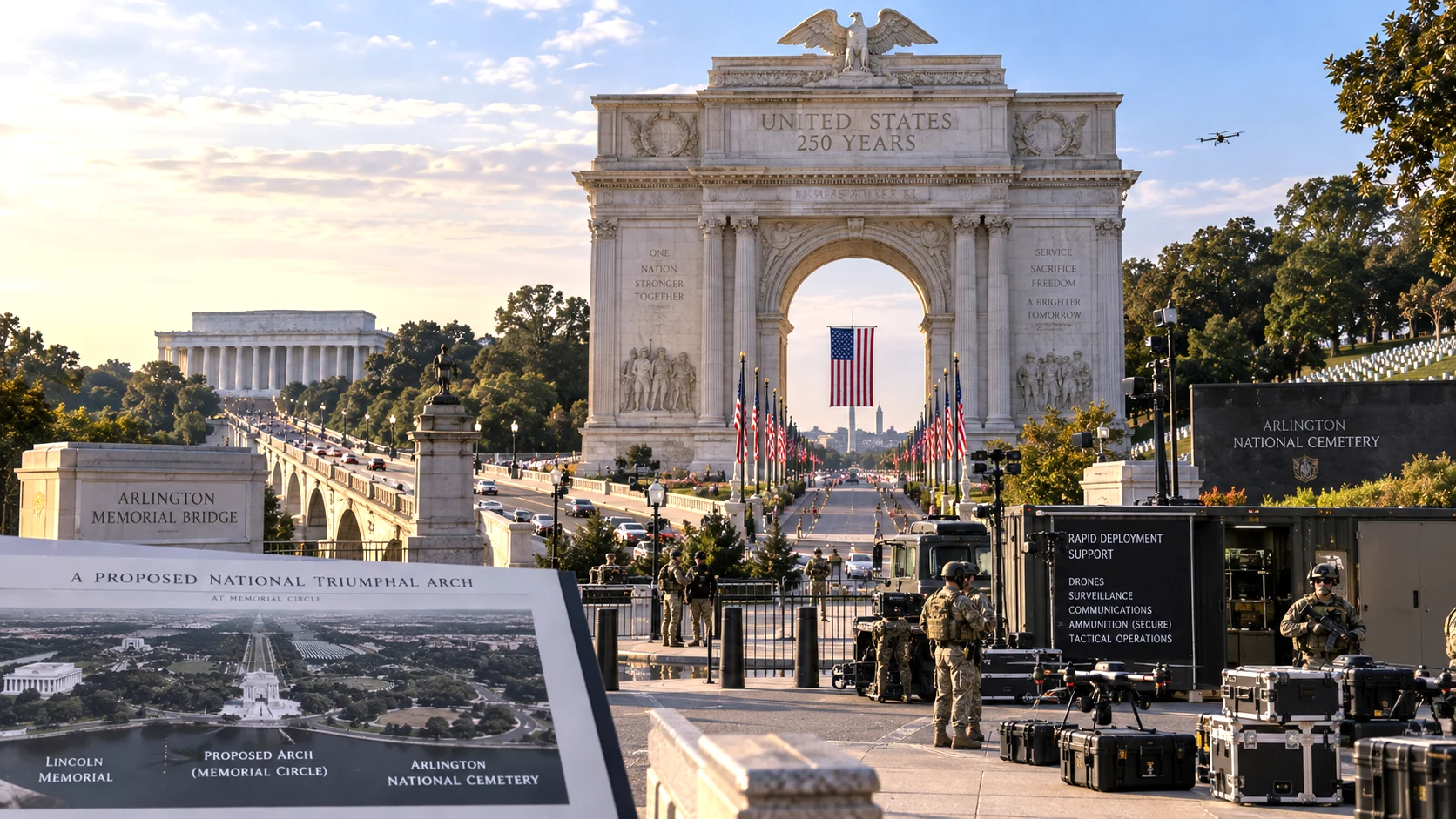
the proposed 250-foot Washington triumphal arch near Arlington National Cemetery with dual ceremonial and military functions
Table of Contents (20 sections)
WASHINGTON, September 21, 2026: President Donald Trump has dramatically expanded the stated purpose of his proposed monumental arch at the western end of Arlington Memorial Bridge, saying the structure would double as what he described as a “top grade Military Complex.”
In a social-media announcement on Sunday, September 20, Trump said the planned structure would be able to house and rapidly deploy large numbers of drones, accommodate snipers on its roof and plaza areas, and store substantial quantities of sniper ammunition.
Trump said he had agreed to the change at the “strong request” of the U.S. military and described national security as the reason for transforming the monument into a dual-use facility.
The announcement itself is genuine.
What has not yet been independently established is which military branch requested the change, what security requirement prompted it, how many drones would be based there or what specific military mission the facility would perform.
Recommended Reading
Related Stories & In-Depth Guides
Curated editorial perspectives matching this topic.
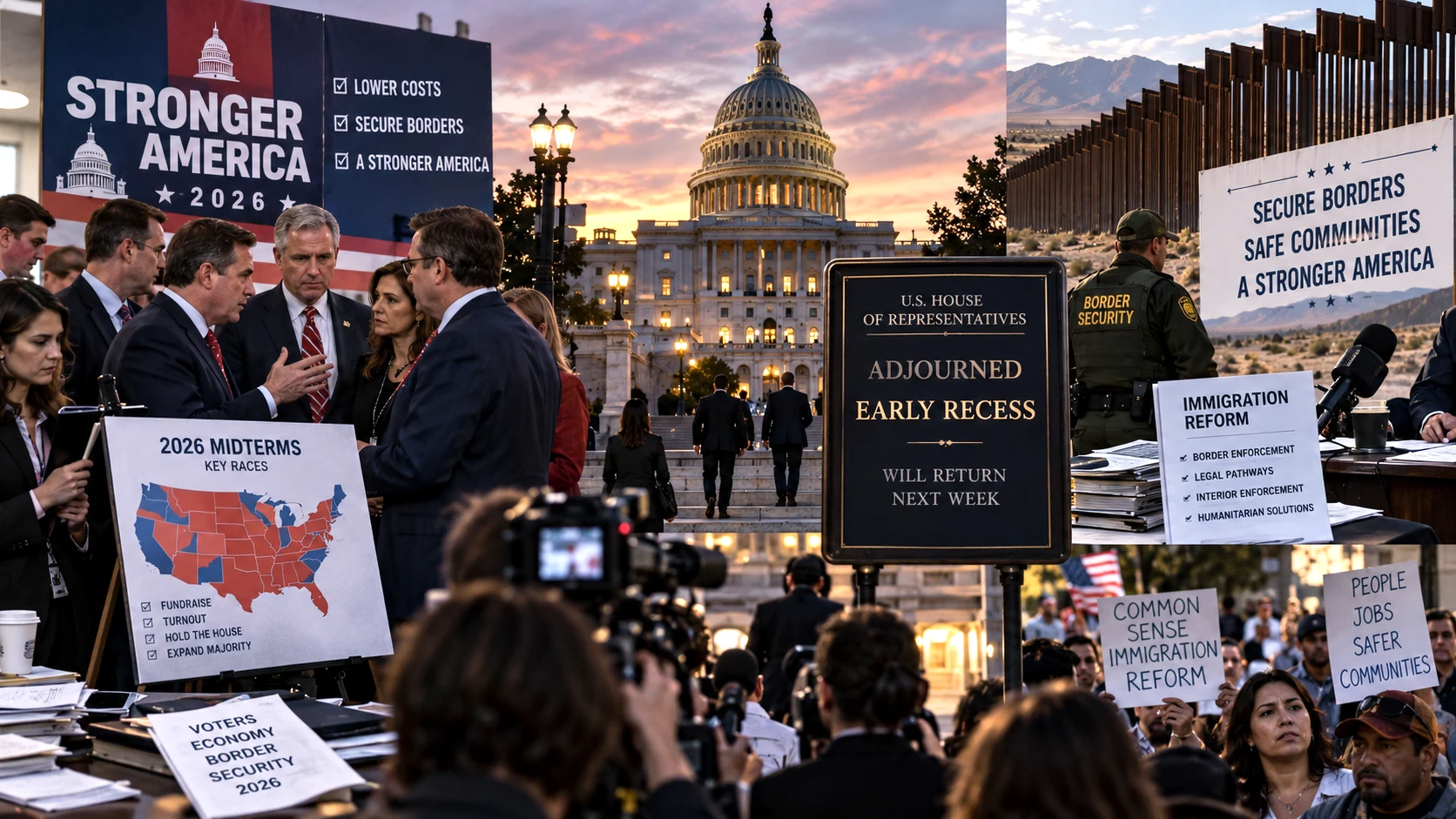
The Florida Republican says Hispanic voters who helped return Donald Trump to the White House now “feel betrayed,” while polling shows broader erosion in support for the president’s immigration approach. Separately, Speaker Mike Johnson has sent the House home early for the campaign season, drawing
Iran’s Revolutionary Guards Navy says the Togo-flagged oil-products tanker caught fire and stopped after attempting what Tehran called an “illegal passage” on September 17. No independent confirmation of the strike, casualties or cargo damage was immediately available as shipping through the strateg
The Pentagon told the Associated Press that it had no information to provide beyond Trump's announcement.
Key Takeaways
Trump proposes converting the 250-foot triumphal arch into a dual-use military complex.
The structure would house drones, sniper positions and ammunition storage according to the president.
Trump says the change was requested by the U.S. military; Pentagon has not independently confirmed details.
The project remains under planning reviews and faces a federal lawsuit over congressional authorization.
Construction of an operational military facility has not begun.
FAA has determined the structure can be built without creating an aviation hazard if visibility measures are included.
What Exactly Is Trump Proposing?
The project is a monumental classical-style arch planned for Memorial Circle, at the western end of Arlington Memorial Bridge.
The location is immediately adjacent to Arlington National Cemetery and directly across the Potomac River from the Lincoln Memorial.
Although the site visually appears to be on the Virginia side of the river, the federal parkland around Memorial Circle lies within Washington's jurisdiction.
The proposed structure is approximately 250 feet, or 76 metres, tall.
That would make it substantially taller than Paris's Arc de Triomphe, which stands at roughly 164 feet, and more than twice the height of the Lincoln Memorial.
Renderings show a white classical arch topped with gilded statuary, including a winged representation of liberty.
The design has also included patriotic inscriptions and ornamental elements intended to commemorate the United States' 250th anniversary.
Drones, Snipers and Ammunition Added to the Plan
Trump's September 20 statement significantly changed the public description of the project.
For much of the planning process, administration officials presented the arch primarily as a commemorative monument and tourist landmark.
Trump now says it should serve both ceremonial and security purposes.
According to the president's announcement, the complex would provide space for:
Drones: Trump said the facility would store a substantial drone capability and allow rapid deployment.
Snipers: He said sniper positions could be established on both the roof and plaza areas.
Ammunition: The president said quantities of sniper ammunition would be stored inside the complex.
National-security functions: Trump characterized the structure as a military installation as well as a triumphal arch.
No technical specifications for any of these functions have been publicly released.
There is no confirmed information on the types of drones involved, their proposed operators, the number of personnel that would be based at the site or whether the facility would operate continuously.
Reuters reported that Trump did not identify a specific threat that required the new military role.
Did the U.S. Military Actually Request It?
Trump says yes.
Independent confirmation is more limited.
The president stated that the conversion came at the strong request of the United States military.
But when reporters sought further information, the Pentagon did not provide supporting details and said it had nothing to add beyond Trump's statement.
Neither Reuters nor the Associated Press reported receiving an independent Pentagon explanation identifying the military organization that made the request or describing the threat assessment behind it.
For accurate reporting, therefore, the proper formulation is:
Trump says the military requested the conversion.
It would be premature to write that the Pentagon has independently confirmed an operational requirement for a drone-and-sniper base at the arch.
Why Put a Military Facility at Memorial Circle?
That question has become one of the central issues surrounding Sunday's announcement.
The proposed location is already close to some of the country's most heavily protected military and government infrastructure.
Arlington National Cemetery sits beside the proposed site.
The Pentagon is nearby.
Joint Base Myer-Henderson Hall is also close to the area.
Washington itself has extensive security infrastructure protecting federal government buildings and national landmarks.
Critics therefore question what capability the proposed arch would provide that cannot already be supplied from established military installations.
Retired Marine colonel and defense analyst Mark Cancian told Reuters that the security rationale appeared unusual given the amount of existing military infrastructure in the immediate area.
The administration has not yet released a detailed military justification answering that question.
Location Raises Aviation Questions
Another major issue is the arch's proximity to Ronald Reagan Washington National Airport.
The planned monument would sit only about 3,000 feet from the airport and near flight paths used by aircraft approaching or departing Reagan National.
That prompted a formal Federal Aviation Administration review.
On September 18, the FAA determined that the proposed 250-foot structure would not constitute a hazard to air navigation, provided specified visibility measures are incorporated.
FAA Requires an ‘Eternal Flame’
The FAA determined that the towering arch should be made clearly visible to pilots.
Its aviation review called for a non-standard eternal flame at the structure's upper section along with continuous floodlighting.
The flame and lighting are intended to help aircraft crews identify the structure.
The FAA also considered cranes that could reach approximately 320 feet during construction, which could last several years.
The aviation determination removes one potential obstacle but does not constitute comprehensive approval for construction.
Other planning, preservation and legal questions remain.
Washington Planning Agencies Have Reviewed the Project
The arch has moved through several federal review stages during 2026.
The U.S. Commission of Fine Arts approved the proposed design in May.
The commission is responsible for reviewing the aesthetic impact of major federal projects in Washington.
Its approval came despite extensive public opposition.
A staff review presented during the process found that more than 99% of public comments received about the project opposed it, according to reporting on the commission proceedings.
The National Capital Planning Commission subsequently gave preliminary approval to the site and building plans in July.
That did not end the review process.
The commission deferred some questions, including how federal building-height rules should apply to the monument.
The newly announced military functions could raise additional planning questions because the building previously reviewed as a monument would now apparently contain security infrastructure and potentially restricted operational areas.
Could the Military Conversion Require a New Review?
Possibly.
Preservationists have questioned whether converting the proposed monument into a military installation would materially change the design and security requirements that federal commissions previously considered.
A real military facility containing ammunition, drone equipment and sniper positions could require features not visible in the earlier public renderings.
Those could potentially include additional controlled-access areas, structural hardening, security checkpoints or restricted zones.
However, no revised technical design incorporating those features has yet been publicly released.
It would therefore be speculation to describe exactly how the site would be secured.
The question now is whether federal agencies determine that Trump's newly announced military function constitutes a sufficiently substantial modification to require additional review.
Veterans Are Already Suing Over the Arch
The project was controversial well before the military-complex announcement.
Three Vietnam War veterans and an architectural historian have challenged the project in federal court.
Their lawsuit argues, among other things, that the administration cannot construct the monument without congressional authorization.
The challengers point to the Commemorative Works Act, the federal law governing many memorial projects in the nation's capital.
The Trump administration disputes that interpretation.
Administration officials have argued that legislation approved more than a century ago for an earlier project at the site supplies sufficient authority and that new congressional approval is unnecessary.
That remains a contested legal question.
Trump’s National-Security Argument Draws Scrutiny
The timing of Sunday's military announcement has therefore attracted attention.
Trump had previously promoted the arch primarily as a grand commemorative gateway to Washington.
The addition of a national-security function comes while the administration is defending the project against litigation.
Lawyers representing the challengers argue that calling the structure a military facility does not eliminate statutory requirements they believe apply to construction.
Representative Don Beyer, a Virginia Democrat whose district includes nearby areas, has likewise questioned the new justification.
The administration, by contrast, says the project can proceed legally.
No final court ruling has resolved the core dispute.
Federal Judge Requires Advance Notice Before Construction
Litigation has already produced safeguards governing the project.
The administration agreed to provide advance notice before substantial construction activity begins at the site, allowing opponents an opportunity to return to court.
A federal judge has maintained restrictions requiring notice before major work proceeds, aside from limited preliminary activities such as archaeological or site-investigation work.
That means Sunday’s presidential announcement should not be interpreted as construction beginning immediately on a military installation.
The structure remains a proposed project, not an operational military complex.
Would It Be the World’s Tallest Triumphal Arch?
At the proposed 250-foot height, Trump's monument would exceed several internationally famous triumphal arches.
Paris's Arc de Triomphe is around 164 feet high.
Trump has repeatedly said he wants the Washington structure to be the largest or most imposing monument of its type.
The arch would also stand far above many nearby structures.
Critics argue that its scale would compete visually with Arlington National Cemetery and alter the historic relationship between the cemetery, Memorial Bridge and the Lincoln Memorial.
Supporters of the design argue that the arch could create a monumental entrance to the capital consistent with Washington's neoclassical architectural tradition.
Why Arlington National Cemetery Matters to the Controversy
The location is particularly sensitive because Memorial Circle sits directly beside Arlington National Cemetery, where hundreds of thousands of U.S. service members, veterans and other eligible individuals are buried.
Opponents argue that a 250-foot structure would dominate views around a landscape designed to convey solemnity.
Some veterans involved in the legal challenge say the monument could alter the visual connection between the cemetery and the Lincoln Memorial across Memorial Bridge.
Fine Arts commissioners themselves discussed the need to respect Arlington's character during the design review.
Nevertheless, the commission ultimately approved the proposed 250-foot scale.
Trump Says Arch Has Historical Roots
In announcing the military conversion, Trump said a triumphal arch at the location had been contemplated since around the Civil War era.
There is historical precedent for grand gateway proposals around Washington, and federal planners considered related monumental concepts in earlier periods.
However, Trump's specific 250-foot design and its proposed military functions are contemporary proposals.
It would therefore be misleading to suggest that today's drone-and-sniper complex represents a Civil War-era plan finally being constructed.
The historical reference concerns earlier ideas for monumental gateways, not the present military configuration.
Connection to Trump’s Broader Washington Building Program
The arch is part of a much larger effort by Trump to reshape prominent areas of Washington during his second term.
Projects and proposals have included changes around the White House, the Lincoln Memorial area, cultural institutions and other federal properties.
One particularly notable comparison is Trump's planned White House ballroom.
Trump has also increasingly described that project in national-security terms.
Reuters and AP noted that the president's new description of the triumphal arch mirrors arguments his administration has made about the ballroom — projects originally promoted primarily for ceremonial purposes later being characterized as security-related infrastructure.
Critics say the security justifications deserve greater scrutiny.
The administration says the projects can serve multiple purposes.
What Is Actually Confirmed?
As of September 21, these points are established:
Trump has proposed a 250-foot triumphal arch at Memorial Circle near Arlington National Cemetery.
The Commission of Fine Arts has approved its design.
The National Capital Planning Commission has provided preliminary approval to the site and building plans.
The FAA has determined that the proposed structure can be built without creating an aviation hazard if specified visibility measures are included.
Trump announced on September 20 that he wants the arch to function as a military complex containing drones, sniper positions and ammunition storage.
Trump says the change was requested by the U.S. military.
The Pentagon has not publicly provided an independent explanation of that request.
No specific drone type, number of drones, staffing plan or threat assessment has been publicly disclosed.
The project faces a federal lawsuit challenging its legality without congressional authorization.
Construction of a fully operational military facility has not begun.
What Remains Unknown?
Several significant questions remain unanswered.
It is not clear which part of the military allegedly requested the complex.
There is no publicly released operational plan explaining what the drones would be used for.
There is no disclosed number of sniper positions or military personnel.
The administration has not published a revised architectural plan showing how ammunition storage and military operations would be incorporated.
It is also unclear whether those modifications will trigger new environmental, historic-preservation, planning or security reviews.
And a federal court has not yet conclusively settled the dispute over whether Congress must authorize the project.
Those unanswered questions matter because the difference between a ceremonial monument and an armed military installation is substantial.
Bottom Line
The claim that Trump wants his Washington arch to house drones and snipers is real.
But the most accurate version is narrower than some social-media posts suggest.
Trump has announced his intention to make the proposed 250-foot triumphal arch a dual-use military complex.
He says the military requested the change.
The Pentagon has not independently explained that request.
The monument is not currently an operating drone base or sniper facility, its final construction authority remains disputed, and many details of the proposed military mission have not been released.
The next major developments will be whether the administration publishes revised plans, whether federal planning agencies require additional review, and how the ongoing court challenge affects construction.
Key Takeaway
Trump proposes dual-use military function for Washington arch.
Drones, snipers and ammunition storage announced.
Military request claimed; Pentagon details limited.
Project faces legal and planning hurdles; construction not begun.
The Rajatheertha Team publishes news, explainers, guides and updates across India and the world. Our coverage follows Rajatheertha's editorial, verification and corrections standards.
European Commission President Ursula von der Leyen has proposed opening the door for Canada to become the EU’s first “associate member,” but the status does not yet legally exist and has not been approved by the bloc’s 27 governments. Mark Carney welcomed the ambition in Strasbourg as Donald Trump w
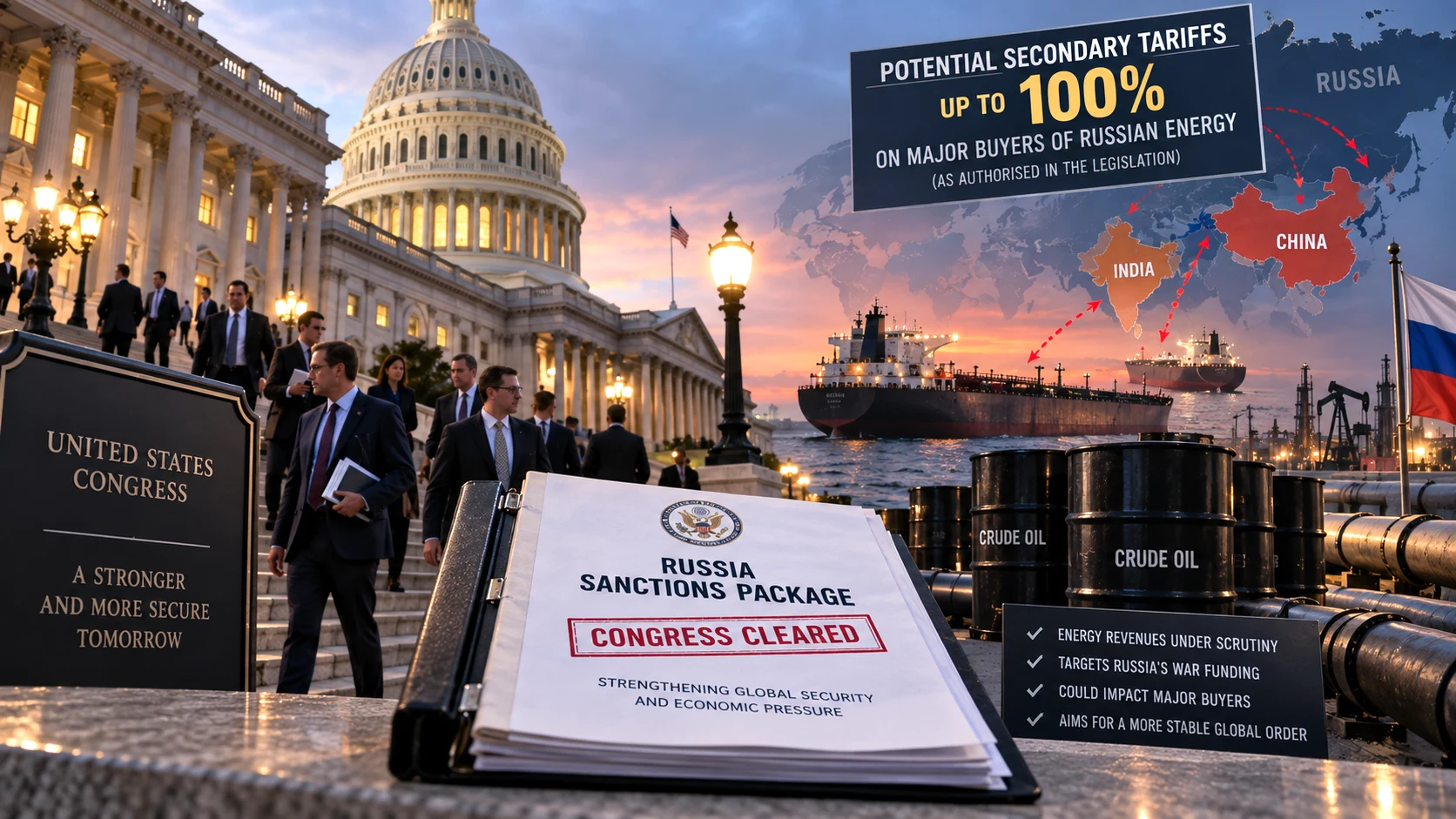
The House approved the Lindsey O. Graham Sanctioning Russia and Iran Act of 2026 by 262-159 after the Senate passed it 86-11. The measure now awaits President Donald Trump’s signature and could subject major buyers of Russian oil or gas to additional US tariffs of up to 100%, although India and Chin
The House voted 262-159 to approve the Lindsey O. Graham Sanctioning Russia and Iran Act of 2026 after the Senate backed it 86-11 in August. The bill targets Russian banks, energy, defence and its “shadow fleet” while creating secondary tariffs for major buyers of Russian oil and gas. It now goes to
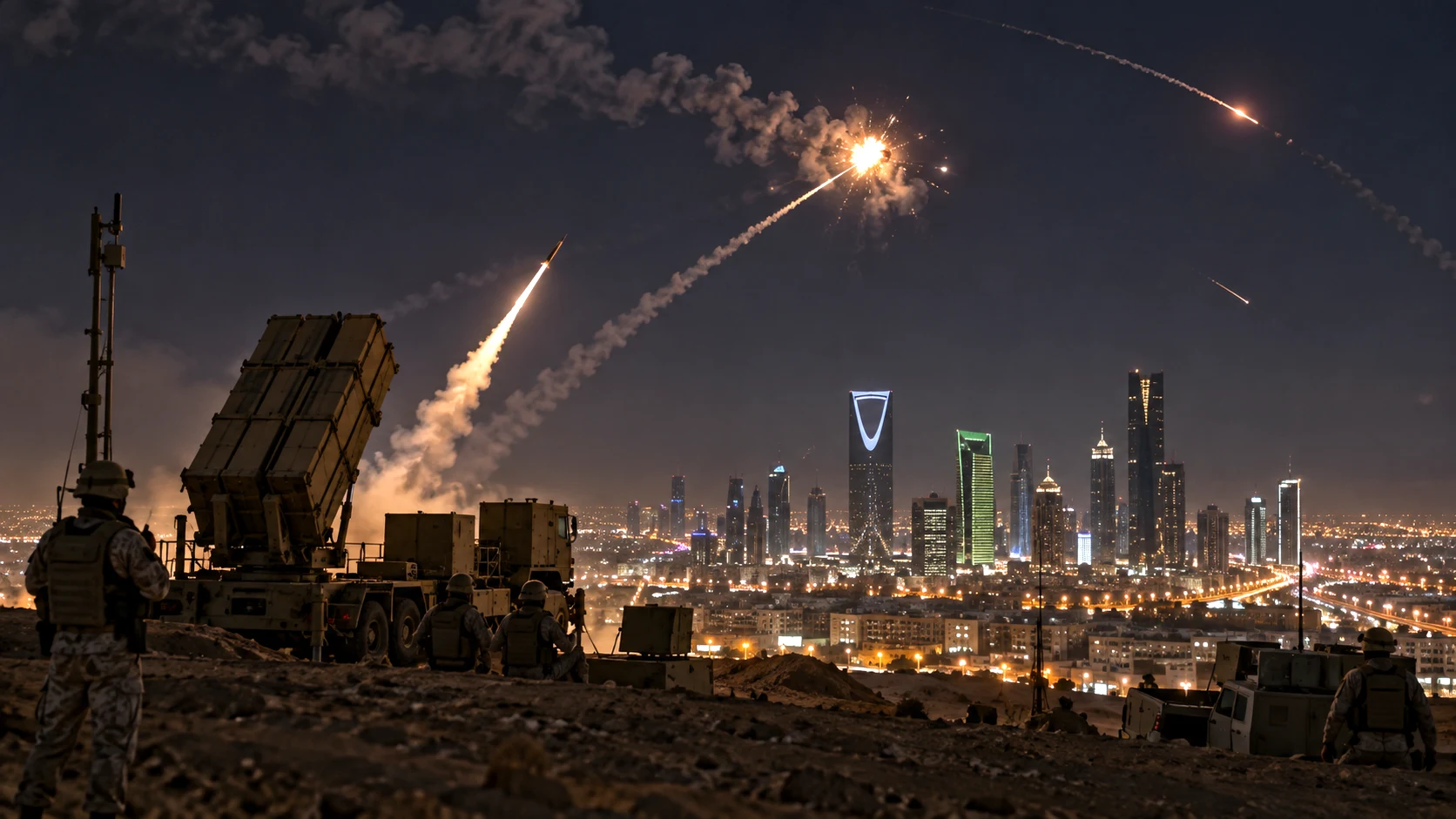
A Houthi ballistic missile aimed at Riyadh was intercepted by Saudi air defences as explosions and smoke were reported near the Saudi capital’s main airport, marking a sharp escalation in the renewed Saudi-Houthi confrontation. The attack comes alongside strikes on Saudi energy infrastructure, inten
The new US law targets Russia’s energy, financial and defence networks and allows additional tariffs of up to 100% on goods from the largest buyers of Russian oil and gas. India faces significant exposure because of its large Russian crude imports, but a 100% tariff on Indian goods has not been impo
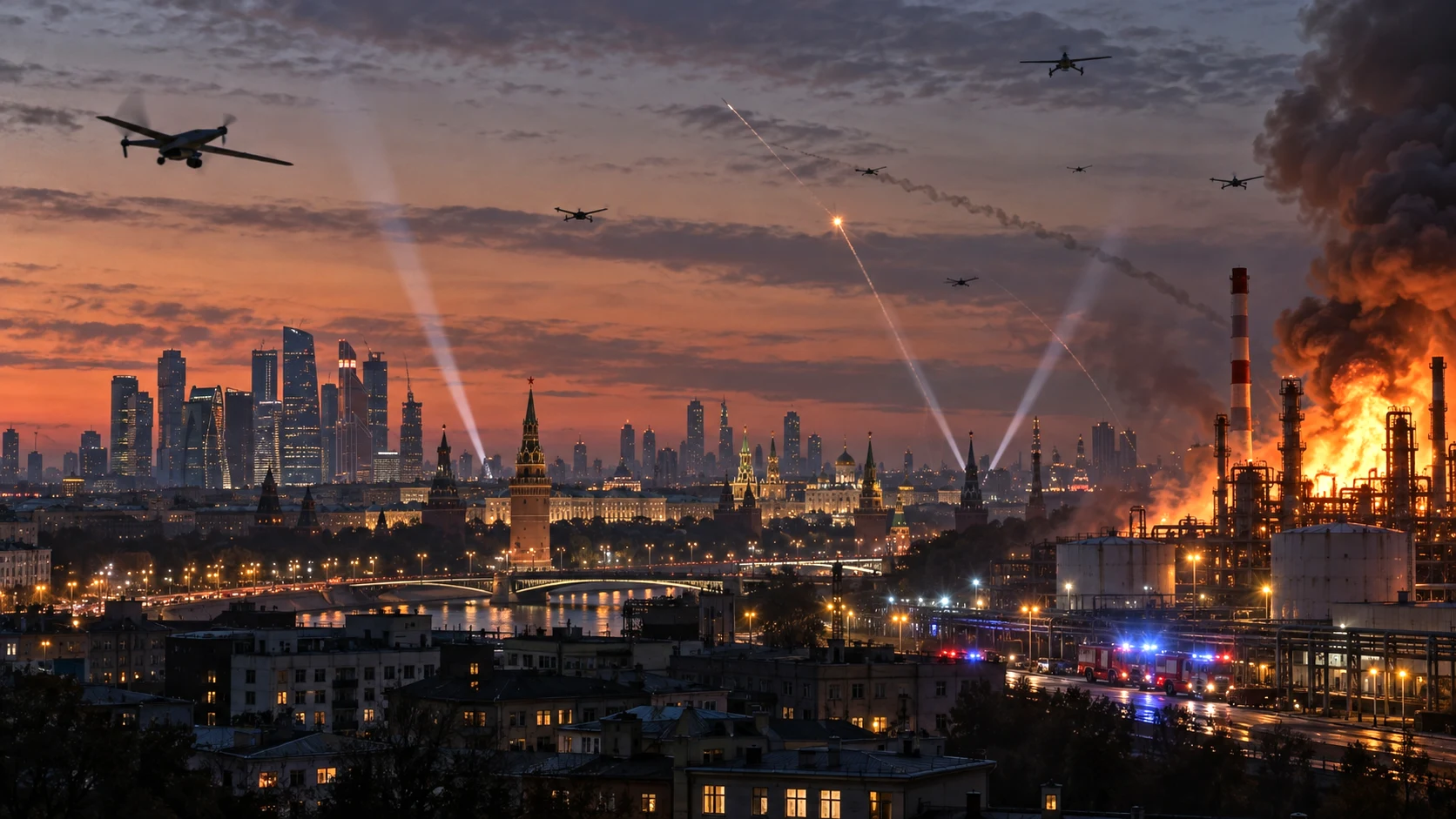
A huge Ukrainian long-range attack sent hundreds of drones toward Moscow and other parts of Russia early Sunday, damaging the Moscow Oil Refinery, disrupting civilian areas and putting Russian air defences under intense pressure. Russian officials described it as the largest drone attack yet directe






0 Comments