Trump Signs Greenland Security Deal With Denmark and Greenland, Expanding US Military Access
Donald Trump, Denmark and Greenland have signed a new Arctic security agreement expanding US military access, allowing new defence areas and strengthening Pituffik Space Base while preserving Danish sovereignty and Greenland's right to self-determination.
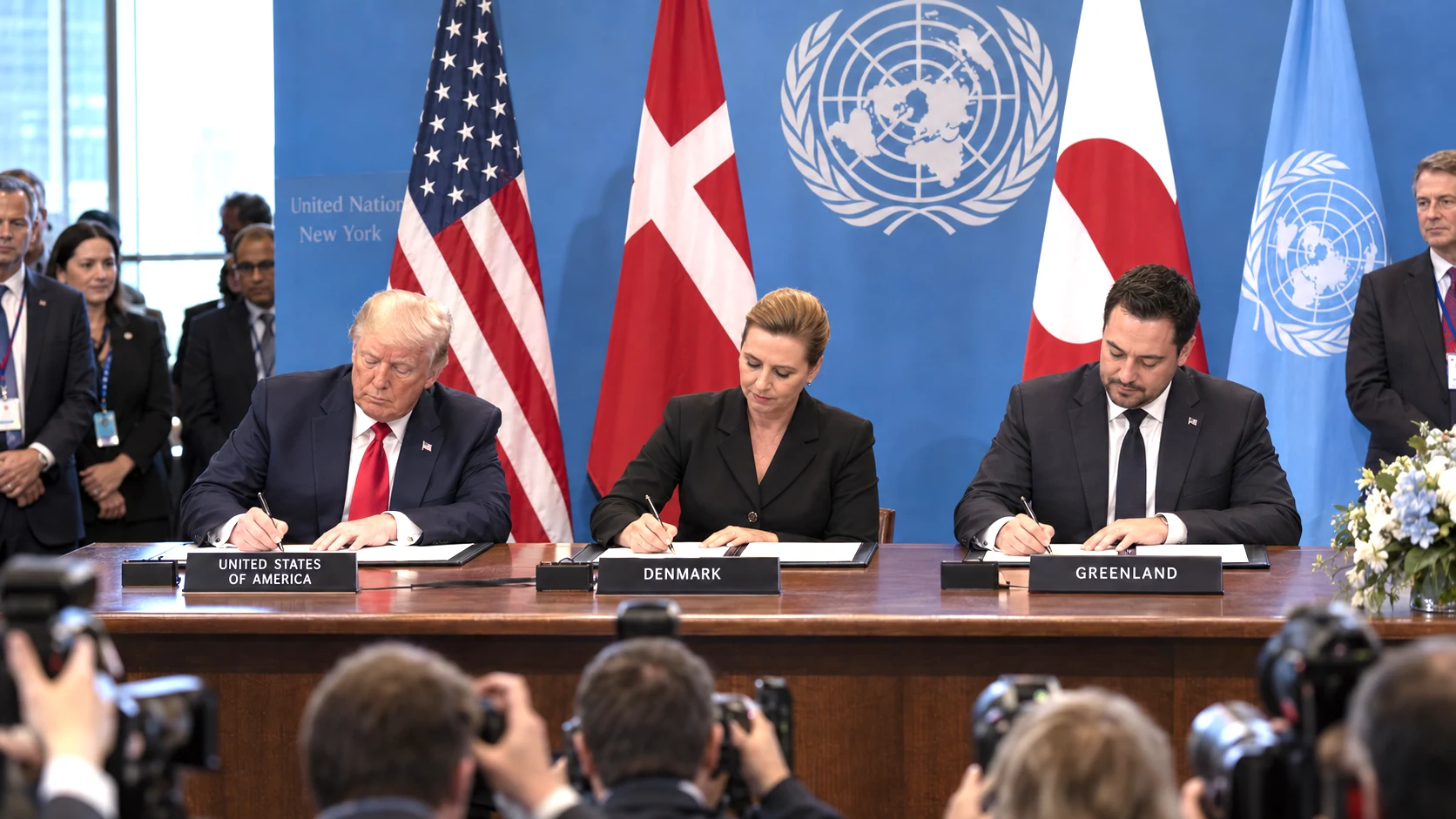
US President Donald Trump, Danish Prime Minister Mette Frederiksen and Greenland Prime Minister Jens-Frederik Nielsen have signed a major new Arctic security agreement that substantially expands the United States' ability to operate military forces and infrastructure across Greenland.
The agreement was signed at the United Nations headquarters in New York on September 22, 2026, during the UN General Assembly. It amends and supplements the defence framework that has governed US military activity in Greenland since 1951.
Recommended Reading
Related Stories & In-Depth Guides
Curated editorial perspectives matching this topic.
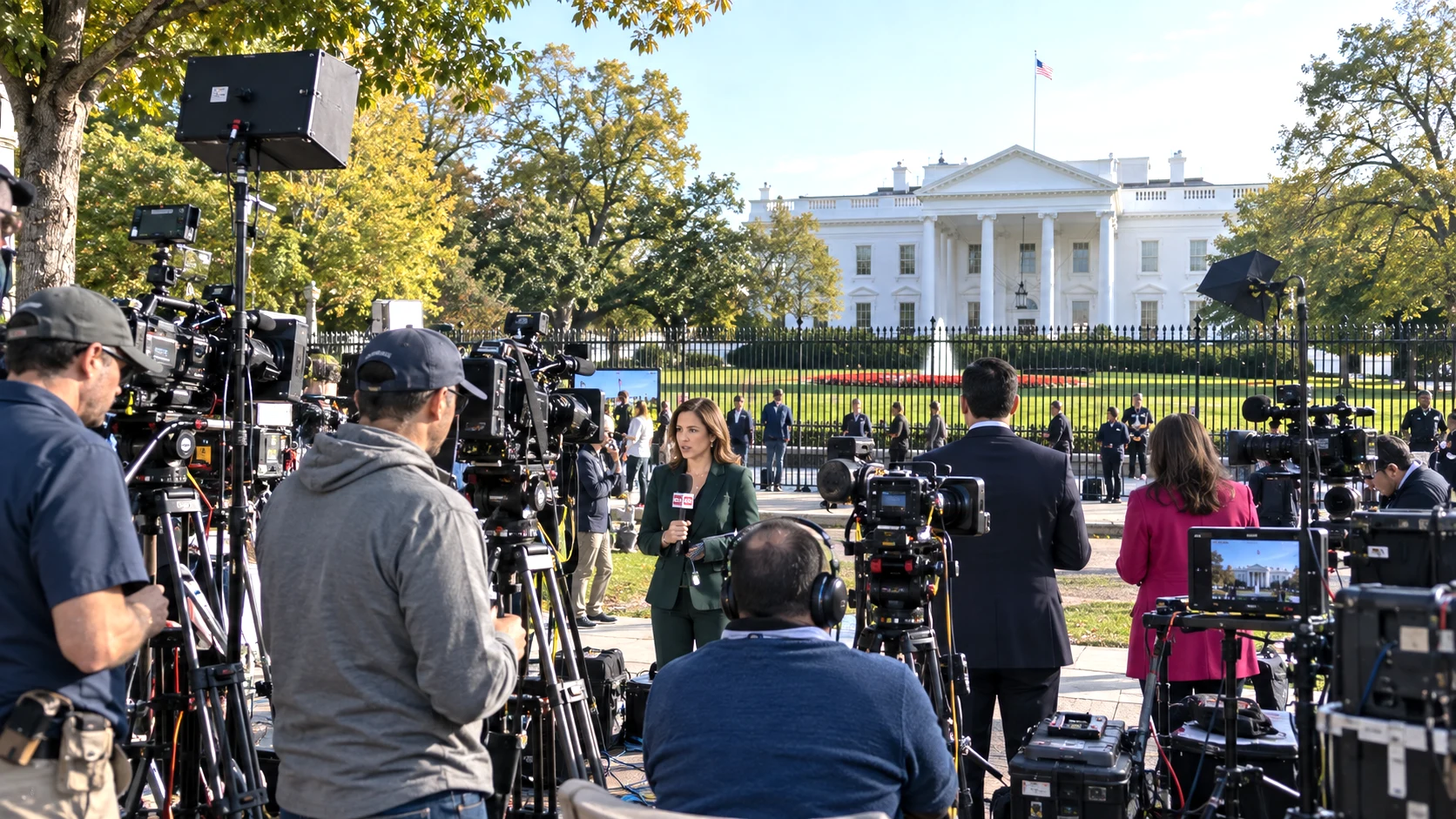
Major US television networks have suspended shared pool coverage of President Donald Trump after CNN was blocked from its scheduled duties, while CNN, MS NOW and Politico have sued over their White House access ban.
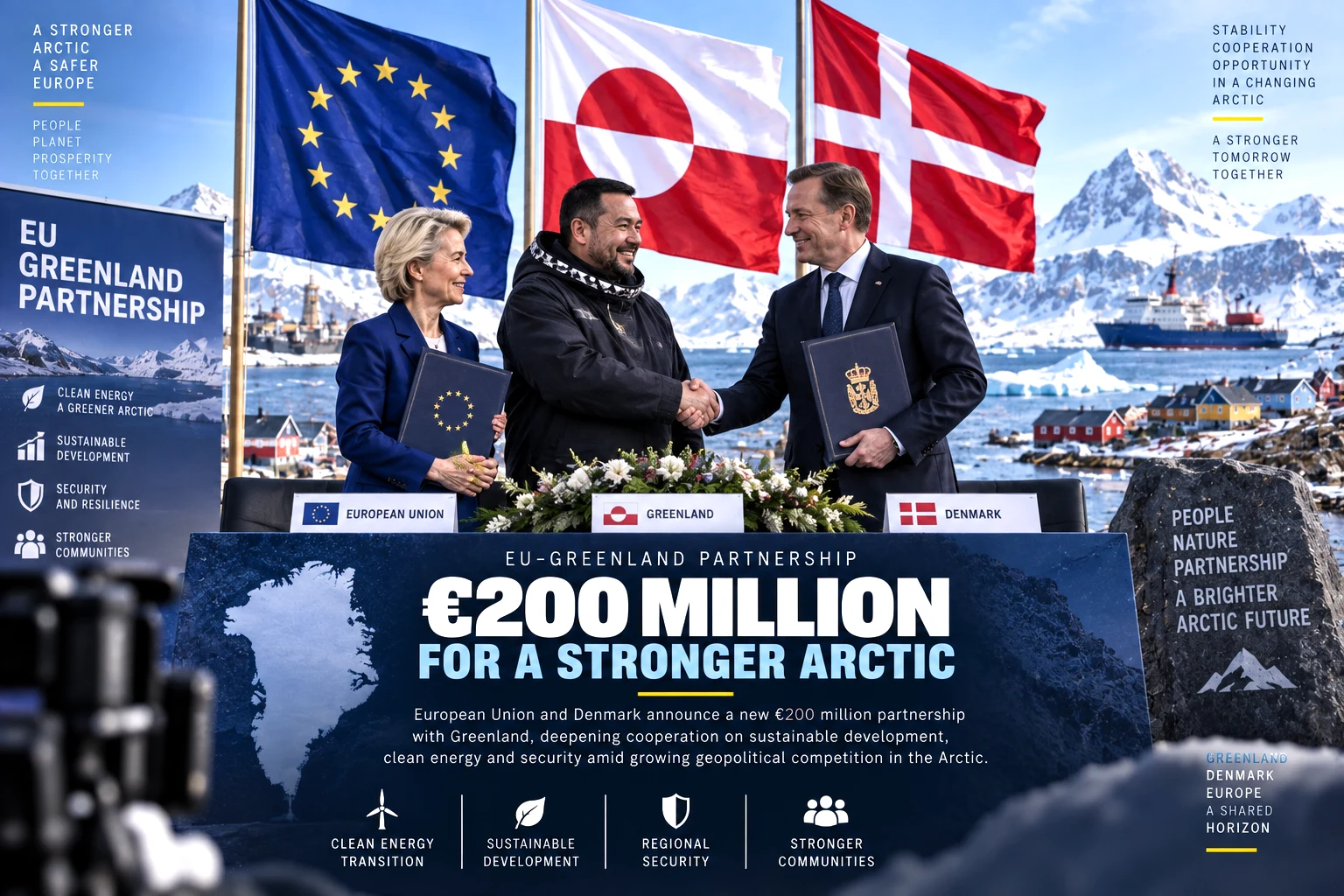
The EU has announced a €200 million Greenland partnership covering minerals, energy and connectivity as Trump’s push for US control keeps Arctic sovereignty in focus.
Under the signed text, the United States will be permitted to expand operations at the existing Pituffik Space Base, establish additional defence areas at Narsarsuaq and Mestersvig, and potentially propose further military sites in the future subject to consultations and agreement among the parties.
The agreement also provides broad US military access by air, land and sea between authorised defence areas and expands provisions for aircraft overflight, military vessels and unmanned installations.
However, the deal does not make Greenland US territory.
Its text explicitly reaffirms the sovereignty and territorial integrity of the Kingdom of Denmark and recognises Greenlanders as a people with a right to self-determination under international law.
It also has not yet entered into force. Denmark and Greenland must complete the necessary parliamentary procedures before the agreement becomes legally effective.
Key Takeaways
Trump, Mette Frederiksen and Jens-Frederik Nielsen signed the agreement on September 22.
The United States can expand activity at Pituffik Space Base.
The deal provides for additional US defence areas at Narsarsuaq and Mestersvig.
Additional defence areas may be proposed in the future but require consultation and agreement.
US aircraft, vessels and military personnel receive substantially broader access across Greenland.
The agreement supports possible infrastructure connected to the US “Golden Dome” missile-defence concept.
Non-NATO states are generally barred from maintaining persistent military forces or bases in Greenland unless the parties agree otherwise.
Sensitive foreign investment can face additional screening on security grounds.
Denmark retains sovereignty over Greenland, while Greenland's right to self-determination is reaffirmed.
The agreement has no fixed end date, but it has not yet entered into force because parliamentary procedures remain outstanding.
What Exactly Was Signed?
The agreement formally amends the 1951 US-Denmark Defence Agreement concerning Greenland, along with subsequent arrangements governing American military activity on the island.
The document says the parties want to strengthen Arctic and North Atlantic security as military activity and strategic competition in the region increase.
It also calls for stronger NATO involvement in the Arctic, including:
military planning;
presence;
exercises; and
joint intelligence gathering.
The agreement therefore goes considerably beyond the operation of a single US facility.
It creates a framework for a broader American military footprint across strategically important parts of Greenland.
Has Greenland Become Part of the United States?
No.
The agreement does not transfer sovereignty, ownership or territorial control of Greenland to Washington.
The text explicitly reaffirms the sovereignty and territorial integrity of the Kingdom of Denmark. It also recognises the Greenlandic people's right to self-determination.
Denmark's government made the same point after the signing.
Frederiksen said the agreement strengthens common defence while respecting the Kingdom's sovereignty and territorial integrity and Greenland's right to determine its own future.
Greenland Prime Minister Jens-Frederik Nielsen similarly emphasised that the agreement recognises Greenlanders as a people with the right to self-determination.
This distinction is particularly important because Trump had previously pushed publicly for US control or acquisition of Greenland.
The September agreement represents a security arrangement rather than annexation.
What Changes at Pituffik Space Base?
The agreement expressly allows the United States to modernise and expand its activities at Pituffik Space Base.
Pituffik, formerly known as Thule Air Base, has long been central to US missile warning, space surveillance and Arctic defence.
Under the new framework, its role can be expanded as Washington and its allies strengthen northern missile and aerospace defence.
The agreement's preamble also refers specifically to the parties' shared interest in US military access that could support establishment of a Golden Dome defence system.
That wording establishes a strategic basis for such activity but should not be interpreted as confirmation that every proposed Golden Dome installation has already been designed, funded or constructed.
Are Two New US Bases Being Built?
The agreement allows the United States to establish additional “Defence Areas” at Narsarsuaq and Mestersvig. Under the treaty's definition, a Defence Area is an area where the United States establishes or operates a military base under the defence arrangements.
However, the exact scale and technical configuration of those sites have not been fully fixed.
The agreement says the modalities and technical details must still be mutually agreed.
For that reason, saying “two new bases are already operational” would be inaccurate.
A more precise description is that the agreement authorises two additional US defence areas that could become military bases or operational facilities once implementation details are agreed.
Where Are Narsarsuaq and Mestersvig?
Narsarsuaq is in southern Greenland and has historical significance for transatlantic aviation and military operations.
Mestersvig lies on Greenland's remote eastern side and gives the alliance another strategically placed Arctic location.
Combined with Pituffik in northwestern Greenland, the planned defence areas would give the US military a geographically broader footprint across the island.
That distribution could support surveillance, logistics, missile defence, aircraft operations and other Arctic missions depending on the eventual configuration of each site.
Could the United States Build More Bases Later?
Potentially, yes—but not unilaterally.
The agreement allows either party to identify a need for an additional Defence Area.
A proposal would need to specify matters such as:
location;
scope;
size;
intended activities; and
mitigating measures.
The parties would then consult through a Permanent Committee.
If agreement is not reached there within 90 days, consultations would escalate first to deputy-minister level and then to ministers.
The clause therefore creates a pathway for further expansion but still requires a negotiated process.
How Broad Is US Military Access?
The agreement gives US forces significant mobility rights.
American military vessels, aircraft, armed forces and vehicles will be allowed free access and movement between Defence Areas through Greenland, including its territorial waters, by land, air and sea.
US aircraft may also fly over and land in Greenland, while US public vessels receive specified access to Greenlandic territorial waters, subject to the terms agreed by the parties.
These provisions amount to a substantial expansion of the formal framework governing American military operations on the island.
However, the agreement also states that those rights should be exercised with respect for Greenlandic society and ways of life, including hunting, fishing and traditional activities.
What About Unmanned Military Installations?
The agreement also creates an accelerated process for considering US requests to establish unmanned military installations outside designated Defence Areas.
Denmark and Greenland would still review such proposals, which must describe the location, activities, size and other implementation details.
Possible unmanned facilities could theoretically include sensors, communications equipment or surveillance installations, although the treaty does not specify that every future installation will serve one particular purpose.
Is This Agreement Permanent?
The treaty says it does not have an end date.
It may be amended only by mutual consent under the existing defence framework.
That gives the new arrangement a long-term character.
The White House has described the agreement as providing permanent US security and basing rights in Greenland, although some of the administration's political language goes further than the more technical wording of the treaty itself.
What Happens if Greenland Becomes Independent?
The agreement directly addresses that possibility.
It says that if Greenland exercises its right to self-determination and becomes independent, Denmark and Greenland are to ensure that the new Greenlandic state:
remains in NATO or applies for NATO membership where necessary; and
assumes the rights and obligations contained in the defence agreement.
That provision is significant because it attempts to preserve the US security arrangement even if Greenland's constitutional relationship with Denmark changes.
At the same time, the agreement explicitly recognises Greenland's right to self-determination rather than attempting to prevent independence.
Can Russia or China Establish Bases in Greenland?
The agreement says a state that is not a member of NATO cannot establish its own manned or unmanned military installations or maintain a persistent military-force presence in Greenland unless the parties agree otherwise.
In practical geopolitical terms, that provision would restrict countries such as Russia and China from establishing an independent military presence on the island without approval.
The treaty itself frames the policy around non-NATO states rather than naming only those two countries.
What Does the Deal Say About Chinese or Other Foreign Investment?
The agreement goes beyond purely military installations.
It also contains provisions concerning foreign direct investment in particularly sensitive sectors or activities, including critical infrastructure and resource extraction.
Under the text, investors from countries that are not NATO members, NATO partners or European Union members may face restrictions where control, significant influence or access to non-public information could threaten national security or public order.
Greenland is expected to implement this through its investment-screening rules in cooperation with Danish authorities, with consultations involving US and other relevant partners.
This gives the deal an economic-security dimension alongside its military provisions.
Why Are Greenland's Minerals Important?
Greenland has attracted growing international interest because of its deposits of strategically important minerals.
The agreement specifically defines sensitive activities as potentially including resource extraction, reflecting the connection between Arctic security and competition over critical minerals.
Washington has repeatedly raised concerns about strategic competitors obtaining influence over infrastructure or minerals in Greenland.
The new investment-screening framework could therefore make some foreign mining or infrastructure investments subject to greater scrutiny.
However, the agreement does not give the United States ownership of Greenland's mineral resources.
Why Is Greenland Strategically Important?
Greenland sits between North America and Europe and occupies a strategically important position in the Arctic and North Atlantic.
Its geography makes it relevant to:
missile warning;
space surveillance;
transatlantic defence;
Arctic shipping;
air and maritime operations;
NATO's northern flank; and
monitoring military activity in the High North.
The agreement itself says the Arctic security environment is changing because of increased military activity and growing strategic interest by adversaries.
The parties also support stronger NATO planning, exercises, presence and intelligence cooperation in the region.
What Is Trump's “Golden Dome”?
Trump's administration has promoted “Golden Dome” as a proposed broader missile-defence architecture for North America.
The Greenland agreement specifically acknowledges an interest in giving the United States access necessary to defend Greenland, NATO territory and the American continent, including through establishment of a Golden Dome defence system.
Greenland's geography could make it strategically relevant to sensors, tracking systems or other components of missile defence.
But the treaty does not by itself provide a detailed deployment schedule, cost or final technical design.
Those questions would depend on subsequent implementation decisions.
What Does Greenland Get From the Agreement?
The treaty states that the parties want Greenlandic society to receive tangible benefits from the defence areas.
One concrete provision says US contracts involving establishment, maintenance, servicing, construction and dismantling of Defence Areas should go to Greenlandic commercial sources to the maximum extent possible, depending on capability and feasibility.
That could create opportunities for local firms involved in:
construction;
logistics;
maintenance;
transport;
supplies; and
support services.
The precise economic effect will depend on how much infrastructure is ultimately developed and how contracts are implemented.
What Did Greenland's Prime Minister Say?
Jens-Frederik Nielsen welcomed the agreement and said it recognises Greenland's role in Arctic security while respecting Greenlanders' right to self-determination.
In a subsequent press conference, Nielsen also acknowledged that earlier US rhetoric regarding Greenland had created distrust.
He described the agreement as a step towards rebuilding that trust and emphasised that Greenland's red lines concerning self-determination and Greenlandic ways of life had been respected.
That context is important because Greenlandic acceptance of closer military cooperation should not be confused with support for US annexation.
What Did Denmark Say?
Danish Prime Minister Mette Frederiksen described the agreement as beneficial to Greenland, Denmark, the United States, NATO and Europe.
She stressed that the agreement is firmly rooted in NATO cooperation and respects the Kingdom of Denmark's sovereignty and territorial integrity.
Danish Foreign Minister Lars Løkke Rasmussen similarly described the arrangement as strengthening security while preserving Greenland's right to self-determination.
What Is the US Position?
The Trump administration has presented the agreement as a major national-security achievement.
The White House says it gives the United States lasting security and basing rights while preventing adversarial military or sensitive economic footholds in Greenland.
Trump described the agreement in broader political language as giving the United States extensive ability to defend North America from Greenland.
Those comments should be understood as the administration's interpretation of the deal.
The treaty itself continues to recognise Danish sovereignty, Greenlandic self-determination and a joint consultation process for several categories of future military activity.
Is the Agreement Already in Force?
No.
This is one of the most important details for readers.
The three leaders have signed the agreement, but the treaty says it enters into force only after Denmark and Greenland complete the necessary parliamentary procedures and the United States is formally notified.
The Danish Prime Minister's Office confirmed the same requirement after the signing ceremony.
Therefore:
Signed does not yet mean fully in force.
The parliamentary process is the next major step.
Does the Agreement Require US Congressional Approval?
The published agreement specifically states that its entry into force depends on completion of necessary parliamentary procedures by the Kingdom of Denmark together with Greenland.
The document does not state in that clause that US Senate treaty ratification is required.
Any separate US legal or funding requirements for particular military projects would depend on the nature of those projects and applicable US law.
Does This End Trump's Effort to Acquire Greenland?
Politically, the agreement represents a major shift from the earlier dispute over ownership.
Reuters described the agreement as resolving a prolonged Arctic standoff by expanding US military and strategic rights while leaving Greenland within the Kingdom of Denmark.
The signed treaty itself contains no transfer of sovereignty to the United States.
Instead, it explicitly recognises Danish territorial integrity and Greenlandic self-determination.
The more accurate description is therefore that Washington obtained expanded security access without acquiring Greenland.
What Changes for NATO?
The agreement calls for stronger NATO engagement in Arctic:
planning;
military presence;
exercises; and
joint intelligence gathering.
Denmark also commits to continuing its own stronger Arctic defence posture across land, maritime, air and space capabilities.
The deal therefore does not simply replace Danish or NATO defence with American control.
Instead, it attempts to integrate a larger US presence into a broader NATO framework.
Why the Deal Matters Beyond Greenland
The agreement could have implications across several areas of global security.
Arctic military competition
Greater US access could strengthen NATO surveillance and operational capacity in the High North.
Missile defence
Greenland's position could support parts of US and NATO early-warning and missile-defence infrastructure.
Russia
Russia has extensive Arctic military infrastructure, making NATO's northern posture an important strategic issue.
China
China does not border the Arctic but has pursued Arctic economic, scientific and infrastructure interests. The investment clauses could limit its ability to gain control over strategically sensitive Greenlandic projects.
Critical minerals
Security screening may increasingly intersect with Greenland's mining and resource-development decisions.
Greenland's political future
The provision dealing with a potentially independent Greenland gives the agreement constitutional significance beyond immediate military planning.
What Happens Next?
The most important developments to watch are:
completion of parliamentary procedures in Denmark and Greenland;
detailed implementation plans for Narsarsuaq and Mestersvig;
expansion plans at Pituffik Space Base;
decisions concerning Golden Dome infrastructure;
the scale of additional US troop and equipment deployments;
whether the United States eventually proposes further Defence Areas.
Until those implementation decisions are made, claims about exact troop numbers, construction costs or the final size of the new installations should be treated cautiously.
Latest Verified Position
As of September 23, 2026, the verified position is:
Donald Trump, Mette Frederiksen and Jens-Frederik Nielsen signed the trilateral Greenland security agreement on September 22.
It expands and supplements the 1951 Greenland defence framework.
The US can expand activities at Pituffik Space Base.
The agreement provides for additional Defence Areas at Narsarsuaq and Mestersvig.
Additional Defence Areas may be proposed but require consultations and mutual agreement on implementation.
US forces receive broad access and movement rights across Greenland for defence purposes.
Non-NATO states are generally barred from maintaining military installations or persistent forces in Greenland unless otherwise agreed.
The agreement includes new security screening provisions for some foreign investment in sensitive sectors.
Denmark retains sovereignty and Greenland retains its recognised right to self-determination.
The agreement has no fixed end date.
It has been signed but is not yet in force, pending necessary parliamentary procedures.
Frequently Asked Questions
Did Trump sign a Greenland military deal?
Yes. Trump signed a trilateral Arctic security agreement with Danish Prime Minister Mette Frederiksen and Greenland Prime Minister Jens-Frederik Nielsen on September 22, 2026.
Did the United States buy Greenland?
No. The agreement explicitly reaffirms the sovereignty and territorial integrity of the Kingdom of Denmark and Greenland's right to self-determination.
Is Greenland now controlled by the United States?
No. The United States receives substantially expanded military and security rights, but Greenland has not become US territory.
Is the US building two new bases?
The agreement authorises additional US Defence Areas at Narsarsuaq and Mestersvig. The exact technical details still need to be mutually agreed.
What happens to Pituffik Space Base?
The United States is explicitly permitted to modernise and expand activities at Pituffik.
Can the US establish more military sites in Greenland?
Potentially. The treaty creates a process through which additional Defence Areas can be proposed and negotiated by the parties.
Can Russia or China build a military base in Greenland?
The agreement generally prohibits non-NATO states from establishing military installations or maintaining a persistent military-force presence unless the parties agree otherwise.
Does the agreement cover the Golden Dome missile-defence system?
The agreement's preamble explicitly refers to US military access supporting defence of Greenland, NATO territory and North America, including through establishment of a Golden Dome defence system.
Is the Greenland agreement permanent?
It has no fixed end date and can be amended only by mutual consent under the existing defence framework.
Is the deal legally in force now?
Not yet. The agreement requires completion of the necessary parliamentary procedures by Denmark together with Greenland before entering into force.
What if Greenland becomes independent?
The agreement provides that an independent Greenland would be expected to remain within NATO and assume the relevant defence obligations contained in the agreement.
Bottom Line
Donald Trump, Denmark and Greenland have signed a major Arctic security agreement expanding US military access across Greenland, including expanded activity at Pituffik Space Base and additional defence areas at Narsarsuaq and Mestersvig.
The deal does not transfer sovereignty. Denmark retains control and Greenland's right to self-determination is reaffirmed. The agreement has been signed but is not yet in force pending parliamentary procedures.
Key Takeaway
US expands military access in Greenland under new security deal.
Pituffik can grow; new defence areas authorised at Narsarsuaq and Mestersvig.
The Rajatheertha Team publishes news, explainers, guides and updates across India and the world. Our coverage follows Rajatheertha's editorial, verification and corrections standards.
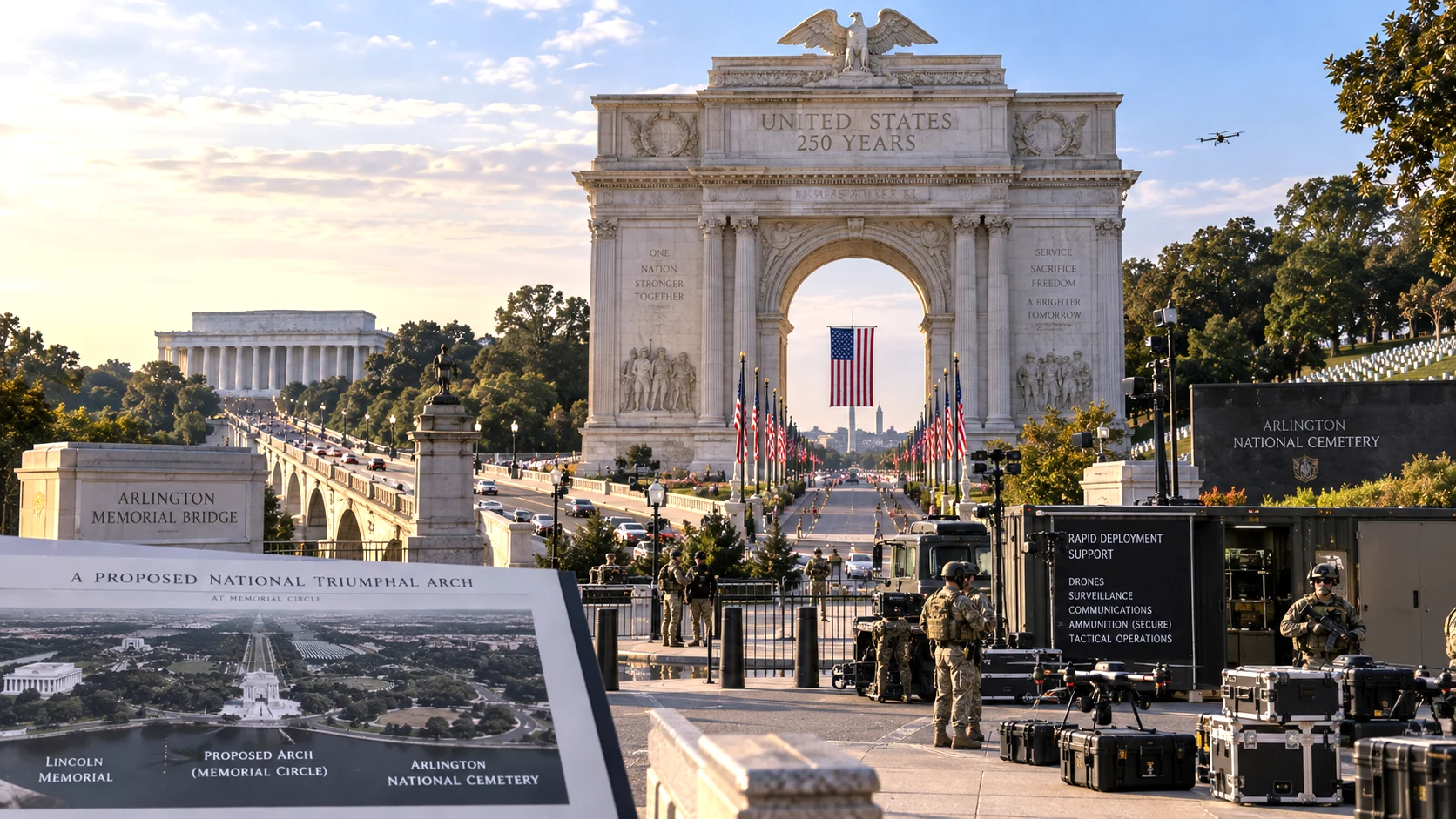
President Donald Trump says his proposed 250-foot triumphal arch near Arlington National Cemetery will now be designed as a dual-purpose military facility capable of housing drones, sniper positions and ammunition. The announcement adds a national-security dimension to an already controversial Washi
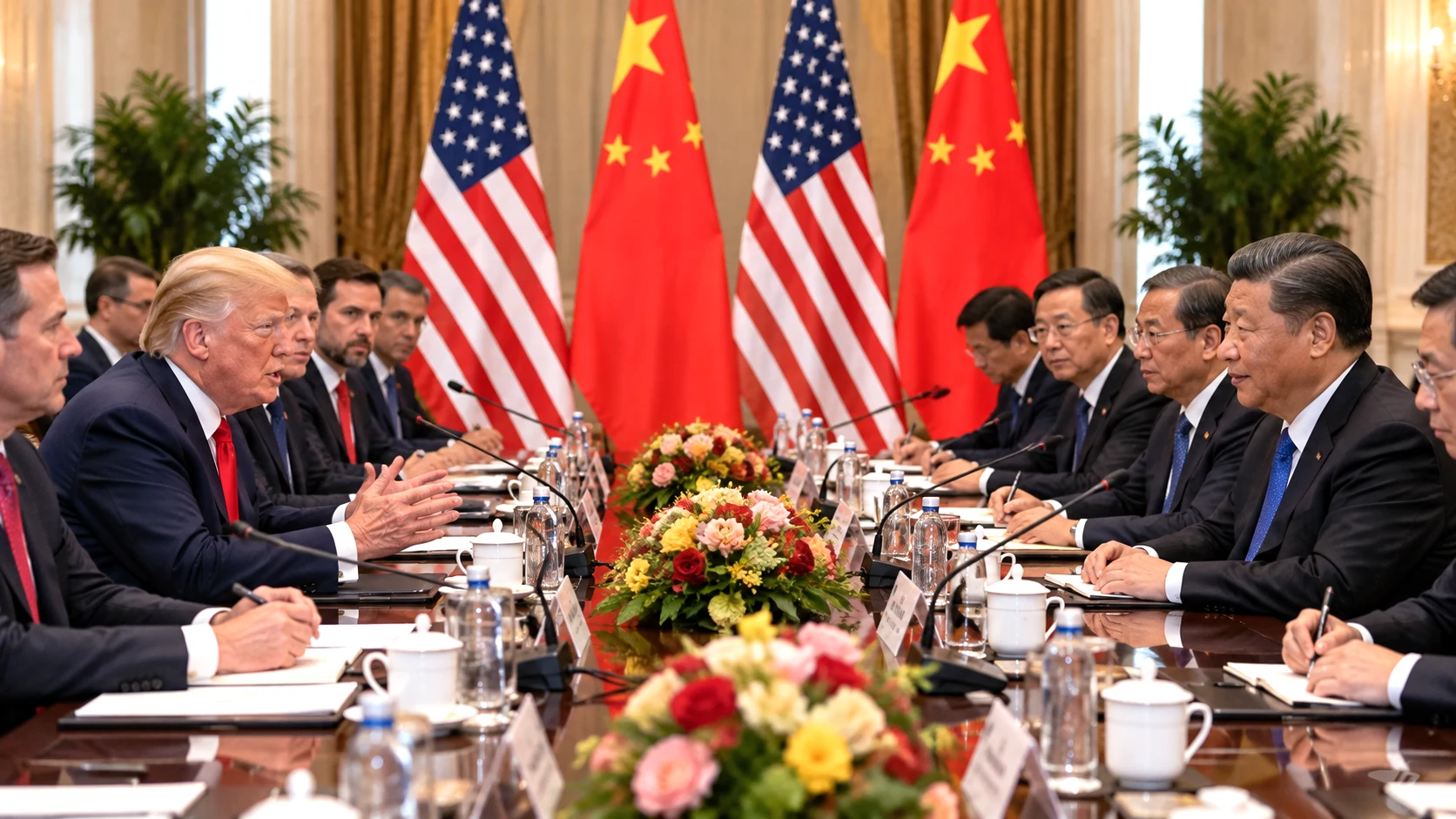
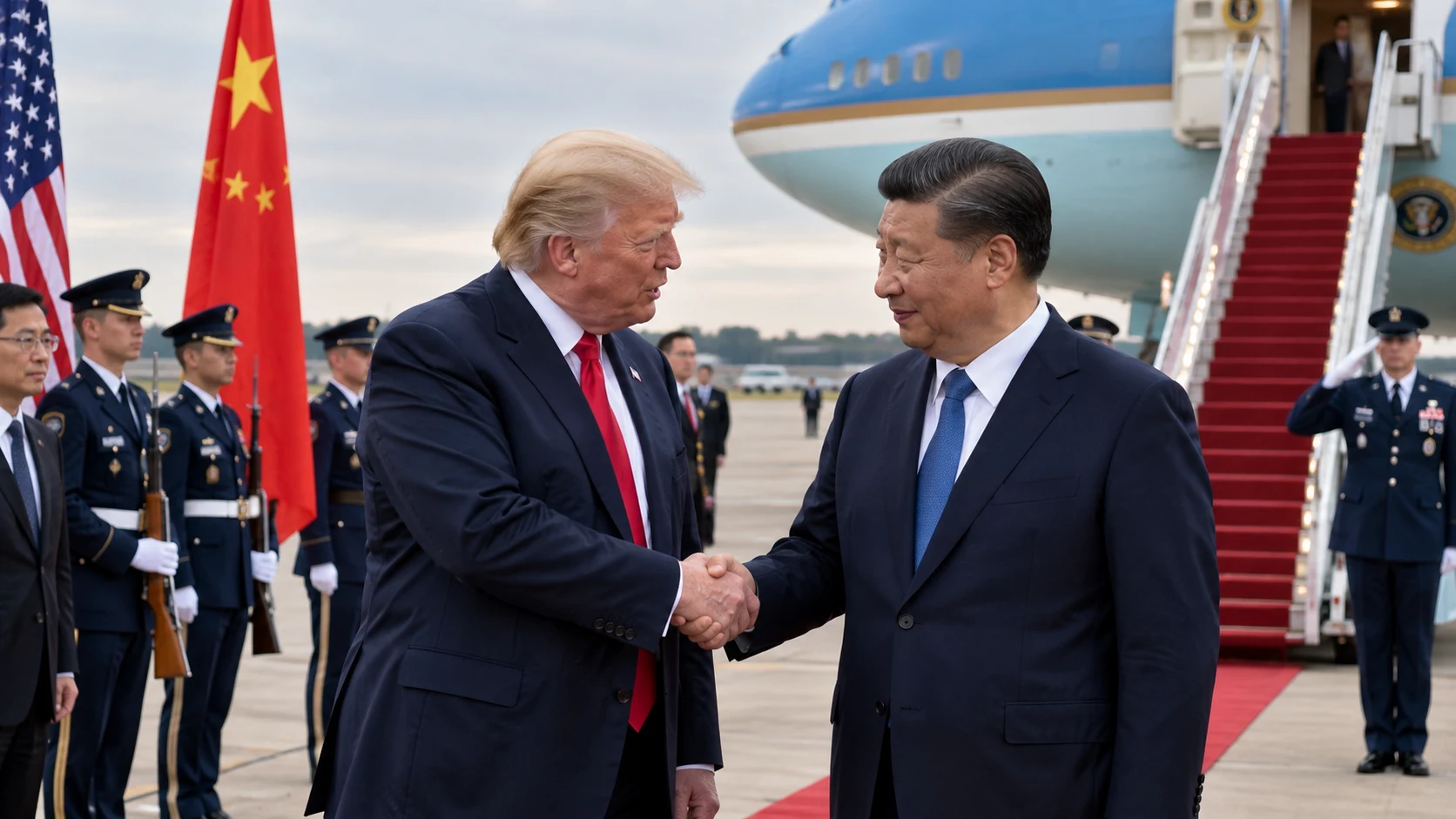
Donald Trump and Xi Jinping are expected to meet in Washington on September 24, with artificial intelligence emerging as a central strategic issue alongside trade, Taiwan, Iran and fentanyl. Advanced chips, AI safety, military autonomy and allegations of technology copying are likely to shape the te
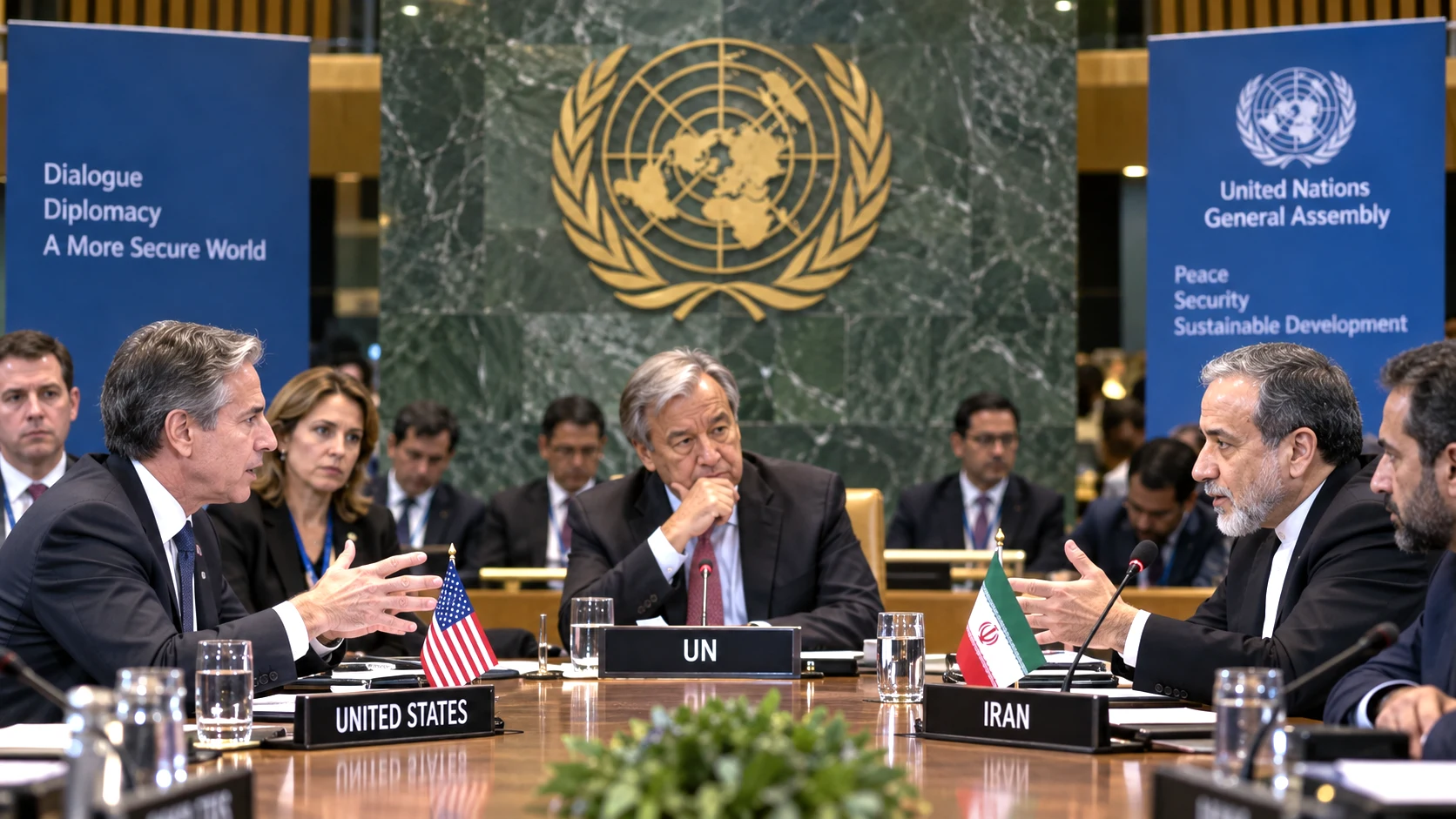
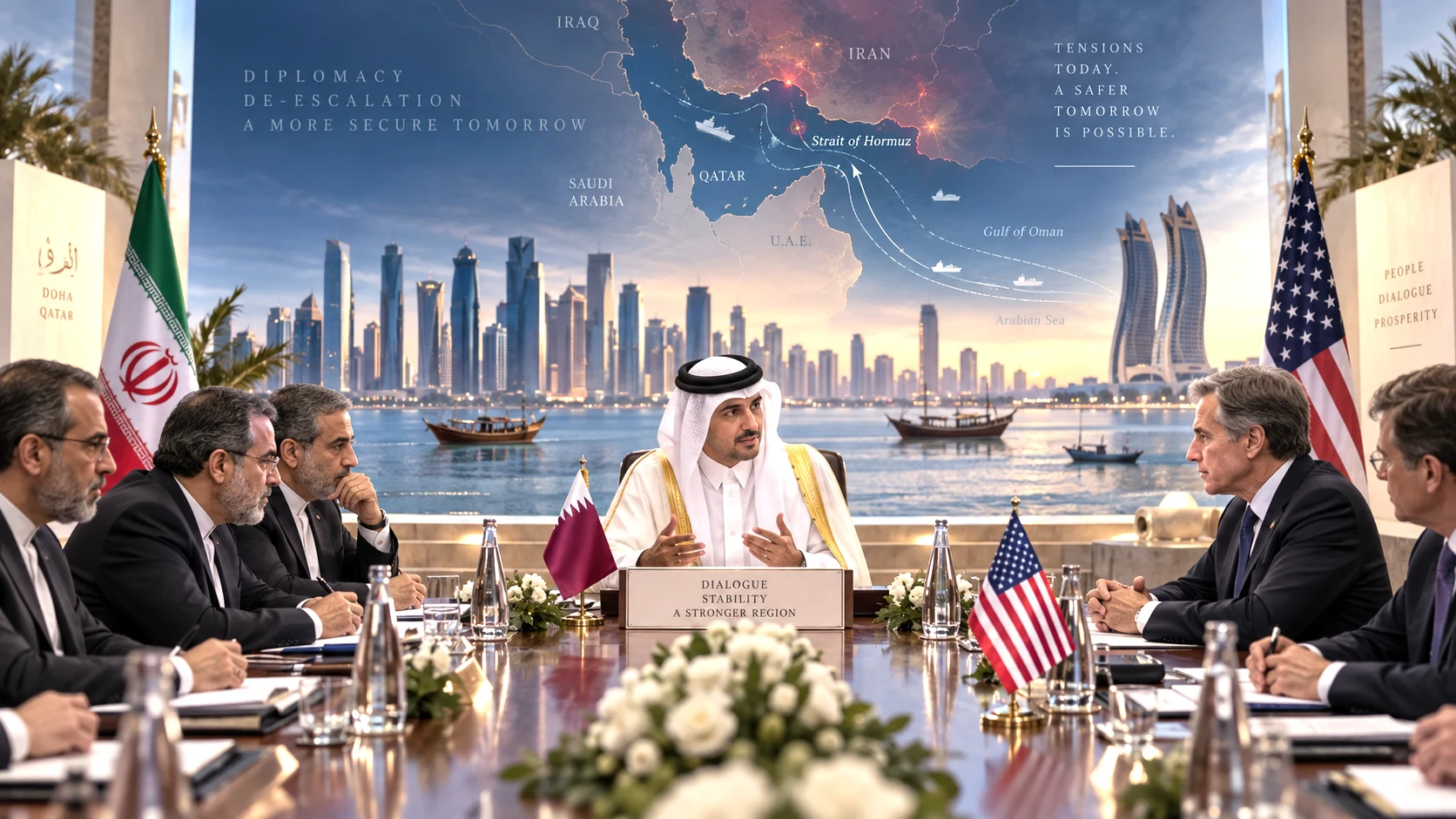
US and Iranian representatives held roughly three hours of mediated talks on the sidelines of the UN General Assembly after Donald Trump threatened Iran with further destruction if no deal is reached. Here is what was discussed and what remains unresolved.
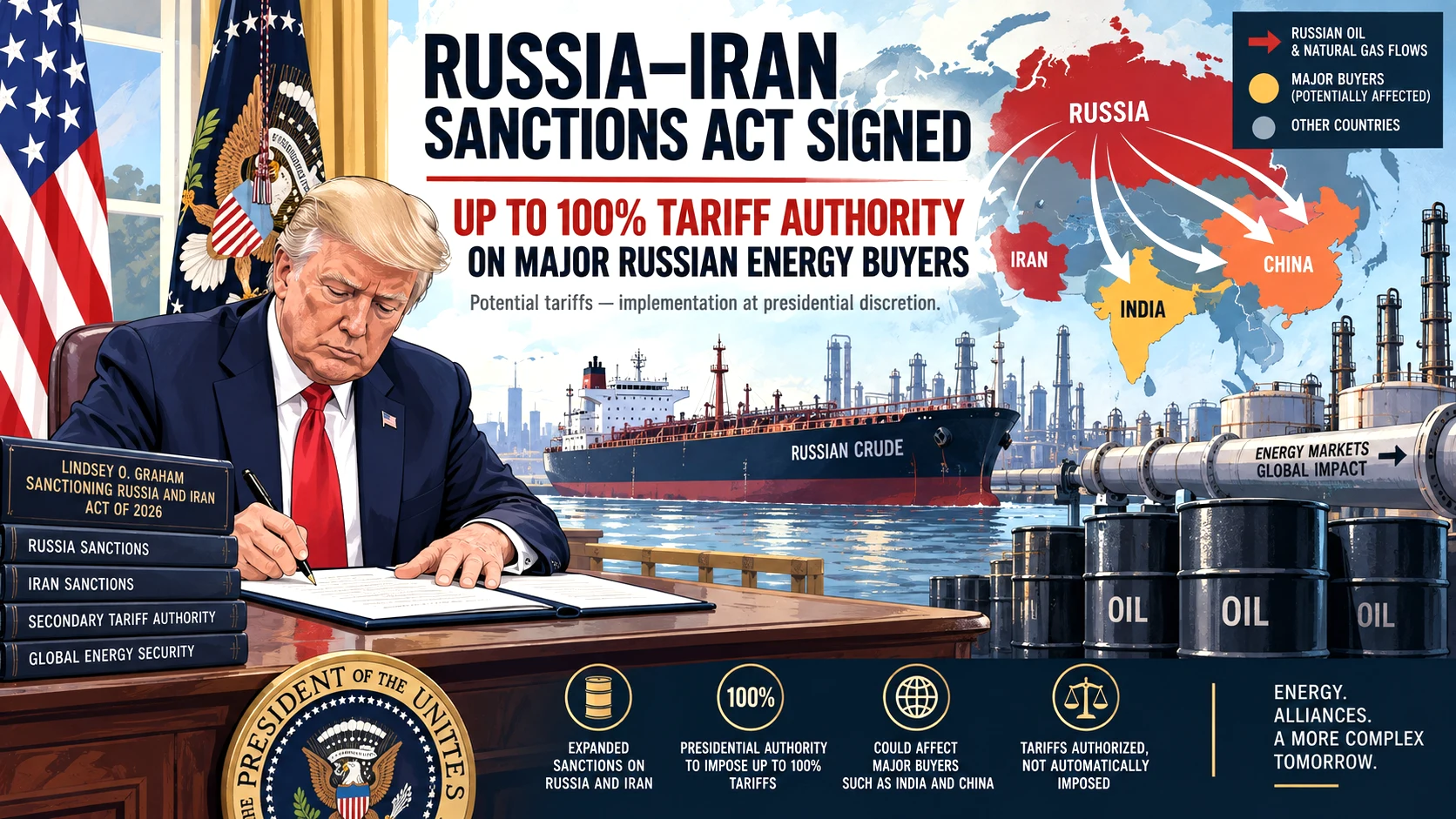
The new US law targets Russia’s energy, financial and defence networks and allows additional tariffs of up to 100% on goods from the largest buyers of Russian oil and gas. India faces significant exposure because of its large Russian crude imports, but a 100% tariff on Indian goods has not been impo
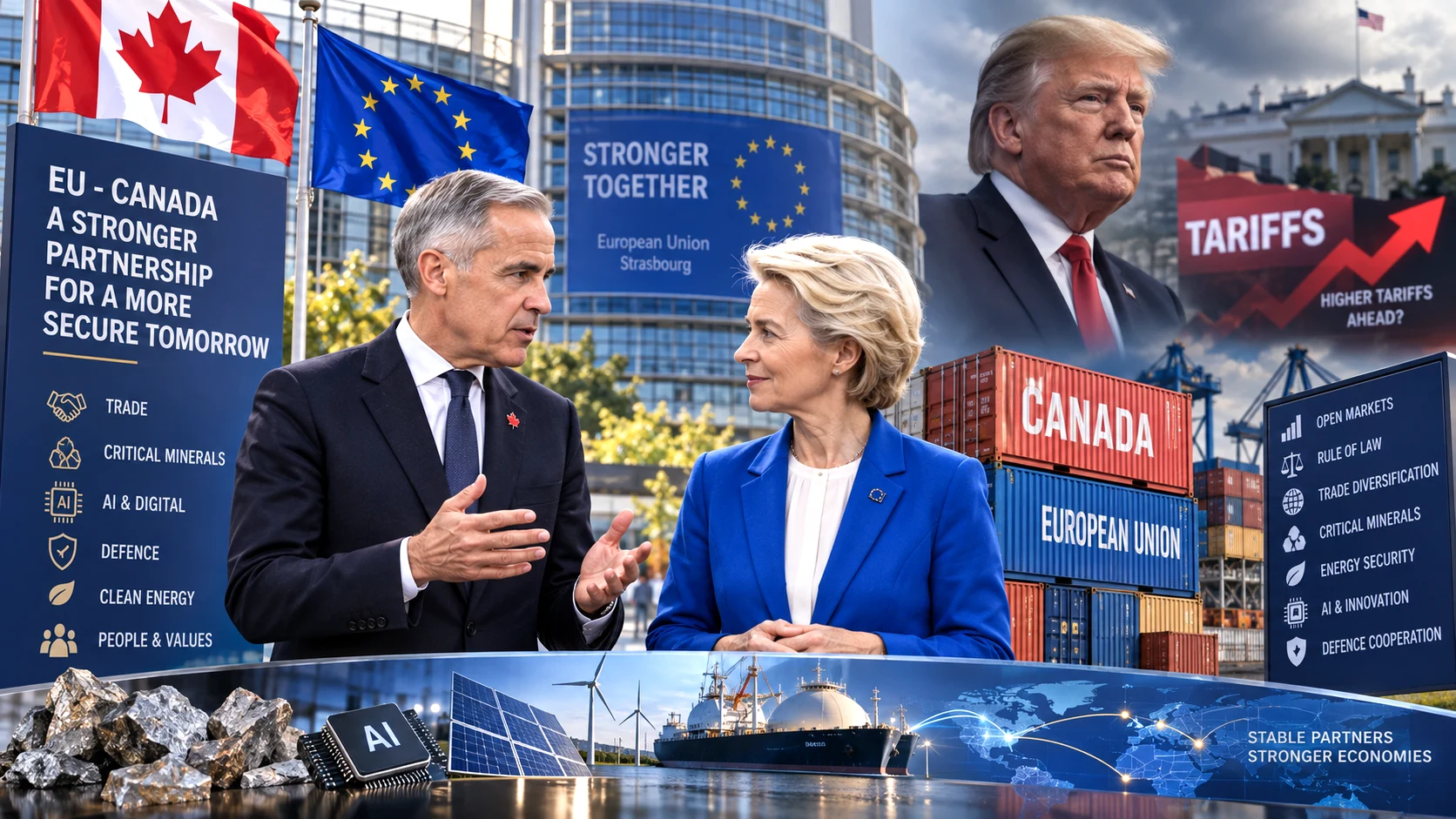
European Commission President Ursula von der Leyen has proposed opening the door for Canada to become the EU’s first “associate member,” but the status does not yet legally exist and has not been approved by the bloc’s 27 governments. Mark Carney welcomed the ambition in Strasbourg as Donald Trump w
The 2026 US midterms have entered a crucial phase as voting begins and Trump’s administration asks the Supreme Court to allow new restrictions affecting mail ballots.




0 Comments