US Clears $24.3 Billion Sale of 48 F-35 Jets to Saudi Arabia; China Technology Risks Draw Scrutiny
The Trump administration has formally notified Congress of a proposed sale of 48 F-35A stealth fighters and 49 engines to Saudi Arabia. The deal is not yet completed, while separate US intelligence assessments have reportedly warned that China could try to gain access to sensitive F-35 technology th
the proposed US sale of F-35 stealth fighters to Saudi Arabia and associated technology-security considerations
Table of Contents (11 sections)
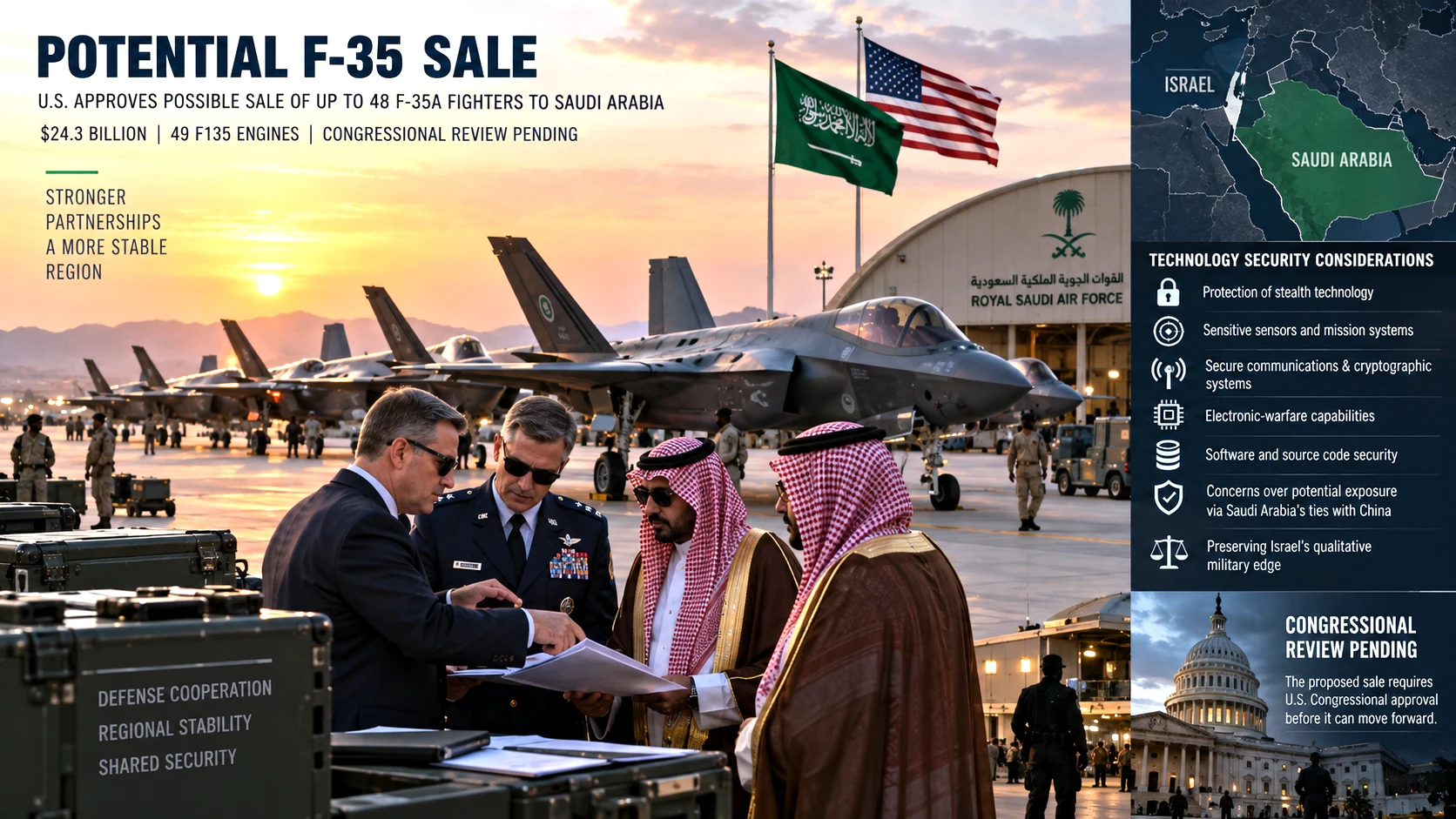
The Trump administration has cleared a proposed $24.3 billion sale of 48 F-35 stealth fighter jets to Saudi Arabia, moving one of the most consequential US arms deals in the Middle East into the congressional review stage.
The US State Department announced on September 17 that it had approved the possible Foreign Military Sale of Lockheed Martin F-35 Lightning II aircraft and related equipment to Riyadh.
The proposed package includes 48 aircraft and 49 Pratt & Whitney engines, along with communications equipment, spare parts and other logistical and programme support.
Defence reporting identifies the aircraft as the F-35A, the conventional take-off and landing version of the fifth-generation fighter.
The announcement represents a major step forward for Saudi Arabia’s long-running effort to acquire the advanced aircraft, but it should not be described as a completed $24.3 billion purchase.
The State Department has authorised a possible sale and notified Congress. Further review, negotiations, contracting, production and delivery would still be required before Saudi Arabia receives the fighters.
Key Takeaways
The US State Department approved a possible $24.3 billion Foreign Military Sale to Saudi Arabia on September 17, 2026.
Recommended Reading
Related Stories & In-Depth Guides
Curated editorial perspectives matching this topic.
European Commission President Ursula von der Leyen has proposed opening the door for Canada to become the EU’s first “associate member,” but the status does not yet legally exist and has not been approved by the bloc’s 27 governments. Mark Carney welcomed the ambition in Strasbourg as Donald Trump w
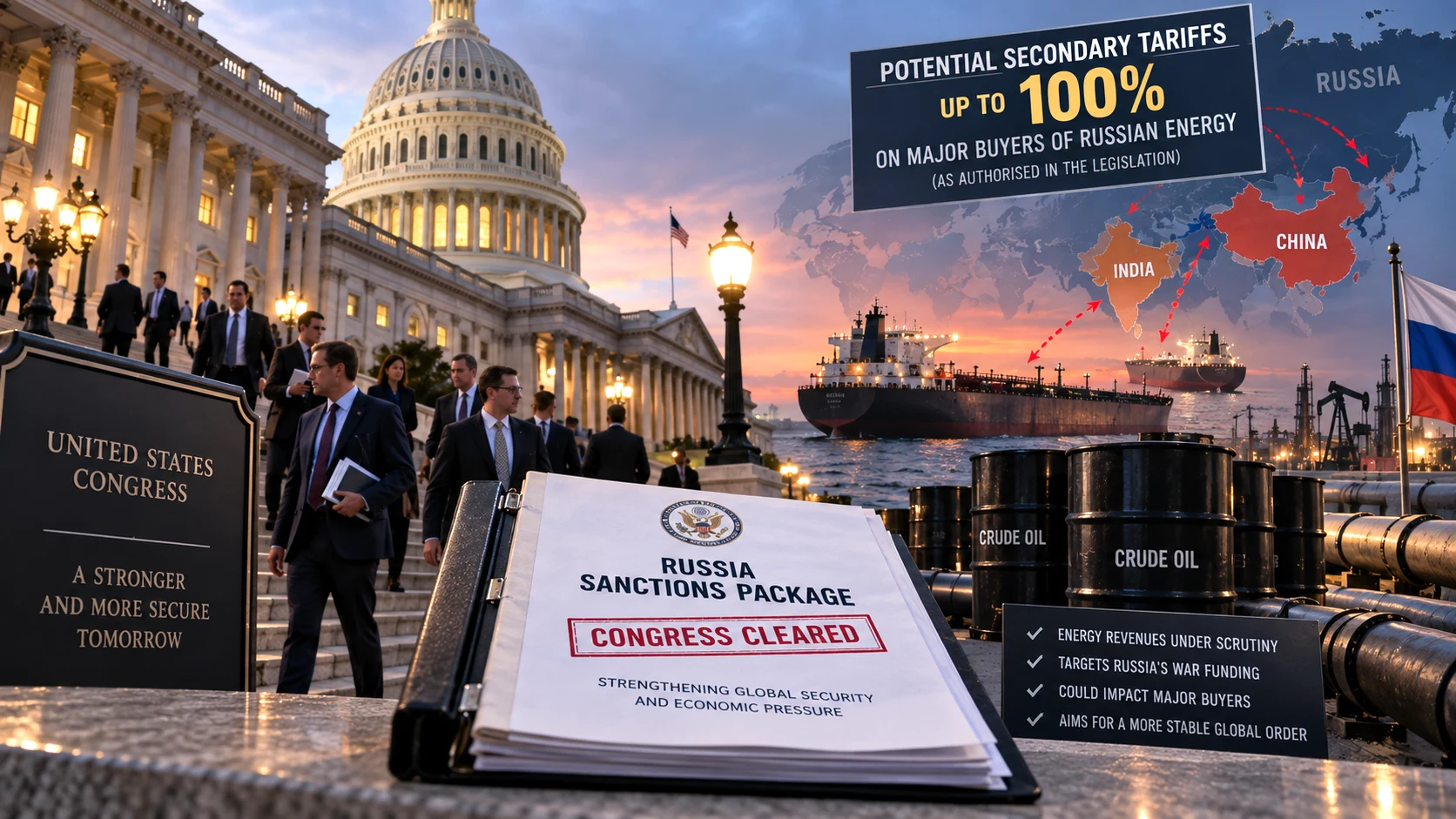
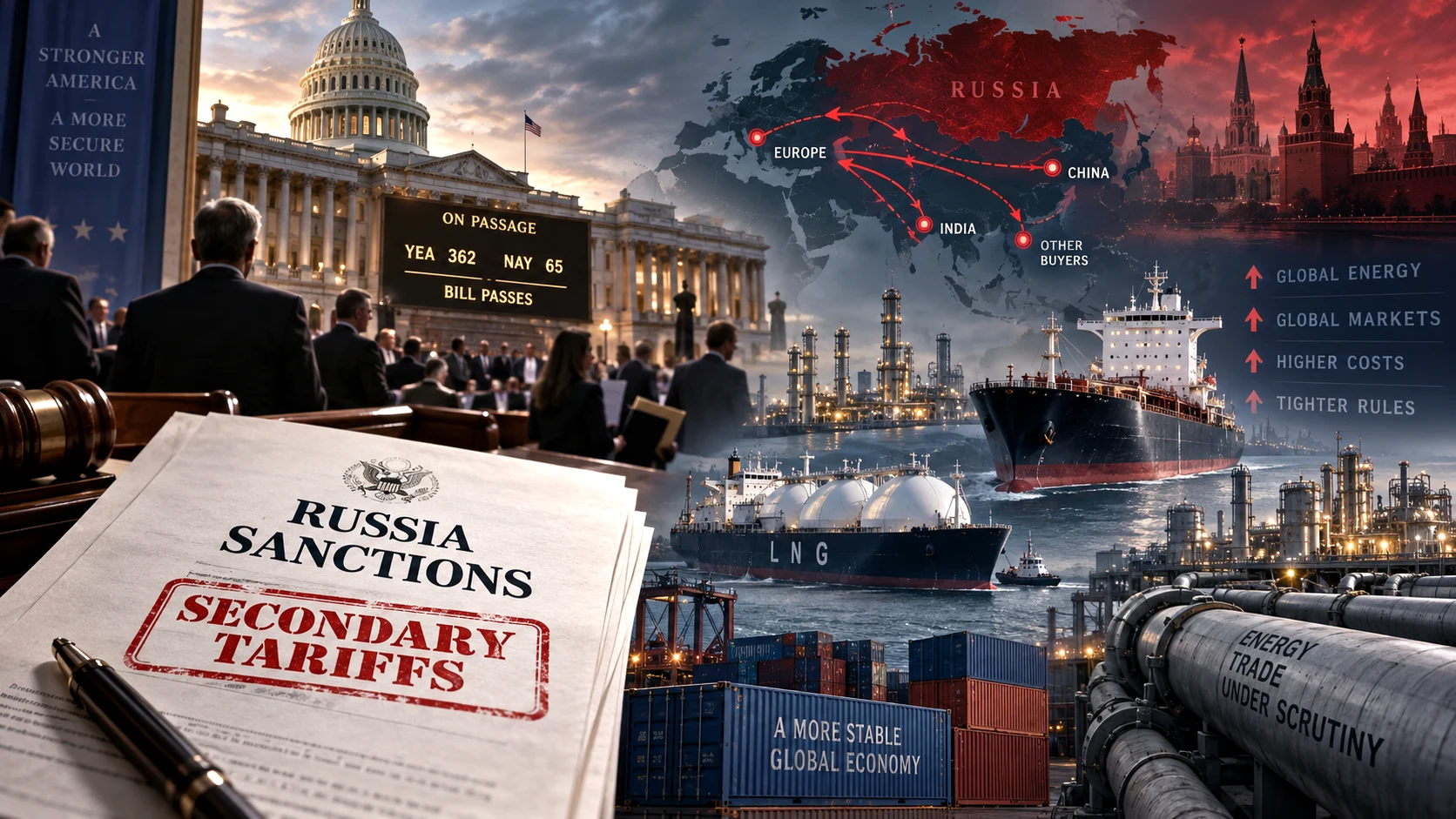
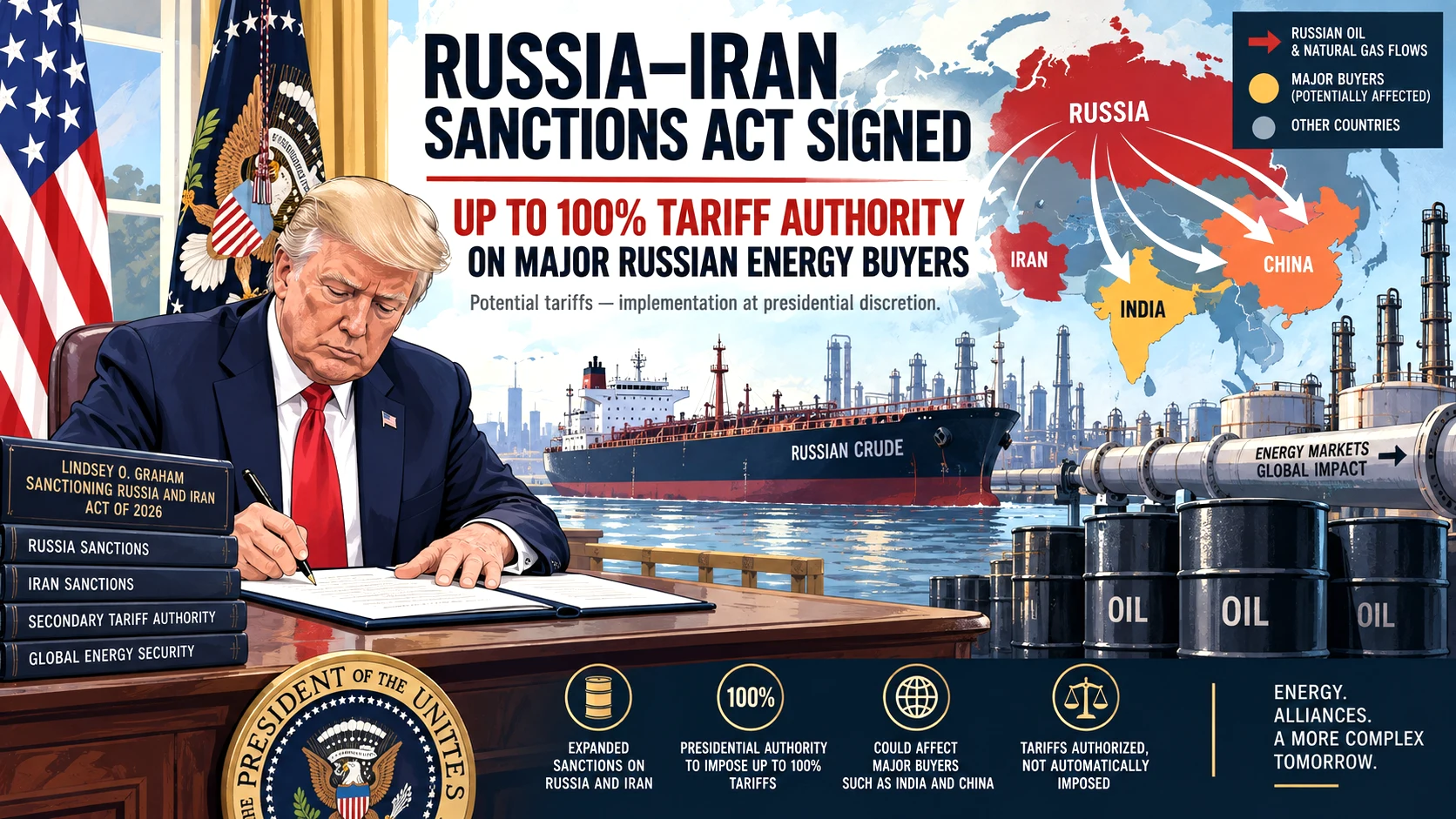
The House approved the Lindsey O. Graham Sanctioning Russia and Iran Act of 2026 by 262-159 after the Senate passed it 86-11. The measure now awaits President Donald Trump’s signature and could subject major buyers of Russian oil or gas to additional US tariffs of up to 100%, although India and Chin
The package covers 48 F-35A Lightning II fighters and 49 Pratt & Whitney F135 engines, along with communications equipment, spare parts and support.
Congress has been formally notified. The notification does not mean the aircraft have already been sold or delivered.
If completed, Saudi Arabia would become the second Middle Eastern country — and the first Arab state — to operate the F-35. Israel is currently the region’s only operator.
US intelligence assessments have reportedly warned of a potential risk that China could obtain sensitive F-35 technology through espionage or its security and military relationships with Saudi Arabia.
Those assessments describe a risk, not evidence that F-35 technology has already leaked to China.
The State Department says the sale would strengthen Saudi homeland defence and would not alter the regional military balance.
What Exactly Has the US Approved?
Under the US Foreign Military Sales process, the State Department determines whether a proposed transfer can proceed and notifies Congress when statutory thresholds are met.
The September 17 notification covers up to:
48 F-35A Lightning II fighter aircraft
49 F135 engines
Communications equipment
Spare and repair parts
Training and technical assistance
Logistics and programme-support equipment
The package has an estimated maximum value of $24.3 billion.
The figure is an estimated package value rather than evidence that Saudi Arabia has already paid $24.3 billion or that the final contract will necessarily have precisely the same value.
Foreign Military Sales notifications frequently represent the maximum anticipated equipment and support package.
Congress Has Been Notified — Deal Is Not Yet Finished
One of the most important factual distinctions concerns the word “approved”.
The State Department has approved the potential sale and formally sent the notification to Congress.
That does not mean Congress has separately passed legislation approving the transaction, nor does it mean the aircraft have been delivered.
Under US arms-export procedures, Congress receives an opportunity to review major proposed sales and can seek to prevent them through legislative action.
The production and delivery process for aircraft as sophisticated as the F-35 would also take years even if the transaction proceeds.
The New York Times reported that Saudi Arabia would become only the second Middle Eastern country to possess the F-35 if production and delivery are ultimately completed.
Saudi Arabia Would Be First Arab F-35 Operator
Israel currently remains the only country in the Middle East operating the F-35.
If the Saudi transaction is completed, Riyadh would become the first Arab state to operate the aircraft and the second Middle Eastern operator after Israel.
That makes the proposed sale strategically important beyond the dollar value of the package.
The F-35 is a fifth-generation combat aircraft designed around stealth, advanced sensors, electronic warfare capabilities and networked battlefield information.
Providing such aircraft to another major Middle Eastern power inevitably raises questions about the regional military balance and Washington’s long-standing commitment to preserving Israel’s qualitative military edge.
State Department Says Sale Will Not Alter Regional Balance
Despite those questions, the State Department said the proposed package would not alter the military balance in the region.
Its notice said the sale would strengthen Saudi Arabia’s ability to deter current and future threats, bolster homeland defence and improve interoperability with US forces.
The department also said the aircraft would improve Saudi air-to-air and air-to-ground self-defence capabilities.
That is the official US government assessment.
It should be distinguished from the broader strategic debate over whether giving Riyadh fifth-generation aircraft could affect Israel’s military advantage or change regional deterrence calculations.
Why Israel Matters to the Decision
Washington has for decades maintained a policy of protecting Israel’s qualitative military edge, commonly referred to as QME.
Israel operates its own F-35 fleet and has previously raised concerns about transferring the aircraft to other Middle Eastern states.
Reuters reported that a Saudi F-35 sale could test Washington’s interpretation of that policy and potentially alter regional military dynamics.
US officials nevertheless maintain that the proposed Saudi package would not upset the military balance.
Those two positions are not necessarily identical claims: the State Department is providing its formal assessment, while critics and regional governments may assess the strategic effect differently.
Intelligence Reports Flag Possible China Risk
A separate controversy concerns Saudi Arabia’s expanding relationship with China.
Before the State Department announcement, US intelligence officers had reportedly raised concerns that China could potentially gain access to sensitive F-35 technology if the aircraft were based in Saudi Arabia.
The New York Times reported on September 16 that internal US assessments, including one prepared by the Pentagon’s Defense Intelligence Agency, had examined the possibility of Chinese acquisition of F-35 technology through espionage or through Beijing’s growing security relationship with Riyadh.
The assessment reportedly examined factors including Chinese military access to Saudi facilities and the kingdom’s use of Chinese technology in telecommunications infrastructure.
The administration nevertheless moved forward with the proposed sale the following day.
China Concern Is About Possible Future Exposure — Not Proven Leakage
This distinction is critical.
There is currently no public evidence in the material reviewed showing that Saudi Arabia has transferred F-35 technology to China.
Saudi Arabia does not yet operate the F-35.
The intelligence concern instead relates to the possibility that Chinese personnel, intelligence services or organisations could attempt to gain information about the aircraft once sensitive systems and infrastructure were present in the kingdom.
Therefore, headlines saying “China has obtained F-35 technology through Saudi Arabia” would be false based on current evidence.
The accurate description is:
US intelligence assessments have warned of a potential future technology-security and espionage risk.
What Does Saudi Arabia’s Relationship With China Have to Do With the F-35?
Saudi Arabia remains a longstanding US security partner but has developed deeper commercial, technological and diplomatic ties with China in recent years.
Those expanding relationships have raised questions in Washington about technology security, dual-use systems and the potential for sensitive information to be compromised through proximity, infrastructure or intelligence activity.
The reported intelligence assessments focus on the risk that those relationships could create pathways for China to learn about or gain access to F-35-related systems if the aircraft were deployed in the kingdom.
They do not establish that such access has already occurred.
Bottom Line
The confirmed development is that the US State Department has approved a possible $24.3 billion Foreign Military Sale of 48 F-35A fighters and related equipment to Saudi Arabia and has formally notified Congress.
The transaction is not yet complete. Further congressional review, contracting, production and delivery would still be required.
If ultimately fulfilled, the sale would make Saudi Arabia the first Arab operator of the F-35 and only the second Middle Eastern country to field the aircraft after Israel.
Separately, US intelligence assessments have reportedly warned of a potential risk that China could seek access to sensitive F-35 technology through espionage or its growing security and technological ties with Riyadh.
Those assessments describe a risk of future exposure, not evidence that F-35 technology has already been transferred to China.
The State Department maintains that the proposed sale would strengthen Saudi defence capabilities and would not alter the regional military balance.
Key Takeaway
US notifies Congress of possible $24.3 billion F-35 sale to Saudi Arabia.
48 F-35A jets and 49 engines included in the package.
Deal not yet final; delivery would take years if completed.
Intelligence assessments flag potential China technology-security risk.
The Rajatheertha Team publishes news, explainers, guides and updates across India and the world. Our coverage follows Rajatheertha's editorial, verification and corrections standards.
The House voted 262-159 to approve the Lindsey O. Graham Sanctioning Russia and Iran Act of 2026 after the Senate backed it 86-11 in August. The bill targets Russian banks, energy, defence and its “shadow fleet” while creating secondary tariffs for major buyers of Russian oil and gas. It now goes to
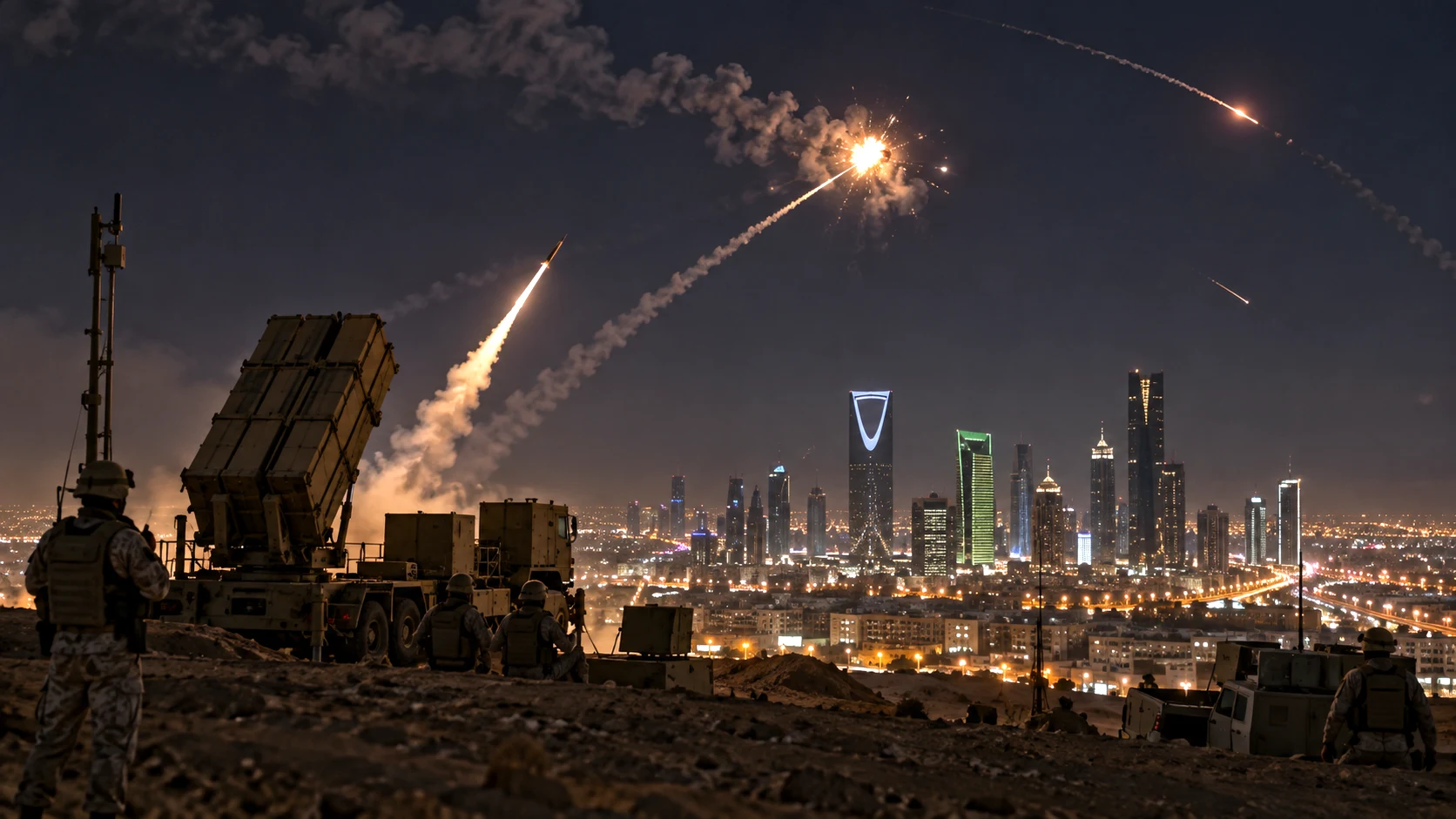
A Houthi ballistic missile aimed at Riyadh was intercepted by Saudi air defences as explosions and smoke were reported near the Saudi capital’s main airport, marking a sharp escalation in the renewed Saudi-Houthi confrontation. The attack comes alongside strikes on Saudi energy infrastructure, inten
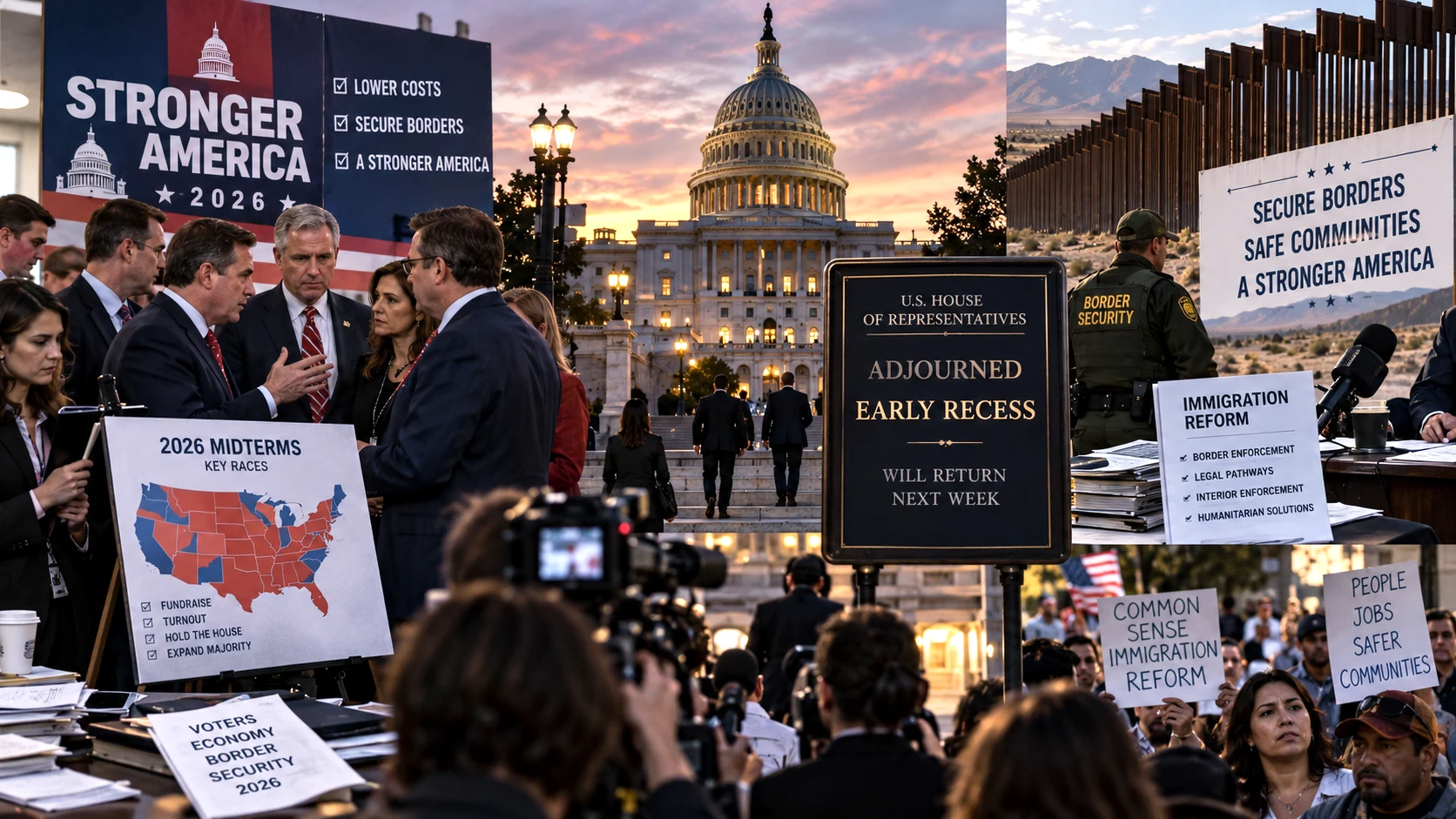
The Florida Republican says Hispanic voters who helped return Donald Trump to the White House now “feel betrayed,” while polling shows broader erosion in support for the president’s immigration approach. Separately, Speaker Mike Johnson has sent the House home early for the campaign season, drawing
The new US law targets Russia’s energy, financial and defence networks and allows additional tariffs of up to 100% on goods from the largest buyers of Russian oil and gas. India faces significant exposure because of its large Russian crude imports, but a 100% tariff on Indian goods has not been impo
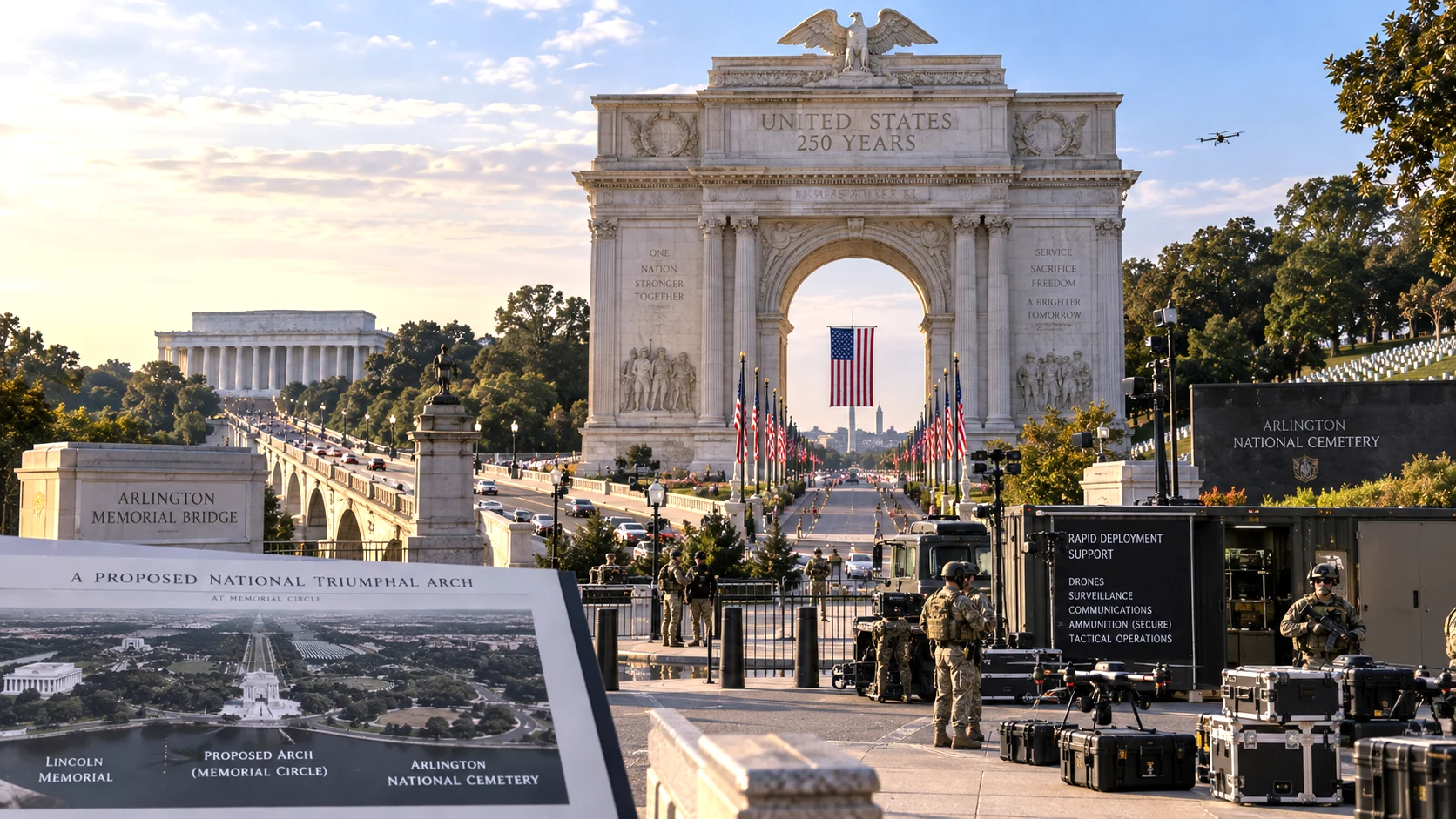
President Donald Trump says his proposed 250-foot triumphal arch near Arlington National Cemetery will now be designed as a dual-purpose military facility capable of housing drones, sniper positions and ammunition. The announcement adds a national-security dimension to an already controversial Washi
A huge Ukrainian long-range attack sent hundreds of drones toward Moscow and other parts of Russia early Sunday, damaging the Moscow Oil Refinery, disrupting civilian areas and putting Russian air defences under intense pressure. Russian officials described it as the largest drone attack yet directe




0 Comments