Karnataka HC Rejects US-Based Daughter’s Property Claim: When Can a Daughter Claim a Share in Her Father’s Property?
A Karnataka High Court ruling has renewed questions over a daughter’s right in her father’s property. The court rejected a US-based daughter’s partition claim after finding the assets were not proved to be ancestral coparcenary property. Here is what the ruling means—and what it does not mean.
A Karnataka High Court judgment involving a US-based daughter and properties held by her family has renewed a frequently searched legal question in India: Does a daughter have a right in her father’s property, and can she demand a share during his lifetime?
The short answer is that it depends heavily on what kind of property is involved.
A daughter has the same coparcenary rights as a son in qualifying Hindu joint-family coparcenary property under Section 6 of the Hindu Succession Act, 1956, as amended in 2005. But that does not automatically give her a birthright in every property owned by her father or originally acquired by her grandfather.
Recommended Reading
Related Stories & In-Depth Guides
Curated editorial perspectives matching this topic.
The Bombay High Court has restarted hearings on Maharashtra’s 10% Maratha reservation law. Here is what petitioners argue, how the State has defended the quota and what happens next.*
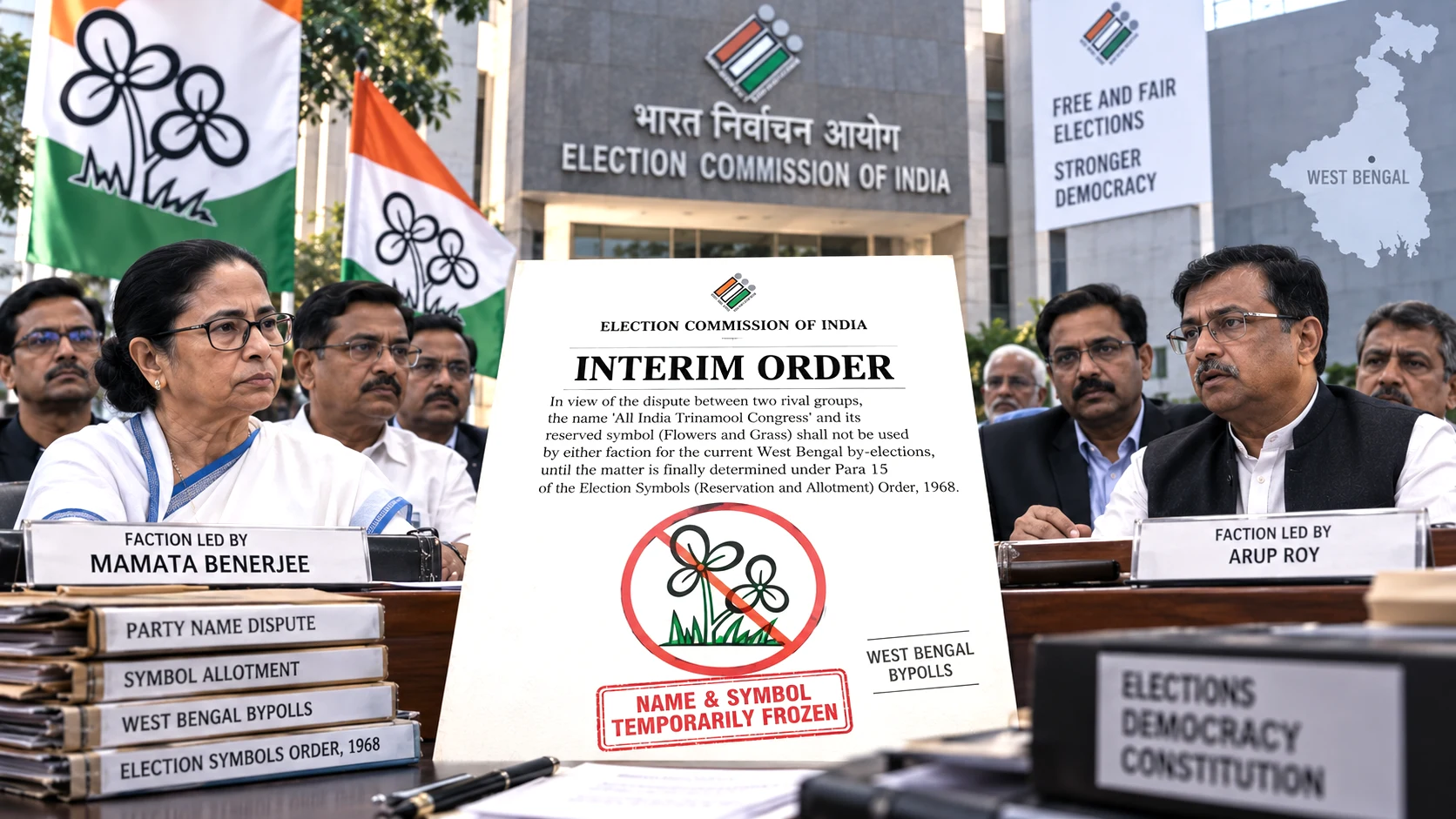
Neither the Mamata Banerjee group nor the rival faction formally represented before the Election Commission by Arup Roy can use the All India Trinamool Congress name or its reserved symbol in the October 6 bypolls. The order is temporary while the ECI decides the larger party-control dispute under P
That distinction was central to the Karnataka High Court's decision in Smt Usha N. Swamy v. Sri M. Venkataswamy, RFA No.1568 of 2018.
Although the ruling has attracted fresh media attention on October 8, 2026, the High Court actually delivered the judgment on June 16, 2026. The Division Bench comprised Justice D K Singh and Justice T M Nadaf.
Recent coverage has highlighted the case because the plaintiff had lived in the United States for decades and had sought partition of several properties associated with her parents and grandfather.
The High Court ultimately dismissed her appeal.
But the ruling should not be understood as saying that daughters have no rights in their parents' property.
Instead, the court found that the woman had failed to establish that the disputed properties were ancestral or coparcenary properties in which she had acquired a right by birth.
That distinction is critical.
What Was the Karnataka High Court Case About?
The appellant, Usha N. Swamy, was the daughter of M. Venkataswamy.
According to the judgment, she married in 1979 and thereafter lived with her husband in the United States. She later filed a partition suit involving four sets of properties in and around Bengaluru.
She argued, among other things, that certain properties had come to her father from her grandfather and should therefore be treated as ancestral joint-family property.
Her claim relied substantially on the principle that daughters are coparceners under the Hindu Succession Act and have the same rights as sons in coparcenary property.
The dispute therefore turned not simply on whether she was a daughter, but on a more fundamental legal question:
Were the properties actually ancestral/coparcenary properties in her father's hands?
The High Court concluded that she had not proved that they were.
What Properties Were Involved?
The judgment records four schedules of property.
Schedule A concerned agricultural land in Kannayana Agrahara Village in the Bengaluru area. Schedule B was a property in Jayanagar. Schedule C involved agricultural land in Kengeri Hobli, while Schedule D concerned another property in Jayanagar.
The plaintiff maintained that assets received by her father from his father retained an ancestral character and that she therefore had a coparcenary interest.
The court examined how those properties had originally been acquired.
That became decisive.
Why Did the Daughter Lose the Case?
The High Court found that the relevant properties had originally been self-acquired by the plaintiff's grandfather.
Evidence before the court showed that the grandfather had purchased the land himself rather than receiving it as ancestral coparcenary property from earlier generations.
The properties were later divided among his children through a partition or family arrangement.
The High Court held that simply because the father received property from his own father through such an arrangement did not automatically transform it into ancestral coparcenary property in the father's hands.
The court recorded that Schedule A, C and D properties were the grandfather's self-acquired properties and, after they went to the plaintiff's father, became his individual or separate properties rather than coparcenary property available for partition by the daughter as a birthright.
That was the core reason the claim failed.
Does Property Coming From a Grandfather Automatically Become “Ancestral”?
No.
This is one of the most important lessons from the judgment.
In everyday conversation, families often refer to any property received from a parent or grandparent as “ancestral property.”
Indian succession law uses the concept more precisely.
The Karnataka High Court emphasised that the plaintiff had not proved that the properties were ancestral assets in the hands of her grandfather.
Instead, the evidence indicated that the grandfather himself had acquired them.
The court observed that once the grandfather's self-acquired properties were allotted to his children, the share received by the plaintiff's father became his individual or separate property in the circumstances of this case.
Therefore, the mere fact that an asset moves from grandfather → father → child does not by itself establish a coparcenary birthright.
The source and legal character of the property matter.
What Is a Daughter's Right Under Section 6 of the Hindu Succession Act?
Section 6 is extremely important for daughters in Hindu joint families governed by Mitakshara law.
Following the Hindu Succession (Amendment) Act, 2005, a daughter of a coparcener becomes a coparcener by birth in her own right in the same manner as a son and has the same rights in qualifying coparcenary property.
The Supreme Court clarified this principle in Vineeta Sharma v. Rakesh Sharma in 2020.
The Supreme Court held that daughters born before or after the 2005 amendment enjoy coparcenary status in the same manner as sons and that it is not necessary for the father to have been alive on September 9, 2005 for the daughter to receive that status, subject to the statutory protections for certain earlier dispositions and partitions.
However, Section 6 operates where there is coparcenary property.
The Karnataka High Court expressly noted that if property is an individual's self-acquired or separate property rather than joint Hindu family coparcenary property, another family member does not acquire a coparcenary interest in it merely by birth.
That is why identifying the property's legal character comes first.
Does This Judgment Take Away Equal Property Rights of Daughters?
No.
The ruling does not overturn the 2005 amendment or the Supreme Court's Vineeta Sharma decision.
In fact, the Karnataka High Court expressly recognised that under amended Section 6, a daughter is a coparcener by birth and has the same rights as a son in qualifying coparcenary property.
The daughter's problem in this case was different.
She had to first demonstrate that the assets over which she sought partition were coparcenary properties.
The court found that she failed to establish that foundational fact.
Therefore, the judgment concerns the classification and proof of property, not a denial of equal coparcenary rights to daughters generally.
Can a Daughter Demand a Share in Her Father's Self-Acquired Property While He Is Alive?
Generally, a child does not acquire a coparcenary birthright merely because an asset is the father's separate or self-acquired property.
The Karnataka High Court cited Supreme Court authority stating that a Mitakshara father has extensive rights of disposition over his self-acquired property and that descendants do not automatically acquire a right in such property by birth.
Accordingly, where property is genuinely the father's separate property, Section 6 cannot ordinarily be invoked simply to demand partition during his lifetime as though that asset were ancestral coparcenary property.
This principle applies to sons as well as daughters; it is not a gender-specific disability.
But Can a Daughter Inherit Self-Acquired Property After Her Father Dies?
This is where many social-media posts and simplified headlines can become misleading.
The absence of a birthright during the parent's lifetime is not the same as saying a daughter can never inherit that property.
Where a Hindu male dies intestate, meaning without a valid will governing the property, succession may take place under the Hindu Succession Act.
Section 8 provides the general rules of succession for a male Hindu dying intestate, with Class I heirs receiving priority. The Schedule includes a daughter among Class I heirs. The Karnataka High Court itself reproduced the Section 8 succession framework while examining the dispute.
So the legal questions are different:
Coparcenary question: Does the daughter already possess an interest by birth and therefore have a right to seek partition?
Succession question: Does she inherit after the owner's death under a will or the rules of intestate succession?
Confusing these two questions can lead to an incorrect understanding of the law.
What If the Father Makes a Will?
A person's ability to dispose of separate property by will is another issue distinct from coparcenary rights.
Whether a daughter inherits a particular self-acquired asset can therefore depend on matters including the legal character of the property, whether its owner is alive, whether a valid testamentary instrument exists and which succession law applies.
A court may also need to determine whether a document described as a gift, will, settlement or partition is legally valid.
For this reason, a general statement such as “a daughter always gets half of her father's property” or “a daughter has no right in her father's property” is legally unreliable without knowing the facts.
Why Was the Grandfather's Self-Acquired Property So Important?
The origin of the property determined the case.
Evidence quoted by the High Court showed that the plaintiff's uncle acknowledged that the grandfather had purchased the land involved in Schedule A. The court found no evidence showing that the grandfather himself had inherited the land from his ancestors or purchased it using an established ancestral-property nucleus.
The High Court therefore concluded that the property was the grandfather's own property.
Once that fact was established, the daughter's argument that it necessarily remained ancestral property when allotted to her father could not succeed.
The court said the properties given to the father's generation became individual or separate properties in the circumstances before it.
The Daughter Had the Burden to Prove Her Case
Another important part of the judgment concerns evidence.
The plaintiff argued that the defendants had not produced sufficient evidence and that the court should draw an adverse inference against them.
The High Court rejected that argument.
It held that a person approaching the court must first discharge the initial burden of proving the case on which relief is sought.
The bench found that the plaintiff had failed to produce sufficient evidence establishing that the properties were ancestral coparcenary properties.
The court said a plaintiff cannot succeed merely because the opposing side's evidence is weak if the plaintiff has not established the essential elements of her own claim.
The appeal was consequently dismissed, and the High Court found no error in the Bengaluru trial court's April 13, 2018 judgment dismissing the suit.
Did Living in the United States Cause the Daughter to Lose Her Property Rights?
No.
Her residence in the United States was a factual part of the history of the case, but the judgment did not establish a rule that an Indian daughter loses succession or coparcenary rights merely because she lives abroad.
The court noted that she had lived in the United States after her marriage, but the decisive issue was whether the disputed assets were coparcenary properties in which she possessed a birthright.
An NRI daughter's rights therefore cannot be rejected simply because she lives outside India.
The nature of the property, succession history, documents and applicable law remain crucial.
Ancestral Property vs Self-Acquired Property: Why the Difference Matters
For families dealing with inheritance disputes, labels used casually at home may not reflect the property's legal status.
Calling land “our grandfather's property” does not automatically establish that it is ancestral coparcenary property.
A court may examine how the grandfather obtained it.
If he bought the land from his own funds, received it under circumstances making it separate property, or otherwise held it as his individual property, the legal consequences may differ sharply from property that genuinely forms part of an existing Mitakshara coparcenary.
Similarly, mutation records, family trees and the fact that several relatives once possessed land may not, by themselves, establish every element required to prove a coparcenary claim.
Title deeds, earlier partitions, wills, settlement deeds, succession history, revenue documents and evidence showing how the asset was originally acquired can all become significant.
Does a Married Daughter Have the Same Coparcenary Rights as a Son?
Under the amended Section 6 framework, marriage by itself does not remove a daughter's status as a coparcener in qualifying property.
The 2005 amendment was intended to place daughters and sons on an equal footing in coparcenary property.
The Supreme Court's Vineeta Sharma ruling reinforced the principle that daughters are coparceners by birth with the same rights and liabilities as sons, subject to the statutory framework governing earlier dispositions and partitions.
The Karnataka case does not alter that principle.
Does a Daughter Have Rights in Her Mother's Property?
A mother's property raises a separate succession analysis and should not simply be merged with rules governing a father's coparcenary property.
Rights may depend on whether the mother owns the property absolutely, whether she executes a valid will, whether she dies intestate, how she acquired the property and which provisions of succession law apply.
Therefore, the phrase “parents' property” can be legally too broad when discussing an individual judgment.
The present Karnataka case primarily examined the daughter's asserted coparcenary rights over property associated with her father's side of the family.
What Homeowners and Families Should Learn From the Judgment
The most important lesson is that property origin matters as much as family relationship.
A daughter unquestionably has strong statutory protection in genuine Hindu coparcenary property.
But before filing or defending a partition claim, families may need to trace how each disputed asset was acquired and how title moved through previous generations.
A property lawyer may need to examine old sale deeds, partition deeds, settlement deeds, wills, gift deeds, court decrees, mutation entries and succession records before determining whether an asset is ancestral, coparcenary, inherited separate property or self-acquired property.
The label appearing in family conversation is not necessarily the legal conclusion.
Why This Ruling Matters
Property disputes involving the phrases “ancestral property” and “daughter's equal share” are common in India, especially after the 2005 Hindu Succession amendment strengthened daughters' coparcenary rights.
The Karnataka High Court judgment is significant because it illustrates the other side of that principle.
Equal coparcenary rights do not mean that every asset owned by a father automatically becomes coparcenary property.
The claimant must still establish the legal character of the property.
At the same time, the judgment should not be misreported as establishing that a father can always exclude his daughter from every kind of property or that daughters lose inheritance rights after marriage or migration overseas.
Those broader propositions are not what the court decided.
Bottom Line
The Karnataka High Court dismissed Usha N. Swamy's appeal because she failed to prove that the properties for which she sought partition were ancestral coparcenary properties.
The court found that key assets had been self-acquired by her grandfather and had subsequently become separate properties in the hands of her father rather than coparcenary property giving her an automatic birthright.
The ruling therefore does not change the general principle that daughters have the same rights as sons in qualifying coparcenary property under Section 6 of the Hindu Succession Act.
Nor does it mean daughters can never inherit a father's self-acquired property.
Instead, it reinforces a more precise rule:
Before asking whether a daughter has a share, first determine what kind of property it legally is and whether the claim arises through coparcenary birthright or through succession after the owner's death.
This article provides general legal information based on the cited judgment and statutory framework. Property and succession rights can depend on facts, documents, religion/personal law, wills, previous partitions and other circumstances. Individual disputes should be assessed by a qualified legal professional.
Frequently Asked Questions
Does a daughter have an equal right in ancestral property in India?
Under Section 6 of the Hindu Succession Act, as amended in 2005, a daughter in a Mitakshara joint Hindu family is a coparcener by birth in the same manner as a son and has the same rights in qualifying coparcenary property.
Can a daughter demand a share in her father's self-acquired property while he is alive?
A daughter does not ordinarily acquire a coparcenary birthright merely because an asset is her father's separate or self-acquired property. Whether she later inherits it is a different succession question.
Can a daughter inherit her father's self-acquired property after his death?
Potentially, yes. If a Hindu father dies intestate, a daughter is among the Class I heirs recognised under the Hindu Succession Act, although the actual distribution depends on the surviving heirs and applicable facts.
Does property received from a grandfather always become ancestral property?
No. The legal character depends on how the grandfather acquired and transferred the property. The Karnataka High Court held in this case that the grandfather's self-acquired property did not automatically become coparcenary property simply because it was allotted to his son through a family arrangement.
Does marriage remove a daughter's right in ancestral property?
Marriage by itself does not remove the statutory coparcenary rights available to a daughter under amended Section 6 in qualifying property.
Does living abroad affect an Indian daughter's property rights?
Living abroad does not by itself extinguish a daughter's property rights. The Karnataka case turned on the character of the assets and proof of coparcenary status, not simply on the daughter's residence in the United States.
What did the Karnataka High Court decide in Usha N. Swamy's case?
The court dismissed her appeal and upheld the trial court's rejection of her partition claim after finding that she failed to prove the disputed assets were ancestral coparcenary properties.
When was the Karnataka High Court judgment delivered?
The judgment was delivered on June 16, 2026, although it received renewed media attention in October 2026.
Bottom Line
Karnataka HC rejected the partition claim because the properties were not proved to be ancestral coparcenary assets. Daughters still have equal rights in genuine coparcenary property under Section 6. Self-acquired property follows different rules.
The Rajatheertha Team publishes news, explainers, guides and updates across India and the world. Our coverage follows Rajatheertha's editorial, verification and corrections standards.
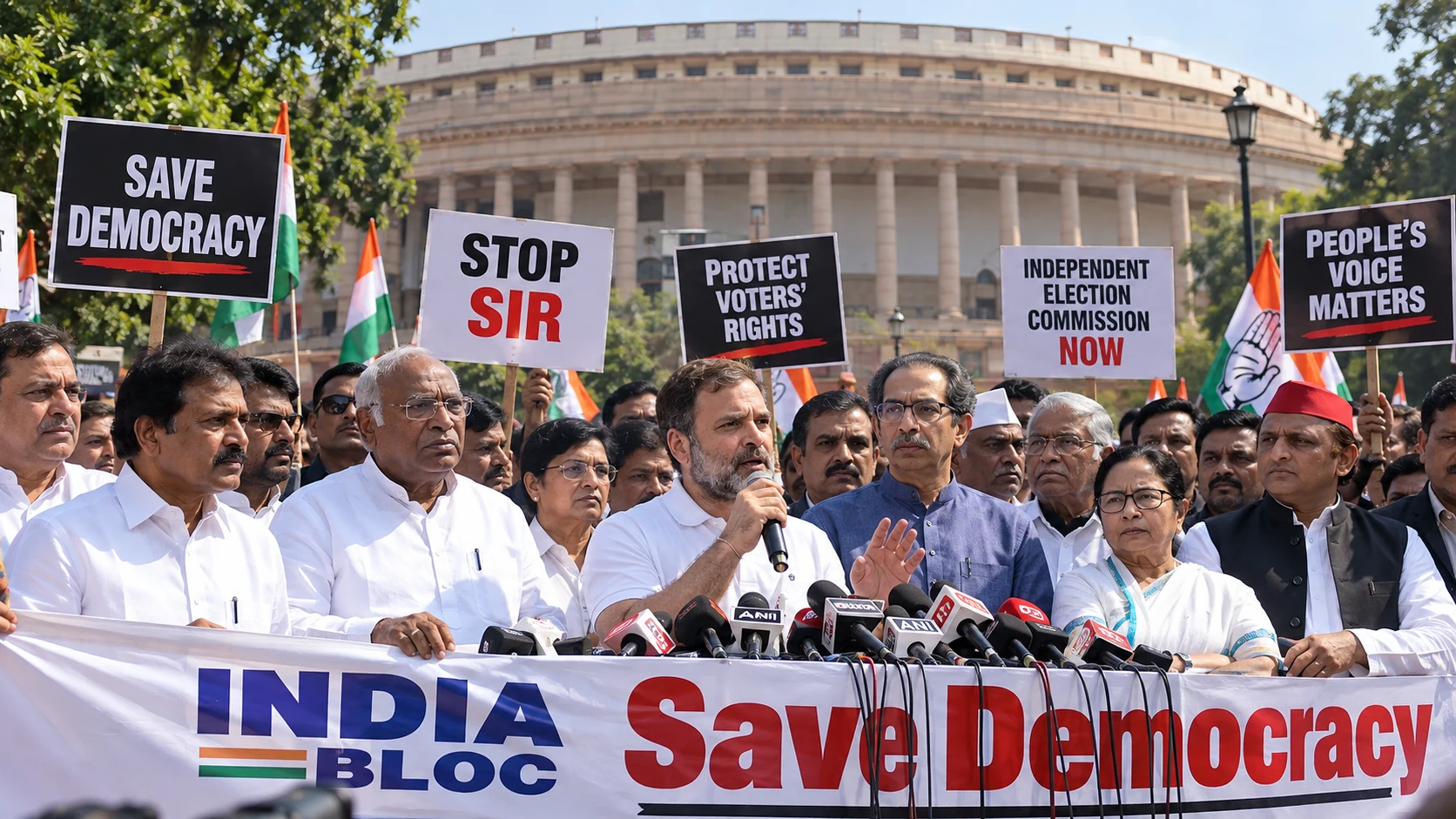
The Supreme Court has listed Rahul Gandhi and other INDIA bloc leaders’ petition over the Election Commission’s Special Intensive Revision of electoral rolls. The plea seeks disclosure of ECI records, an independent audit of voter deletions, safeguards against removal without notice and an interim s
The INDIA bloc has announced nationwide “Save Democracy” marches from Oct. 2–8 over the Election Commission and SIR controversy, with MPs planning an Oct. 6 march to the EC. The BJP has rejected the allegations as political frustration after electoral defeats.
The Election Commission’s interim freeze on the Trinamool Congress name and ‘Flowers and Grass’ symbol has pushed rival factions to temporary identities. Mamata Banerjee has challenged the order in the Supreme Court, while the October 6 Nandigram bypoll has been further complicated by the withdrawal
Mumbai’s Santacruz observatory recorded 37.6°C on October 8, just days after the southwest monsoon withdrew from the city. Here is why Mumbai often turns unusually hot in October, what monsoon withdrawal changes and what the heatwave warning actually means.
Seriously wounded inside the cockpit of flydubai Flight FZ1073, Captain Smit Machchhar realised the aircraft was descending and forced himself towards the door release. That decision allowed others to enter the cockpit and intervene. Now the Mumbai-born pilot’s actions are drawing recognition from t
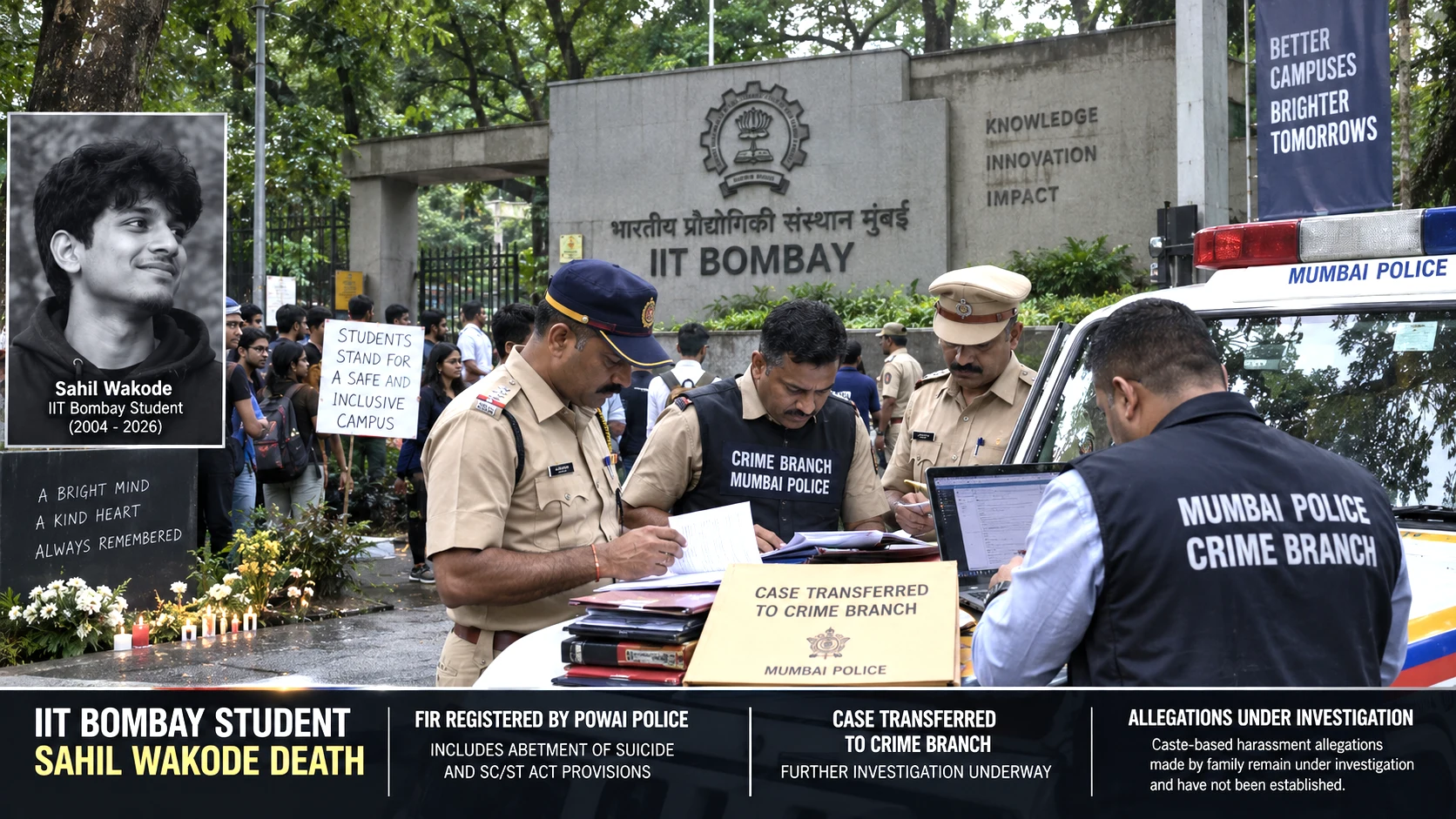
The Mumbai Police Crime Branch has taken over the investigation into the death of IIT Bombay student Sahil Wakode after his family alleged caste-based harassment and demanded action against those they hold responsible. An IIT Bombay faculty member has been booked for alleged abetment to suicide, whi










0 Comments