Navratri Day 3 2026: Maa Chandraghanta Puja Vidhi, Mantra, Colour and Bhog
Navratri Day 3 falls on October 13, 2026 and is dedicated to Maa Chandraghanta. Check today’s red colour, mantra, bhog, puja vidhi and what comes on Day 4.
Editorial illustration representing Navratri Day 3 Maa Chandraghanta worship and red colour
Table of Contents (14 sections)
Today, Tuesday, October 13, 2026, marks the third day of Shardiya Navratri and the worship of Maa Chandraghanta, the third form of Goddess Durga in the Navdurga tradition.
For devotees following the popular nine-day Navratri colour calendar, today’s colour is red. Milk, kheer and other milk-based preparations are among the customary offerings associated with Maa Chandraghanta, while one of the simplest mantras recited in her worship is:
ॐ देवी चन्द्रघण्टायै नमः॥
Om Devi Chandraghantayai Namah.
October 13 falls under Shukla Paksha Tritiya. In Hyderabad, the Tritiya tithi continues until about 11:27 PM before Chaturthi begins. Exact sunrise, muhurat and related panchang timings can vary by location, so devotees planning a time-specific ritual should use a panchang set to their city or follow their family or temple tradition.
Key Takeaways
Date: Tuesday, October 13, 2026
Goddess: Maa Chandraghanta
Colour: Red
Tithi: Shukla Tritiya
Common bhog: Milk, kheer or milk-based preparations
Recommended Reading
Related Stories & In-Depth Guides
Curated editorial perspectives matching this topic.
Navratri Day 4 falls on October 14, 2026 and is dedicated to Maa Kushmanda. Check today’s royal blue colour, malpua bhog, mantra, simple puja vidhi, Chaturthi timing and what comes on Day 5.
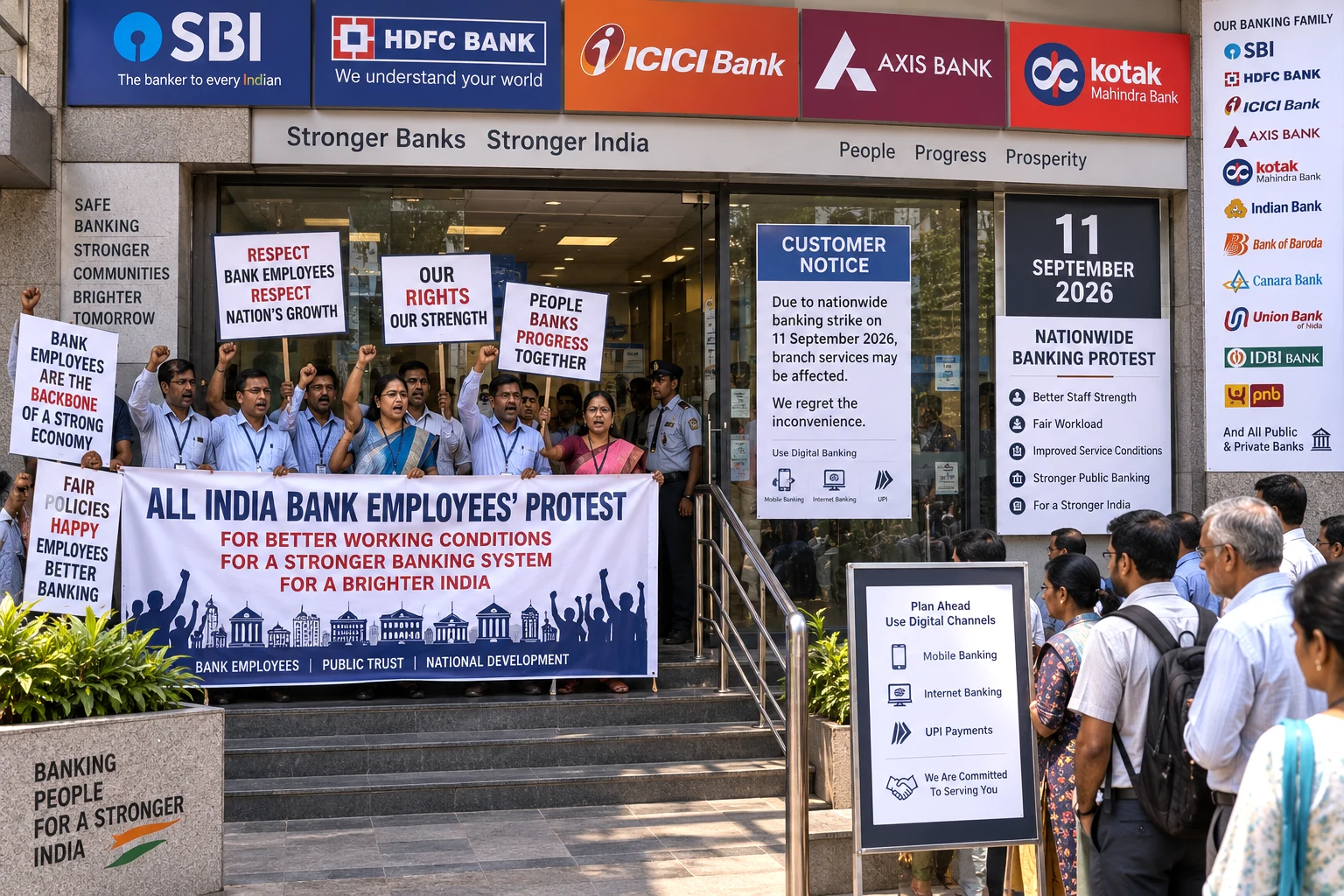
Bank unions will strike nationwide on September 11 over five-day banking and other demands. Here is why employees are protesting, what banks say, how customers may be affected and what happens next.
Mantra: Om Devi Chandraghantayai Namah
Next: Day 4 (October 14) — Maa Kushmanda, Royal Blue
Navratri Day 3 2026 at a Glance
Date: Tuesday, October 13, 2026
Festival: Shardiya Navratri Day 3
Tithi: Shukla Tritiya
Goddess: Maa Chandraghanta
Popular colour of the day: Red
Common bhog: Milk, kheer or another milk-based sattvic preparation
Simple mantra: Om Devi Chandraghantayai Namah
Next Navratri day: Wednesday, October 14, 2026
Day 4 Goddess: Maa Kushmanda
Day 4 colour: Royal Blue
Who Is Maa Chandraghanta?
Maa Chandraghanta is worshipped as the third form of Goddess Durga.
Her name is traditionally connected with the crescent moon on her forehead, which is described as resembling a bell, or ghanta. Traditional iconography commonly presents her with ten arms, carrying weapons and sacred objects while also displaying gestures associated with protection and blessings.
She is frequently shown riding a tiger, although artistic and regional representations of Hindu deities can differ.
The form is important because it combines two ideas that might initially appear opposite: serenity and readiness to confront danger.
Devotional traditions associate Maa Chandraghanta with courage, strength, protection and fearlessness. These are religious and cultural interpretations rather than promises that performing a particular ritual will automatically produce a specific material result.
For many devotees, the third day therefore represents the movement from the discipline of Maa Brahmacharini on Day 2 toward a more active expression of courage and inner strength.
What Is the Navratri Colour Today, October 13?
The widely followed Navratri colour for Tuesday, October 13, 2026 is red.
Red is commonly associated in Indian religious and cultural traditions with energy, strength, auspiciousness and devotion. It is also a colour strongly associated with worship of the Goddess in many parts of India.
Devotees following the daily colour custom may choose a red saree, kurta, salwar suit, dupatta or another red element in their clothing.
However, wearing the colour of the day is not a compulsory requirement for Navratri worship.
The daily colour calendar is a popular cultural tradition that is especially visible during community celebrations, Garba events, workplaces and social gatherings. Regional practices can differ, and some families may follow a different colour tradition altogether.
That distinction is useful because Navratri customs are not completely uniform across India.
A devotee following an established family, temple or regional tradition does not need to replace that practice simply because a different colour list is circulating online.
Navratri Day 3 Puja Vidhi: Simple Household Steps
There is no single household puja sequence followed by every Navratri devotee in India. Rituals differ between families, regions, temples and sampradayas.
For readers looking for a simple home observance, the following sequence can be used as a general guide.
1. Prepare yourself and the puja area
Begin after bathing and wearing clean clothes.
Clean the place where the Navratri altar, Kalash, Goddess image or murti has been placed.
Those following the nine-colour tradition may wear red today, although this is optional.
2. Continue the Navratri altar worship
If a Kalash was established during Ghatasthapana on Day 1, continue its regular worship according to your household practice.
If your family maintains an Akhand Jyoti, handle the lamp carefully and follow normal fire-safety precautions.
3. Invoke Maa Chandraghanta
Offer prayers to Maa Chandraghanta as the third Navdurga form.
A traditional image or murti may be used if that is part of the household’s regular worship.
There is no need to purchase a separate idol for every Navratri day if that is not your established tradition.
4. Offer diya, incense, flowers and customary items
A diya and incense may be lit.
Flowers, kumkum or roli, akshat, fruit and other customary puja items can be offered.
Jasmine is traditionally associated with Maa Chandraghanta in some devotional references, but flower customs vary. Devotees can follow the flowers normally used in their household or temple tradition.
5. Offer bhog
Milk, kheer and milk-based sweets are among the commonly mentioned offerings associated with Maa Chandraghanta.
Some families may instead prepare another sattvic dish, fruit or traditional prasad.
There is no need to assume that every household across India must prepare exactly the same bhog.
Food customs differ by region, community and family tradition.
6. Recite the mantra
A simple mantra for the third Navdurga form is:
ॐ देवी चन्द्रघण्टायै नमः॥
Om Devi Chandraghantayai Namah.
Devotees may repeat it according to their normal prayer practice.
People who already follow a particular Durga Saptashati recitation, family mantra or temple liturgy may continue that established practice rather than combining several unfamiliar rituals taken from different online sources.
7. Complete the worship with prayer or aarti
Conclude with the aarti or prayers followed in your household.
The offered food may then be distributed as prasad according to family practice.
The purpose of a simple puja guide is to explain the sequence for readers, not to replace instructions from a family priest, temple or established religious tradition.
Maa Chandraghanta Mantra for Navratri Day 3
One of the most commonly cited short mantras dedicated to Maa Chandraghanta is:
ॐ देवी चन्द्रघण्टायै नमः॥
Om Devi Chandraghantayai Namah.
It is a straightforward invocation of Maa Chandraghanta and is easier for many household devotees to follow than a longer Sanskrit recitation.
Traditional devotional literature also contains longer prayers, stutis and dhyana verses associated with the Goddess.
Readers who already follow a particular recitation should generally continue with that practice rather than assuming that one online version is mandatory for everyone.
What Bhog Is Offered to Maa Chandraghanta?
Milk is one of the offerings most commonly associated with Maa Chandraghanta worship on Navratri Day 3.
Kheer, prepared with milk and rice or another household recipe, is therefore a popular option. Milk-based sweets are also offered in many families.
The important point is not that every devotee must prepare an identical dish.
Navratri food traditions vary considerably.
Some households offer fruit.
Others prepare kheer.
Some offer milk or sweets.
Others follow a family-specific naivedyam.
Where fasting rules are observed, the ingredients should also be consistent with the vrat tradition followed by the household.
Is October 13 Really Navratri Day 3 in 2026?
Yes.
Shardiya Navratri began on Sunday, October 11, 2026 with Pratipada, Ghatasthapana and the worship of Maa Shailputri.
Monday, October 12 was Day 2 and was dedicated to Maa Brahmacharini.
Tuesday, October 13 is Day 3 and is dedicated to Maa Chandraghanta.
For Hyderabad, the local panchang places Shukla Tritiya through approximately 11:27 PM on October 13, after which Chaturthi begins.
This is also why simply looking at midnight-to-midnight calendar dates is not always enough when interpreting Hindu festival observances.
A tithi follows lunar calculations and can begin or end at times that do not coincide with the start or end of a civil calendar day.
Why Navratri Timings Can Differ Between Cities
Readers often encounter slightly different puja times in articles published for Delhi, Mumbai, Hyderabad, Kolkata or other cities.
This does not automatically mean one of the calendars is wrong.
Sunrise, sunset, Rahu Kalam, Abhijit Muhurat and other location-sensitive timings can vary from city to city.
For Hyderabad and Telangana readers, a Hyderabad-specific or Telangana-specific panchang is therefore preferable when an exact muhurat is important.
For an ordinary household morning or evening Navratri prayer without a time-sensitive ritual, many families simply continue their regular worship according to established custom.
Red Is Popular Today, but Regional Traditions Still Matter
The modern nine-colour Navratri calendar has become extremely popular.
For 2026, the widely circulated sequence begins with orange on Day 1, white on Day 2 and red on Day 3.
Day 4 moves to Royal Blue.
But the colour system should not be confused with the tithi itself.
The lunar tithi determines the religious calendar, while the daily colour tradition is a widely followed cultural practice.
That is why two families can worship Maa Chandraghanta on the same day while making different choices about clothing, flowers or bhog.
Both may still be following valid traditions.
From Maa Shailputri to Maa Chandraghanta: The Navratri Journey So Far
Rajatheertha’s Navratri 2026 series began on October 11 with Maa Shailputri, Ghatasthapana and the opening-day orange colour.
Day 2 moved to Maa Brahmacharini, associated in devotional tradition with tapas, patience, discipline and sustained devotion. White was the widely followed colour.
Day 3 now turns to Maa Chandraghanta and themes traditionally associated with courage, strength and protection.
The sequence gives each day a distinct devotional identity while remaining part of the same nine-day worship of the Goddess.
When Is Vijayadashami in 2026: October 20 or October 21?
For Hyderabad and much of the commonly followed 2026 calendar, Vijayadashami or Dussehra falls on Tuesday, October 20, 2026.
Dashami tithi begins around 12:50 PM on October 20 and continues until about 2:11 PM on October 21.
The reason some readers may see October 21 in festival listings is that Bengali Vijayadashami is listed separately on Wednesday, October 21.
Regional calendars and observances should therefore be read carefully rather than assuming every reference to October 21 means the national Dussehra date has shifted.
For readers following the Hyderabad calendar, October 20 is the relevant Vijayadashami date.
What Comes on Navratri Day 4 Tomorrow?
Navratri Day 4 falls on Wednesday, October 14, 2026.
The fourth form in the Navdurga sequence is Maa Kushmanda.
Royal Blue is the widely followed Navratri colour for the day.
Maa Kushmanda is traditionally associated with creative energy and the origin of the cosmic creation in devotional narratives.
The transition from Maa Chandraghanta on Day 3 to Maa Kushmanda on Day 4 continues the Navdurga sequence as devotees move toward the middle of the nine-day festival.
The Rajatheertha Team publishes news, explainers, guides and updates across India and the world. Our coverage follows Rajatheertha's editorial, verification and corrections standards.
Navratri Day 2 falls on October 12, 2026 and is dedicated to Maa Brahmacharini. Here is today’s white colour, Dwitiya tithi, simple puja vidhi, mantra, traditional bhog and what comes on Day 3.
Shardiya Navratri 2026 begins on October 11. Check the Ghatasthapana muhurat, Day 1 puja guide, today’s orange colour, the full nine-day colour calendar and key dates through Dussehra.
Dussehra 2026 falls on Tuesday, October 20 in the widely followed Vijayadashami calendar, while Bengal observes Vijayadashami on October 21. Check the Dashami tithi, Vijay Muhurat, Shastra Puja guidance and what to know about Ravan Dahan timing.
India/ Politics | Election Commission | Supreme Court10 min read
The Supreme Court has listed Rahul Gandhi and other INDIA bloc leaders’ petition over the Election Commission’s Special Intensive Revision of electoral rolls. The plea seeks disclosure of ECI records, an independent audit of voter deletions, safeguards against removal without notice and an interim s
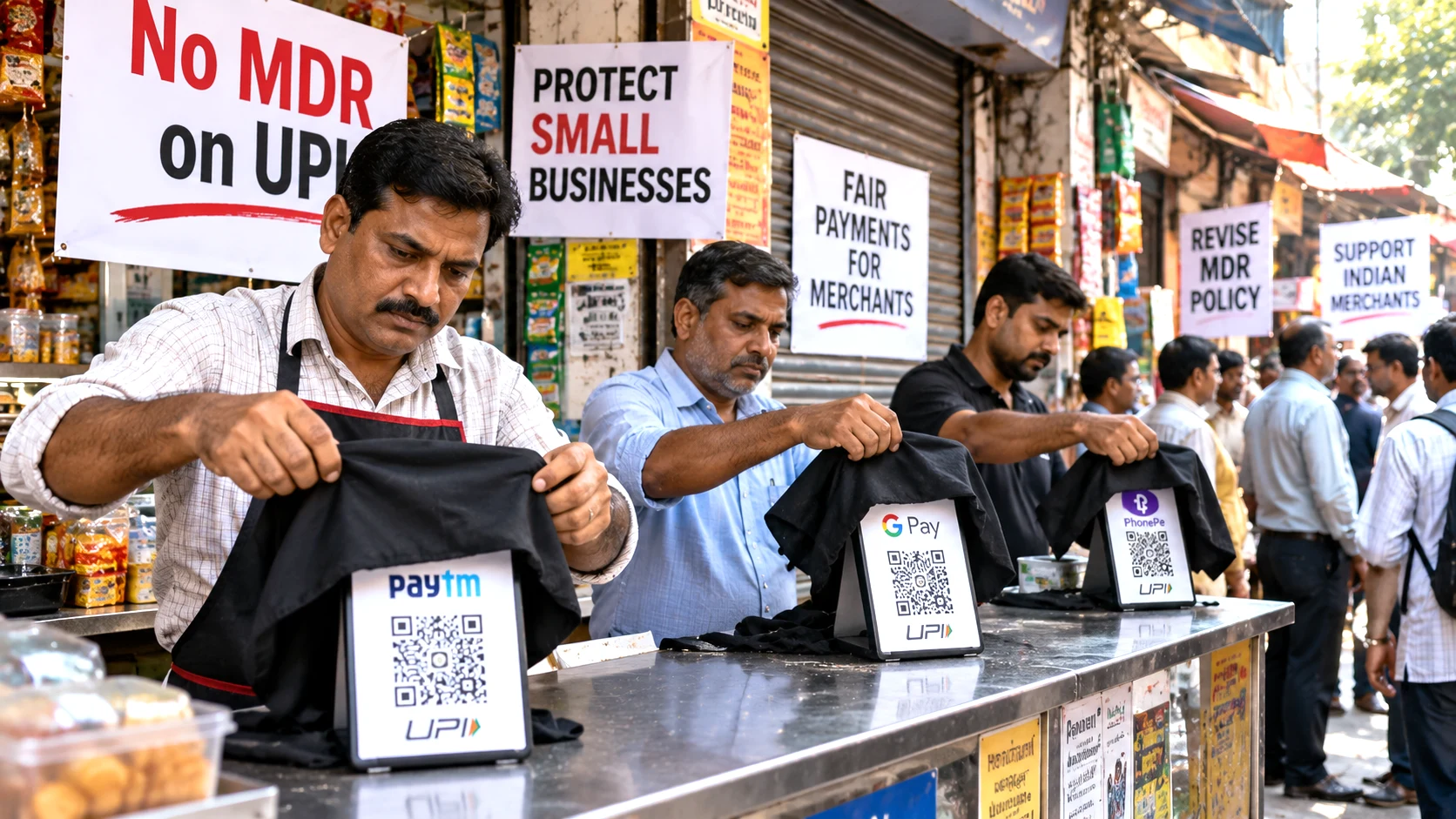
Several trader associations have called for a voluntary “No UPI Day” on October 2 against the new MDR on some merchant UPI payments above ₹2,000. UPI itself will not shut down, customers will not pay the MDR, and most transactions remain free.
India celebrates National Space Day 2026 on August 23, remembering Chandrayaan-3’s historic Moon landing while highlighting ISRO’s achievements and the country’s rapidly expanding ambitions in space exploration.









0 Comments